Columbus, Che and La Raza
I’m not sure why, but the 40th anniversary of Che Guevara’s murder, assasination, execution… death… passed unnoticed here in Alpine, Texas.
It’s been rumored for years that a local worthy is retired CIA (probably true), and that he was involved in whatever it was exactly that went down in La Higuera, Bolivia 9 October 1967. By legend, our small town civic leader chopped off Che’s hands and took them back in his flight bag to Washington.
Maybe, maybe not. Che certainly is dead, however. But, still relevant. I realize it’s easy to romanticize the guy (and there aren’t a lot of handsome revolutionaries to make tee shirts out of. Lenin and Mao never struck anyone as fashion icons) or to forget that he was — after all — a failure, but he still resonates today.
Che, like Simon Bolivar a hundred years earlier, and Hugo Chavez, Evo Morales, Rafael Correa — and to some extent, Mexico’s AMLO — all sought an intergrated Latin America. Whether it was done through military conquest (like Bolivar), revolution (like Che) or the ballot box and trade agreements (Chavez, Moreles, Correa, Lopez Obradór) the goal is the same: uniting the varied peoples of the Americas in one big happy Raza.
It’s we English speakers who miss the boat here. In English, “race” is a word used to separate us into small, competitive groups. In Spanish, “raza” is a uniting concept — a way of grouping peoples together.
It was a blunder, but the Italian sailor who brought us all together is also remembered this week. Edmundo, at ¡Para justicia y libertad! says things much better than I can:
Today, youth across the nation are told by our government that Christopher Columbus merits honor and celebration because it marks the arrival of Columbus to the Americas. Most nations of the Americas observe this holiday on October 12, but in the United States the annual observance takes place on the second Monday in October. It was Franklin Roosevelt who first suggested in 1934 that all states adopt October 12 as Columbus Day, later in 1971, under Richard Nixon; the second Monday of October officially became established as a federal holiday to honor the explorer.
The October 12th celebration is commonly known in many countries in Latin America as Día de la Raza, a holiday that is comparatively recent. Before I go on, it is important to address the meaning of “la raza” because I can already hear the complaints how the name of the holiday is just more proof raza means “race.” The Spanish the word raza carries the meaning of an extended community bound by cultural ties in addition to those carrying similar physical traits. During that time, the word raza was used in a cultural sense to reference the contended affinity between Spanish-speaking peoples on both sides of the Atlantic Ocean. However, one must also be aware that during the early 20th century it was not surprising to find intellectuals employ racist theories because this was also the height of the eugenics movement.
The origin of Día de la Raza or Fiesta de la Raza goes back to the beginning of last century. In 1913, Faustino Rodriguez San Pedro, Chairman of Iberoamerican Union, proposed that 12th October be called Fiesta de la Raza and be celebrated throughout Spain and Latin America. Spain would later change the rename the holiday to Fiesta de la Hispanidad. In Costa Rica it is called Día de las Culturas and in the Bahamas it is called Discovery Day.
For better or worse, we’re all on the landmass. We should be one people, but that may be asking a bit too much…
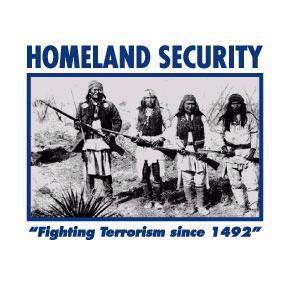
Happy… whatever… day:


 mexfiles.net
Hello Campers,
The reason Che failed in Bolivia was that the Bolivian rural community wanted a public bus system to go to town and sell their goods and shop. The government gave it to them, the Bolivian people got what they wanted and did not support a revolution!