What is to be done?
With the argument that “we cannot allow a failed state on our borders, and ‘shit runs downhill’ President Felipe Calderon was reluctantly expected to join with the leaders of Ecuador, Venezuela, and Bolivia (the so-called “three amigos states”) in a restructuring plan for the corrupt and bankrupt North American country.
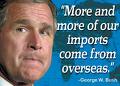 The “three amigos” plan seeks to alleviate the immediate crisis, brought on by several years of de-regulation and institutional neglect, exacerbated under the present Bush regime by open corruption in the private sector, ill-advised foreign adventurism and government policies encouraging citizens to invest in luxuries instead of necessities — tortilla, beans, education.
The initial rescue was proposed by Venezuelan President Hugo Chavez, who argued that “Once they get that drunken burro out of the White House, we might be able to turn the place into a decent country.” Ecuadorian President Rafael Correa and Bolivian President Dr. Evo Morales joined Chavez recently in an emergency meeting on the U.S. rescue plan, under which banks and financial insitutions which were hastily nationalized will be merged and their assets sold to stable foreign interests, with the understanding that until deposits are covered, the new owners will be unable to repatriate assets — a plan based on the Mexican bank securities law.
Agentina, Chile, Uruguay, Paraguay and Brazil have all agreed, in principle to stand with the “Three Amigos” if the plan includes guarantees that U.S. would make the necessary cuts to non-essential spending, and concentrate resources on essentials like health and safety. By giving the Latin American development bank, Banco del Sur oversight on government expenditures, the southern cone nations were assured enough to sign on to the rescue package. The Cuban government agreed to take at least one debit off the U.S. hands: Guantanamo Bay will be returned to Cuba, in return for a token amount of money.
Calderon, who has generally tolerated the U.S. financial irregularities, finally signed on when it became clear that political and financial instability in the United States was driving the increasing encroachment of gringos into Mexico with their guns and dollars.
Calderon, whose own economy is still recovering from privatization and – until recently – was expected to continue the process said “You think we’re totally nuts? Of course we stopped in time… but we can’t afford to have millions of gringos pouring across our borders, not doing the work Mexican fresas won’t do either. We have no choice but to sign on.”
To meet the immediate emergency, bank accounts will be frozen for the next sixty days while a new U.S. dollar, pegged to the Mexico Peso is introduced. This will give time for the Three Amigos nations to work out a debt swap with Chinese and Dubai investors, who hold most of the United States debt (estimated in the hundreds of billions of pesos). Although the true debt is unknown – mostly because the spending on recent military adventurism was a state secret, and even the Treasury Ministry seems to be in the dark about it – Banco del Sur will assume control of recently state-bought banks and management funds. The Banco del Sur will swap the debt for future agricultural and commodity exports from the United States, sold under the authority of a new international agency, managed by Mexicans Andres Manuel Lopez Obrador and Cuauhtemoc Cardenas.
Lopez Obrador, who has pushed for “socialist austerity” in salaries and state funding for inessential programs, is expected to mandate caps on executive compensation and cut all funding for inessential, non-productive spending that is not of direct benefit to “the poor among us.” Lopez Obrador admitted this will cause some pain throughout the economy, as people learn to walk to a bus stop, or find neighborhood abarrotes, which will receive priority funding over the failing auto industry, and the fuel-wasting so-called “big box stores” that are a feature of U.S. life. To protect vulnerable workers and their families, Lopez Obrador and Cardenas both are expected to recommend encouraging people to join unions, develop family assistance networks and organize. “If,” as Lopez Obrador says, “those pendejos don’t want to listen, then the people must – non-violently – hold them accountable. Hijo de madre! We’re going to have to teach those gringos how to take over a city.”
Cardenas, whose father successfully nationalized the oil industry in Mexico, will be “Energy Czar” under the plan. Venezuelan oil consultants, joined by Bolivian food distribution specialists and Ecuadorian military planners are included in the recovery plan. Bolivia and Ecuador, having experience in writing constitutions to protect the resources and people of their countries from predatory financiers will also dispatch advisors to the United States as it attempts to dig itself out of a seemingly hopeless situation.
(Note to the clueless — not a bad idea, but this is satire. In reality, the former Indian Finance Minister Yaswant Sinha did tell the International Monetary Fund that, ” I think the time has come. After the crisis here … the U.S. should accept some monitoring by the IMF.”)
We don’t need no stinkin’ golden parachute, but we do need to pay the stinkin’ electric bill, the internet connections and buy the occasional taco…


 mexfiles.net
top notch satire
Bush was technically correct that more and more imports are coming in from overseas countries in Asia and not say over land like Mexico, Canada, and South American nations.
Any quote to make Bush look bad works doesn’t it? Wouldn’t Mexicans want more and more imports to the US to come from Mexico and not China?