Zombies and the balance of power
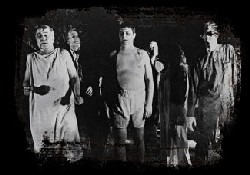 There are, it seems, more than one kind of zombie, and different tactics are needed to deal with them. With the relatively harmless walking dead, the Presidencia Zombi, the tactic being employed by the Senate is new and untried: call it the Nancy Reagan approach — just say “no”.
The Procurador General de la Republica, the Attorney General (or rather “national prosecutor”) is one of the few cabinet positions requiring Senate approval.
There were some objections to Attorney-General Designate Arturo Chávez Chávez, mostly from women’s groups and human rights organizations, stemming from his previous job as Chihuahua State prosecutor. As I’ve argued for the last several years, I don’t think the “femicides” in Juarez are more the result of the frontier conditions of Juarez than a result of any official complicity, but the State Prosecutor’s office has continually been blamed for faulty or sloppy investigations and a lack of any prosecutions in the 300 or so murders over the last 15 years.
While there have been chronic human rights abuses involving the Mexican police and army for years, the Administration’s use of soldiers in the anti-narcotics exporter fight has only exacerbated the problem. Chávez has also held some federal posts overseeing human rights protection within the Federal Prosecutor’s office, again with less than stellar results.
These are legitimate concerns, and should be raised, but normally, they would be brushed aside after a few Senators raised the objections, and the Administration made some pretense of responding to the objections… usually a matter of vague promises to review the situation.
But, this is — as far as I can tell — a new situation. For the first time ever, there is a single opposition party in control of the Senate (PRI) and in a position to reject a cabinet nominee. Human rights and justice are legitimate issues to be considered, but Chávez is going to be rejected for purely political reasons: weakening PAN.
I’m not saying that PRI is “better” than PAN, but, I will say this is a step forward for Mexican democracy. There is considerable overlap in the governing style and neo-liberal economic policies between the two largest parties, as well as dependence on the same “special interests”, making leftist sneers at “PRIAN” valid.
Of course, in the United States, where there are for all realistic purposes there are only two parties, both of them overlap considerably more than this country with its more ideologically based politics. It’s foolish though, to expect parties not to attempt to maximize their power. The problem in Mexican governance since independence has been the overriding power of the Presidency, at the expense of a balanced federalism.
There is a possibility that the Senate — seeking a short term gain — will start demanding more oversight of the cabinet, eroding the presidency even further. Which, when the PRI returns to the Presidency (which it probably will in 2012), should minimize some of the danger of a return to what was once known as the “perfect dictatorship.”


 mexfiles.net