La Casteñada a century later
Along with the Revolution itself, this is the centennial of the opening of La Casteñeda… inaugurated with great fanfare by Porfirio Díaz in 1910 as part of a series of institutions designed to show off Mexico City as a “modern” capital.
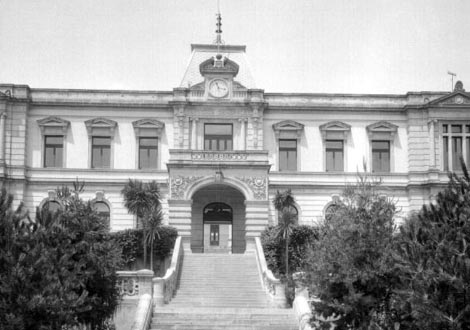
It was the type of government facility every respectable metropolis had at the time… an insane asylum.
It’s not that mental health facilities didn’t exist. The great 16th century progressive and all-round good guy among the early Spanish rulers —
Vasco de Quiroga, who arrived as Audiencia judge in 1530… past sixty (an old man for his time) was something of a pioneer—the first foreigner who came to México to retire but found a new and meaningful second career in his adopted country. Among many other things in the 16th century, monasteries were assisted living centers. Even peasants often invested a small sum with their local monastery over their lifetime to pay for their care when they got too old to work. Quiroga, who had a good pension as a senior bureaucrat, planned to invest in a new Mexican monastery that would take care of him the rest of his life when he finished up this last assignment.
Quiroga found two things in his Audiencia that bothered him deeply. Pedro de Guzmán’s abuse of the local indigenous peoples, especially the Tarascans, and the huge number of minor criminal cases where the defendant was drunk. Quiroga was one of the first people to recognize alcoholism as a disease. His money for the monastery went to open the world’s first alcoholism rehab … in Mexico City.
(Gods, Gachupines and Gringos)
What makes this notable was that La Casteñada — in Mixcoac, then a far suburb of Mexico City — was not so much a new facility as a rehab and expansion of an existing facility… a pulque distillery, and La Casteñada’s first patients included the alcoholics transferred from that still-functioning 16th century rehab. Along with the inmates of el Divino Salvador, a church run facilities for mentally ill women, few private madhouses, and epileptics (then considered a mental illness) who had been warehoused in the Hospital para Epilépticos de Texcoco.
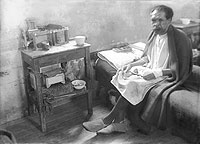 When it opened in 1910, with Porfirio’s son cutting the ribbon before a distinguished audience including the diplomatic corps, wealthy benefactors, and the medical establishment, it was considered a genuine breakthrough in the treatment of mental illness. It provided the training for generations of Mexican psychiatrists and its centennial is celebrated as a milestone in medical care in Mexico.
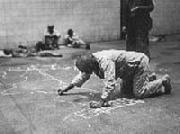 As with similar institutions of its sort, La Casteñada developed a sinister reputation as a snake-pit . A facility designed to humanely care for 1200 patients at any time, had 3500 people under its roof in the early 1940s, some of whom languished in forgotten cells meant for violent patients and the criminally insane. Reports of mistreatment, abuse, neglect and the high death rate from communicable disease — problems found in similar institutions around the world — spelled the end of La Casteñada, which was finally demolished in 1968.
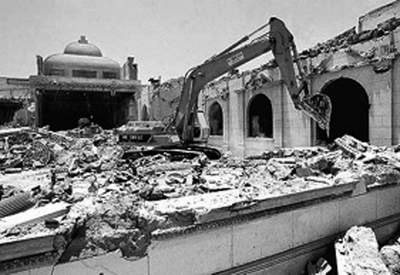
Writer and clinical psychologist Ivan Arellano Covarrubias, on his blog, Diario Psicoanalítico, wrote an “obituary” for la Casteñeda ïn October 2009, on the 41st anniversary of its demolition.
Definitely, the Manicomio General de México, better known as la Casteñeda was a watershed in Mexican for psychiatry and the medical profession. As we know, the mental hospital tried to be an excellent institution to patients dismissed as ‘crazy’, but following the Revolution it became difficult to maintain its altruistic intentions, and began to deteriorate in such a way that could no longer not fulfill its mission. For all that, it should be emphasized that the ‘madhouse’ set the stage for the formation of psychiatrists and paved the way for hospitals like the renowned Hospital Fray Bernardino Álvarez and other psychiatric specialty hospitals of today. And while there is no doubt that the asylum was for some years nothing more than a shelter for the needy, opening la Casteñeda was also global watershed in the clinical treatment of the mentally ill.
(By the way, this is the 3000th post on the Mex Files. An obsessive-compulsive disorder?)


 mexfiles.net
Congrats on your 3000 th post!!
I found this post very informative and interesting!.
If -like we say in Mexico- para muestra basta un botón, I think I’m going to buy your book!!
3000 huh….and I thought I was prolific…. 🙂
Congrats and here’s to the next 3,000.