A food crime!
“Nobody loves me…everybody hates me. I’ll just go eat worms”… gross! Unless… the worms are chinicuiles.
Technically, chinicuiles are the larval state of Comadia redtenbacheri, a fairly large moth endemic to Mexico and south Texas. The larve are usually ground into a salsa: a handful of chiles, a handful of worms, four large tomatoes, a quarter onion, and a dash of pulque… Yum, I guess… so we’re told. Having to be gathered by hand, this is a “gourmet item” on the menu, somethingt one-up foodies in snob appeal. They’re also added to stew and some breads.
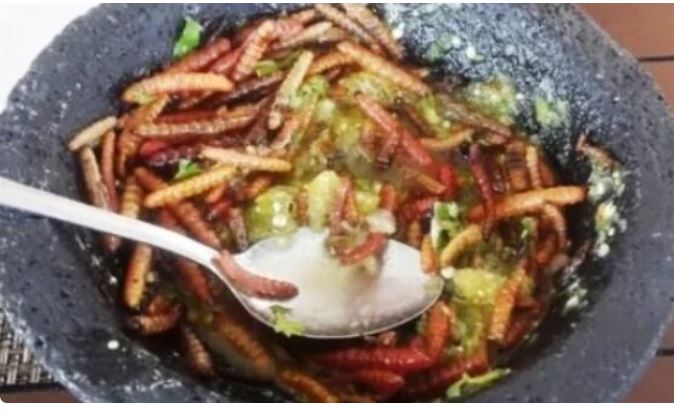
But, there’s a catch. Comadia redtenbacheri lay their eggs at the base of agave plants… and agave has it’s own place in the food and libations culture… being the source of pulque and (off brand) tequila. As well as some other economic uses as animal fodder and its fibers used for cheap wrapping paper.
As you can imagine, there’s a much bigger market for booze than exotic insect food… and for agave growers, Comadia redtenbacheri is a pest, although ridding the fields of chinicuiles brings in some extra income.
Agaves are more delicate than they look. Although the larvae tend to climb up the plant, in dry seasons (and there’s a drought right now) to remove the chinicuiles, farmers have to carefully dig up the plant, knock the lavae off, taking care not to damage the roots before replanting.
Which has led to a crime wave of sorts in Hidalgo (where 71% of the agave in the country is raised). Chinicuile rustling has become a thing. The quick and dirty way to get at the larvae is to just rip the agave plant out of the ground and snatch up the little wormies. It takes about 50 plants to find a kilo of larvae, though, at $3500 pesos a kilo wholesale, criminally minded types have been worming their way into gourmet food biz.
One Hildalgo famer interviewed recently by Joranda, claims to have lost 2500 plants, and there are reports of farmers losing up to 20,000 agaves.
This bugs me.


 mexfiles.net