¡COMO MEXICO NO HAY DOS! Mexico's hsitory and culture, the Real, and the surreal, Mexico. Politics, economic, news sometimes here, but regularly posted at mexfiles.substack.com. Copy and quote freely, but be respectful, and acknowlege the source. And, of course, monetary donations help keep the site going.
(apologies for bad formatting/editing… I just can’t get it set right after trying to fix everty8ing for the last hour or so)
… in 1824 there were only 10 elementary education institutions in Mexico. By 1844 this number had multiplied to 1310, covering a total of 59,744 students. By 1846, the number of elementary educational institutions in the republic had nearly reached 5000, with approximately 250,000 students.
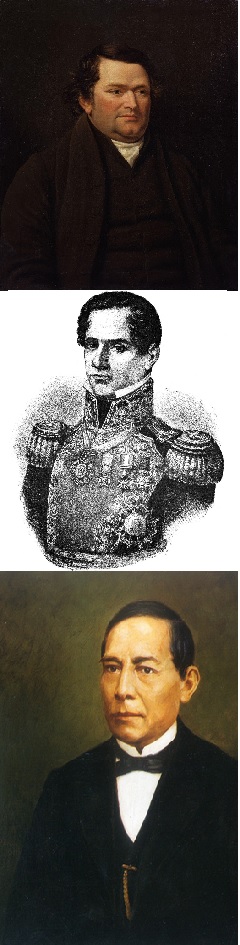
Joseph Lancaster was the British Quaker who — despite never having been to Mexico — was probably had more to do with General Santa Ana’s otherwise inexplicable political success — and led to the downfall of his regime, and the creation of a modern state under the Reforma administration of Benito Juarez.
Born 1780, Lancaster had wanted to be a school-master from an early age. At the time, primary education — readin´ritin´ánd rthmatic — was pretty much left to the church, and, for the wealthy, private tutors. The focus was on religious education, and if the working class was educated at all, it was only meant to meet the minimal requirements of whatever job they were expected to perform.
While the school Lancaster first ran (and got a reputation as a harsh and often cruel school-master at a time when corporal punishment was the norm) incorporated influences by Smith, as well as Church of England missionaries who were working in India, trying to turn Madras orphans into good English mechanics and clerks, he developed methods still standard in education today.
Not all Lancaster’s innovations were unique to his system, overall, what he developed was what would become standard, and unremarkable to any teacher or student today: a set class schedule, a lesson plan with clearly defined goals for each subject (and — for that matter — dividing the school day into discrete subjects — an hour of ´ritin’, and hour of readin’, an hour of ‘rithmatic… and do on) which needed to be tested regularly (“there will be a quiz”) and beginning with the most basic of concepts, building on them as the learning process progressed. Lancaster also proposed small rewards for students doing better than average work (and teachers still give students god stars for well-done homework).
W
With a clearly defined curriculum and method, this also meant it was possible to writer teachers’ guides, and standardize education throughout an area. Especially when the Lancasterians (as he and his followers became known) realized that, with a shortage of trained teachers, those pupils who did the best on examinations might also be put to use, themselves given the task of training those less advanced than they were… or, to consider becoming teachers themselves.
Lancaster himself has his faults. Being hopeless with money being one of them, and more than once he ended up in debtor’s prison. Offered a lifeline by Simón Bolivar — in his hope of making Grran Coombia Gran (as soon as possible), and understanding his nation was in dire need of qualified, educated people to replace the departing colonial overlords — welcomed Lancaster and his supports to the Americas. Lancaster himself would eventually move to Pennsylvania, dying in 1824… the same year his daughter and son-in-law arrived in Mexico to start what one might call an early NGO/think tank, pushing the Lancasterian line.
Enter General Santa Ana. The man had more than his faults as a politician, but — as Will Fowler’s recent “revisionist” biography of the old rogue points out1, Santa Ana did value education, donating large personal sums for schooling. In his autobiography2 (written after his final disgrace and fall), he proudly mentions that his hacienda workers were always provided with schools, and it might be noted that Dr. Mora — the early “elections analyst” — noted that the real iinfluencers in elections were the better educated middle class — the rural middle class in his day. The same class Santa Ana was from, and something his supporters who wanted their own children educated, would rally around, whatever the Generals particular party at the time.
While the “Lancasterian Society” — had been successful in the massive growth in education from 1824 until 1843, in that year, with Santa Ana seeking to centralize the state, took over the educational system — incidentally unlike today, a CONSERVATIVE administration not privatizing a social service, but the opposite, taking it under state control. The Lancasterian Society stayed on, as a “think tank”m and government contractor as the educational system was expanded to include secondary and higher education as well. With more trained teachers (though the new “Normal Schools”) the need to use the “best” students as teachers somewhat lessened, but continued especially when it came to higher education (today’s TAs in every university undergraduate program).
And here is where Benito Juarez comes in. He may not have learned to read until he was 12, but he was earning more than his share of gold stars and quickly rose to the top of his class…A good enough student to be a teacher himself for a time… his first leadership role.
And, he was hardly the only one of the “Reforma” generation that transformed Mexico following the defeat of Santa Ana and the old guard in 1855. Nearly all the major leaders were products of that Lancasterian system. The novelist, jurist, general, and later Secretrary of Public Instruction (and Supreme Court Justice) Ignacio Manuel Altamirno had been the recipient of a Santa Ana decree mandating every community to support at least one “Indian”at the university. That Altamirano’s father was the municipal president of Toluca had something to do with it, true… but yet another product of the Lancastering/Santa Ana educational reforms.
Even Porfitio Diaz — at least according to a possibly apocryphal anecdote trlated by PR man James Creelman in the 1911 “Diaz, Master of Mexico” has a derring-do Porfirio swinging from a rope past the church tower cell of a fellow plotter against Maximilian, outwitting any listening guards by conversing in Latin — Don Porfirio, belying his public image as the simple soldier, yet another of those Lancasterian prize winning pupils, doing well enough in his prep school Latin to have been yet another student teacher.
It is, perhaps, not surprising that so many of Mexico’s leaders — Juarez, Obregon, Calles, not to mention the current President (who promises greatness) have been teachers, or — like Cardenás — see education as an essential to the nation, it’s development, and are willing to spend an inordinate amount of the federal budget, seeing it as not just in terms of its economic benefit, but essential to the very growth and survival of the nation.
“Santa Anna of Mexico”, University of Nebraska 200, pp. 216-17, et. passum ↩︎
“The Eagle”, Anna Fears Crawford, ed. State House Press (Austin) 1967 ↩︎
Also: Sunpiejing Wu, Shixue Jiang, “The emergence and role of Lancaster in Mexican public Education”, Journal of Infrastructure, Policy and Development, (http;//doi. org/10.24.294/jipf.v8i7.5592 and sources quoted in the paper.
And, of course… myself: “Gods,Gachupines and Gringos”.
Leave a reply, but please stick to the topic Cancel reply
Support the Mex Files
The Mexfiles has never expected to turn a profit, but personal funds only go so far. Miscellaneous expenses (telephone, internet connection, subscriptions, spyware, hardware repair, etc.) run about 600 pesos (35 US$) a month, and donations are gratefully accepted. Please note that your donations are in Mexican Pesos (18 pesos to the US Dollar as of February 2019). A 25 US$ donation is 450 pesos.
The background of Mexican anti-clericalism and the "atheist" general who led the Catholic counter-revolution of the 1920s
128 pp., Editorial Mazatlán, 2012.
An oral history of the World War II experiences of Gilberto Bosques (1894 – 1997), Mexico 's Consul General in Marseilles, France, who saved tens of thousands from the Nazis.
36 pp. Editorial Mazatlán, 2007 $35 MXP (click the image)
While "The Mex Files" authorizes and encourages non-commercial use, such use must include a link including the words "Mex Files" hyperlinked to either "https://mexfiles.wordpress.com" or "http://mexfiles.net". Printed material must reference the original post.
Non-commercial re-publication is allowed for copyrighted material, provided it is "fair use" as defined in 17 USC § 107.
Commercial re-publication and all other use without the express written permission of the author is prohibited.
Information at richmx2 (at) live (dot) com


 mexfiles.net