There’s one in every crowd
Via Gringo Tree (Cuenca, Ecuador):
Jerry Gilliam, who lives and blogs in Mexico, calls himself a “student of expatriates.” An Ohio native and an expat for 20 years, Jerry is at work on a book about the expat life. One of his favorite pastimes is classifiying expats.
 Although he admits his classification system is not particularly scientific, he says it is something he has developed over the years. Jerry has eight expat categories including the “Eternal Quester” (the expat who moves from country to country and city to city looking for paradise); the “Give Backer” (who is involved in charitable and fundraising activities), the “Clusterer” (who rarely ventures beyond the comfortable confines of gringo haunts) and “Looking for Love” (no explanation needed).
The most interesting expat type for Jerry, however, is what he classifies at the “Expert.” This is his description.
“The Expert is the guy –and it’s almost always a man– who is driven to lay claim to the role of authority figure in his particular expat community. He is the guy who knows all about the hot topics of the day, whether it’s visas, the best restaurants, real estate, rentals, new government policies affecting expats, gringo pricing, the weather, and which marriages are on the rocks.
“Years ago, he held court in cafes, bars and restaurants popular with expats; you didn’t need to look for him since he would make himself apparent in due time. Today, his venue is the Internet and he is a frequent contributor to blogs, community Facebook pages, website comment sections and email forums.
“Amazingly, the “expert” is usually not fluent in the native language of his adopted country, if it is anything other than English. He is also known to hold strong personal grudges, which he is eager to share. He is threatened by other would-be “experts”. And, he is an utter bore if you have to deal with him in person.
“Bottom line? Be suspicious of anything the “expert” says and run the other way if you encounter him in social situations.”
Did NAFTA Help Mexico? … uh, nope.
Mexico did all the things that Washington wanted and was supposed to be the big winner from NAFTA. But after 20 years, it’s pretty clear that although some billionaires did remarkably well, the Mexican people lost. There should be more discussion of what went wrong, especially in light of the proposed Trans-Pacific Partnership Agreement, which is modeled on NAFTA.
So said Mark Weisbrot of the Center for Center for Economic and Policy Research in summarizing a study of the first twenty years of the North American Free Trade Act on Mexico.
Among the findings:
- Mexico ranks 18th out of 20 Latin American countries in growth of real GDP per person, the most basic economic measure of living standards.
- From 1960-1980, Mexican GDP per person almost doubled, growing by 98.7 percent. By comparison, in the past 20 years it has grown by just 18.6 percent.
- Mexico’s per capita GDP growth of just 18.6 percent over the past 20 years is about half of the rate of growth achieved by the rest of Latin America.
- If NAFTA had been successful in restoring Mexico’s pre-1980 growth rate – when developmentalist economic policies were the norm – Mexico today would be a relatively high income country, with income per person significantly higher than that of Portugal or Greece. It is unlikely that immigration reform would be a major political issue in the U.S., as relatively few Mexicans would seek to cross the border.
- According to Mexican national statistics, Mexico’s poverty rate of 52.3 percent in 2012 is almost identical to the poverty rate of 1994. Meanwhile, the rest of Latin America saw a drop in poverty that was more than two-and-a-half times as fast as that of Mexico.
- Real (inflation-adjusted) wages for Mexico were almost the same in 2012 as in 1994, up just 2.3 percent in 18 years, and barely above their level of 1980.
- Unemployment in Mexico is 5.0 percent today, as compared with 2.2 percent in 1994; these numbers seriously understate the true lack of jobs, but they show a significant deterioration in the labor market during the NAFTA years.
We always knew this…
That the “mainstream” U.S. media is finally catching on (Dudley Althous was for years the Houston Chronicle’s Mexico correspondent) is all to the good, but there is still the sense of “if it bleeds, it leads” in foreign press coverage. The hard truth (and hard to put in a news story) is that crime is a symptom, not the disease. The collapse of small farms (exacerbated by NAFTA) and rural opportunity in general, coupled with climatic change, has a lot more to do with rural insecurity than the particular crops being exploited for the north american market.
And, while the Global Post is not exactly the most widely read of sources, it’s a start…
TIERRA COLORADA, Mexico — Major events these days in Mexico’s seven-year-long criminal conflict have precious little to do with a war on drugs.
In the past year, the capture of town after town by volunteer police and citizen militias in the Pacific coast states of Michoacan and Guerrero has roiled and embarrassed President Enrique Pena Nieto’s government.
Officials have dispatched thousands of troops and militarized police to contain the “self-defense” groups, which claim they’re filling a vacuum left by incompetent or corrupt officials.
But many of the civilians taking on the gangs that control the region say they care little about illicit narcotics, which have been supplying US and Mexican consumers for decades. They just want the criminals to leave ordinary residents in peace.
“Drug trafficking is always going to continue,” says Neftali Villagomez, a 66-year-old butcher who now commands nearly 400 armed vigilantes in Tierra Colorada, a rural market town 35 miles north of the gang-ravaged resort of Acapulco.
“We aren’t against drug traffickers,” he says. “We are against organized crime.”
That view mocks former President Felipe Calderon. He often justified the military offensive he launched against entrenched criminal gangs in December 2006 — that the media later branded the “Mexican drug war” — as intended to keep drugs away from Mexican youth. But it dovetails with the aims of his successor, Pena Nieto, who says he wants to eradicate crimes most affecting common citizens.
Those crimes include the extortion, kidnapping and protection rackets that have flourished in recent years.
“It’s understandable. Their priority is the security of their families,” says Mexican analyst Alejandro Hope, who served in the intelligence service under Calderon. “They have lived with drug trafficking for a long time.”
Many anti-gang activists say they have little problem with poor farmers growing marijuana and poppies or the young men and women who work for the traffickers as either smugglers or guns for hire. Few express concern about crime lords’ use of narcotics proceeds to corrupt officials at every level.
“I don’t blame them for deciding to do that,” says Pioquinto Damian, 61, leader of a merchants association in Chilpancingo, Guerrero’s state capital. He barely escaped assassination Jan. 28 immediately after publicly accusing the city’s mayor of abetting local gangsters.
“The problem isn’t drugs, it doesn’t impact public activity.”
Not my first choice, but…
Not bad. Mexico is becoming more like the U.S. (and not in a good way) with speculation about the next administration coming earlier and earlier. Peña Nieto is only a year into a six year term.
Latin American Herald Tribune (Caracas):
Former Mexico City Mayor Marcelo Ebrard said in an interview with Efe that it was time to “change the ship’s course” because the policies implemented in Mexico over the past 20 years have failed, opening the way for the left to get a real shot at power in 2018.
[…]
“I am preparing myself so I can be one of the left’s options in the year 2018 on the basis of what we did in the government (of Mexico City),” Ebrard said.
A future leftist government in Mexico should follow the example of U.S. President John F. Kennedy, who sent a man to the moon, and set a “great national goal,” focusing on education, health care, tax reform, technological innovation or youth policy, the politician said.
Ebrard, who is the leader of one of the factions within the Party of the Democratic Revolution, or PRD, and served as Mexico City’s mayor from 2006 to 2011, said he demonstrated the effectiveness of his policies in the capital.
“We already did it in Mexico City and we did it well. I honestly believe they were good administrations. Mexico City is very hard to govern because you have big citizen participation. I do not see why you couldn’t do it at the national level,” the politician said.
“In the country, in the past six, seven years, the violence rose about 45 percent. In Mexico City, the violence fell by the same proportion. It’s a very interesting thing. The country went up, the city went down. It means that if we used similar policies, we could expect the same results in other cities,” Ebrard said.
I expect I’ll be a Mexican voter by 2018, probably by 2015.
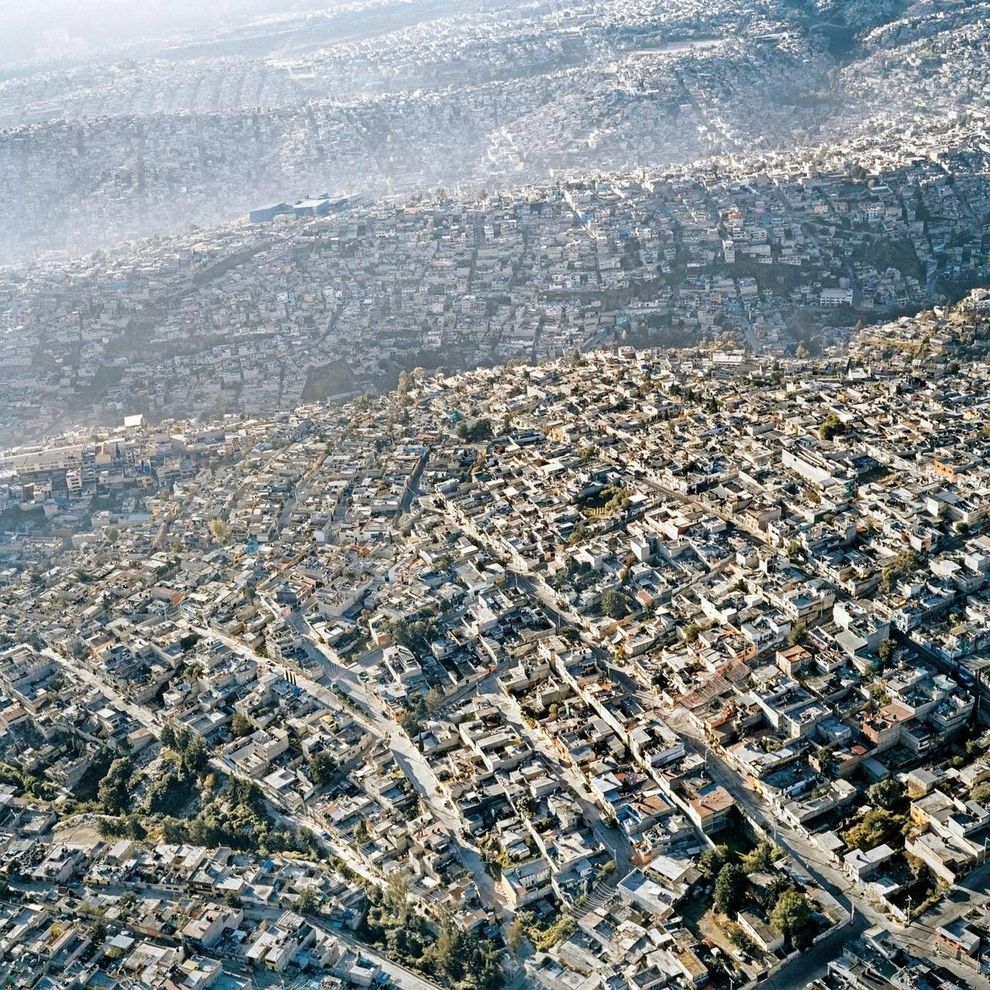
Bird’s eye view of Mexico City
NAFTA, drugs…. and publishing

Four manuscripts in process, another torn apart and being edited, and three eBooks being prepared for release.
The good news is that Editorial Wisemaz has a lot of works in progress. The bad news is that so much work has fallen in my lap that I don’t have the time (or energy) for much posting here.
While I catch up… there’s this, via Sterling Bennett, on the effects of NAFTA and the U.S. narcotics trade, by Laura Poy Solano, translated by Mariana Silva.
According to leaders of the region, the Michoacán countryside is in very poor conditions, besides the fact that it is one of the three states with the most agricultural and forestry activity. The lack of safety and support for agricultural production has caused hundreds of families to migrate.
In separate interviews, Francisco Jimenez, from the Plan de Ayala National Coordinating Committee (CNPA), and Victor Suarez, from the National Association of Companies that Commercialize Agricultural Products (ANEC) stated that, due to lack of financing and “devastation” by the extortions of organized crime,
“many small farmers are growing crops for self-consumption, The threat is so big that not only their harvest and their soil are in danger, but also their lives.”
Jimenez, who is a national leader of the CNPA, pointed out that lime and avocado production are not the only ones that have been affected in the state.
“all agricultural production has to pay a fee [to organized crime]. Day-laborers have to surrender 20 pesos [US$1.50] from their daily 80 pesos [US$6.00] income. Landlords have to pay 120 pesos [US$9.00] for every hectare [2.5 acres] under cultivation each month, besides a minimum of a thousand pesos [US$75] for every hectare of corn. Lastly, warehouses have to pay at least 100 pesos [US$7.50] for every ton of corn.”
Farmers have no government support for production, and the retail prices for crops and vegetables are low. Moreover, there are no government policies to help the agricultural sector. All of this is happening 20 years after the North American Free Trade Agreement ( NAFTA) was signed, and the result has been
“ migration of thousands of farmers from their land and their communities, and the arrival of narcos that control the food production.”
He pointed out that it has been two decades
“since the government last considered agriculture as a priority, and the void has been filled by organized crime groups. For the last twenty years, there has been no public investment in agriculture; the sector has not grown, and the retail prices of the crops have been lower than the production costs. The sector has not been profitable and it has been unable to provide job opportunities for the young.”
All these factors, he explained, affect all states, but Michoacan suffers from it the most because of organized crime, since it controls the rural economy of the area. They do it by charging farmers a cuota to grow, harvest, transport and sell their products. A farmer has a production cost of 18 thousand pesos [US$1,350] per hectare of corn. If he produces six tons of crops, he will receive that same amount, but also have to pay the extortion fee.
Michoacán is one of the main producers of avocado, limes and strawberries. It also produces cereals and forage, which represent 68% of its crop area. Fruits and vegetables are grown on 26%, but they represent a 70% of the income from agricultural production.
Jimenez stated that organized crime not only affects farmers, but all the productive areas.
“The Knights Templar takes 8 pesos [US$.60] for every 2 pounds of beef produced in the state, and they take 5 pesos [US$.37] from butchers for every 2 pounds sold. It is estimated that in each of the 113 Michoacan municipalities, 1.5 million pesos [US$112,500] is gathered from the payment of cuotas.”
Auto-defensas as rural police
I don’t often do this, but I have found it difficult to get my own thoughts together about the government offer to fold Michocán’s auto-defensas into the mortibund Cuerpo de Defensa Rural. I see this in the historical context of both the peasant militias of Emiliano Zapata and Obregón’s canonizado: “No general can withstand a barrage of gold pesos”. But just haven’t had the time or energy to write about this in any coherent way.
In the meantime, Bob Broughton (Guanajuato) translated an article from La Jornada about this latest development, posted yesterday at Daily Kos.
Good news from the Mexican State of Michoacán: Mexico’s Federal Government, the Government of the State of Michoacán, and local citizens’ self-defense groups, known as autodefensas or vigilantes, have signed an agreement which legitimizes the autodefensas and incorporates them into the institutional security forces.

The agreement establishes the objective of “rebuilding peace and order using a holistic approach encompassing social, economic and cultural aspects, using all legal tools and mechanisms to achieve a lasting and stable environment”, according to a statement from the Interior Ministry.The autodefensas will be integrated into the Rural Defense Corps (Cuerpos de Defensa Rurales). The leaders of the various autodefensa groups must submit lists of their members, which are turned over to the local police.
“This agreement is the first decisive step to complete the strategy for security and development, to restore normality to Michoacán,” said Alfredo Castillo Cervantes, Commissioner for Security and Integral Development of Michoacán.
The signers were Castillo Cervantes, Commissioner of Federal Police, Enrique Galindo Ceballos, Fausto Vallejo Figueroa, Governor of the State of Michoacán, Maria Elena Morera de Galindo, President of Citizens for Common Cause (Ciudadanos por una Causa en Común), and representatives of the communities of Churumuco de Morelos, Nueva Italia de Ruiz, La Huacana, Parácuaro, Tancítaro, Cualcomán de Vázquez Pallares, Aquila and Coahuayana de Hidalgo.
The provisions of the agreement:
- The Rural Defense Corps will be under the control of the Ministry of National Defense, and the autodefensas are to be temporary.
- The autodefensas may be part of municipal police provided that they meet legal requirements and have the endorsement of the local city council.
- The autodefensas must register their weapons. The National Public Security System or the Department of National Defence is obligated to provide them with the necessary tools for communication, transportation and operation.
- Municipalities involved in the conflict with the narco-terrorists must conduct an audit of the use of public resources.
- The full weight of the law will be applied to municipal and state public servants who have criminal or administrative liability.
This article was translated from an article in La Jornada by NOTIMEX and Ciro Perez: Gobierno y autodefensas firman acuerdo contra crimen organizado
Lefties on the rise in Central America
AFP, via Tico Times (San José, Costa Rica)
The rise of the left in Latin America could see reinforcement with a triumph by the Broad Front Party (FA) that would be historic in Costa Rica, and the re-election of the ex-guerrilla Farabundo Martí National Liberation Front in El Salvador in simultaneous elections on Sunday.
A polarization of “left versus right,” unprecedented in Costa Rica and repeating itself in El Salvador, has converged in the two elections. Both elections are too close to call and likely will result in runoffs, according to polls.
“They have in common the day the elections will take place, and campaigns of ‘fear,’” Roberto Cañas, a political and economic analyst in San Salvador, said. “But there are two lefts, two histories, two countries, two very different candidates.”
In Salvador, haunted by the inconclusive civil war of the 1980s and early 1990s, the unresolved issues of inequality have been exacerbated by rampant crime and natural disasters. The far right ARENA party won presidential elections in 1994, 1997, and 2004. The leftist FMLN (Farabundo Martí National Liberation Front), although it was winning municipal elections, was thought to be considered “too radical” to gain the presidency, but did in 2009 with a moderate candidate, former ESPN reporter Mauricio Funes. Funes had also benefited from out-going president Tony Saca’s perceived corruption, willingness to send Salvadorian troops to Iraq (as bomb squads) and out of control criminality.
Funes, governing more as a U.S. style “liberal” than a leftist, did nothing to undo CAFTA (the Central American Free Trade Association) which — like NAFTA in Mexico — has been seen (especially on the left) as worsening already alarming income inequality, and destroying traditional agrarian communities. The Funes government did, however, successfully lower the county’s alarm crime rate through a radical (and risky) “truce” with organized crime. With former ARENA President Saca, who was expelled from his party on suspicion that he was working with a new rightist party … and now is the candidate of that rightist party, GANA likely to split right-wing votes with ARENA’s Norman Quintana (presently mayor of San Salvador), there is a very good chance that FMLN will hang on to the presidency. And this is where it gets interesting. The FMLN candidate is an “out” leftist, vice-president Salvador Sánchez Cerén … a former guerilla commander during the civil war.
Sánchez is mapping out a “Bolivarian” course for Salvador. Although the country will continue to depend on remittances from Salvadorians working in the United States, it will be more likely to align itself politically and economically with Venezuela, Nicaragua and Ecuador in its foreign policy and general economic policy.
In Costa Rica, the Presidency used to go back and forth between the dominant, vaguely social democratic PLN (National Liberation Party) and the conservative, “neo-liberal” PUSC (Social Christian Union Party). PUSC has lost ground over the last several years, and a Libertarian Party (the only one of any significance in Latin America) has sprung up as the conservative alterantive to PLN.
The spoiler has been the Partido Frente Amplio (Broad Front), until now a minor party. In the 57 seat national Legislature, elected by proportional representation, the FA had one seat. The lone FA deputy is José María Villalta … am attorney and environmental activist, his party’s presidential candidate and quite possibly Costa Rica’s next president.
“The support of FA is multi-ideological: Villalta channels the discontent, the protest votes, not only against the political system, but also the economic system,” according to a Costa Rican political analist quoted by Tico Times. Villalta was a leader in the fight to keep Costa Rica out of the CAFTA bloc, and… with a “populist” economic policy… has been drawing off enough support from the traditional parties (if a Libertarian Party can be considered “traditional”) that he is expected to be the second place finisher, with enough votes to force a run-off with PLN standard-bearer, Johnny Araya.
With some polls showing Villalta in the lead, and the right reduced to warning their supporters abut “that Communist” … it is entirely conceivable tht Villalta would become president in a run-off, unless enough on the right chose the lesser of two lefties, and goes for Araya… who, as president, would have a legislature in which the Frente Amplio would be the main opposition party: moving the country left… and lefter.
Sources: Matt Levin, “New poll: Support dropping for Araya, Villalta, but candidates still appear headed for a runoff”, Tico Times, 28 January 2014.
María Isabel Sánchez, “Leftist parties gaining ground as Costa Rica and El Salvador elections near”, AFP via Tico Times, 28 January 2014
Aarón Sequeira, “Johnny Araya: ‘No creo en esos resultados'” La Nación (San José, Costa Rica), 16 January 2014
Doriam Díaz, “Historias de candidatos: José María Villalta,” La Nación, 10 November 2013
Pete Seeger, QEPD
A life well spent.
Does this look gay?

Toda belleza y toda inteligencia descansan en mí, y me repudias. Me ves como señal del miedo a los muertos que se resisten a estar muertos, o a la muerte llana y simple: tu muerte. Porque sólo puedo salir a flote con tu naufragio. Sólo cuando has tocado fondo aparezco.
Pero a cierta edad me insinúo en los surcos que me dibujan, en los cabellos que comparten mi gastada blancura. Yo, tu verdadera cara, tu apariencia última, tu rostro final que te hace Nadie y te vuelve Legión, hoy te ofrezco un espejo y te digo: Contémplate.
Prosa de la calavera
Mexico Shore? Sure…
MTV Latin America is developing Mexican versions of its hit reality show Jersey Shore and viral video series Ridiculousness.
The network has ordered 13 episodes for both formats, which will have their Latin America premieres in September. The location for Mexico Shore (working title) will be announced later.
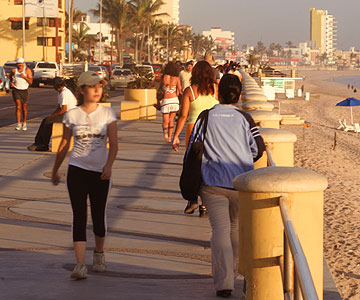
I don’t believe there are a lot of foreign tourists in the original show, and it is definitely “down-market”, which kinda puts the kibosh on Cabo and Cancún and Puerto Vallerta. Suggestions? Mazatlán come to mind as a blue collar town with beach resorts.


 mexfiles.net