WHY?
Besides not writing much about daily political events, I really try not avoid getting into my personal life on this site. I live in a rather isolated (intellectually and geographically) provincial city of no particular interest beyond a nice beach, sea lions and some famous criminals, which isn’t enough to sustain much interest over a long period of time. I’m sure I could dig up some events (mostly in my checkered past) of more than passing interest to strangers (let’s just say I don’t understand all the fuss over photos of Anthony’s weiner — and no, I won’t expand on that remark!), but in writing about what is going on around me, I just don’t see much point in discussing perfectly routine activities like paying the gas bill, or filling out some government form or going to a cafe or…
In other words, I live a relatively normal Mexican life for a (somewhat eccentric reclusive) guy in my position, and don’t see much reason to dwell on it among strangers.
Besides which, been there, done that and self-published: there are plenty of other websites and self-published books with the nitty-gritty details of buying gasoline at PEMEX stations, or shopping in the local market, or getting a telephone installed, or any of the other details of living in a country not your own. Some are actually worthwhile, and a few are worth reading on their own merits.
Useful as these websites (and my own badly-edited, written in a two weeks, little book) might be, I’m — against my expectations — José Corporativo when it comes to publishing now. At least I insist that stuff be edited… and worth the time and money invested in publication. At Editorial Mazatlan we’ve preferred to to go deeper, having last year published Joanna van der Gracht de Rosado’s “Magic Made In Mexico” which deals honestly with the psychological and cultural adjustments she (and others) have made in order to live a full and happy life here, and we now have our reader/associate editor working through a manuscript on adjusting to the culture, and more aimed at those who will be expected to immerse themselves in Mexico (as workers or students) than those who just are living here (as retirees or “expat” residents).
Both are essential works (and I expect those of you who haven’t read Joanna’s book to go out and buy it today!) but neither can answer for everyone the most basic of questions, and the first one that should be asked by any emigre: why?
WHY? is a question I’ve been forced to consider because of my routine life, and one that the answers to may have a profound impact on Mexican culture and historical trends — which at least makes it fair game for consideration here.
The house I rent is really bigger than I want, but I like the location, and the price  was reasonable. A bit more than I wanted to spend, but with a very large extra room (with its own bathroom), I quietly sublet it to foreigners, preferably to congenial, free-spirited, self-reliant types for several months at a stretch. I lucked out last winter, getting a sub-letter who cyber-commuted to work every day, and spent her time with her own established circle of friends here (but was good company)… was good friends with my dog, and even better, cleaned her own bathroom and once in a while was inspired to cook up a big meal for all of us here! Hell, yeah, I lowered her rent!
But, the “season” being October to March, I have to take who shows up… or calls. And I need some extra cash to cover some unexpected recent expenses. The latest tenant stayed two weeks (out of an expected month at least), and I’m still not sure why he was here. He wanted to be near a beach where he could swim (I’m five minutes by foot), and… I supose that was enough for him. But, the questions about where the WalMart was, why the supermarket within walking distance is so bleak (I didn’t realize it was) and whether the local restaurant prices were standard (Not sure what standard is, normally eating at home).
 Ok, my place is cheaper than the hotels, and nicer than any hostel… and I’m reasonably fluent in English, so as a bargain for long-stay tourists, I guess that’s as close to an answer to WHY? as I’d get from somebody who appeared to be a permanent tourist (and, though I can’t say exactly why, creeped me out enough to consider his first month would be his last month). Which means I needed a renter.
Anyway, I got a call this afternoon from the United States about the room. The guy needed a place while looking for something more permanent here. That’s not an abnormal sitution: I had a Mexican-born, but U.S. raised guy here for a couple of weeks, scoping out housing for his U.S. family. Oh, he had his somewhat unrealistic concepts of Mexico, mostly based on what he could and couldn’t afford on his salary here, which is to be expected, but it wouldn’t have crossed my mind to ask the “why” question. He was here because he could, or because he had to.
The guy who called today (from his accent and voice, I’m assuming he’s an older anglo) asked right off the bat, “What does it cost to live [in Mazatlan]?” which raises all kinds of “WHY?” alarms.
When people start off their questions with “what does it cost to live?,” there are a bunch of more important question they should be asking themselves beyond the mundane ones of their needs and expectations. “WHY?“… as in “Why here, why now, why is this your first question?”
I know, to my own satisfaction, why I moved here… call it a creative midlife crisis, or call it absolute terror at the prospect of minimal financial security in exchange for a unsatisfactory and mind-numbing career of writing endless iterations of “Press any key to continue” and conforming to the standards and practices of people I really despised. Either way, not being retired, I certainly didn’t expect my financial condition to improve here (and anyone moving from the United States to Mexico expecting a higher paycheck is abolutely insane).
My sense was — given the guy’s other question was whether or not Mazatlan had changed in the last thirty years (Donno… wasn’t here… but my sense is that everywhere on Planet Earth has) — is that the guy is a retiree, looking to preserve a “lifestyle” on a pension that just doesn’t go as far in the United States as it once did.
I look at the websites for people planning to move here, and I’ve read more than my share of the literature, and this guy is not at all atypical of the huge influx of north of the border emigres. And it bothers me.
My business, and my income (and my prospects of anything resembling financial security) depend on a continued interest in Mexico, and that interest is fueled in good part by potential emigres… a portion of whom will look at more than the cost of living. And psychologically and culturally adjust at least in part … or so I hope.
 Otherwise, what the future holds is a cultural K-Mart, based on the economic law that states a widely available, even if inferior product, will drive the superior product out of the market. Against the fear that Mexico is becoming for to many a “good enough” version of whatever these people left behind, all I can do is to keep writing on our history, and the events that mirror our history, or are likely to change our history. The culture I chose to adopt.
Mexican are not perfect, and this is not a perfect country, and it will change… but do I want it to see it morph into the culture I fled, or do I want to see it change according to its own historic rhythms?
And WHY?
Stay tuned, sports fans
I keep promising to not write about day to day political events, and — sort of like my promise to take more time off to work on a book — seem doomed to break my word. Ni modo… while I have nothing to say about the arrest of Carlos Hank Rhon, the former Tijuana political boss (who, unlike his father, who famously said, “A politician who is poor is a poor politician” says, “There’s no such thing as dirty money: mine is always well laundered”) on weapons charges. Well, I can say that Hank Rhon claims the 88 weapons and 9000 rounds of ammunition were for his protection (he owns a sprawling estate that includes the old Aguas Calientes Racetrack — where Sea Biscuit did some of his best work — a casino complex and housing for his “security personnel”) and there are some serious questions being raised about the legality of the arrest itself: Hank’s lawyers claim there was no warrant to enter the property, and by having been flown by military personnel to Mexico City, is being held incomunicado, in violation of his human rights.
That, and questions about the timing of the arrest, which some see as meant to discredit the PRI (of which Hank Rhon is a prominent member) ahead of the critical State of Mexico gubenatorial elections, are daily politics, the kind of thing I hope to leave to guys like Aguachile and Ganchoblog. What interests me isn’t that Hank Rhon has his defenders, but that his defenders are showing up in uniform.
Among the other properties Hank has acquired over the years (he learned his daddy’s lessons well) is Tijuana’s pro soccer team, los Xoloitzcuintles de Calliente. The various Xoloitzcuintle “porras” (fan clubs) have been called on to mount protests in the club owner’s defense.
 Porras have been a feature of Mexican politics since the 1950s, although, unlike the British soccer hooligans of the 70s, they have been less used as “shock troops” in street demonstrations, as in a cost-effective way for politicans to swell his cheering crowd (in return for tickets and free beer). However, this clubs (which can get rowdy at futbol games, but rarely — if ever — turn violent) have given their name, “Porra” to other organzied mobs, and increasingly are seen as political gangs — hock troops that break up opposition rallys and demonstrations, although not necessarily recruited from futbol fans. A huge exception might be in Guadalajara, where fights between various administrative factions at the Autonomous University have turned violent, and various leaders have unleashed porras recruited from the Tecos fans who share common social or political ideologies unrelated to what goes on in the stadium.
What makes the “Xolo” protests notable is that this is a variation on a theme I hadn’t seen before. The Xolo porras are being told to wear the team colors — red and black — and to protest for what exactly, or against what (in favor of legal niceties, against weapons seizures?) and to what end, no one can quite figure out.
But they’re dogged defenders of whatever it is.
Thomas Jefferson and another lefty populist
Thomas Jefferson, as a Virginia plantation owner, measured his wealth in terms of property. In 1785, he wrote to similarly rich Virginian, James Madison, about the need for both a radically progressive tax on wealth and on the advisability of distribution of wealth.
Another means of silently lessening the inequality of property is to exempt all from taxation below a certain point, and to tax the higher portions of property in geometrical progression as they rise. Whenever there is in any country, uncultivated lands and unemployed poor, it is clear that the laws of property have been so far extended as to violate natural right. The earth is given as a common stock for man to labour and live on. If, for the encouragement of industry we allow it to be appropriated, we must take care that other employment be furnished to those excluded from the appropriation. If we do not the fundamental right to labour the earth returns to the unemployed. It is too soon yet in our country to say that every man who cannot find employment but who can find uncultivated land, shall be at liberty to cultivate it, paying a moderate rent. But it is not too soon to provide by every possible means that as few as possible shall be without a little portion of land. The small landholders are the most precious part of a state.
Ironically, today, while Jefferson remains somewhat anathema among the right for his defense of religious liberty (including the right to disbelieve), both he and Madison are the intellectual heroes of the “libertarian” strain among the right, where “rights” and “freedom” are generally based on one’s economic condition (something not too different from what Karl Marx said, by the way).
Ollanta Humala is no Thomas Jefferson, but then, he doesn’t pretend to be (as far as I know). Jefferson died in 1826, about which time Peru was just gaining independence. And the economic order of things — and the basis of wealth — has changed a bit since Jefferson’s day.
Still, it’s worth considering that the latest in a string of “Leftist Populist” Latin American leaders is not really all that radical. Certainly, there was nothing “radical” in the proposals both by Humala and his opponent, right-wing populist Keiko Fujimori to what the Associated Press characterized as “a raft of giveaways for the poor, including free school meals and preschool care.” In Jefferson’s United States, no sane person (I’m specificially excluding those “Jeffersonian fundamentalists” who, like religious fundamentalists, pick out of their sacred text those passages that support thier prejudices and ignore the rest) would consider old age pensions radical after about 1936, nor school lunches odd after the Truman Adminstration, nor “Head Start” after 1964. Hardly “give-aways to the poor,” these kinds of programs are generally seen as a common good, and beneficial to the entire society.
What seems to be “lefty” about Humala is the possiblity that he will propose more taxes on foreign extractive industries, and, perhaps, increase Peruvian access to its own natural gas, even at the cost of fewer exports of the increasingly valuable commodity (this, by the way, is most likely to impact Mexico, which is shipping its own natural gas to the United States and importing Peruvian NatGas). After all, the wealth from extraction is the basis of wealth in Peru, much as land was that of 18th century Virginia, and “to tax the higher portions … in geometrical progression as they rise,” seems very much in keeping with the philosophical roots of American social and political thought.
And, as to Jefferson’s “silently lessening the inequality of propert” by “exempt[ing] all from taxation below a certain point,” during the campaign, Humala’s spokesman Daniel Abugattas made the point of stressing during the campaign that “There will be no taxes on your chickens nor will your house be take away”. In other words, this isn’t a flukish left-wing socialist victory as one of counting your chickens. The populist most popular with the populace beat the other populist.
It should be noted that the United States, which seemed to prefer the rightist Fujimori (which was looking out for its internatinal corporate interests, but really didn’t have a chicken in this fight), is already making the claim that Humala is another Lulu (the “good”, i.e. “tame”, socialist) and not a Hugo Chavez (the “bad”, i.e., not pro-U.S., kind of socialist). If he is even a socialist, and not just a nationalist (specially an Ethnocacerista, which, in a sort of “Inca revivialist” spirit, seeks to bring the Mestizo and Indigenous masses into the elites, at the expense of those Peruvians of European and Asian extraction), which might set off some alarms in the rich countries and give cover for complaining about any economic plans that upset the status quo.
At any rate, he’s the President-elect of Peru, so get used to it.
Narco-corridos, Miniskirts and St. Alexius
In mentioning that I had difficulty finding Jornada on newsstands here in Mazatlan, I said one factor is that political conservatives control the debate here. Esther (From Xico) asked me if I had any thoughts as to WHY this might be true in Sinaloa, though I admit I’ve never given it much thought. Off the top of my head, the only thing I can think of is that we are a historically isolated state, with access either through the very dangerous Devil’s Backbone (not paved until the 1960s), or from the south, along the coast. As a seaport, Mazatlan has never been as international as some ports further south, and the state’s political culture tends to be rather in-bred. There probably are other states where that holds true, but it’s the best explanation I can come up with.
The state being controlled by PRI as much by inertia as anything else, I was somewhat in favor of the “left-right” coalition that took control of the state and municipal governments, although I had qualms about the candidates themselves. The Governor, Mario Lopez Valdez (aka “Malova”) is a right-wing PRI pol, turned PANista. At the municipal level, here in Mazatlan and elsewhere in the state, the PAN municipal presidents seem to have jettisoned their leftist supporters and are pursuing a their own agenda.
Not that this is so different than other places. In the United States and Canada, voters have been fed up with political inertia and — with a healthy assist from more conservative media — have elected some real bone-headedly reactionary leaders who marketed themselves as “outsiders” promising “change”, but upon taking office began to pursue a quasi-religious social agenda that is not the sort of change the voters bargained for. Nor is it unusual for voters (and other citizens) to suspect that the conservatives carve out “special rights” for their favored rich constituents. Nor for the politicos to try to change the subject by blaming a social problem on irrelevant social trends.
What is different about Sinaloa, is the influence of our … um… “unlicensed agricultural export and military-grade hardware import” trade. Despite the best work (and perhaps truth) of commentators like Malcolm Beith, the sense that conservatives at the national level tacitly support these Sinaloan “free traders” is not going to go away.
In translating Martin Velez, “De narcocorridos, minifaldas y la oración a San Alejo” (La Convención Sinaloa), I had to take liberties with the text, especially in the prayer at the end (although it makes about as much sense in my version as in the original) just to preserve some semblance of the rhyme and meter.
There are numerous jocular prayers to Saint Alexius (San Alejo in Spanish), who seems to be the perfect patron saint for “ni-nis” (ni trabajo, ni escula… unemployed youths not attending school… “slackers” in U.S. parlance), having been a wealthy Roman who abandoned his wife on his wedding night to become a holy beggar for many years — a sort of Christianized guru — before he returned to Rome to live incognito his parents’ house as a sort of charity case.
There is a chorus to one of the many corridos about Chapo Guzman that goes [in my rough translation]:
“Many there are who seek,
And many who help him hide
In the cities, the hills and the dales,
are those that protect the Chief.
If you want to know where he passes
— talk to dude with the glasses”

Little bald guy in glasses and three other people
But who could the “dude with the glasses” be?, I mean who exactly is that guy who knows where Chapo is? Hmmm … lets see, could he be, as in the memorable phase of Manuel Espino, the fellow described as “a little bald guy in glasses”?
Another popular corrido, Pacas de a Kilo, by Los Tigres, has the line, “My farm gives me bales, and the pines give me shade.” Where are these pines that provide so much shade. Hmmmmm… Los Pinos must be very high, for their shadow to cover Sinaloa.
What a pity that such interesting questions on forthcoming issues that arise from the inexhaustible creative flair of narcocorrido composers can no longer be asked. The governor of Sinaloa, in a fit of genius, decided to prohibit those same narcocorridos that we so blithely danced to during his campaign (videos available on the internet). He’s hitting the narcos where it will hurt the most: in their monotonous popular songs. This brilliant move by the Governor of Sinaloa has been applauded by the federal government. Calderon [National Security] spokesman Alejandro Poire twittered, “Good for Malova!”. applauding the tremendous blow no the narcos, which are on the verge of collapse. Well played, Governor Malova, well played indeed!
Good ideas are springing up all over Sinaloa. Malova’s example has been followed by the mayor of Navolato, who – proving there is no shortage of genuis in the state – decided to attack the problem of teenage pregnancy with a bold and infallible remedy: banning miniskirts! This municipal president, who should not be forced to wallow in anonymity, brought into the light a problem we all know all too well: that Mexico is a nation of male victims of the infinite evil of those women who, knowing the weaknesses of the flesh, revel in displaying their enticing parts. In such cases, the innocent males are propelled towards them, often violently. If these women are molested, if they are raped, if they become pregnant – they have no one to blame but themselves. Sinners! Alas, as the gift of genius is not always perfect, Navaloto’s municipal president forgets to protect men against that other terrifying weapon: the revealing neckline, that show the path to a false Eden (without which there is no paradise). The only complete solution to the entire problem is the burka.
Any time now, we can expect someone to come forward with a solution to bullying. If studious children, the so called “nerds” are victims of increasingly violent bullying, then the solution is at hand: stop studying! If these kids would stop being nerds, they would no longer have to blame their violent peers for being forced to pick on them in self-defense.
Nor will it be that long before someone proposes a solution to discrimination based on skin color. If those of dusky hued epidermis do not want to be discriminated against, they should stop being dark. If Michael Jackson could be bleached, it shouldn’t be all that hard. Surely the secret is stored somewhere. Even if it may have been what put the “King of Pop” in a premature grave, surely the secret was buried with him.
To end these notes: Attuned to these politicians that surprise us with such bold measures as proof of their greatness, your correspondent proposes this simple solution to the problems of the whole nation. All Mexicans will pray, at the same time, in every church, the following prayer to Saint Alejo:
Oh merciful Saint Alexius,
You learned so many ancient tricks:
Like sorting crawfish from crabs, you know,
Or from a mile off predicting where the rabbits go —
Help us in our present imbroglio
Free us from our govern-hicks.
And save us from these stupid pricks!
There will always be an England…
… though, thanks to… um… forward-directed Mexican export policies, some things are changing…their football fans are becoming almost civilized!
What can one say to the awesome BrittanyYoung, but to quote that famous guitarrista, Juan Lennón:
Me gustaría darle las gracias en nombre del grupo y de nosotros y esperamos que pasó la audición.
Brittany did indeed pass the audition… getting that non plus ultra of compliments for British pop music… being covered by a Mexican. Or, a covered Mexican:
The glory that was Greece…
 Via Naked Capitalist comes of a report of Europeans doing unto their fellow Euros, as they used to do unto us… and they understand that quite well:
The Financial Times reports that a new austerity package is about to be foisted on Greece. It amounts to asset stripping and a serious curtailment of national sovereignity:
European leaders are negotiating a deal that would lead to unprecedented outside intervention in the Greek economy, including international involvement in tax collection and privatisation of state assets, in exchange for new bail-out loans for Athens….pressure is building to have a deal done within three weeks because of an IMF threat to withhold its portion of June’s €12bn bail-out payment unless Athens can show it can meet all its financing requirements for the next 12 months.
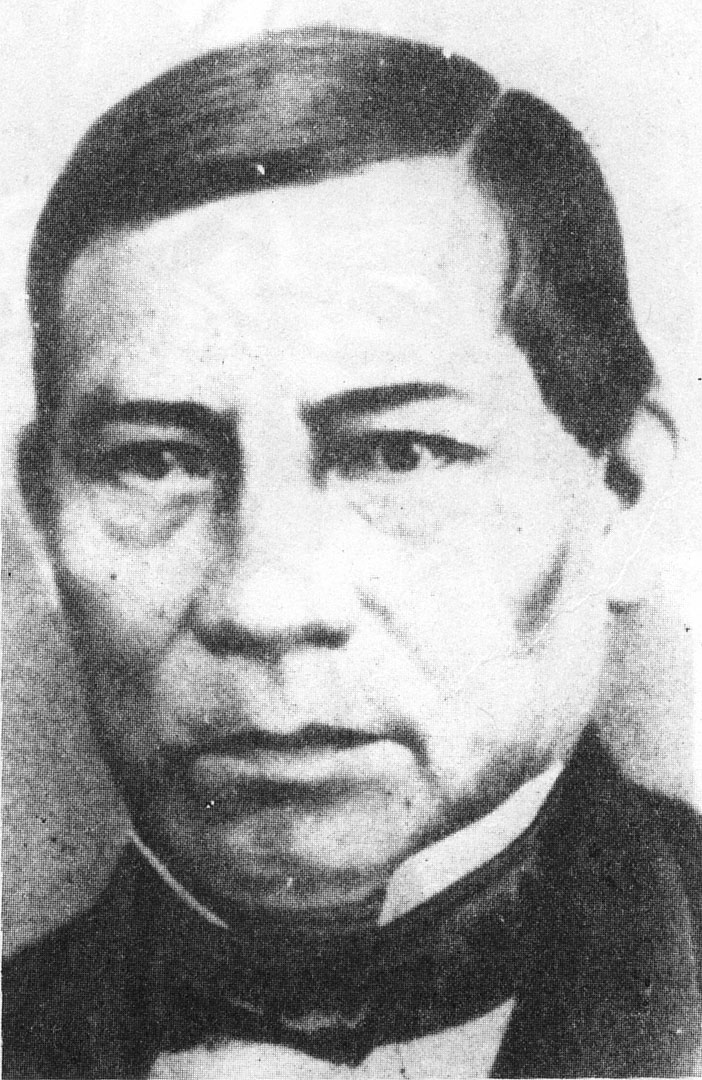 f you think “international involvement in tax collection ” is something new, let me introduce you to a bankruptcy attorney named Benito Juárez . In March 1861, with Mexico unable to pay the exorbitant interest on its foreign debt:
The [Mexican] government was willing to acknowledge the debts it had inherited from the past governments, but it was going to have to stop payments for the next two years. …
… France proposed taking over Veracruz and collecting customs reciepts until the debt was repaid. This was the standard 19th century way of dealing with debtor nations … creditor nations would simply occupty the debtor country’s ports and pay themselves out of tax receipts. The Mexican government offered to negotiate with the European creditors, but the Europeans expected some kind of security while payment terms were worked out. Reluctantly, Mexican forces were withdrawn from Veracruz. The port was basically turned over as collateral on the outstanding loans and a joint force of the creditor nations landed in December 1861…
(Gods, Gachupines and Gringos © 2008, Richard Grabman, pp 175-77)
The difference between Mexico in 1861 and Greece in 2011 is that no one is talking about landing troops… of Marines… yet.
… the notion that the invading banker hoards are going to “supervise” tax collection is sure to mean that they will make certain that they are first in getting tax receipts. As various readers have pointed out, lower middle and middle class Greeks have taxes withheld from wages; it’s the rich and the participants in the black economy that escape. It is far fetched to think that foreign involvement will improve matters; indeed, I’d expect everyone who can to operate out of the black economy as an act of rebellion.
The methods involved in a “serious curtailment of national sovereignty” hadn’t been perfected in 1861: the creditors simply installing a foreign regime and the result wasn’t just a black market, but a full-scale war against the Austrian rent-a-crown (whose administration, incidentally, only managed to wrack up more debt).
The Greeks, of course, have their own long and convoluted history to consider when they want to draw parallels with the present, but surprisingly, they are looking at recent Latin American history in looking for a way out of national peonage.
The Greeks appear to have a keen appreciation of what is in store for them. Protests have been underway in Athens, and the locals seem to think they could eventually produce bloodshed. We received an e-mail forwarded from a source claiming to be in Athens… Note that it says that “parts of the national capitalist class” are taking the idea of leaving the Eurozone seriously. But reading between the lines, the writer of the e-mail appears to see that as a local looting scheme, as opposed to one to benefit foreign bankers.
This is the fifth day and the crowd is increasing in Syntagma square in Athens. There must have been more than 30.000 people this evening and there are still there more than 10.000 at 11.30 pm (today). As a genuine gathering of the multitude there are not prevailing slogans apart from “thefts” and “take a helicopter and leave this place” (it refers to what has happened in Argentina). Flags of Argentina can be also seen among the demonstrators. In the front a banner says in Spanish “we are desperate, we woke-up. What time is it? Its time for them to leave”. People are dancing shouting or just hanging around talking to each other. A “general assembly” is held at late hours in the square, where people can take the microphone, speak and say what they think freely. It’s not stopping and it will not stop although I think that maybe there will be less people the forthcoming days.
The Argentine reference is to the kinder, gentler method of dealing with debt collectors. When it was “only” Latin American countries where foreign bankers were willing to make dubious loans benefiting only the ruling classes, the French Foreign Legion, or gunboats with United States Marines or — after World War II — “debt restructuring” could be counted on to force repayment. That is, until the Argentines did the unthinkable.
Forced at one point to give up their own currency, and having weathered “restructuring” after “restructuring” in the 1990s and the first few years of the

Kirchner and Lavagna
21st century, in 2002, Argentina simply said ¡No mas! … or, in English, Fuck you, to the international lenders. After putting up with threats and bullying for the next couple of years, finally in 2005, Nestor Kirchner and his finance minster Robert Lavagna — operating on the old principal that when you owe the IMF a billion dollars you have a problem, but when you own the IMF 84 billion dollars… the IMF has a problem — forced the bankers to take a two-thirds loss on their loans.
The conventional wisdom in the financial media was that Argentina was doomed… not hardly.
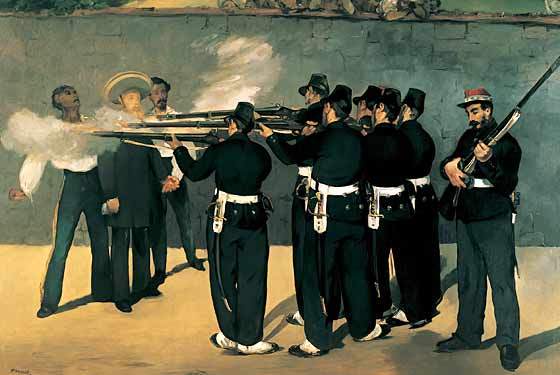
Naked Capitalism seems to think that “going Argentine” is a recipe for disaster for Greece. But, the financial media was unananmous in predicting disaster in Argentina, too. Shedding the U.S. dollar, and the foreign debt was hardly painless, but Argentina re-emerged, not in the “dollar zone” but as a leader of its own sphere of influence (Mercosur) and a model for other nations seeking to fend off the barbarians of capital. Shedding the Euro, and repudiating the foreign debt will lead to huge disruptions in Greece, and probably violence, but what other option is there for Greece? Attempting to stave off bankruptcy in 1859 and 1860, the Juárez government was desperately selling off national assets (as the “international community” is attempting to force the Greeks to do). Selling under pressure, the sales didn’t bring in nearly the funds needed even for interest payments to Juárez , and the Greeks can’t expect to do much better.
Disruptions in commerce, and possible riots if the Greeks default? There was in Argentina, too, but at least Argentina’s creditors got something back. The disruptions in Mexico of the 1860s were quite a bit rougher. But, Mexican preserved their national sovereignty and Europeans had to write off their loans to the previous Mexican governments as a wash.
Perhaps, in picking a new IMF Managing Director the Greeks — and the other debtor nations — might want to keep the Mexican lesson in line… the Mexicans have beat the French before, and know how to liquidate their debts quite neatly…
What am I still doing in provincia?
Sean Paul Kelly (the Agonist) and his significant other visit la Capital:
The art scene here is incredible. New York City, the great creative metropolis of America is a joke compared to the depth of art, intellect and literature here in Mexico City. There really is no comparison. Rockefeller, so the story goes, commissioned Diego Rivera to make a mural for his new art-deco building in NYC. He didn’t like what he got–a small picture of Lenin was in it–and destroyed the version Rivera made for him. What a fool–and how he deprived America of something like this. It’s also a progressive city: same sex couples have all the right that heterosexual couples do. Go figure?
I have not detected even a smidgen of animosity towards gringos here. Everyone has been polite and very happy to share their city with me and The Brunette. The air pollution is pretty fierce. I don’t want to sugar coat that. And the poverty is serious, but this is a wealthy city. It’s not a giant poverty wracked metropolis like Bombay, or Quito or Phnom Phen. The altitude, at 7500 feet, leaves on[e] huffing and puffing the first forty-eight hours. The food is simply divine. Time is elastic. The driving in chaotic. You cannot drink the water. All these things are true: but it’s important to remember that Mexico is a rich country and the City of Mexico is a rich city.
Being here and not there, Sean Paul’s photos are the next best thing for your elDeFe fix.
Marching on
Despite a small quibble about a questionable assertion (the Zetas may have originally been rogue military personnel, but there is no evidence that they are anything but common criminals, and recruited no differently than any other members of organized gangster organizations), Jason Wallach’s video report on the 8 May “No mas sangre” is well worth re-viewing.
One thing that strikes me is that despite some sense among Mexico watchers that the movement is some sort of failure in that Genaro Garcia Luna has not yet been forced to resign, or that the government suddenly managed to find the presumed assassins of Juan Francisco Sicilia, that the social movement will just fade away… or, as Ganchoblog suggests, needs to become a U.S. style “special interest group” (Patrick seems to be thinking of groups like the Christian Coalition or the Moral Majority) to enjoy success.
On the first point, it appears Javier Sicilia’s call for Garcia Luna’s resignation was meant more as a metaphor for social change, than as a political demand. While, of course, as the most visible architect of a failed policy (or, more properly, the executioner of the plan) he is more than a symbolic figure. Had Felipe Calderon given into demands and demanded Garcia Luna’s resignation, it might be seen as a concession to the “no mas sangre” movement, but would have signaled an acceptance of the larger demands for social and political change, and a recognition of the present administration’s failures in other areas like education and national security. It forced the administration to take a defensive position… in NOT firing Garcia Luna, the administration has been at pains to prove its policies have not failed, and, ironically, to start changing them. One would expect Juan Francisco Sicilia’s alleged killers would be found. Which may satisfy (on a personal level) Javier Sicilia, but then forces the government (and Garcia Luna) to start answering questions about the other 34,999+ victims of this adminstration’s militaristic approach to criminal activity.
On the second, it has to be remembered that the U.S. pressure groups had no interest in changing the system, only the agenda. As it is, groups like the Moral Majority’s tactics were mostly “under the radar” — running candidates in existing parties (overwhelmingly the Republican Party, which was desperate to redefine itself after Watergate) in local elections, and leveraging local political control to steer private campaign contributions (impossible in Mexico) and voters towards the group’s favored candidates. Mexican political organization is much more “top down”, but even so, we don’t know how many opponents of the existing political system are running for offices like regidor or presidente municipal, nor on what parties. The movement appears to have the support of at least the PRD (or a sizable fraction of that party), and in a multi-party state, it it doesn’t require nearly as sizable a faction to take over a party and to drive the national agenda towards a concensus that meets that faction’s demands.
Anyway, it’s becoming more and more obvious that the Calderonista regime is on the way out, and at least conventional wisdom is that the PRI will provide the next President. Specifically that the Carlos Salinas wing of the PRI will provide the next President. Which may be true, but even they are running away from the “drug war” and as the situation (both in the world of the political class and in the streets) develops over the next year (the parties haven’t even held primaries yet), the political elites may realign themselves, if only to guarantee their own survival.
More importantly, the Mexican protests were somewhat overlooked because of protests around the world taking place at about the same time: in the Middle East, in Greece, and now in Spain. While it is easy to find the differences in the proximate causation they all are rooted in the same discontent with governments that don’t fulfill their citizen’s expectations of protection and economic security, and a better future for their youth. And, in all of these countries, there is a sense of revulsion at the impunity enjoyed by the political classes.
Equally important is to remember that these “old world” movements are uprisings against the prevailing economic system. Egyptians, Greeks, Spaniards and Mexicans may have had different specific grievances, but all were based in their respective state’s administration’s willingness to put meeting the expectations of the world’s economic power-elites ahead of the well-being of their own peoples.
Is “no mas sangre” a simple demand for political change? Perhaps. But, perhaps more importantly, in common with the Greeks, the Spaniards, the Egyptians, the Syrians, the Hondurans, and others, it is a world-wide demand for democratization and accountability from the leadership… in short… a revolution.
The civil right that dare not speak its name
It was easy to overlook, and not exactly the most widely celebrated day on the calendar, but 17 May was “International Day Against Homophobia”… except here in Mexico.
President Calderón has no trouble signing the meaningless proclamations for International Women’s Day, or International Day of the Indigenous, or any of the other “International” days meant to highlight continued discrimination against vulernable peoples. But, 17 May was proclaimed “National Day of Tolerance” — and, of course, ignored by the administration.
“Tolerance”, while sounding like it might mean the same thing, seems to be the administration’s rear-guard attempt to justify discrimination… in that it implies “tolerance” for clerical and conservative attacks on minorities (sexual and otherwise) and women. One “tolerates” those attacks, while simultanously “tolerating” the existence of minorities, but doing nothing to improve their social or economic well-being.
This administration, has a record of ignoring progressive policy changes, and — largely controlling the press — somewhat overlooked has been the major changes in our Constitution. Recently passed the prerequisite 17 states — the President’s party fighting the changes mostly on the grounds that the changes would promote abortion, libertinage and homosexuality — the consitutional changes affect several different parts of the entire document, strengthening non-discrimination language, and making it clear that civil rights protections for all persons (including sexual minorities) is a responsiblity at all levels of government, from municipalities to the Federal government.
Perhaps to drive home the point that change is coming, whether the President likes it or not, another “new” Constitutional change (that’s been awaiting Presidential signature since 2009) permits the President of the Senate or of the Chamber of Deputies to sign bills that the President of the Republic won’t sign.
There are at least 50 bills awaiting official sign-off before they can be published in the Diario Oficial and become part of the legal code. In the meantime, Mexicans will just have to tolerate FeCal’s indifference.
More unmarked graves … good
Mexican experts have discovered seven new Mayan archaeological sites and an “important concentration” of pre-Columbian graves in the southeastern state of Yucatan, the National Institute of Anthropology and History, or INAH, said.
…
The new sites were found in an area covering roughly 1,000 hectares (2,470 acres) and are known as Oxmul, Polok Ceh, Cuzam, Chan Much, Nichak, Tzakan and Chankiuik.
According to INAH, Oxmul is an especially important archaeological site where 75 pre-Columbian graves were found containing the remains of Indians buried with polychromatic vessels and other ceramic pieces “never before seen in this Maya region.”
Archaeologist Luis Raul Pantoja Diaz, coordinator of the Merida Region Archaeological Project, said in a statement that these finds of “earlier, well-organized populations with an elaborate social stratification” have altered the previous chronology of the ancient Maya culture.
For example, archaeologists have corroborated their hypothesis that Yucatan’s northern region had been populated as far back as 400 B.C. – rather than only starting in the Classic period (200 A.D.-600 A.D.) as had been previously believed.
“These are areas of the municipality of Merida that were thought not to have been populated by such remote pre-Columbian groups because these are lands that weren’t productive,” Pantoja said.
Pantoja said archaeologists have found architectural structures made from materials that show evidence of “intense social and economic development.”
“We now know that in the space where Merida now sits there’s an early architecture, ceramic pieces, lithic fragments and human graves, basic elements that will serve to complete the history of this region of northern Yucatan,” he said.
…
Leonora Carrington, D.E.P.

Photo: El Universal archives
A walking, smiling poem, which turns into a shadow, which turns into a parasol, which turns into a bird, which turns into a fish, and then disappears.
— Octavio Paz
My previous posts on the great Mexican artist, and last of the surrealists, here, and here. Rita Pomade (MexConnect) had a fine article on Carrington and Mexico City in the sixties not too long ago.
(And, in a late addition: There is an excellent post on Carrington by Joanna van der Gracht de Rosado, who like the late artist, realized it wasn’t so crazy to marry into Mexico 🙂 at Writings from Merida)


 mexfiles.net