Political weather report
Although I have posts on the Mex Files going back as early as 2002, I seriously starting this site in 2004. I learned a hard lesson in the first two years… basically, that one cannot predict the political future in this country, or even say with certainty who the candidates or issues will be, until a few months before an election. In 2005, I expected Andres Manuel López Obrador to face off against Santiago Creel, and López Obrador to win.
Well, MAYBE I was right in that second prediction (but not in the way I expected) but in February 2005 I wouldn’t have taken Felipe Calderón — the then obscure ex-president of the Banobras (the federal development bank) and ex-Energy Secretary — seriously as a candidate, or even a pre-candidate for PAN. And, although trouble was brewing in Oaxaca, I wouldn’t have expected the PRI governor’s heavy-handed response to pave the way for a quasi-“state of emergency” under the rubric of fighting gangsters to be the result of Calderón’s questionable victory in July 2006.
At any rate, having decided this year to pull back on writing about day to day events, I’m recommending Aguachile and Ganchoblog to those who follow the pre-candidates, the candidates and the party maneuvering that may or may not impact the July 2012 Presidential elections. I don’t expect those kinds of issues to engage me much before March of 2012, but it does seem important to pay attention to the kinds of events that may not create some immediate political posturing or create “sound bites” for one politico or another, but may change the political landscape in unexpected ways.
Unexpected, and under-reported, for an English-language source for what will likely have a huge political impact in Mexico, I’ve had to link to a story filed for some unknown reason from Las Cruces, New Mexico, and published in the Salem (Oregon) News.
February’s freezing fury has left a path of crumpled crops, pummeled harvests and dashed dreams in the countryside of northern Mexico. Hardest hit was the northwestern state of Sinaloa, known as the “Bread Basket of Mexico,” where about 750,000 acres of corn crops were reported destroyed after unusually cold temperatures blanketed the north of the country in January and early February.
Sinaloa is among Mexico’s major producers of white corn, the variety of maize used to make staple tortillas. Heriberto Felix Guerra, secretary of the federal Secretariat for Social Development (SEDESOL), called the weather-related losses “the worst disaster” in the history of Sinaloa.
Altogether, more than 1.5 million acres of corn, vegetable, citrus and other crops were either damaged or destroyed in Sinaloa, with a preliminary economic loss of approximately one billion dollars.
The source of about 30 percent of Mexico’s grains and vegetables, Sinaloa also exports food products to the United States. Other northern states also experienced the widespread destruction of winter crops. In Sonora, more than 130,000 acres were reported lost, including 45 percent of the acreage planted in winter wheat. In Tamaulipas, nearly 800,000 acres in corn and sorghum were impacted, while crop losses in Chihuahua were calculated in the $100 million ballpark.
How that has affected Sinaloa’s other major agricultural exports, I can’t say, but the economic losses to the marijuana and poppy growers are probably just as devastating. As Tim Johnson reported on the economics of these crops for McClatchy last September, the importance of poppy and marijuana crops cannot be easily dismissed:
Cannabis cultivation in Mexico soared 35 percent last year and is now higher than at any time in nearly two decades, the State Department says.
It’s also been a boon for Mexico’s powerful organized-crime groups.
Marijuana is perishable, bulky and less profitable than their other exports — heroin, cocaine and crystal meth…
… The mountain slopes and valleys in the part of southern Chihuahua state that’s hugged by Sinaloa and Durango states are sometimes called Mexico’s Golden Triangle — after the opium-producing Golden Triangle of Southeast Asia — because of their productivity. Illicit crops include not only marijuana but also poppy, the flowering plant that provides the white gummy latex that’s later processed into opium and heroin.
It’s a dangerous area. Even the poorest farmers tote weapons. A third of the region’s population is thought to earn its living from the illicit drug industry.
Peasant farms need little to grow small fields of marijuana: bags of seeds, some fertilizer, lengths of hose for primitive irrigation systems and a few months for the crop to mature into 10-foot tall plants.
According to State Department estimates, the areas of harvestable marijuana fields in Mexico grew from 10,130 acres in 2001 to 29,652 acres in 2009…
Farmers see little stigma — or risk — in growing cannabis.
“It’s always been said that poppy is controlled by organized crime, and marijuana is for the people. Growing it is like growing corn,” said the general, who spoke to a journalist on the condition — set by Mexico’s Defense Ministry — that he not be named.
Marijuana pays better than corn — but not much. A couple of pounds of marijuana sells locally for barely $15 or $20….
…The biggest competition for Mexican cartels comes from domestic marijuana growers in the United States. A document produced by local, state and federal law enforcement officials in California’s Central Valley, a major hub for marijuana cultivation, says that California’s 2009 marijuana harvest alone surpassed the annual estimated harvest of nearly 32,000 tons in Mexico. It put overall U.S. marijuana production at 76,380 tons.
“Mexicans sometimes tell me that they think we are self-sufficient in marijuana,” Johnson said.
In reality, though, Mexican pot may remain popular because it’s far cheaper than domestically grown cannabis in the United States is. The low price of the less-potent Mexican marijuana buoys demand, inducing cartels to stick with it as a revenue-producer.
I understand that agricultural productivity is not a sexy political issue, but the crop losses are already immediate political impact, and the “ripple effects” could be serious enough to upset any political calculations made this far in advance of mid 2012.
Felipe Calderón, meeting with Sinaloas ex-PRIsta turned PANista, PRD-coalition Governor, Manuel López Valdez, to promise immediate relief from the Secretariat of Agriculture and the Treasury to beleaguered farmers. While Calderón was speaking of insurance, and credit for the farmers, 20 tons of seed was highjacked — presumably by an organized crime group — on a Sinaloan highway. Highjacking agricultural products is a traditional type of crime in rural Sinaloa, and I don’t think it means the marijuana producers are switching to corn (though, like farmers anywhere, market prices are more likely to determine what they plant — one reason I’ve suggested it would be more cost effective to control narcotics by paying farmers the narcotics market price for growing something else, or just not growing anything). But it does point out that the present Administration, and much of the opposition, could be investing too much political capital in narcotics control when the voters (especially in rural states) are likely to have other priorities come the elections.
At the end of January, and the beginning of February, there was a lot of talk about how food prices were behind the “disturbances” in North Africa. Time magazine was fretting over the role bread prices were playing in the situation in Egypt:
In the last few days, soaring food prices have been cited as one of the proverbial straws that led Egyptians to take to the streets in frustration over Murbarak’s 30-year rule. It wouldn’t be the first time that food has been a catalyst for social upheaval in the northern African nation. In 1977, what came to be known as the Egyptian Bread Riots broke out after the state ended its subsidies of basic food staples. Hundreds of thousands of poor Egyptians took to the streets; scores were killed and hundreds were injured. Thirty years later in 2007 and 2008, as food prices soared and food riots swept cities across the globe, panic over a disruption in the supply chain of flour and bread in Egypt again unfolded into deadly protests.
This year, food prices are also reaching worrying highs. Global wheat prices are at an all-time high, and other grains and meat prices were up over 20% by the end of 2010. Though some 40% of Egypt’s 80 million residents live in poverty, high food prices don’t have the same impact in Egypt that they might have in other vulnerable countries. The nation has a huge subsidy program that, when its working right, helps protect its poorest citizens from inflated food prices. Two years ago, when food prices were soaring and riots broke out, there technically was no food shortage, but the high prices of commodities – and bad management of the private and government supply chain – led to disruptions in the supply of subsidized grain, so many couldn’t afford to eat.
While Rebecca Wilders of the Council on Hemispheric Affairs is rather superficial in her analysis of the likelihood of an Egyptian-style uprising happening in the Americas, she is correct in noting that the demographics and social/political situations in the Americas are very different, and an uprising is difficult to imagine. The FAO (the World Food Organization) was also sounding the alarm of potential unrest around the world due to crop shortages. UNREST, not uprisings, in Mexico is very likely. However, as we learned in the last election, unrest — in the sense of distrust of the status quo — is seen in the United States as “potential” uprisings, and given recent rumblings by U.S. officials about “insurgency” in Mexico, the United States could put both covert and overt pressure on Mexico to preserve “stability”… i.e., avoid change.
Also very likely that the promises of insurance and credits will be enough to keep farmers afloat. As I’ve been told, marijuana is more temperature resistant than corn, and has a much shorter growing season. Given that the United States already has adequate marijuana, more Mexican production would probably drive down the farm price here, putting even more rural workers off the land, or forced into “alternative” rural industries like meth production. Which, in turn, would have implications for the increasingly unpopular “war on drugs” that could change the political landscape.
Calderón has been front and center on climate change, but whether his early recognition of the issue. Whether he or another politico will be able to use this disaster as a way of building on climate change as in issue , or whether Calderón’s attempts to make climate change an issue earlier in his tenure will rub off on any potential successor, remains to be seen.
Complicating things — and perhaps something that has also been overlooked by focusing on the “drug war” has been that the present administration is borrowing heavily from the World Bank. This was justified as a way of stabilizing the peso… something that’s going to be harder to do if there is a need for massive corn imports, or bailing out the farmers, or if food prices go up (which they likely will) leading to inflation (something more a concern to middle-class voters than to the poor, for whom basic food security is likely to be important). And, of course, the World Bank’s “recommendations” more than likely will be for more corn imports from the United States, leading back to less security for the farmers, leading to…
Any, or all of these, are going to have a political impact. What we should not do is focus at this point on how potential candidates are packaging themselves, but on how those politican’s clients are likely to respond to events that are unfolding over the next 18 months.
May the best man win
As I’ve said before, Mexicans are the world’s best multi-taskers. Take Mazatlán’s favorite son,  Pedro Infante. Just as an icon, he is multi-tasking: his memorials here being the statue of him as a biker-dude, and in lending the name of his most famous film character to the city’s best known gay bar.
 Not only the Mexican Sinatra (some would say the Mexican Elvis), but the Mexican Clark Gable, Peter Fonda and Sylvester Stallone as well. As an actor he was successful in comedies, westerns and urban dramas… the working class widower of Nosotros los Pobres, who finds love and tragedy in Ustedes, los ricos, and, in Pepe el Toro becomes the “working class boxing hero” .
Sylvester whats-his-name’s “Rocky” series may have started out in the spirit of the nuanced tragedy of Pepe el Toro, but unfortunately continued much too long… as cartoonish and meaningless as his Rambo character. It’s too bad, considering there might have been the greatest working class hero of the boxing ring film that was crying out to be made:
Sombrero tip to Laura Martinez (Mí blog es tu blog)
Upside Down World
The Seattle Cartel (aka Microsoft) is complaining la Familia Michoacána is muscling in on their territory:
La Familia drug cartel is selling not just drugs, but also counterfeit Microsoft Office computer software, according the Redmond, Wash., tech giant.
Microsoft showed off unauthorized copies of its Office 2007 software in Paris today which the company said it found for sale in Mexico. The pirated copies of Office were marked with La Familia cartel’s rectangular “FMM” logo …
(Sombrero tip to Burro Hall)
I can’t imagine waking up and remembering I was British car show twit Richard Hammond. If Chicarito finds Manchester depressing, at least he’s not waking up British:

(… and another sombrero tip to Guanabee)
Lest we forget: Ronald Reagan at 100
Ronald Reagan would have been 100 this past Sunday. In fitting tribute, I’m happy to except from Dennis Hans (Counterpunch) a summary of the Gipper’s contributions to Mesoamerica:
In January 1981, the newly inaugurated Reagan inherited Jimmy Carter’s policy of supporting a Salvadoran government controlled by a military that, along with the security forces and affiliated death squads, killed about 10,000 civilians in 1980. In the first 27 months of the Reagan administration, perhaps another 20,000 civilians were killed. El Salvador’s labor movement was decimated, the opposition press exterminated, opposition politicians murdered or driven into exile, the church martyred.

"Open Veins" Unidentified Nicaraguan work. Photo by Florence Babb.
In April 1983, seeking to shore up shaky public and congressional support for continued aid to El Salvador, Reagan went on national television before a joint session of Congress and — with a straight face — praised the Salvadoran government for “making every effort to guarantee democracy, free labor unions, freedom of religion, and a free press.” The Great Communicator/Prevaricator achieved his objective; aid — and blood — continued to flow.
In neighboring Nicaragua, the U.S.-backed Somoza dictatorship slaughtered perhaps 40,000 civilians from 1977 to 1979 in a desperate bid to hold power. Candidate Reagan was sad to see Somoza go, and once in office his administration turned to officers from Somoza’s hated National Guard to spearhead a “liberation” movement. Known as the contras, they never managed to hold a single Nicaraguan town in their eight years as Reagan’s proxy army, though they were quite proficient at raping, torturing and killing defenseless civilians. Tens of thousands of Nicaraguans died in a war that never would have been were it not for good ol’ Dutch.
…
In Guatemala in 1982, the dictator Efrain Rios Montt — an army general and evangelical minister branded by critics the “born-again butcher” — launched his “beans and guns” scorched-earth counterinsurgency campaign. The army destroyed hundreds of villages and slaughtered thousands of civilians. Reagan was furious. Not at our blood-soaked ally, but at Amnesty International and others who documented his depridations. Rios Montt was getting a “bum rap,” Reagan whined.
Rumor control
Now that wasn’t so hard, was it Felipe?
MEXICO CITY – Mexican President Felipe Calderon enjoys “a good state of health,” his private secretary said, addressing allegations by leftist lawmakers that the head of state is an alcoholic.
The president “begins his day at 6:30 in the morning; exercises for an hour each day, has private meetings and begins public activities at 8:30 in the morning, like many of you are used to doing, and always concludes around 10:00 at night,” Roberto Gil Zuarth said.
“This rhythm of activities is the best expression of his good state of health, of his physical strength and of his strength of character,” the presidential aide said…
Naturally, nothing was said about the rumor resulting from reporting on the rumor… that the Office of the President greased the skids that led to Carmen Aristegui’s abrupt departure from MVS.
Enrique Peña Nieto, a more calculating politico, or at least more proactive in these matters, has also answered the rumors surrounding his wife’s mysterious death … but answering the rumors on a U.S. television network (Univision) seems shady to me, which I’m sure will be grist for the rumor-mill to those so inclined NOT to believe the governor who still hasn’t given anyone a plausible (and quasi-believable) explanation of his part in the whole Niña Paulette case.
What part of “E pluribus unum” do you not understand?
BBC World news has a short (and alas not easily downloaded) clip on the work of 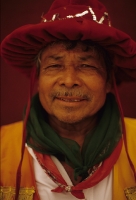 Argentine photographer Ariel Carlomagno, “The many faces of Mexico” which — besides in some small way making up for the caddish behavior (behaviour?) of those upper-crust twits on their second rate knockoff of Tom and Ray, The Car Guys — is a nice counterpoint to recent bashing the idea of multi-culturalism has taken, not just in Britain, but even here in Mexico.
Of course, the British attack came from a politician (well, the Prime Minister, to be exact) and was couched in the terms of a critique of how a government social policy is implemented — “state multiculturalism” as he called it. It probably is a “dog whistle” appealing to racists and  xenophobes, but British “identity politics” and the long history of English racial theories is something they have to live with… I don’t.
The anti-multiculturalism rant from Mexico was harder to figure out, the author being a long-time foreign resident blogger (nothing wrong with that), who — even though he continually lets readers know he is married to a Mexican — appears to have moved to Mexico well over the weight limit of emotional baggage.
The pseudonymous author of “The Bierce Account” sets up a ridiculous “straw man” argument between “Don Trendy” and “Don Ambrose”. that frankly makes no sense at all. Either “The Bierce Account” takes his sense  of “multiculturalism” from sources hostile to diversity, or his intellectual development was stunted somewhere before Franz Boas started publishing at the turn of the 20th century. There is certainly nothing “Trendy” in the idea that minority cultures exist and are valid components of a national culture… nor that the national culture is stronger and better for diversity.
The Don Ambrose character also misquotes Abraham Lincoln, totally misusing Lincoln’s “A house divided against itself cannot stand” to somehow argue that nations are like families… all alike (Which, I suppose might be true if you’re talking about incestuous families… or royalty — which amounts to the same thing). The REAL Ambrose Bierce, proud of his service in Mr. Lincoln’s Army — would have made  mincemeat of this poseur. I might suggest “Don Ambrose” read Bierce’s work, starting with The Affair at Coulter’s Notch, and The Occurance at Owl Creek Bridge: both dealing with cultural identity in the multi-cultural world of 1860s United States.
But, to be honest, I’m not all that interested in the fake Ambrose Bierce, nor in his several other several pseudonymous sites, nor in the bizarre Alan Wall, whose “Letters from Mexico” are still available on vdare.com who like “Bierce” makes continual mention of being married to a Mexican, as a shield against claims of racism. I’m not going to bother with the links for Alan Wall — they’re on a white supremacist “hate site” that is blocked in some countries (and by U.S. military computers) which means a good number of my regular readers can’t access it anyway. And I don’t think racist assholes deserve any hits , except maybe the kind delivered with a baseball bat.
I am bothered that there are foreigners who just don’t “get” Mexico, but feel obligated to write about the place as if they have a cultural understanding of it. What makes this so very, very odd is that these guys seem to consciously block out the fact that they live in one of the most radically multi-cultural societies on the planet. Is it always peaceful? No, but even conflicts that involve communities of  varying ethnicities are not rooted in their cultural differences, but in normal things like property disputes. One does, occasionally run across inter-cultural disputes between members of a community embracing “mainstream values” and dissidents holding “traditional values” (as in religious conflicts in Chiapas within Mayan communes), but they are NOT the result of “multi-culturalism” (trendy or otherwise), but of cultural values in transition… and even “mainstream” cultures change.
At any rate, the Bierce Account author — like Alan Wall — is what  one hopes is only a handful of foreign (mostly U.S.) Mexican residents who are obsessed with their own self-proclaimed position as the arbiters of cultural propriety. That is, as representatives of “white culture” they feel obligated to pick out the flaws in Mexico, or Latin America (or elsewhere) as “proof” of the superiority of whatever it was they left behind. Which, of course, begs the question why they are here, other than they seem to expect those of us who embrace Mexico, and celebrate our differences, to shoulder their white man’s burden.
Photos all copyright © Ariel Carlomagno: Latidos de América.
OOPS!
Yeah, I know Mexico has a lot of work to do to reassure tourists who, having heard of gangsters chopping the heads off various dead guys, get the idea that head-chopping is something of a normal activity down this way. At the very least, the Mexican tourism officials can say they do a better job of keeping keeping tourists from coming apart than some other nations in our part of the world…

Sombrero tip to Bananama Republic… who deservedly will see their hits jump up after posting an article with the headline: “Medical Tourist Loses Penis.” Just saying penis in your post guarantees a bunch of extra hits…
The Mexican still known as Prince
… is rapidly going downhill at the age of 52.
 Mexico’s top Olympic skier (OK, Mexico’s ONLY Olympic skier) in the 2010 Winter Games, Prinz Hubertus von Hohenlohe-Langerberg, at the age of 52, qualified for slalom and the giant slalom in the Alpine World Ski Cup taking place this month in Garmisch-Partenkirchen, Germany. There’s something very Mexican in the whole thing, the Prince managing to get himself into the Guiness Book of World Records as both the oldest contestant in the Alpine World Ski Cup, and the only Mexican (and the oldest Mexican).
Or, at least that’s what I can puzzle out of the German newspaper. But he’s made the English speaking sports news, too… in a completely different field, as a fashion and environmental photographer. Joe Battaglia, (Universal Sports) writes:
…Maria Riesch of Germany, Tina Maze of Slovenia, Ingrid Jacquemod of France, Michaela Kirchgasser of Austria, and Sarka Zahrobska of the Czech Republic… [t]he Ski Girls along with their sponsor, European chocolate maker Milka, have teamed up on a project called Alpine Beauties aimed at drawing attention to a cause next to no one would associate with Alpine wilderness – the extinction of rare flowers….
 The Milka project cites changes to Alpine conditions due to drainage of wetlands and artificial fertilization, tourists and others encroaching on once uninhabited land. There is also the issue of global warming, which causes plant species to move from low-lying areas and invade higher locations, thus displacing those species that are indigenous at higher altitudes.
Each one of the five women has chosen an Alpine flower that is special to her. The five flowers stand as representatives of the endangered Alpine world and the women are campaigning for wise stewardship of nature in the Alpine regions.
As part of the campaign, the women gathered for a photo sho ot before the season in a mountain pasture near Kirchgasser’s hometown of Filzmoos in Salzburg, Austria. Hubertus von Hohenlohe, the eccentric prince/Olympic Alpine skier for Mexico, was brought in as the lead photographer.
So the guy ALSO produced records.., and was the singer, on this 1993 homage to Andy (a different guy than the Prince formerly known as Andy Himalaya ):
Hurbertus, “eccentric”? NAH! Ok, so he’s also an Austrian Prince, but no different than a lot of Mexicans who end up living abroad… suiting up and showing up — and managing to pull off a credible effort in whatever job presents itself.
What if?
The Ciudad Obregón Yaquís just won the Mexico-Caribbean Series, which leads me to wonder…  given that the Sonorans just knocked out the best teams from Puerto Rico, Dominican Republic and Venezuela, I’m wondering how it would go if the Yaquís faced the a U.S. major league team.. who’d mostly be Dominicans and Puerto Ricans and Venezuelans likely as not.
Yaquís v Yankees anyone?

Photo: El Universal
Drunk with power?
With all due respect, Gancho or Aguachile, the two guys who I consider the best English-language commentators on Mexican political events, have fallen down on the job. Dudes, what did you spike your Kool-aid with? Both seem to forget they’re alternative media people, and shouldn’t be praising the “mainstream press” for trying to shape the news to comfort-fit the powerful.
Carmen Aristegui — well known internationally from CNN was unceremoniously dumped by MVS Communicaciones (owner of two of the largest radio chains in Mexico) for suggesting that it might be time for Felipe Calderón — or, rather, the Office of the Presidency — to… er.. scotch the rumors of the current resident of Los Pinos’ over-indulgence in intoxicating beverages.
When PT (Workers’ Party) and PRD “radicals” (to use Agachile’s description) raised a banner with the provocative phrase “You wouldn’t let a drunk drive your car, why do you let one drive the country?” (similar to the “if you drink, don’t govern” stickers alluding to the Governor of Jalisco’s alleged alcoholism praised by Aguachile back in October), the “mainstream media” was forced to confront a question about Calderón that has been raised by the alternative media and the left, and in internet chat rooms at least since 2006, when he was a candidate for President.
Running “Felipe Calderon Borracho” and “Felipe Calderon Alcoholico” through search engines turned up several mentions over the last few years, mostly from the left, and backers of Andres Manuel López Obrador’s “Legitimate Presidency” (although López Obrador himself says that Calderón is an inept usurper, but not a drunk). Even Brozo — who, unlike right-wing TV pundits in the U.S., makes no bones about being a clown — has alluded to the story in past years. Questions about Calderón’s sobriety surfaced again in October 2009, after a speech in Guatemala, and in April of last year, when Contralinea uncovered seemingly excessive spending on alcoholic beverages by federal departments (including the Office of the President).
Although the accusations may be as baseless as, say, U.S. reports that suggest President Obama was not born in Hawai’i, it would hardly indicate a free and open press if reporters were compelled to ignore the issue completely. Ms. Aristgui, in reporting on the banner incident, only said what several reporters suggested Obama (then a candidate for president) do: address the rumor.
Gancho translates the respected news commentator’s remarks as:
Does the president have problems with alcohol or not? The Presidency of the Republic itself really should give a concise, formal answer regarding this. There is nothing offensive when someone, if this were the case, goes through a problem of this sort, alcoholism is a health problem, very well studied, very well known…
Even if, as Gancho say, Arestigui went “on and on she goes, hitting the same notes,” there is nothing inherently untruthful or irresponsible about asking for the question to be answered. Aristigui said she has no idea if Calderón drinks, or how much he drinks, but then again, plenty of talking heads and “pundits” in the United States (from all political persuasions) saw fit to ask questions about Bill Clinton’s sex life a few years back, and Italian reporters would be remiss not to ask about the impact of rumors about Silvio Berlisconi’s private behavior on his ability to carry out his official duties.
MVS claims they fired Aristigui for giving “validity to an assumption, transgressing our code of ethics, and in [her] refusing to offer a public apology, as requested by the company,” although this seems to be the first anyone has heard of such a “code of ethics” (public rumors being discussed before without consequences, or demands for apologies). Los Pinos denies having pressured MVS into taking action, which — naturally — means the Office of the Presidency, even if lying through their teeth, is at least addressing another rumor in a forthright manner.
Lorena Aguilar Aguilar writes in Kaosenlared (my translation):
… the issue goes beyond censoring a critical and truthful journalist: as a society we must defend our right to free information, a universal right universal being violated in Mexico today. Cases like Aristegui’s … are proof that in our country we do not enjoy real freedom of expression.
My Super Bowl post
Today is Constitution Day (more on that later) but, of course, my readers being mostly in the United States, I’m expected to say something about El Super Tazón. Here in Mexico, where it was on two of the four local television channels I receive, we just saw a futbol americano game… but missed what north of the border is considered of extreme importance… the barrage of paeans to the one true faith of our north of the border neighbors: consumption and personal gratification.
For the greater glory of corporate profits, all must give praise… even, it appears, murals by Mexican communists. Who ever thought Diego Rivera’s 1933 “Detroit Industry” (called by the Detroit News at the time “coarse in conception … foolishly vulgar … a slander to Detroit workmen … un-American” could find its place in this kind of religious service?


 mexfiles.net