For the good of the nation
Two health notes from Las Americas:
- BRASILIA – Brazilian Health Minister Jose Gomes Temporao Monday recommended that Brazilians have sex up to five times a week as a way to prevent chronic health problems such as hypertension, diabetes, and cardiovascular trouble.
…
At a press conference, Gomes Temporao called upon Brazilians to eat more fruit, vegetables and legumes and to get exercise, including sex.
“It’s not a joke, I’m serious. Getting physical exercise regularly also means having sex, obviously protected sex,” the minister said, while safeguarding the ministry’s insistence on safe sex to prevent the spread of HIV. (Diabetes News)
- In Uruguay where 75-year old President Jose Mujica has been told that his 12 to 15 hour work days are impairing his health… for the good of the nation, he will be scheduling a daily siesta. (The Latin Americanist)
No wonder we EXPORT drugs from Latin America… we have better ways to feel good.
We’re from the government…
You think the IRS plays rough? When the auditors showed up at 43-year old Culiacán housewife, Griselda Peréz’ yesterday, they brought along seven military trucks full of soldiers and marines, a passel of federal police and four tanks (ok… “tanquetas” — subcompact tanks, but still, they’re tanks).
 With the informality of Mexican marriages, it’s not clear that Ms. Peréz ever was officially married to the father of her children. He lives elsewhere and has moved on with his life… but has been providing for the kids, and — it seems — has not stinted on maintenance for Ms. Peréz. But, so it is said, Ms. Peréz has been a bit lax in filling out the right tax forms.
As part of the tax inquiries, she was whisked off to Mexico City for questioning, six properties listed in her name were temporary put in receivership by the SCHP (the Mexican Treasury Department) and she was released.
Oh, did I mention her ex-husband is Chapo Guzmán?
Stand in line
“If you were the brother or sister of a U.S. citizen and you were born in Mexico, your U.S. citizen sibling could file an I-130 petition for you by paying a $355 fee. The United States Citizenship and Immigration Services (USCIS) will take your sibling’s money, process the petition, and advise you that you have been placed in a line to await your visa call. But one important fact USCIS will not tell you is that, based on the large number of already registered immigrant-visa applicants from Mexico, you will have to wait approximately 131 years to reach the front of the line to receive your visa, and that is only if your sponsoring U.S. citizen relative is still alive at that time.”
Homeland Security advisor Prakash Khatri “The Opportunity of Two Lifetimes: U.S. Immigration Process Ensures Disparate Treatment for Mexican Immigrants” (PDF file) (via Benders’ )
Making limonada?
Besides the possible short-term benefits to Mexico from the mega-disaster in the Gulf, Mexican exports may be in higher demand because of another, less noticed, commodity shortfall:
Antonio Maria Costa, head of the UNODC, told the BBC that Afghanistan’s 2010 opium output could fall by up to 25 percent, thanks to the disease, a fungus that could have infected about half of the total poppy crop.
Bilal, a farmer in Helmand’s Nad Ali district, said the disease had drastically cut his opium output.
“We are in the very last days of the harvest, maybe in two or three more days we’ll be done. We’ll have less output this year,” he told AFP. “I don’t know what the disease is but we’ll have little output (as a result).”
Opiates and oil — two commodities the United States (and the “developed world”) can’t figure out how to do without, though it tries and tries and tries. Control of the sources for both leads to highly uncivilized behavior by the countries that claim they are the epitome of civilization. Both tend to focus inordinate attention on the Middle-East, with only a “by the way” mention that Mexico has these commodities for sale — a higher price and perhaps not as high-grade as the Middle Eastern products, perhaps, but they’re both available.
From Zorro to Chapo
Zorro is a Mexican folk hero in the same way that Taco Bell is a Mexican restaurant. Johnston McCulley‘s “Old California” hero perhaps bears a passing resemblance to the real thing, but with the piquancy and incongruity of the original blanched out into a simple, smooth and uncomplicated figure.
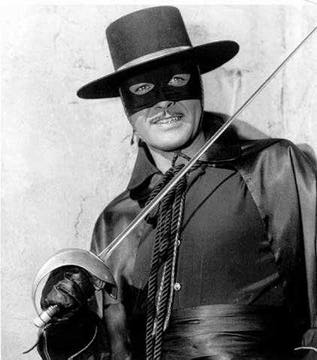 Several historical Mexican “social bandits” (and the quasi-mythical Californian, Joaquin Murietta) have been proposed by scholars as THE source of McCulley’s masked hero, but none more than Heraclicio Bernal. Born in San Ignacio, Sinaloa in 1855, Bernal’s managed to learn to read and write, and to absorb the history of the guerrilla war against the French, before he was forced to cut his education short at the age of 13 to go to work in the Cosalá mines. At the age of 16, he was accused of robbery (falsely, it turns out) and unable to defend himself, fled into the wild Sinola-Durango border country.
From the hills, the former miner became an astute student of labor and management in the extractive industries. His research methodology was simple — extract from management and build a network of associates and contacts throughout the labor sector through directed financial assistance. Or, to put it in crude terms, rob from the rich and give (after deductions for overhead, expenses and executive compensation) to the poor.
Captured in 1876, Bernal was transported to Mazatlán where — Juarez having died the previous year, and the unpopular Sebastían Lerdo de Tejada having ascended to the Presidency, a coup in support of Porfirio Díaz was being organized. In search of good guerrilla fighters for what was expected to be a hard campaign, Bernal was offered a Lieutenant’s commission. Like Pancho Villa a generation later, Bernal’s criminal activities did not interfere with ability to analyze political and social trends. Recognizing that the Díaz regime would mean more dependence on foreign economic intervention, and serious in his support for Mexican miners, he spurned the offer, headed back into the Sierras and spent the next several years targeting specifically foreign owned mines.
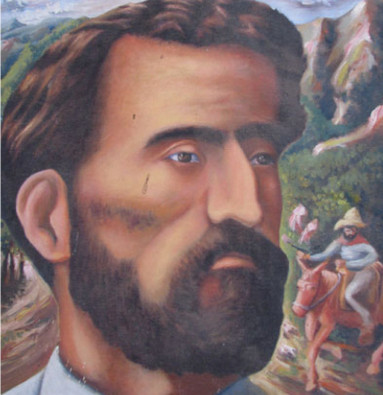 As the Ejército Renovador, Bernal’s forces — to those who were paying for the movement — were bandits. To the workers and peons, they were an army in revolt. In 1880 the Ejército Renovador managed to briefly capture Mazatlán, but mostly operated as a guerrilla unit, staging hit and run raids on foreign owned mines and businesses. By 1885, the federal army had ceded control of large swaths of the Sierras to Bernal’s forces, and in July of that year, he was powerful enough to call a convention, which united with forces led by Trinidad García de la Cadena, the Governor of Zacatecas, proposed launching a popular revolution against the Díaz regime.
The revolt was short-lived. García de la Cadena was captured and executed in October 1886. Bernal fought on, unsuccessfully attempting a raid on Culiacán with a force of 400 cavalrymen. The result was a 100,000 pesos offer for Bernal’s head and his brother (who had nothing really to do with all this) was arrested and shot. Retreating back into the hills, Bernal’s forces were continually harassed, and he kept retreating. His heath deteriorated, and he died 4 January 1888.
And here is where the story gets weird. Recognizing that his rebellion had failed, but wanted to turn it to some profit, he suggested his men cut off his head when he died, and turn it in for the reward, then distribute the money to the miners. Depending on what story you believe, either his compadre Crispín García carried out Heraclio’s dying wish, or — surrounded by the Federales — Crispín convinced the Federales to finish off the dying Heraclio and take a cut of the reward money, with the bulk going to the miners.
Although the “mainstream media” of the time made Heraclio Bernal out to be a criminal and threat to the national state (both of which he certainly was), he was celebrated in Sinaloa’s hill country as a folk hero, a wily enemy of the gringos and a friend of the poor. Corridos celebrated his real and imagined exploits and the pulp fiction of his time — celebrating the deeds of a backwoods Sinaloan hillbilly — were reworked by Johnston McCulley when he created the Californian hidalgo Don Diego de la Vega.
In the 1880s, when Heraclio Bernal was fighting for the workers in one Sinaloan industry serving foreign interests, another industry was just getting started. Because of declining opportunities for small-time Mexican capitalists to compete against the foreign mining operators, and in opportunities for small hill farmers, the poppy cultivation and opium processing became an important part of the Sinaloan economy.
UNAM’s Institute of Social Research professor (and Sinaloa native) Luis Astorga , writes (Drug Trafficking in Mexico: A First General Assessment) of the early Sinaloa narcotics business:
Articulated since the end of the nineteenth century to the economy of California and Arizona in the U.S.A., the opium produced in that state followed the same route as certain agricultural products that were exported via the Pacific railroad. Chinese immigrants and local producers and traders,  mostly but not exclusively from the mountains of Badiraguato (a municipal division of the state of Sinaloa) transported their merchandise to the border cities of Nogales, Mexicali and Tijuana. Criminals by law, they were merchants, some of them from wealthy families, peasants, adventurers, and middle class people, living in cities and towns where everybody knew each other, who decided to tempt the devil and tried to make quick money to get rich, to capitalise their legal business, or to earn a living living. Those who persisted and specialised in drug trafficking, those who became professionals, were, most of the time, people from the mountains where poppy fields bloomed. They created dynasties, transmitted their know-how to the successive generations and succeeded in founding a source of permanent drug trafficking leaders to manage the business nation-wide. In the long term, they appear as a kind of oligopoly: they have been leading the most important drug trafficking groups since the beginning of prohibition; the power of the groups has not followed the six-year political cycles; and they have never shown any interest in organizing themselves in politics…
The emphasis in the last sentence is mine… and illustrates the key difference between Heraclio Bernal and Chapo Guzmán. While both Heraclio Bernal and Chapo Guzmán are portrayed in the “mainstream media” of their respective times as crimnals, pure and simple, in the hills and hollers of backwoods Sinaloa nothing is ever pure, or simple.
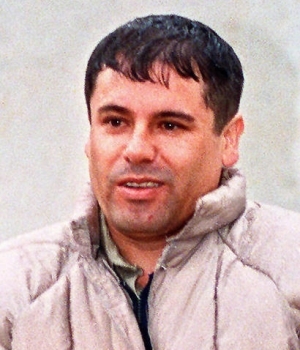 Like hill country people the world over — whether in Afganistan, Appalachia, Chiapas or Sinaloa — these are people living in isolated communities who resist any outside interference in their way of life for good or ill. Both Heraclio and Chapo are folk heroes to these people (and many others) for similar reasons: they are, in one way or another, redistributing the wealth, economically defending their community from foreign dominance and defying the larger forces of the state. And… of course… respected, admired or feared as outlaw kings in their own untouched dominions.
But Heraclio had a political agenda… the overthrow of the exploitive state. So far, the Sinaloan narcotics exporters have not needed a political agenda. After all, within Sinaloa, they have been part of the establishment since the 1880s.
The state, though, by defining the “cartels” as an “enemy” run the risk of uniting the bandits those with a social agenda… much as the Ejército Renovador grew out of a gang of robbers and became a guerrilla army.
Heraclio was eventually defeated. But… consider the next generation of “social bandits”. With Porfirio’s state becoming more repressive, and controlling the technology that permitted control (in his day railroads and telegraph), opposition had to make common cause with those bandits to achieve social change. And did. Will Chapo in a hundred years be seen as a precursor to the next Pancho Villa? I can’t say, but — just from one small slice of Sinaloan history — I can suggest that the present Federal response to the narcotics distribution business is creating more resistance to the government than it is gaining support in this one over-emphasized state action… and more likely to drive those who do not necessarily support the narcos to see them as allies against the state.
Hasta la vista, Aryan-zona
I’m not sure it was a joke…
Emory University may have decided The Honorable Arnold Alois Schwarzenneger is entitled to be a Doctor of laws, but he better not try teaching Kindergarten in Arizona:
The Arizona Department of Education recently began telling school districts that teachers whose spoken English it deems to be heavily accented or ungrammatical must be removed from classes for students still learning English, according to a report in the Wall Street Journal.
The crackdown applies to classes deemed to have students who are learning English, mostly as a second language. Federal No Child Left Behind regulations call for students to be taught by persons fluent in English. The determination of fluency is left up to individual states.
Arizona seems to think that includes accents. Of course, they are wrong – accents do not by themselves measure fluency. And almost every person who is a native speaker of another language is going to have an accent when speaking English, unless they learned English at a young age.
But, then again, maybe Herr Doktor Gobernator’s teaching style is a bit problematic for other reasons …
On Monday in Geneva the United Nations Commission on Human Rights issued a statement warning of what it called “a disturbing legal pattern hostile to ethnic minorities and immigrants.” The statement said that Arizona’s new law cracking down on illegal immigration contained language raising “serious doubts about the law’s compatibility with relevant international human rights treaties to which the United States is a part.”
…
The United Nations statement was also critical of HB 2281, a measure Governor Brewer signed into law on Wednesday placing restrictions on public school ethnic studies programs. The U.N. statement said the new law is “at odds with the State’s responsibility to respect the right of everyone to have access to his or her own cultural and linguistic heritage and to participate in cultural life.”
Estado de vergüenza
A classic corrido (written by U.S. musician Eugene Rodriguez and performed by the U.S. group, Los Cenzontles):
Two birthday boys

Two Mexican Revolutionary figures with difficult names — and often misidentified even by scholars — share a birthday today.

"Juan Andrew Almazan" photo from Nevada Observer
Juan Andreu (or Andrew) Almazán — born 12 May 1891) was a political chameleon. Trying to figure out exactly which side of the Revolution he was on (answer: all of them) is only slightly more difficult than straightening out his name.
He had no English antecedents, although he claimed something even better — that he was a direct descendant of Moctezoma. Not likely, but even good Mexican sources often misspell his Catalan apellido paterno (Andreu) as the English name “Andrew” and scholars (even native Spanish speakers) assume “Juan Andrew” was his given name.
Ray Acosta — who probably knows more of who was who in the Revolution than anyone alive — managed to straighten out the scholars in his book, and get the guy’s name right… and figure out who he was fighting for and against at any one time, but at the cost of insomnia and near breakdowns by two editors.
As a medical student in Puebla, he joined the Madero movement in 1910 and accompanied the “apostle of democracy” into exile, joining the Revolution in 1911, when — sent by Madero to negotiate with Zapata, he joined Zapata’s anti-Madero movement. Then… when Madero was overthrown by Huerta — going back to the federal government. When Huerta was tossed out in 1914, rather than join the victorious Constitutionalists, Andreu joined the counter-revolutionary Orozco (who himself had moved from an anarchist to supporting the old guard in rural Chihuahua). People forget Zapata was fighting to maintain traditions… which often put him on the side of the reactionaries. And, being somewhat cast as an Anarchist, Orozco and Andreu slipped easily into the new role of Zapatista allies.
Zapata, allied with the Conventionalists (as opposed to the Constitutionalists) seemed to have the upper hand for a time. But, by 1916, with the Conventionalists melting away, Andreu managed to find a new losing faction to join. The outlier of the Revolution — the Felicists (promising a return to the good old days of Don Porfirio, under the rule of his nephew, Felix Diaz).
Of course, things finally sorted themselves out and the Constutituionalists, under Venustiano Carranza more or less had the upper hand. For once, Andreu picked the winning side, joining Obregón’s 1920 “revolt” when Carranza tried to extend his presidential term through a proxy candidate. This time he managed to stick with the government… through the 1924 attempted “Revolt of the Generals” serving in the cabinet under Ortiz Rubio. Maybe he just got bored growing rich on paving contracts and investments in Acapulco real estate. He left the government in 1939 to run as a far right wing candidate in the 1940 election… garnering almost six percent of the vote. And finally got the hint that politics wasn’t his calling. He died in 1965.

Abelardo L. Rodriguez (photo: Crisol Plural, Aguascalientes)
Abelardo Luján Rodríguez (born 12 May 1889) has a less problematic family name. Some scholars give his birth name as Rodríguez Luján, others as Luján Rodríguez. It is possible Luján was his mother’s family name, and not his father’s, but the Mexican records suggest otherwise.
The confusion seems to stem from his activities in the United States (where only one family name is the norm). Mexicans often find their apellido materno mistaken for their “last name” and the more commonly used apellido paterno is taken as a “middle” name. As a very young man, he worked in the United States as a professional baseball player. In the 1920s, his Tijuana business catered to gringos. Apparently, the U.S. style name stuck.
Abelardo looks rather comical in his military uniform, and it’s hard to think of him as a pro baseball player, which he gave up to join the Revolution in his native Sonora in 1913. A Calles loyalist, he was appointed Military Governor of Baja California Norte in 1921, and stayed on as governor of the Baja (at that time a single state) until 1929.
The 1920s was the “noble experiment” north of the border, and Luján Rodriguez — perhaps with less than noble intentions, but certainly practical ones — set up a highly successful wholesale liquor business in Tijuana. His business acumen, and his political reliability, and his … uh… well-oiled connections north of the border, led to his short stint as interim president when Ortiz Rubio retired for reasons of ill health (the bullet hole someone had put in his jaw had a little to do with that, though Ortiz Rubio thought Plutarcho Elias Calles’ disapproval of his administration was even more detrimental to his health).
Not yet fifty when he left office in 1936, Luján Rodriguez had a surprisingly honorable — though less colorful — post-presidential career. Although he’d never finished primary school, with his business and political experience serving as his higher education, he was the first rector of the Autonomous University of Sonora. After a term as governor of his home state, he moved north of the border, running businesses (all legit) and teaching at UCLA until his death in 1967.
Abuelo with a message for Arizona
At work? Leave the sound down, and go with the English subtitles…
Wonders never cease
… a growing chorus of conservative evangelical leaders has broken with their traditional political allies on the right. They’re calling the Arizona law misguided and are attempting to use its passage to push for federal immigration reform that includes a path to citizenship for illegal immigrants.
The group, which includes influential political activists such as Richard Land, head of the Southern Baptist Convention’s public policy wing, and Mathew Staver, dean of the Liberty University School of Law, will soon begin lobbying Republican leaders in Washington to support comprehensive immigration reform under President Obama.
…
“Discussion of immigration and government immigration policy must begin with the truth that every human being is made in the image of God,” the National Association of Evangelicals said in a recent resolution backing comprehensive immigration reform. “… Jesus exemplifies respect toward others who are different in his treatment of the Samaritans.”
But evangelical leaders are also working to convince Republicans that the party will lose Hispanic voters — a fast-growing bloc — if they take a strident line on immigration.
The Southern Baptist Convention’s Land said that Hispanics, like non-Hispanic white evangelicals, generally take a conservative approach to social issues like abortion and gay marriage, but that they often vote for Democrats because of the immigration issue.
“Hispanics are hard-wired to be like us on sanctity of life, marriage and issues of faith,” said Land, describing political similarities between Hispanics and white Southern Baptists. “I’m concerned about being perceived as being unwelcoming to them.” (CNN)
I’m certain this is good news, but I wonder about that “hard-wired” remark. It sounds as if Richard Land thinks people’s political and social attitudes are embedded in one’s DNA, or that “all Hispanics think alike” … or that… somehow Latin American immigrants to the United States, unlike every other immigrant group (or any human group) is going to maintain the same customs and attitudes held by their ancestors.
Oh well… it’s a refreshing change from the conservatives who used to carp that Latin American immigrants were either too Catholic or too Marxist.
Pancho Villa as you’ve never seen him before
There is a photograph identified as “Francisco Villa as a child” in the Wikipedia article on Pancho Villa that has always bothered me. I might 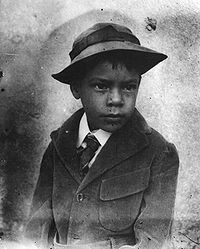 imagine Pancho Villa as an intense serious tyke, but but Villa’s parents, Agustín Agustín Arango and Micaela Arambula were sharecroppers, and there was no way they could have afforded to have studio photos taken of their children… let alone dress them in suits. Especially in suits not worn in Durango in the late 1870s.
I finally ran across the photo in Paco Ignacio Taibo II’s Pancho Villa: Una Biografía Narrativa which is chock full of Villa photos I’d never seen… including one I’d seen in the Wikipedia article. As I thought, it is not Doroteo Arango Arambula at all, but Agustín Villa Corral, Pancho’s eldest son. I can’t find any information on the date the photo was taken (Taibo includes in in notes to a chapter on a 1921 family reunion at the Canutillo ranch in Villa took as partial payment for his surrender in 1919. Agustín would have been about 11 by then, and the boy in the photo (assuming it is Agustín) is younger than that. The photo was probably made while Luz and her children were sent abroad –to Texas and Cuba — for their protection during the Revolution.
At any rate, while trying to track down the source of the photo (which I never did find), I ran across a weird, undated (and not very clear) photo of Pancho Villa I don’t think gets printed very often.
Pancho Villa, despite his… er… active live style … was prone to turn into paunchy Villa and did what he could to stave off the forces of gravity (and his addiction to ice cream). After his retirement, he took up jogging. And somewhere along the way (Taibo thinks it was during his military comapaign) found the time for swimming.
So, here he is. Pancho Villa, swimsuit model… ¡Ai, papí!
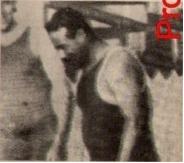
Ciudad Victora, Tamaulipas historian Osiris Villa Huerta (Francisco Villa y la división del Norte) is hoping to find a better image, and if anyone knows of one, let Osrius know. I’d like to see one too.
Every dog has his day
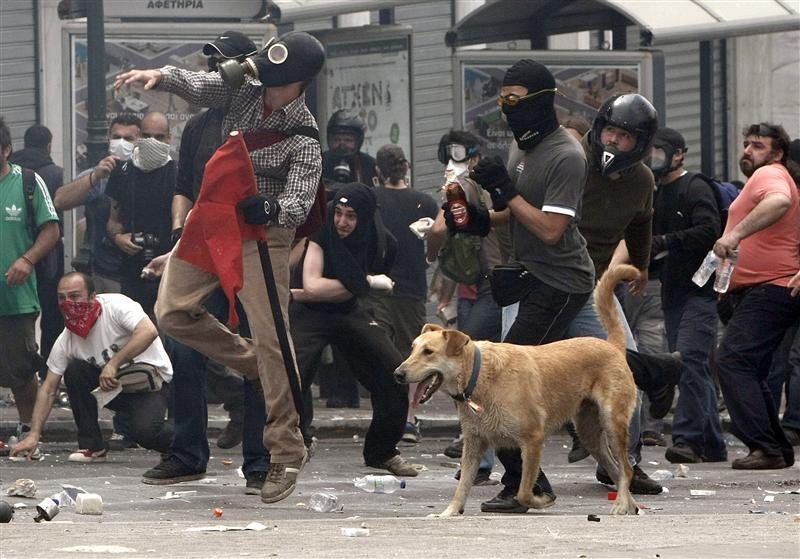
Peruvian neo-liberal economist Hernando de Soto once made a quasi-serious suggestion that in places where people traditionally lived communally, or where there were unclear property lines, the point at which a roof dog starts barking at strangers could be used to define the owner’s property lines. From his academic perch De Sota was coming up with ways to force people to join the neo-liberal world of private ownership, land as a commodity to be bought and sold, and living at the mercy of credit and banks and become connected to the world financial order… whether they wanted to or not. Whether it’s a good idea is another discussion, but it did start me thinking about dogs and politics. At least Mexican dogs and politics.
Looking down on us from above, and obsessed with their own narrow sphere of existence, are roof dogs — fearful or contemptuous of the world around them — of course, these are the conservatives: PANista pooches.
House dogs, who move in a wider sphere, take an interest in the doings of the world but are beholden to one master … and, whatever the faults that master has, are doggedly loyal. While the patron may trust his clients (the house dogs) to explore a bit of the outside world, and interact with the rest of doggie-dom, and even slip off their leash when they go out to check the pee-mail, the patron — and the house dogs — fully expect to be watched. They like the security and regularity of life. Good PRI-pups.
And then there are the street dogs. They may have people to whom they give loyalty, but expect that loyalty to be reciprocated. Some work as free-lance security guards and taco testers, or companions (Canello, a street dog in my old neighborhood, breakfasted outside the local school, spent his afternoons keeping the news vendor company and slept in the corner pharmacy at night in return for occasional barking to chase off would be burglars) and others are satisfied to spend their days in solidarity with the pack. The street dog may have loyalties beyond one master… and divided loyalties, including that to his pack… Perrodistas and Petistas, every one of ’em.
That the street dogs are with the underdogs is not — it appears — uniquely Mexican. Kanellos, the Rebel-Dog of Athens (or is it Rebel-dogs?), is not just in the tradition of street dogs… but of the Greeks and of democracy itself. Let’s remember how Democracy got started. The rulers tried to screw the ruled … literally. In 514 B.C., Athens was ruled by the tyrants, Hippias and Hipparchus. Hipparchus tried to boink working class Harmodius. Harmodius’ upscale boyfriend, Aristogeiton fought back and organized street demonstrations… ok, riots… killed Hippias and Hipparchus and ushered in the first Democracy.
The screwing over right now is more metaphorical… looking down from the roof are the Central Banks, and the International Monetary Fund which have their own narrow view of the world and their own turf to protect. The Greeks are a little too close to the house, and need to be barked at… and… if it comes to it, bitten. Never mind that it was their own financial miscalculations proved wrong, that hasn’t left the Greeks a bone to gnaw on, and is leaving them to for the scraps. The same thing’s been done to Latin America , and elsewhere time and time again.
The well-fed roof dogs are barking that their house in under attack. The house dogs are clawing at the windows. And the street dogs… democracy is ruffffff!


 mexfiles.net