Progress, not perfection, for Latin American GLBTs
Although the news of the gruesome murder of a Jorge Steven Lopez Mercado, a cross-dressing Puerto Rican teenager — seen as a test of new hate-crimes laws in the United States — received extensive attention in both the Latino/a and gay media, the Latin American press gave more coverage to the upcoming nuptuals of José María De Bello and Alex Freyre, scheduled for the first of December in Buenos Aires.
De Bello and Freyre will be the first legally married same-sex couple in SOUTH America, although not in Latin America. Coahuila state in northern Mexico has had same-sex marriages since Civil Registar Civil Registrar Alberto Villareal of Saltillo issued a marriage license to Karla López and Karina Almaguer on the first of Februrary, 2007.
It appears that marriages in Coahuila are legal anywhere in Mexico, making de facto same-sex marriages legal, and there haven’t been any problems or really any news about this since then. If the Federal District — which had already passed a bill granting limited rights to same-gender couples (Sociedades de convivencia) came into effect the month after Coahuila’s marriage law — also, as expected, passes a full marriage law, there will probably be a push-back by the Federal legislature, as there has been in the Dominican Republic, which changed its constitution to read like that in some U.S. states, defining marriage as between “one man and one woman”.
The Dominican Republic, of course, has always taken its cues from the Colossus of the North, and Puerto Rico is under the United States flag. Mexico’s was the first to change its constitution to specifically mention rights for sexual minorities, and as constitutions have been amended throughout Latin America, rights are slowly being given legal recognition.
An article in the February 2009 Foreign Policy argues that Latin American gays — being in nations not traditionally Protestant (as is the United States) nor Islamic (Guyana, which is 12 percent Muslim, being the only place in the Americas where Islamic tradition plays any role in political discourse), are more likely to achieve social equality than elsewhere:
What explains the great Latin American awakening? Among the obvious answers is regime change: It helps that the region is no longer authoritarian, because gay rights rarely expand under such conditions. It also helps that the region is solidly urbanized and that Latin American cities are becoming more globalized and richer; gay life thrives in wealthy, cosmopolitan cities. It helps that the region is not Muslim or predominantly Protestant, because countries where these religions dominate — for example Arab or Anglo-Caribbean countries — tend to have the least gay-friendly legislation.
It also helps that gays and lesbians — being de facto outsiders — were prominent in human rights and democratic change movements in Latin America, and in the countries where there were recent organized struggles to achieve change — Argentina, Chile, Uruguay, Brazil, Ecuador, Venezuela — those now in control of government “dance with thems that brung ’em” as the late Molly Ivins would say.
What’s considered “gay culture” is largely an urban phenomenon, though of course, gays and lesbians are everywhere. Still, urbanization and gay rights seem to go hand in hand, and the more urban the population, the more likely governments are to legally recognize gay rights. Within Mexico, it’s the Federal District (Mexico City) where gays have the most political clout (the first openly lesbian deputy was Patricia Jimenez, a PRD suppliente, appointed to her seat basically as a gesture for the organized gay and lesbian support of Cuauhtemoc Cardenas’ campaign for District Governor in 1992), and PRD controlled states (except Coahuila) where equal rights legislation has advanced the furthest.
One oddball statistic used to measure the growing political and social clout (and tolerance) for gays and lesbians is a count of the number of businesses which openly solicit business from sexual minorities per thousand inhabitants. By that measure, Quito and Montevideo are more “gay friendly” than New York City!
Though, “He’s a Montevideo Boy” just doesn’t scan right.
OK, so I’m showing my age… I still like Pet Shop Boys.
The Mex Files police blotter
Dear kindly Sergeant Krupke
You gotta understand
It’s just our bringin’ upke
That gets us out of hand
Two thousand, four hundred and seventy-five posts ago, The Mex Files started life as another one of those “my life in Mexico” blogs … but I got over it.
I seldom mention my private life, not just because it’s rather dull, but because I don’t think it’s all that instructive or enlightening when I’m talking about the politics, culture and history of a “normal” country not my own, but usually misrepresented in my own.
That said… I seldom deal with the police at any time. I did get a traffic ticket from a transit cop for not wearing my seat belt (and settled on the spot) a few months back, and once translated for a tourist needing police assistance in Mexico City after being taken by the infamous “Mexico City scammer“, but in the course of my rather mundane existence, today was the first time in my life in the allegedly dangerous Republic of Mexico I’ve ever had to call a cop.
Yeah, I know… Mexican police are represented as being — by definition — a bunch of sleazy, overweight, lazy, crooked bastards. I’m not one of those pro-police guys by nature, but it’s worth noting that … in my experience… Mexican coppers — like cops everywhere in the world — mostly just do their job.
At least a couple hours a day, I’m in the bookshop that supports the small publishing company that pays the pittance on which I eke out my modest living. Because the bookshop depends on the tourist and expat trade, a good part of mi patron‘s day is spent answering questions or posting comments on the various bulletin boards.
Some guy posted about his appearances in a local bar, making a deal of the fact that he was a foreigner, and should be supported on the basis of that alone. Which is fine, I guess — ya gotta have a gimmick — but with one of the people who steers business to us regularly being the wife of a local musician who doesn’t eat if the tourist places are hiring non-union, non-legal performers, it’s an issue for El patron of personal, as well as local interest. El patron posted something about how he boycotted — or suggested boycotting — those places that hire “under the table” foreign entertainers. The upshot was the guy who plays in the bar sent threats suggesting he had “friends” to take care of the situation (what situation? Damned if I know) to both the wife of the Mexican musician and el patron.
Of course, its idiotic to claim one has criminal “friends” in a foreign country, especially as our homegrown Sinaloa criminal class deals rather harshly with wannabes cutting into their trade. Much more so than the musicians union or the immigration folks (and, anyway, there’s an amnesty for illegals, if the guy is illegal, and all he has to do is pay the fine and prove he’s the required person for that particular job). Ni modo… while I once had a cyber-stalker and was advised to take even emailed threats seriously, Mr. Wannabe-scary-dude in a rather… um…. “testicularly-challenged”.
Although, if he is legally working as a musician, the theoretical boycott wouldn’t affect him, and — while its true that damaging ones business reputation is actionable in this country, there was no harm, no foul until the dude sent in his wife to DEMAND an apology for… apparently her inability to read English and making her mother sad… her mother I guess owning the bar where Mr. Not-so-tough performs (badly, if the youtubes of his act are reliable).
… Which mission she undertook by walking in on a Thursday afternoon during the tourist/snowbird season. And — screaming about the need for apologies. Out of control people are not conducive to business at any time… especially when a foreign client of the publishing house is also on the telephone. Especially when they’re talking to a guy with a hearing aid (el patron… I could hear Señora Sin-huevos just fine… from the back room where I was sorting paperbacks. And, it did make me a tad testy when she tried to claim I was an illegal alien that could be deported… that would seem to be an attempt to damage El Patron’s business reputation, but then, I’m not a member of the Mexican Bar, so wouldn’t make assumptions).
When, after asked to leave three times (in English and Spanish… and very loud Spanish, too) by two people, and about twenty repetitions of her same “demand” (though by now it was difficult to figure what the demand was for), it was about time for an intervention.
So, I sauntered down to the corner kiosko, where the young, healthy, fit, trim, clean-cut officer was briefed on the situation, mounted his bicycle, rode down to the shop and did — surprise, surprise… what cops are supposed to do: placed himself between Señora Wannabe-bad-dude and El Patron (who has a minor physical condition that makes it hard for him to stand up), patiently tried to explain to the Señora that this was neither the time, nor the place for making a scene, and … as everyone had said… if she believed she had a legal case, it was a matter for an attorney. And on and on and on the Señora would have gone (getting more melodramatic and teary with each verse), as the officer slowly eased her towards the door, calmly reviewing her “evidence” (a printout of the allegedly offensive email) and — at least getting her to the point where a customer could walk in, shop and do business. And get her the heck out without swearing at her, or whacking her with his baton or tasering her (though that fashion in police dispute resolution has yet to catch on here).
Not really a big deal, but worth posting just as a reminder that Mexico is as normal as any other place. People can be dicks (and some dicks are missing a standard complementary pair of accessories and have to send their wives to pointless confrontations) anywhere, and cops are called out all the time everywhere to deal with them. And do their job.
On a “meta level” (or, maybe in a standard Mex Files post), I’d add something about how this just illustrates my contention that focusing crime prevention and police resources on the “drug war” and stinting on normal, every day police work is a mistake; how dangerous it is to send young soldiers to act as policemen; and how much better it is to have local policemen (familiar with local weirdness, like disputes over expat message board posts) working out of your local kiosko, and with a handy-dandy mountain bike, than a national police operating out a distant capital. But, then, this is just a post about my boring daily life. So I won’t talk about that.
I never died, says he

Today is the 94th anniversary of the judicial murder of Joe Hill, executed by a Utah firing squad 19 November 1915. Hill, a Swedish immigrant (born Joel Hägglund in the 1870s — no one seems to be certain), while working as an itinerant laborer throughout the U.S. west, was also an entertainer, songwriter, and — most dangerously — an IWW organizer. Charismatic and handsome, Hill’s labor organizing skills were a threat to the mining company management, and several attempts had already made to silence him.
Having been treated for a bullet wound in Park City, Utah, on the night of 10 January 1914 — as were at least six other men — he was fingered as the killer of a store keeper and ex-policeman who was killed during a robbery that night. Hill claimed he was shot by an irate husband while in bed with the man’s wife, whom he refused to name, and even by the forensic evidence available in 1914 Utah, could Hill’s wounds have come from the murdered man’s gun. Nor did witnesses to the robbery-murder say that the killer looked like Hill. Nor did Joe Hill own a gun.
However, as Hill wrote “Owing to the prominence of [the victim] there had to be a ‘goat’ and the undersigned being, as they thought, a friendless tramp, a Swede, and worst of all, an IWW, had no right to live anyway, and was therefore duly selected to be ‘the goat’.” The dubious nature of the evidence against him led to calls for clemency (from, among others, President Woodrow Wilson), but he had unwisely, and against the advice of his attorneys, had that late Victorian attitude about protecting a lady’s reputation. And made another lady’s reputation…
Cold water on gold fever
NGD, a Canadian gold-mining company is “cooperating with Mexican government authorities and pursuing all legal appeals after the company was notified yesterday that it must suspend mining operations”, at Mineria San Xavier (called Cerro Cerro San Pedro in company press releases) in San Luis Potosí —
Otto at Inca Kola News — who posted about the closure this morning — wrote in his subscription-only Latin American commodities investor newsletter “IKN Weekly” had suggested there were problems with the Canadian firm’s investments last weekend:
It is up to the individual investor to decide whether NGD suits his or her portfolio, but in this case I’ll venture to say that I would not be a shareholder in New Gold for the forseeable future. That’s just me. Enough said.
The mine closure follows complaints from citizen groups and Greenpeace that the company was not just damaging the environment and illegally working in protected forest areas, but — according to an article in the 13 June 2009 La Jornada, NGD was involved in several corrupt schemes to illegally acquire land from “falsos ejidatarios” in the 1990s. In what was billed as a liberalization, collective farms (ejidos) were broken up into private ownership plots under the Salinas administration — the result being not that the owners of the small farms (which were only productive when cooperatively farmed) were often pressured or cheated into selling off valuable properties to outside investors. In NGD’s case — at least according to the complaints — this went one step further, sending in “ringers” to make claims on the land.
AND… in what’s an under-reported story even in Mexico … leaders of dissenting farmers and environmental activists, were assassinated. Since 1999 Pro San Luis Ecológico has been seeking to annul the company’s mining permits, thwarted (or so ) by the Fox Administration and various PAN officials in the state who assisted NGD in shopping for “friendly jurisdictions” to hear the legal claims.
IN June 2004, the Ninth Tribunal (equivalent in a U.S. system to the Federal District Court) ruled in favor of citizens and against NGD, on the grounds that the company’s land claims were flawed.
A separate October 2005 ruling — this time from the Federal Tribunal for Fiscal and Administrative Affairs (TJAFA, for its initials in Spanish) — based on complaints from SEMANAT, the Secretariat of the Environment — ordered the government to cancel NGD’s environmental impact statement.
According to Juan Carlos Ruiz Guadalajara, a researcher for the Colegio de San Luis who wrote the Jornada article, the mining company — actively colluding with the state and federal PAN administrations — went court shopping for a friendlier jurisdiction to fend off the inevitable. This latest ruling — from PROFEPA (Mexico’s Environmental Protection Agency) carries out the court order, annulling a re-issued Environmental Impact Statement. However, the company is telling investors that:
“This is a continuation of a decade of challenges from a group of individuals largely from outside the area who are opposed to the mining operations at Cerro San Pedro. We are taking all possible steps to respond to challenges to our legal ability to operate the mine, and believe that we will resume full operations” says New Gold CEO Robert Gallagher.
In other words, they’re still court shopping. Otto is the go-to guy for investments, and I’ll not comment on the feasibility of throwing more money at the problem. The larger issue seems to be that a very outside the area group (the Canadian company) is complaining about “challenges from a group of individuals largely from outside the area…” — which means basically scientists, environmentalists and water quality experts called in by the local farmers and residents opposed to the mine — having been thwarted by Mexican courts for so long, with the active collusion of the political leadership, is looking to change the rules of both the democratic and judicial process.
I won’t make a comment on it here — but worth noting — is that “Tranparency International” has new rankings for its always interesting “corruption index”. Mexico has become a lot more “corrupt” under the present administration, despite its claims to be the clean team.
¡Oy, carrumba! Venta Prieta
While there has been a small movement among the “crypto-Jews” — the descendants of the conversos who made up a large portion of the early Spanish emigration to the New World — to “reconvert” to the religion of their ancestors, but whose ethnic background is as mixed as anyone else’s in this country, we tend to think of Mexican judaism as a totally European phenonoma, not, as with Roman Catholicism, a belief system that could be incorporated into indigenous culture.
Haim F. Gazuli, writing on Beth Hatefutsoth — the website of the Nahum Goldman Museum of the Jewish Diaspora (Tel Aviv, Israel) — writes:
It is widely assumed that small groups of descendants of crypto-Jews who fled the persecutions of the Spanish Inquisition during colonial times and sought refuge in remote regions of Mexico, where they lived among the native people of the country continued for many generations to keep alive in secret, the remembrance of their Jewish origins. Living and intermarrying with local population brought about their full assimilation, and only rarely a few old Jewish practices and beliefs persisted while their significance was totally forgotten.
…
Sometime during the 1850’s some native Mexicans who believed they were descendants of crypto-Jews decided to return to Judaism. Prominent among them was Ramón Jiron of the town of Morelia in the State of Michoacan. According to oral traditions he died at the hands of his neighbors after it was discovered that he abandoned Catholicism. According to other version he run away from home after refusing to submit to his father’s wish and become a Catholic priest. To escape the persecutions he, or only his widow along with their children and a young man called Manuel Tellez, fled to the town of Real de Oro, and then to the nearby Pachuca, in the State of Hidalgo. Eventually the group and their descendants founded Venta Prieta, then a small agricultural settlement in the outskirts of Pachuca.
Although following the liberal Constitution of 1857, the freedom of religion was introduced in Mexico, the native Mexican Jews of Venta Prieta as well as in other parts of the country, did not make public their beliefs and practices. Francisco Rivas Puigcerver, himself of crypto-Jewish origins, came to the defense of the native Mexicans Jews already in 1889 in a series of articles he published in his periodicals. After 1917, following the promulgation of a new, more anticlerical Constitution, the mantle of secrecy that covered many native Mexican Jews started to loosen as they began establishing organized communities as well as entering a gradual process of learning and return to mainstream Judaism. Francisco Rivas was instrumental in coordinating an umbrella organization for some 3,000 native Mexican Jews who lived mainly in Venta Prieta, in the State of Hidalgo, in Mexico City, and in other localities. The Kahal Kadosh Bnei Elohim community was established in Venta Prieta in 1920.
First reports containing details of the ritual practiced by “Indian Jews” may be found in Francisco Rivas’ periodicals. In his El Sabado secreto he wrote about Indians living in isolated villages who married among themselves only, prayed to God calling him by his old Hebrew name and observed the Shabbat. During their religious ceremonies the prayers were first recited in Hebrew from a sefer and then translated into Spanish.
Not so much hostile to the outside world as self-effacing, the community was visited in the late 1930s by photographer Ida Cowen (I’m trying to get the museum to scan a few photos) and was served by U.S. immigrant rabbi for several years. Rabbi Lerner retired in 1999, and the community has split into two congregations, one Orthodox and one Conservative. Leslie Tellez, who wrote a short article on the community for Mexico Insider in April 2009 had trouble finding people who even would admit the synagogues existed, let alone that they had congregations. Elizabeth Téllez, president of the Comunidad Mexicana Israelita el Neguev Venta Prieta, explained to Leslie Tellez (no relation, as far as I know) the self-imposed obscurity of this Mexican community:
“A lot of people have taken advantage of the community, when in reality they don’t know us,”Téllez said, adding that she’s heard stories of people not affiliated with the temple trying to raise money for Venta Prieta. “We don’t need any promotion. Mexico and Israel, they accept us.”
Téllez said that a rabbi traveled from Mexico City to lead their services each Friday and Saturday and that a few Venta Prieta families had moved to Israel. Other facts she would allow to appear in print: The temple, a stone structure with a Star of David etched into the window, was their third. Families paid for it and the recreation hall with their own money. About 150 Jewish people lived in Venta Prieta, Téllez said.
She showed me a black-and-white photo of the congregation, dated 1938, before politely ending the conversation.
“This is how we’ve always lived,” she said, “and this is how we’re always going to live.”
From the Honduran Embassy
With the United States (and no one else) ready to recognize elections held under a “government” — that theoretically is not recognized by the United States — the Honduran Embassy in the United States makes a suggestion — Just don’t do it!

(A vote is a vote FOR the coup. If you vote, you fall into the coup-monger’s trap)
Southern Exposure
The Woodrow Wilson Institute for International Scholars Mexico site picked up an article from El Universal that has captured what I think is one of Mexico’s greatest challenges… facing north when it should be looking south:
Mexico was once boasted as a leader in Latin America, but is now an observer of the development of other nations. Academics and specialists confirm that the country has found itself stuck in several areas stymieing its competitiveness.
The majority agree: the country wasted its potential, never looked south to reassert itself as a leader, and squandered the advantage of oil resources and neglected science.
(Original article in El Universal 16-November 2009)
I’ve talked before about the disadvantages of Mexico’s too-close ties to the United States economy, which has worked to discourage trade with the rest of Latin America and other parts of the world. At the same time, despite my continual carping on the lack of attention the United States pays to Latin America, Mexico does receive attention… just not the kind that allows for creative and independent policy-making.
Narrow concerns with “stability”, coupled with the unfortunate co-incidence of the timing of the last presidential campaign during the United State’s own bout with extremist political and economic attitudes probably did have more to do with with the questionable outcome of that election than it should. Not that a López Obradór administration would have necessarily have been more successful than the Calderón administration, but AMLO was more interested in pan-Latin initiatives, and his program was more focused on the basics — like educational and agricultural reform — than the incumbent is.
Secondly, Mexico’s willingness to fight the United State’s “war on drugs” — or rather, the Calderón administration’s willingness to use the “mano duro” against “instability” (which includes not just the narcotics exporters, but political and social dissent as well). Basic judicial reforms, as well as social programs which would have ameliorated the need for so much dissent (as well as the need to make a living working in the narcotics industry) have been put on the back burner.
Third, while the PAN people are not incompetent per se, they are ideologically bound to the wrong issues. This wouldn’t have been a problem had the U.S. economic house of cards stood up a few more years, but it didn’t. While the United States could make some mild reforms thanks to an election at the right time, Mexico is stuck with the same mindset when it comes to economic responses as the Bush Administration in the U.S. I thought it a good sign when Augustín Carstens was appointed Secretary of the Treasury, although — today — an orthodox World Bank type is exactly wrong.
And, of course, shit happens. Mexico isn’t “exotic” — or exciting enough to rate the pres that Brazil does right now. And, our stability may be working against us. People like Felipe Calderón are kind of dull… even AMLO, or Beatriz Parades just don’t have the star appeal of other Latin American politicos like Bolivia’s Evo Morales or Ecuador’s Rafael Correa, And, outside the “drug war” and quasi-crises like the flu epidemic, there hasn’t been any “change to believe in” that really captures one’s attention since the Oaxaca protests.
While it looks, on the surface, that nothing is going on… there are signs that something will give. The cynical dismemberment of Luz y Fuero del Centro (and the union) hasn’t quite sunk in yet, nor has the Calderón administration’s coddling of the corrupt union boss, Esther Elba Gordilla… nor the seeming lack of ideas from the administration on how to respond to the economic situation. There will be national elections in 2012… and although it appears for now that the likely winner is a Carlos Salinas protege, nothing is ever for certain in Mexico. As Porfirio Dias said, just before everything changed, “Nothing changes in Mexico… until it changes.”
Hackers unite! We have nothing to lose but our taxes!
Esther (From Xico) caught (and translated) the article in Proceso about an apparently well-organized guerrilla hacking campaign, set off, perhaps, by the proposal to tax the internet, but raising a number of issues needing attention:
Under the banner ¡Viva México Cabrones!:
“Ciber Protesta Mexicana (CPM)” modified 33 home pages of some state governments, local newspapers and businesses.
This protest, of a kind not seen before, adds itself to the outbreaks of civil disobedience against the policies of the government of Felipe Calderón and the political parties in the Legislature.
The group of hacktivistas make a call to the political class with the following message:
In a country in which our governors, deputies and senators think that we ae blind, that we ae dirty, that we are mute, that we will wait patiently with fear, without will nor protest, we Mexicans undertake this peaceful internet protest…
The modified sites called to visitors to leave citizen proposals….
By 7:00 pm, there were more than three hundred comments against the increase in the IVA (sales tax) and in general opposition to “corruption, nepotism, abuse of power, ineptitude, influence peddling, embezzlement of funds, shamelessness, lives, thievery, illicit enrichment, favoritism, hypocrisy, and useless political parties.”
That time of year
Rose Cromwell, a photographer in Panama,

Photo by Rose Cromwell (http://rosecromwell.livejournal.com/)
… sent out an email a week or so ago asking my dear family and friends to donate to my cause to create a xmas party for the children of the Coco Solo community in Colon, Panama…
My friend and fellow Panama Fulbrighter Larnies Bowen wrote this little snippet about Coco Solo for those that didn’t receive my email:
“Coco Solo is a former US Naval Air Base that now houses some 200 families who were displaced after the1989 invasion to oust Noriega. Fast forward 20 years later, and many of these families continue to live in these squatter settlements without running water, proper sewage, or trash removal. These families live in those very same buildings the Americans built during the early 20th century. The Panamanian government has promised to move these tenants to more humane living conditions, but residents are still waiting for that and many other empty promises to be fulfilled.”
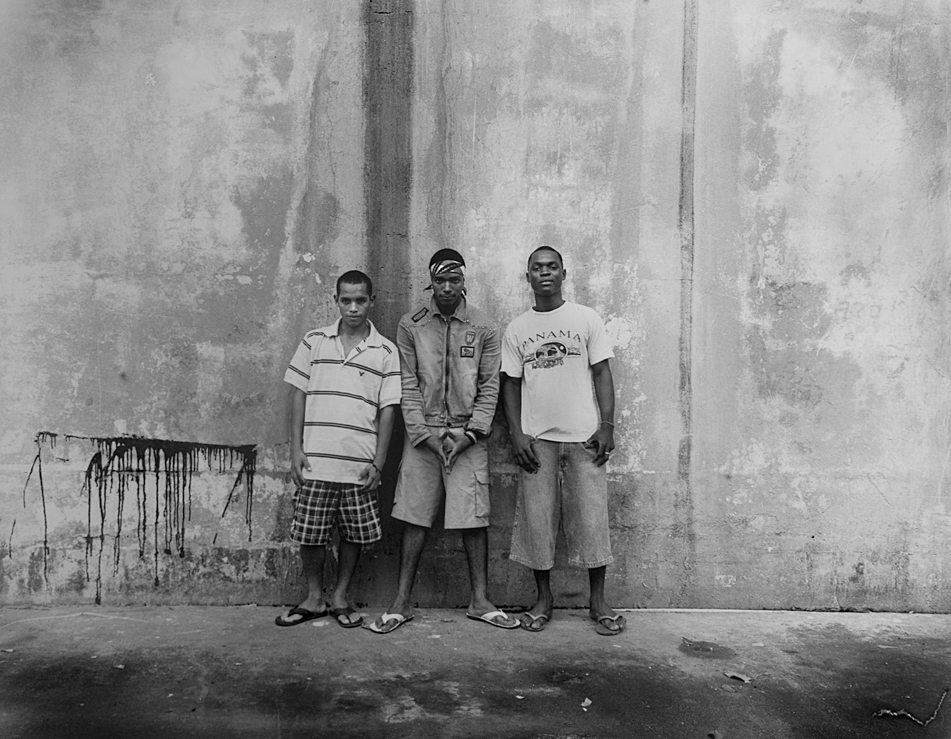
Coco Solo (http://rosecromwell.livejournal.com)
Coco Solo was also, it’s interesting to note, the birthplace of U.S. Senator John McCain — who, if any of the Mex Files readers are in contact with him (and you’d be surprised, not all the readers here are left wing nuts… I have a few right wing nuts too!) — might be able to part with a few bucks to help out his old neighborhood.
Of course, the place has changed since McCain was a lad. During the United States invasion of Panama (December 1989), poor neighborhoods in Panama City were heavily bombarded (see John Le Carre’s “The Tailor of Panama” for a fictional account of the war) and — although the poor had nothing to do with the causa belli (that being Manuel Noriega, who was hardly a poor man) — the poor were left with no homes to return to, and have been squatting in the abandoned military base — which also lacks regular transport to and from jobs in the city — for lack of anywhere else to go.
 Rose has been working with Bishop Brenda Barber of one of the Afro-Antillean church on a small, manageable project. Bishop Brenda (that’s Her Grace in the turban) who is more involved in more projects than any one person should be, throws an annual Christmas party for the Coco Solo children. With toys… which runs into a little bit of money. Last year Brenda’s bash ran about 80 U.S. dollars … a bit less than what it costs to keep the lights on, and the phone connected at the Mex Files a MONTH (no internet tax, but electrical rates have gone up and telephone connections probably will be taxed).
SO… when you send your annual “keep Mex Files creaking along another year” this way, also send five or so bucks via paypal to Rose to pass along to Brenda. rosecromwell@hotmail.com.
Mark the payment a “gift” and include in the message a note that it is for this party, since Rose also sells her photographs through this paypal site. Excess funds last year went to pay bus fare for residents to get to and from their jobs.
This revolution is brought to you by…
New York Times (15-Nov-2009)
A federal judge in Texas has issued final approval for Grupo Mexico’s plan to regain control of a copper mining company, Asarco, ending a lengthy takeover battle with a rival suitor.
Grupo Mexico said Sunday that Judge Andrew S. Hanen of Federal District Court in Brownsville, Tex., on Friday confirmed Grupo Mexico’s plan to pay $2.2 billion to Asarco’s creditors. The deal was recommended by United States Bankruptcy Court Judge Richard Schmidt.
The Asarco smelter — subject to lawsuits for the last decade or two over both its emissions and, when the U.S. owner took the typical U.S. out of declaring bankruptcy, over it’s disposition — played a forgotten role in the Mexican Revolution.
The plant sits directly on the border, and — in 1910 — had a shed in back on the Mexican site. Which, on 20 November 1910 became, briefly, Mexico’s capital.
Francisco Madero was in many ways an impractical dreamer (he dabbled in half-baked Hinduism and his belief in ghosts was essential to his revolutionary thinking — having spent long hours conversing with Benito Juarez on the “other side”) but the Maderos were raised to be hard-headed businessmen, who watched his investments and wasn’t one to sit back and just listen to his broker.
Among the many Madero investments were substantial holdings in American Smelting and Refining (today’s Asarco), which — happy to oblige a major investor — would loan that shed to give the Revolution a presence on Mexican soil. Madero had announced (and even advertised) the start of the Revolution for 20 November.
On the appointed day, Madero, who, with his wife, had spent a busy week attending parties in El Paso while arranging press coverage for the Revolution and telephone service for his “Provisional Capital…, crossed the border and posed for the cameras. He’s managed to talk the Bell Telephone Company into running a line across the border in return for hanging up a sing on the “Provisional Capital” thast advertised the phone company and would be seen in the news photos. Madero was by no means the first revolutionary to seek corporate sponsors but as probably the first to trade off advertising for technical support.
(Gods, Gachupines and Gringos © 2009, Richard Grabman)
Today is “officially” Revolution Day, in honor of the day Madero took over an Asarco shed… I haven’t been able to locate an on-line photo of the Provisional Capital (and its Bell Telephone sign), but located one in David Dorado Roma’s wonderful pictorial history of El Paso and Juarez during the Revolution, “Ringside Seat to a Revolution: An underground cultural history of El Paso and Juárez, 1893- 1923” which I will try scanning in by the “actual” Revolution Day.
It’s a holiday, so I’m outta here.
Cleaning up our side of the street
Patrick, at “Gancho Blog” picked up on this first, but I swear I was intending to write something about it.
Edgardo Buscaglia, a law and economics professor at ITAM (Instituto Tecnológico Autónomo de México), the private university that provides much of the technical and intellectual support for PAN administrations, complains of a fatal flaw in the Administation’s “War on (some) Narcotics (Exporters)”. According to Professor Buscaglia — an internationally recognized expert on organized crime — the administration’s “strategy” used to fight the cartels ignores their financial structure, making it inevitable that there will be more deaths and corruption.
He also said that 78 percent of the sectors of the Mexican economy have been invaded by drug money, which is an interesting stat, although it provokes more questions than it answers (What constitutes a sector? What impact does the drug money being there have on the law-abiding portion of the sector?). Whatever the case, it’s true that you used to hear a lot about Calderón taking aim at the financial backers of drug traffickers, whereas today that kind of talk is rather rare. I don’t know if that’s because such efforts have petered out, but it definitely seems from the outside to occupy a smaller part of Calderón’s strategy.
Not having seen the Professor’s research, I’m not sure what a “sector” is, nor how he derived this estimate. My feeling is that “dirty”money — no more or less fungible than any other kind — would be in every economic sector imaginable. There have been complaints (and legitimate ones) that the United States does nothing to control its own money laundering, but one can almost pinpoint the date the Calderón administration stopped talking about “cleaning up” the financial situation on the Mexican side… about the same day Zen Ye Gon alleged his mega-million dollar meth lab was laundering money for PAN.
As it is, Buscaglia is suggesting that simplying throwing more firepower at organized crime is fruitless. Mexico was one of the signatories of the 2000 “Palermo Accords”, a United Nations sponsored agreement that outline judicial and criminal code reforms — things harder to achieve, and perhaps less in the interest of the Calderón Administration than supplying a market for U.S. built helicopters or U.S. based “training programs” paid for by the Merida initiative funding.
A Modest Proposal on immigration
Great speech!
“Robert Erickson” was introduced to a 14 November Minnesota Tea Party Against Amnesty as a Minneapolis resident concerned about illegal immigration. Some of the crowd never did quite figure out what Robert was suggesting… but it sounded right, didn’t it?
“Bluestem Prairie” via “Jesus’ General“.


 mexfiles.net