Sunday in the Park (Fun Things To Do When Your Broke)
November days are clear – a little brisk, sunny and the pollution is nowhere near what I read in the guidebooks. I’ve been working on some projects at home, and this is the time of the month where I’m always financially challenged (like most foreign teachers, I’m paid the middle of the subsequent month… and after paying the rent, laying in supplies, etc., there isn’t a lot of mad spree money – or even relatively sane mild amusement money — until the 15th). There’s a limit to how long one can spend hunched up over the laptop, and consulting books. And the parrot is no conversationalist.
I needed a break for a couple of hours and was reminded of exactly why I live in Mexico City. I know some of our correspondents from the campo have other ways to kill a few hours, but here’s what I do in the city. On the ten-minute walk to the Metro, I greeted the neighbors, admired my neighbor’s 1962 Chrysler Imperial and discussed dogs with the human companion of Polverón, a friendly, well-behaved Golden Retriever of my acquaintance.
My Metro line (Santa Anita – Martin Carrera) is an elevated line down the east side of the city. I have a choice of views – the mountains (including Popocatépetl) — or the city skyline. At Candalaria, I read the newspaper headlines while walking to the Observatorio – Pantitlan line. None of the Sunday papers especially enticed me, and I really didn’t want to hole up reading a newspaper anyway.
Aguila o sol? Observatorio. I’d done my monthly pilgrimage to Merced (the station always smells of onions – but then, it is right in the middle of a market large enough to include its own parish church). And, I wasn’t carrying the money for grocery shopping (nor my shopping bag). Pino Suarez? I’m not looking for clothing or computer software, nor am I interested in visiting Cortés’ grave today. Zocalo? Endlessly fascinating, but not today. Hidalgo? The parks, the squares and… the best hamburgesas on the planet can wait a while. Balderas? My knee has been bothering me: I can walk but dancing with the old ladies at Parque Morelos might be tempting fate. Cuauhtémoc? Some of my favorite “art deco” architecture, and a favorite Cuban café, but feeling a bit unimaginative, I got off at Insurgentes for the Zona Rosa.
Not carrying much money is sometimes the best idea. The book fair at Insurgentes Station had some “Crazy” temptations. Patsy Cline’s Greatest Hits (not pirata!) for only 30 pesos! Should I ever want to get in touch with my inner bubba, I know the sound track is available. The jazz ensemble and the dance troupe’s performances were free. I ran into a friend of mine on calle Genova, and settled in at an outdoor café to enjoy either the first or second-best floor show in Mexico (I have never decided if calle Genova or the Zocalo is the more entertaining. Genova may lose a point or two for being so self-consciously flamboyant). My friend is addicted to the news from north of the border, so, after hearing the unpleasant details of life in the old country, my sense that moving to Mexico was the right decision was renewed.
One café americano and an hour or so conversation with an American friend, and the new Mexican friends who couldn’t find a table, was enough of the Zona Rosa. Too much time on calle Genova can give you “hip-ititis” (terminal trendiness), and the sight of an overweight, late middle-aged man waddling down Genova in tight, tight, tight white bicycle shorts is enough to convince me it was time to move on to more aesthetically-pleasant surroundings!
A much more pleasant sight – one of those extraordinary ordinary bits of life – was the policewoman with a big teddy bear strapped to her back. I strolled down Reforma towards the Alameda. Contrary to popular belief, it wasn’t Maximilliano who laid out this route. His much more intelligent horse blazed the trail, and the much more competent Porfirio Diaz decided to make it an elegant paseo. The present city administration has been sprucing it up recently, and has done a great job. The plantings, sidewalks, shop windows, monuments and architecture (from Porfiriate to post-modern) merit a leisurely stroll. And there are the sculpted nopales: a long-term temporary show of every possible (and some improbable) variations on a theme. I’m not sure how the present city government managed the feat (perhaps it’s the uniforms), but even the police officers along Reforma are better looking than before.
The Alameda has been the people’s Zona for the last few hundred years — a great place to just hang out, make out, walk around, kick a futbal around, take a siesta or take in the sites. The tour books would have you believe that gay and lesbian Chillengos are a exotic foreign-introduced species only to be found in the Zona. The world’s first gay rights demonstration was in the Alameda in 1901. It ended tragically. Felix Diaz, the dictator’s nephew (and Mexico City’s police chief) rounded up the demonstrators, sending most to be worked to death in the labor camps of the Valle Nacional. (Porfirio was ahead of his time. Europeans like Stalin and Hitler wouldn’t emulate this method of controlling dissidents for another 30 or more years). It’s fitting the gay working class favors the 1985 Earthquake Survivor’s Memorial.
The Park is for everyone – old ladies sunning themselves, families with babies, morose gangs of teenagers and prostitutes, male, female and transvestite all happily co-exist. The prostitutes aren’t nearly as numerous as they were even a few years ago. Times change, but the Alameda has a long, long tradition for … uh… flaming. Watching the heretics burn was one of the more popular attractions in the 17th century. In the 21st, it looks as if the heretics are back: and the all-woman Baptist-preacher mariachi band I watched (but was not saved by) was hot! Myriad forms of salvation – through Jesus, Buddha, the Virgin, AA, and the Secretariat of Public Education – are sold here every Sunday. Open to self-knowledge myself, I did get weighed (“Su peso por un peso” – how can I resist that sales pitch, and at that price?) I’m a little underweight, which excused splurging on one of those famous Alameda hamburgesas (the usual beef, mustard, mayo, onions, yellow cheese you’d get in any greasy spoon – plus white cheese, chilies, ham, bacon, and avocado – in an ambiance even the classiest greasy spoon could never duplicate). For some reason, I declined a free cholesterol check.
Hearing a few bands and the Word, watching a few magic acts, people watching, a little harmless flirtation, getting a bite to eat and otherwise killing time, I just grabbed the Metro at Hidalgo for the trip home (this time by the underground Universidad-Indios Verdes route). There’s a bus from Portrero station to my house. Even though I take this route almost daily, it still surprises me. Guadalupe Tepayac, another of those neighborhoods not in tour books, is a visual delight. The homes all have well-maintained, colorful facades, lots of wrought-iron and bits of whimsy I’m still discovering. Today’s news: the Virgin recommends Comex paint (or at least her image is included in the local hardware store’s homemade advertising campaign).
There I have it. What would I do in a country town? Take a walk? Drive or take the bus to the local attraction? Talk to the same folks I met last week… and the week before… and the month before that… about whatever we talked about last time? So, I’m a jaded urbanite – and a cheap one. A couple of floor shows interspersed with musical numbers; dinner and a drink (well, a coffee, but that’s me); opportunities for sex and romance had I been so inclined today; a brush with religion; an art tour, a history lesson; and some exercise – cost me 4 pesos in Metro tickets, 10 for coffee, 12 for a hamburger and 2 for the bus… 28 pesos.
One is unlikely to be shocked by white bicycle shorts on a fat butt in the country, and some delicate souls may never recover. Or, like the misguided Aztecs who were off-limits to the Inquisition, they may have received the wrong training and information. Invincible ignorance isn’t just for theologians: there are those misguided “true believers” in the polluted, dirty, dangerous and “unMexican” Mexico City. Charity requires acceptance. Mexico long ago eschewed burning heretics and sending dissidents to the gulags. I suppose in the spirit of tolerance, I can accept those who avoid my city for any number of misguided (or mis-guidebooked) reasons. But to those who post questions like “what do I do in Mexico City for a few hours?” there’s a simple answer – walk around and enjoy yourself. We do.
Jane Austin meets Jacques Cousteau (from a letter)

It is a truth universally acknowledged that foreign teachers, in possession of a good chunk of time and not much dinero, must be in need of reading material.
Classes tend to drop off at the end of the year, so there’s not a lot to keep me busy, and checks are – as all too often – late. Some of the books you find for 5 or 10 pesos in the used bookstores had more interesting adventures than the story’s characters. An American spy novel, in a British edition, with a sales receipt from the Tegucigalpa, Honduras airport gift shop can still be boring. C’mon you touristas! Leave better reading material behind!
Somehow we’ve ended up with various Jane Austin novels here in Colonia Gertrudis Sánchez. I’ve done some strange things here in Mexico, but discussing Pride and Prejudice is one of the weirder. For Mansfield Park (which I’ve never read, and no literate, slightly befuddled tourist has yet to leave behind) I might go as high as… oh… 25 pesos. My mother keeps suggesting the public library. Good thought, but our public libraries – even when they have the funding for more than a few hundred books – tend to buy books in Spanish.
My niece, Andrea the Oceanographer, is coming down Mexico Way, but she’s headed for Cozumel, a good two days from here. She worries that the island is not the “real Mexico” (She’s under the impression that I’m one of those third-world purists who eschews the tourist industry. Hey, English-speaking tourists are what drive the demand for English teachers!)
Besides, the first “real Mexicans” were from thereabouts. Cortés found two Spaniards there in 1519. Gonzalo Gonzales and Padre Jeronimo Agullar were the only survivors of a shipwreck. Gonzales had married into the local gentry, a much better job than swabbing the deck on galleons and a passel of little Gonzales at home. He was the first – but certainly not the last – tourist to never leave. Padre Agullar was another pioneer: the first cranky tourist complaining about Mexican food. The guy copped an attitude when the local Mayans made tacos out of the other padres – hey, they offered to share! He was young and healthy and had a decent trade (he was also a carpenter, which is why the Mayans didn’t just serve him up for lunch). The local Mayan girls saw him as a suitable husband and he really, really wanted to be rescued. He was either very uptight or he took his vows of celibacy seriously.
Other than a few stray pirates, there weren’t a lot of tourists until Jacques Cousteau made a Undersea Special about the local reefs in 1961, followed by everybody who wanted to be Jacques Cousteau, and everybody who wanted to look like deep sea divers and… those guys needed someplace to eat and sleep and rent diving equipment and buy beads and trinkets – the usual story. It’s an island, and it’s a tourist resort – you’re not being overcharged, it’s the local (loco) rate. But, the people cleaning the rooms and working at McDonald’s – and gringa graduate students — have to eat and sleep and buy beads and trinkets too.
The generic tourist advice applies. If you need to save money, remember that the less “English spoken here”, the better the prices. In tourist zones there’s an unofficial “tourist tax”. Watch what Mexicans are ch arged (if you can find Mexican buyers – who are probably tourists themselves, and, so, also pay the tax). If the difference is only a few pesos, or dollars or Euros, pony up. It takes years to learn to swear like a Mexican, and even then, you don’t always save that much. Beads and trinket vendors are not currency traders: they’ll take dollars and Euros, but you pay less in pesos (and an ATM transaction give you the best exchange rates). Oh, and home cookin’ usually doesn’t include foreign tourists (or if it does, it’s only the obnoxious ones). Enjoy your tacos!
The Dead Tour — 2003
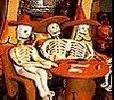 Nobody knows where all the bodies are buried: this is a very old city, and many of the early cemeteries have simply disappeared. Several skeletons were discovered in the Centro Historico during street repairs in 2002. Alameda Park was once the hanging ground and where the Inquisition burned heretics. How many heretics and “ordinary, decent criminals” are buried in the park is anyone’s guess.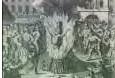
Cemeteries were nationalized during the Reforma. Among other things, burials within churches were outlawed, but just about any church built before the 1850s will have a few graves in the walls. Hernan Cortés is one of the few people immured in a church wall in the 20th century. According to provisions in his will, Cortés’ remains were sent to Mexico and immured in the Hospital de Jesus chapel (Rep. de El Salvador & Pino Suarez) in 1547. During the anti-Spanish riots in 1836, Lucas Alemán, the conservative historian and diplomat (then the Hospital administrator), hid the remains. Alamán sent a letter to the Spanish Embassy, giving the location of … uh, “Hernando’s Hideaway”. The letter was misfiled, and not discovered until 1946 (slow postal service is nothing new in Mexico!). Cortés was reburied in the wall over the altar, first and last person buried in chapel.
When restrictions on the church were loosened in the 1990s, San Juan de Dios (across from the Alameda — the church attached to the Franz Meyer museum) began to offer burial space in their crypt. For those who want a permanent residence here, sorry, I don’t know the cost. The “Jardin de recurerdos” in Tlaplanta — you can’t miss the big “Praying Hands” (they’re lit at night) if you’re taking the bus north – does a lively business. If interested, you can check out their website at www.jardinderecureros@aventel.com.mx.
Iglesia San Fernando (Plaza San Fernando, at Guererro and Orozco y Berra) was the best place to be dead in the 19th century. Maximilliano von Hapsburg was unwanted in Mexico, dead or alive. Benito Juarez has Maximilliano’s space. When Juarez was buried in San Fernando in 1872, General Miguel Miramon (who had been executed alongside Maximilliano) was disinterred by his snobby pro-clerical, anti-Republican relations and reburied in more conservative Puebla. Fittingly, the remains of the great Republican hero and hero of Cinco de Mayo, Ignacio Zaragosa, were transferred from Puebla to Miramon’s former grave.
No one knows whom – if anyone – is buried into the niche marked with Isadora Duncan’s name and dates. All that’s known is that it isn’t Isadora Duncan. There are no recorded burials at San Fernando in 1927 (Duncan’s death date, and the date on the tomb. Duncan was killed in an accident in the south of France and is buried in Paris’ Pere Lachase). 1927 was the height of anti-clerical repression in Mexico. I’ve speculated that a bishop or other cleric is buried there under the name of the famous atheist and radical.
Most burials since the 1850s have been in Civil Panteones. There are exceptions: Leon Trotsky is buried in his yard (as is the American communist killed during Siqueros’ attack — his name escapes me now). The Monument to the Revolution is sort of the Westminster Abbey of Revolutionary Mexico — the columns include the cremated remains of Madero, Carrenza, Calles, Lazaro Cardenas and Pancho Villa (all but Pancho’s skull — Villa was originally buried in Parral, but someone dug him up and stole his skull in 1929). There’s a space reserved for Zapata, but his survivors (and followers) maintain that the Revolution betrayed him, and his tomb in Cuatla is still zealously guarded.
Panteon Delores is the best known of the Civil Panteones — it’s on the edge of Chapultepec Park, accessible by Ruta from Constituyentes or Tacubaya Metros. Delores includes the Rotonda de los Personas Illustres (formerly “Hombres Illustres”, but Mexico strives for equality, and who are more equal than the dead?), mostly of interest to specialists in Mexican political history. However, the illustrious personages buried there include David Alvaro Siqueros (who designed his own tomb), Jose Clemente Orozco and Diego Rivera. Frieda Kahlo (or what remains of Frieda—like Santa Ana, Maximilliano, Alvaro Obregon and Pancho Villa, she was missing a few pieces) may be joining them soon. Taking the Metro to Panteones (line 2) is the easiest way to visit the “foreign” Panteones — Español, Alemán, Monte Sinai (the main Jewish Panteone) and the Americano. Joan Vollmer, William S. Burrough’s unfortunate wife was buried here and forgotten. The “beat” writer and drug addict (“Queer” and “Junkie” were both written here) shot her between the eyes, supposedly during a game of “William Tell” involving a bottle of mescal and a pistol. Burroughs fled the country while out on bail, and never paid his late wife’s maintenance fee. Vollmer’s remains were later transferred to an unmarked niche in the back wall.
Panteone Frances has a certain cachet. Maria Felix, the Mexican film star of the 40s and 50s, is buried here. Felix had left the bulk of her estate to her much younger male companion. Her relations insisted the 85-year old actress had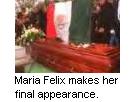 met with foul play, so up she came. Her exhumation didn’t quite draw the mob her state funeral did, but drew a respectable crowd (I am fortunate enough to have been one of the crowd outside, but that’s only because my bus was stuck in traffic). The quintessential Mexican – and actress – that she was, Maria Felix was not about to let a little thing like mortality interfere with one final appearance. Any “Legeria” ruta from Tacuba passes the entrance.
Panteone Sanctorum is a block from Cuarto Caminos Metro (but cross the street at the pedestrian bridge, unless you’re dead-set on taking up residence there!): it’s one of the older, more traditional cemeteries, with some fine homemade tombs and touching memorials to the unforgotten dead. San Lorenzo Tezonco (Periferico at Tlahuac) is further out from the city, but also easily reached by public transport. Any “Tlahuac” bus from Tasqueña Metro will stop there, and it’s the end of the line for the trolleys. There’s also a furniture market (not including caskets, though you can buy them second-hand on the street in Tepito), moving truck and taxi sitio there.
For the hard-core urban dweller, the Gayossa funeral parlor overlooking Parque Sullivan includes a high-rise, condominium cemetery: look for the stained glass windows. The side streets are home to the funeral district, with services available to fit any budget or style. Naturally, there are several florists in the vicinity. And snack carts – Mexicans love to sit and chat with each other, even if the person they’re visiting isn’t talking much. Visitations go on for hours and hours and hours. And – given the national propensity for creative capitalism (and food) — at least a few funeral parlors sell decent antiojitos.
There is at least one government owned parlor for civil servants (most civil service contracts include the right to a dignified burial) – given the slow processes of bureaucracy in this country, there’s a fairly good chance the person who is supposed to stamp whatever essential form you need is the guest of honor there tonight. Contrary to popular belief, it has never been an Article of Faith that Catholics had to be buried (I only know this because my very Catholic family checked with their bishop). Cremation was the standard practice in pre-Hispanic Mexico, and remains (no pun intended) common. As in several European countries, bodies are not permanently buried. It’s hard to find “living space” here in the City: cremation is accepted, and even encouraged. A few years ago, the Green Party ran on a platform that included non-polluting crematoria. One Delegacion is now offering a cremation and urn package below cost as a way to preserve more green space that might otherwise be used for burials.
It’s a bit gruesome to consider, but a friend of mine, from a large and old family in Guanajuanto State recently spent a weekend with the relatives: digging them up. The family plot was full, so great-granddad, ancient aunts and various ancestors had to make way for the present generation. Not my idea of a family outing: what do you say to these relations anyway: “Abulito, you’ve lost a lot of weight since I saw you last!”?
My friend’s family pays for perpetual care, but how long is perpetual? I found – buried in la Prensa’s police report section — an interesting little item earlier this year. A witch doctor/private eye (it’s common to pursue two careers at a time, and at least these two are somewhat related – unlike, say, my travel agent, whose day job is as a gynecologist) was arrested on unrelated charges while transporting two freshly disinterred human skulls. He claimed in his own defense that he had paid good money for them at Panteone Delores (200 pesos a head, if you must know).
If the survivors do not make perpetual-care arrangements, the remains are periodically disinterred and supposed to be cremated. In Guanajanto, minerals in the soil naturally mummify bodies. Until recently, the interesting looking ones ended up in a museum. If you forget to pay the cemetery bill, mummy-dearest might end up in one of the Republic’s more macabre tourist attractions.
The folk belief that the dead continue their daily routines is still strong. I once spent an afternoon wandering through a panteon in Villahermosa, and couldn’t help but feel sorry for the well-tended tomb of a housewife, which included a mop and pail (so much for eternal rest!). I guess it’s not all work and no play for the dead, however. If the departed continue their routines in the afterlife, that cemetery must be a pretty lively place — other graves included guitars (either the “real thing” behind glass, or stone guitars by way of a grave marker), drums and even a pair of blue suede shoes (marking a rock n’ roller’s grave). The Huastaca people sometimes complain about their dead relatives who come back to raid the fridge, drink up all the beer, and party all night.
In Mexico, there is too much life to let a little thing like mortality interfere. Besides, your passport expires when you do – if you think acquiring an FM-3 or extending your visa is exasperating, try leaving the country in a box. The Hapsburgs had a hellacious time getting dear old Max back (the Queratero embalmer had made a little mistake originally, and Max turned bright green. Lucky for him, the slow process of Mexican bureaucracy gave him the time to guild the ex-Emperor’s body, giving him, if not a lifelike look, at least a healthy looking tan color.
Too bad he couldn’t do anything about the missing eyeball. Firing squads – especially 19th century firing squads – do quite a bit of damage to the human body besides just killing you. Maximilliano’s eyeball was knocked out of the socket and never was found. The embalmer didn’t think anyone would notice when he used a brown glass eye, but, alas, the Hapsburgs were a strange family, and Max’s mom wanted one last look at her boy’s baby blues).
An elderly friend of mine living out her remaining days in a downtown hotel had a neighbor with a slightly different plan. He was a Venezuelan with terminal AIDS, and his last wish was to die in Mexico City. Just before Christmas, he did. Between an airport strike in Venezuela and Mexican bureaucracy, there was no way he was leaving (I thought of cremating him and stuffing the ashes in a piñata, but I’m a die-hard practical gringo). As far as I know, he’s still here, though not in the hotel. Venezuelans throw good parties (my friend, being British, was reluctant to go – apparently one does not wear black to parties in Britain) at home. In Mexico, where death is no barrier, the good times can go on for … however long you want, apparently. This is a friendly place, and we welcome visitors, dead or alive. 
The King and I… or the Reign in Spain
The King and I
I was curious to see what the Zocalo area was like now that the street repairs are finished. I haven’t been down that way much lately. It’s been an archeological site since August, digging up the old pavement, phone lines, water pipes, sewers and a few miscellaneous Aztecs. Just to keep things interesting, the manholes were open, and the sidewalks were also torn up. So, you catwalked, jumped, clung to the sides of buildings your way though the vendors (I started to write “sidewalk vendors”, but there weren’t any sidewalks to vend upon) to the main square, which was always full of striking schoolteachers (they’re STILL camped out), tourists, bureaucrats, “demonstrations of the day” and always vendors on top of more vendors. Now that the work is done, it’s kind of eerie. No vendors! None.
It’s kind of strange to actually see the buildings (and some of them are interesting), but I think it takes a lot of the life out of the area, but that’s what the well-heeled tourists and bureaucrats want. At least the plumbers, painters, home-repair guys that have been hanging around the cathederal since … before the Cathederal was built … are still there.
So, I looked at the new pavement (some composite of concrete and recycled tires, that is supposed to last longer, and “float” during earthquakes), street lights, trashcans (so new, they haven’t been graffitted yet) for a while. I was just walking home, when I saw a big crowd in front of the Spanish Cultural Center. In Mexico, if you see a crowd, it could be anything from a overheated car engine to the Second Coming, so I really didn’t think much about it, until I noticed the cops and military guys in dress uniforms and all the plainclothes cops. And TV crews. And barriers on the street. And snipers on the roofs. Probably more than a Volkswagen overdue for a tune-up.
I had taught this morning at a very conservative company out in Bosques, so was dressed to proper Latin business standards (plus, it’s damn cold there on top of those mountains in the morning, so I was even wearing a jacket), and was standing next to a couple of elderly, well-dressed folks — Spaniards waiting to see their king during his State Visit.
So, down the street saunters our Jefe de Gobernation (when you’re the great Socialist/Populist leader, it wouldn’t do to show up in an armored limo –especially with the 100% luxury tax on limos here). Su excellencia was met by his rival for the hearts and minds of the Mexican people, su gracia, Norberto Cardinal Rivera (who may be the next Pope). A little more waiting around, a few sirens and up pulls Their Most Catholic Majesties, Juan-Carlos and Sophia of Spain.
I don’t think Su majestad is a complete dummy. He managed to bamboozle Francisco Franco into restoring the monarchy (on the other hand, Franco wasn’t the sharpest tool in the fascist shed. And Franco was just senile enough to think he was living in the 17th century, and a king would keep Spain safe for closed-minds and closed-markets). And he did face down a military coup. (Kind of ironic that the party in power in Spain is the neo-Francoists. Nice allies we have against Iraq –Spanish neo-francoists and Italian neo-fascists. If we eased up on Argentina, maybe Shrub could rope in the neo-peronists while he’s at it — end of diatribe).
I know a few no-account counts, once met a grand duke (a very, very old grand duke, who hadn’t anything to be grand about since the Austrio-Hungarian Empire went out of business back in 1917) and saw Queen Margaret II of Denmark wave from a balcony (and there’s plenty of drag queens around my Metro stop), but being greeted by a King is a first. I’m no monarchist — I guess if I think the Spanish Prime Minister is a Nazi with a good tailor, he’d think I’m an anarchist who knows which fork to use. At least I know you aren’t supposed to correct royality in public. What was I supposed to do — answer the Most Catholic Majestic mumble with “Wrong guy, pal!, it’s the old lady who said ‘¡Viva el rey!”? . “¡Mucho gusto!” is the wrong verb form in this situation. Academia Real be damned: I’m an American and did my nation proud — or at least kept my Jeffersonian sense of equality intact.
Oh yeah, Vince and Martha are in town for a change, and showed up in their armored Chevy Suburban.
The King greeted the guy who wasn’t a subject, and the Queen — well, not to be catty, but she looks like a skinny blond version of her brother, Prince Philip and her nephew, the Prince of Wales. Hey, they are more than a little in-bred. The Spanish royals aren’t noted for either their looks or the intellectual abilities. But that’s ok — the reign in Spain falls mainly to the plain.
Ya know, I’ve wanted to use that line for over 30 years and never had occasion to. And it’s only Monday!
posted by Richard
The Pope, Brittany and I…
The Pope and Brittany Spears have come and gone. Both gave abbreviated performances, and promptly left the country. The Pope got better reviews.
Ms. Spears (tickets going for 300 pesos and up) split for the airport after performing for under an hour. My favorite newspaper, La Jornada (more like “The Nation” than a daily paper — no want-ads or supermarket specials, but a few days worth of lengthy, in-depth articles) normally wouldn’t cover a pop concert, reviewed the concert under the headline “Gringa Exhibits Contempt.” They probably would have covered the Papal visit as “Cult Leader Disrupts Traffic” if they could have. The dozen plus newspapers have different audiences, and different political biases. I usually don’t need to buy a newspaper — just look at the headlines. The Pope pushed everything else off the front pages. La Jornada was the only one without a Pope picture every day for the last week: even the sports paper managed to somehow run a picture of His Holiness on the front page (cover story — “Pope Likes Futbal”).
The altitude is hard on any visitor, and it’s still raining a few hours a day — not really the ideal vacation spot for an arthritic with health problems. Maybe Ms. Spears isn’t as spry as she looks. But the Pope has added difficulties: he has trouble standing up and sitting down and trouble speaking. So, when not riding in the Papamovil (a comfy chair in the back of a pickup truck. The only difference between the Pope and Granny Clampett is the Pope’s truck has a glass camper), he’s guided around on a rather elegant skateboard. His Spanish is understandable, but he sounds like Marlon Brando in “The Godfather”. And, as La Jornada noted, His Holiness leans to the right.
The official reception turned into a national hoo-haa, when the President kissed the Pope’s ring. THAT got the Pope on La Jornada’s front page! That’s a major issue here — elected officials are banned from showing religious preferences in public. The last leader to go to Mass publicly was Maximilliano von Habsburg, and look what happened to him. Fun Maximilliano factoid: the embalmer used too much copper in the fluid, and Max turned bright green. The customs service claimed the Austrian royal family didn’t file the right shipping forms, which gave the embalmer time to do some rework, and at least make get Max to look brownish-gray.
You can tell the mayor wants to run for president — his party is a more in the anti-clerical tradition, so he was very publicly sitting OUTSIDE. Meanwhile, the talking heads are wagging on TV, the journalists are scribbling, the press secretaries are clarifying and the archbishop is saying “no big deal”. I didn’t receive an invitation to the services, and I’m not running for anything, so I did what I suspect everyone with a semi-plausible excuse to skip work that day did — slept late.
I DID watch the Papal plane fly over when he left. Fun Papal factoid: Aero Mexico not only installed a bedroom on the plane for the Pope, they also stocked the bar with Corona and tequila. Supposedly, it’s for that wild and crazy Vatican Press corps, but if the College of Cardinals starts singing “La Cucaracha” off-key … maybe there’s something to the rumor of the plot to get a Mexican Pope.
With only one student early Thursday morning, and another late in the afternoon, I had a lot of free time. I went to Tlatelolco, aka Tlateloco — mapmakers have as much trouble with Nahuatl as I do. No wonder the tour books all call it “Tres Cultures” — ruins (it was the Aztec Brooklyn to Tenotchitln, the Aztec Manhattan, in downtown Mexico City — just across the bridge); a “new” Franciscan church built in 1609 (including big chunks of the old church, which was taken from the temples) and what the tour books insist on calling “the ugly housing development”. They’re generic high-rise apartments, but aren’t exactly the “projects” — an 18th century park, running trails, an art center built into an pedestrian underpass, etc. The apartments are small, but most apartments are — it’s probably not a bad place to live — today.
This was where the surviving Aztecs finally surrendered to Cortez and where the students and workers (including the apartment tenants who joined the protests) were massacred in 1968. Army snipers and a helicopter gunship opened up on the workers, tenants and students (including high school students) getting ready for a protest march. It’s always been known about (there’s a 1993 memorial), but the details are just starting to come out now (one reason the ex-Presidents who are still alive are getting dragged into court).
A lot of the protesters were killed on the church steps — the priests locked the doors when (or before?) the shooting started and people had nowhere to go. I didn’t quite have the heart to tell that to the nice ladies from Louisiana. They were there because Juan Diego was baptized in the old church (of course — it was the only church open to Indians, something else I thought best not to tell the nice ladies). I just went into the church to look at the place, but there was a mass going on — in English — with 4 priests and a bishop. All part of a tour group shepherded by … and this is the weird part … a friend of mine from the school I worked at in Cuernavaca. Teaching art to those ninos malcriados (“ill-bred children,” i.e., rich, spoiled brats) wasn’t her idea of fun — riding herd on American church groups is a saner way to pay for graduate school.
Must be the Papal aura, but I seem to be going to a lot of masses this week. Trying to find the way into the San Fernando cemetery means going thru San Fernando Church. They don’t give you much time to just wander around on Sundays looking at all the baroque ornamentation that managed to survive here. I did get a good look at the amazing mural of martyred monks — they’re a bunch of non-plussed, unexcited monks — ignoring those slight inconveniences of the missionary position — little things like knives stuck in their backs, and axes through their heads… High Baroque meets The Road-runner.
The cemetery is closed for repairs (how does one repair a cemetery, anyway?). Isadora Duncan, of all people, is buried there. Or rather, isn’t.
“Lead us not into temptation” ends at the church door — the bootleg CD stalls are right outside (I once bought the Rolling Stones Greatest Hits at the cathedral — they always test the CDs for you, and there’s something twisted about blasting out “Sympathy for the Devil” at 10 on a Sunday morning). At least the piratas have … uh… catholic tastes. I really don’t need more than one or two cumbia or salsa collections — I’ve found everything from Los Beatles and El Doors (both still very popular here) to Billie Holiday to Danzon (Cuban waltz music) to Wolfgang Amadeus Mozart. Wolfgang was from the Slovenian National Orchestra, but on what a pobre maestro makes, it’s what you buy.
The only problem with cheap CDs is storing them. There’s really not much room in my place, and every millimeter of space counts. I had to add a cache of textbooks this week, plus I’m working on a course for Mexican attorneys, so have had to pick up a few specialized dictionaries — I’m going to have to think about finding a larger place.
I’d hate to give up rooftop living though. The older buildings have maid’s shacks (live-in maids are a thing of the past, and new buildings don’t have them), but they’ve become hard to find — they’re fashionable. The relative privacy and views appeal to artists and eccentrics. If I’m on the roof at the right time of the morning, I catch the cat parade. Some of them jump two or three roofs (from 3 or 4 stories up) on their way to breakfast — the maid’s shack on the next building is home to a standard eccentric: the neighborhood crazy cat-lady. The roof Yorkie between here and the cat-lady isn’t nearly as amused as I am. The cats are bigger than he is, and it’s hard work trying to chase all those kitties. As soon as the parade is over, he takes a siesta.
I’m managing to get by, but it’s the catch-22 of having time and no money, or the money, and no time. I need the money, and I don’t exactly break a sweat when I’m paid to drink coffee and discuss the New York Times, or the Bushista follies. If only I was paid in Euros or Dollars, but still nice work if you can get it. And, I’m still charting out English verb forms — 3 meters long and the future tenses aren’t done yet.
Just call me the Diego Rivera of English Grammar!


