Trump’s Mexicans? Business interests meet with Trump advisers.
Carlos Mota, who I guess you would call the “business gossip columnist” for El Financiero caught wind of a rather interesting meeting that seems to have been purposely kept out of the media spotlight, but leaves some intriguing (and troubling) clues as to the future of U.S.-Mexican relations.
My translation:
Last Wednesday (7 December), three of United States President-elect Donald Trump’s closest advisers arrived in Mexico City. Their mission was a private meeting with this country’s most prominent business executives, to establish cose relations with the business community, and lay the foundation for close relationships between the two parties. I can not reveal the names of the Mexican businessmen gathered here, nor of Trump’s advisers; but I can say that the meeting involved those at the highest level, those from the U.S. people who have Trump’s ear.
As far as I know, no member of the Mexican government was so careless as to shake hands with the Trumpista party. There was no official meeting.
But with the Mexican entrepreneurs who attended the meeting, there was surprising level of complete identification between the parties. A meeting that was supposed to last an hour and a half stretched out to six hours of informal discussions that veered close to fellowship and even friendship between the parties.
At the meeting, Trump’s team would have revealed that the president-elect’s intention is to increase the flow of trade with Mexico, something that apparently calmed the Mexicans and and even hopeful about future business relations with the United States to a degree that the conclusion was that they are better off with the Republican than they would have been with the Democrat candidate. Also, the most prominent of the Mexican entrepreneurs calculated that if Trump’s promise to create 25 million jobs in the United States over the next decade held true, millions of these jobs would have to be done by Mexicans. I understand that there was applause for this.
Trump’s team revealed interesting facts about their new boss: he is extremely impestuous, and has no self-control when he uses Twitter. This is not a serious flaw, according to the U.S. team, saying such reactions were likely to be curbed soon. They added that there are three Donald Trumps: the candidate, the president-elect, and the constitutional president. And they had a request: they asked the Mexican businessman to provide in the following days a list of some well-to-do US businessmen who have shown closeness to the Mexican business leadership. The purpose? Select an ambassador.
Things were not there. Amid the fellowship and geniality expressed over Mexican and Lebanese cuisine was any invitation to the Mexican side to visit Florida in January, for a stay at the impressive Trump-owned tourist resort in that state.
One could speculate on who was at the meeting (though mentioning Lebanese cuisine suggests the Harp-Slim clan was represented) but it matters less than the observation that the business elites don’t feel in the least threatened by Trump’s anti-Mexican rhetoric, or by Trump himself. One assumes that the Mexican moguls were those with significant investments in U.S. business, and who understand that Trump’s populism and nationalism is as thin as his skin when it comes to Twitter… if money is to be made, a Trump presidency is not about to rock the boat. That is, money for the elites.
The “calculation” by one Mexican attendee, that jobs in the United States (of what kind… Obama created millions of new jobs, but at lower wages, too) looks like an attempt to create a talking point for selling Trump to Mexicans. We’ll get the “sloppy seconds” of the jobs.
And, most intriguing is the suggestion that the Mexican business elites are proposing the next U.S. ambassador. I had some strong reservations about Obama’s appointees … Carlos Pascaul and Anthony Wayne both coming from war-zone diplomacy which more than sent the signal that Mexico’s relationship with the United States was dominated by the “drug war”… but even more reservations about a return to the “dollar diplomacy” era. For the Trumpistas, Mexico is just an investment source, not a country. And, while it should be flattering that for once the United States is asking what kind of ambassador Mexicans will accept, the sense that the decisions are being made for us not by our elected representatives or our government, but by those whose financial interests lie in the United States does not bode well.
Do not call!
 PRI deputy Fernando Moctezuma Pereda has proposed a change to the Federal penal code under which using a cellular phone while driving could be punished by up to five years in jail. Moctezuma’s justification is that distracted drivers, specifically drivers using their cell phones, are one of the major culprits in the 12,000 traffic deaths nationwide this year.
Admitting the threat of imprisonment is meant to scare drivers out of using their cell phones while on the road, Moctezuma is also proposing a secondary bill that would penalize drivers who commit traffic infractions while drugged, drunk, or using a cell phone.
Now, if they can just apply it to fools like this (a bigger hazard when I bike around town than the cars… at least cars whose drivers aren’t on their ·$%& cell phones), too: 
Zapata v Trump
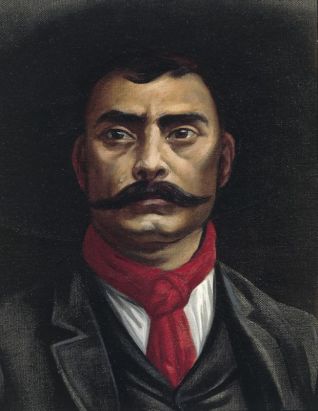 Meeting on the 105th anniversary of the signing of Emiliano Zapata’s radical Plan of Ayala (““That to the pueblos (villages) there be given what in justice they deserve as to lands, timber, and water, which [claim] has been the origin of the present Counterrevolution” in John Womack’s translation), campesino and indigenous leaders sat down to hammer out what they see as the most immediate response to the threats of a Donald Trump presidency.
I’ve slightly abridged the original post from the 28 November SinEmbargo (more on that below) in my translation:
Over fifteen peasant and indigenous organizations, united in the “ El campo es de todos” movement met today to evaluate achievements over the past year and discuss an action plan for 2017, with the objective of remaking public police in favor of food sovereignty, financing small producers, defending the rural economy from the ravages of multinational corporations, and combatting combating poverty in rural areas.
Regarding the challenges raised by the new president-elect of the United States, they stressed the impact of tarrif barriers on Mexican exports on both large farm operators and day laborers.
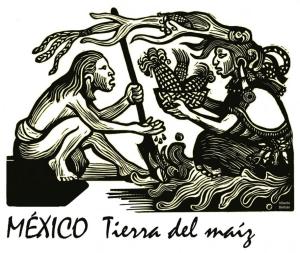 Javier Ortega, director of the Unión Campesina Nacional (National Peasants’ Union) said we needed to be more concerned about food security than “Trump’s wall”.
“Only 40 percent of what is consumed in Mexico is produced in Mexico; We must fight for the right to food, “he said.
Ernesto Guevara, leader of UNORCA, documented that “one in four Mexicans can not eat all three meals a day and spends ten time more on imported food than on native produce, like rice, soy, or corn. As a result of Mexico’s dependence on mainly imported and transgenic products, he said, “we have serious problem with diabetes.”
David Contreras, representing the Red Nacional de Organizaciones de la Sociedad Civil (National Non-governmental Organizations Council) said that for farmers “it is time to modernize”. He said that while the business sector has been transformed and enjoys great profits, “we have received only crumbs and government handouts.”
He suggested that small farmers not think of themselves as poor, but as “entrepreneurs because we produce the food of this country”.
José Juárez, of the Consejo Nacional Ciudadano (National Citizens’ Council), reminded the group of the importance of working together, “so that this country has something to eat.”
Sergio Gil of the Unión Campesina Popular (Popular Peasants Union) added that the thousands of peasants demand “decent living conditions”, not just a stipend.
Peasant and indigenous leaders agreed to fight for national food self-sufficiency while criticising the government for favoring multinationals.
Engel López, a leader of the Central Independiente de Obreros y Campesinos (Independent Workers ‘and Farmers’ Collective) stressed that the results of the “El campo somos todos” movement have not been satisfactory to date, and the movement needs to be more energetic.
“We demand that the government give the money to the peasants, not the transnational corporations,” he said.
In the voice of the Central Peasant Cardenista (Cardenist Peasant Collective), Max Correa agreed, arguing that “the government promotes disunity in the peasant movement to continue profiting to the detriment of the peasants.”
On the question of indigenous communities losing land to large corporate operations, Felipe Rodríguez stressed the need to push for an Indigenous Law that respects land rights and would prevail against a lack of prior consultation and democratic openness with land use permits.
What I left out of my translation was a paragraph mentioning homage to the late Fidel Castro. Not only because it wasn’t as important as what the farm leaders are saying about food security, but because of something that might seem obvious to Mexican campesinos isn’t always clear to us in the English-speaking world, and certainly not to the bulk of Mexfiles readers in the United States. That is, that while the Cuban Revolution may have also been a Communist one, what Mexican peasant leaders then and now saw, was Castro’s agrarian reforms, modeled in large part (or at least paying homage to) on the radical proposals of the Plan of Ayala. While if I had to put a label from our vocabulary of western political thought on Zapata, I would call the Plan of Ayala “anarcho-libertarian” rather than Marxist. Zapata seemed to envision private ownership, or rather small corporate ownership, where Castro favored state ownership, but the goal was the same… to provide security for farmers.
Castro’s Cuba was never able to obtain food security, but continued to depend on crop exports (sugar and tobacco) for food imports. During the “special period” (after the Soviets simply abandoned Cuba) there were genuine shortages and, while Cuba was able to expand its agriculture to meet some basic needs, it never has been in a position to achieve full security. Mexico, however, shouldn’t need to import food. We have a broad-based agricultural system (and, about any food crop you can think of… with the possible exception of cranberries… grows in Mexico) and, at the same time, we are a major exporter of agricultural commodites either not particularly used here (marijuana and coffee for example), or are dedicating massive amounts of land to single crops (like tomatoes) entirely for export.
At the same time, economic policy favors the multinationals that exploit both single-crop farming, and other land uses (like mining) that limit our own food-growing capacity. And, as the farmers noted in their conference, policies here have neglected rural areas, forcing small producers to depend more on welfare payments than on sale of their own produce.
While I’m not sure that Mexico could be 100% sufficient in food production, nor am I convinced that we can do without agricultural exports (not completely), but there is no reason not to become more self-sufficient, especially if these radical farmers are right, and trade with the United States is disrupted.
And forget about building a wall, too!
MEXICO CITY, Dec. 6 (Xinhua) – Eight out of every 10 Mexicans surveyed are willing to stop buying US goods if the next president, Donald Trump, takes policies that affect Mexico’s interests, according to a study released today.
[…]
In case the business mogul carries through on his promises once he takes office as president most Mexicans would respond with actions against the US economy, according to the study.
Eighty-six percent of respondents said they would be willing to stop buying products from the United States, 67 percent would not watch movies filmed in the United States and 58 percent would not travel as tourists to their cities and attractions.
… 31 percent responded that they would take violent actions against U.S. companies and 49 percent would be willing to protest at the US embassy or consulates in Mexico.
Fidel in Mexico
The history of the Cuban Revolution is also part of Mexican history. I had planned to post this yesterday, but there were some glitches in the connection I had. Thanks to Franc Contreras for getting this up on Youtube:
Writers welcome!
English-language travel writing about Mexico goes back to the notorious Thomas Gage — the renegade monk turned Cromwellian propagandist, and has always been full of cliches and “ango-centric” views of the country. Although  travel writing didn’t really take off with Gage, and had to wait until the late Victorian Age to find it’s genre, one of the pioneers of the art, Ethel Brilliana Tweedie (“Mrs. Alec Tweedie”) discovered something that still seems to surprise the English language writer: Mexicans are delighted to have their country written about, but want to remind the author to keep us in perspective.
From Mexico As I Saw It (1901):
After luncheon, a short swarthy man stepped forward, bowing low, and addressing the Goveror in Aztec, he asked if he might say something to the English lady; his name was Florentino Ramirez, and he came from the village of Tetlama. Of course, permission was at once granted. He stood opposite to us, surrounded by all those Indians, and though only a young man — perhaps, twenty-two or three years of age — he spoke as to the manner born. He was neighter shy nor awkward: his voice was loud and clear, and the determined expression of his dark face denoted his descent from some great race. His words were more or less as follows:

Xochicalco, ca 1900
“I am spokesman of the neighbouring villages. When we heard our beloved Governor was coming, accompanied by a lady from such a far-away land, we felt proud. We are honoured that anyone should come to see our ruins, and we thank you, Señora, from the bottom of our hearts, for you must have undertaken a long and tedious journey to come so ar to see our Xochicalco. That you are going to write a book about Mexico delights our hearts, and we have come from far and near, and done our best to bid you welcome and manifest our gratitude. We are only ‘the people,’ but we have hearts and sympathies, and both have been aroused today by the visit of Colonel Alarcón and the English authoress. You have come from a land of great civlisation to visit our wild country; but. Señora, you must remember that five thousand years ago, when England was unknown, our ancestors raised those ruins,” and he waved his hand with a theatrical air as he spoke, and pointed proudly to the fortress.
A rising wage lifts all boats?
Joseph Stiglitz was asked about the noises from the United States (mostly emanating from the soon to be whiner-in-chief) about renegotiating what the Nobel Economics Laureate has long considered a flawed agreement. Stiglitz noted that a “free trade agreement” presupposes the free exchange not just of goods and capital, but of labor as well. For NAFTA to actually have free trade when it comes to labor, one of two things would need to happen. Either US and Canadian wages would need to fall to those in Mexico, or Mexican wages would need to rise dramatically.
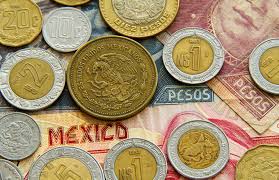 I’m probably misquoting Stiglitz (I read today’s Jornada across the street from a fashion store which was blaring out loud hip-hop and old disco to attract customers, and annoy unfashionable types like the people who read newspapers at cafes). I expect US wages will be dropping, and I don’t see much support from the one percent for immediately raising them. And, of course, Mexican wages are hardly going to reach US levels any time in the foreseeable future. If ever.
Which doesn’t mean raising the “salario minimo” isn’t recognized by the elites as a economic priority. While the salario minimo (a daily, rather than hourly, rate) was once based on a “basket”… the market price for the bare essentials needed by a person working six days a week (and paid for seven) to support a family of four (which besides tortillas and beans, was calculated by the price of mangoes, cooking gas, bus fare, fish for Friday dinner, and other things)… the labor “reforms” of the present administration changed the formula, allowing for hourly pay. This did raise the salario minimo, especially in rural areas (the old system had different rates reflecting the basket price in different areas of the country) but not enough to reflect the rising cost of living.
Business people at least understand that if people aren’t earning enough to meet the basics, they’re not buying. So, the Confederación Patronal de la República Mexicana (COPARMEX), basically, the Business Leader’s Union, has come out favoring a return to the old “basket” system, with an immediate raise in the wage to reflect inflation, and a stepped rise over the next year of between 13.02 and 13.20 pesos to reflect from state benefits that the “labor reforms” stripped away, but were essential to survival at the ridiculously low salario minimo.
$ 89.35 isn’t much (about 4.30 US$ today), and I’m not sure how anyone would survive on that (I allow myself more than that in daily pocket money, and am about as moderate a spender… some would say downright cheap… as you’d find), but one thing that has to be noted is that the salario minimo is a bottom rate, and the minimum rates for any sort task that can be defined as a work “type” (everything from field hand, to general assistant, to delivery person, to teacher, or doctor) has a higher rate, usually a multiple of the “salario minimo”.
In addition to calling on Congress to raise basic wages, COPARMEX is looking to lower the costs for some public programs. When the salario minimo was de-indexed from the basket, a unit called the UMA (Unidad de Medida y Actualización) was invented, initially at the amount as the salario minimo, but indexed to inflation. Where some payments to the government (like traffic fines) were in units of the salario minimo (say five salarios for an illegal left turn), as well as some “ability to pay” government programs (like INFONIVIT, which provides home mortgages, or FONICAT, which underwrites some costs for home appliances and furniture), the UMA replaced the salario minimo.
That gets confusing, but the UMA is set yearly by the inflation rate, and would be substantially less than the salario. Clarifying that government benefits were based on UMA would qualify more people for various programs.
Still woefully low, but at least the one percenters recognize it.
Our security, and yours…
I honestly didn’t have the time (or energy) for more than a rough translation of “Trump, ave de tempestades para México en materia de seguridad” in the latest issue of Proceso (Issue: 2090, 20 November 2016, pp 14-19) … on the newsstands today… but it was important to bring Jorge Carraso Araizaga’s reportage on the possible effects of the incoming Trump Administration’s effect on Mexico, in economic issue and our “war on (some popular US consumer favored) narcotics” as seen by US experts out in English as soon as I could.
I skipped several paragraphs that were just detailed examples of various points, or paraphrased them (usually indicated in brackets: [ ] ).
The Trump administration will be a hurricane for Mexico. It threatens to demolish our security. Its simplistic ideas – building a wall or deporting migrants – will translate into major problems for this country. Add to that the uncertainty and contractions of Trump’s discourse, and the Mexican goverment will need to reshuffle its own priorities and prepare for scenarios that might arise. U.S. experts agreee.
MEXICO CITY (Proceso) .- The Enrique Peña Nieto administration must prepare for the worst. Security experts agree that Donald Trump’s hard line towards Mexico has to be taken for granted.
At best, even if some of its measures are merely cosmetic, the profile of the new US administration may lead to greater militarization in the fight against drug trafficking – a strategy that at present has left about 200,000 people dead in Mexico.
In fact, the Mexican president and his security cabinet will have to consider retaliatory measures even if Trump and his collaborators – given their tilt to the radical right – are determined to foster a hostile relationship, diverging on questins of migration and drug trafficking.
We are likely to see a return to the situation of the 1980s, defined as that of “distant neighbors” by the American journalist Allan Riding in his book of the same name, documented mistrust and confrontation between governments of Miguel de la Madrid and Ronald Reagan.
Now it may be even worse, warns Vanda Felbab-Brown, Senior Fellow at the Center for 21st Century Security and Intelligence in the Foreign Policy program at the Brookings Insititute, one of Washington’s most influential think tanks.
[…]
Felbab-Brown has no doubt that the previous and present Mexican administrations been improvising and done very little to consolidate a long-term drug policy. She says the two presidents [Calderón and Peña Nieto] have put repression of “cartel” leaders over institutional reforms, With the Trump victory, things will get worse. Or at least, more uncertain, she said in a telephone interview.
The ties built during the decade of “Plan Merida” in cooperation in the areas of security, including military assistance and intelligence, could be undone by the arrival of white supremacists in the White House, according to Maureen Meyer, director of the Mexico Program at the non-governmental Washington Office of Latin America (WOLA).
[…]
“I dont know hw cooperation can continue,” says Meyer. Trump has in his view NAFTA as well as migration and border security. During the campaign, he said almost nothing about foreign policy, and even les about Latin America. He refered to narotics trafficking, specificially about Mexican heroin, but from the perspective that it wasn’t good for Mexico.
Felbab-Brown agrees: “It is very difficult to say what will happen. The president-elect has said so many contradictory things during the campaign, and gave few specifics… [other than] reiterating his wish to deport undocumented persons and stop drug trafficking, without mentioning the internal issues in Mexico, where various gangs struggle for control of the [business]”
 But, “The only sure thing is that he will take a hard line with Mexico”. This could be cosmetic, or it could have real impact. The first might be something like constructing an extremely costly wall, which would then require more National Guard units, helped by better technology. Taking a hard line, but of little impact.
But, he would also be capable of … destroying NAFTA, imposing tariffs on the Mexican market, which would signficantly damage the country’s economy, raisie the levels of unemployment and underemployment, stimulate crime, and force more people to emigrate to the United States. That would be a contradictory policy, destroying NAFTA while making the border less secure.
[Two or three years of that and Trump’s contradictory policies would force] business and institutional interests to seek cooperation with Mexico. “I hope he applies the most cosmetic of measures, before he implements a policy that would be a disaster for both nations”.
[… Speaking about boreder security, an issue where Felbab-Brown thinks that Trump is particularly ill-informed, believing that a wall or fence, and not cooperative intelligence and legal work will resolve issues, she uses the phrase “distant neighbors”, the title of Alan Riding’s 1985 book about Mexican-US relations, during the de la Madrid (in Mexico) and Reagan (in the United States) era, one in which relations were] “hostile, or at least distant. It was a difficult time, but I imagine much of what went on then is applicable to this scenario.”
Should Trump adopt an agressive policy [towards Mexico] Peña Neito’s government — facing an election in 2018 — might respond: “If you’re not going to work on a joint security policy, nor focus on institutional development, nor intelligence agencies here, then thanks… but no thanks”.
That is, Mexico could lose interest in cooperation, especially if there is a border wall. Drugs would continue to flow north, by sea or air, although without collaboration between the two governments, it would also be more difficult to inspect trucks entering the United States as well.
If the Trump administration turned to an even more hostile policy, acting unilaterally in economic
matters, such as abrogating NAFTA, the Mexican government could take reprisals in several ways. For a start, it could terminate “Plan Merida” and cancel any security cooperation, or cooperation in controlling migration from Central America …
[…]
WOLA’s Maureen Meyer […] says that the United States could return to trying to erradicate and detect drugs, in place of the evolution [within Plan Merida towards institution and justice reforms, the focus would return to military activity. Whether the Department of Defense or the State Department has the upper hand in Latin American-US relations would be an open question. The Proceso article notes that spending by the Pentagon for training in America tripled between 2007 and 2014. Mexican forces have received training from the Green Berets, among others, recently].
Mexico needs to define what it wants from the United States, and negotiate on that basis. Meyer expects that Mexican anti-narcotics assistance would be cut to levels similar to that of other countries [which under Plan Merida was a focus of US spending: 2.5 Billion dollars between 2008 and 2015].
[… Next February, when the State Department prepares its foreign assistance budget, there will be some idea of how cooperation the Trump Administration is willing to provide for these types of programs. Asked about the possiblity of returning to the old “certification” programs … under which Mexico and other country’s were “certified” based on their own cooperation with US demands for narcotics control… Meyer answered that the anti-immigrant thrust of the Trump campaign could have an effect in Congress, which could make assistance funding conditional on other matters. But, in the short term] Mexico’s priority is NAFTA, whether renegotiated or abrogated.
[…]
But, also important is what the Peña Nieto adminstration will want to propose, when it comes to cooperation….
“We ope that it [the Mexican administration] decides to work on insitutional weaknesses, like in the police and judicial system, which require much more than mere equipment”
Regarding human rights, … the President elect was supprted by torture supporters, making it difficult to see him taking up the cause as one of his priorities.
Not a bad idea, really
One assumes that with Morena and PRD in control of the district assembly, this will probably be shot down, but it seems perfectly reasonable to me. (My translation from NOTIMEX):
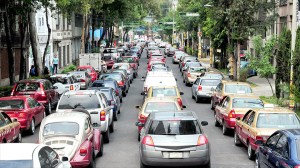 The PAN faction in the Federal District Assembly (ALDF, for its initials in Spanish) has proposed retiring the “tenencia” (property tax) on private vehicles, including those that cost more than 250 thousand pesos, that is, the so-called luxury cars.
In place of the tenencia, Local deputy Andrés Atayde Rubiolo suggests taxing private autos on the bases of two factors: the amount of contaminants per unit, and yearly mileage.
This would be a proportional tax, with a rising rate: those who use their cars more, and who pollute more, would pay a higher tax. y.
Atayde added that the tax would be “corrective”, in that it compensates for the damage in the city caused by excessive use of private vehicles, said to be the largest contributor to pollution, as well as an incentive to reduce the use of private autos.
The chairman of the ALDF Finance Committee clarified that the tax would not be on cumulative mileage on the auto, but on mileage during the corresponding year. That is, a car that has been in use for several years would not be taxed at a different rate than a new car with very low initial mileage.
The National Action Party (PAN) believes that putting a tax on the savings or investment of the city’s families distorts consumption, savings, and investment in the medium and long terms, Ayayde Rubiolo added, calling the tenencia a “distortion” in that ownership of an automobile was a investment.
Atayde Rubiolo also reported that according to his data, 50 percent of the tenencia in the capital comes from middle class and lower middle class taxpayers.
 He stated that the intention of the proposal is that families who, with effort and savings buy a car for mobility, will no longer pay this tax. However, luxury and larger autos, which tend to pollute more, would pay a higher tax rate.
The proposal, as presented, would earmark revenue from the new tax primarily to the Fondo de Movilidad (“Mobility Fund), given that currently seven out of every 10 trips in the Federal District are made by public transport.
The Fondo de Movilidad presently spends seventy percent of its budget on roads for cars, and only thirty percent on pedestrian and cycling infrastructure.
While I think any proposal that encourages people to drive less (and stop hogging the road with large luxury vehicles) is worth considering, a few possible suggestions might be to give a lower annual mileage rate for electric or flex fuel autos; ignore the expected demands from luxury car services (like Über and the like); use some of the “Mobility Fund” for low-cost loans for buying more energy efficient taxis and alternative fuel autos; and earmarking a higher percentage of the fund to pedestrian and bicycle transportation needs.
Thoughts?
Revolutionary Changes
¡Feliz Día de la Revolución!
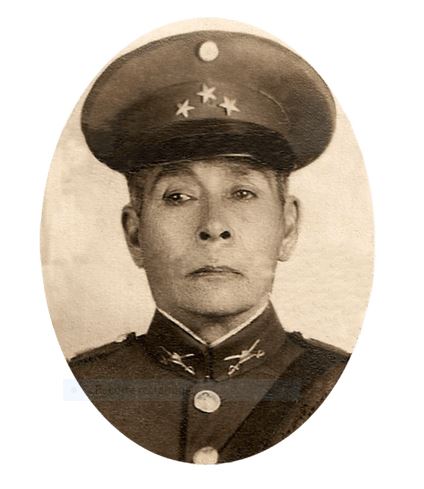 It isn’t unusual to find that veterans of the the ten-years of revolution ended their service in an army completely different than where they had started out. Besides those professional soldiers who defected from the old Federal Army (like the artillery expert, Felipe Angeles — ) and those whose ideological commitment led them to transfer their allegiance from one to another revolutionary faction (like the Constitutionalist turned Villista, Rafael Buelna), there were those whose motives might have been opportunistic, but who fought all the same, within what would later be dubbed the “Revolutionary family”.
But very few made the radical change Amelio Robles did.
Born in rural Guerrero state in 1889, Robles joined the Zapatistas in 1912 as an irregular messenger and forager, taking on more and more duties, promoted to Captain, and … upon joining the regular (Constitutionalist) Ejército Mexicano, was promoted to Colonel. A decorated war veteran, Colonel Robles would outlive several wives before dying in 1984 at the age of 95.
Did I mention that Amelio Robles was born Amelia?
All in all, no way you’ll build a wall
I’m still amazed at the number of people who think a wall… or even a fence… along the 3154 Km (1954 miles) of land border between the United States and Mexico is feasible. My best guess is they’ve seen photos of the less than half that’s a more or less straight line.
Nothing to fear but fear itself
I haven’t been posting much on this site, and … as I generally do… stayed away from any discussion of US politics or of my personal life. For the record, while there has been an absurdly long delay in completing my naturalization here, I hadn’t planned to vote in the US anyway, and really didn’t have more than a theoretical interest in the outcome, the same as any other foreigner.
While I think the outcome of the US election had more to do with the inability of the losing candidate to connect with the voters (and her party’s reluctance to deal with very real distrust for the status quo), the election of a President who openly appealed to white supremacists, and who made anti-Mexican rhetoric integral to his campaign is likely to affect me personally. Some thoughts at three in the morning.
I first moved to Mexico the first of September 2001, in good part because I was tired of racism and I sensed the country was headed for a war. Which, it was, a mere ten days later. Coming back to the US a few years later, I didn’t recognize the place… the rampant nationalism and worship of the military you expect in a country at war was all there, but not the sense of a people pulling together, nor any sense of sacrifice for the good of the nation. Coming back to Mexico was a relief.
Mexico is hardly perfect, and our government is held in even less repute than that of the United States, but still… people speak in terms of “solidarity” and … where we argue or fight with each other… it is with a sense of fighting for the common good, and not personal advantage (even when, in reality, it is for personal gain). Outside of sports, you don’t hear talk of “winners and losers”. I like that.
And now… the country of my birth is to be led by an enemy of the country of my choice. What will happen?
I once had a few rocks tossed my direction by a crazed junkie who was shouting something about Iraq (at least that’s what I think she was babbling about), but I don’t expect any great outbreaks of anti-gringo violence here. Less willingness in the “gringo ghettos” by municipal governments to make concessions to foreigners, perhaps, and a few more mega-protests outside the US Embassy here, but nothing I’d take personally.
Financially, the country… and myself… will take a hit (and already have). Perhaps I’ll need to post more and beg for donations again. As it is, my business is on the brink of closing, and maintaining a middle-class life is becoming something of a challenge: which leads me to speculate on how Mexico will respond should a Trump Administration attempt to carry out it’s threats to crack down on undocumented aliens… or in Trump-ese, “Mexicans”.
It wouldn’t affect me directly, but the first response I’d expect from the government would be a movement against those “permanent tourists” and “border jumpers” that are easily discouraged from staying in the country, and could be removed without much damage to the economy. How much a rental and maybe a few extra meals at local restaurants contribute to the overall national wealth is probably much less than those snowbirds and border jumpers (who assume they will be given 180 days on a temporary visa every time they cross the border) think they do.
Our visa fees are modest, and a significant raise in prices could be imposed without a problem. I would expect immigration officers to be more proactive, and perhaps making a public display of deporting gringos working without authorization.
None of which really affects me. What does are the prices for the goods and services which are now imported from the United States. “Thanks” to NAFTA, most of my groceries are US brands, or reflect the prices of US imports, and food prices will be going up significantly. They already have, and that may not be a bad thing. Should … again as Trump threatened… try changing NAFTA’s terms, we are in a position to reclaim control of our agriculture, and with the US unable to buy as many Mexican food exports, the internal market could absorb much of it (and the prices would reflect much lower transportation costs).
Over the long term.. should we be able to withstand the pressure on the peso in the meantime… less dependence on US markets (and a general revulsion throughout the world at the US President) is an opportunity to expand trade with the rest of the world. US consumers will scream bloody murder is auto prices rise 35% (another Trump threat), but considering we can sell autos elsewhere just as well, and the auto plants here aren’t about to move to the United States, we’d make out well there.
Our oil? Depending on the month, Mexico is the second or third largest foreign supplier to the United States. It was suggested a few years ago that, while developing our abundant alternative energy sources (hydro, solar, tidal, wind, etc.) use the oil we have at home to develop our own manufacturing capability. Thanks Trump.
On a purely political level, the traditional parties here were all openly betting on a Clinton Administration that would, while paying lip service to our sovereignty, used us as an outlet for their military sales and supplies, under the fiction that they were “assisting” us in fighting a war to prevent the sale of drugs to the massive consumer market in the United States. And, like the Obama Administration, would praise (and reward) those Mexican politicians whose policies benefited the United States and its multinational corporations. With the despised Trump heading the US government, Mexican officials seen as too pro-US are not likely to find much support. I’m one who believes Mexico would be better off, financially and otherwise, if it turned to strengthening the internal market, and if it developed closer ties to the Latin American nations at the expense of the northern neighbors. And traded more with Asia than with the US.
The US has elected an ultra-nationalist (or at least an ultra some-of-the-nation-alist) and the response here might be one of our own… a return to our traditional political non-alignment, freeing us to work for the common good of Mexico, and not the economic benefit of the United States.


 mexfiles.net