¿Adios, Beto Fife?
While U.S. police departments are proliferating to a sometimes absurd level — there are 2500 separate police agencies in Texas alone compared to 2300 or so in all of Mexico (Grits for Breakfast asked the question “Do community college police really need a SWAT team“… when maybe a better question would be “Do community colleges need their own police department?”) — the Administration is now pushing to combine all local police agencies into a single agency, at least at the state level. That is, the state would be hiring and paying for our local coppers.
In a way, that’s very good. While I have no problem with Mazatlán police, and the municipio has made some progress in combining the various units, the traffic police and security police and preventative police (and the beach police and tourism police) into just “The Police” there is an overwhelming problem here. The municipio doesn’t have any real taxing authority, and depends on the state for its resources. The security budget has been running at a deficit for years, and — with a combined police force, there’s a need for some new uniforms, paint jobs for police cars, and whatnot, on top of salaries and pensions (and, alas… funeral expenses and survivor’s benefits) that have to be met.
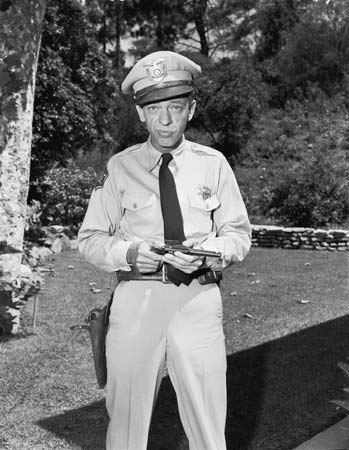
Mazatlán — being a seaport and beach resort among other things (like a major exporter of marijuana and opium products) — probably has better policing than many places. One problem highlighted, and used to sell this proposal, has been the extremely low pay for officers and the appallingly low educational standards. According to Genaro García Luna, the Federal Secretary of Public Security, 70 percent of police officers have only a “basic education” and only 4.5 percent have a degree of some kind. But then, a lot of these departments can get by with hiring Beto Fife, or he may be the only candidate for the job.
García Luna claims (and I’ve no reason to doubt him) that 17 percent of local governments have no police department, and 88.5 percent of all police departments have less than 100 people. Presumably, that includes administrative personnel. Just combining administrative functions make this a good proposal on its face, and — recognizing the educational problem, as well as the pay problem (some officers — I’m presuming rural officers working part time — earn less than a thousand pesos a month. Those guys NEED the bribes: be generous!)
 Off the top of my head, my only objection is that rural areas (with less voters) are likely to get stinted by a state police, and there is always the danger that police protection will be used as a political football, as it was in the Federal District (where the police chief is a presidential appointee) which has a local government overwhelmingly opposed to the Administration. And, with Judicial and Preventative police having different roles, and answering to different branches of government (Judicial police, as the name suggests, work for the judiciary and carry out court orders, while Preventative police are controlled by the executive branch of government), who and how a unitary state police will be structured and under whose authority, are considerations. My understanding is that State Police would be under the State Governor’s authority, which may be one reason state governors are lining up behind this initiative.
O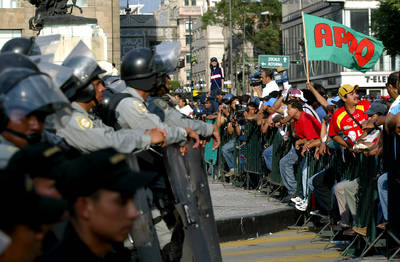 ne thing that needs to be understood. Policemen has never been held in high esteem here. With the exception of Jorge Rivero (where the story line had less to do with police work, and more to do with getting Rivero’s shirt off, and showing off his muscles), there aren’t heroic cops in Mexican films or TV shows. Sometimes there are honest cops in the movies, but usually, they depend on the derring-do of El Santo or Lola la Truckero or even La India Maria to catch the baddies. Cops, if they aren’t crooks, or bullies, or the agents of repression, are usually seen as Barney Fife figures… pathetic, inept and naive. Changing public perception is going to require much more than changing an organizational chart.
Just firing cops is not a good plan, so I’d like to see more on what’s being proposed in the way of training (and not just in things like firearms use or the law, but in how to act like a decent citizen — which pays off both in officer morale and in public perception of the police. The Nezahuacoatl police, after reading Don Quixote and taking art appreciation classes (and getting a raise) themselves demanded honest administrators.
But, I don’t see a bureaucratic shuffle as particularly useful as a tool in creating honest coppers. If anything, it would seem more cost effective — if I was Señor Rico Criminale — to bribe one honcho in the state police bureaucracy, than to run around spreading bribes among a bunch of municipal honchitos.
North of the border — and to a large extent here — the concept is being sold that state-wide combined police departments are somehow less corruptible than local police. In the sense that lousy pay and the generally low esteem in which police are held here may have a lot to do with corruption, giving officers a decent wage and state civil service benefits might be a step in the right direction.
Justice reforms probably go hand-in-hand with police reforms: simply shuffling law enforcement from the municipal to the state level is not going to resolve a much bigger, more intractable issue… how does the state restore the people’s belief in their ability to honestly, transparently and impartially serve justice?


 mexfiles.net