¡COMO MEXICO NO HAY DOS! Mexico's hsitory and culture, the Real, and the surreal, Mexico. Politics, economic, news sometimes here, but regularly posted at mexfiles.substack.com. Copy and quote freely, but be respectful, and acknowlege the source. And, of course, monetary donations help keep the site going.
There will be time, there will be time / For visions, and revisions, which a minute will reverse
And, perhaps his is the time.
My 2008 “Mexican history for gringos” book… “Gods, Gauchupines and Gringos” was intended for “expats” and students; it was never intended as a scholarly work, but with two goals in mind:
First, as an antidote to some of the more egregious misconceptions of Mexico I witnessed and heard from foreign visitors (and even long-term residents), including the assumption that Mexicans were “just” a mix of some supposedly homogeneous “Indian” culture and an equally homogeneous “Spanish” one. Thus, the inclusion of other migrant communities.
Secondly, recognizing that Mexicans are more keenly aware of their history, and form their opinions and actions based on their own knowledge of that history –something alien to most foreigners, especially those from the United States. As an introduction to the “mainstream” view, or, maybe better said, the generally accepted interpretation of past events, in a small way, I hoped to assist the expat or student when it came to those “why do they…?” questions.
With that second goal in mind, my outline was the table of contents for a middle school history text.I deviated somewhat, in including some acknowledgement of women and LGBT+ historical figures, given that feminism and the rights of sexual minorities were being discussed openly in Mexico, and were likely to come up when interacting with locals.A few readers found this problematic, and at least one “Amazon” reviewer (who enjoyed the book)commented that the author was “obviously” a “total lefty”.
Maybe not “totally”.I realized later my book short-changed important minorities like Afro-Mexicans and the various East Asian migrants (if the Afro-Mexicans can really be described as mere “migrants”) and there are some issues – the Inquisition being a prime example – which I ignored (as do most histories), but have come to reject the standard “lefty” viewpoint.
And, with time, much of what seemed likely in 2006 when my editor and I were pushing to get the book to press.I certainly did not expect the “drug war”, nor the political shift to the left in 2018. Nor the reconsideration of various historical figures (like Cortés’ “mistress”, Doña Mariana) and the new focus on otherwise forgotten ones.Nor… for that matter… the rapid economic and political changes of the last two decades.
All this to say, there are many things I’d write differently, IF I were to revise “Gods, Gauchupines and Gringos”.I made a few half-hearted attempts over the years to at least start, but for one reason or another, never managed to start anything.
As it is, given my age, my health, my living conditions, I don’t know I’d have it in me to even try. Instead, what seems feasible, and while every week or ten days, I’ve managed a “substack” post on Mexican politics (or… more accurately… US-Mexican relations), I can also manage a series of essays on specific topics, like the “lost northern territories”, the Inquisition, the “cultural revolution of the 1920s”, and others. Enough for a book? Probably, although I’ve not developed a detailed enough outline to think about that…. yet.
ABOUT THAT “YET”…
My previous editor died several years ago, and for now I’m operating without a net. I’ll post the essays, or the draft of essays, on Mexfiles.net under a Creative Commons license until (or IF) an editor takes me on, and will, of course, want to protect their rights. In the meantime, I’ll depend on the kindness of strangers (not so much for any financial incentives, but to question, disagree, or downright condemn whatever it is I write… comments are always welcome, even negative ones).
By no means would I claim to be writing an “academic” work… that is, in an eclectic work like this, like in Gods, etc. I will be going easy on the citations, although… where possible … I will include the reference source.
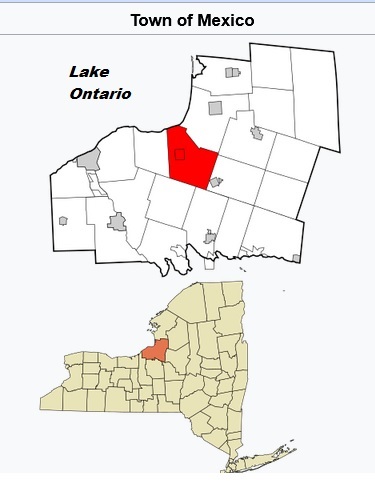
Mexico TOWNSHIP (not the village of Mexico), New York, in Oswego County borders Lake Ontario, and… in theory… extends to the midpoint in the late, where it becomes the Province of Ontario.
I haven’t been there in a very, very long time, but remember in the Village of Mexico, there was a Gulf service station…naturally, the Gulf of Mexico.
A pop history video, but very, very good. The Monroe Doctrine has been reworked to fit the situation several time, and ignored completely (like the Mexican-American war, which doesn’t even get mentioned here) when inconvenient.
he’s completely forgotten today, but give a thught to Robert Tomson. Who? not only the first native English speaker to settle in the Americas, but the first “illegal alien” deportee.
Born about 1535, the son of a British merchant, Robert was sent to Cadiz when he was 17 or 18 on family business. Or .. perhaps… his gap year? He was supposed to stay with John Field, and English merchant in the busy port city. He did learn Spanish (pretty quickly… a bright lad, apparently) but somehow managed to catch the attention of Maria de la Barrara, herself from a wealthy merchant family… one looking to expand operations in the “new world”.
We have no clue what the de la Barraras thought about their foreign son-in-law. Maybe they put a lot of faith in his abilities, or maybe they wanted him out of the way. Who can say? At any rate, he and John Field (which suggests he’d not been taken into the de la Rarrara family business) sailed to Vercruz in 1556. Where Field immediately contracted “vomito negro” (what we call yellow fever today) and died on the way to Mexico City. Tomson did find another English resident in the Capital… Thomas Blake1.
While Robert did recover from his own but of “vomito” at Blake’s residence, he ran into a little problem. Tomas had been born in 1535…and what happened in back in 1534 no one expects?
Yup… the Spanish Inqusition. Once Robert was healthy enough, the Inquisitors locked him up as a heretic. As I’ve pointed out before, the gory stories of torture and burnings at the stake are over-blown2. He had his effigy hung up in the Cathedral and sentenced to walk around with a dunce cap until he was deported abut three years later.
What recognition Tmson has today comes from his observations, which he wrote down, of Mexico City… later quoted by, and a source, for Richard Hakluyt’s 1589 hakluyt’s Collection of the Early Voyages. Travels and Discoveries of the English Nation. — usually credited with generating the buzz among English elites for their own colonial expansion into the Americas.
Whatever happened to Tomson after his return to England we just don’t know. All we can call call him is the first deportee.
There doesn’t appear to be much information on Blake. However, it does confirm that there were “other than Spanish” Europeans in Mexico much earlier than we realize. ↩︎
Just in the Tutor era of Robert’s lifetime, the English burned or beheaded… in a much smaller population than Spain… offed more of their own for “heresy” than the Inquisition managed world-wide in 300 years. By a factor of at least 5! ↩︎
The Trans Isthmus rail-port project is up and running (on a limited basis) now, but we forget sometimes that the project itself goes back even before Porfirio’s first (and for a short time profitable) project that functioned from 1907 until 1914 when the Panama Canal largely made it obsolete.
From Millard Fillmore’s first “state of the union” address in 1850:
Citizens of the United States have undertaken the connection of the two oceans by means of a railroad across the Isthmus of Tehuantepec, under grants of the Mexican Government to a citizen of that Republic. It is understood that a thorough survey of the course of the communication is in preparation, and there is every reason to expect that it will be prosecuted with characteristic energy, especially when that Government shall have consented to such stipulations with the Government of the United States as may be necessary to impart a feeling of security to those who may embark their property in the enterprise. Negotiations are pending for the accomplishment of that object, and a hope is confidently entertained that when the Government of Mexico shall become duly sensible of the advantages which that country can not fail to derive from the work, and learn that the Government of the United States desires that the right of sovereignty of Mexico in the Isthmus shall remain unimpaired, the stipulations referred to will be agreed to with alacrity.
By the last advices from Mexico it would appear, however, that that Government entertains strong objections to some of the stipulations which the parties concerned in the project of the railroad deem necessary for their protection and security. Further consideration, it is to be hoped, or some modification of terms, may yet reconcile the differences existing between the two Governments in this respect.
Fresh instructions have recently been given to the minister of the United States in Mexico, who is prosecuting the subject with promptitude and ability.
What’s interesting is that the US had just seized about half the country, but that Fillmore was anxious to repair relationships within Latin America (mostly to gain access to resources… but then, that’s been SOP forever) and was not dictating terms, for once in US history.
With “Manifest Destiny” back in popular discussion in the US, a reminder that not everyone back in the 19th century was on board with invading or annexing (or both) foreign territory. Among those opposed to the War on Mexico in 1848 was Frederick Douglas, editor of the Rochester, NY “North Star”.
January 21 1848
“Our nation seems resolved to rush on in her wicked career, though the road be ditched with human blood, and paved with human skulls. Well, be it so.
“But, humble as we are, and unavailing as our voice may be, we wish to warn our fellow countrymen, that they may follow the course which they have marked out for themselves; no barrier may be sufficient to obstruct them; they may accomplish all they desire; Mexico may fall before them; she may be conquered and subdued; her government may be annihilated — her name among the great sisterhood of nations blotted out; her separate existence annihilated; her rights and powers usurped; her people put under the iron arm of a military despotism, and reduced to a condition little better than that endured by the Saxons when vanquished by their Norman invaders; but, so sure as there is a God of justice, we shall not go unpunished; the penalty is certain; we cannot escape; a terrible retribution awaits us.
“We beseech our countrymen to leave off this horrid conflict, abandon their murderous plans, and forsake the way of blood. Peradventure our country may yet be saved. Let the press, the pulpit, the church, the people at large, unite at once; and let petitions flood the halls of Congress by the million, asking for the instant recall of our forces from Mexico. This may not save us, but it is our only hope.”
Back in 1962, during the administration of Adolfo López Mateos — who governed, as he said, “as far to the left as the constituitin allows” (though it did allow him to break the railway man’s union, and… alas… made the odious Gustavo Díaz Ordaz his Inerior Minister (and successor), did make one of the last leaps great leaps to the left when he nationalized the electrical system.. something only recently (and incompletely) clawed back.
In the early 60´s there were billboards all over Mexico reading “The electricity is yours. Use it!”, While rural electrificatin didn’t reach everywhere (and still doesn’t) , it did upend Mexican life… television and radio reached the backwaters,,, fostering the desire among so many to move to the cities, as well as creating a huge demand for “electrodomesticosm.
Now in the second wave of electrification, not just in the industry, but in everyday life, the government is again stepping in, and very likely creating a whole new market for eletrical goods. Speficially autos.
While, yes… electric cars are not new here, the government is now investing (by way of a “public-private parnetrship) in electric vehicles. The Olinia (Nahuatl for “movement”) — developed at the National Polytechnical and Technical Institutes is expected to be on the market by the start of the World Cup Games next yea. Well, as Carlos Monsevais once noted, Mexicans have three topics of conversation: futbol, futol, and futbol. Using the World Cup as a deadline makes sense.
Anyway, the Olinia is designed specifically for the Mexican urban market. A “mini-car” (two-door, get around town, run errands, commute) car, a four-door suitable also for taxis, and a “Last-mile” delivery van are the models to be made available. One huge advantage over the better known Chinese brands and Teslas, is that Olenias can be recharged from a standard electrical outlet. Perhaps there will create a sendary market in extention cords, but wait and see.
And the price? YOW… from 90,000 to 150,000 pesos.. or about 4200 to 6000 US dollars. Financing (though the government) available.
And.. the little one (the 4200 dollar one) is so darn cute!
Tongolele, born 3 January 1932… and still at it, just not shaking her hips as much as she did from the 1940s to the 70s… in nightclubs, videos, and even a horror movie or two (“Island of the Snake People, with her co-star Boris Karloff),
Although she’d been part of something called the Tahitian ballet after leaving home in her native S Tongole (aka Yolanda Montes) when she burst upon the Mexican nightclub/cabaret scene in the 1940s, she depended on her putative Tahitian great grandmother (her ethnic background is more mundane Euro-mutt — Spanish-Swedish-German-French) the young dancer from Spokane had only that Spanish surnamem a vivid imaginastion, and a lithe body to make herself the a fixture in Mexico City¿s artistic and even intellectual circles. The poet rene Leduc and his one-time wife, Leonara Carringon, among her many, many cronies.
Surrealism, cheexe horror pix, danging… or all three simultaneously, she did it all:
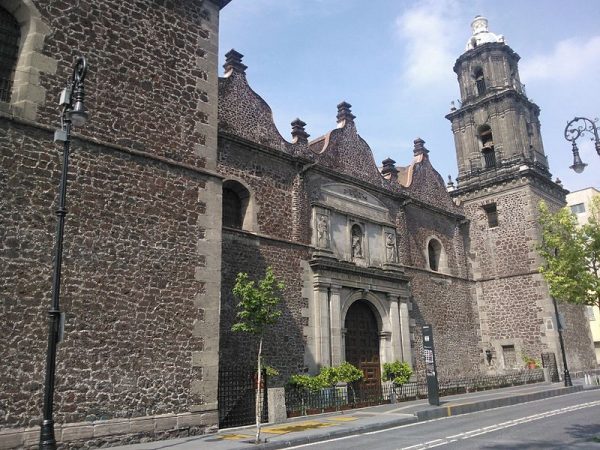
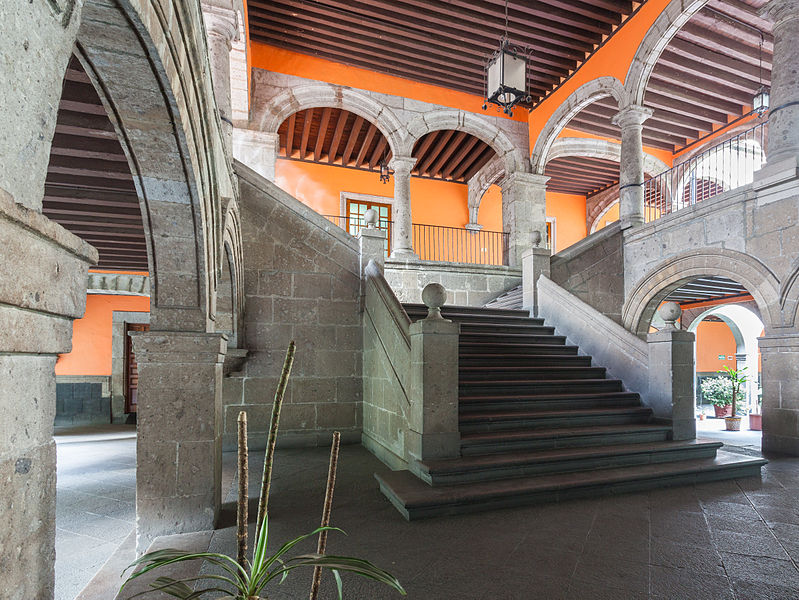
I image leeches and wolfsbane aren’t in the pharmacy, but with 500 years in operation (and performing operations9, Mexico City’s Hospital de Jesús is still in the same business — and on the same site –providing medical care to all social classes, regardless of ability to pay, since 1524.
Hernan Cortés wasn’t exactly the kind of person who ever said “sorry”., but like other medieval warlords had that nagging sense that he was headed for the bad place, and had a rather transactional relationship with his maker. Not that he saw anything wrong with mass murder in the pursuit of bringing people to Jesus (and making himself rich), but that it being “easier for a camel to pass through the eye of a needle”, maybe sharing a bit of the loot with Jesus might ease the way.
Whatever it was that Cortés was thinking — perhaps just that sick and dying “indios” and wounded conquistadors needed taken somwhere — he did finance what was a “multi-service” general hospital. By multi-service, i don’t just mean medical care — or what passed for medical care at the time — but preparing you for the next life. The complex still includes a church… and where Cortés¿ remains were meant to go when he died the richest man in the Spanish empire in 1547, and did… although it was quite a while — like 400 years –before that was the happen.
The Hospital — financed through a kind of Cortés family trust for the first 300 years — survived somehow, updated and expanded in the 17th century after the 1624 floods that left the entire city underwater for two years, and after 1824 through private donations. it was expanded again in the 1960s, with a new and frankly boring modern wing although… having always depended on donations and taking in all patients regarless of ability to pay, it is now strapped for money, and the oldest hospital in the Americas (and second oldest continuously functioning hopital in the world, faces an uncertain future.
(apologies for bad formatting/editing… I just can’t get it set right after trying to fix everty8ing for the last hour or so)
… in 1824 there were only 10 elementary education institutions in Mexico. By 1844 this number had multiplied to 1310, covering a total of 59,744 students. By 1846, the number of elementary educational institutions in the republic had nearly reached 5000, with approximately 250,000 students.
Joseph Lancaster was the British Quaker who — despite never having been to Mexico — was probably had more to do with General Santa Ana’s otherwise inexplicable political success — and led to the downfall of his regime, and the creation of a modern state under the Reforma administration of Benito Juarez.
Born 1780, Lancaster had wanted to be a school-master from an early age. At the time, primary education — readin´ritin´ánd rthmatic — was pretty much left to the church, and, for the wealthy, private tutors. The focus was on religious education, and if the working class was educated at all, it was only meant to meet the minimal requirements of whatever job they were expected to perform.
While the school Lancaster first ran (and got a reputation as a harsh and often cruel school-master at a time when corporal punishment was the norm) incorporated influences by Smith, as well as Church of England missionaries who were working in India, trying to turn Madras orphans into good English mechanics and clerks, he developed methods still standard in education today.
Not all Lancaster’s innovations were unique to his system, overall, what he developed was what would become standard, and unremarkable to any teacher or student today: a set class schedule, a lesson plan with clearly defined goals for each subject (and — for that matter — dividing the school day into discrete subjects — an hour of ´ritin’, and hour of readin’, an hour of ‘rithmatic… and do on) which needed to be tested regularly (“there will be a quiz”) and beginning with the most basic of concepts, building on them as the learning process progressed. Lancaster also proposed small rewards for students doing better than average work (and teachers still give students god stars for well-done homework).
W
With a clearly defined curriculum and method, this also meant it was possible to writer teachers’ guides, and standardize education throughout an area. Especially when the Lancasterians (as he and his followers became known) realized that, with a shortage of trained teachers, those pupils who did the best on examinations might also be put to use, themselves given the task of training those less advanced than they were… or, to consider becoming teachers themselves.
Lancaster himself has his faults. Being hopeless with money being one of them, and more than once he ended up in debtor’s prison. Offered a lifeline by Simón Bolivar — in his hope of making Grran Coombia Gran (as soon as possible), and understanding his nation was in dire need of qualified, educated people to replace the departing colonial overlords — welcomed Lancaster and his supports to the Americas. Lancaster himself would eventually move to Pennsylvania, dying in 1824… the same year his daughter and son-in-law arrived in Mexico to start what one might call an early NGO/think tank, pushing the Lancasterian line.
Enter General Santa Ana. The man had more than his faults as a politician, but — as Will Fowler’s recent “revisionist” biography of the old rogue points out1, Santa Ana did value education, donating large personal sums for schooling. In his autobiography2 (written after his final disgrace and fall), he proudly mentions that his hacienda workers were always provided with schools, and it might be noted that Dr. Mora — the early “elections analyst” — noted that the real iinfluencers in elections were the better educated middle class — the rural middle class in his day. The same class Santa Ana was from, and something his supporters who wanted their own children educated, would rally around, whatever the Generals particular party at the time.
While the “Lancasterian Society” — had been successful in the massive growth in education from 1824 until 1843, in that year, with Santa Ana seeking to centralize the state, took over the educational system — incidentally unlike today, a CONSERVATIVE administration not privatizing a social service, but the opposite, taking it under state control. The Lancasterian Society stayed on, as a “think tank”m and government contractor as the educational system was expanded to include secondary and higher education as well. With more trained teachers (though the new “Normal Schools”) the need to use the “best” students as teachers somewhat lessened, but continued especially when it came to higher education (today’s TAs in every university undergraduate program).
And here is where Benito Juarez comes in. He may not have learned to read until he was 12, but he was earning more than his share of gold stars and quickly rose to the top of his class…A good enough student to be a teacher himself for a time… his first leadership role.
And, he was hardly the only one of the “Reforma” generation that transformed Mexico following the defeat of Santa Ana and the old guard in 1855. Nearly all the major leaders were products of that Lancasterian system. The novelist, jurist, general, and later Secretrary of Public Instruction (and Supreme Court Justice) Ignacio Manuel Altamirno had been the recipient of a Santa Ana decree mandating every community to support at least one “Indian”at the university. That Altamirano’s father was the municipal president of Toluca had something to do with it, true… but yet another product of the Lancastering/Santa Ana educational reforms.
Even Porfitio Diaz — at least according to a possibly apocryphal anecdote trlated by PR man James Creelman in the 1911 “Diaz, Master of Mexico” has a derring-do Porfirio swinging from a rope past the church tower cell of a fellow plotter against Maximilian, outwitting any listening guards by conversing in Latin — Don Porfirio, belying his public image as the simple soldier, yet another of those Lancasterian prize winning pupils, doing well enough in his prep school Latin to have been yet another student teacher.
It is, perhaps, not surprising that so many of Mexico’s leaders — Juarez, Obregon, Calles, not to mention the current President (who promises greatness) have been teachers, or — like Cardenás — see education as an essential to the nation, it’s development, and are willing to spend an inordinate amount of the federal budget, seeing it as not just in terms of its economic benefit, but essential to the very growth and survival of the nation.
“Santa Anna of Mexico”, University of Nebraska 200, pp. 216-17, et. passum ↩︎
“The Eagle”, Anna Fears Crawford, ed. State House Press (Austin) 1967 ↩︎
Also: Sunpiejing Wu, Shixue Jiang, “The emergence and role of Lancaster in Mexican public Education”, Journal of Infrastructure, Policy and Development, (http;//doi. org/10.24.294/jipf.v8i7.5592 and sources quoted in the paper.
And, of course… myself: “Gods,Gachupines and Gringos”.
With the controversy over going to a system where federal judges are elected, it might be useful to take a look at what was has been done in the past. Mexico became independent in 1821… sort of. But, the “Plan de Iguala” was a sort of ad hoc compromise that ended the war of independence — a Catholic monarchy, but at least an independent nation. The immediate result was the large chunk of the country, the so.called “Captain-Generalcy of Guatemala” declared independence from the Mexican Empire, the local oligarchs not wanting to cede power to Mexico City, having been fighting mostly just to take control of their own fiefdoms. Which was pretty much what the oligarchs in the rest of the new “Empire” wanted to do.
it took another coup — forcing “Emperor” Agustin — the first and last — to abdicate, and having a much more varied oligarchy (as well as business and intellectual class that favored independence and more centered in Mexico City and the “heartland”) a better compromise system was called for.
So, looking northward, the borrowed from what was tat the time the model constitution for a republic, and got to work. The basics were there… an elected chief executive and legislature, a federal republic… but, noting the US Constitution was rather fuzzy on how its judiciary would work.. and having had its judges sent by Spain previously… something beyond appointing judges to life-time positions … seemed to make sense.
The Constitution [of 1824] also established that the Supreme Court would be made up of 11 ministers, who would be elected in open voting in each of the states on the same day that the legislatures were elected. In each state, 11 ministers would be elected, and their list would be sent to the federal Congress. The federal deputies would make the count, and those who obtained the greatest number of votes out of the total number of legislatures would be elected.
The revised constitution of 1857 would also include elective judges, although the 1916-17 Constitution … focused more on social issues than on governmental structures… did away for direct election of judges.
There has been a lot of talk and more than talk about the advantages Mexico has in its trade ties to China… both from “nearshoring”, and through its expanding transportation network, as well as it’s geographical position, with both Atlantic and Pacific access, as well as “north-south” collections.
Which is really nothing new, as explained in this video from the Mexican Cultural Institute, hosted by Brown University’s Dr. Eveyln Hu-Dehart.
I had been aware of Evelyn Hu-Dehart’s books on the Yaquí1 , but less so with her later publications on the Chinese/East Asian disaspora in Mexico. However, her focus for the last several years has been on the Chinese (and East Asian) migration to especially north-west Mexico.
“Chinese” is something of a misnomer when speaking about before the mid-19th century, although Chine is essential to this story. According to Dr. Hu-Dehart, “Chino” — “Chinese” — was broadly applied to east Asians of any ethnicity… at least initially, although that would change in the later 19th century when Chinese expelled from the US in the 1870s and 80s, or denied entry “thanks” to the Chinese Exclusion Act of 1886, settled in northern Mexico rather than in Califronia and the US west. .
Dr. Hu-Dehart’s presentation is geared to a general audience, and one might quibble with a fact(oid) here or there (Galleons were sailing ships, and while they might need to be towed if there wasn’t a favorable wind, they weren’t rowed across the Pacific. Depending on the size of the ship,the crew would be very large however, anywhere from 159 to 500 sailors, not always free laborers). and she closes her presentation in the 1930s, missing the important role Chinese emigres — or rather internal refugees from the pogroms and overtly xenophobic attacks in the north — took in Mexico City, especially in the restaurant and… strangely enough “French bakery” sector. And, of course, the recent and noticeable Chinese/east Asian immigrant community, and China’s strong presence in industry, including the automotive sector.
Enjoy.. and learn.
Missionaries, Miners, and Indians: History of Spanish Contact with the Yaqui Indians of Northwestern New Spain, 1533–1830 (1981)
Yaqui Resistance and Survival: Struggle for Land and Autonomy, 1821–1910 ( 1984) ↩︎
The Mexfiles has never expected to turn a profit, but personal funds only go so far. Miscellaneous expenses (telephone, internet connection, subscriptions, spyware, hardware repair, etc.) run about 600 pesos (35 US$) a month, and donations are gratefully accepted. Please note that your donations are in Mexican Pesos (18 pesos to the US Dollar as of February 2019). A 25 US$ donation is 450 pesos.
The background of Mexican anti-clericalism and the "atheist" general who led the Catholic counter-revolution of the 1920s
128 pp., Editorial Mazatlán, 2012.
An oral history of the World War II experiences of Gilberto Bosques (1894 – 1997), Mexico 's Consul General in Marseilles, France, who saved tens of thousands from the Nazis.
36 pp. Editorial Mazatlán, 2007 $35 MXP (click the image)
While "The Mex Files" authorizes and encourages non-commercial use, such use must include a link including the words "Mex Files" hyperlinked to either "https://mexfiles.wordpress.com" or "http://mexfiles.net". Printed material must reference the original post.
Non-commercial re-publication is allowed for copyrighted material, provided it is "fair use" as defined in 17 USC § 107.
Commercial re-publication and all other use without the express written permission of the author is prohibited.
Information at richmx2 (at) live (dot) com