“San Francisco Values”… in the Yucatan
Mc Clatchy’s intrepid Mexico correspondent, Tim Johnson, finds echoes of San Franscisco in the Yucatan.
Nearly all Oxkutzcab migrants flocking to San Francisco start out as dishwashers, then rise in kitchens. Some have become sous-chefs. They live in the shadows, vulnerable to immigration raids and deportation. Those who come back _ either voluntarily or forcibly _ have mismatched skills. While Oxkutzcab is a thriving agricultural center, few of its corn and citrus farmers can afford to eat Peking duck, Thai food or veal scaloppine, or even have a taste for it.
Roger Burgos, a 36-year-old former sous-chef, developed his cooking chops at Kuleto’s restaurant, a Northern Italian eatery near San Francisco’s Union Square. He worked in other restaurants, too, and can easily banter about how to make bechamel sauce.
Today, he buys and sells cattle, barely making ends meet.
Some 70,000 Yucatecas live in, or around, San Francisco… and — with their return (by choice or otherwise… generally otherwise), the cultural changes are noticible. But, perhaps, the cultural exchange is not as one-way as we might think.
While one wants to blame narcotics use on the gringo-influence, the psychological effects of certain agricultural products weren’t exactly unknown the the Mayans, nor was inter-communal violence, though both are seen as recent problems within Oxkutzcab, and blamed on the returning migrants and the pernicious habits learned in California.
While nouveaux “Yucateca-Thai cuisine sounds intriguing (and, after all, the chiles that are essetial to Thai food originally came from the Yucatan… one of the many gifts of Mexican agriculture to the world) and men helping with the housework might not be such a bad cultural adjustment, coping with those who picked up U.S. style narcotics habits is less so.
An excellent article, though I questioned Tim’s passing reference to “a soupcon of tolerance for gay lifestyles”, as a result of migration and return. I imagine that there are those who just assume any reference to San Francisco has to mention gays, and nothing is said in the article about gays and lesbians and Mayans… but I will.
Tim was gracious enough to admit the phrase was just an oversight on his part when I pointed that the Yucateca Mayans have been known for their tolerance of (or rather quite open acceptance of) same-sex couples for a very, very long time.
I haven’t a clue what a “gay lifestyle” is supposed to be, but I know what gay people are… the people Hernan Cortes, writing from Veracruz (15 July 1524) complained about, when he wrote “They are all sodomites” in the Yucatan and the east coast of what is now Mexico . And, althought subsequent early colonial writers (including the saintly Las Casas) didn’t think every Mayan was a “sodomite”, he did note that same-sex couples weren’t unknown. The much less saintly Diego Landa … who seemed hell-bent on destroying Mayan culture in order to save it (for his book, “Relations of things of the Yucatan”) tried to pretend same-sex relations were unknown, at the same time having people burned at the stake for “sodomy”. The Chilum Balum is full of references to sexual acts between persons of the same gender*
.
The Mayans, who have a few centuries of practice at it, have been very good at just living their lives as they see fit, tolerating the outside world, and … as with their chiles tht eventually found their way to Thailand only to return in a different form, perhaps that “soupcon of tolerance” has always been there and maybe… just maybe… they brought it to San Francisco rather than the other way around.
* Hernan Cortés, Letters from Mexico, Anthony Pagden, trans. (New Haven: Yale University Press, 1986); Rosemary E. Joyce, “Male Sexuality Among The Ancient Mayans” in Robert A. Schmidt and Barbara L. Voss, eds., Archaeologies of Sexuality (London: Routlege, 2000).
Bad manners
After our interview, Pepe showed me around the rest of his property and then brought us back to the courtyard. He answered a call on an old Nokia brick phone — urgent state business. After he hung up, I asked Pepe whether he minded if I smoked a joint. I fully understood the implications of smoking weed in front of a head of state, but of all presidents, I thought, he’d be game. After my translator relayed my request, Pepe smiled broadly and exclaimed, “Por favor!”
Krishna Andavolu, “Meet Uruguay’s Charismatic ‘Robin Hood’ President“
Vice News (10 May 2014)
Call me a stick-in-the-mud, or an old fart, but one … does… not… light up a joint in the home of a head of state, even if he has the good manners to allow what is, very much, an illegal activity to occur in front of him. While the article started out well, focusing on President Mujica of Uruguay’s background as a florist turned guerilla-fighter and political prisoner… and then leader of his nation… one with a surprisingly modest (for lack of a better word) life-style … discussions of Mujica’s vision of a more equitable and just Uruguay give way quickly to the one thing that seems to matter to outsiders about the country — not Uruguay’s long tradition of progressive legislation (the first nation in the Americas with Social Security… going back to the 19th century!) — but that DESPITE its unpopularity, the president and his party pushed through a bill allowing URUGUAY CITIZENS to purchase marijuana, under strict regulations.
I have no objections to either people using marijuana or its legalization in user countries, though I do have reservations about the effects legalization in the largest user on the planet would have on our agriculture here. I do, like Mujica himself — and most Latin American bourgeois — see marijuana use as … well… tacky and sort of stupid. Mujica himself had been talking about the conservative (again for lack of a better word) culture in Uruguay, and resistence to plans for opening up the traditionally agrarian economy to include mining operations.
But, apparently all that takes a back seat to what rich hipsters really care about… themselves and self-gratification. Be honest… would Vice, or any other rich country media… “give a shit about the place” (to quote Richard Nixon on Latin America) … if it didn’t involve their immediate concerns, or — in this instance — suggest that others “buy” whatever it is they see as somehow important. No… that U.S. media stories can talk negatively about PEMEX trying to hold on to 30% of any new oil discoveries (as if, of course, any reforms in the oil laws here mean that the U.S. should have first dibs on Mexican resources), or simply ignore mass protests in Chile demanding free education other than mention that taxes might go up, which might impact some U.S. businesses doing business in Chile. No… we don’t count, but we DO have marijuana and foreign hipsters think that’s great.

I suppose an ill-manned reporter wasn’t the worst Canadian that could have shown up…
So… what does the reporter do? Not just light up a joint, but report on it. While Vice is a Canadian publication, and appeals to the “hipster” market, the incident… and the editors’ decision to leave it in the article… oozes with the contempt and self-indulgence of the “northern” media when it comes to Latin America. Would a U.S. or Canadian reporter smoke a Cuban cigar in front of Barack Obama? Would a Uruguayan reporter? Whether Mr. Obama is as well-mannered as Mr. Mujica is beside the point. And Mr. Mujica may very well not be bothered by marijuana smoking in his own home (although, my sense is, that like most Latin Americans, he’ll tolerate tacky behavior before he would complain and possibly offend a guest). Apparently, Vice’s editors, and their reporters, have no compunction about assuming their “right” to overstep the bounds of hospitality, and seem to be of the mindset that Latin American leaders aren’t important enough to be given the deference due any head of state.
Moreover, there is the sense that — coming from a rich country — one can not only violate the laws, but is entitled to do so, and that — again as a representative of the wealthy nations’ media — such behavior is to be celebrated and reported upon.
Tacky, tacky, tacky. And imperialist to boot.
The master builder: Lorenzo Zambrano
The Economist has an excellent obituary for Lorenzo Zambrano, which — as one might expect — focuses almost exclusively on Cemex’s late CEO’s financial activities in creating a Mexican-owned and Mexican-identified multi-national corporation, and the possible effect of his death on financial markets.
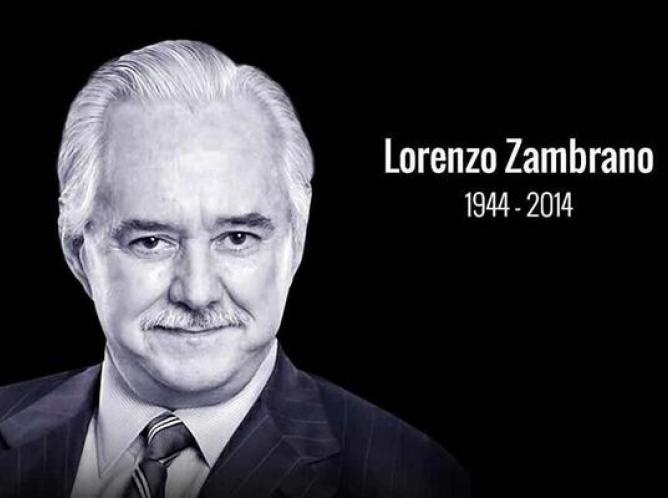
While it does Zambrano justice, one thing to remember about him is that the businessman and philanthopist (who personally both preserved a large part of the remaining Mexican wilderness and helped resolve a chronic complaint with the U.S. over smuggling activity, with his huge investment in buying land for Parque National Ocampo to compliment the U.S.’s Big Bend National Park) he never seemed to forget why there are big businesses… to provide PEOPLE what they need, not to make himself rich.
Literally, he kept this country together … where would be be without Cemex? He will be missed.
The rich will always be with us
If I haven’t mentioned it on this website, I have talked about my sense that “class” (as in “middle-class” and “lower class” and “one percenters”) has as much to do with social assumptions and expectations as with income. I know I’ve said before that as a society, we’re better off with small independent shop-keepers than with chain stores, even if the workers in a chain store earn more money, because the shop-keepers … as entrepreneurs and “stakeholders” in their immediate community are fostering “middle class values,” whereas an OXXO employee has no stake in his immediate community (will he sweep the neighbors’ sidewalk in the morning, or stop at the property line?) and his “investment” in OXXO is only dependent on receiving a paycheck.
 At any rate, the Programa Nacional de Protección a los Derechos del Consumidor, via publication in the Diario Official de la Federation, has given an official definition to our social classes here.
For the most part, the classes are defined in economic terms: the “lower class” (35 percent of all Mexicans) being those without regular employment and who depend on public assistance. the “high lower class” are what perhaps would be the “working class” … people earning above the minimum wage, but doing, in the official definition “arduous work”. This includes both urban workers and small farmers.
The “middle class” is likewise divided between the “lower” and “upper” strata. The twenty percent of Mexicans who “don’t have much, but have stability” fit in here… office workers, tecnicians, supervisors… and… this being Mexico, artisans (potters, sign painters, etc.)
“Upper middle class” people (14%) are “businessmen” (Spanish is a sexist language at times) and … in a rather unclear term, “professionals who have triumphed”… supposedly meaning people like best-selling writers (as opposed to us working slobs) or even Carlos Slim.
It is in the upper class that we see the less economic definitions and the more social ones come in. The upper six percent of Mexicans are those of inherited wealth… the difference between the “lower upper” and the “upper upper” (the “one percenters… literally!) being how many generations their family has held wealth. The One Percenters are officially defined as those whose family wealth goes so far back they may not even know where it came from!
I suppose having been born into moderate wealth Carlos Slim could be considered lower upper class. As it is, his father — as an immigrant — should be considered lower class (I guess I should too, but then, I’m probably more “lower-middle”… an artisa of sorts, with not much money, but enough to get by). Slim himself, as a “professional who has triumphed”, is merely upper middle class. His children and grand-children certainly know where the loot came from, so even if they are richer than the one-percenters (heck, their richer than one percenters everywhere) they aren’t “techncially” one percenters.
I gather criminals and politicans (which some might say are the same thing) should be considered “professionals who have triumphed” … which doesn’t bode well for those of us who think “middle-class values” are what makes for a successful culture.
We’re not as think as you drunk we are
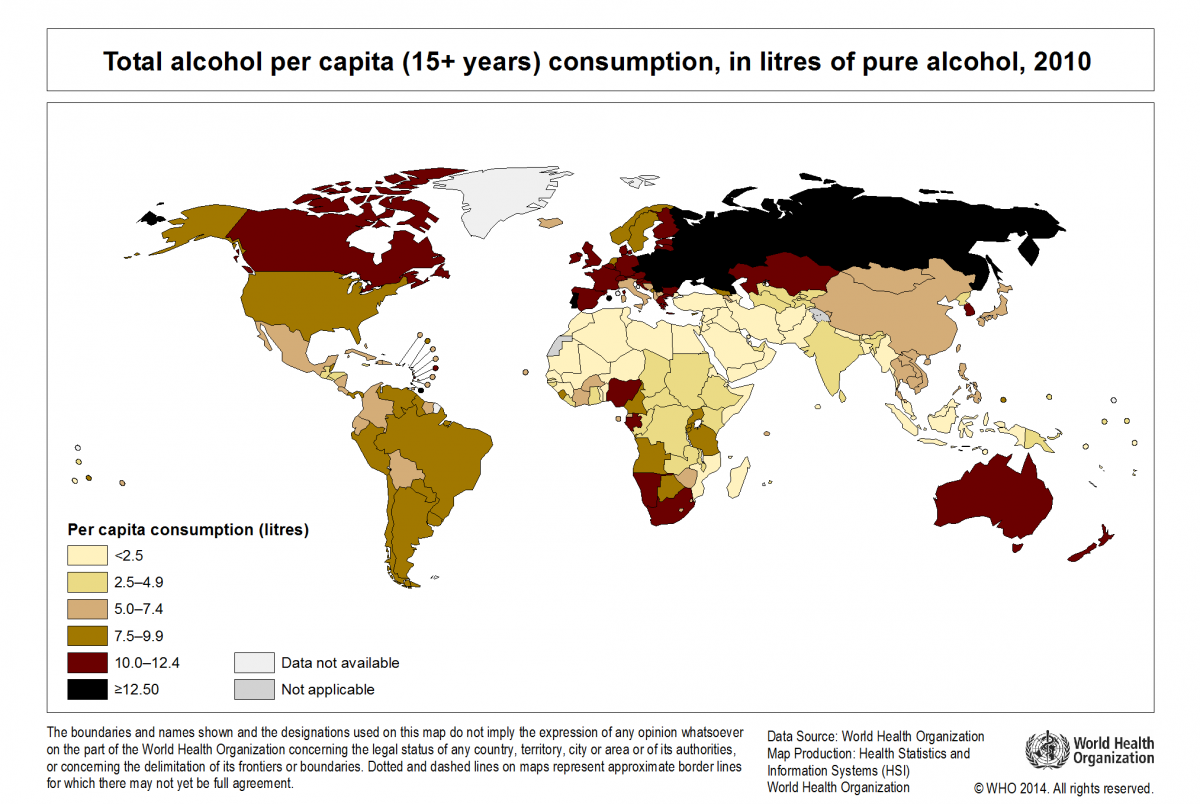
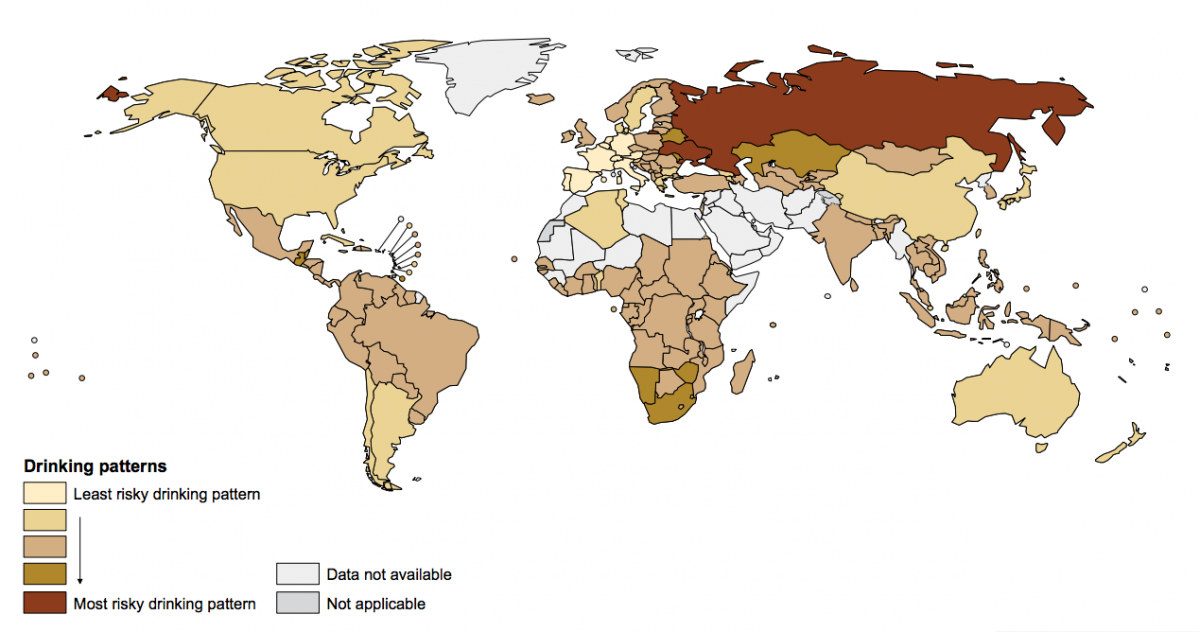
Although the Mexican press yesterday noted that Latin American is the second heaviest drinking region in the world (after eastern Europe), the World Health Organization doesn’t show Mexicans and Central Americans as particularly heavily drinkers.
The Russians, to no one’s surprise, are the world’s heaviest drinkers, while in the western hemisphere, it’s the Canadians who consume the most alcohol (must be the long winters). While Mexicans — on average — are much lighter drinkers than people from the U.S. and Canada, and only moderate drinkers among the peoples of the Americas, when Mexicans drink, they are more likely to drink to excess than other North Americans.
Interestinly enough, although Guatemalans drink much less than Mexicans, when they do drink, they are much more likely to drink excessively.
Mexican bug-a-loo
Via Entemology Today:
A grasshopper that was recently discovered on the side of a mountain road near Oaxaca, Mexico by University of Central Florida scientists (UCF) now bears the name Liladownsia fraile after Grammy-award-winning singer and activist Ana Lila Downs Sánchez.
The scientists named the new species after the Mexican-American singer as a nod to her efforts to preserve indigenous culture and her penchant for wearing colorful, local costumes as part of her performances.
Liladownsia fraile:

And the not so frail Lila Downs on another well-known Mexican insect:
We don’t need no education…
Everyone knows there is a problem with Mexican education, but before making radical changes, maybe it’s not a bad idea to find out what the problems are, exactly, and where there is need for change. Pablo Zoido, a researcher for the Organization for Economic Co-operation and Development (OECD), uncovered one challenge to improving Mexican education that has been overlooked, and one that reflects poorly on the assumptions made by the business elites in this country in their hiring practices.
Not surpringly, Mexican university graduates score lower than their peers in other OECD countries on standized math tests. BUT, what is noteworthy is that graduates of the elite PRIVATE universities have scores significantly below those of Mexican graduates as a whole. That is, students from poorer families, who attend public universities, or lower cost “no name” schools, are only a grade behind their peers in other OECD countries, while those from wealthy families are two grades behind.
And… as Blanca Herida noted in El Financiero (the pre-Murdoch Wall Street Journal of Mexico), this is a problem for the Mexican businesses, which give preference to graduates from those elite schools (my rough translation)
The extremely mediocre educational performance of our richer students is of concern for three reasons. First, it suggests that in a country where social origin generally far outweighs merit and talent , for higher income groups investing time and effort in education appears to be much less important than for those with less income. Second, if our rich don’t give importance to investing in education, we are left with an elite that invests in maintaining its privilege position via means other than merit and talent (long meals, strategic marriages and through political power over knowledge, innovation and labor) . And third, because of what it this says about what it takes to ” make it” economically and socially tends to militate against arguing there is value in study and works against the interests of the entire population.

Somehow, I knew this. I had an unusual private student several years ago, from an extremely wealthy (and dysfunctional) family. The guy had joined the Army (not something the elites normally do) simply to get away from his overly protective mother (who, naturally, expected she could send his maid along to clean up his bunk while he was in basic training!) and who later went out and found himself some real jobs. Of course, he continued to benefit from his social connections and status, at one point taking a job teaching calculus in an elite prep school, where the students expected high marks based on their family connections and background rather than actually learning anything about differential equations. The students had no problem offering teachers a bribe if necessary, which my acquaintance — with an independent income and not dependent on the miserable salary paid even to prep school teachers — was in a position to turn down. Although, as one might expect, flunking the rich kids cost him his job.
Mexico’s educational problems may not entirely be the fault of the teachers (as the present and previous administration have tried to claim), nor of a lack of resources, but of our expectation for teachers, and how we allocate our resources. One accepts that the rich will always be with us, and that the rich are different than you and I… but, does having been born rich entitle you to remain rich without talent or study?
Family planning
With the stink over Rosario Robles‘ ill-considered words to an audience of indigenous women, a surprising development in Guerrero state this last week went practically unnoticed. State Governor Ángel Aguirre Rivero sent a bill to his state legislature that would legalize abortions, which is surprising enough, but more so when the reason given is not only the usual “right to chose”, but protecting public health… arguing that clandestine abortions (especially by those poor women, like the indigenous women addressed by Ms. Robles) are the greater danger to women’s health. As far as anyone can tell, this is the first time anywhere in Latin America that a liberalized abortion law has been proposed as a public health measure rather than as a matter of sexual equality. The Governor sent the iniative to the State Legislature in a ceremony attended by the state’s Secretaries of Justice, Women’s Affairs, Education and Government Affairs.

Governor Ángel Aguirre. Photo by José Luis de la Cruz/Proceso
As a federal matter abortions are legal everywhere in Mexico if the pregancy is a result of rape or incest or when there are fetal deformities, but several states have “life begins at conception” clauses in their own Constitutions and do prosecute (and imprison) women for seeking abortions (or, simply for having a “suspicious miscarriage”) and, as a rule, women are not told they have the right to an abortion when they are legally entitled to one. One state, Yucatán, authorizes abortions for “economic reasons” if the women has already had three children. Only in the Federal District are abortions (in the first trimester) legally permitted and relatively available to women seeking one. Elsewhere, while rich women in the very early stages of pregancy can often seek treatment for “late menstration”, clandestine abortions (under less than ideal conditions) have been the rule, rather than the exception. With devasting consequences for women’s health.
In possibly related developments,Alejo Zavala, Archbishop of Chilpancingo, denied earlier today that he had threatened to excommunicate the Governor (as was reported in Proceso), but that he did want to lobby individual legislators about the proposed changes to the legal code. Cardinal Norberto Rivera, the Primate of Mexico, has also decreed that despite being a grounds for excommunication, women who have had abortions can seek absolution if they confess during Lent. Previously, women seeking absolution had to have their confessions heard at the Basilica of Guadalupe or at the Metropolitian Cathederal. It seems liberalization is coming on all sides on this issue.
(see also: “Is Abortion Legal in Mexico?” SterlingBennet.com
Not to be paranoid or anything…. BUT….
(Reuters) – Colombia said on Tuesday it had uncovered spying aimed at disrupting peace talks with leftist rebels that might have included hacking the e-mail of President Juan Manuel Santos after the government raided an office used by an opposition political candidate’s staff.
Colombia’s prosecution service raided an office used by right-wing presidential candidate Oscar Ivan Zuluaga’s social media team in an up-market area of northern Bogota on Monday after receiving a tip-off, the government said.
 Political “strategist” j.J. Rendón, whose name surfaces as the candidate in question’s paid adviser surfaced also in recent news reports as having been hired by Colombian narcos to work out agreements with the government. And, in any number of news stories over the last several years in connection to his campaign work for anti-Chavez people in Venezuela, the fake election of Pepe Lopez in Honduras after the coup, and in Enrique Peña Nieto’s presidential campaign here (which if you remember, led to any number of allegations of fraud, and the final nail in the coffin for the credibility of the now-defunct Federal Elections Commission (IFE) here).
I don’t believe that “kingpins”… in crime or politics… are essential, only that there are indiviuals who are very good at putting the pieces together when it comes to mutual interests among groups. And Rendón seems to be one of those people. I leave it up to you why neo-liberals and gangsters use the same PR guy.
Tet de Mayo
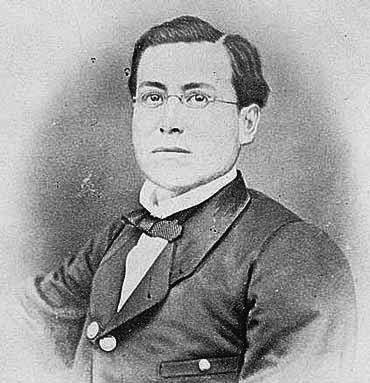
Cinco de Mayo isn’t much of a holiday, but what makes the Battle of Puebla important was that is was the Tet Offensive of the 19th century. It didn’t really matter so much that the French were able to occupy Mexican cities when a cobbled-together peasant army showed it could defeat what at the time was the best and most technically advanced army in the world. And that there was an organized national reistance movement capable of not only continuing the resistance, but of maintaining a functional government.
And that nerds can be heroes too:
Uruguayan authorities have unveiled the details of their marijuana legalization program.
The price is set at one U.S. dollar per gram, with registered consumers over the age of 18 permitted to buy up to 40 grams per month. (By the way, the AVERAGE income in Uruguay is about 9500 US dollars per year). Authorized clubs with between 15 and 45 members can grow up to 99 plants for their own use, and distribute up to 480 grams annually to their members (which, again, works out to 40 grams per month).
Individuals can grow up to six plants for their personal consumption.
(source: Animal Politica
I expect this will be discussed widely in the U.S. media, mostly from the pro-legalization people. A couple of thoughts.
While I don’t object to legalized drug use whether we’re talking about marijuana or heroin, whether the U.S. can just co-opt the Uruguayan experiment I don’t know. Latin American countries have relatively low consumption levels, especially compared to the rich countries and especially to the United States. Marijuana use is much heavier in the southern cone (Argentina, Uruguay and Chile) than other Latin nations, but still, there’s never been much polemical discussion about consumption — neither the “Reefer Madness” nor the “Make Marijuana Legal” crowd has has amounted to anything of any significance in domestic affairs.
 Uruguay is not a marijuana producer, and legalization is aimed more at cutting Paraguayan exports (and the violence that comes with unregulated agricultural markets) than at satisfying any particular consumer demand. It’s more just a way of dealing with an unwanted social problem, similar to regulations in most countries meant to channel prostitution or gambling or public drunkenness away from public security concerns. Of course, in the United States — with its obsession for security (and the financial interests in security that prop up so much of its economy) — Uruguay’s experiment does appear radical.
For us marijuana-producing and exporting countries, where foreign security concerns have been foisted on, Uruguay’s regulations are not particularly relevant. Countries like Mexico are not major marijuana consumers, and the concern over foreign regulation is two-fold. This country became invested (whether by choice or otherwise) in fighting production and export, while simultaneously finding production and export extremely lucrative. I’ve argued before that legalization in the United States would not particularly benefit the Mexican farmer (whose price depends largely on the illegality of the product), nor Mexican agriculture in general. Even when of lower quality (as Mexican marijuana is said to be), the cheaper price and greater availability of a product will drive higher-quality “craftman” products off the market, or at least limit their production (why do you think there are a lot more Fords than Rolls-Royces on the road?) Corporate agro-biz would gobble up the market, and the profits thereof are not going to return to the Mexican countryside should there be a legal U.S. market. And, let’s not get into the very real possibility that openly-grown, marijuana production would be on a corporate scale, gobbling up land and water resources in a country that is already having serious problems with food security.
Certainly, for farm workers and as a security issue, legalization north of the border would benefit us, but there are ways to deal with those issues without depending on U.S. legalization (and probably less harmful in the long run): simply give up on the “War Against Drugs” and let the buyer handle the results for starters. Pay farmers a subsidy to go out of production. Give amnesty to the exporters in return for paying taxes on their profits over the last 20 years.
My point is, the Uruguayan experiment, while to be applauded, may hold very few lessons for us here in Mexico, and may not be all that relevant to a major consumer like the United States.
Planned birth?
Only Papa Lazaro and Doña Amelia could have pulled this off… the debut of baby Cuauhtémoc on Labor Day:
1° de Mayo de 1934… feliz cumpleaños to the old lefty on his 80th.
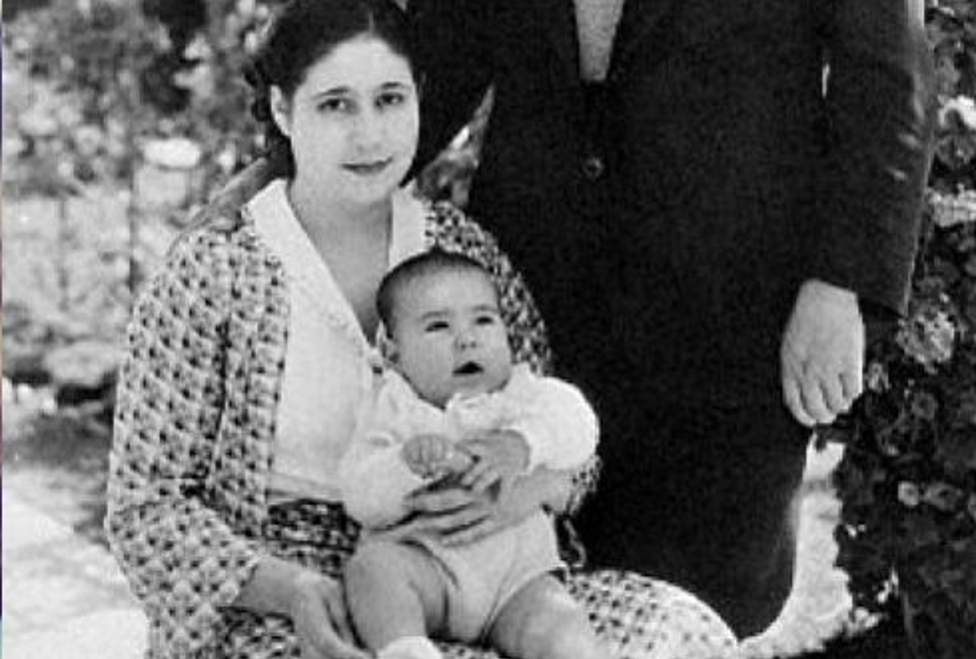
Photo: regeneracion.mx
(Behind every great man is a great mom… more on Doña Amelia here)
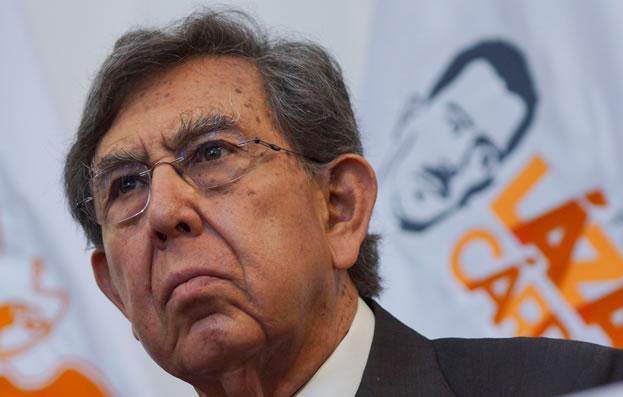


 mexfiles.net