Is this site working??
I gather it is… couldn’t get into my computer at home, “thanks” to an earthquake earlier today (all my power at home was out), and the local internet cafe computer for some reason wouldn’t let me see this site. Thanks for checking!
Ink, alcohol and a whiff of gunpowder: Heriberto Frías
Editorial Mazatlán plans to publish in the next year the first English-language translation of a minor Mexican classic… “The War Against The Gringos”, a 1901 didactic (and highly… er… “colorful”) study of the U.S. invasion and occupation (and partition) of Mexico in 1846-48, written by Mexican journalist and author, Heriberto Frías. Sabina Becker, who learned her art translating into English the bombastic, nationalistic and populist stylings of some of Latin American’s more eloquent politicians, had to pull out all the stops to get this manuscript ready for editing. Given that the author was a reporter in country where reporters even now are given to flowery language, euphemisms and allusions… and, when they are paid by the word, tend to hammer home a point by saying it again, and again, and again… even an excellent translation like Sabina’s requires editorial intervention. Being something of an editor’s nightmare in that I, too, am given to convoluted sentences and allusions (and… yes… a tendency towards the “decorative”), I guess it’s karma that I’m editing this work. I must say, I am enjoying it… although the Mexican-American War – and Mexican geography – is a blank to most readers north of the border, and it means I’ll have to dig in and write footnotes… lots of footnotes.
And, an introduction. Here’s a first draft of a biographical sketch of the author:
I’m not sure what Heriberto Frías would have made of contemporary Mazatlán. The late 19th century author, playwright and newsman was a notoriously hard-drinking, “bohemian” whose antics might not unduly raise eyebrows had he cruised today’s Malecón and tourist haunts, and… having arrived in the Pearl of the Pacific under something more than a cloud… might have found himself perfectly suited to his environment. On the other hand, as a bombastic and… er… colorful nationalist, which I am afraid our foreign tourist and “expat community” might have found an uncomfortable neighbor.
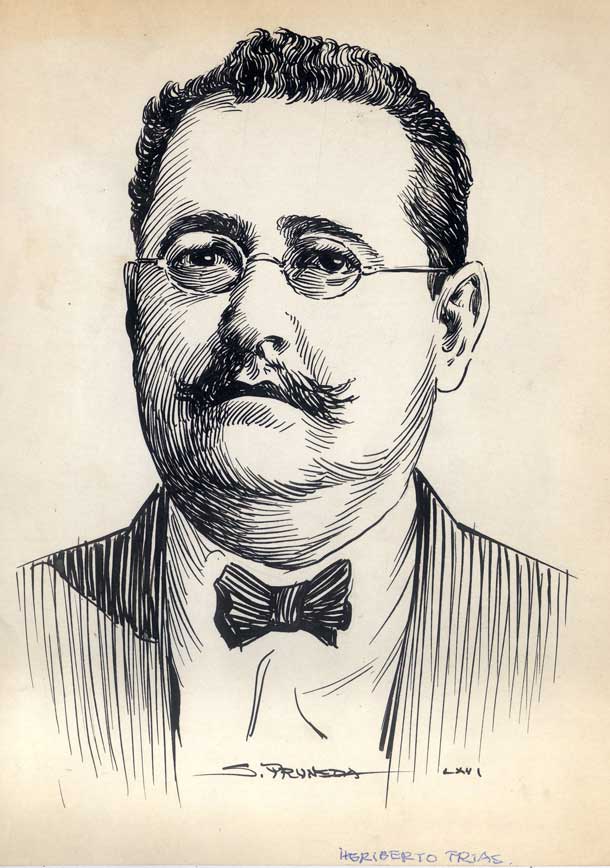 And, in our day, one can’t help but think Frías would have “owned” the internet, and the foreigners are probably just as well off that Frías never wrote in English.
Born in 1870, the scion of a military family, he was destined for the family trade … oppressing the masses. However, when his father died in 1884, when Heriberto was a student at the national preparatory academy. Without enough money to continue his education, he took a job as a compositor and printers’ devil. An honorable beginning to many a 19th century writing career, to be sure, while his job forced him to read, and read continuously, the hours were long, and the lighting was poor.
A sixteen year old boy, with deteriorating eyesight, if he wanted to continue his studies, he would need a job with more flexibility. However, he seemed to overlook the small detail that his new, intended career probably required even more attention to detail than printing. But, it was as a failed burglar that Frías began his career as a popular author. While serving an eight month stretch in prison, as the only literate inmate in his cell-block, he discovered he had an innate gift for florid expressions, for the allusive phrase was appreciated by his fellow unsuccessful criminals, who avidly handed over what money they had for love letters… heartfelt promises of reform…pleas for mercy or remission of sentence. And of course, letters to mom.
Including his own, who had returned to her native Queretaro with the younger children when her husband died. Though upon his release, Heriberto had found work as a theatrical ticket seller — and he would, in later years, become a prolific playwright — his mother still hoped her son would have an “honorable” career. Though her Army and family contacts, arrangements were made to overlook Heriberto’s “youthful indiscretion” and enroll him in the prestigious Colegio Miliar. Despite constant bullying as a weaking and “four-eyes”, Frías finished his training, and was commissioned as a “subtenient” (Second Lieutenant) in January 1889, just short of his 19th birthday.
He quickly earned the respect of one General … Sóstenes Rocha… who wanted to give a more “literary” tone to Combat, the military magazine he edited. Military poetry, though, is not the same as military discipline. Frías, during his incarceration “being less educated in the ways of the underworld, had learned to enjoy their vices”, as one biographer daintily puts it. In other words, Subtiente Frías was in and out of the military prison at Santiago Tlateloco. Patriotic and enthusiastic as he was, discipline was something he never did quite get the hang of.
Having by necessity turned to crime as a boy, his lack of personal discipline did not interfere with his sense of justice. Like Chelsea (nee Bradley) Manning, the U.S. Army intelligence specialist who exposed atrocities in Afghanistan, Frías was the less than ideal soldier who sacrificed his career… and risked his life… to inform the public of his own army’s unjust, and immoral, actions. In 1892, he saw service in the Tomochic Rebellion. As much a religious revival as a peasant revolt, what was later seen as an early precursor of the Revolution, was put down with brutality. The advice he gave himself was to start drinking heavily, which was going to change the situation, nor to bring any justice to those who were slaughtered. Writing about it might.
With no publisher daring to unvarnished truth, Frías wrote the story within the conventional frame of a love story about a conflicted army officer and a peasant rebel girl. And, although Tomóchic was published without the name of an author… and the publisher claimed HE was the author… Frías was too well known as a writer/officer to avoid being identified. It was only because his patriotic verse was well-known, and appreciated by military men, that he avoided the firing squad for “disseminating military secrets”. He did serve a few months in the military prison, then quietly allowed to leave the Army.
At a loss what to do, he turned to journalism… and alcoholism. With his progressively worsening eyesight to boot, he was on a downward spiral even by the loose journalistic standards of his time. Antonia Figueroa … his landlady and would-be girlfriend… turned him around, forcing him not only to clean up his act, but to start writing (and dress like proper Mexican gentleman) … deserves the credit for re-booting what would have been an aborted literary career.
Toñita doesn’t figure in most biographies (no more anyway, than, say, we hear about Margarita Maza de Juarez when we read about her husband, Benito — the 19th century Mexican woman’s power was exercised through her husband even more than it is today) … but the Frías who emerged after his marriage was the successful, nationally respected journalist, editor, author and champion of human òrights. While none of his subsequent novels had the success that Tomóchic did, he returned several times to the trick of sneaking in the unpleasant truth in the guise of fiction… notably in his “El Triunfo de Sancho Panza” based on his ringside seat as editor of the Mazatlán Correo de Tarde of corruption, abuse of power and outright thievery by city leaders.
As an anti-establishment insider, Frías saw no contradiction between fighting the powers that be and patriotism. To him, they were the same thing. In that vein, he wrote a series of didactic works, meant to instill both national pride in the masses, and outrage at their betrayal by their own leaders throughout history. In 1901, a series of articles were published under the title Episodios militares mexicanos, his highly colored view of the Mexican-American War of 1846-48 later appearing under the title La Guerra contra los gringos.
By 1909, he was the leader of the journalists association in Mexico, and – as one would expect – a supporter of the Madero reformists. He accepted a post as under-secretary for Foreign Affairs in the Madero Administration… which got him sent back to prison under the Huerta dictatorship. Knowing full well that his health – undermined by his years of alcohol abuse — and his increasing blindness would make it impossible for him to survive even the short jail term, the faithful Toñita shared his cell.
Freed after six months, he joined the Constitutionalists, supporting Alvaro Obregòn (who shared Frías’ taste for bombastic writing, and, like the journalist, was a military man known to write poetry). When Obregòn gained the Presidency in 1920, he rewarded Frías with a sinecure as Mexican consul in Cadiz, although the by now all but completely blind and increasingly ill writer, never would be at ease in a foreign country. He soon resigned his post, and returned to live out his last few years in Mexico City.
One hundred chilangos
It’s a cliche (and every Thomas Friedman column), that talking to a taxi driver is the path to gaining insight into a community. here’s a taxi driver who discovers his own city.
Artist Jason Schell turned that idea inside out… becoming a Mexico City taxi driver to gain his insight from his passengers.
Cien retratos
(written 9 April for later posting)
Crop rotation
Nick Miroff has a long article in last Sunday’s (6 April 2014) Washington Post suggesting that Mexican heroin from Mexico is flooding the U.S. as a result of tolerance for marijuana use.
While not presented as sensationalism (it’s no secret that people in the U.S. have always had a tremendous appetite for chemically-enhanced means of altering their moods), the story is misleading in a number of ways. Patrick Timmons of the Mexican Journalism Translation Project said much what I would write about this, and does so much more succinctly than I would:
I find Miroff’s article about Sinaloa’s poppy production to be deeply, deeply flawed. Poppy production in Sinaloa has absolutely nothing to do with US attempts at legalizing marijuana. Since the late nineteenth century poppies have always been a successful Sinaloa product — the work of Froylán Enciso, currently at UCMexus in San Diego’s proves this, and with stunning attention to archival detail.
 The story that the myopic Miroff misses is that marijuana cultivation has significantly expanded to the Laguna, much closer to the US border, and much closer to large bodies of water which marijuana needs to grow. (Poppies are much better suited to Sinaloa’s climate, they need less water, and aren’t damaged, like marijuana is, by the coastal climate.) The story Miroff has missed is that the increase in marijuana cultivation in La Laguna is leading to forms of internal displacement that seem unprecedented. There are strong indications of a huge crisis of land ownership and tenancy in the Laguna. There are transplants to Chihuahua from Sonora who tell of being forced from their lands by the marijuana cultivating narco.
I won’t dispute — not in the slightest — that the United States is a huge consumer of illegal drugs, many of which are cultivated in Mexico, but to say that poppies are being grown more now in Sinaloa because of U.S. legalization efforts is deeply deeply problematic, for the reasons that I have identified above.
I am sorry to see that the WaPost’s Mexico coverage has started to slip in quality, and quite drastically.
(written 9 April for later posting)
Will be off-line temporarily…
If my posts have been mostly links to other sites lately, it’s because I have been extremely busy with our publishing business. We have two new books coming out (or, rather have been printed, though are not in hand yet): Brave Blood, a definitive lexicon of bull-fighting, and a second printing of Sterling Bennett’s “thinking man’s western”, Playing for Pancho Villa. In addition, we have about a dozen works in progress (or… rather… in various states of progress), including at some point, a revised “Gods, Gachupines and Gringos.
And, while I’ve agreed to take on (at least part time) a consulting project headquartered in Mexico City which would only require occasional stays of a couple of days at a time, I have also long known that doing business in Mexico… even in the age of E-mail and video conferencing… is a face-to-face proposition. And, Mazatlán is not on the radar of most publishing and book distribution people. A one or two day fly-in visit is not enough time to hunt up sales people, buyers, distributors… nor is it always possible to do research for my own writing completely on-line.
So… I’m off to Mexico City tomorrow, and will be commuting back and forth for at least the next few months. I should be posting semi-regularly again by next week at some point. Here, or there… if not somewhere else.
“Hecho en México” doesn’t just mean built there…
Via CCTV (China’s English-language service)…
Re-barring any more catastophe…
Remember how the news was dominated by the big earthquake in Chile?
Neither do I… and, as Inca Kola News says, that’s news that should be reported:
 See that Rebar? That’s what good buildings have in seismic areas (for example, the house in which your humble scribe is currently typing these words, as it was built by us) and it’s precisely that kind of building standard that allows the very big quake and its aftershocks in well-built Iquique to become a minor news item just days after the event. Because that building was put together correctly, the very large and heavy concrete roof sheared and wobbled horizontally, causing the damage seen, but didn’t break off and pancake the house to nothing. Meanwhile, we’re still talking about the 2010 Haiti earthquake which measured at 7.0 mag, precisely and exactly because nobody could be bothered to put rebar into any of the concrete columns. Result, 220,000 dead bodies.
Building with rebar is expensive… much beyond the budget of poor Haitians. Outside of a few private initiatives, I haven’t heard of any governmental “assistance” going into any projects that just involve building better houses. Maybe scrap metal isn’t sexy enough for the NGOs and there’s not enough “concessions” in it for the banksters and “economic consultants” to think about, but the best rehabilitation project I can think of for any earthquake shattered region is “preventative medicine”… try to keep people from getting killed, and having buildings fall down in the first place.
(I’ll be living part time in Mexico City over the next few months, so earthquakes are on my mind).
(Sombrero tip to Patrick Timmons)
Julio Salazar and Eduardo Piñón are the first same sex couple to be married in Cd. Juarez, the second such couple to contract a marriage in the State of Chihuahua… where the legal code defines marriage as:
…el acuerdo de voluntades entre un hombre y una mujer para realizar la comunidad de vida, en donde ambos se procuran respeto, igualdad y ayuda mutua, con la posibilidad de procrear hijos de manera libre, responsable e informada.
(…the voluntary agreement between a man and a woman to form a community for life, with respect, equality and mutual assistance, and with the ability to bear children in a free, responsible and informed manner).
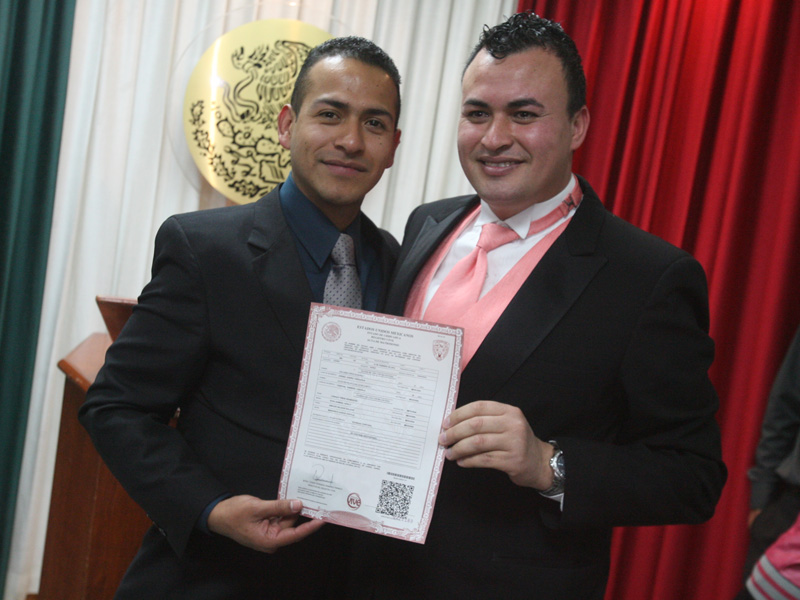
Photo: José Luis González, Nortedigital.mx
We’re in this weird situation in Mexico where just because something is legal doesn’t mean you don’t have to prove it’s legal. Federal courts in Mexico consistently rule marriage codes like that in Chihuahua violate of both the constitutional guarantees of equality of gender, as well as equality regardless of physical ability (like bearing children). And, since the constitution here guarantees the right to family planning, the ability to bear children is irrelevant to marriage.
However, unlike the United States, it would be unusual — if not impossible — one is only guaranteed the right to “struggle” for one’s own rights, or one’s rights as part of a class. Which means, right now, the only same-gender marriages you are seeing outside of the Federal District and Quintana Roo (both of which explicitly allow for same-gender marriage in their civil codes) is if you have enough money to sue the State… and the persistence to follow the case through the Federal Court.
Sterling Bennett wrote this week about another right that exists more in theory than in practice and which can — and does — lead to more immediate consequences than a delay in legal recognition of a relationship.
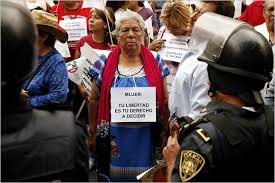 In 2007, the Federal District changed its criminal code to strike down any penalties for first trimester abortions. Upheld by the Supreme Court, seventeen states criminalized the procedure… including in most, provisions that allow the woman who had the abortion to be imprisoned. The situation is even more confusing in that all but three states permit abortion under some circumstances, with one state (Yucatan) adding “economic necessity” to the usual list of rape, risk to the mother, or fetal deformity” … while in a few, especially Guanajuato, women have been imprisoned for either seeking an abortion, or having a “suspicious” miscarriage (suspicious in the minds of the state ministry, anyway). As Jo Tuckman wrote in the Guardian soon after the Federal District’s more lenient abortion law was upheld by the Supreme Court (and before there was a rush to add “life begins at conception” to a number of state constitutions):
The laws of most Mexican states allow terminations in cases of rape, risk to the mother’s life or severe foetal deformities. In practice almost no states offer abortions in such cases. However, nor do they prosecute the doctors who offer safe illegal abortions or the cheaper life-threatening backstreet practitioners.
One needs to add that alternative (and technically illegal) first trimester abortions are often openly advertised (as treatments for “late menstruation”) and that in U.S. border states with restrictive abortion laws, like Texas, women of limited means go to Mexico for legal means to terminate their pregnancy, that are not considered abortions, and not covered under existing laws here).
Constitutionally, no state can have a more severe penalty than any other state for the same kind of crime. But… with abortion NOT a crime in the Federal District, and with that constitutional provision guaranteeing the right to family planning, Federal Courts do uphold the rights of (in this instance) the defendant.
HOWEVER… as with same-sex marriage in states that do not permit such… the problem is getting an amparo. It takes a lot longer than three months, and for women who have been jailed, it’s a matter of finding a lawyer, being able to hire a lawyer, and sitting out their sentence until their case comes before the judge.
Both the anomalous situation with same-sex marriage laws and with abortion laws unfairly affect the poor. That the Constitution also guarantees equality before the law regardless of “social condition”… which, I suppose means, ability to hire a lawyer. Which it would take hiring a lawyer to get to court to enforce the provision.
Who watches the watchers?
How many unsuitable officers or infiltrators slipped through before the polygraph program was implemented or beat the test is anyone’s guess, though the bureau has tried to address the question.
The polygraph program in question is part of the hiring process for applicants for positions as Border Patrol agents. Only instituted six months ago, polygraph tests on would-be agents have turned up murderers, rapists, child molesters, kiddy porn producers, one pig-fucker, and a lot of former marijuana smugglers and more that a few people with serious substance abuse issues. How many future problems slipped through during the Border Patrol hiring frenzy that has been on-going since 2006 is anyone’s guess. We’ll probably start finding out about 2015:
One internal study on corruption, completed in December 2011, found that corrupt agents had been on the job an average of almost nine years before they were caught.
(Quotes and source: Andrew Becker, “On Polygraph Tests, Would-Be Border Patrol Agents Confess to Crimes,” Daily Beast, 4 April 2014)
Throwing more agents at the border (not the Canadian border, mind you, but the Mexican one) was more political grand-standing than anything else, and one area where the a government “make work project” was salable to conservatives on the argument that “THE GOVERNMENT MUST DO SOMETHING”, even if the “something” was as likely to cause more problems than whatever problem it was that the government was supposed to do something about ever did.
 It’s not that “corrupt” policemen are unique to Mexico, of course… the corrupt police officer (think of Claude Raines as Lieutenant Renault, in “Casablanca” who describes himself at one point as “just a corrupt police official”) and the cop who plays both sides of the law have been staples of fiction (and real crime news) everywhere. But, here in Mexico, it seems that our government MUST DO SOMETHING about police corruption.
The easiest way, and the one that gets the most attention is simply to hire new cops.
One is constantly seeing in the news that some police department or another is being completely replaced. When I read that, I wonder what happens to the ex-police officers, Is there any sort of career placement service, or are the left on their own? I suspect the latter, or that career placement has been outsourced to the same people who “corrupted” them in the first place. Every time some kidnapping ring, or hitmen are arrested, it seems at least one or two of them are described as a “former police officer”.
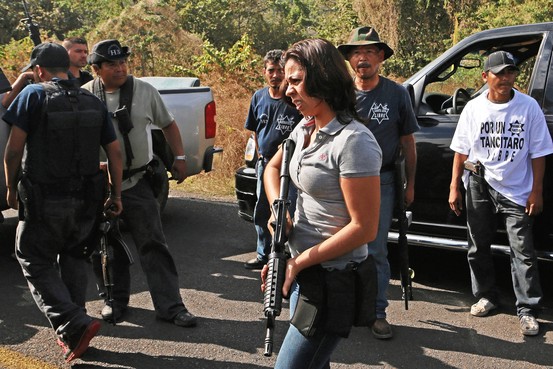 Recently, with the turn-about by the Peña Nieto administration on the “self-defense groups” in Michoacán… from potential “terrorists” to would be rural police, there have been… um… “issues”… with self-defense groups that may or may not be on the side of law and order, or have personal agendas… or, are operationally no different than any police they supposedly replace.
Where I have seen improvements in policing, it’s not been where there are just more cops, more trucks and more guns but where someone has gone to the effort of asking what a police officer should be: an unpaid peon, keeping the poor away from the rich?; a hired thug to be unleashed when there is a threat to the established order?; a collector of “human garbage” (as more than one cynical cop has defined his job)? Or a civil servant?
While I am afraid that all of the above are a policeman’s lot, where I have seen genuine improvements have been in places where questions have been asked about why the officers are of such low quality and what can be done to find better officers. Paying a decent livable wage was one answer. So was better physical training; and — what seems to have been most effective here — raising the educational requirements for recruits.
And polygraphs. They aren’t perfect by any means, but the better departments are at least weeding out some who never should be given a gun and a badge anywhere. Whether this means less “corruption” in the future, it’s hard to say.
BUT… and this is what I notice about both the Border Patrol and our “new” police. No one (or almost no one) asks the basic question… why do we need new officers? Is there a better way to handle immigration than throwing enforcers at it? What social needs are unmet, that police officers are needed to prevent unrest? Should the rich hire their own thugs (and should society as a whole be protected from them)? Can we recycle “human garbage” in some less wasteful manner?
By a nose… or, You are so beautiful to me…

El Gringo Suelto is a few light-years above the usual “what I’m doing on my trip to Mexico” sites. In good part this is because Kim G is not only a good writer and observer, but because the El Gringo Suelto is as much about being a gringo in Mexico as it is about trying to overcome his “suelto” status.
Although, like other “My life in Mexico” sites, and as I’ve done on occasion, El Gringo Suelto sometimes tries to “explain” Mexican culture based on a convergence of personal experiences. And, as I’ve found when I’ve tried it myself, for an honest writer, it raises more questions than it answers.
Kim G’s most recent post, “Moreno y Güero in Zacatecas — Some Thoughts on Mexican Concepts of Beauty” muses an observation many of us have, usually sooner than later. Two incidents. First, he sees a clown entertaining children, As part of the act, the clown asks a little girl what kind of boyfriend she’d like when she grows up … tall or short? blond or dark haired?
Tall, güero, handsome. These words all belong together here. Ugly, short, moreno. These words too, sadly, go together in Mexico. The really weird thing? The crowd eats it up, laughing and applauding. But they are almost universally moreno themselves.
The clown act converges nicely with a more personal event:
Yesterday, I got a chance to get a bit of a deeper view into this whole moreno inferiority complex […] As I move about the plaza taking photos from different angles, his eyes follow me, and I keep looking back. After about fifteen minutes of this, it’s clear he’s gay and seemingly just as interested in me as I am in him. I dally for awhile on a bench and smile at him. He smiles back.
… We start to chat … Up close he is nothing short of stunning — jet black hair, deep deep brown eyes that I could lose myself in, and a beautiful face with a square jaw, a very perfect, straight European nose, and eyes that reflect his mixed heritage. His skin tone is definitely moreno, but closer to moreno claro than dark moreno.
Ten years ago, I wrote on the concepts of “race” myself. What I said in “The Unbearable Whiteness of Being (in Mexico)” I still hold is true, but my thoughts were more based on general observations and theory than on any specific event.
It’s worth looking at “Missing Persons” or “Wanted” posters to understand what Mexicans consider identifying traits – build; eye, nose and mouth shape and size; skin tone; etc. It certainly isn’t ethnicity.
While getting acquainted, the youngster brings two things he’d change about himself:
I’m planning to get a nose job in few months,” he says casually. I am literally stunned. Enrique has the kind of nose most people getting surgery hope for, but few achieve. It’s about as perfect a nose as I’ve seen, perfectly straight, smallish without being girly, and perfectly formed.
“Are you completely nuts?” I say. “Your nose is perfect in every way. It would be a locura for you to get a nose job.”
[…] for the love of God, don’t get a nose job.” For emphasis, I add, “Please,” with a pleading look in my eye. He starts to look as if what I said might have penetrated just a smidgen. I start to feel hopeful.
“I want to have my skin lightened too,” he adds, sort of changing the topic. I look at him again skeptically. “I also want botox.”
If there is some sort of “moreno inferiority complex” there’s also a “Aztec nose inferiority complex” at work here as well. And botox? The fellow claimed to be all of 19 years old.
I suggested to Kim that the young fellow may have just been trying to please his “audience”, he misreading what might be considered defects by El Gringo Suelto, and El Gringo Suelto missing what the fellow is actually saying…. “I will be whatever you want”.
I don’t mean that to sound cynical, but Kim seems closer to my age than to the fellow in Zacatecas’… and while I see nothing wrong in age differences between friends (or closer acquaintances), and for all I know, Kim is the hottest and most charming guy on the planet, but am also perfectly aware that differences in perceived social class and standing do make for arrangements that have less to do with physical attraction or the meeting of minds than more mundane concerns like security and financial need.
Hold all calls!
If you have a “foreign” name listed in the telephone directory, chances are good that eventually you’ll get a call from someone claiming you need to send them money. From another site, discussing the always popular “this is your nephew you haven’t seen in years, and I’m stuck in Mexico and need 3000 pesos sent to me right away…” was this story of the equally popular — though much scarier — “we have your children held hostage” scam.

For the last 18 years I have lived in Mexico City and one day several years ago I got the ” phone call “. Someone asked me to pay 15000.- pesos, or they would kill my son, who it seemed was screaming in the back ground with pain. I told the guy ” kill him ” and hung up the phone. He called back two minutes later, was actually kind of nice and explained that I was probably overcome by the news, but that they really needed the money to save his life ( my son was shouting in the back ground and screaming ” mom, mom, help me “), because his ” patron ” would sure kill him. ” You don’t want your child rotting by the side of the road with his head in a plastic bag ” he added and then started to give me instructions. I interrupted him and told him that he could do with my son whatever he wanted and hung up again ( with my heart wanting to jump out of my mouth ). They called a third time and when I almost screamed to ” kill the ***** bastard ” they hung up. The thing is, I am not married and never had any children……still I called the police, because I was really scared, because they had my phone number. The police told me that they generated my number at random. Even years later when the phone rings late, I worry a bit.
PS: Only weeks later did I realize that my ” son ” had a very juvenile voice. If I had had a son at a normal age he would have been maybe 35-40, plus; he was shouting in English and since I am German no son of mine would plead for his life in a foreign language. But I still was very scared.
 The only scammers I’ve had were trying to claim I had a package for delivery… but didn’t seem to be able to answer the simple question, “what’s the address on the package”. As far as I can tell, most of these kinds of calls come from prisons (er… “Centers for Social Readaption”) and — while people do fall for them (and “virtual kidnapping” isn’t unknown) — I tend to see them as more a nuisance than anything else.
And, I have standing orders that should someone claim to kidnap me or mine, demand a payment to take me back. And a factura!.
Born today
31 March 1914: Octavio Paz

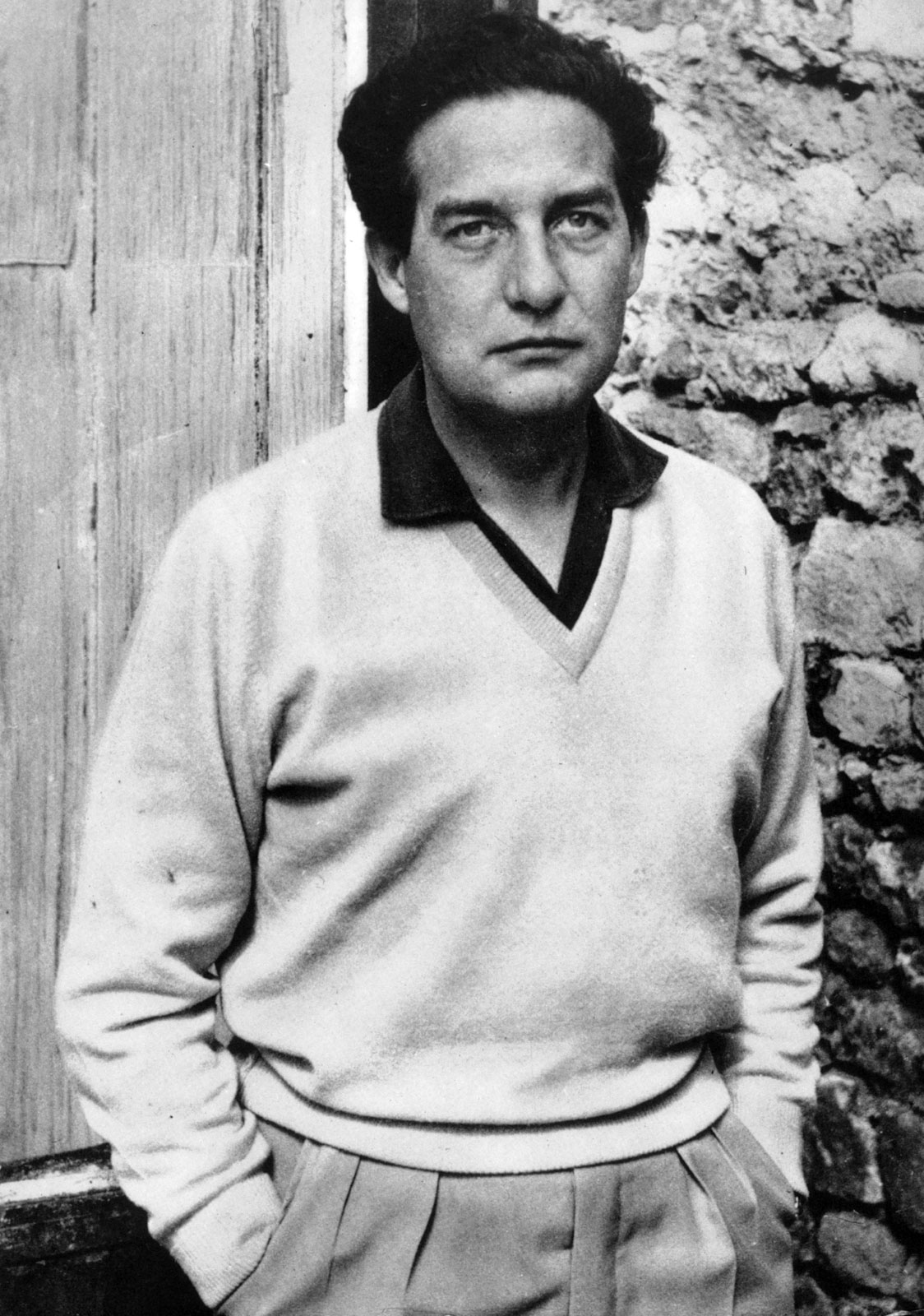

There is not
A single soul among the trees
And I
Don’t know where I’ve gone.


 mexfiles.net