I for one, do not welcome our new overlords
It’s a process of destruction of the constitutional system that began in November 1991 when Article 27 was reformed in order to open the door to plundering and privatization of communal lands. Now it’s culminating in December 2013, when an even more radical counter-reform just destroyed that pillar article of the Constitution.
So wrote Adolfo Gilly for last Friday’s La Jornada . With unprecedented haste, and following on massive constitutional changes meant as much as anything to preserve the political status quo (not only allowing for re-election to federal offices below State Governor and President of the Republic… which gives incumbents a built-in advantage in legislative offices, and makes it harder than ever for new parties to break into the system… but also locking in political parties as the overseers of elections), over the weekend, a majority of states ratified changes to the constitution that will permit the hardly discussed, and barely debated new energy laws to go into effect.
These undebated constitutional changes, while maintaining the fiction of Mexican ownership of subsoil resources, allow for private (and foreign) extraction of those resources without a just return on the profits to the Mexican people. This is not government by, for and of the people — either of Mexico nor of the major beneficiary of these changes (the United States), but it is
…subordinating sovereignty, economy, rights, salaries, wages, territory, nature, and the Mexican nation to the interests and
necessities of the neighboring nation, the United States, and its financial and military institutions, constitut[ing] an overturn of historical dimensions still hard to imagine. It’s about a sneak attack, carried out without discussion or consultation, that does not respond to the interests of the nation and its people but to the interests of the current beneficiaries of those politics and their allies and local associates. Nor is it about the interests of the people of the United States but rather those of Wall Street and the Pentagon.

(Translation by Julia Kawamura at Mexico Voices)
Signs and wonders
Wow, I wish I had seen this last week… but better late than never. Illinois-born Mexican-American artist Israel Rico re-imagined Virgen de Guadalupe in terms of another female icon of the Americas.
via The Feminist Texican: Super Wonder-Lupana (2009)

Contempt of… or for… Congress?

Photo: El Diario de Coaahuila
Mexicans, like any other humans, of course have an appreciation for the aesthetic appeal of the human nude, but this is a culture where it’s not so much a matter of “clothes make the man” (though it would be silly to say that a guy in a suit and tie won’t get better service at your local license branch than the guy in shorts and a tee-shirt) but that to dress is a sign of respect.
To undress in public … except maybe on the beach (where even there, it is somewhat considered a private act — next time you’re at a Mexican beach, notice how many even well-knit young Mexicans will wear a shirt when they go in the water), or when a futbol player pulls off his shirt in exultation of an unlikely GOOOOOOOLLLLLLLLL! it is also a sign of contempt to go naked (or underdressed) in public.
If you’ve ever had the dubious pleasure of stumbling into a brawl in Mexico, the first sign that things are serious is that one of the combatants takes off his shirt. While not destroying a good shirt in a stupid bar-fight (or explaining to your mom how you got those bloodstains) may be a factor, it is a signal to one’s rival that the shirtless person will face him … without armor as it were… not only “I bear contempt for you”, but I “bare my contempt to you… and the world”. Similarly, while the “naked farmer” protests were making the point that they’d lost their shirts (and everything else!) due to what they consider misguided government policies, they were also exhibiting their contempt for the politicians that created those policies. It wasn’t for nothing that many of them were wearing nothing but a picture of Carlos Salinas’ face to cover their genitals (figuratively… excuse the language… “skull-fucking” the father of NAFTA).
Antonio García Conejo is a PRD Deputy (lower house representative) from the very traditionalist (and traditionally “communalist”… if not Socialist) state of Michoacán, forever associated with its former Governor, and the father of nationalizion, Lazaro Cardenas. García, in stripping down down to his underwear and socks in the well of the Chamber of Deputies, was — in a very real sense — not only signalling that the coming brawl is going to be serious, but that he (and the people he represents) have the utmost contempt for his legislative colleagues.
“Energy Reforms” passed with support from PRI, PAN and their small allied parties (the not so “green” Greens, and the New Alliance) … over objections by PRD, and the smaller leftist parties (for once putting aside their differences). To the left, and to perhaps a majority of Mexicans, this is seen as selling out national interests to private concerns in the United States… something celebrated by Forbes today:
… the law includes measures to open the oil and gas industry to private and foreign investment, through cash, profit-sharing and production contracts. What is new, however, and is the result of the hard political bargaining that has taken place between the governing PRI and the PAN in recent weeks, is the legal entity of the “license”. Although the legislation still explicitly prohibits the use of concessions in the hydrocarbons sector, the license will act in a very similar way, with the idea that it will be applied to unconventional projects (primarily shale). This item made its way into the legislation thanks to the PAN insisting that the government adopt a more liberal approach to oil reform to secure PAN support in the aftermath of the deeply divisive fiscal reform process.
But, to Deputy García the reform bill is treason and those who have supported it deserve his contempt (my translation):
It’s beyond belief that Deputies from PAN and PRI come into this room to violate the mandate conferred upon them. That is called treason. Here in this very chamber, they took an oath to protect and defend the Political Constitution of the Mexican United States.
Comrades, they stripped the Nation of its goods: privatizing Telefonos de Mexico, to what benefit? They robbed the nation privatizing the railroads. Where is the benefit?”
Dutch Journalist Jan-Albert Hootsen, who spoke with Deputy García earlier today, quoted him as saying “I stripped down, because no one was listening to me. And if they violate [in the sense of rape] Mexico, why should I act according to their rules?”
The gloves are off … along with the shirts and pants… and the fight is on.
Deja vue in Honduras
There are just too many parallels, both in the evidence of fraud (bringing cell phones into voting booths to show one’s ballot to those who are paying for your vote) and in the response of the opposition, to Mexico’s 2006 and 2012 elections to enumerate.
While Mexico didn’t have nearly the number of “foreign observers” that Honduras did, it did have a U.S. media avid to buy the “official story” and bend the rules of objective journalism too:
Greg McCain: “Inside the Honduran Elections” (Counterpunch, 12 December 2013):
Libre, the party of the resistance movement that grew out of the protests following the 2009 coup d’état, had mass popular support. […] All the pre-election polls except the ones paid for by the National Party had [Ximara Castro, Libre’s Presidential candidate] clearly in the lead.
[…]
You would not know how massive these irregularities were if you only relied on the mainstream press. News outlets such as The Washington Post and the AP’s man in Honduras , Alberto Arce, both declared [Juan Orlando Hernandez of the National Party] the winner before the counting process was complete and the fraud investigated thus promoting the neo-liberal agenda that has devastated this country. […] To cut him some slack, Arce’s opinions appear to be fueled more by naiveté and a comical obsession with being seen as an “objective” journalist than by any clear cut ideological ax to grind. Perhaps he is just an unwitting conduit of neo-liberal propaganda.
[…]
The irregularities that occurred on Election Day were numerous. Many of them echoed the old machine politics of Chicago where the slogan of the day was “Vote early and vote often,” and whole cemeteries were registered to vote. In Honduras they added the twist of claiming that a voter who showed up to vote was dead and thus could not. As with the internal elections last year, National Party offices were discovered to have boxes full of ID’s needed to vote. Now, just as then, the reports in the press went uninvestigated by the District Attorney…
Vote buying occurred out in the open in numerous places. In the town of Quimistan, Santa Barbara, Marta Concepción (also known as Chonita), the National Party candidate for deputy who was up for reelection in the National Congress, was seen unashamedly giving out 100 Lempira bills to those crowded around her in front of the gate which led to the voting tables at Escuela Francisco Borogan. When she saw an international observer from the US’ Honduran Solidarity Network (HSN), who was dumbstruck by the blatancy of her actions, Chonita stated, “They’re so poor and hungry. I have too big a heart.”
[…]
Further evidence of vote buying occurred in the form of people taking photos with their cell phones of their ballots to prove how they voted so that they could receive their payment. Several members of the HSN delegation at several sites around the country observed this as the camera’s flash went off in the voting booth. The TSE judges at the tables did nothing to annul the votes even though it is a clear violation to have cell phones while voting.
The greatest source of the fraud occurred in the transcribing of the tallies and the transmission of the votes. It was up to the judges at the tables to check each other as the transcription occurred. These are the same judges that were heavily biased toward the National Party who bought the credentials of the smaller parties.
[…]
But perhaps a bigger source of fraud, according to Jose Morales, an expert in design and maintenance of automated information systems, occurred through the software for data transmission and vote counting…
Mexican free-style driving
The wonder isn’t that there are so many traffic accidents in Mexico, but that there aren’t more, considering our “creative” interpretation of the rules of the road… and drivers who sometimes have rather unique ideas on saving wear and tear on their tires.
If you’re wondering, this is the highway coming into San Miguel Allende from the west.
El duodécimo de diciembre
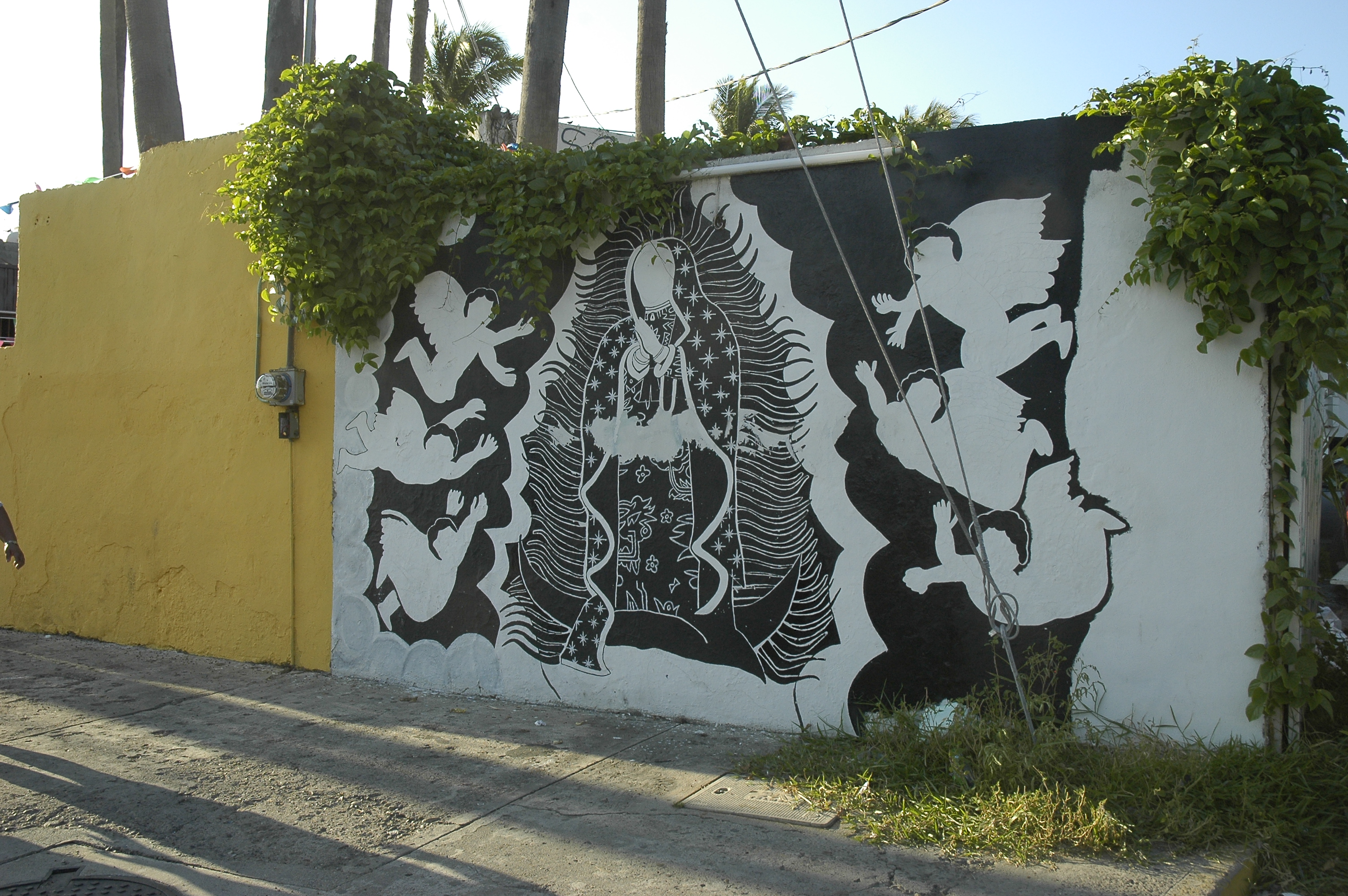
Mazatlán, Sinaloa. Photo by John Kirsch
Oh shit!
Between the rush to frack (contaminating the water of an already water-short agricultural country) and climate change, there’s this:
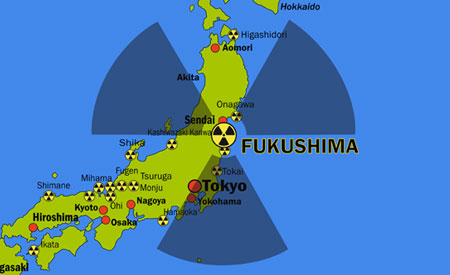 The fallout has been already been detected off the coast of Alaska. It will cycle down along the west coast of Canada and the U.S. to northern Mexico by the end of 2014. Massive disappearances of sea lion pups, sardines, salmon, killer whales and other marine life are being reported, along with a terrifying mass disintegration of star fish. One sailor has documented a massive “dead zone” out 2,000 miles from Fukushima. Impacts on humans have already been documented in California and elsewhere.
The Japanese government is trying to criminalize any discussion of the Fukishima disaster “cleanup” but the rest of us are going to be paying heavily for it.
Japan’s Deadly New ‘Fukushima Fascism’ (Firedoglake, 11 December 2013).
La patria es primero?
… Camacho Solís … more than suggested that not only was he offered “campaign contributions” (or, as we call them in Mexico, “bribes”) … but that while he turned the money down, Vicente Fox took it.

Photo: Jorge Rios/El Universal
Standing in the well of the Senate of the Republic, PRD Senator Manuel Camacho Solís dropped a bombshell Sunday … which has gone all but under-reported (or, ignored) by the media here… or in the United States.
Camacho Solís, a former PRI staltwart, served as the Regent of Mexico City from 1988 to 1993 (until 1997, the federal district’s government was headed by the Presidentially appointed Regent), and — despite his close personal ties to Carlos Salinas — has been considered one of the best administrators the Federal District ever had, even by the leftist PRD that has run the District since 1997.
Or, because of it. Although he was appointed to serve as the Salinas Administration’s Foreign Secretary in November 1993, Camacho Solís was increasingly at odds with the neo-liberal wing of the PRI, then led by Salinas and which now controls the party… and includes, of course, Enrique Peña Nieto. Supposedly in disgust over the party (and Salinas’ role) in both the assassination of reformist PRI presidential candidate Luis Donaldo Colosio and the PRI’s response to the Zapatista uprising of January 1994, Camacho Solís — together with younger PRI reformists like Marcelo Ebrard — joined the new PCD (Democratic Center Party) and was the party’s Presidential candidate in 2000.
Camacho Solís only received 0.6 percent of the national vote, and the party merged with the PRD the following year. Camacho Solís is in an odd position… the PRD was mostly formed out of old socialist parties, the Communist Party and the left wing of the PRI. That Camacho Solís has been a Salinista (a neo-liberal), a centerist and now is a sitting senator for a socialist party (albeit, one moving rapidly towards the political center) has always opened him up to accusations that he is a “grillo” (literally a grasshopper, figuratively, a politician willing to switch parties and ideology as his own interests dictate), and his connections to Salinas, the assassinated Colosio and his fight with Ernesto Zedillo to become the replacement candidate for Colosio, have led many to question his motives and to ask whose interests he really represents.
Still… speaking against the proposed energy reform bill (which he concedes is likely to pass), Camacho Solís — almost in passing — more than suggested that not only was he offered “campaign contributions” (or, as we call them in Mexico, “bribes”) that would have … oiled his campaign for Los Pinos (and made it happen, according to the Senator), but that while he turned the money down, Vicente Fox took it.
There is no question that U.S. oil companies, often in conjunction with the U.S. government, have been attempting to subvert the Mexican government for the benefit of those oil companies for over a century. While not going so far as to stage a coup, as U.S. Ambassador Henry Lane Wilson, aided and abetted by oilman Frank Buckley did in 1914, or to finance military rebellions (and a religious terrorist movement) as Buckley and others did in the 1920s, the threat has always been real. That Salinas — who reorganized PEMEX as part of his grand scheme to move Mexico towards a more neo-liberal state — had to resort to fraud to win the 1988 election … and that the United States government had a major role in permitting the fraud to occur (and probably financing much of it) is hardly conjecture.
With people like U.S. Republican public relations “adviser” Rob Allyn admitting to working illegally and often under a false name on the Fox campaign, as well as the involvement of the Reagan Administration in underwriting minor “leftist” parties that ran a fusion ticket with Fox’s conservative PAN (letting Fox argue that his candidacy was the only “useful vote” against the PRI) the charges are at the very least plausible. And disturbing.
One has to weigh Camacho Solís record as an opportunistic politician (and twice thwarted Presidential candidate) against his solid record as a relatively honest administrator, and as a politician whose initial break with the party he’d grown up with, and with a president with whom he’d had a long personal relationship was — at least publicly — motivated by nationalist principles.
While the accusation that the “reforms” (which include constitutional reforms basically undoing the 1938 expropriation, and returning if not quite to the Porfirian era’s merely theoretical ownership of natural resources, than at least to the Obregón era’s “Bucarelli Treaty” which merely required foreign companies to acknowledge Mexican government’s sovereignty over the oil fields, while upholding the rights of foreign lease-holders to pump (and market) the oil they pulled out of Mexican soil. Camacho Solís is pleading for a referendum (which, it appears, may be required before these reforms can be implemented) which would likely reject the reforms… absent U.S. oil money underwriting a “Yes” campaign that is.
Sources:
Juan Arvizu Arrioja, “Reforma energética es tramposa acusa Camacho Solís” El Universal, 8 December 2013.
Simon Romero, “Republican Strategist Is Taking Heat for Taking Mexico as Client” New York Times, 28 December 2005
“Texas GOP Political Consultant Rob Allyn Admits Covert Activity in Mexican” Presidential Campaign, Narco News, 9 July 2000
“VIDEO: Camacho revela que EU le ofreció la presidencia a cambio de Pemex” SDPNOticias, 10 December 2013
Gods, Gachupines, and Gringos and the usual on-line encyclopedias.
We’re fracked!
From Narco News TV, this is pretty much how the energy “reforms” are being sold:

Cartoon by Daryl Cagle
Subculture?
Certainly, it’s one tolerated by the “mainstream”:
There is a subculture of cruelty within the Border Patrol—and, more broadly, within the entire machinery of the U.S. deportation regime. From the ranks of frontline Border Patrol agents to the guards in private, for-profit detention facilities, the abuse of detainees is widely tolerated and even accepted. This is the central finding to emerge from the second wave of the Migrant Border Crossing Study (MBCS). Wave II of the MBCS is currently housed in the Center for
Photo: John Moore/Getty, “The Daily Beast
Latin American Studies at the University of Arizona and the Department of Sociology at George Washington University. The survey is a study of 1,110 randomly selected, recently repatriated migrants who were surveyed in six Mexican cities between 2009 and 2012. The results of this study are being released in a series of three reports titled Bordering on Criminal: The Routine Abuse of Migrants in the Removal System.

More at: “New Reports Expose Subculture of Cruelty Within the U.S. Border Patrol“, Walter Ewing (Immigration Impace, 10 December 2013)
José, can you see?
In a Bloomberg piece salivating at the thought of U.S. companies getting their paws on Mexican oil (can’t tell what side I’m on, huh?) on the”reform” bill worked out by PAN and PRI (which used to be a nationalist party, but then again the U.S. Republican Party used to be the party of Abraham Lincoln and Teddy Roosevelt, and the British Labour Party once was about working class interests… once) that would allow for…
… private companies from Exxon Mobil Corp. (XOM) to Chevron Corp. (CVX) to develop fields in the largest unexplored crude area after the Arctic Circle as state-owned Petroleos Mexicanos seeks to reverse eight years of falling output. The legislation would allow companies to log crude reserves for accounting purposes, which may make it easier to secure project financing…
… there is some mention of possible roadblocks from PRD. While the bill still needs to pass the full Senate (supposedly a done deal) and the Chamber of Deputies (where PRI holds a clear majority), where there is also likely to be opposition. Not to mention on the streets and in the oil fields.
While I can’t predict the fall-out from the passage of a bill that undoes one of the cornerstones of the Revolution (and — besides bringing in fracking, which is absolutely insane in a country already too prone to earthquakes) and question the premise that Mexico MUST sell its oil (it could be more profitably used to develop industry internally, as alternative energy sources are developed and brought on-line) for now, in the short-term, expect demonstrations both inside and outside government facilities:
At one point during committee debate yesterday, PRD Senator Adan Augusto Lopez played a recording of the U.S. national anthem on his mobile phone to protest what his party says will be the delivery of Mexico’s oil resources to U.S. companies. PRD lawmakers argued the proposed overhaul will cause Mexico to lose sovereignty and control of its energy industry.
All the Yage?
Sorry, but business has kept me from posting (much as I need to, about the oil law “reforms” and Lopez Obrador, among other important events here.
In the meantime, a reminder that Allen Ginsburg (“The Yage Letters”) and William S. Burroughs (“Queer”) were not entirely making shit up:
If You Haven’t Heard Of DMT Yet, You Might Soon (Huffington Post)
Drug researchers have found evidence that a hallucinogenic compound used in shamanic rituals in the Amazon is growing in popularity. Dimethyltryptamine (DMT), the active ingredient in ayahuasca, a plant-based mixture, can also be used by itself, often by smoking it.
…
Ayahuasca brew, a combination of two plants that grow in South America, has long been known to the readers of Beat literature as yage. “I was a vomiting snake,” early adopter Allen Ginsberg wrote of one ayahuasca journey. “I vomited with eyes closed and sensed myself a Serpent of Being … covered with Aureole of spiky snakeheads miniatured radiant & many colored around my hands & throat — my throat bulging like the Beast of Creation, like the Beast of Death.”
…
Such psychedelic tourism grew so quickly that ayahuasca journeys are now offered in Latin American countries that have no native tradition of using the brew. Tommy Thomas, a farmer who lives in Costa Rica, also spoke about the trend for the 2009
book. A real estate developer from Washington, D.C., Thomas moved to the country more two decades ago hoping to earn a living growing hallucinogenic plants. The market turned out to be less lucrative than he’d imagined. Thomas now grows mostly traditional crops, dedicating only a small portion of his farm to mind expansion, on a four-acre plot he calls an “ethnobotanical garden.” He said that he first noticed the ayahuasca trend take a major upswing in 2005. The local version of the ceremony involves flying in a Peruvian, Ecuadorian, or Brazilian shaman, because their Costa Rican counterparts never used ayahuasca.
“It kind of pisses them off,” Thomas said of the native Costa Ricans, “but it’s good money.” Indeed, the retreats, mostly organized by Americans, can cost thousands of dollars per head.
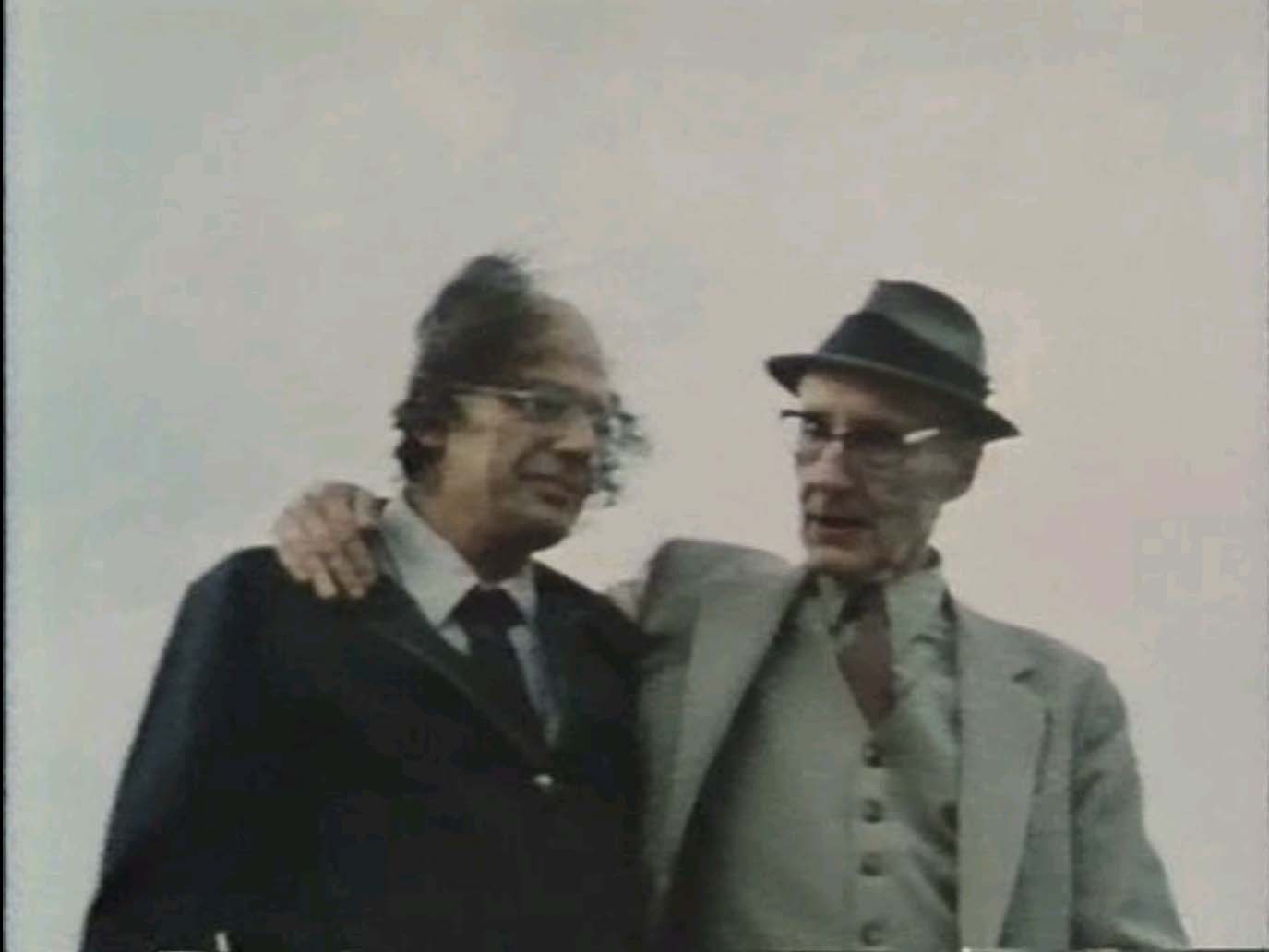
Well… yeah. Kind of like the way Mexico’s traditional people are pissed off at foreigners who expect shamans to provide peyote or magic mushrooms, in return for cultural appropriation, exploitation and a “free market” that gets a lot of them killed.
The western rage for vicarious experiences and the shameless sense of self-entitlement of the wealthy whenever a “new” indigenous plant product becomes a media sensation is destructive. It”s not just “drugs”… think of the negative effect the food faddies and hipsters demand for quinoa has had on Andean diets.
NOne of us should be shocked when foreign demand leads to local growers being coerced into an illegal international market with the profits accruing to those rich foreigners at the expense of traditional agriculture and human lives.After all, we did it.
http://www.huffingtonpost.com/2013/12/09/dmt-use_n_4412633.html


 mexfiles.net