So much for the Master Race
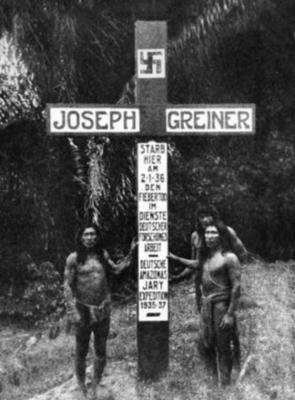
The 1935-37 Amazonas/Jary River expedition was led by Otto Schulz-Kampfhenkel, claimed to be collecting ethnographic and botanical data on the Amazon, but it’s real purpose — besides finding possible new sources of raw materials for the increasingly militant Nazi regime at home — was to test the region as a possible “Lebensraum” fit for the “master race”.
… Joseph Grenier provided proof that it wasn’t, and the Nazis weren’t … his tombstone (swastika and all) is still standing, by the way.
Missed a spot
Via Bloomberg:
Sherwin-Williams Co. (SHW)’s $2.34 billion bid to acquire Mexican paint maker Consorcio Comex SA was rejected by Mexico’s antitrust regulator, which said the combined company would be able to set artificially high prices.
The Federal Competition Commission voted 3 to 2 to block the takeover, Cleveland-based Sherwin-Williams said today in a statement. The company is pursuing “several paths” to get approval including an “internal appeal” to the regulator, Chairman and Chief Executive Officer Christopher M. Connor said on a conference call. The shares fell the most in four years.

Less PRI-occupied with stereotypes?
While congratulations are due to Benjamin Medrano Quezada for becoming the first openly gay presidente municipal elected in Mexico, his victory in the Fresnillo, Zacatecas has less to do with his sexuality than with being a relatively fresh face in the PRI. Fresnillos is the largest municipio in Zacatecas and control of the municipal government in a state that was considered “lost” to the PRD only a few years ago, it is a BFD for the party. It’s not like there aren’t out gay politicians in Mexico, but up until now, either from the PRD or one of the smaller leftist parties, and this is the first time the PRI has run a out candidate for this high a position, and not tried to cover up his sexual orientation.
Although the candidate sexual orientation played some role in the campaign — to my knowledge, it’s the first time a male candidate had ever been asked by the press whether he liked wearing women’s clothing (Medrano supports the rights of transgenders and transsexuals to work) — he made a point of running as a social moderate. In his campaign Medrano tended to emphasize his experience in government and background as a businessman… and stressed he was a good Catholic, but not “too Catholic”:
I wish the church had a different view, but I cannot go against doctrine … I respect my church, and I don’t want to dig any deeper beyond what’s permitted and what is appropriate.

Not the new Presidente … but Fresnillo is home to this kinda gay Monument to Miners.
Medrano had been affiliated with the Workers’ Party (PT) — almost an after-thought in most Mexican political arenas, but a power in Zacatecas (especially in Fresnillos) where they controlled the municipal government in a coalition with formerly state-dominant PRD. However, when former PRD governor Ricardo Monreal broke with PRD and brought his machine into the PT, the left’s circular firing squad created an opening for the PRI … which recruited moderate PTistas, like Medrano as candidates.
The presidente elect’s personal story resonates with voters — one of eleven children in a poor family, who after his quasi-obligatory stint working in the United States came home to start a successful singing and business career — as does his experience in appointive positions within municipal and state elections.
All that helped. So too, his victory owes something to not only to his lack of ties to any of the warring factions within the left, but also to a similar disconnect to the gangs fighting for control of criminal activity in Fresnillos. Not that gays are less gangsterish than anyone else and not there aren’t gay gangsters, but as a group, they tend to be as savagely reactionary in their social policy as they are in savagely capitalist. The local gangsters wouldn’t be caught dead in a gay bar (such as Medrano owns), or admit to knowing the guy.
Washington Post, Mexico’s 1st gay mayor elected in rough northern state known for machismo, drug violence
El Universal, Primer edil gay del país gobernará en Fresnillo
Fresnillo merece MÁS, Quién es Benjamín Medrano (campaign video)
The old gringa…
A bit of trivia for you. Tongalele, who is largely responsible for popularizing Afro-Antillean culture in Mexico, is one of us. A gringo (ok, a gringa, to be precise). She ought to be an inspiration to us all.
The Spokane Washington native’s stage act in the late 1940s led to a career in films and television. Although the octogenarian star is sticking to less strenuous appearances on things like chat shows these days, Yolanda Montez Farrington, well into her 60s put on a show to rival youngsters like 55 year old Madonna…
Nobody does it better?
When former President Antonio López de Santa Anna — then serving as general of the defeated Mexican Army — hoping to save what was left of his forces from the invading United States forces as well as his own skin, attempted to bring his troops through the State of Oaxaca, the state Governor, one Benito Juárez called together the state legislature to pass a bill specifically excluding the former president and general from entering the state. The troops… fine. Antonio López de Santa Anna?: no.
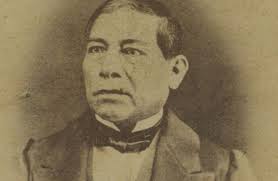 In his memoirs, Santa Anna would claim Juárez feared him because the General had known the Governor when Juárez had worn the white pajamas of a Mexican peasant and did not own shoes. Juárez, in Santa Anna’s view, was — and always would be — an peasant, an Indian with a bad attitude. Which is true enough.
Juárez — a Zapotec — had started working at the age of three (as a shepherd) and being recognized as a highly intelligent lad, had been sent at the age of 12 to the City of Oaxaca where — working as a bookbinder and servant — had put himself through law school. That Santa Anna would have run across Juárez working as a waiter is quite probable. When Santa Anna returned to power in the early 1850s, he had Juárez forced into exile. The former Governor of Oaxaca joined with some fellow political exiles in a small business, supporting themselves and their families peddling cigarettes in the bars along the New Orleans waterfront. If Juárez had a personal grudge, it is more likely due to Santa Anna being a lousy tipper, though one presumes it was something a bit more of a philosophical difference.
Vicente Fox, of German-Basque heritage, was born into a wealthy  family of agricultural exporters. A mediocre student with a business degree, he did a stint of honest labor in his 20s… as a route driver for Coca-Cola while in an executive training program. In his 70s now, he is joining with a former Microsoft executive from Seattle in a venture selling smoking products …
OK, so both guys having become President of Mexico there are a few similarities. But in comparing himself to Juárez — claiming he was an even greater president than the “Benemérito de las Ámericas” — the peals of laughter were the only things drowning out the howls of protest coming from the defenders of Juárez.
The City Council of Oaxaca (or, as it is known officially, “Oaxaca de Juárez”) seems to be channeling the ghost of the stiffed waiter … while the cannot prevent Fox from entering their municipality, have voted to declare Vicente Fox “persona non grata”.

Stimulus package on steroids
We always get ambitious five-year plans in the first year of a new Presidential administration (which runs six years). They never seem to come to completion… certainly not within five years… but what a hell of a stimulus package. And passenger trains returning to Mexico? WHoooo-hoooooo!

News that the Peña Nieto administration will be spending heavily to build and upgrade new highways, ports, airports, rail lines and telecommunications infrastructure should be a boon to the country’s construction and building industries.
Eduardo Garcia and Pa Kwan Yuk, Financial Times (subscription required): Mexico Brings out the big bazooka
Some of the projects the government is contemplating pouring resources into are: three new passenger train lines (including about 600 Km of high-speed rail, a line linking Mexico City and Queretaro as well as one linking Cancún and Mérida), 15 highways, seven ports and seven airports.
According to Lizbeth Diaz of Reuters:
The government also restated its desire to close Mexico’s “digital gap,” although details were thin.
Only about 20 percent of the population has a broadband subscription and just under 40 percent has Internet access.
Including investments by state-run energy and water companies, infrastructure spending during his six-year term could reach 4 trillion pesos, Pena Nieto said, though he did not detail plans for energy sector spending.
Among the government’s other plans were two new satellites to be put in orbit, a tender process for two new national television networks and 15 new highways.
A couple of other things worth noting. The foreign press, especially the business press, is trying to spin the fate of the whole package around “energy reforms” by which they mean 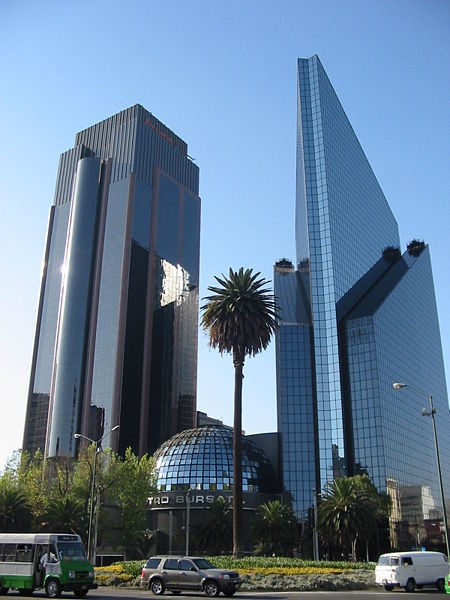 privatization of Pemex. Which may or may not happen, and doesn’t have much popular support, and is likely to be resisted. Not that the stimulus necessarily depends on that… nor that every one of the developments will even be started. I did notice that the ports were mostly meant for export and trans-shipping… while I have long through (with AMLO) that the country needs to focus on internal markets rather than continuing to depend on exports to the United States.
The Financial Times mentions several large Mexican firms that are most likely to benefit from state spending — CEMEX (of course) as well as construction giants Empresas ICA and Grupo Mexicano de Desarrollo and project management firms IDEAL (owned by… who else… Carlos Slim) and Pinfra — and whose stocks were all up on the news of the five-year plan. Spanish-owned OHL México also saw a rise in its stock prices on speculation about the project. Presuming that money will flow to domestic firms, or those with a strong Mexican presence, one might want to keep an eye on Canadian-owned Bombardier (which supplies trains to Mexico City and has production facilities in country) and cable/communications firms (Telmex, Axtel, etc.)
Presunto Culpable… no más
The Federal District Assembly unanimously approved a change Monday in the District’s criminal procedure code, under which the accused will be presumed innocent. Going into effect next year, the new law will only be in effect for one year, since a new Federal Code, which also gives the benefit of the doubt to the accused, and will mandate this change in the present “guilty until proved otherwise” assumptions now in effect throughout the Republic, will be implemented in 2016.
A living capo?
While it looks like Miguel Treviño Morales — supposedly #1 guy in los Zetas — had a rough time at the hands of the Mexican Marines that captured him yesterday (15 July), it’s  probably a small sign of improvements in human rights and the Mexican justice system that he was even alive. Not that anyone was losing too much sleep over the string of deaths in shootouts with police or military units of so-called #1 guys in the various organized crime groups (aka “cartels”… or for those addicted to using cute bureaucratic acronyms meant to justify stimulus packages for military hardware and “services” providers… “TCOs” — transnational criminal organizations, which sound a lot scarier than “gangsters”).
During the Calderón era the only honchos of note taken alive either had significant ties to the U.S. (like El Barbie — Edgar Valdez Villarreal, the U.S. citizen who headed the main faction within the Beltran-Leyva “cartel”) or, like Vicente Zambada Niebla, the son of one of the Sinaloa “Cartel” leaders, may have been “protected” by either the U.S., the Mexican or both governments: Aside from more than rumors that the Calderón Administration (and possibly the present one as well) has some sort of agreement with them, Zambada Niebla claimed in open court that the Sinaloans had an “understanding” with U.S. authorities.
Treviño Morales is not connected with the Sinaloans… nor does it appear he is a U.S. citizen. However, most of his immediate family lives in Dallas, Texas, and “You cannot understand this man and what he’s become without looking at his time in Dallas” in the words of one U.S. official. With most of his immediate, U.S. based family either in custody, under indictment or cooperating with the authorities — and with gangsterism in Mexico being largely a family business — one might think that much of that particularly nasty gang’s financial and operational direction was coming out of the United States as well.
I wouldn’t be surprised if on one pretext or another, the United States gets first crack at the latest living capo… and he is extradicted without answering questions in a Mexican court. That would leave us once again with only rumors and the official story. Valdez Villarreal and Zambada Niebla seem to have “disappeared” from the U.S. penal system… supposedly as protected witnesses (against whom exactly?) and have completely dropped off the radar. If they’re still alive. Taking Treviño Morales alive in MEXICO means we might get a chance to hear what he knows about the Zetas and the people who profit from their …. er… enterprise. Which might not be something those north of the border want to know… or want US to know.
Maybe same-sex marriage IS abnormal!
The divorce rate in Mexico is about 15 percent. According to Miguel Ángel Mancera, jefe de gobierno (governor) of the Federal District — who acted as a witness for a collective wedding of 26 same-sex couples last weekend, the divorce rate among same-gender married couples in the Federal District is only two percent. That downright perverse, isn’t it?
How to win friends and influence people: bribery!
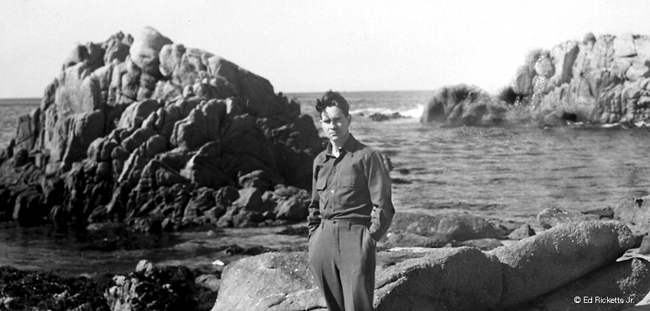
Ed Ricketts, 1939
The result of biologist E.F. “Ed” Ricketts’ 1940 expedition in the Gulf of California (then called the “Sea of Cortez” on U.S. maps) have been an invaluable contribution not only to the study of Pacific marine and tidal biology, but to travel literature … and to the sizable library of foreign observations of Mexican culture as well.
The Sea of Cortez: A Leisurely Journal of Research and Travel (1941) was a collaboration. From notes, Ricketts contributed much of the research journal, while the Leisurely parts came from a member of the crew, the pioneering ecologist’s drinking buddy, editor, lab assistant, crewman and partner in crime, John Steinbeck:
Did I say crime?
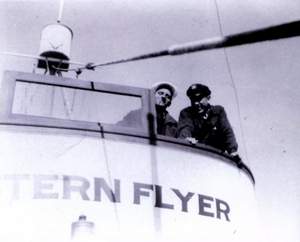
Steinbeck (in cap) with Tom Berry, owner and captain of the “Western Flyer”, the purse seiner chartered for the 1940 expedition.
… in regard to the bribes one sometimes gives to Mexican officials. This is universally condemned by Americans, and yet is a simple, easy process. A bargain is struck, a price named, the money paid, a graceful compliment exchanged, the service performed, and it is over. He is not your man, nor you his. A little process has been terminated. It is rather like the old-fashioned buying and selling for cash or produce.
We find we like the cash-and-carry bribery as contrasted with our own system of credits. With us, no bargain is struck, no price named, nothing is clear. We go to a friend who knows a judge. The friend goes to the judge. The judge knows a senator who has the ear of the awarder of contracts. And eventually we sell five carloads of lumber. But the process has only begun. Every member of the chain is tied to every other. Ten years later the son of the awarder of contracts must be appointed to Annapolis. The senator must have traffic tickets fixed for many years to come. The judge has a political lien on your friend, and your friend taxes you indefinitely with friends who need jobs. It would be simpler and cheaper to go to the awarder of contracts, give him one-quarter of the price of the lumber, and get it over with. But that is dishonest, that is a bribe. Everyone in the credit chain eventually hates and feats everyone else. But the bribe-bargain, having no enforcing mechanism, promotes mutual respect and a genuine liking. If the acceptor of a bribe cheats you, you will not go to him again and he will soon have to leave the public service. But if he fulfills his contract, you have a new friend whom you can trust.
So… now I know not to make that left turn, and as a bonus, I have a new friend whom I can trust.
Mexican music is not just horns and accordions…
… it’s also bagpipes!
Banda de gaitas del Batallion de San Patricio at the Museo de la Intervención in May, 2008.
At “descent” intervals
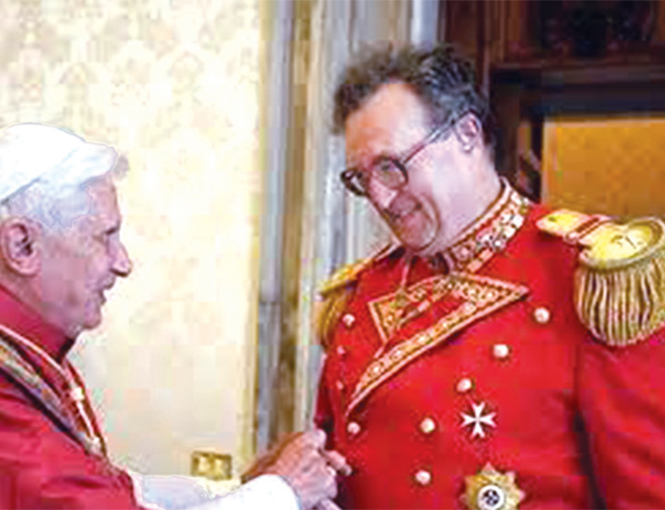
I think I have this right. Maximiliano von Götzen-Iturbide is the great-great- great-great-grandson of … this guy:

Agustín Itubide … a rather dashing Mexican officer who, in may 1821 switched sides in the Mexican War of Independence, going over to the Insurgents in a plan that would give Mexico independence from Spain… but under a Catholic Monarchy. The Catholic Monarchs being rather dubious of the whole idea, Iturbide decided HE was the Emperor and was crowned (such as it was) on 19 May 1822.
Other than Iturbide, no one seemed to cotton to the idea, so Iturbide … er.. Emperor Agustín, spent most of his ten month reign dickering for a decent pension in return for going into exile. That was worked out… with the understanding that “we don’t need no stinkin’ monarchs” and — if ex-Emp Auggie came back, he’d be shot.
In 1828 he came back. And was shot. He hasn’t looked good since.
Agustín’s younger son, Angel, not particularly in the Princess market, married a plain old gringa named Alice Green. Their son Agustín was kidnapped by Angel’s sisters (who tossed in a 14 year old cousin named Salvador Iturbide into the deal) … and sold the kids as heirs to “royal house” to this guy…
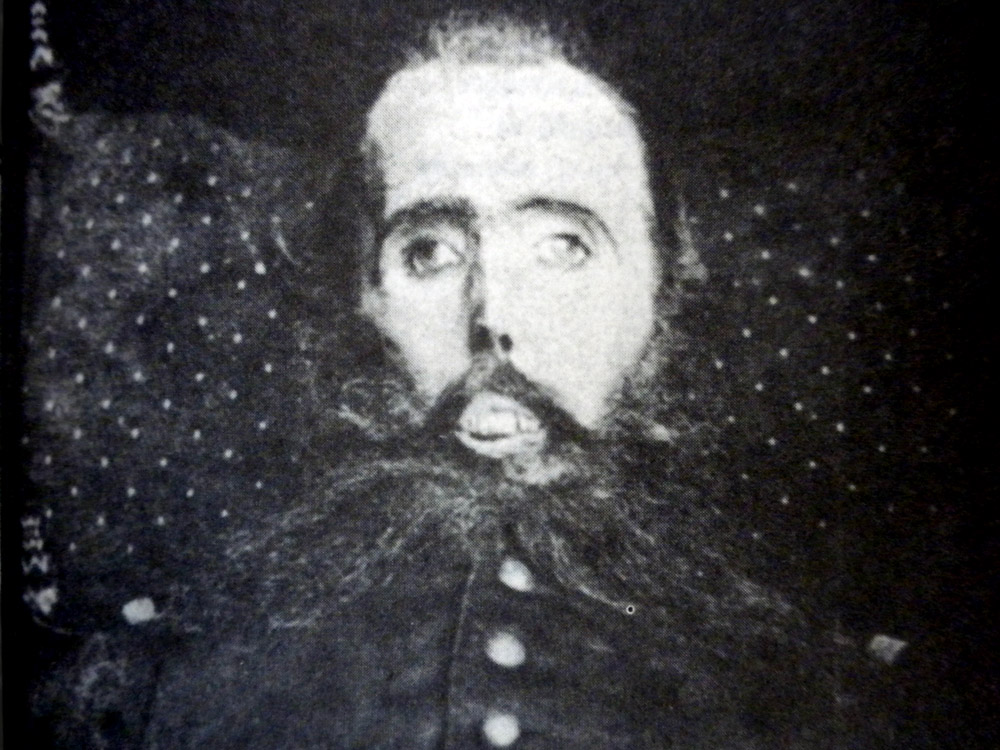
Of course, Max the First and Last, like Agustín the First and last, didn’t quite understand how serious the Mexicans were when they said he’d be shot. He was. Empress Carlota had left the country before Max went to the firing squad and sort of forget about young Agustín. Which maybe is just as well, considering she was completely insane. Somehow young Agustín ended up pretty much on his feet, and semi-normal… becoming first a Mexican army officer then a professor of foreign languages at Georgetown University. He did have to deal with the nonsense of being considered heir to a non-existent throne and having the title “Prince”.
Salvador had somehow ended up marrying some Hungarian titled lady, and was more or less treated as a minor prince in the Austria-Hungarian Empire (he got paid for it, anyway).
The Professor formerly known as Prince never had children. He died in 1925 (while Carlota was still living… if you can call it that), and even though the whole nonsensical Austria-Hungarian Empire itself had expired in 1918, SOMEBODY had to take over the fiction of being Emperor of Mexico. So..
Salvador had been dead for thirty years, but he did have a daughter, María Josepha Sophia Iturbide… who was smart enough to stay out of the whole “Mexican Empire” nonsense, but… unfortunately for her, not the royalist stuff. She was imprisoned in 1949 in Romania as an “unrepentant monarchist” and died the same year (probably just of normal causes, but not for sure… we are talking about a family history of premature politicide).
Seeing the “throne” (or whatever you want to call it) seems to skip a generation between heirs, it was natural that María Josepha left the title in her will to the guy in the other red suit, with more bling than the old Pope: Maximiliano von Götzen-Iturbide… who, if he’s smart, probably wants to stay out of Mexico.
Max von… etc…. is an Australian (not Austrian) resident or citizen, though I don’t think he wears that fancy jacket with the bling around Perth. I was wondering what it was: the article from which I took some of the photos (and some of my snarky royal history) in Excelsior (Juan Pablo Reyes, “México tiene ‘familia imperial'”) had the photo of Max II and Ben XIV labeled as having been taken in 2011, suggesting Max II was received by Ben as a fellow monarch… which might have been a problem. However, I found the same photo, from a July 2008 photograph of the Knights of Malta … membership in which is one of the perks(?) of “nobility”


 mexfiles.net