Field of bad dreams…
Yahoo baseball columnist Jeff Passan:
GLENDALE, Ariz. – A team full of Mexican citizens and Mexican-Americans played a baseball game here Wednesday. This would be of little note in 49 other states. In Arizona, where immigration has been politicized to the point of dystopian fiction, this was a recipe for jokes about how many of the team’s players were asked for their papers on the way to the stadium. It might’ve been funny if not for the fact that a police officer really had stopped one.
“I actually got pulled over today on the way to the field,” said Marco Estrada, a Milwaukee Brewers pitcher who has lived in the United States for 24 years, whose wife and children are American citizens and who is representing Team Mexico in the World Baseball Classic.

Watch your (offensive) language!
Via Blabbenado:
In a landmark 3-2 ruling released after a session held today, the First Chamber of the Mexican Supreme Court of Justice has determined that homophobic expressions such as “maricones” or “puñal” are not only offensive and discriminatory but also not protected under under freedom of expression laws.
The full text of the ruling will not be available until a later date but a press statement released by the Court states the following (my full translation):
In a session held on March 6th of the current year, the First Chamber of the nation’s Supreme Court of Justice – at the request of Justice Arturo Zaldivar Lelo de Larrea – resolved an issue in which it analyzed the complex conflict between freedom of expression and discriminatory demonstrations – particularly homophobic expressions – a first for Mexican jurisprudence.
In finding a resolution for the Direct Appeal for Revision 2806/2012 (Amparo Directo en Revisión 2806/2012) the Chamber’s starting point was the strong influence language has on people’s perception of reality and which can cause prejudice that can take root in society through expressions which take for granted the marginalization of certain individuals or groups. In this introductory stage, the Chamber also studied the role of dominant discourses and stereotypes. Thus, in the opinion of the Chamber, the language used to offend or disqualify certain groups gain the characteristic of being discriminatory.
In this sense, the First Chamber determined that homophobic expressions or – in other words the frequent allegations that homosexuality is not a valid option but an inferior condition – constitute discriminatory statements even if they are expressed jokingly, since they can be used to encourage, promote and justify intolerance against gays.
For this reason, the Chamber determined that the terms used in this specific case – made up of the words “maricones” and “puñal” – were offensive. These are expressions which are certainly deeply rooted in the language of Mexican society but the truth is that the practices of a majority of participants of a society cannot trump violations of basic rights.
In addition, the First Chamber determined that these expressions were irrelevant since their usage was not needed in resolving the dispute taking place as related to the mutual criticism between two journalists from Puebla. Therefore it was determined that the expressions “maricones” and “puñal”, just as they were used in this specific case, were not protected by the Constitution.
It should be noted that the First Chamber does not hold that certain expressions which could be taken as having homophobic intent in abstract can never be validly used in scientific research or in artistic works. That does not, in itself, imply employing hate speech.
To conclude, it should be noted that this resolution is consistent with the various First Chamber rulings on freedom of expression and the right to one’s honor since they set the parameters for the analysis of such rights. They are consistent in establishing that offensive and impertinent expressions are not protected by the Constitution and the current case offers and update.
The vote in this decision is as follows: 3 votes in favor (Ministers Pardo Rebolledo, Sánchez Cordero de García Villegas and Zaldívar Lelo de Larrea) and two votes against (Ministers Cossio Díaz and Gutiérrez Ortiz Mena).
One’s dignity (or “honor” in the above translation) are considered essential to a person’s being, and Mexican law recognizes assaults on dignity (or honor) as potentially criminal offenses (one reason it was so hard to reduce libel to a civil matter).
The Mexican Constitution grants equality before the law regardless of “sexual preference” (and gender… neither of while is mentioned in the U.S. Constitution). While a ruling by one of the two Salas only means the case will be taken up by the Supreme Court as a whole, and doesn’t establish precedent, it does mean the Supremes are seeing verbal assaults on the dignity of sexual (and other) minorities as something that needs to be addressed in the law.
Tortillas in space
Canadian astronaut Chris Hadfield demonstrates yet another Mexican contribution to space exploration…
This new American character…
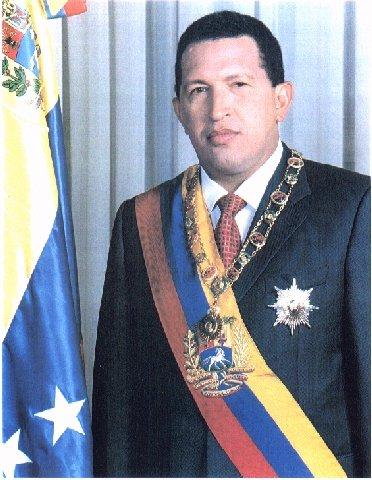
In explaining south of the Rio Bravo to those north of the Rio Grande, I often resort to inexact analogies… describing, for example, the Reforma era scientist, politician and theorist Melchor Ocampo as a Mexican Thomas Jefferson. Thinking about Hugo Chavéz, many analogies to our own time come to mind… a Latin Nelson Mandela, a modern Benito Juarez , a male Eva Peron. But for our friends north of the river, perhaps a better analogy might be to a controversial figure from U.S. history… Andrew Jackson.
The Jacksonian Era was nothing short of another American Revolution. By 1850, the “common man” demanded his place in politics, the office of the president was invigorated, and the frontier exerted its ever more powerful impact on the American scene. Hated by many, but loved by many more, Andrew Jackson embodied this new American character.
(The Age of Jackson, ushistory.org)
Of course, it’s not a perfect analogy… nothing ever is. But both Chavéz and Jackson were military officers turned politicians, products of their back country upbringing, and unrepentant populists who despised and did their best to destroy the entrenched economic elitists who controlled their nation’s economy. And both profoundly changed the not only their own countrymen and women’s perception of what it meant to be a citizen of their country, but the world’s perception of their nation, and its culture, as well.
The only period in U.S. history named for an individual is the “Jacksonian Era”… from the late 1820s to the mid 1850s… a period of unlimited expansionism, a sense of the United States as an ascendent power and a feeling commoners (at least white, male commoners) could hold their own against the bankers and the elites, and had the right — and opportunity — to better their lives. Of course, not all of that was quite true. Jackson pursued genocidal policies against the Native Americans, slavery was further entrenched in the economic system and women had no say in political or economic matters, and “bettering their lives” meant a chance to move west, stealing land from the Indians, buying slaves or grabbing large chunks of Mexico. Still, within the confines of early 19th century thought, this was an enormous human breakthrough… creating a radially different sort of culture — and one marveled at by even European aristocrats like Alexis de Tocqueville — than anything the world had seen before.
Jackson was derided in his own time as “King Andrew I”, and a “dictator” or “tyrant”, not for how he came to power, but for the fact that he was given power, and used it. The derision, along with stories of his own buffonery (including the popular claim that he was a functional illiterate) came not from those who normally suffer under a tyrant or a king, but from those who perhaps would prosper under a monarchy… those of inherited wealth, the old “Virginia Aristocracy” and the bankers. Chavéz, though popularly elected, was so often labeled a “dictator” in U.S. and other “first world” media that the term is just used without any consideration of its appopriateness. A correspondent of mine used the term “thug” today to describe Chavéz, but what “thuggishness” was referred to (perhaps fending off open insurgency financed by the former elites?) was never answered. Had Chavéz, like Jackson, engaged in genocide against native people (and he was a descendant of those people himself), or even jailed dissidents in any number (a few, mostly for normal criminal activity) perhaps the charges would have made some sense. But one realizes, that like the charges that Jackson was “King Andrew”, it was simply a case of class envy… the old elites whining that as they had done unto others, so was done unto them (although, it must be admitted, without the massive bloodshed of the previous Venezuelan governments, who had a nasty habit of killing protesters at the slightest pretext).
Hugo Chavéz perhaps had a harder path to the presidency, coming as he did from a much older society, with more entrenched social customs than the very young United States. As an Afro-Mestizo, he faced an unstated challenge to his presidency that the plantation owning Jackson never would have encountered. And, having as a teenager taken part in the War of Independence, Jackson — unlike Chavéz — had to face an elite who distrusted the economic superpower of the day (i.e., the British) and were predisposed to pursuing nationalist economic goals. Venezuela had been a in thrall to the the British, then of the United States for its entire history, and it was less a matter for Chavismo of weaning the elites from their dependence, as breaking either the elites dependence, or the elites. Or both, if necessary.
During the Jacksonian Era, he United States loomed large in the popular imagination as an alternative society, but was not a particularly major power in the world. Chavista Venezuela, even with its outsized importance as an oil exporter, is not a major power though it has loomed large in the world’s imagination. What is the crucial difference, and the one fact that guarantees Hugo Chavez a place in the pantheon of Latin American (and global) leaders was that his revolution… the Bolivarian Revolution… was not, like Jackson’s, merely a matter of one nation, at one time.
Of the various heroes (and heroine) mentioned above, only Nelson Mandela is comparable to Hugo Chavéz. Ocampo, like Jackson, is a purely national figure.  Juarez broke the mold… proving that European extraction is not a requirement for greatness even in a nation of European-descended elites, and is honored throughout the Americas. Eva Peron, although a controversial figure, overcame the barriers to her gender and all-too-maculate background to create a symbol of womanhood recognized one way or another — and understood or misunderstood in different ways — world-wide. With better communications in the late 20th century, Mandela’s amazing accomplishments have made him more than a South African, or even Pan-African figure. He is a world-wide symbol of the power of the people to change meaning of their country and their culture.
Similarly, Chavéz’ “Bolivarianismo” — in changing the meaning of Bolivarianism from José Vasconcellos’ concept of a culture reveling in its Iberian, Roman Catholic roots to one rooted in the experiences of the multi-ethnic American hemisphere — has changed the way the peoples of Latin America view themselves. Even should the government of the Bolivarian Republic be changed through subversion or force, that change is here to stay.
Coming as he did, like Juarez, Ocampo, Peron and Jackson, from the back of the beyond, and — like Juarez, Peron and Mandela — from the forgotten majority and only like Mandela, having captured the entire world’s attention as the head of a new and different form of understanding nationality, carved out of an entrenched, unfair and exploitative old one, breaking through neo-colonial forms and assumptions, did, indeed, change our world.
Everything’s bigger in Texas… including the bullshit
Via Juanita Jean:
exas Senior Senator John Cornyn, who has been sissy-whipped by Texas Junior Senator The Amazing Ted and His Bubbling Mouth, has gone all out on them damn illegals. I mean, if you ain’t working up a good lather of hate, then you ain’t senatoring very well.
Catch this twitter –
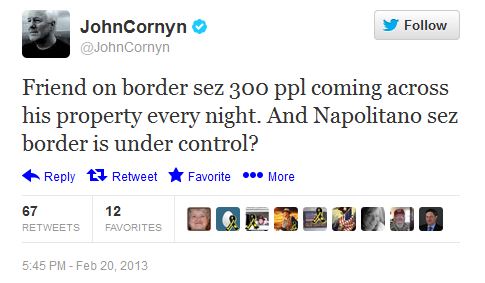
Let’s see… 300 per day = 9000 per month = 108,000 per year. Senator Cornyn claims this is somewhere in “South Texas” but doesn’t seem to have a clue where along th 1,241 miles of border the U.S. Border Patrol defines as “South Texas” there is this supposed influx.
Let us prey…
Chavéz wasn’t even dead yet, and the U.S. was already busy trying to make mischief: Via The Guardian earlier today:
[While President Chavéz was dying in a military hospital, Vice-President Maduro]… said the government planned to expel a US embassy official for meeting military officers and “planning to destabilise the country”.
Maduro identified the American as the air force attache, whom, he said, had been spying on Venezuela’s military. He said the official had 24 hours to leave the country.
Greg Adams, a US embassy spokesman, identified the attache as David Delmonaco. Adams had no immediate comment.
Later, the foreign minister Elias Jaua also announced the expulsion of a second US official, also an air force attache.
Or, Barack Obama said, corrected to what he meant:
“At this challenging time of President Hugo Chavez’s passing, the United States reaffirms its support for the Venezuelan people elites in developing a constructive relationship with controlling the Venezuelan government and resources. As Venezuela begins a new chapter in its history, the United States remains committed to policies that promote subvert democratic principles, the rule of law, and respect for human rights.”

There, fixed it.
Caracas
I think you’ll have to go to Miami, or Washington to find a different reaction to Hugo Chavéz ‘ death than that expressed by the people in his own country.
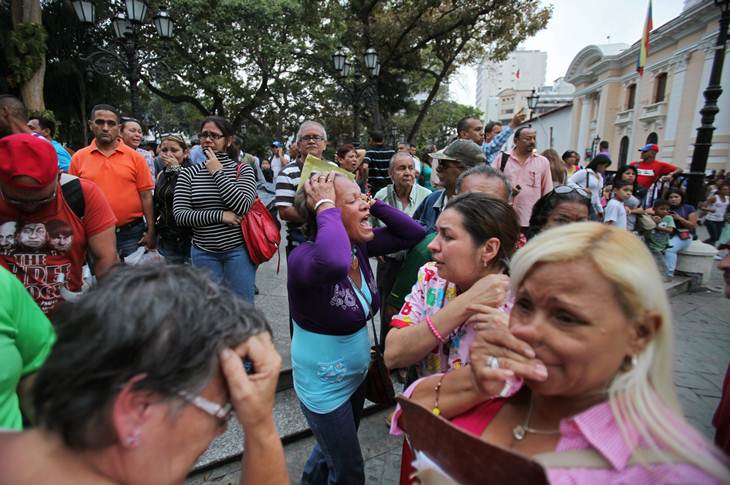
Hasta siempre…
When Mexico invaded Europe
Via the Mexican History/Historia Mexicana facebook page, I learned about the otherwise forgotten Mexican conquest of… Yugoslavia.

Apologies for using a stock photo…for some reason the Tito monument isn’t a much photographed as the one to Winston Churchill. Funny that.
With Marshall Tito having broken with the Soviets in 1948, and pro-Soviet Yugoslavs (and suspected Soviet sympathizers were roughly rounded up), all things Russian were looked at askance in the multi-Slavic People’s Republic. With the “Cold War” raging, citizens in Communist countries were stupidly punished by restrictions on cultural exports. All was not lost… the OTHER major revolutionary state of the 20th century stood ready to fill the gap. And the fractious Serbs, Croats, Slovines, Macedonians, Bosnians and Herzogovninans were, for a time, united through mariachi and Emilio Fernandez films:
Emilio Fernández’s Un Día de vida (1950) became so immensely popular that the old people in the former republics of Yugoslavia even today regard it as surely one of the most well known films in the world ever made although in truth it is probably unknown in every other country, even Mexican web pages don’t mention it much..
When Tito died in 1980 the dream of a united Slavic republic died with him. But although he failed to turn his union of fractured ethnic enclaves into a modern state, it was an honorable effort, that is remembered not only with the monument to Tito in Chapultepec Park but in the wonderful recordings of Serbo-Croatian mariachi.
We need this act. ACT!
Boz (Bloggings By Boz) and I normally disagree about… well, just about everything, but he’s right about how important this is, and how important it is that U.S. citizens let their representatives understand the importance of it. That includes those of us who are residents of Mexico, the country most affected by U.S. gun smugglers. The lives we save may be our own.
The Stop Illegal Trafficking in Firearms Act of 2013 does three important things:
- Defines and prohibits straw purchases. There is currently no federal law against straw purchases, where someone knowingly buys a gun for a person who is prohibited from owning firearms. Prosecutors currently charge straw purchasers with lying on federal forms. This bill will make the act of straw purchasing illegal, helping prosecutors directly target the problem.
- Strengthens anti-trafficking laws. This law will make it illegal to knowingly transfer firearms when the person has a “reasonable cause to believe” that the weapon will be used in a crime. Currently, people who traffic weapons to criminals but aren’t directly involved in crimes can often dodge prosecution.
- Prohibits smuggling firearms out of the US. It’s currently illegal to smuggle a weapon from Mexico to the US. This bill will make it illegal to smuggle a weapon from the US to Mexico. There is no reason that any person should be smuggling weapons across the border in either direction. This bill will make it easier to prosecute those aiding transnational criminal organizations and terrorists with obtaining weapons.
These three actions will help reduce gun violence in the US and in the hemisphere. They close obvious loopholes exploited by criminal groups to arm themselves. These measures have been requested by US law enforcement and the governments, police and militaries of our allies in Latin America and the Caribbean who are too often on the wrong end of illegally trafficked firearms. The three measures are completely constitutional, respect the second amendment, and will not impact US citizens who want to legally buy, sell or own firearms.
There is a contentious debate to be had over gun control and gun rights in the US, particularly over the proposed assault weapons ban, but the Stop Illegal Trafficking in Firearms Act should not be controversial. In fact, along with background checks, this bill should be obvious compromise legislation that both parties can agree on before they disagree about the other stuff. It protects law-abiding gun owners and law enforcement while going after violent criminals and criminal groups both at home and abroad.
Congress should pass it; President Obama should sign it.
Senators Patrick Leahy (D-VT), Susan Collins (R-ME), Dick Durbin (D-IL), Kirsten Gillibrand (D-NY), and Mark Kirk (R-IL) are sponsoring the bill. They deserve credit for drafting this legislation.
Start spreadin’ the news…
Mexican creativity, and protest, at its best. Ambulantes are usually the people who get on the subway selling everything from candy to pirate CDs to copies of the Periodic Table (I bought one once… I was trying to do a crossword puzzle in Spanish, and didn’t know the names for the elements) but it can mean any roving resource provider. Fed up with what’s seen as media manipulation and omissions by the corporate press (especially Televisa), “Periodistas Ambulantes” are taking the news to the people, at least to the people who ride the Metro. Bunch of dirty hippies? Uh… no.
Pope matters… or Popes matter
For anyone interested in Latin American business and investment, the Inca Kola News has always been required reading. Otto the Inca, perhaps slightly (very slightly) errs in referring to the upcoming Papal election as “of passing interest, a bit of a sideshow that doesn’t really affect [investors’]lives.” Perhaps not their lives, but — if the next Pope is “one of ours” it certainly could impact their investment portfolio.
Otto was calling attention to a very good post on Central America Politics asking “Could the next Pope come from Latin America?” Mostly concerned with the symbolism — and “market share” — of a Latin (or other “global south”) Pope, the post reflects what might be considered “first world” view of the challenges facing the Church:
The Catholic Church confronts one of the most challenging periods in its 2,000-year history. The sexual abuse of children by priests and the illegal and immoral covering up of that abuse by Church leaders have caused many faithful to leave the Church, to cut back on their offerings, and to stop sending their children to its schools. While the abuse scandals in the United States and Ireland have gotten the most attention, scandals have rocked Mexico, Chile, and other Latin American countries as well. A twenty-first century congregation has also had a difficult time supporting the Church’s stances on homosexuality, contraception, celibacy, and women and married clergy. As a result, in most countries, the percentage of Catholics as well as the number of men entering the priesthood is decreasing significantly.
While not ignoring the impact of any of these issues on Catholics (and others) in the “global south”, and fully aware that the overwhelming “papabili” mentioned as coming from “our” part of the world are considered “conservatives”, a few points about the reality of Catholic Latin America:
- First, we global southerns have been tolerated clerical non-celibacy for centuries without much of a fuss.
- Secondly, although it’s nothing to be proud of, at least in Latin America sexual cohersion (even when it amounts to rape, or abuse of power) has not been something people see as all that unusual, or even noteworthy.
When priests are accused of being overtly homosexual, its usually in terms of “men in dresses”, not where they park their penis… that is, a question of appearance, and not of behavior or orientation.
From news reports (slanted to the issues of the global north) it seems a major factor in Benedict’s abdication was his inability to deal effectively with the sex scandals. I’m not sure how much they matter, or if a Latin-American Pope would be all that personally shocked, to be honest.
- While I’d add that at least in Mexico, where the birth control pill was invented, and the right to family planning is constitutionally guaranteed, the Church is adept at side-stepping the issue. Catholics in Latin America, like the bureaucrats in colonial New Spain are perfectly capable of saying “I hear, but do not obey” when pronouncements come down from the leadership.
- Finally, creative ways of dealing with priest shortages have a very long history here. Sometimes politically created (as during the anti-clerical era in Mexico), but more often just a reflection of the difficultly in finding suitable candidates for the priesthood, people have accepted a situation where they might only see a priest once or twice a year, as did their parents, grand-parents, great-great-great grandparents, back to whenever some wandering Conquistador with a monk at his side decided their whole community was now Catholic. And, without more than occasional clerical guidance, people consider themselves good Catholics to this day.
What seem to be issues that overwhelmed Benedict the German might not be seen as particularly pressing to a Latin American Pope, who would — if forced to deal with them (and no matter who the next Pope is, or where he comes from, will have to deal with these issues) — likely opt for less “one size fits all” solutions, if he didn’t consider them less pressing than those issues of more immediate importance to we global southerners. As it is, the Catholic experience in Latin America offers a Pope some viable workarounds.
One difference between a Euro-centric Pope and a Latino- or Afro-centric one might also found among the “strayed” Christians. What I mean is that while John-Paul II, being an Eastern European spent much of his papacy on trying to bring Orthodox and the Eastern Churches (like the Chaldean Church) back into the field of the “one, true, universal church” and the Benedict the German was making concessions to the more conservative Anglicans, a Latin Pope would have several innovative “Catholic” churches from which to draw.
Latin America is chock full of more or less Catholic, but Popeless, denominations like the Brazilian Apostolic Catholic Church (which started with a Bishop’s suggestion in the 1930s of some changes that the Papacy later accepted like saying Mass in the local language, and turning the altar around to face the congregation) and the Iglesia Católica Apostólica Mexicana which owes its existence to now forgotten Church-State controversies of the 1850s. These churches have found ways of maintaining their Catholic identity (and the Apostolic Churches are, at least theoretically, able to return to the larger Roman Church at any time) while instituting policies that work for them. The Brazilian Apostolics, for example, accept divorce and both churches permit a married clergy.
In a region with Evangelical Protestantism is seen as the largest theological competitor, I would expect a Latin American Pope would be more likely to turn to these small successful “offshoots” and learn from them more than from the competition.
But what the biggest difference would be… and the one investors should note (as well as Secretaries of State, CIA chiefs and their equivalents in the major powers) is that even the “conservative” cardinals, like other Latin and African elites have a very different perspective on the global situation than European elites. Even the most conservative of our leaders can’t afford to ignore climate change, economic inequality (and the subsequent unrest it causes) and resource depletion. Frankly, who the bishop is boinking isn’t of much concern to Cardinals who come from places where people begging in the streets, or when housewives are banging pots to demand price controls on tortillas, or local tribesmen are blocking highways to protest timber thefts or oil drilling.
This isn’t to say that any of the mentioned Latin/African candidates are at all sympathetic to “Liberation Theology”, nor that the hierarchy in Latin America or in Africa are friendly to the left, but they tend to be realists.
My friend, and expert on Polish intellectual thought, Eva Dadlez says that Poles are natural “Liberation Theology” Catholics, and John Paul II did write (Centesimus annus, 1991):
When there is question of defending the rights of individuals, the defenceless and the poor have a claim to special consideration. The richer class has many ways of shielding itself, and stands less in need of help from the State; whereas the mass of the poor have no resources of their own to fall back on, and must chiefly depend on the assistance of the State. It is for this reason that wage-earners, since they mostly belong to the latter class, should be specially cared for and protected by the Government.
Pace Dr. Dadlez, JPII began a process continued under Benedict of rooting out Liberation Theologians from the Latin American Church and installing conservatives (especially Opus Dei trained priests) in the Hierarchy. Eva’s point though, is worth a thought. When John Paul was elevated to the Papacy, Poland was chaffing under a Soviet-backed regime. I tend to think it was the Marxist influence and rhetoric in Liberation Theology, rather than the sensibility to the rights of the poor and working class that John Paul found unacceptable.
John-Paul’s Poland was a relatively poor country (by some socio-economic indicators, it’s poorer than Mexico, Chile and Costa Rica). That matters. Our Cardinals … having been largely John Paul’s and his theologically similar Benedict’s creations, are — like the author of Centesimus annus — products of a culture that also has been subject to rapacious foreigners.
Poland was, still is, a country of extreme social conservatism, but also one with a sense of national solidarity that somehow incorporates class consciousness. That is, the Poles are not so much given to “workers of the world, unite”, but to “workers of Poland unite… and go to Church”.
Don’t forget, in 1938 a very conservative Mexican Catholic hierarchy threw its considerable weight behind Lazaro Cardenas when he nationalized the oil industry in Mexico. The Church’s social teachings, in documents such as Centesimus annus have always recognized the right to own private property, but they also recognize the state’s right to control access to goods or to control natural resources for the common good of its people. A Latin-American Pope will most likely still tell gay couples they’re going to Hell. That doesn’t really affect anyone’s portfolio or more than some ripples in the back offices of various foreign ministries. But, if a Cardinal in say, Ecuador or Mexico stands aside or supports a government that tells Standard Oil to go to Hell, all Hell is likely to break loose in the global north … or maybe, with the Pope’s backing, Cardinals in Ecuador, and Mexico and Ghana and Nigeria and… start telling the multinationals “thou shalt not steal”, investors in the global north (and their governments) will face a tough penance — changing their attitude from “let us prey” to “let us pray”.


 mexfiles.net