So, Pope Has-Ben doesn’t get to keep his ruby slippers. He’s got some snazzy Mexican shoes instead.
(via Laura Martinez):
The Vatican today announced Benedict XVI will lose the Swiss Guard, the papal ring and his iconic red shoes when he retires Feb. 28. He will, however, hang on to his Mexican brown leather shoes… which this blog will refer to as #Papos.
Happy retirement… and Keep on walkin’

¡BABALU!
Today would have been Desi Arnaz’s 96th birthday. Born Desiderio Alberto Arnaz y de Acha in Santiago, Cuba into a prominent political family family, he may not have the revolutionary cachet of some other Cubans who became famous in the 1950s, but he was a radical in a way, too.
His father ( the mayor of Santiago and a sometime congressman) was briefly jailed by the Batista regime in 1933, leading to the family’s exile to Miami. After graduation from high school, Arnaz made his way to Hollywood, where his accent and ethnicity locked him into only a limited number of possible roles.

Integration, 1950s style
However, when his wife, Lucille Ball, insisted Arnaz be her co-star in an upcoming television version of her own popular “My Favorite Husband” radio comedy, two barriers were breached in American culture. First, while there had been comedies featuring families of mixed ethnicity before (Abie’s Wild Irish Rose, about a Jewish-Catholic family) “I Love Lucy” was the first to present a normal (albeit hilarious) family that crossed “color” lines. It’s hard to realize now, but at the time, Cubans were often considered black, and even Cubans of largely European extraction (like Arnaz) were considered “colored”. While the Cubanismos of “Ricky Ricardo”, and the supposed volubility of Latins in general played a large part in the comic situations presented on I Love Lucy, it was the Anglo partner in the Ricardo household who was the ditzy one… the Latino was the one who resolved problems and returned life to normal.

… and in 1966
The other innovative Desi Arnez breakthrough was that he pioneered the made for TV (or by TV) pop music band. Based on the premise of “My Favorite Husband,” the Ricardos had to be a show-business family, and so… Rick had to be involved somehow in show-business, and — having had some minor success as a band-leader in real life… he played one on TV. The TV band became the “real” band, paving the way for those future TV show bands like The Monkees in the U.S. and RDB here in Mexico.
In later life, as an executive of Desilu productions, he and his by then ex-wife; Lucille Ball, boldly went where no TV executives had gone before, producing Star Trek, a series that featured not only not only inter-racial, but inter-galactic, characters as normal, healthy, functional people who could cooperate and work together as a family.
Beam me up…
The romance of Elba Esther…
In The Guardian Jornada editor Luis Hernández Navarro explains the saga of Elba Ester Gordilla and Enrique Peña Nieto in terms the British readership can understand: the twisted, dysfunctional and destructive relationship of Cathy and Heathcliffe in Wuthering Heights:
Gordillo’s arrest is a political decision justified by legal arguments. An openly political conflict is thus channelled through the criminal justice system.
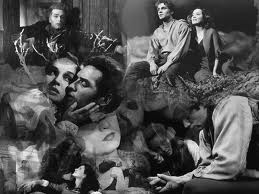 She leaves the union as she came: as a product of a decision, not by the teachers, but by the incumbent president. At stake in this Mexican version of Wuthering Heights is the future of education in the country and that of the teachers who make it possible. But at the same time a message was sent to all the country’s political actors: the neo-liberal reforms are here to stay.
Getting rid of Elba Esther was easy… though I might be tempted to see her in terms of another classic of British Romanticism… Mary Shelley’s Frankenstein. Not so much Gordilla’s freakish lab-created appearance, but a creature meant to be a reflection of the creator, who runs amok when searching for autonomy.
Calderón went after the independent unions (the Electrical Workers and the Miners), and now Peña Nieto, looking for low-hanging fruit and finding it, has started in on the formerly state-controlled (“charro”) unions who might impede the rush to a neo-liberal state.
Whether the neo-liberal reforms are here to stay, I don’t know. With an administration seemingly hell-bent on adopting neo-liberalism as an ideology just as that ideology is coming into disrepute worldwide, perhaps there’s yet another British Romantic work we might consider: Percy Bysshe Shelley’s England in 1819.
An old, mad, blind, despised, and dying king,–
Princes, the dregs of their dull race, who flow
Through public scorn, mud from a muddy spring,–
Rulers who neither see, nor feel, nor know,
But leech-like to their fainting country cling,
Till they drop, blind in blood, without a blow,–
A people starved and stabbed in the untilled field,–
An army which liberticide and prey
Makes as a two-edged sword to all who wield,–
Golden and sanguine laws which tempt and slay;
Religion Christless, Godless, a book sealed,–
A Senate—Time’s worst statute unrepealed,–
Are graves from which a glorious Phantom may
Burst to illumine our tempestuous day.
A background of the imagination
Sterling Bennett (author of Playing For Pancho Villa) was a Professor of German Language and Literature before becoming a novelist. His newest work, Playing For Pancho Villa, is available in Mexico from Libros Valor/Editorial Mazatlán and will be available in the U.S. and Canada in April of this year.
I have always thought the U.S. served as the spiritual backyard of the German imagination. Mexico may serve the same purpose, though a darker one, for the U.S. imagination. Most Americans know something about Mexican language, beer and beaches. Far fewer have a grasp of Mexico profundo – the foundation of generosity, intelligence, humor, and patience. Many equate Mexico with danger, a perception that repels, but also attracts. Americans need to know about their neighbor to the south: about its cultures, histories, languages, and what’s going on right now, and how Americans are involved: the drug wars are fueled, for example, by U.S. consumption of drugs and the U.S. sale of weapons to the drug cartels. They need to know, for example, that at the end of the Mexican-American War 1846-48, Mexico was forced to concede (the U.S. occupied Mexico City) 55% of its prewar territory to the U.S., including California, Arizona, New Mexico, Texas and parts of Utah, Nevada, and Colorado. Many Mexicans remember this historical fact, while few Americans do. The overflow of Mexico into the U.S. is an old and continuing process (see John Ross’s book The Annexation of Mexico, 1998). Poverty and the leadership’s lack of interest in providing jobs and education drive the courageous and hopeful toward the U.S. border or into the hands of the narco-cartels, who will supply jobs.
(About My Stories, Sterlingbennet.com)
Madero speaks!
Here’s why Don Pancho didn’t survive… he honestly believed that the only reason for a Revolution was to overthrow Porfirio Diáz (“su único enemigo, que es el dictador”) and never understood the need for a thorough re-construction of the social compact.
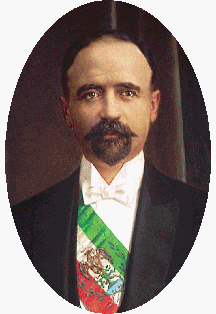 I know there are those who want to believe that — absent Huerta’s counter-revolution — the democratically elected Madero would have paved the way for a gradual “modernization”, but it is wishful thinking (and if we’re engaging in “what ifs”, then we need to assume that the U.S. oriented Maderos would have left the neo-colonial economic system of the late 19th century largely intact).
Huerta DID stage a counter-revolution (with a healthy assist from U.S. Ambassador Henry Lane Wilson) and there were a number of uprisings even against the Madero regime (Orozco in the North and Zapata in the south, to name two) that indicated the revolution was more than use a matter of replacing one leader with another, and tweaking the political system.
For better or worse, the Mexico that was yanked into modernity through ten years of fighting and infighting, was waiting for more than a transfer of power, and high-pitched, high-sounding rhetoric.
A grand, and terrible, old man…

When Mother Jones (1837 -1930) was called by a U.S. Senator, “the mother of all agitators,” she replied, “and I hope to be thier great-grandmother too”.
The grandfather of today’s agitators… French diplomat, WWII Resistance hero and international rabble-rouser, Stéphane Hessel, has passed away at the age of 95. Raised by his translator father, his journalist mother and his mother’s artist lover (he was French… it’s complicated) Hessel (who was Jewish) refused to collaborate with the Vichy Regime in France, fled to England and joined the Resistance. Captured by the Germans in 1944, he avoided death at Buchenwald by switching identities with an already dead prisoner, and … transferred to another death camp… managed to escape, making his way back to France to resume the struggle.
As a post-war diplomat, he worked with U.S. delegate to the United Nations, Eleanor Roosevelt in drafting the United Nations Charter of Human Rights. He later oversaw France-s witdrawal from Vietnam and Algeria, as well as serving his country in a number of diplomatic and ministerial posts.
In 2010, at the age of 92, the very distinguished elder statesman published a small pamphlet, “Indignez-Vous!” (Time for Outrage… download here), followed up the next year by “Engage-vous!” (Get involved!)… two works by a reasoned, impassioned old man who never accepted injustice.
He is survived by his many sons and daughters…Occupy Wall Street, London, Paris… the world; YoSoy#132; los indignados of Spain; the Chilean student uprising; the Arab Spring and many, many more.
Elba Esther… we hardly knew ye…

Supposedly, Gordillo blew a huge chunk of the 2 billion pesos she allegedly stole on face-lifts. What gave them that idea?
WOW!!!
Mexico arrests Elba Esther Gordillo, powerful teachers union boss, on corruption charges
In a curious turn of history, Gordillo’s arrest harkened back to the early days of Salinas de Gortari’s owned presidency. Seeking to boost his popular support, Salinas ordered the arrest in early 1989 of Mexico’s then most powerful labor leader, Joaquin Hernandez Galicia, who headed the oil workers union.
She only padded her resume… Carmen Montejo, D.E.P.

Carmen Montejo, like so many other female stars of the Mexican golden age, never considered aging an excuse to leave the profession.
Born in Cuba (26 May 1925), María Teresa Sánchez González, had been a minor child actress (having at least curly hair, she was packaged as a “Cuban Shirley Temple”) who, upon her arrival in Mexico in 1940, “slightly” expaned on her theatrical background, claiming to have been a major star… and — under her assumed name — worked in radio and film throughout the 40s, 50s and 60s. In Mexico, she did indeed become the star she claimed she was in Cuba, working with Pedro Infante, Pedro Armendárez and the other leading men of the era.
As a stage actress, Montejo starred in several classical (The Trojans, La casa de Bernarda Alba) and appeared in various then-controversial works, including the Mexico City premiere of Edward Albee’s “Who’s Afraid of Virginia Woolf?“. Not one to deny the vissitudes of aging, the former child star found a continuing fan base in her third age, playing matriarchs and grandmothers in numerous telenovelas.
She died Monday at the age of 87.
The mustache speaks…
Factual errors, ham-fisted analysis, and contradictory assertions distinguish the work of [Thomas Friedman,] the Pulitzer Prize–winning New York Times columnist and author.
That, according to Belén Fernández, who — being witty and actually knowing what she’s talking about — is generally ignored North of the Border. She shouldn’t be… Friedman should.
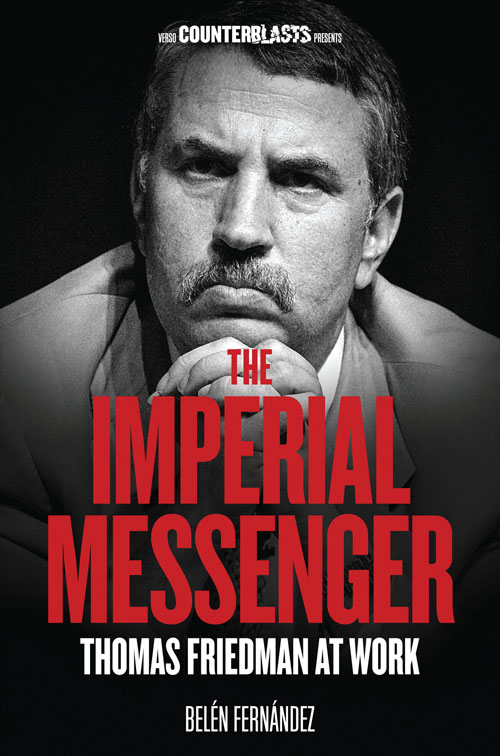 Friedman writes of Mexico as if he discovered something new, when all he is really saying is that he spent the last several years reading himself. What’s new in the fact that Mexico has a shitpile of trade agreements, a lot of engineers and low wages?
In other words, Friedman wrote about the same thing he always does… throws out a couple of factoids and makes a sweeping assertion that’s meant to flatter whoever it is he’s been paid to talk to how much wherever he is is the place of the future…
Rather pathetically, some of the most important people in Mexico (Secretary of the Treasury Luis Vidigaray, Ambassador to the United States Arturo Sarukhán, business moguls Lorenzo Zambrano and Richardo Salinas) actually think Friedman matters… or that he’s saying something new.
Against the grain
More in the way of notes than an actual post… sorry, I have just been too busy and overworked to keep up this site on any regular basis.
Ever since the crash of 2008 exposed the rotten core of a failed economic model, we’ve been told there are no viable alternatives. As Europe sinks deeper into austerity, governing parties of whatever stripe are routinely rejected by disillusioned voters – only to be replaced by others delivering more welfare cuts, privatisation and inequality.
So what should we make of a part of the world where governments have resolutely turned their back on that model, slashed poverty and inequality, taken back industries and resources from corporate control, massively expanded public services and democratic participation – and keep getting re-elected in fiercely contested elections?
Seumas Milne in The Guardian
Milne is talking about the electoral success of a string of leftist Latin American governments… most recently in Ecuador and Venezuela. While on the right (or, rather in the media of those countries addicted to the Austerian School — or is that the “Austrian School” of economic theology, it’s tempting to label Hugo Chavez and Rafael Correa as “dictators” or “authoritarian”, as a way of discrediting their perverse ability to govern nations that are NOT in recession. But, with the governing structures and political culture of countries like Venezuela and Ecuador are no more (or less) authoritarian than, say, Mexico, where — while growth rates have been less spectacular — there still is economic growth during a time of world-wide recession the argument falls flat.
While economic growth rates have not been as spectacular in Mexico as in some of the nations to the south (The Plurinomial Republic of Bolivia — often considered the most radically leftist of the South American Republics — had a 4.1 percent growth in its GDP last quarter, someone disappointing for the Bolivians, who’ve seen quarterly growth rates of over 9 percent per quarter in the last few years). Mexico — in MOSTLY resisting the calls for austerity — hasn’t done as well as Bolivia, but it has been weathering the economic crisis relatively well.
Credit in good part is due to Agustín Carstens who, as treasury secretary in the Calderón Administration and as later as President of the Banco de México resisted the “neo-liberal” calls for austerity despite Carstens’ own background as a University of Chicago trained economist. Although stimulus spending was not as aggressive as elsewhere, and poverty has increased, for a “conservative” country (and one that basically echoes European and North American economic models), it has kept the Mexican economy — as a whole — from contraction.
Not that everyone is doing OK, or even that the majority is doing OK… food prices have gone out of sight in the last two years, but that overall things didn’t get nearly as bad as they could have. I suppose in a sense, the “War on (some) narcotics” might be considered stimulus spending (although it was more a stimulus for the U.S. economy than here), but the Calderón Administration was also spending on basics like roads and bridges, a cash-for-clunkers program and the like, which at least put money into circulation, and Carstens should get some credit for that.
On the other hand, with the previous administration ideologically tied to an economic “theology” that just doesn’t deliver (i.e., neo-liberalism, or “Chicago School economics” or Friedmanism or Randifarianism or whatever you want to label this particularly crude form of Capitalism) people saw their personal economic situation getting worse, and that was a factor in the recent elections.
Although the foreign media focused on weariness with that stupid “drug war”, the economic situation played a much larger role in voter preference than the north of the border press reported. The PRI, though hardly a leftist party any more, having adopted neo-liberalism under Carlos Salinas, and having not looked back since, did nudge the country back towards alignment with the contrarian Latin American economic style of … for want of a better term… “whateverism”.
The beginning of the end
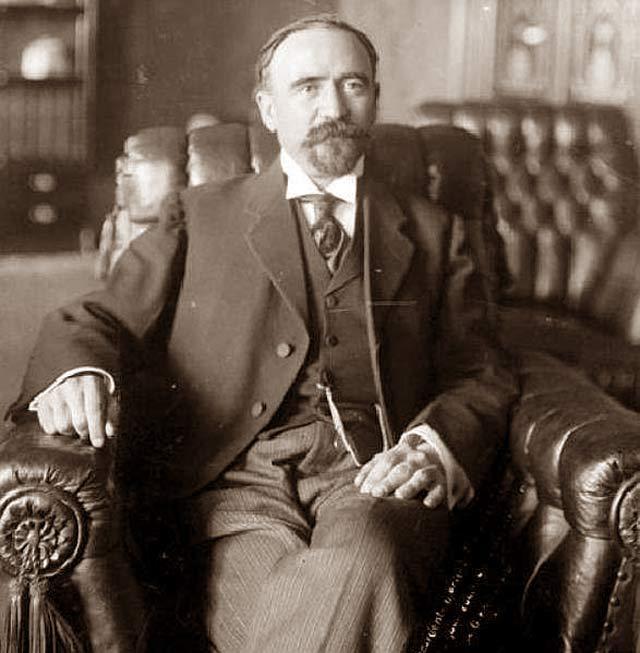
This photo, taken sometime in February 1913, was the last one ever taken of Franciso I. Madero, who was assassinated on the night of 22 February 1913 outside Lucumberri Prison by Huerta’s henchmen. Huerta, of course, joined the coup against the democratically elected Madero (and double-crossed the putative leaders, Felix Diáz and Bernardo Reyes) formented in large part by U.S. Ambassador Henry Lane Wilson.
Mexico would lose an estimated million people in the next ten years… though war, pestilence, famine and exile… as a result.


 mexfiles.net