No man… big problem
No man, no problem
(Attributed to Josef Stalin)
YIKES!
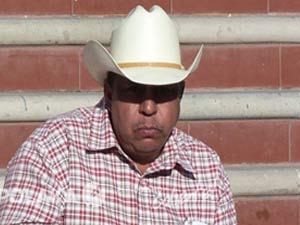 Ismael Solorio Urrutia, the leader of the agrarian El Barzon movement (perhaps best translated as “the dirt farmers”) and his wife, Manuela Martha Solís Contreras, were murdered Monday afternoon on the highway outside Ciudad Cuauhtémoc, Chihuahua.
Solorio had met with Chihuahua officials last week to complain about threats against him, his family and members of El Barzon by employees of the Cascabel mine in Ejido Benito Juarez (San Buenaventura Municipio*). The mine is owned by the Canadian firm Mag Silver. Both Solorio and his son, Eric, were physically attacked by mining company employees on 13 October.
El Barzon and the Solorios opposed the mining operation, and had been objecting to illegal mining activity and well-drilling in the region, as does the majority of the residents of the ejido. As a particularly dry region, water usage by mining is always a contentious issue.
As of right now, member of El Barzon, and other groups are occupying the the state capital building, demanding Governor César Duarte provide answers to what they are calling a “Crime of State”.
El Observador (Chihuahua, Chihuahua) is reporting that unofficial sources are saying four persons were detained by the army as the supposed hitmen., but — as always — who pulled the trigger is less important than who ordered the triggers pulled.
Sources: Proceso, El Mexicano, Radio Zapote, El Observador
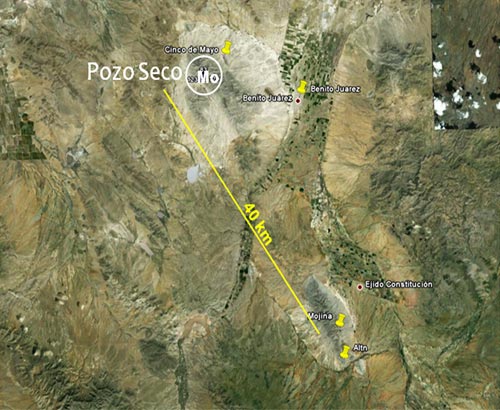
Map from MAG website
* From the description in my Mexican source, it appears they are talking about either MAG’s “Cinco de Mayo” or “Mojina” projects, although — given El Barzon’s accusations of illegal drilling, there may be a third site in-between the two. Mining people please comment!
Fancy footwork
I attended a performance by Citali Iglesias’ Mirabras Flamenco this weekend but any of the videos I’ve been able to find of her work aren’t all that good. The videos, not the flamenco. So, I’ll go with one of the classics… though I don’t know what movie this was from.
According to legend, the night Carmen Amaya was born (2 November 1913) there was a storm that had the shutters of all the houses of Barcelona clattering in rhythm. Maybe, but being born into a Gypsy family that produced several well-known dancers and musicians had something to do with her forty year career as a professional flamenco dancer (starting at age 10) and her continuing fame as the greatest of all flamencos.
She was already a celebrity throughout Spain when she first began appearing in films, making her a star throughout not only the Iberian Peninsula but throughout Latin America as well. As a follow-up to her successful appearance in the 1935 “Maria de la O” she embarked on a tour of the Spanish provinces, but the outbreak of the Civil War, forced her to flee to Portugal and led to a surprising career not just in Iberia and Latin America, but in England, France and especially in the United States. She entertained U.S. troops during the Second World War and gave a special performance for Franklin Roosevelt in 1944.
Although she returned to Spain in 1947, she continued touring Europe and the Americas until her death of kidney failure at the relatively early age of 50.
I believe this was from her last film, Los Tarantos, made when she was already dying. It is unique not just for being in color, but for giving her a chance to perform her art not as an exotic and theatrical experience, but as what it always was to Amaya… an essential expression of her people and culture.
Not even a bridesmaid…
If I were to vote in the U.S., I’d have to do so by absentee ballot at my last U.S. address, which happens to be Texas. For those of you not in the U.S., one doesn’t vote for the President of the United States, one votes for a slate of “electors” by state, based on the number of districts in the House of Represenatives plus two for the Senators. In Texas, that means I vote for 38 people I never heard of, and know nothing about, who are pledged to vote for one or the other of the two candidates on the State ballot.
Given that the 38 state electors are going to vote for the guy I wouldn’t vote for anyway, rather than the guy I might reluctantly vote for as at least havig a saner domestic and economic policy, it doesn’t matter all that much… especially when I don’t live in the United States, and don’t have any plans to do so again. And as it is, neither of those guys seem to have any interest in the world, outside of a few places nowhere near where I live anyway. As Bloomberg’s Josh Barro put it:
Apparently “foreign policy” has come to mean “places in the Middle East and North Africa where we are or might be bombing people, plus some really stupid and demagogic discussion of trade with China.
By my count, “Latin America” was said twice… and only in an incorrect comparison to China. there was an oblique mention of Peru (possibly… in reference to “other Pacific nations”) as well as mention of two favorite villains of Mr. Romney’s party: “Castro” and “Chavez”. But I suppose I have to give him credit for at least mentioning this quarter of the globe.
Mr. Obama mentioned “Europe, Asia, Africa…” as places where the U.S. had interests. As if this hemisphere didn’t exist, or as if the U.S. has no interests here. Ah….
Absolutely nothing said about… oh… the U.S. trade deficit with Mexico, the imposition of their “war on drugs” or the devastation caused by NAFTA agricultural policy, or migration issues, or…
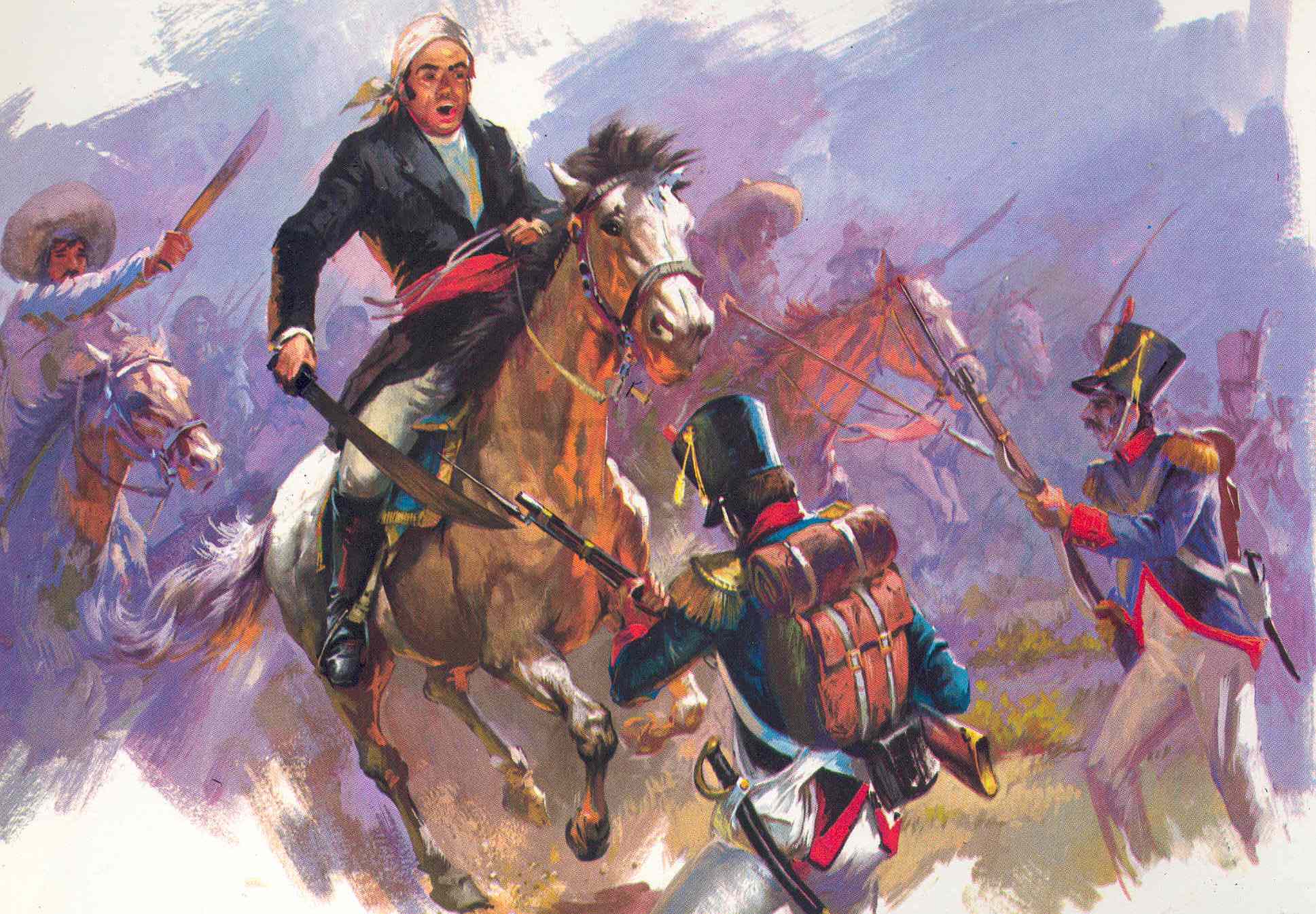
It doesn’t really matter what the outcome of the election is down this way… the Gringos are going to keep coming, but — as usual — have no idea why the locals resent them, and sometimes resist… if need be with horses and bayonets (or machetes… more the local style).
Could never have worked
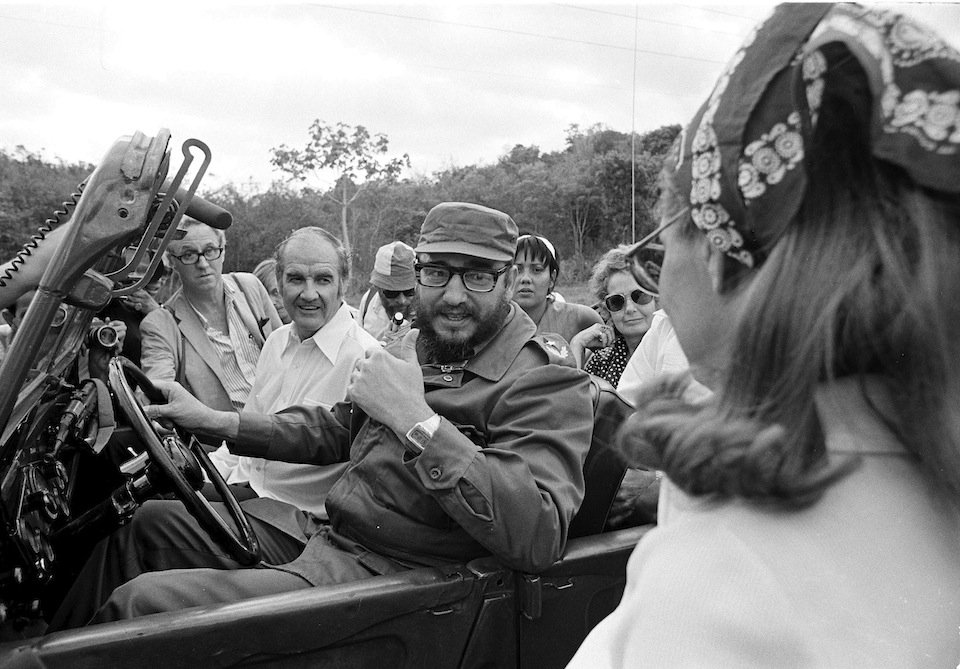
In this May 8, 1975 file photo, South Dakota Senator George McGovern goes for a jeep ride with Cuban Premier Fidel Castro, behind the wheel, during the senator’s visit to Cuba. A family spokesman says, McGovern, the Democrat who lost to President Richard Nixon in 1972 in a historic landslide, has died at the age of 90. According to a spokesman, McGovern died Sunday, Oct. 21, 2012 at a hospice in Sioux Falls, surrounded by family and friends. (AP Photo/Charles Tasnadi, File)
Un-bear-able
In Coahuila, and much of Mexico, abuse and torture of human beings will go unremarked and unpunished. And ignored by the media. Perhaps it’s because, as Amnesty International’s recent report, Abusers known, victims ignored: Torture and ill-treatment in Mexico, says:
Mexico has experienced a severe public security crisis in many regions during the Calderón administration. The government has deployed military and police on an unprecedented scale to combat powerful drug cartels and other organized criminal networks. At least 60,000 people have been killed and more than 160,000 internally displaced1, predominantly as a result of violence during inter-cartel territorial disputes, but also as a result of security force operations. It is in this context that reports of torture and ill-treatment have risen alarmingly.
The government has frequently repeated its commitment to ensuring that its militarized approach to combating drug cartels is carried out with full respect for human rights. However, Amnesty International has documented a sharp increase in grave human rights violations, including unlawful killings, enforced disappearances, arbitrary detentions, excessive use of force and torture by federal, state and municipal public officials.
 I’m not excusing what was done to Bella the baby bear, nor do I overlook that a crime was committed, and justice called for swift punishment, I do want to point out that making an example of the Civil Protection officers in Zaragoza, Coahuila seems “too easy” compared to bringing justice to victims of HUMAN rights abuses, by forces like the police and army who are not only armed state agents, but enjoy a mystique as the public’s protectors that unarmed public protectors do not have.
Civil Protection Units are NOT the police or military, although they carry out a smorgasbord of duties police and military units also do: everything from dig out earthquake victims and evacuate communities threatened by volcanoes (both fairly common activities here in Mexico) to direct traffic at accident scenes. In smaller communities, they’re often also the fire department. They also are often the closest thing a community has to animal control officers. The grunts of public safety work.
If you haven’t followed the story, though, a bear cub was spotted wandering around Zaragosa on Thursday. Civil Protection officers captured the cub, but… rather than turn it over to the Secretariat of Natural Resources (as, apparently, it says they are supposed to do with wild animals somewhere in their operations manual), they took the cub back to their station house and began fooling around… or thought that tying up the baby bear and stretching her out for the camera was cute, or funny, or wouldn’t be seen as what it was: animal abuse.
That the photos had an instant reaction when they were tweeted and facebooked and otherwise spread around the internet had an instant reaction… one that is surprising in light of the relative indifferent people have to people being abused. Of course, when we see people abused, we somehow justify it as “well, they probably deserved it,” or “that’s what happens when you do… [whatever it is we’re told they did… fill in the blank]. The bear was just being a bear, and it’s hard to rationalize away.

Bella, free at last
Within twelve hours of the first photos being sent out on the web, the Civil Protection officers had been arrested on complaints by the Federal Prosecutor for Environmental Protection, and were in custody, being threatened with nine years in prison. Five were given a very stiff fine, and Bella… after a night spend under observation and treatment of abrasions to her paws and snout, was released into a national park.
The moral being… if you’re going to be tortured by the authorities, it’s better to be an animal than a human. Unless the captors act like… humans.
El Universal:
And so it goes
I need to update my “Resource” page, I know (haven’t done a thorough update in years), but from time to time add something. Today, I had to delete one… quickly… because the author of a reputable site on Immigration issues had sold the site, with the expectation that it would be continued in the same spirit.
My GAWD! It’s now a dumping ground for the white supremacist/nativist bunch, and totally worthless.
It does make me wonder what the best way is to “legacy” this site might be. I can’t do this indefinitely… and did try to ease out of the Mex Files about a year ago. I suppose if I sell or give away the domain name, I’d have to have a strict contract, and keep ownership of the previous posts, maybe preserving them in some other format. eBooks?
Blame your mom?
Elba Esther Gordillo — known variously as “Señora Hoffa” (after the late Jimmy) or the “Bride of Chucky” (after the monster movie character she uncannily resembles) — blames working mothers for the dismal state of Mexican education. Via Los Angeles Times:

“A fact that was changed when women had to share responsibility for the family income, which didn’t only contribute to the deterioration of the individual but also of society,” Gordillo wrote.
“The abandonment of the mother in the rearing of children turned schools into daycare centers, gave teachers sole responsibility for education and emptied education of any substance,” she added.
Gordillo went on to say that the void created by absent mothers working outside the home was filled with “the excessive consumption of junk TV” and similar distractions, which generally contributed to the demise of society’s values.
Not that she’s completely wrong. One particular working mother is responsible for much of what ails Mexican education. Elba Esther is, of course, also “president for life” of the largest Teacher’s Union, representing a goodly number of working mothers. And. although in real life, neither Jimmy Hoffa nor the demon doll Chucky was her spouse, she has children… and supposedly works.
Gordilla is almost the stereotype of the “corrupt union boss” … notorious not so much for her seeming addiction to cosmetic surgery and bling, as for her ruthlessness in dealing with union dissidents… and her political acumen: swinging deals with both PAN and PRI administrations to maintain her own personal fiefdom, even at the expense of the interests of her rank and file.

SDP Noticias photo
Elba Esther was always more a politician than a teacher. Although she has worked in the classroom, she was a PRI activist, who in 1970, was the leader of a movement within the teacher’s union to throw out long-time leader Carlos Jongutude (a normal school professor turned union boss) who had, at the behest of the Echiverria administration organized a coup within the union leadership. Echiverria fancied himself a man of the left, but was willing to use the unions (as PRI and its antecedent parties had done since the 1920s) as an arm of the state… that is, the Party sought out union leaders who would back whatever the prevailing ideology of the time was, and impose them on the rank and file, resorting not just to stuffing the ballot boxes, but stuffing dissidents in unmarked graves.
A backer of Carlos Salinas, who sought to move the Party towards a “neo-liberal” ideology, Gordillo at the time a PRI Deputy as well as head of a Salinas-leaning faction within the union leadership, headed the 1989 union putsch that led to her “election” as SNTE President, and a more prominent role in PRI leadership circles.
She served as Secretary-General of CNOP — the PRI labor “sector” and later as a plurinomial PRI Senator before she was installed as Secretary General of the PRI’s Central Committee. While on the one hand, she helped crack down on anti-Salinas reformers within the Party, on the other, she purged the union of anti-Elbaistas. Dissident teachers disappeared or mysteriously fell off the roof of tall buildings, and underpaid teachers who just wanted to keep their jobs either kept quiet or got with the program.
Both reformists within PRI — those who hadn’t defected to PRD or PAN — and anti-Salinas party members who had no objection to neo-liberal ideology, but did to Salinas’ continual hold over the party, rebelled in 2002, when Roberto Madrzzo managed to oust Gordilla from her party post. She, in turn, formed her own party, PANAL, which allies itself with PAN or PRI, depending on which of the two now neo-liberal parties are best suited to her political and personal interests. Those interests are not education.
Tracy Wilkerson’s article in the LA Times is highly misleading in saying that “most experts would blame Mexico’s poor educational system on precisely the union…” when the link is not to “most experts”, but to an article by Ken Ellington on a polemical film attacking public education, which refers to its producers, Mexicanos Primero as a “reform group”. It is, in the same way that “FreedomWorks”, the corporation that sponsored the “TEA Party” movement in the United States is a reform group. Mexicanos Primero is a right-wing, or — ultra-rightist — pressure group that has been working to discredit public education in general for several years.
Most experts would blame the poor state of Mexican education on the Salinas administration, and subsequent administrations, underfunding of public schools and signing off on a push for privatized education: Mexicanos Primero is analogous to groups in the United States that — in the name of educational reform (and destroying teachers’ unions) — claim “charter schools” which take public funds and give them to private organizations to run schools of one sort or another are a better use for tax revenue.
With a second threat to Gordillo coming from a reformed teachers’ union, CNTE, she seems to have decided that teachers — and education itself — are impediments to her own goals. In 2003, she allied herself with the clerical wing of PAN, specifically in the person of the then-powerful first lady, Marta Sahagún (wife of Vicente Fox, and a PAN leader in her own right) to push through educational “reforms” that led to the unusual sight of teachers taking to the streets to protest against curriculum changes. Something we’re also seeing (although coming from CNTE, the dissident teacher’s union) in Michoacán, where — as in Chiapas in 2008 — Gordillo’s allies are willing to permit violence against educators in the name of “social peace.” Interestingly enough, when the Calderón administration started “cracking down” on “corrupt unions”, it was the miners and the electrical workers (which remain strongly socialist) and not the neo-liberal teacher’s union that were decertified and their offices closed by armed troops.
Gordillo, as a supposed labor leader, you would expect to say something in support of her fellow labor leaders. You’d be wrong. Nor has she, or her underlings, done anything about reducing class sizes, getting better pay for teachers who actually work in the classroom and not in administrative posts, opening up more slots in the normal schools, building libraries, or even much said about the shrinking percentage of the federal budget devoted to education. She did, however, score a victory for educators of a sort… managing to have Josefina Vasquez Mota demoted as Secretary of Education when she refused to go along with some of Gordillo’s demands , and replaced with the hapless Alonso Lujambio who would sign off on teacher competency testing (whether standarized tests prove anything about students is widely dismissed. Standarized competency testing, however, especially when the results can give polemical support to a “failing” educational system, is popular among the right-wing anti-union types).
Don’t blame the teachers or working mothers for problems with Mexican education. Blame the mother of PANAL Secretary General Mónica Arriola Gordillo and PANAL federal deputy Maricruz Montilongo Gordillo for playing politics when she should have been working for a better education for Mexicans.
¡No güey!
The City of Chicago wanted to honor Vicente Fernández, but naming a thoroughfare “Vicente Fernández Way” was … uh… shall we say an oversight, and whoever was responsible needs a remedial Spanish class, muy pronto?
What’s left unsaid
Via Latino Rebel:
This week the Associated Press reported the following story, “Mexico Raids Seized Campus, Battle Protesters.” As with most of the stories the AP publishes, this online article appeared in countless of major American media outlets, like CBS News and TIME. However, even though the story chronicled how the police in Michoacán, Mexico raided three teachers colleges in response to student protesters who had been “hijacking buses and trucks for a week to protest curriculum changes,” the AP story did not include any of the images from the Michoacán raids that have gone viral through social media networks.
THE issue, as reported by AP, is that Normal College students object to adding English and Computer classes to the curriculum. That is AN issue, but there is much more to it the situation than that. Rural teachers’ colleges have long been seen as a hotbed of “leftist” activism, and — with both PAN and PRI administrations seemingly more focused on policies that work against the interests of the rural regions (removing agricultural subsidies and support for small farmers, for example) and the impoverishment of the rural regions have led to years of simmering discontent. In addition, for many of the rural teachers, the incoming administration is seen as one likely to stint rural education and support for the working poor in favor of more “neo-liberal” policies that benefit mostly the urban upper classes. And, the Normalistas support CNTE, the dissident union which opposes the “offical” SNTE: not only because they believe Esther Elba Gordilla is hopelessly corrupt, but also because they see the SNTE as having been co-opted by the PAN-PRI establishment, serving the needs neither of teachers, nor students.
But reporting that opposition to the incoming administration (and the outgoing one) is being met with brute force is a spin the AP and “mainstream media” would prefer to avoid.
Disturbing pictures after the jump…
The highlands are calling
After writing a biography (though without the cooperation of his subject) on Chapo Guzmán … and spending years covering the “drug war” in Mexico, Malcolm Beith made the tour of the U.S. think tanks, but has returned to “the worst country in the world for drug-related crimes” — where cranky clans have eked out a living on the barren backland mountains and feuded with each other for generations. I mean, of course, his native Scotland:
International Herald-Tribune Rendevous, via New York Times:
… Thankfully, beheadings aren’t common here, like they are in Mexico — but in a recent Scottish court case, it was revealed that a group of drug traffickers allegedly had video clips of men having their heads chopped off on their mobile phones. This may be an omen.
Mexican and Colombian drug cartels are responsible for the majority of drugs trafficked into Scotland, through ports in southwestern Spain and English cities like Liverpool; in recent years, the Scottish Crime and Drug Enforcement Agency has made several arrests of British citizens importing cocaine from Bolivia and Ecuador, too.
[…]
Consumption shows no signs of slowing here: roughly four percent of Scots between 16 and 64 have used cocaine in the past year, according to authorities, nearly double the figure in the United States. American authorities recently announced a money laundering investigation into the Royal Bank of Scotland’s operations, citing concerns over deficiencies in governance, risk management and compliance systems — the very same issues that allowed billions belonging to Mexican cartels to pass through HSBC’s operations, prompting a severe scolding from the U.S. Senate and the resignation of HSBC’s head of compliance, David Bagley.
One thing I don’t understand is why Malcolm figures Scotland is doing something unique, or even particularly “heralded by other crime fighters around the world”. When it comes to stopping the trafficking, Scots authorities, like every other country’s coppers, share information and target “kingpins” — although unlike Mexico, targeted kingpins seem to survive to stand trial, which is rather an innovative idea.

Beam me up
Mitt-staken identity
Mitt Romney’s dad may have been born in Mexico, but the candidate doesn’t seem to be getting any traction out of it… yeah… maybe he’d be better off if he was “born Latino”, but he might do even better if he had some clue about Latinos, or about Latin America. Or at least had supporters who did.
Of course, I don’t pretend to be Latino and I don’t speak for all Latin American Policy Wonks, so I don’t have any doubts that Mr. Romney has Latino, and Latin Americanist support… not a lot, but some. His party’s appeals to “traditional values” has some support, although the traditional communal and/or Catholic values of Latin Americans diverge quite a bit from the Protestant Ethic and individualism of the U.S. conservative movement. The older Cubans, with their fixation on hitting the re-set button on a half-century of change on that island find the Republican Party more ideologically comfortable, as do more recent Venezuelan self-exiles (although few are U.S. voters) and second, third… sixth generation Latinos (or, as in Texas and New Mexico, people with Spanish surnames whose families have been there for a several centuries) aren’t likely to be all that different than their “Anglo” neighbors when it comes to political and social thinking. Still…
I donno… maybe Mr. Obama is “not macho enough for Latinos“, whatever that might mean, but he apparently was macho enough to hold his own against Mr. Romney in last night’s U.S. Presidential debate. Señor Romney used the phrase “undocumented illegals” . Perhaps, to be charitable, he may have meant “undocumented… illegals“, trying out both terms in the same sentence — either way, it was bi-estupido.
While neither word is specifically applied (in theory) to Latinos (though try telling that to a Puerto Rican questioned about his nationality, or a Tejano told to go back to his own country in Houston, or just about anyone with a family name ending in “-ez”) it has a special political significance for Latinos. “Undocumented” indicates some willingness to understand the problem with U.S. immigration procedure, and the difficulties that has created for people living in the country without the proper authorization. “Illegal”— while widely accepted in the “mainstream press” is seen as implying the people described are less than human, and that they are at fault, and must be punished, and that their intentions in entering the United States were automatically illegitimate.
The first term likely to raise the hackles of the reactionaries who want to punish anyone not born in the United States, or having the wherewithal to navigate the byzantine U.S. immigration system (or… let’s be honest… anyone not white and Protestant) and the second serving to show a reasonable Romney, he managed to do neither… only show himself as speaking with a forked tongue.

Via Cuéntame (http://www.facebook.com/photo.php?fbid=10151188711274712&set=a.182219384711.125334.172945319711&type=1&theater)
More seriously, Latino and Latina writers are glomming on the specifics of Romney’s proposals — opening himself up to mention of his ties to Chris Kolbach, the Kansas lawyer who has made a political career out of writing anti-immigrant legislation (he was the mastermind behind Arizona’s “show me your papers” laws) — is going to play very poorly with those Latinos for whom these issues are important.
Latinos with ties to the old countries (except those nostalgic Venezuelans and Cubans), and Latin American foreign policy wonks (LAFPW), had to be appalled by the article (printed in Fox News Latino) by David Laska, Special Assistant to Chairman Edward F. Cox, Chairman of the NY State Republican Party. There is so much wrong with the article, that it’s impossible to know where to begin.
Cuba is not a “Bolivarian” country — it’s a Communist one, but it’s left of the U.S., and so are the Bolivarian countries, so just lump em all together.
Colombia and Brazil are not particularly looking towards the United States for much of anything. “Fast and Furious” — the ill-conceived anti-gun smuggling investigation that ended up killing a lot of Mexicans only became a U.S. issue when a U.S. agent was killed. The anger here is not with the Obama Adminstration, but with the entire U.S. gun culture… something Mr. Romney seems to be the result of not enough (opposite sex) two-parent families. Panama’s “Free Trade Agreement” with the United States, as well as Colombia’s were much more controversial in those nations than in the United States.
A “Campaign for Economic Opportunity in Latin America” sounds to Latin Americanists (and FPWs) like the “Alliance For Progress”, or any number of “assistance” programs the U.S. has pushed over the last century that usually ended up with a bunch of dead Latin Americans… and a bunch of “undocumented… illegals” pushing their way into the U.S. to escape the U.S. created mayhem.
The pain in Spain
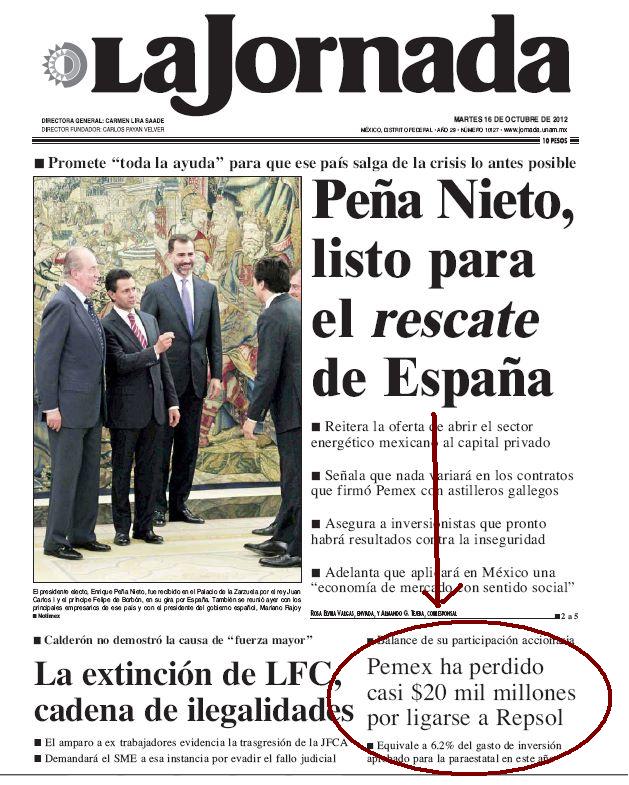 While there’s a delicious irony in president-in-waiting (“president-elect” would require making some assumptions that aren’t universally accepted in Mexico) Enrique Peña Nieto is offering to “rescue” Spain from its recent economic turmoil, while at the same time, he’s looking to open PEMEX to Spanish investors… after PEMEX just lost a bundle on Spanish oil company investments.
Um, if Mexico’s got money to spare, here’s a thought. Rather than send it to Spain (been there, did that… for about 300 years), why not spend it at home? All those financial types keep saying PEMEX could use a cash infusion.


 mexfiles.net