Run for the Border
I was somewhat disappointed this exchange in Salon.com between interviewer Katie Ryder and Steven Bender, the author of Run for the Border: Vice and Virtue in U.S.-Mexico Border Crossings (New York University Press, 2012).
Many U.S. citizens go to Mexico to retire, which, as you discuss, has a complicated effect on the Mexican economy. There are benefits to an influx of relatively wealthy people, but there are also very specific ways that it harms the Mexican economy.
Yes. Like the maquiladora experience in Mexico, the influx of U.S. residents as retirees, or even as buyers of second homes and vacation homes, really leaves a conflicted economic record. Certainly there’s a boost to the local economy, with the initial building of these retirement and other homes, but that tends to be a fleeting economic presence, and if anything it drives up prices and really excludes Mexican residents from the prime real estate. You have this dichotomy then between the sort of walled-in southern-California-type oasis that’s inhabited by the retirees and the working-class housing of the laborers on the other side of the walled-in community. And that’s a dichotomy that we find in the United States as well, but it’s a particularly stark contrast in these Mexican retirement havens.
My disappointment isn’t that Bender appears to cover areas we don’t usually think about when it comes to discussions of U.S.-Mexican economic and social relationship I presume Bender goes into more detail that just making the superficial observation that low-wage service workers generally don’t live as well as those they serve and that can cause resentment, and that rich people drive up the cost of housing.
I’d be much more interested in knowing what effects those retirees are having on things like the social fabric of their communities.
The “gringo enclaves” mentioned by Bender are only a part of the foreign retiree story. Steven M. Fry (Surviving Yucatan) posted on a gruesome incident in his part of the country (where the retirees are thick on the ground) of what appears to be the result of cultural “interactions” gone horribly wrong. The victim of what appears to have been a murder was a foreigner not well likes, nor known, to his neighbors. An acquaintance of mine… an octogenarian retiree… died at home, and the body wasn’t discovered for several days, which might not happen in one of those enclaves that Bender mentions, but is part of the retiree story here… U.S. and Canadian retirees — for whom ignoring the neighbors is considered part and parcel of “independence” are perhaps setting themselves up for this kind of incident (not that it would matter to them if they’re dead), but it raises an issue that I don’t see much addressed. As these foreign retirees become debilitated, how will society deal with them? Care for the aged is largely a family matter in Mexico, but it is good business to cater to “independent” living for the aging. Since these retirees are not voters, nor really part of Mexican culture, I’m not sure whether they would be in a position to “demand” facilities be made available for the dependent, nor will they be in a position to expect much in the way of social support.
In less life-changing matters, the social implications are also in need of discussion. While I make fun of the foreigners who spend their waking hours in search of Canadian coffee brands, or some exotic appliance like a toaster (though I’ve seen them sold here in Mazatlán, I’ve never seen one in a Mexican kitchen), the gringo ghettos seem to have been the wedge for the entry of U.S. chains into Mexico. Stores like “Costco” don’t often find their way into places like Itzapalapa, but you will find them in Puerto Vallarta or Morelia… and in places that have always had consumers oriented towards the U.S., like Hermosillo or Monterrey. Whether this is a retiree effect or something else, I’d like to know.
And, while I’m technically an “assimilated immigrant” and on the pathway to citizenship, I’m obviously a foreigner, and getting to that age where I’m often mistaken for just another gringo retiree (what’s retirement? I doubt I could afford it on a Mexican income). Whether there are enough of us to have any sort of macroeconomic impact I can’t say. Certainly, I wouldn’t have the impact of, say, Reuben Creel, the Lincoln Administration’s consul in Chihuahua whose marriage to Angela Terrazas launched a political and economic dynasty that has dominated Chihuahua for over a century. Individual foreigners, or adopted Mexicans, like silversmith William Spratling or artist and novelist Leonora Carrington… or even temporary residents like William S. Burroughs… made their mark, and in some ways changed the culture (or the Mexican perception of their own culture). Spratling did have some micro-economic impact, and I know a few people who turn a few pesos out of Burroughs aficionados but do we — and should we — expect to have a “macrosocial” impact?
And do the retirees?
I would hope Run for the Border: Vice and Virtue in U.S.-Mexico Border Crossings would consider these issues, but from the interview, it appears the usual “drugs, oil and Mexican workers in the U.S.” dominate the conversation.
Alternative media… the old fashioned way
Yes, the Tlatelolco Manifesto is being spread though the “new media”… via youtube, facebook, blogs… but what is fascinating is that the “old media” form of alternative communication — i.e., taking your message to the streets (or on the Metro) is what is being recorded, and by doing so, the students are forcing the “mainstream media” to take notice of their story… if nothing else, to link to the video.
And, I think the symbolism of issuing the manifesto from Tlatelolco is doubly-brilliant. Not only does it remind Mexicans of what happened in 1968, when students and workers and middle-class by-standers were mowed down by the Army (and the PRI) for standing up for democracy, it is the “three cultures” of Mexican students (at least in Mexico City) coming agreeing on a common statement… the future business and industrial elites of IBERO, the future technocrats of IPN and the future everybody else of UNAM.
¡Me gustan los estudientes!
When the chips are down
Three Sabritas warehouses were torched in Morelía, and a dozen Sabritas delivery trucks were destroyed in Guanajuato State.
 Either somebody really, really has it in for potato chips (the Food Nazis?) or organized crime gangs (what bureaucratic types and those who want to pretend gangsters are something new are calling “T.C.O.s” these days… Transnational Criminal Organizations) are … as everyone expected they would … moving into more traditional forms of mayhem and mischief: instead of producing and distributing useless but addictive consumer products themselves, shaking down the producers and distributors of some other useless and addictive consumer product.
Of course, “useless” does not apply to Ruffles con Queso.
Pizza Pie fight
Read the idiotic comments on the story about Pizza Patrón’s offer of a free pizza if you ask (nicely) en español… and the offer to even teach you to say “Pizza, por favor” and you’d think the pizza chain founded by a Lebanese-Italian-American from Ohio was trying to take back the Alamo… or sap Anglos of their precious bodily fluids or something.
… they want to condition us to make Spanish the #1 language eventually. The writing is on the wall when a certain demographic is breeding like conejos…
(Possibly ironic, but alas, taken seriously)
I have more of a problem with them accepting Pesos than I do with the Spanish promotion. Anyone can say three words, it’s not a big deal. But as far as the Pesos go, that is a bit too far. If Hispanics want to be Americans, why do they want America to conform to them? Pesos aren’t an American currency, they’re Mexican. If you really prefer Mexico so much, stay there. Don’t bring your country to mine.
(Funny… at least once a week, I have customers here in Mazatlán who insist on paying in dollars —and every once in a while, one who demands to pay in “real money”… which is pesos here. We don’t have a problem taking dollars, any more than Pizza Patrón has taking pesos — as long as it’s bills and not coins, the same policy Pizza Patrón and just about any business that accepts foreign currency follows — though of course one can’t expect the bank exchange rate: foreign currency being only a receivable [and one we don’t know the exact value of until it is exchanged at the bank] and not cash on hand.)
Maybe some of the states that are dominate in hispanics should not be a part of the United States. If they want to turn their states over to Mexico than do so but leave the rest of this country alone.
(Because you can get free pizza in Texas for using the secret phrase they give you in the promotional advertising?)
It’s really disgusting that little by little a foreign culture is eating away at America and refuses to assimilate into the “melting pot” that once brought us together.
(Sicilian food is American… Sicilian food marketed in Texas to the Hispanic market is… unAmerican? Okie-dokie!)
Multiculturalism has destroyed most of the great civilizations on this planet. Looks like we’re next on the list.
(Ditto.)
Speak english, this is America and we are so dumb to speak more than one language.
(Perhaps he meant “too dumb…”?)
So… welcome to America…. land of the FREE Pizza, y el hogar de los pendenjos.
My, that went well… or not
Enrique Peña Nieto cancelled his appearance here in Mazatlán (think it had anything to do with having a couple of Universities here in town?) in favor of a rally in Guasave. It must have gone well, with reports of 20,000 people turning out at Estadio Francisco Carranza Limón to hear the candidate. Which must have been a tight fit, since the stadium only has a seating capacity of 8000.
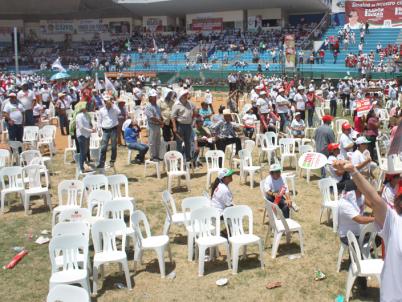
Well, it was an awfully hot day to be at the baseball stadium.
According to both the Sinaloan-based Noroeste and SDPNoticias the crowd (however many there actually were… Noroeste estimated 8000, including those sitting in the infield) began leaving early, before the candidate even showed up (only a half hour late, so not bad) to speak for … 20 minutes, amid tight security… what PRI state party leader (and former Guasave Presidente Muncipal) called “discrete” security. By discrete, he must have meant the fifty PRI militants who were there to stop the protesters and rip up protest signs.
This election gets more and more interesting all the time, going totally off script in the most delightful way.
What goods a campaign, if you can’t dance to it?
If our presidential candidates aren’t good for anything else, they are good for a laugh…
Carlos Chavera, “Peña Nieto: Sólo un Títere” (Peña Nieto: Just a puppet”)
You believe what you wanna believe…
The Inca, who crunches numbers for a living (usually numbers with decimal points in them, and some kind of currency symbol in front) looks at the polling numbers for the Mexican election:
The basic problem is that the pollsters aren’t reliable. This report from one of the best tracking sites out there, Mexico’s ADN Politico, shows (it has a nice graphic, so even if you’re lacking in Spanish language ability you’ll see the main info easily enough) that according to your taste:
- Enrique Peña Nieto (PRI) is either 8% ahead or 21.6% ahead or a couple of other numbers in between.
- Josefina Vázquez Mota (PAN) lies in second spot.
- Andrés Manuel López Obrador, or AMLO to his friends and enemies alike (PRD), is in a clear second place so forget all that stuff about Josefina in second will you?
Peña Nieto is continuing to fall in the polls, Vásquez Mota is cratering and Quadri is doing better than I expected, and his party may even keep its registration. AMLO is trending upwards, but I tend to put more stock in chincanery than polling data. To misquote Stalin, it’s not who is polled, but who does the polling. And, not so much who votes, but who benefits from whoever it is that counts the votes.
My sense is that Peña Neito has the best chance, given that the U.S. government and corporate media (representing international corporate interests) clearly prefer Peña Nieto, but want stability.
In both 1988 and 2006, the U.S. government made it very clear which candidate they preferred, and in the U.S. and corporate media the challengers were painted as a destabilizing leftist and rabble-rouser. While it is most clear that the elections were stolen (and possibly with U.S. assistance) in 1988, it is still considered suspicious that there was a not coincidental similarity between the 2006 Mexican election and the too close U.S. Presidential election of 2004… and that some of the same political advisers for the “winning” U.S. candidate in 2004 were working for the presumed winner in the 2006 Mexican election.
While EPN continues to trend downwards, even in the most PRI-friendly polls, a real sign that he is in trouble will be when the U.S. Department of States stops saying “we want a fair election” and start saying “we will work with whatever government is elected” (meaning “We wanted a corporate friendly U.S. client state, but will grin and bear it if we don’t get exactly what we want”) and the corporate media stops putting out nonsense like the Los Angeles’ Times description of street protests as “almost a movement” and starts recognizing them for what they are… a call for change.
The question for the U.S. is which will be more destabilzing… a dubious victory by the PRI, which will be rejected by large segments of the population (especially the well-educated), or one seeking to broaden economic and social development, even at the cost of major shakeups within post-NAFTA corporate structures?
IBERO rector: “Leave them kids alone… please”
Politics is brutal in Mexico… and not in a metaphorical sense.
The PRI having tried to claim that the protests at Jesuit-run Universidad Iberoamericano when Enrique Peña Nieto came to speak were the work of an organized group, and that said group was 131 individuals, students — and anyone else with half a brain in Mexico — realized what an idiotic statement that was. Apparently, Televisa news editors have significantly less than half a brain, striving mightily as they did, to give some credibility to the statement.
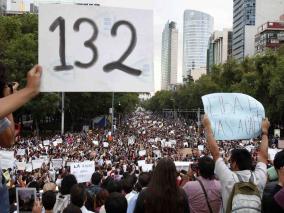 I guess 131 sounded better than “about 100” or “not very many”, It reminded me of those numbers Senator Joe McCarthy was always trotting out about the number of “Communists” in the State Department… numbers that were always precise, but never based in anything real.
At any rate, the students, having taken this for the ridiculous statement it was, and understanding that ridicule is a powerful political tool, organized a protest against Televisa (and the PRI-friendly media in general) under the banner “Somos más de 131″… featuring several thousand people claiming to be the 132nd protester.
IBERO’s Rector, Dr. José Morales Orozco, S. J., released the following statement yesterday (my translation):
Universidad Iberoamericana
- Expresses its solidarity and support for students participating in the group known as “Somos más de 131” who have received intimidating or threatening messages via social networks and reproves some actions. If they continue, the University reserves the right to take appropriate measures.
- Categorically rejects any act which seeks to curtail the right of this group to express themselves and to express themselves freely, and rejects any attempt to harass those who exercise their freedom of speech.
- The University calls on all members of its community to take an informed position on the current electoral process, and to express that position with respect and tolerance.
Universidad Iberoamericana seeks the integral formation of students to foster their growth as individuals and develop their full capacities, their sense of being with and for others and social commitment. attitudes of commitment to society.
This rather mild (and not very specific) message was released after two separate incidents in which IBERO student activists with “Somos más de 131” received credible enough death threats that they felt it necessary to leave the country at least temporarily. One student was approached in the parking lot of the exclusive (and restricted access) campus, the other received telephone threats against both him and his family.
Several videos from around the country, of various anti-Peña Nieto protests have caught attacks on protesters or on reporters covering the protests. While not making any accusations, while it doesn’t appear these attacks and threats are coordinated, they don’t appear to be coming from more than one candidate’s supporters.
Rafael Buelna Tenorio’s birthday isn’t on everyone’s calendar as a day to celebrate, but at least the Autonomous University of Sinaloa always remembers him… even though he was never one of their students.
He was a Sinaloan, however, and one who forgot what it means to be a dedicated student… inside and outside the classroom to take up the causes of their time and their country, and embrace the challenge of creating a better tomorrow for us all.

GENERAL Rafael Buelna Tenoria, 1915.
Even in his mid-twenties, Rafael Buelna was one of those guys who would have been carded if he’d tried to buy a six-pack… if they’d carded people, and they sold six-packs in 1915. But don’t let the looks deceive you. He may have looked like an innocent kid, but was anything but.
Having been expelled from a Jesuit high school in Culiacán for organizing student demonstrations against the Porfirian state governor in 1909, he worked as a cub reporter for the Mazatlan Correo de la Tarde, headed the Democratic Club (the local pro-Madero organization) . Making the news as a protest organizer, as well as reporting on it, led local Porfirians “suggesting” that maybe Rafael wasn’t cut out for the news trade. At least in Mazatlán.
He was working in Guadalajara for La Gaceta and had started to take a few evening classes to qualify for entry into the University. His prospects looked better in Mexico City, where he moved in mid 1910, just Madero’s campaign was becoming a genuine threat to Don Porfirio’s long reign, and a revolt became inevitable. Diaz was still clinging to power in January 1911, when Buelna found his baby-faced innocent looks could be a came in handy.
Not too many people had cars in those days, and besides, Buelna didn’t look old enough to drive. So, no one would have thought anything if a harmless looking twit with his compadre Enrique (Estrada), wanted to rent a car and driver to go out on a picnic. That they had to make a few stops to pick up various boxes around town might have raised the driver’s suspicions, but, both Buelna and Estrada were well-dressed and well-spoken, so he just didn’t say anything. A couple of nice enough lads… until Buelna pulled a pistol out and hijacked the car. Having picked up arms and ammunition stashed around the Capital, they were headed for Estrada’s home town of Tepic. The Revolution could always use another guerilla unit, and Estrada had some contacts in Tepic.
Leaving the chauffeur in Toluca shouting “¡Viva, la revolucíon!” (supposedly the driver considered the lost wages — and his boss’ limo — a suitable donation to the cause… but he did try to hit up President Madero for the unpaid fare a few months later), the pair put themselves, their weapons (and their snazzy new limo) under the command of Martin Espinoza, who immediately conferred the rank of Colonel on Buelna… and proceeded to overthrow the local administration around Tepic (at the time, a territorial division of the State of Jalisco). With Madero’s revolt having toppled Porfirio’s regime, Buelna returned to Culiacán and his not-quite completed Jesuit high school classes.
I wonder if the Jesuits had to tell the colonel not to smoke in the Boy’s Room, and how they handled it… according to José C. Valdéz, who in 1937, wrote his memoirs of the Revolutionary general [i]who had boarded with his grandmother during his stint in Mazatlán, Buelna was one of those bad boys who smoked, and was the one buying the beer (no wonder he was a popular officer!)
While Buelna did finish his high school classes, and, was preparing for a legal career, the counter-revolution of 1913 again interrupted his studies. Back under his old commander, Martin Espinosa, Buelna was again a cavalry colonel. Alas, political ambitions among the various leaders in the Constitutionalists over tactics and aims (and their eventual place in a post-revolutionary pecking order) led to dissension and eventual split in the leadership: Buelna ending up in Pancho Villa’s Division of the North, promoted to General.
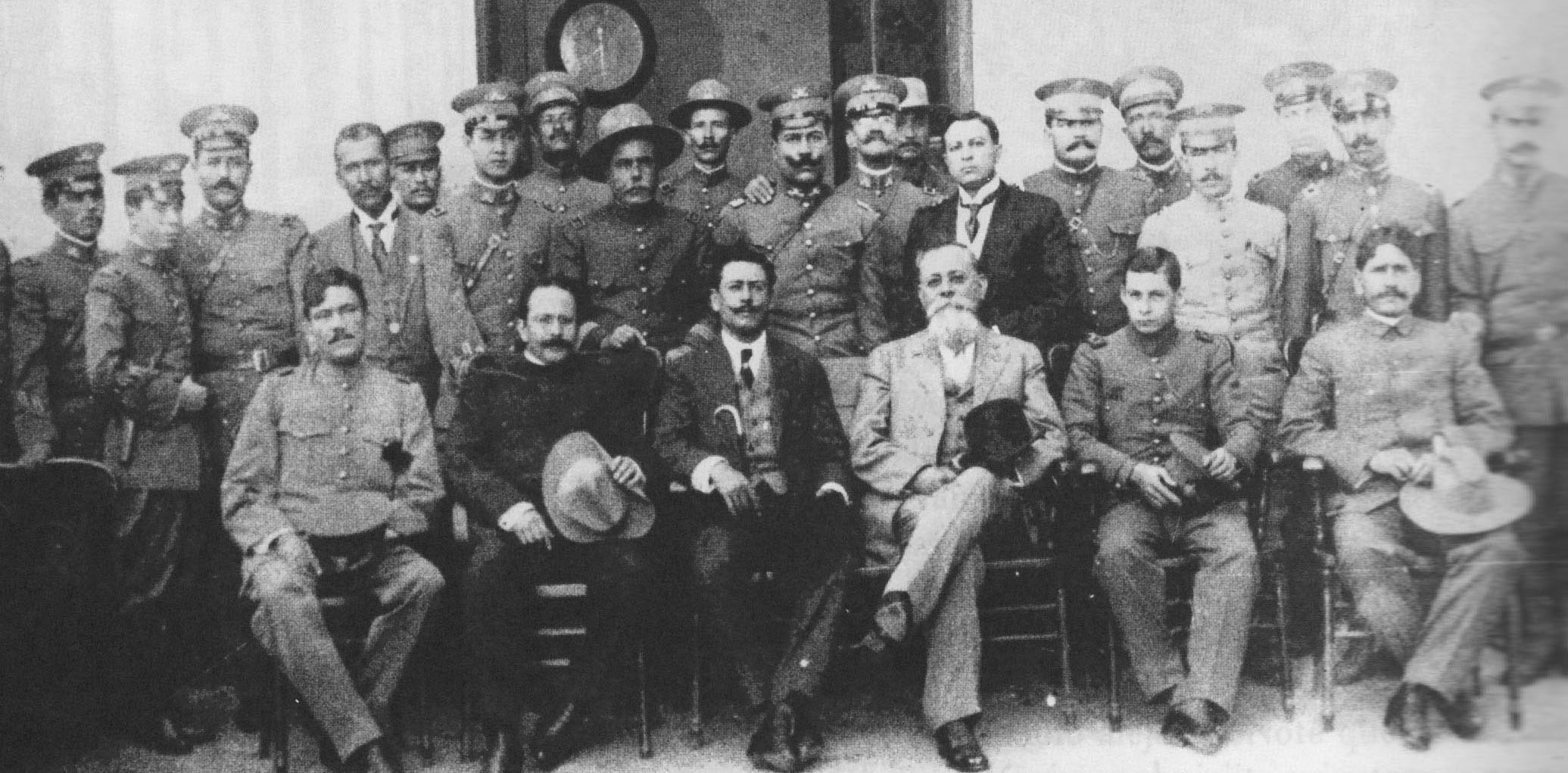
Buelna is the only one in the front row without a mustache.
While Alvaro Obregón was fighting his way down the west coast, Buela and his faction managed to capture Tepic (again). Youth and enthusiasm sometimes trumps age and cunning. The guy was STILL trying to finish his formal education, so I guess this could be called the ultimate internship: Buelna was installed as political chief of the Tepic Territory . The wily Obergón, sought to limit Villa’s power, but left Tepic out of his own plans to control Jalisco, effectively leaving Buelna as governor of what would, in 1917, become the State of Nayarit.
While all Buelna was trying to do was finish his education, he was loyal to his commander, becoming in Villa’s words, the “gold nugget” of his Army. Buelna, as a General (and a Territorial governor) took an active part in the Convention of Aguascalientes. He might be called “the kid,” but he was highly respected for his acumen and skill at synthesizing the arguments put forth by the various factions. Obregón — who was not at the Convention, but was in contact with the delegates. In his drive to destroy Villa, Obregón avoided taking on Buelna, not so much because he considered the 24 year old general a military threat, as because he gambled that the still very young political and military jefe would be more valuable within his own “revolutionary family” than outside it.
While also a dedicated revolutionary, he had married Luisa Sarría. Luisa was a revolutionary herself, and all in favor of Rafael’s political activity, but she’d like it if he stayed alive. Following Villa’s defeat at the Battle of León, and not ready to make his peace with Obregón, Rafael and Luisa moved to the United States, where he could, at the very least, finish his studies.
The couple returned to Mexico in 1919, and — although still active in politics — more of less settled down to run a store and, for Rafael, to practice law. The attempt by Venustiano Carranza to hang onto the Presidency after the expiration of his term brought Rafael back into the field, and feeling Obregón was betraying the Revolution, was one of those generals who joined the Delahuertista Rebellion of 1924. Serving under his old Mexico City compadre and partner in car-jacking, Enrique Estrada, Buelna captured another youthful general, Lázaro Cárdenas del Rio. Military enemies to be sure, and under the barbaric rules of engagement of the time, Buelna should have had Cardenás shot. The two had too much in common. Cardenás’ education had been interrupted by his father’s death, and had joined the revolution at 16, and — like Buelna — had been given military and political power while still very young (and chafed somewhat as being called “kid” by their peers and even their subordinates). And both were idealists who saw in the Revolution the best hope for the rising generation of Mexicans. It was only chance that the two had chosen to serve under different leaders.
Buelna of course released Cardenás, who in the course of his long and productive life never spoke ill of the “gold nugget,” who was killed a few weeks later by a sniper at the age of 32.
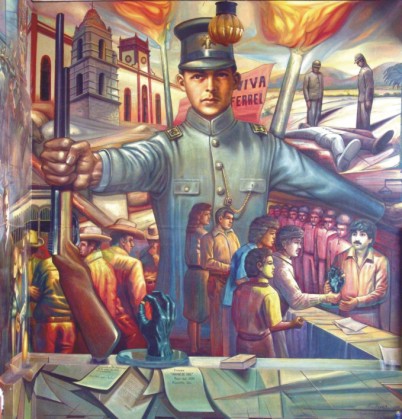
“Rafael Buelna”… mural in the Ayuntamiento of his home town of Mocorito, Sinaloa
[i] Rafael Buelna: La Caballerías de la Revolutión. Culiacán: Instituto de Investigaciones Económicas y Sociales Universidad Autónomia de Sinaloa, 1937, rep. 2009.
And F.U. to the anti-immigration folks, too!
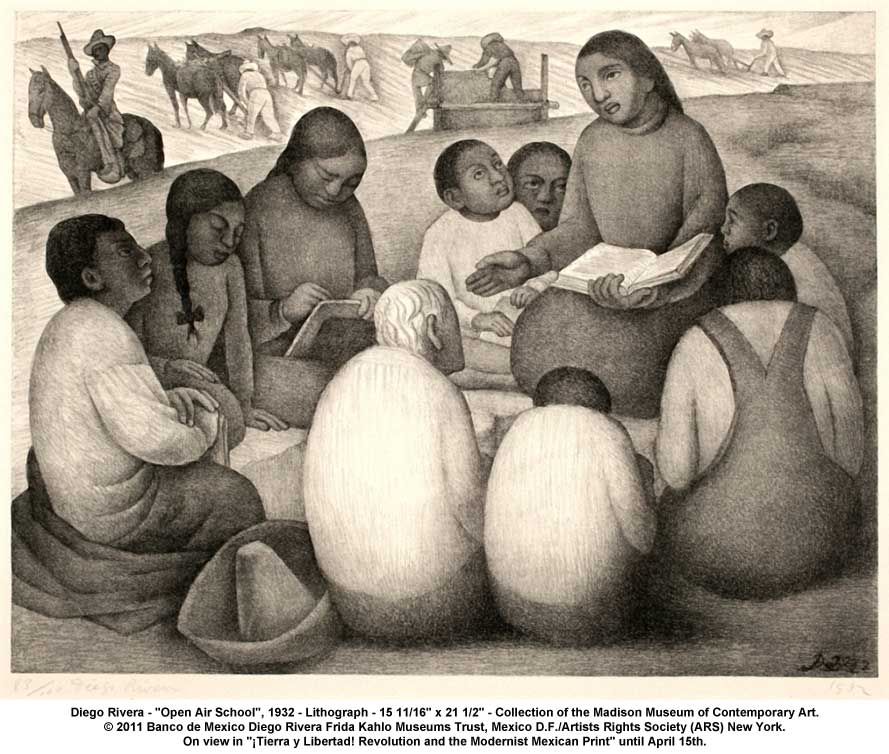
Founded in 2011, Freedom University is a volunteer-driven organization that provides rigorous, college-level instruction to all academically qualified students regardless of their immigration status. Our faculty are fully committed to providing our students with college courses equivalent to those taught at the state’s most selective universities. We believe that all Georgians have an equal right to a quality education. Separate and unequal access to higher education contravenes this country’s most cherished principles of equality and justice for all.
Fundada en 2011, la Universidad de la Libertad es una organización impulsada por voluntarios que ofrece rigurosa instrucción universitaria a todos los estudiantes académicamente calificados, independientemente de su estatus migratorio. Nuestros profesores están enteramente comprometidos a proporcionarles a nuestros estudiantes cursos universitarios equivalentes a los que enseñan en las universidades más selectivas del estado de Georgia. Creemos que todos los habitantes en Georgia tienen derecho a una educación de calidad. Acceso separado y desigual a la educación superior contraviene los más preciados principios de este país de igualdad y justicia para todos.
Addicting information: the cocaine market
Alejandro Hope, writing in the Mexican on-line political journal Animal Politico, breaks down data supplied by convicted cocaine smuggler and “Zeta” regional boss Raúl Lucio Hernández to derive some estimates of the internal market for narcotics in Mexico.
Two things that should be noted. Coca is one of the few cash crops that cannot grown in Mexico (cranberries is another), so all cocaine is, by definition, imported. Secondly, Hope is using the highest possible estimates for narcotics use, and admits his estimate of the amount by which pure cocaine is “cut” (adulterated) before it is sold to consumers might inflate the user numbers. With the bulk of consumption in areas close to the United States border, there is an unstated assumption that much of the retail sale is again cut and sold retailed across the Rio Bravo del Norte.
Still, for all the talk about Mexican narcotics use, and even giving the highest possible user estimates, you are still dealing with what should probably be considered economically as cargo and not as a consumer product:

Hope estimates that the entire Mexican narcotics market is only 1.4 percent of that of the U.S. narcotics market. Even excluding the fact that the U.S. has three and a quarter times the population of Mexico and is a much wealthier country, the market in Mexican for narcotics is negligible.
 As to cocaine, the most recent figure I can find claims about 2.5 percent of the U.S. population are either “recreational users” or addicts. That would work out to just under 8 million people in the U.S., compared to the 422,000 in Mexico, or about 0.035 percent of the population.
*******
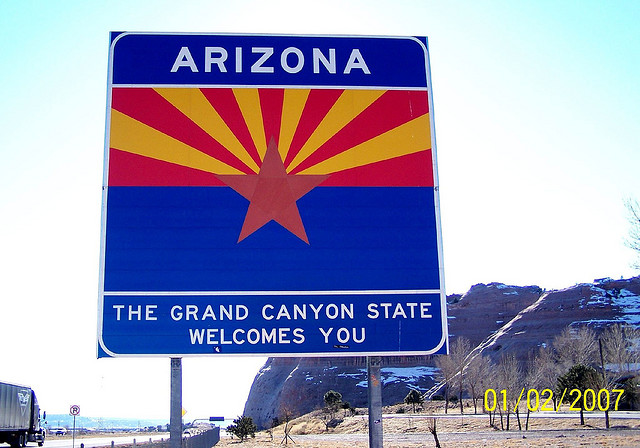 Another interesting fact to look at is that, according to ICE (Immigrations and Customs Enforcement), 53 percent of Mexican narcotics pass through Sonora and into the United States by way of Arizona. What’s fascinating about that is that Sonoran and Arizonan border towns have much lower levels of violence than communities along the border. Of course, ICE — being a federal bureaucracy — was justifying its requests for more funding. And, as the ICE-men note, the Sonoran-Arizona connection is controlled by the Sinaloan “cartel”, which has largely been left alone during this “war on drugs” … a fact that is interesting, but one upon which I don’t feel qualified to comment.


 mexfiles.net