A brief history of U.S. narcotics interdiction in Latin America
From Inca Kola News:
- 2003: USA writes a report for US consumption about how horrible drugs are and how the little brown people are to blame. Little brown people reject the US view. Nothing is done, situation gets a little worse.
- 2004: USA writes a report for US consumption about how horrible drugs are and how the little brown people are to blame. Little brown people reject the US view. Nothing is done, situation gets a little worse.
- 2005: USA writes a report for US consumption about how horrible drugs are and how the little brown people are to blame. Little brown people reject the US view. Nothing is done, situation gets a little worse.
- 2006: USA writes a report for US consumption about how horrible drugs are and how the little brown people are to blame. Little brown people reject the US view. Nothing is done, situation gets a little worse.
- 2007: USA writes a report for US consumption about how horrible drugs are and how the little brown people are to blame. Little brown people reject the US view. Nothing is done, situation gets a little worse.
- 2008: USA writes a report for US consumption about how horrible drugs are and how the little brown people are to blame. Little brown people reject the US view. Nothing is done, situation gets a little worse.
- 2009: USA writes a report for US consumption about how horrible drugs are and how the little brown people are to blame. Little brown people reject the US view. Nothing is done, situation gets a little worse.
- 2010: USA writes a report for US consumption about how horrible drugs are and how the little brown people are to blame. Little brown people reject the US view. Nothing is done, situation gets a little worse.
If you look very closely you may be able to spot a trend.
Un grito de dolor… from Texas
To mark the occasion of Padre Hidalgo’s “Grito de Dolores” Jason Dormady gives his own grito de dolor from Nacogdoches…
The local paper called today and asked me for an interview regarding Mexican Independence. I understand it is a local paper, but it certainly bolstered my disgust at the state of the semi to non-informed journalist asking shoddy questions in a brusque manner. The favorite moment of the interview came when Ms. Reporter asked: So, what about Texas? I mean, technically it was part of Mexico, I guess.
The Greatest Floor-show on Earth

I’ve always said that the best floor-show in the world (and, for you, almost free) is to watch the goings on around the Mexico City’s Zocalo any day of the week, any time of the year. Although, every two hundred years or so, the show is something special.

Not just a good idea… it’s the law
Mexico Trucker On-line is “undertaking the monumental task of translating Mexican trucking regulations and traffic laws into English and making them available in our downloads section of the site.”
While the translations so far seem machine-generated, they seem to be an excellent start for not only those in the commercial cargo business, but anyone traveling by motor vehicle in Mexico… or that perfect gift for one’s bone-headedly stupid friends and acquaintances who “KNOW” the rules don’t apply in Mexico. Yes they do, and Mexico Trucker has started scratching the surface of those rules.
Police uniform-ity
I’ve commented before on proposals to unify police forces under a single command (either nationally, as in with the French police), or at the state level. Basically, I fail to see how this in itself makes officers more honest, or more efficient or anything other than putting a large budget in the hands of state governors (or the federal executive), rather than in the municipalities. And, I see a value in local officers, familiar with their community: the trade-off being they know the local narco, but they also know the local “good kid” who gets caught up in something wrong, the rich guy’s ne’er-do-well son, the village drunk and the other “characters” whose treatment by the police might not be equal, but is — in the eyes of their community — acceptable justice.
All that said, three items caught my attention late last night (when I finally had time to sit down and look my computer). Milenio reports that the State of Durango’s legislature unanimously approved a bill said to be the first step towards a unified single state police agency.
“Under the Volcano” writes of a start — and I think a good one — towards a COORDINATED (not combined) police force for the 11 municipalities of greater Monterrey.
Mexico City had an unfortunate experience with its experiment with a coordinated police force (the June 2008 “News Divine” raid that ended up killing several teenagers and a officers), but that doesn’t mean coordinated departments aren’t a good idea. The “News Divine” raid disaster may have been the result, not of coordinating police departments, but attempting to create a newsworthy first outing for “Unipol” against a “soft target” … underage drinking didn’t require a massive police raid, and it was the sort of action better suited for municipal (or, in Mexico City’s case, Delegacion, police).
Coordination doesn’t mean splashy raids… things like common training facilities and better communications and, what police show lingo calls “backup” make perfect sense, especially in larger, multi-jurisdictional urban areas.
At the same time, I caught a small item in SDPNoticias on the mass resignation of a police department. Apparently, this was a labor dispute, and has nothing to do with threats or corruption (except maybe in the municipal budget), or any of the other things North of the Border commentators are likely to read into an event like this. And I don’t imagine the Purépero, Michocán (population 1,094) is all that large to begin with. As the SDPNoticias article notes, state police and the army (which I still say — and so does the Mexican Constitution — has absolutely no place in municipal police work). Municipalities are supposed to provide their own security, but I can see where it might be a strain on the budget of a small rural community like Purépero. Paying the officers, let alone providing training, vehicles, and equipment might be unrealistic for such a small community, and might make a combined force (with neighboring municipalities) a sensible alternative.
NAFTA 2: The Razor’s Edge
Clearly, a free trade agreement between Mexico, Canada, and the United States has the potential to benefit the citizens of the three countries. Overall, however, NAFTA’s impact on them over the past two decades has been essentially a failure. In building a replacement, several important factors must be considered in order to translate NAFTA into a success.
(Preston Whitt, Council on Hemispheric Affairs)
Whitt’s brief article on “New Nafta” (something I don’t think exists outside the rarified world of think tanks) mentions the two largest drawbacks for Mexico in the “old NAFTA” were that “Foreign Direct Investments (FDIs) for the most part really didn’t create any new businesses or jobs in significant number — they merely meant more foreign ownership. New capital did create some new jobs, but over half the new jobs did NOT provide even the basic benefits package standard in Mexico, and in no way made up for the millions of jobs lost in the agricultural sector.
As to the damage to Mexican agriculture – just in time for the Independence Bicentennial – the CNC (Confederacíon Nacional Campesina or National Farmers Conference) issued a statement reading in part:
NAFTA has done in 16 years what it took the Spanish Empire nearly five centuries to do, as the transnational firms that operate in Mexico likewise control production, marketing, fertilizers and transportation of food in the country.”
On manufacturing, Eduardo Galleano once wrote (Upside Down):
Maximum production, minimum cost, open markets, high profits – the rest is unimportant. Many U.S. companies set up shop on the Mexican side of the border long before the two countries signed a free-trade agreement. They turned the border zone into a vast industrial pigpen. All the treaty did was make it easier to take advantage of Mexico’s abysmal wages and the freedom to poison its water, land, and air. To put it in the language of capitalist realism, the treaty maximized opportunities to make use of the resources of comparative advantage…
Galleano is speaking of environmental degradation, and I have no doubt that Mexican owned businesses would be just as dirty– and do everything they could to hold down wages and benefits, but whether they would have been so “successful” (if that’s the right word) in polluting and labor-stiffing in the absence of the FDIs is doubtful.
While obviously NAFTA created more access to goods and service, what is less clear is that opening Mexican markets to foreign goods and services improved anyone’s quality of life in a substantial way.
I went shopping yesterday with a recent foreign arrival who — never having learned to use anything other than an electric shaver, and having lost his in transit — needed so shopping assistance. The NAFTA brand electric shavers we found seemed ridiculously high-priced to him, even in the Mexican department stores. What we managed to find — at a reasonable price — was your generic electric shaver … though not NAFTA, but “Made in China”. Which, I realize has even more abysmal wages (and even stinkier “industrial pigpens”) than here.
And Mexican wage earners would have a hard time paying for that Chinese shaver. The Chinese worker had better learn to shave with a straight razor. It’s not an item I even thought about one way or the other… and expect it is unobtainable in a provincial department store in a “third world country” like China, and perhaps a luxury item in a middle income country like Mexico, where one would expect to pay a premium. I don’t know if that’s changed because of NAFTA, or just that abysmally-paid Chinese electric razor assemblers are attracting the FDIs that allow them to undercut Mexican prices.
Whitt writes:
Primarily, a New NAFTA (or NNAFTA) must allow individual governments to enact policies to address the inevitable and usually severe effects of economic liberalizations like free trade agreements, in order to ameliorate the trade agreement’s impact. Any large-scale trade treaty will cause an equally large-scale domestic economic restructuring, and domestic governments must have some power to influence this restructuring.
… which – translated from “think tank” into plain English seems to mean countries should set their own priorities… like the did pre-NAFTA. When I first moved to Mexico there was a big “don’t buy Chinese” push. The word disleal regularly appeared in business columns and on financial news reports in regard to Chinese imports. Pre-NAFTA, Mexico had encouraged product substitution – there might not be a dozen brands of tomato soup on your market shelf, but there would be tomato soup… a Mexican brand or two. Imported items that Mexico didn’t produce were available … for a price, or on the black market. I don’t know where, in a provincial Mexican backwater, one would have found a black-market electric shaver, and I’m glad the guy’s quality of life issue was resolvable without too much pain (and at a reasonable price).
But are Mexican freer, happier, and better-off as a people, because they can chose from a dozen brands of tomato soup, or four or five differently priced electric razors? I doubt it.
A bridge to the 21st century
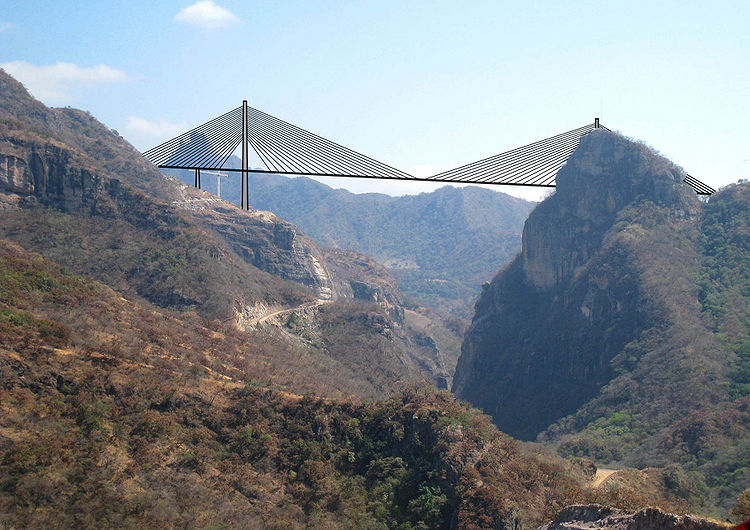
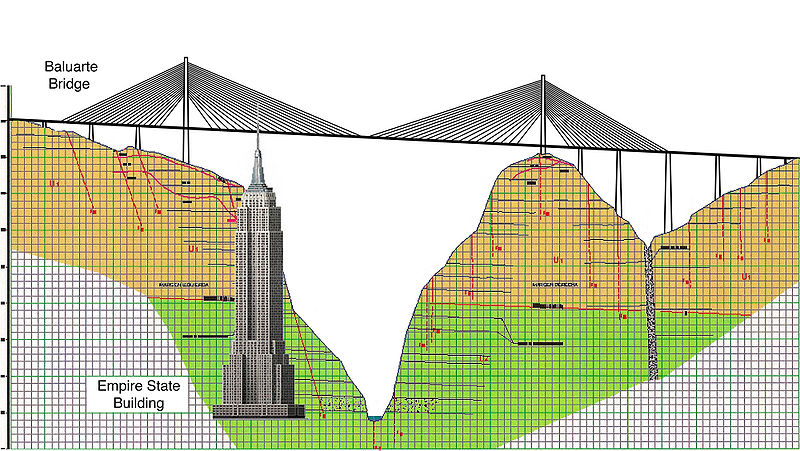
When it is completed in 2012, the Baluarte River Bridge will not only be the highest bridge in North America but the highest cable stayed bridge in the world surpassing the Millau Viaduct in France. It is the crown jewel of the greatest bridge and tunnel highway project ever undertaken in North America. Known as the Durango-Mazatlán highway, it will be the only crossing for more than 500 miles (800 km) between the pacific coast and the interior of Mexico. The path of this new highway roughly parallels the famous “Devil’s Backbone”, a narrow road that earned its nickname from the way it follows the precarious ridge crest of the jagged peaks of the Sierra Madre Occidental mountains. The dangerous road is a seemingly endless onslaught of twisting, terrifying turns that are so tight there are times the road nearly spirals back into itself.
By cutting a safer, more direct route through the mountains, the highway department of Mexico hopes to improve trade and increase tourism between the city of Durango and the coastal city of Mazatlán…
The “Devil’s Backbone” has traditionally cut off Sinaloa from central Mexico. The turn of the last century ethnographer and explorer Carl Lumholtz writes of burros falling off cliffs while negotiating what was then the best and safest link between the Sinaloa coast and the rest of the north. It’s the reason Mazatlán might be the closest seaport to a rich mining region, but its exports were mostly seafood and easily transportable local produce (like marijuana and opium) and it has never become a major import center (except maybe for tourists) and why, culturally, it often looked north to San Francisco or south to Guadalaraja, than east to Durango and Chihuahua.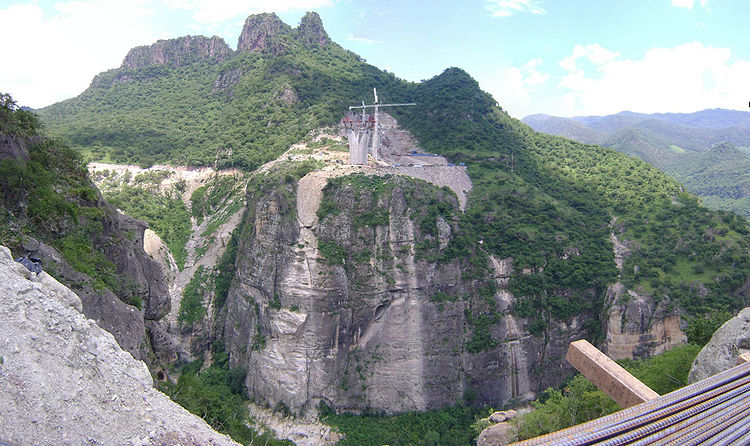
Cutting a highway of any kind through the Devil’s Backbone in the 1940s was a tremendous engineering feat, matched only by the Copper Canyon Railway, not completed until the 1960s. But expanding traffic on that railroad is — while technically possible — probably not in the cards. Topolobampo, the port serving the railroad is too shallow for expanded container ships (and the seabed is basalt, making various proposals to deepen the port more than slightly unrealistic. Although rail traffic is more efficient and ecologically sound than truck traffic by a factor of something like 30 to 1 — not that I’ve looked it up lately, so don’t hold me to those numbers), it has always made economic sense to expand the Mazatlán-Durango highway.
Richard Rhoda and Tony Burton (Geo-Mexico) look at the probable economic impact:
…The driving time from Monterrey or South Texas to Mazatlán will be reduced to less than a day. This could revive Mazatlán as a major tourist destination after a couple of decades of relative stagnation.
Perhaps the biggest effect of the new highway will be the improved connection between the Pacific Ocean port of Mazatlán and north-central Mexico (population about 12 million) and most of Texas (about 20 million). The impact from increased trade in finished products (especially those which are relatively light and suitable for truck transport) will be significant.
Shrimp from Mazatlán and many, many products destined for northern Mexico/Texas from the Pacific Rim Region (China, South Korea, Taiwan, Japan, Indonesia, Australia, etc.) will be shipped through Mazatlán and trucked from there on the new highway. We expect there will be considerable trucking/shipping in the opposite direction as well…
We expect the impact on the state of Durango will be less. Most of Durango’s mineral and timber products are rather bulky, not ideally suited to truck transport, and not globally competitive; therefore they will not find their way through Mazatlán to world markets.
Rhoda and Burton note an article by Chris Hawley in the 26 April 2010 USA Today that fretted (as U.S. reporters are supposed to do) about possible effects on the narcotics trade. Certainly, easier access will mean that police and soldiers can reach the region (as the railroads did for large sections of Mexico in the late 19th century, making Porfirio Díaz’ efficient dictatorship possible). That may have some social impact — the isolation of the region being one of the prime reasons it has always had an “outlaw culture”… hills breed hillbillies. And the Devil’s Backbone is hillier than most inhabited places on the planet.
Of course Rhoda, Burton, Hawley and the engineers on the project cannot predict the social and cultural impacts. Travel the highway now (before the romance is gone) and you’ll see, off in the hollers (relatively close to the “civilization along the road) satellite schools … the only way to provide a decent education in the region being via satellite transmission. I’ve sometimes wondered what happens to those kids when they finish (IF they finish) their education. It’s a hard land to make a living in and a good road through is also going to be a good road out. Other than serving travelers (and perhaps assisting in the transport business), what those kids will do in a few years, how they will think and act — as independent, self-reliant dirt-poor mountaineers, or as cogs in the global economy — I don’t know. None of us do.
But, it’s going to be a cool bridge and will give a whole new meaning to getting high in Mexico:
To see ourselves as others see us
From one of the endless – and generally pointless – discussions of mordita on tourist message boards… comes this gem from Lonely Planet:
… was talking to some cops in Oaxaca one night a few years back who asked me how much cops got paid in the U.S? When I told them and they found out is exponentially more than they, they decided it must be because it is way more dangerous in the U.S. Sure contrary to the perception and what we are told here in the U.S.
11 September
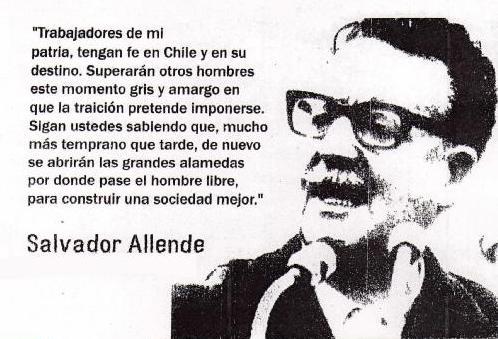
I am ready to resist by whatever means, even at the cost of my life, so that this may serve as a lesson to the ignominious history of those who use force not reason.
Dr. Salvador Allende Gossens, 11 September 1973– shortly before he was murdered during the assault on reason and democracy by force and Henry Kissinger.
Behind Mexico’s Bloodshed
According to investigative journalist Bruce Livesey, in Ciudad Juarez, the murder capital of Mexico, the military is picking winners amongst the cartels.
I might quibble with a few of Livesey’s observations… or rather, his word choices.
Since the Revolution, the economic role of the state (and, for many years,” the state” effectively meant the Revolutionary Party, the PRI after 1949) was as arbiter of the economy. While the PRI is technically a Socialist party, as a friend of mine once defined the “Mexican system” it was “consensus capitalism” … capitalists agreed among themselves to control the market of a given product (the classic meaning of a “cartel”), and the state’s role was to clear the path for these cartels to operate.
With narcotics as a major agricultural export — and recognizing very early on in its history that social peace often meant making accommodations that would include disparate elements (think of Obregón’s definition of the Revolutionary Party as “all who fought for the Revolution”), a place was found for the theoretically illegal, but long established, narcotic crop growers. The drug trade was, at times, actively encouraged by the United States (during World War II, when Sinaloans were encouraged to plant more opium poppies for example), or only half-heartedly discouraged, given the political and social realities of the United States.
Given that since Richard Nixon decided to launch a “War on Drugs”, the United States has used a carrot and stick approach to Mexican official harrassment of the growers and exporters, of course that industry’s support of the state has been unofficial. To call that “corruption” — as Livesey continually does — over-simplifies the situation.
Secondly, I think he misses a point about the PAN presidential victory in 2000. Although PRI had begun to embrace a “market capitalist”, or Washington Consensus, economic system about the same time as the start of the U.S. “War on Drugs”, and its relations with the narcotics industry became more problematic, PAN was much more aggressive in their support of competition in the marketplace (including foreign competitors). For the narcotics industry, it wasn’t so much that PAN was uncorruptable, as that the Fox victory spelled the end of the state-enforced non-compete agreements among the narcotics exporters.
A third point. In the second part of the report, at about 04:00, Livesey says that the gangsters are killing “addicts who want to get off drugs” in reference to a couple of massacres at rehabs. All these massacres occurred at private Evangelical church-run facilities, and there are reports that they were used for hiding gangsters marked for execution by their rivals. If the attacks on rehabs were meant to just indiscriminately frighten addicts, one would have expected attacks also on established rehabs or programs like Narcotics Anonymous groups.
That said, Livesey is the first “mainstream media” reporter to catch on to the important connection between the destruction of Mexican agriculture under NAFTA, having the rug pulled out from under Juarez and other border industrial towns by the U.S. switch from NAFTA partner Mexico to cheap labor (or slave labor) production centers like India and China and the narcotics trade.
Livesey originally did his reports for National Public Radio, but it is quasi-alternative media like The Real News Network that is making these kinds of serious news reports available. Alas, commercial outlets are going to continue to ignore, or simplify, the news to fit between the advertisements… one reason all the more to send The Real News Network a contribution.
¡Murió por la Patria!
Florentino José, Miguel Cruz, Isidro Santiago, Canuto Carrasco and Commandante Isaac Narvaez may have been forgotten, but they are the real heroes of what became the Heroic City of Tlaxiaco thanks to their sacrifice. Tlaxiaco, Oaxaca played an important role in driving the French out of Mexico, but nearly forgotten until research by local syndic Edvino Cruz Cruz and legal affairs advisor Víctor Manuel Aguilar Ávila, was the Tlaxiaco National Guard Company which took part in the important 18 October 1866 Battle of La Carbonera. The guardsmen are finally receiving posthumous recognition.
Tracking down Comandante Narvaez’ tomb in the municipal cemetery led researchers to municipal archives… and back to the cemetery… in their successful quest to uncover the names, and identify the graves, of the 43 Mixtec officers and soldiers of the nearly forgotten unit.
Cruz and Aguilar said of their discovery that the Bicentennial shouldn’t only honor the major national figures, but should pay homage to those — like the Mixtec National Guardsmen — who also fought and died for their country in its hour of need.
 The Battle of La Carbonera was important not only for liberating Oaxaca from the French Occupation, but in resupplying Porfirio Dìaz’ Eastern Army, which had run out of supplies and had the Eastern Army not won, the Mexican Republic might not have been able to hold on. As it was, the overwhelming Mexican victory at La Carbonera — in which the Mexicans, thanks to local forces like the Tlaxiaca National Guard Company only needed an hour to drive out the hated foreign invaders — was instrumental in convincing Marshal Achile Bazine that the occupation was a lost cause, and he should withdraw from Mexico as soon as possible, leaving the puppet “emperor” Maximiliano to his own fate.


 mexfiles.net