Fidel giving up on Communism?
Now the real story can be told…
Open mouth, insert foot… again
Whoops, she did it again…
Hillary Clinton, who thankfully is not “the most powerful man in the world”, had to be told that Mexico is not Colombia not just by Mexicans (who know what Mexico is, and know Colombia is someplace else), but by His Barackness himself.
Clinton somehow came to the conclusion that Mexico was on the brink of “insurgency”… which is supposed to be a bad thing. Psst… Hilary: in about a week we start partying hearty to celebrate the insurgents of 200 years ago. We name streets “Insurgentes” because we like insurgents. They’re our good guys.
Say “insurgent” to a Mexican, and he’ll think of somebody like this —
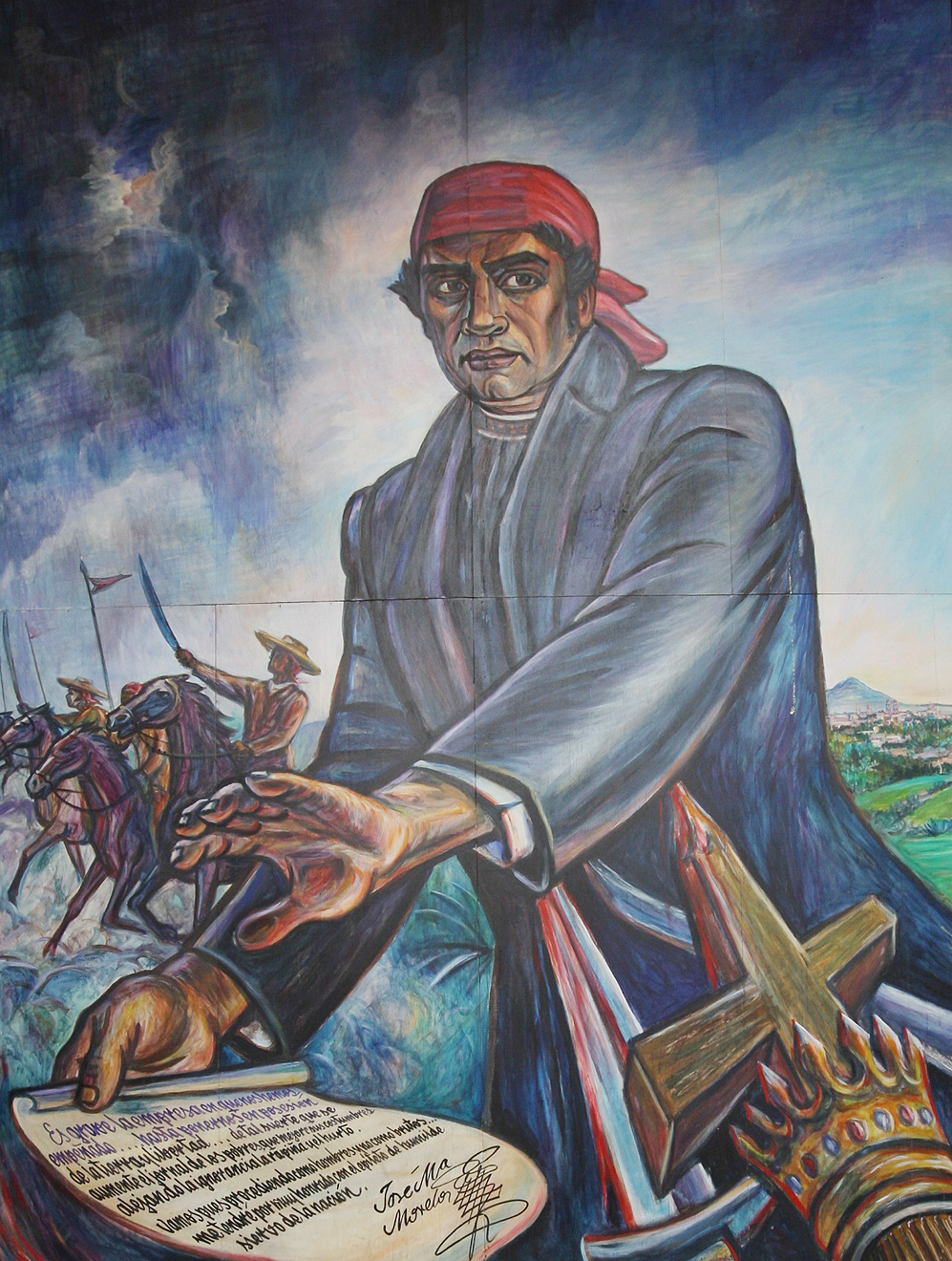
Or this —

As you can see from the above examples, “insurgents” are people who have something in their hands that should be read. Unlike… oh…

Somebody buy this woman a history book, please!
Cd. Juarez: oh yeah, life goes on…
Jean Friedman-Rudovsky writes on Childhood in Juarez (Phoenix New Times):
… Lorenzo still wonders how the baby slept through the neighbors’ screams. The smell of gunpowder lingered in the air as Esteban, an eloquent, extroverted child, began to cry. His questions started right away and continued for days. “Do you think they had kids?” “Even if they did something wrong, they still didn’t deserve to die, right, Daddy?”
They are tough questions for a first-grader. Yet in Juárez, murder capital of the world, they have become commonplace…
Murder may be commonplace, but it doesn’t, by any means, mean murder is the ONLY thing that happens in Juarez, or how one should define Juarez. Lourdes Cardenas (El Paso Times) brings attention to a less noted event, one that brings out much larger crowds than any crime scene:
For at least this month, Ciudad Juárez will try to be a regular city, one where people can attend massive concerts, go to the theater, attend a literature conference and take the family to different cultural events without fear.
The Sixth International Chihuahua Festival is bringing together more than 40 well-known Mexican and international artists, writers and musicians to provide citizens with an opportunity to enjoy their city like they used to not too long ago.
Some of the well-known names in the music arena that will perform in Cd. Juárez are Mexican-American singer Lila Downs, trombonist and bandleader Willie Colon (Azúcar!) and the musician from Mali, Salif-Keita. If you are a fan of the Cuban Buena Vista Social Club, you’ll have the opportunity to see and listen to the marvelous Omara Portuondo, one of the last few remaining voices of the famous ensemble. And if you grew up listening to the Nueva Trova Cubana, you surely would like to attend Silvio Rodríguez’s massive concert in the Olympic Stadium-Benito Juarez. Perhaps you, as well as myself, will revive good memories listening his music.
The festival also features the conference “Literatura en el Bravo,” which will bring authors from El Paso, Mexico, Spain, Venezuela, Colombia and the Caribbean countries to talk about writing and books. There will be 23 roundtable sessions with more than 40 writers, so you should have plenty of topics to choose from.
Clearly, to organize a festival as ambitious as this one represents a big effort by the cultural authorities of Chihuahua. According to poet Jorge Humberto Chávez, in previous years more than 1,500 people have attended just the literature conference alone, a figure that speaks for itself about the interest of the Chihuahuenses in cultural events. It is estimated that the previous festivals have attracted more than two million people to its different events.
Round up — the usual suspects
With 24,000 recorded denunciations (which probably means the actual number of crimes is much higher) and growing an estimated thirty to fifty percent over just the past two years, a crime statistically tied with the number of narcotics-export related murders that have come to define the Calderón era has received little attention. And, if the shoot-outs between various gangster factions, gangster (or alleged gangsters) and the law, and the occasional lynching, sometimes makes it seem as if the present administration is turning Mexico into the wild west, we shouldn’t overlook the rapid rise in cattle rustling.
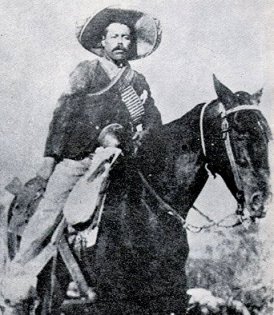
Of course, cattle rustling has been known to open up other career opportunities
Cattlemen say the jump in cattle rustling is a result of common criminals taking advantage of a general “climate of insecurity”, while others (unnamed) claim this is the handiwork of the narcotics exporters diversifying their business. Either — or both — could be true.
If it is just common criminals, it indicates two worrisome facts. First: common criminals have easy access to firearms (most of the rusting involves firearms) — meaning despite promises by the United States and supposed cooperation with the Calderón Administration — illegal weaponry is becoming more and more available in this country.
Of the 51,962 persons sent to prison since October 2009, only five were sentenced for cattle rustling. This is the second worrisome fact. Whether the rustlers are common criminals or narco-gangsters, it means the crime is being ignored. If the rustlers are just “ordinary decent criminals”, the inference could be that the administration is too focused on one type of crime to pay attention to crimes that don’t warrant the attention of the United States government and media.
And, if the rustlers are narco-gangs, there’s perhaps an even bigger concern. The great anti-narco crusade is doing nothing to lower the access to narcotics among consumers north of the border, and is only encouraging well-trained, violent professional criminals to diversify into what had been just cottage-industry and part-time criminal activities.
The prophet
Whoever says economic union, says political union. The people that buy give the orders. The people that sell, serve… The people that want to die sell to one people alone, and the people that want to save themselves, sell to more than one… The people that want to be free distribute their business among equally strong people. If any is to be given preference, prefer the one that needs less to the one that is less disdainful…
NAFTA and the 80 percent of Mexican trade that is with the “disdainful” United States ?
Perhaps… but said about a century before NAFTA…. in 1890 at the “First International Conference of American States.”
And the speaker wasn’t specifically talking about Mexican trade issues, but was representing Uruguay’s interests at that conference.
And, he wasn’t Mexican, but a Cuban who developed much of his thinking about liberation, economics and power while living in Mexico as an exile. José Martí — poet and liberator, “combatant for the liberty of America”, prophet.

Strange world
Off to run some errands today. Via Macha Mexico, the legendary Chavela Vargas… going strong at 91:
Petra Manjarrez — the lost insurgent

And speaking of newswomen….
Although Sinaloa’s role in the struggle for Mexican independence was relatively minor, it too had its heroes… and heroines. The latter are nearly unknown, although historians Rina Cuellar and Giberto López Alanís hope to rescue one from obscurity. The two were interviewed by Graciela Gaxiola of El Debate (Culiacán, Sinaloa: 01/09/2010) about their preliminary research into a forgotten heroine, which I have shameless plundered for this post.
 According to Cuellar, Miguel Hidalgo dispatched an aide –A priest native to El Rosario, Francisco de la Parra and a miner from Hermosillo, José María González. González’ compadre, José Fructo Romero joined the expedition, bringing along a printing press, and his new young bride, Petra Manjarrez.
Little is known about Petra. José was from Guadalajara, but Petra – who was probably 17 years old in 1810 – had family in Sinaloa, which may have been the reason the couple joined González and de la Parra. And, because José’s business was mining. He owned a press, but Petra was the printer and typesetter.
And, more importantly, the two scholars believe Petra was carrying – hidden in her petticoats – the revolutionary and highly illegal anti-royalist writings of Miguel Hidalgo for eventual dissemination in what would be the first independent newspaper in Sinaloa. Produced on the run, and appearing irregularly, “El Despertador Americano” was quite literally a “small press publication”. The pages were only 20 by 25 cm., perhaps having as much to do with the problems of obtaining paper for a clandestine operation as with needing to make the forbidden propaganda easy to hide.
Petra managed to print and distribute seven issues of El Despertador before she was arrested in 1811. The press was seized, and used to print royalist propaganda, but we know very little about what actually happened to Petra:
“…Manjarrez was put on trial, pursued as an insurgent newspaper editor, but even very prominent women’s lives were not well documented. What happened is that histories written in the 19th and the first part of the 20th century has neglected to record even the names of women involved in historical events,” said López , General Director of the State Historical Archives.
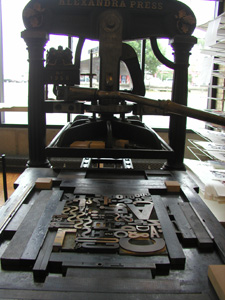 What we know is that after El Despertador Americano was suppressed, José moved to his native Guadalajara where he founded another newspaper, Correo Político Económico. Since his business was primarily mining, presumably this was Petra’s newspaper and — after José died in 1819 — she presumably stayed on as publisher.
Alas, with the lives and careers of women being even more anonymous than the anonymous-by-choice bloggers of the 21st century, we know little enough about our forefathers. and nothing about our foremothers, in the alternative media.
She’s back… YAY!!
Getting published in Mexico is no easy feat, especially for unknown writers: big publishers tend to focus on profit-reaping established authors.
I don’t know what’s different about Mexico from anywhere else on the planet in that respect (although I can recommend a small English-language Mexican publisher who has taken on several unknowns), but am happy to see Alexis Okeowo is back to reporting on Mexico. Okeowo always impressed me with her coverage of overlooked news from wherever she happens to find herself — writing on lesbians in Kampala. couch surfing in New York, or — in Newsweek — on the interest in the United States in Mexican women writers.
A bicentennial moment with Cardinal Sandoval
One reason for writing my own Mexican history in English was that “Mexicans take their history very seriously.” As I noted in my introduction, I had started to put the book together just as the United States was pressuring Mexico (then on the United Nations Security Council) to join its crusade against Iraq. Which the Mexicans refused to do
…for reasons going back ten, thrity-five, sixty, one hundred fifty and five hundred years… The arguments weren’t just raised by professors and professional historians. Mexicans don’t consider five hundred years that long a time, nor do they consider history as something belonging only in a classroom.
It is also the reason I adhered closely to the “official” history — which has been a “people’s history” from the time of the Revolution until recently. The new school curriculum which hasn’t proved popular (there were even history teacher protest marches when it was first suggested) tends to downplay the Revolution as a social upheaval in favor of a blander, political one, and give more space to the Colonial Era. Which, means, of course, more emphasis on the SPANISH Catholicism. It’s not likely to last, but it is, for now, comforting to those who want to build an intellectual foundation to confirm existing prejudices.
Guadalajara Cardinal Juan Sandoval Iñiguez just doesn’t know when to quit (I wonder sometimes if he isn’t modeling his political behavior on the north of the border “tea-baggers” who mix genuine grievances with rampant bigotry making themselves look ridiculous … and increasingly dangerous). In a signed editorial in his Diocesan newspaper, His Eminence — making note of the fact that the Supreme Court absolved the owners of criminal misconduct in the ABC nursery school fire that killed 47 children in Hermosillo (although they did note that the law needed change) — launched another… ahem… rear-guard attack on the gay adoption ruling. According to Sandoval,
If the Court is defending the right of adults, then, over time, adults may be entitled to claim any relationship with anyone, person or animal… not that we are equating so-called homosexual relationships with “relationships” — if they can be called such — with animals. Nor are we promoting rebellion…”
Which is Cardinal-speak for “Don’t blame me if there’s a riot… just because I’m proposing one.” If he get’s what he’s not promoting, he’s likely to come out on the losing end.
That new curriculum isn’t widespread and is being mightily resisted… not to mention that not only are more Mexicans are likely to have been educated under the old one… but that even with a new curriculum, there is no way to undo a long history of anti-clericalism. A commentator on the SDPNoticias story on the Cardinal’s latest assault on common sense dug out this gem from a pamphleteer — a low-tech early 19th century blogger — from the 5 December 1810 El Vengador de la patria:
Open your eyes, Mexicans! Do not let yourselves be seduced by our enemies, the Catholics of Spain, who are not Catholics, but call themselves such for the purpose of taking our money by threats, by oppression and by pillage. MEXICANS! Break these shameful chains of slavery to the Spanish “Catholics”. If we cease to fight among ourselves, then the battle is won. Mexicans! From today, the foreigners are our enemy – DEATH TO THE SPANIARDS AND THE SPANISH CHURCH!
Gringo, guns, Mexico
Energy to spare
Mexico’s electric power generation is among the cleanest in the world, but data shows that only 10.3% is sourced from hydroelectric power and 3.4% from renewable energy. The country stands behind in current global standards, which are set at an average of 18.6% for hydroelectric use and 5.3% for renewable energy. In the renewable energy sector, “modern renewables”, wind and solar, account for just 0.33%, when the global standard is set at 3.7%.
Despite these low figures of renewable energy use for electricity generation, Mexico has great potential for the wind and solar energy production. For example, the north-western region of the country is adequate for solar energy development since it has an average of 5 to 6 low peak sun hours (one of the highest in the world). The rest of the country has between 4 and 5.5. low sun peak hours, which also represents a high scale. Mexico also has optimal wind conditions in the north-west, north-east and south-east regions for wind energy development…


 mexfiles.net