Gone… but not forgotten
The old look and feel for this site disappeared, and the replacement sucked. I wasn’t planning to spend any time on this, and didn’t… there was a canned wordpress “theme” that looks easier for me to work with than the replacement one … but it lost the pretty pictures at the top, which I’ll drop back in later this evening.
Adios a mí concubina?
I hadn’t considered this, but legal recognition of same-gender relationships could cause a few arguments the next time the Spanish Academy meets. The legal terms for spouses in a marriage can be of either gender (esposo or esposa) — but what about same-gender partners in a free union — who have specific legal rights in Mexico (and most Spanish-speaking nations), or in jurisdictions not quite as advanced as Mexico City, Argentina or Spain, where some sort of half-way “civil union” arrangement for same-gender couples is permitted?
 When the laws were written (in Mexico in the 1850s) to cover the rights and obligations of persons in a free union, the assumption was that the male partner had the money and power, and the female partner needed special protection. It’s terribly sexist to assume that today (although it’s usually the case) and at the time it was the reality was that 999.9 times out of 1000. Since the Roman Catholic Church (no slouch when it comes to sexist assumptions) used “concubine” for unofficial wives, the word “concubina” made it into Mexican (and other Spanish-speaking country’s) legal code in spelling out the inheritance and property rights of women living in concubinato.
Outside of inheritance and property law, it seldom makes any difference in a society where women keep their family name even after marriage, except maybe for society women who substitute “de Husband” for the apellido maternal to show they are legally married in the eyes of God and man (and gossip columnists). My neighbors who call themselves esposo y esposa may or may not have a marriage license (not that it’s any of my business) and “concubina” sometimes sounds a little racy to non-Spanish speakers — but is only used by the Church and in very formal settings. As when, for the first year of his Presidency, we often saw on the news, “Vicente Fox Quisada y su concubina, Marta Sahagún Jiménez” — or better yet — when Bertie Ahern, the then Prime Minister of Ireland made a state visit. Ahern was legally separated from his wife, but had a live-in female partner, who accompanied him. The upshot being Mexican protocol officers were left to talk about las primeras concubinas . What Vicente called Marta at home I have no idea (probably “jefa”, but let’s not go there). I’m sure the protocol officers were relieved when Marta lied to the Pope, Vicente called in a judge, and Marta Sahagún de Fox was simply primera dama.
The unimaginative minds who draft legal codes seem to be opting for the dreary and predictable “socio/socia” (partner) for the people in recognized free relationships, and concubina will become obsolete… though maybe there is a place in the DRAE for a neologism like concubino.
Well.. there is another possible word, but we’ll deal with that this afternoon.
21529464
Trivia time. What is the significance of the number 21,529,464 in Mexican (and world) history?
One clue: 2010 Winter Olympics
100 pesos (or equivalent) to the first correct answer to your palpal account or your favorite website’s “tip jar”.
WOW.. you guys are good!
Sarah submitted the correct answer within SIX MINUTES of posting. Either she is a Volkswagen Beetle trivia buff, or a reader of Algarabía, a somewhat high-brow version of “Readers’ Digest” and an excellent resource for anyone learning Spanish… lots of fun little articles on… well, a bit of everything. The August issue had a short excerpt (in Spanish) from one of Fanny Calderón’s 1839 letters from Mexico, as well as interesting short articles on Roman military footware, on Aztec cannibalism, the always popular topic of sex, on Bugs Bunny and– a short piece on the VW bug.
The VW Sedan — or Vocho, or Bug (or “escarabajo” — see, I told you it was great for expanding your Spanish vocabulary) — was manufactured in Puebla, introduced into Latin America by a German aristocrat who was one of the many, many European refugees from the Nazis to rebuild their lives and contribute to Mexican development. The Vocho, in some ways, was probably the most important artifact of the War in Mexico. The effect of the VW, both in creating a strong Mexican automotive industry and in creating an explosion in automobile ownership in Mexico, is incalculable
Prinz Hubertus zu Hohenlohe-Langenburg, the scion of the Mexican VW fortune financed out of his own pocket the entire Mexican team at the 2010 Winter Olympics. Of course, he was the entire team.
The VW Sedan remained in production in Mexico well after the line was discontinued elsewhere, mostly because until 2003, there weren’t enough inexpensive Mexican built autos that could both meet Mexico City’s strict air pollution standards and could withstand the inevitable dents and dings to which Mexican taxis are prone.
21529464 was the serial number of the last bug to roll off the Puebla assembly line, on 30 July 2003.

Beach development the old fashioned way
Guadalajara Reporter (sombrero tip to David Agren*) 06 August 2010:
At least 150 Jalisco state police in full riot gear evicted some 800 people living and working in the beach community of Tenacatita and the neighboring village of Rebalsito in the early hours of August 4.
Although officers said they “invited” residents to leave, some reports suggest there were as many as 27 arrests and three people injured with gunshot wounds.
At least 11 people who resisted the eviction are being held at the municipal jail in Ciuhuatlan. Four minors have been released, according to the Attorney General’s Office.

State police said they acted on the order of a judge in Autlan, who ruled that some 50 families were illegally occupying land that belonged to Jose Maria Andres Villalobos, a successful and influential businessman and realtor, and former president of the Guadalajara Chamber of Commerce and current president of Expo Guadalajara.
Villalobos has been trying the get the low-income families evicted from the land for two decades, ever since he purchased 42 hectares of Tenacatita beachfront land from the wife of a former state governor in 1991. (He apparently obtained the federal beach concession rights in 1993.) Many of the businesses on the undeveloped beach are palapa seafood restaurants that have been serving tourists and locals for more than 40 years…
La Jornada said the Guadalajara businessman had been negotiating with “foreign investors” to develop the land. Villalobos said he envisaged a tourist complex in Tenacatita comparable to the luxury and elitist Careyes resort further up the coast.
The PAN government of Emilio Gonzalez has made tourism development in the Costa Alegre, as the southern part of the state’s coastline is known, one of their main priorities. It’s promoting a number of polemic developments, most notably in Chalacatepec, south of Tomatlan, an ambitious development that has been dubbed “the New Cancun.”
A story from the same newspaper (Guadalajara Reporter is one of two major English-language newspapers in Mexico) dated 10 August 2010 fleshes out some of the story:
The eviction took place after a judge ruled in favor of Guadalajara businessman Jose Maria Andres Villalobos, the owner of Inmobiliaria Rodenas, who claims to own at least 42 hectares of disputed land.
The ousted residents’ claim to the land dates back to the 1940s, when the Rebalsito ejido (local land commune) was set up in the wake of the Mexican Revolution, which dispossessed many wealthy Mexicans of their properties and land.
Unfortunately, the land distribution program was highly inefficient and replete with corruption, and it wasn’t until the presidency of Vicente Fox (2000-2006) that Rebalsito’s ejido lands were regularized under the Programa de Certificacion de Derechos Ejidales (PROCEDE). According to La Huerta municipal officials, 220 land titles were handed out and the deeds duly recorded in municipal registers. The majority of the zone’s residents are up to date with their property taxes, municipal officials say. A few ejidatarios have taken advantage of changes made to the Mexican Constitution in the early 1990s and sold their parcels of land, some to foreigners.
Jorge Diaz Topete, the lawyer for Villlalobos, says these titles are bogus and that his client is the true owner of the land, which he says was purchased from Paz Gortazar de Gonzalez Gallo, the widow of former Jalisco governor Jesus Gonzalez Gallo (1947-1953), in December 1991.
The second of the unsigned articles (and — because of the danger to reporters who cross the local powers-that-be — more and more news is un-bylined these days) may be misleading in its discussion of ejido lands. Efficiency was never a priority of the ejido (rural collectives) — rather, it was meant to undo the long injustices of years of land grabs by the rich and powerful and foreigners, and return the land to the people who lived on it and worked it: efficiently or not.
The problem with “bogus” land titles on ejido lands (or former ejidos) has surfaced time and time again — usually when some rich guy suddenly decides he can make a killing with a development of some kind. Forced evictions aren’t all that unusual either, although most I’ve seen or read about have involved squatters and not people with ties to property going back to at least the 1940s. According to the second article, “Hundreds, maybe thousands, of campesinos from diverse points in Jalisco are set to converge on Guadalajara … to rally in support of residents of the small fishing community of Tenacatita.” The exact date wasn’t known when the article was published. The Guadalajara Reporter thought it would be yesterday or today. There was nothing in yesterday’s Informador or El Occidental about the protest in yesterday’s paper, and this is written before the Thursday papers are on-line.
A little editorializing, if I may. While I’m not opposed to foreign development, foreign buyers need to understand that land titles may not reflect the true owner, and that — unlike the United States and Canada — the original owners were not wiped out, but may have ties to the land going back a millenia or two before paper records were available.
Secondly, while some of the more sophisticated foreigners are aware of the nexus between NAFTA and narcotics and immigration, too many of us overlook the other major change represented by “neo-liberalismo” — the idea that land is a commodity. Those 1990s “reforms” often represented a true “clash of civilizations” between those who saw land as just a thing that could be bought or sold as convenience dictated, and those for whom a piece of land was part of their identity as a member of a community.
Dispossessed, the people in the latter category have lost something of themselves. What choices to they have — go into the narcotics biz? Sell time shares or wait tables for the new “owners”? Emigrate? Or ???
It hasn’t sunk in yet, but it is not only drugs that have alienated the people from their governors, and the desire for a radical change in direction is not just coming from urban intellectuals. How that change is channeled will be the challenge in the next few years.
* whose by-line has shown up at least twice in the New York Times lately… who should feel lucky to have him, if only temporarily. Maybe Times investor Carlos Slim put in a word. If so, good for Carlos and David. If not, still, good for David.
Unjust and absurd
Although I have never made any secret of my distaste for the conservative-erst wing of PAN, former party chair Manuel Espino has the Mex Files condolences on the murder of his nephew in Juarez, presumably a victim of the “drug war”. I normally don’t comment on family tragedies, but Espino’s statement to the press is worth pondering:
“Our youth are falling victim to an unjust and absurd war. Not only our family, but all of Mexico, is suffering.”
Meanwhile, Enrique Peña Nieto, the presumed PRI candidate for the Presidency in 2012 was assuring the United States (not Mexicans) that his party would continue this “war” should it capture Los Pinos.
The Supremes weigh in
Gay marriage wasn’t the only heavy news from The Suprema Corte de Justicia de la Nación recently. The News:
The Supreme Court upheld on Wednesday a law that allows the Military to discharge soldiers if their obesity impedes them from carrying out their assignments.
Although justices upheld the provisions included in the Law for Social Security for the Armed Forces, the court granted an injunction to a soldier who was wrongly discharged for being overweight. Justices said the officer could resume his service in the Armed Forces.
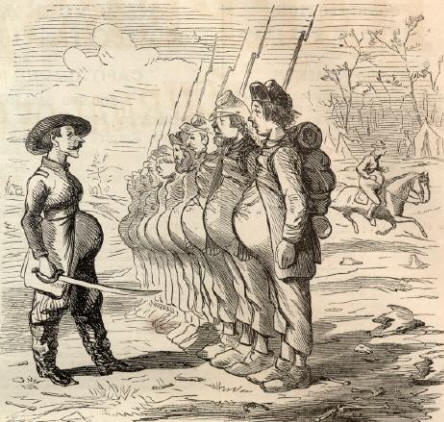 They ruled that the plaintiff’s obesity did not impair him from carrying out his military duties in the area to which he was assigned.
The justices who granted the injunction argued that the army had violated the officer’s individual guarantees by discharging him because it was not specifically due to health reasons, as specified in the first, fourth and fifth articles of the Constitution.
Justices said they considered that the law – which specified obesity to be a reasonable cause for a military officer to be discharged if it became a “disability” – didn’t violate the Mexican Constitution.
¿Y qué es ese ruido?
¿Y qué es ese ruido? / Es el silencio.
— Juan Rulfo
While journalists are supposed to report the news, not make it, last Saturday reporters, news readers, camerographers, editors, and other members of the fourth estate took to the streets in Mexico City and throughout the country.
Carrying signs reading “Not one more!”, they demanded protection on Saturday to do their work in a country international media groups say is one of the most dangerous for practising journalism.
“We’re a little late – 64 killings late – but we’ve finally decided to practice our right to protest, to seek justice for our colleagues who have died or disappeared and to end the impunity for crimes against journalists,” Elia Baltazar, a protest organiser and co-editor of the local newspaper Excelsior, told the Associated Press.
Not all those sixty-four killings during this administration were at the hands of the narcotics gangs, and there’s a recognition that covering gangsters is dangerous work, and can lead to death. And, one doesn’t take to the streets demanding justice by organizations which, if they have a mission statement, is dedicated to subverting justice. No, the protests were directed at the State.
There is some sense that criminals committing crimes is inevitable. What is intolerable is not only the state’s laxity and seeming disinterest in pursuing the criminals who murder, kidnap or intimidate journalists and media outlets, but complete denial of their own role in attacks on journalists. The “Brad Will” case attracted international attention, and there are questions as to whether he should have even been working as a journalist in Mexico, but he was simply the most highly-profiled of those journalists killed while reporting on political issues. Even sports writers have been kidnapped (at least a sports writer whose brother is a well known pollster). Here in Sinaloa, situations like that in May 2008, when El Debate’s main office in Culiacán was attacked by armed police, are all too common. Reporters have been roughed up, or prevented from doing their jobs, or threatened throughout the Republic… BY THE POLICE.
The protests, once again, were directed at the government. On Saturday, the same day, Federal Police officers in Juárez, who had been protesting corruption in their own department, violently clashed with other elements of their force when they took it upon themselves to arrest corrupt officials. Which was — and is — newsworthy. They too, were protesting the state of the State.
As usual, almost nothing about these events was reported by the U.S. media, and what was reported was — as usual — superficial at best. Which is what makes this so appalling —
The presenter, for those not familiar with U.S. media, is Rachel Maddow. She is, by U.S. standards, a “progressive” (she jokes about being considered a “leftist” in her broadcasts) and whose news program is usually considered a “liberal” alternative to other “talking heads.” She is best known for — besides being one of the few gay major media figures — being a bona fide intellectual (she is Doctor Maddow, her degrees earned in wonky fields like public policy administration) whose news programs often treat under-reported items. All of which is to the good. However, when she says “We’ll keep you posted — particularly if the mutineer, vigilante police officers keep letting camera crews show them doing stuff that is this nuts,” Maddow pushes more than a few buttons.
While there is nothing wrong with a news presenter letting one know his or her biases. I am on the side of the “mutineer, vigilante police officers” (the wording suggesting Maddow’s apparent belief that the officers were criminal in their actions) in attempting — successfully, it turns out — to bring criminals before the prosecutor (of course, no good deed goes unpunished). but Maddow is entitled to her suggestion that the “mutineers” were in the wrong.
However, her suggestion that what they did wrong was to “allow” journalists to film the event is a slap in the face at her own profession. Maddow is saying the police have the right to decide what journalists can and cannot cover, and she is giving aid and comfort to those who believe the state authorities are right to silence journalists.
Maddow is not stupid. She’s got researchers and fact checkers. Don’t any of them read Spanish? Do they have internet access (she referred to TVAzteca as a “TV Channel” — a quick glance at Wikipedia might have confirmed it’s the second largest NETWORK in Mexico, and one of the largest NETWORKS in Latin America)? Do they bother to pay attention to organizations like The Committee to Protect Journalists? Or — as I fear — do even the brightest and most “progressive” of U.S. media outlets simply dismiss anything south of the Rio Grande/Rio Bravo as so much noise?
The journalists protest was a silent protest, the police protest noisy. Perhaps it needs to be the other way around, or next time, we will only hear from the police, and not from the journalists.
Sensitivity Training?
From today’s The [Mexico City] News:
BOGOTÁ – Mexico Foreign Affairs Secretary Patricia Espinosa says Mexico’s government is seeking to “sensitize” the U.S. Congress about the danger that arms trafficking implies for both countries.
Espinosa, who visited Bogotá to attend the inauguration of Colombia’s incoming President Juan Manuel Santos, said “Mexico works through different means to inform U.S. senators about the effects of arms trafficking.”
Arms trafficking not only affects Mexico, but also the U.S. population,” where there are “very dramatic” rates of violence that are higher than Mexico’s, in cities such as Washington and New Orleans, Espinosa said.
The Mexican government estimates that more than 80 percent of the weapons it seizes are made by or smuggled in from its northern neighbor.
“We hope U.S. citizens will start to think about armed violence, which is on every street of the United States,” Espinosa said…
I can’t COMPLETELY blame the Calderón administration for the explosion of violence, especially in the frontier region. The U.S. Federal Assault Weapons Ban expired in 2004. There are those who always are quick to note that the spill over weaponry that’s wreaking havoc in OUR border states isn’t all from the U.S. (to which one has to ask why we aren’t seeing more violence in areas away from the U.S. border) and point to the fact that not all the weapons are manufactured in the United States. True enough, but in two minutes I found Bulgarian, Chinese, Russian, Korean, etc. AK-47s available BY MAIL ORDER in the United States:
 While “fully automatic” weapons supposedly are not available, one doesn’t have to be a rocket scientist (or even a particularly experienced gunsmith) to use one of the kits — also sold over the internet, and armor-piercing ammunition… no problem:

True, the weapons themselves have to be shipped to a licensed gun dealer, but that seems to be a formality. Most of the gun sites (I almost wrote “gunsights”) have extremely helpful ordering pages that will help you though the process.
I know Mexicans are “nice”, and have a history of not interfering in other country’s internal political decisions, but the open tolerance of smuggling, the corrupt political system that prevents meaningful control and the spill-over violence into our border municipios are having a serious impact on national security… The Mexican government doesn’t need to raise U.S. “sensitivity”… it needs to help the neighbors to the north grow a pair.
Aberrant reactions
The news that the Mexican Supreme Court had recognized that same-gender marriages in the Federal District are perfectly valid marriages throughout the republic, a less sweeping legal finding, in the United States District Court for Northern California (which only affects part of one state) dominated the news, and the discussion. As a mentioned before, there really hasn’t been much discussion of the impact of the Supreme Court ruling here… although the arguments against it (which is a done deal here, not one ruling by one court which will be appealed) are much the same as those raised in the California case. In other words: stupid.
Glenn Greenwald, the civil rights attorney and widely known writer on these issues, comments on one particularly banal argument raised by some guy nobody reads in the New York Times:
Without pointing to any concrete or empirical evidence, Douthat insists that lifelong heterosexual monogamy is objectively superior to all other forms of adult relationships: such arrangements are the “ideal,” he pronounces. He argues that equal treatment of same-sex marriages by secular institutions will make it impossible, even as a matter of debate and teaching, to maintain the rightful place of heterosexual monogamy as superior.
…
First, the mere fact that the State does not use the mandates of law to enforce Principle X does not preclude Principle X from being advocated or even prevailing. Conversely, the fact that the State recognizes the right of an individual to choose to engage in Act Y does not mean Act Y will be accepted as equal. There are all sorts of things secular law permits which society nonetheless condemns…
The State’s official neutrality on the question of marriage does not even theoretically restrict … freedom …to convince others of the superiority of heterosexual monogamy. They’re every bit as free today as they were last week to herald all the “unique fruit” which such relationships can alone generate, in order to persuade others to follow that course. They just can’t have the State take their side by officially embracing that view or using the force of law to compel it.
Norberto Rivera made much the same argument as the New York Times opinion writer in his sermon last Sunday. Aguachile writes:
I do understand and also respect that people oppose gay marriages due to their personal religious or moral convictions, as defined subjectively. For instance, Cardinal Rivera stated:
“These de facto or legalistic unions of persons of the same sex are intrinsically immoral, as they contradict the divine proyect, distorting the nature of marriage.”
OK, I don’t agree with it, but if that is Rivera’s reading of the bible, fine. But it is what follows that truly puzzles me:
“Such immoral activity can never be equivalent to the sexual expressions of the love of married life, as it puts into danger the dignity and the rights of the family, which constitutes the common good of society.”
This is what I can’t understand…
I can’t understand how the marriage of one couple threatens the marriage of another either, but both the New York Times writer and the Cardinal are trotting out that line of reasoning, with one important difference. The New York Times guy is somebody I’ve never heard of outside of being a New York Times opinion writer, and one who doesn’t seem to have much of following even within conservative political circles in the U.S. and in commentary on his columns by “progressive” writers. The other is the Primate of the Roman Catholic Church in Mexico, and — while admitting that the State can make what laws it wants — comes dangerously close to calling for extra-legal action against the state.
After making reference to Thomas More, basically the British Secretarío de Gobernacíon under Henry VIII, who is a Roman Catholic Saint for his refusal to follow the secular laws of his country, the Cardinal referred to the Law of Christ as the supreme law to free Christians from the power of evil, “present in the exacerbated violence that includes the elimination of the most vulnerable in their mother’s wombs and multiplies into organized crime and the immoral laws which serve as the instrument of [evil]. ”
What I find aberrant is that the man in skirts — who has lived with other men in skirts since he was fifteen years old — who is much more influential than some opinion writer — is openly stating that the law and the court itself is leading to organized crime.
Wha hoppened?
Yes, I know the look and feel of these pages has changed. I don’t know why. Archives and other missing links will be back on line shortly.
That’ll be the day…
I wonder if this guy has been reading Mex Files? Probably not, and Mex Files isn’t the only one who has pointed out that the problem with those talking about legalization as a means of halting violence in Mexico are usually only talking about legalizing (or rather, simply, decriminalizing) marijuana … and in the United States.
Certainly, this would take SOME of the profits out of the Mexican narcotics trade, but does nothing really for Mexico as a whole. Given that Mexicans are not particularly interested in using narcotics (and for the most part oppose legalizing consumption), it seems the true economic beneficiaries of legalization in the United States would be U.S. marijuana growers… or the corporate agricultural firms that are able to control the market as they do other domestic agricultural products. Secondly, I’ve never heard any of the “legalize it” crowd ever say boo about replacing the financial losses to Mexican agriculture from a protected U.S. market. Who would be the first to demand protection from foreign imports if marijuana was legalized in the United States?
What is at issue in Mexico is the production and distribution of narcotics. Taken just as businesses, the growers and distributors are not just important agricultural enterprises, but major investors in the economy. And, there is no logical reason Mexico shouldn’t export or produce crops for which there isn’t a major domestic market. We were never a major coffee-drinking nation, which never stopped Mexico from being a major coffee producer. Oil production was mostly for export, and still is.
The Mex Files has suggested before that Mexico simply legalize production and distribution, and let the buyer take their own risks. The “industry” being out of the closet, would be able to legitimately invest its funds in Mexico, and — perhaps just as importantly — as a legitimate agricultural product, marijuana and opium poppy cultivation would allow for legitimate rural development and employment.
I shouldn’t be surprised by who is also proposing this. Maybe this is just a bored retiree taking up blogging, but the guy has some experience in selling useless, and probably harmful foreign import — former Coca-Cola executive (and holder of a couple government jobs), Vicente Fox writes (my translation):
.. we must consider legalizing the production, distribution and sale of drugs. Legalizing in this sense does not mean that drugs are good or harmless to the consumer. That is beside the point. Rather, legalization is a strategy to break the economic structure which generates huge profits for mafias, and in turn, allows them to corrupt and increase their power. Furthermore, in countries where have implemented legalization, consumption has not risen significantly. A high sales tax – as we have on snuff – could generate revenues allocated to combating addiction, reducing consumer demand and rehabilitation of users.
PROHIBITION is a radical strategy that has never worked. Modern societies deal with social issues … such as abortion, marriage, family, alcohol, cigarettes … differently. Today’s citizens see each party responsible for their own actions, and the role of government as fulfilling its constitutional obligations to provide a path to democracy and freedom. and the government of its constitutional obligations is the path of democracy and freedom.
My proposals are the result of experience, of self-criticism and of studying the successful practices of other countries. We need to upset the balance between criminals, markets, distribution networks and gangs sheltered by corruption. It needs to be done intelligently, and with less violence.
It is imperative to restore balance to our nation, improve our image in the world, attract investment, boost tourism, and to support serious rehabilitation programs. It won’t be easy, but I invite you, my friends, to consider the possibility.
 Perhaps the only critique I might have (as an outsider) of Lic. Fox’s proposition is that — given the size, scope and economic impact of the narcotics production and distribution industry — it be under state control, which would give more leverage to Mexico in dealing with the user countries, when it comes to export duties — and, if the user countries don’t want the stuff, make it simpler for them to simply buy it to keep off the market.
Also, given the complexity of the industry as it is now structured, much of the violence is attributed to competition among the various organizations, as well as between those organizations and the government. Putting the government in charge (perhaps making space for those various producers and distributors — no point in wasting “institutional memory”) that could be minimized. We also have to remember that — like the oil companies, which claimed to be “good citizens” — the social services commitment by competitors in the same industry and same locale — is sometimes hit or miss. A narcotics industry based on PEMEX would — as PEMEX does in Tabasco and Campeche and elsewhere, work as a secondary provider of social services (think of all the PEMEX hospitals and basketball courts and parks built for the workers, but benefiting the entire community). The PEMEX network complements the state network. And, as a state industry, a legitimate narcotics production and distribution system would be a source of middle-class careers. Agronomists and chemical engineers and truckers can always be retrofitted to work with other agricultural products if poppy production ended, but in the meantime, they would be building respectable jobs, and a state company would have the power and incentive to encourage training in these areas of investigation. In short, a benefit no matter whether the product is ever sold or not.
And, as I said, it’s not Mexico’s concern what the buyer does. If foreign governments chose to buy the product and destroy it — while pretending it was part of their anti-use policy — it would still be economically beneficial and less wasteful than what is done now. And, maybe as an added bonus, even if other countries legalized marijuana and/or poppies and allowed for Mexican inports, it would keep Monsanto from introducing genetically altered versions of the crop. Maybe there’s a niche market for “organic” heroin.
Mutiny? Labor action? Demand for justice?
I don’t know what to make of this… From Jornada, with additional information from Diario de Juárez (the photos are from El Diario staff) and others.
At least 300 armed and hooded Federal Police officers blocked Av. Lopez Mateos and surrounded their temporary headquarters at Hotel Playa, leading to six injuries after one hundred officers were called to break up the demonstration.
 The La Playa demonstrations allegedly walked off the job to demand that the Public Ministry open their offices on Saturday, to free a fellow officer, who had been detained for narcotics possession. The demonstrators were also demanding the arrest of Federal Police Commandant Salomón Alarcón, whom they accuse of demanding kick-backs and forcing officers to take part in extortions and kidnappings, under threat of being “seeded” with narcotics.
 The striking group also demanded the presence of a Federal Prosecutor with a warrant to search Comandant Alarcón’s room, where they said narcotics and illegal weapons would be found. During the stand-off, an aide to Alarcón, Julián González, was detained as he attempted to leave through a back entrance… allegedly carrying a quantity of narcotics.
Federal Police Commissioner Facundo Rosas Rosas met with the demonstrators. Four police commandants have been relieved of command, and are federal ministers are conducting an investigation.
Just WOW! There have been police strikes demanding honest commanders before. And it sounds like the striking officers had legitimate complaints. What’s troubling is that this “new, improved, better-n-ever” federal police force was not the magic bullet it was held out to be.
Police strikes like this have followed attempts to hire better educated and better prepared officers. In one way they are good — showing that officers themselves are less amenable to bribery and extra-curricular criminality — but they also reveal that justice reforms have been not thought out, nor are they being implemented holistically.
Honest cops can’t do much to change the police apparatus if the commanders are the same old crooks and reforms in the justice delivery system are shunted aside in favor of simply more police officers. If nothing else, this shows that there are not enough federal ministers (the prosecutor who makes a preliminary finding of probable cause to issue an arrest warrant) if one can’t be found on a weekend.
 More troubling perhaps is that if the strikers’ complaints are even marginally true (and they look to be true) it calls into question the validity of any narcotics charges in which the Federal Police have been involved. Even the less credible stories of police evidence “planting” have to taken seriously now.
And, though I shouldn’t have to say it… 400 angry armed people are scary.


 mexfiles.net