The pill: what every gringo should know
New York Times writer Gail Collins celebrates both Mothers’ Day and the fiftieth anniversary of of the United States Food and Drug Administration’s announcement of its “intention to approve the pill” for distribution by G.D. Searle and Company.
Like a great many of our anniversaries, this one is a movable feast. The Food and Drug Administration actually gave G.D. Searle the go-ahead to market the first oral contraceptive (not counting bees) on June 23, 1960. But the F.D.A. announced its intention to approve the pill on May 9, which also happens to be Mother’s Day this year and, therefore, too good to resist.
This is a story about science, and obviously sex. But it’s also a saga about getting information.
Yes, indeed it is. But Ms. Collins leaves out some information.
For centuries the Huasteca had lived in harmony with their environment — having only the number of children that there were able to adequately care for. Unlike other indigenous societies that limit their numbers, the Huasteca did not resort to infanticide,abortion or sexual abstinence. Fascinated scientists wanted to know the secret, which the Huasteca women were quite happy to share — wild yams. Diascorea villosa, which grows throughout eastern North America, is a source of disosgenin, a chemical which causes the body to produce progesterone, a female hormone that inhibits fertility.
Unable to interest pharmaceutical companies in the United State sin pursuing the research, Dr. Russer Marker moved to Mexico City and began producing diogenin . Once the chemical composition was known, and with additional research by a Roman Catholic doctor, John Rock, who was searching for a way to prevent pregnancies among his mostly lower-middle-class patients in Boston while satisfying religious objects to artificial birth control, oral contraceptives first became available in the late 1950s.
True enough, the FDA made them available to women in the United States through one major drug company in 1960, shouldn’t we also have celebrated 1958 when — based on the Mexican experience with oral contraceptives, Pius XII gave approval of the pill for use by married Catholic women (later rescinded by Paul VI in 1968), or 1951, when the Mexican firm Sintex first began producing oral contraceptives, or perhaps 1950, when Luis Miramontes first synthized artificial progestrone, or perhaps 1939 when Russell Marker first learned about Diasocorea villosa. Who did more for women’s health and equality in the last century… Russell Marker? Luis Miramontes? The Mexico City prostitutes who tested oral contraceptives long before the better know U.S.F.D.A. tests in Puerto Rico? And how should the Huastaca women — whose herbal formulas created the modern feminist movement be given their rightful credit and thanks?
And here’s to you, Mr. Robinson…
Linton Robinson’s Sweet Spot: A novel about Mazatlan Carnival, Dirty Politics, and Baseball is praised to the skies by James Tipton at Mexconnect. Of the book, its protagonist (pro baseball player turned reporter and PR shill for the municipal government, Raymundo “Mundo” Carrasco), and its author, Tipton writes:
Our hero lives in the real Mexico, and he loves it just the way it is, as well as its traditions: “I like old Mexican songs the same way I like coffee. Dark, creamy, overly sweet, served by pretty women, spiked with fine tequila.”
…
Like Twain’s Huckleberry Finn, Mundo is an innocent. Trying to survive in a world that presses too much upon him, Mundo offers a dazzling wit that is endearing because the hero does not himself realize it is so dazzling, and he offers perspectives on a complex and perplexed society that, paradoxically, most clearly can be seen only by an innocent.
I’ve read a lot of novels in the first ten years of this new century, and I must say that Sweet Spot is one of the three or four I like the best.
The press release to promote the novel announces that Linton Robinson’s “work is very much affected by the decades he has lived in various parts of Mexico and Central America. “Sweet Spot” is a valentine to the eight years he lived on a hill right above the throbbing heart of Mazatlán’s carnival celebration, wrote for local newspapers, and hung out with the local musicians, athletes, and criminals.”
In a perfect world, the novel could have been a even better. Sweet Spot is very much a Mazatlán novel. The normal “local color” paragraphs (spotlighting a few of the author’s favored restaurants and bars and tourist attractions) could go or stay and readers outside the city would never notice. Locals might find them interesting — I didn’t see them as essential. But, I wasn’t the editor, and Robinson self-edits. He does a good job of it, but an editor might have caught two plot weaknesses I found.
I found the Carnival sub-plot extraneous, more or less a “behind the scenes” look at at a colorful part of local culture, not particularly important to the story.
Tipton ends his review “… it’s based on a true story”. Well… sort of. Chapter One is based on a “true story”. Mazatlan did have a Worker’s Party presidente municipal — a commie version of Rush Limbaugh — who became a political embarrassment after beating his wife. My problem with that bit of “truthiness” is that after going to the trouble of describing the wife a as a saintly popular figure, she disappears from the novel. Since Sweet Spot is a murder mystery and the wife-beater is the victim, the wife should be around after Chapter One. I’m of the Heinrich Ibsen school of writing –” if there’s a gun in Act I, it should be fired in Act III”. If there’s a saintly aggrieved wife, she should at least be a plausible suspect in a murder mystery — or at least still exist — in some future chapter.
A more troubling problem, and one I don’t know how any editor would handle, or how it could be handled, has to do with the interplay between the reader and the protagonist. Robinson was a reporter for Noroeste, and has written for U.S. and Mexican publications. The fictional Mundo is also a Noroeste reporter, who has written for U.S. publications: but Mundo is a Mexican with his crotchets and eccentricities. And, like most aging jocks, he’s a horn-dog who gets himself into all kinds of complications with women. A “real” fictional person.
Whether I agree with them or not, I can accept Mundo’s opinions on Mexican politics as a Mexican’s opinions. What I have trouble with is that — being written for English (presumably non-Mexican) readers — Mundo sometimes slips into explication of Mexican attitudes, which makes Lin Robinson, not Raymundo Carrisco, the narrative voice.
While there are English writers who pull off the trick of setting their mysteries in other locales (Robert Wilson’s Portuguese thrillers, Jenny White’s “Kemal Pasha” novels about Istanbul), Mexico is — for complicated reasons — the “distant neighbor” that we find impossible to understand and accept on its own terms. The English-language Mexican-location mysteries I’ve read up to now are either set among the expats (and usually the rich, clueless expats at that), or seemingly based on tourist brochures and a few visits to resort communities (like Mazatlán) and generally unbelievable to those of us who have a more than a superficial familiarity with Mexico. Paco Ignacio Taibo II writes Mexican murder mysteries with Mexican characters. Taibo is over the top in his plots, but his characters ring true to Mexicanists. But Taibo has the advantage of being a Mexican. Robinson doesn’t have that advantage, but comes closer than anyone else has ever done.
In quoting the Tipton review, I elided a paragraph:
Sweet Spot is incredible. Linton Robinson should be catapulted to the top of the pile of contemporary authors. Why didn’t this novel win the National Book Award or the Pulitzer Prize?
The reason is simple. Sweet Spot was self-published as a “Print-on-Demand” book, which wouldn’t be considered by the major U.S. prize-givers in any event. I don’t say that to be snide. I work for my publisher, but didn’t work for them until after my second book was in the final production stages: still, people assume I am “self-publishing”. We don’t do Print On Demand books, but expect small publishers (especially in out of the way places)to be ignored, and — good as some of our authors and books are — don’t expect our books to garner any big prizes.
Of course, I can’t help but wish that Robinson (who lived in Mazatlán, and whose book is set in Mazatlán) had published with Editorial Mazatlán. I like to think we would have made a very good book even better, but I don’t think its reception would have been all that different… except maybe locally.
I’m not particularly enamored of Mazatlán (it has serious drawbacks for me as a writer and researcher) and no real interest in being part of some expat colony, so tend to not pay much attention to these things, but Robinson was apparently well-known here as a prickly character. There is some resentment and anger from “locals” over the mere mention of the guy’s book. One reason I’m writing about Sweet Spot here is I was asked to write a review, but irate “colonials” are demanding local websites forbid discussion of this book. Which is, it goes without saying, absurd.
Jack Kerouac, another difficult personality who wrote in Mazatlán, said “We are all assholes some of the time.” Neither knowing — nor the least interested — in the relative assholishness of the various parties in the Robinson v. other gringos issues (and comments regarding these disputes will be deleted), I will say that those who claim great affection for this burg, and claim to speak knowledgeably about the place but haven’t read the book are blowing smoke out of their anal orifice.
Oscar Wilde — yet another writer with a troublesome personality — said “There is no such thing as a moral or immoral book. Books are either well written or badly written. That is all.”
Sweet Spot: A novel about Mazatlan Carnival, Dirty Politics, and Baseball is a well written book. Warts and all.
Amazon.com, or, of course, Mazatlan Book and Coffee Company.
Fifty year old Friday night video
What exactly has changed since 1961?
Hit and run…
A few tidbits of snark-food:
Corresponsales Indíginas reports on a cultural visit to various indigenous communities by Mohammad Hassan Ghadiri, the Iranian Ambassador to Mexico. How long before the U.S. right wingers are talking about possible Totonaca terrorist cells?
Bloggings by Boz writes, “UNASUR countries threatened to cancel their meeting with the EU if Honduras was invited,” which he claims was learned behavior from the United States. Apparently, without Big Brother to the North to teach us to act like dickheads, we are unable to do it on our own.
Ah, shit. Alterdestiny discovers one more drawback to civilized living:
The Natural Resources Defense Council estimates that toilet paper accounts for about 15% of deforestation worldwide.
Maybe along with fighting to save the Amazon and restricting the growth of palm oil plantations in Malaysia, we should reform our own bathroom behavior. Use less, use recycled.
And El Universal finds “Narco Paradise.” Arizona, of course. If you must travel there, be sure to get a Gringo Mask.
Real estate news
For sale or rent
For sale by owner. One prep school… complete with heliport. One prep school, conveniently close to country club. Two more prep schools. A six hundred square meter residential facility, with golf course and sports facilities. And, for the ultimate in luxurious modern living, a lovely 91, 900 square meter residence tucked away in an exclusive neighborhood.
I’ve been describing the reorganization of the Legionnaires of Christ as a sort of religious form of Chapter 11 bankruptcy, but perhaps that’s not quite right. This is just plain old bankruptcy.
Giving to God what is God’s also means rendering unto Caesar what is Caesar’s… and the Legionnaires are up to their wazoos in back taxes, unpaid bills, bad investments and can expect to shell out for massive fines and court settlements. It’s no wonder: cult leader Marcial Maciel reportedly “spent up to 50,000 euros a day, and would take the Concorde from Europe to the US just to have his teeth cleaned.” And the investigation is just beginning.
So, without much notice, the Legionnaires have begun looking for buyers for four prep schools, the headquarters for the “Consagradas” (basically, nuns, that I wrote about yesterday) — that’s the one with the golf course — and their novitiate (priest’s finishing school and brain-washing center), all located around Monterrey, “donations” from wealthy conservative regiomontañanos over the years. The land value for these properties ranges from a low-low thousand to 5,250 pesos per square meter, and the properties themselves are being offered at fires of hell sale prices ranging from ten million to one hundred twelve million pesos.
Although property prices are lower in Mexico, I’m not sure who can afford these places. Given the history of the present owners, perhaps the seller would be wise to look for someone more respectable and of better reputation… say, Chapo Guzmán or the Zetas (that convent might make a wonderful training facilities). Or — given the government’s vague promise to build more drug rehab centers, and the need for more public universities (both in science and agriculture), these might be actually give the administration a way of fulfilling a few of it’s unmet promises.
The Legionnaires are also selling off several residential facilities in San Pedro Garza García, the Beverly Hills of Mexico. I wonder if we can find the Mexican version of the Jed Clampett looking to move?
New development
Meanwhile, in Guachochi, Chihuahua, the Secretaría de Desarollo Social (Secretariat of Social Development) is giving grants of 100,000 pesos to build energy efficient starter homes — 32 square meters, though “round meters” might be a better description.
 Combining traditional Mexican building materials (adobe and brick facing) with a middle-eastern style suitable for desert climates and earthquake-prone regions, the basic one room with kitchen and bathroom “eco-dome” is naturally insulated and largely self-sustaining. It can be designed to be expanded into a 90 square meter house of two or three bedrooms, a dining room, kitchen, bathroom and main room, with enough space on the lot for a garden, fruit trees and chicken run.
Build your own
Not from Mexico, but Canada, comes the most ambitious home building project I’ve ever heard about.
That’s dam impressive!
Eclipsing “Los Suns”
Jobsanger writes from the Texas panhandle:
Last night, the Phoenix Suns basketball team wore special jerseys that identified them as “Los Suns” during game 2 of their playoff series. The game was played in Phoenix. Team owner Robert Sarver, a self-identified Republican, said the jerseys served a dual purpose. They “honor our Latino community and the diversity of our league, the state of Arizona and our nation.” But he made it clear that the jerseys were also worn as a political statement against the state’s new anti-immigrant law.
Sun’s guard Steve Nash, himself an immigrant (from Canada), also spoke out on the law saying, “I think the law is very misguided. I think it is unfortunately to the detriment of our society and our civil liberties and I think it is very important for us to stand up for things we believe in. I think the law can obviously can target opportunities for racial profiling. Things we don’t want to see and don’t need to see in 2010.”
 All that is good, and Mr. Sarver should be mildly saluted for trying to do the right thing, but — as Washington Post sportswriter Mike Wise notes, there were other motives for Sarver’s decision:
Sports franchises have never been separate from the communities in which they reside, and they have become even more entwined over the years as they have skyrocketed in value, becoming some of the most lucrative properties in their geographic areas.
Sarver is both an Arizona citizen and a businessman. He knows the ugly tenor growing around the country over the law, which is the closest thing to legalized racial profiling since having to show proof of emancipation. He also knows he has an arena to fill. His stance risks offending a good portion of his season-ticket base, but a national boycott including hotels and conventions could financially decimate the state.
That’s the whole point.
We know that just a sports boycott is making state officials nervous. How else to account for Governor Jan Brewer penning an editorial (or, having an editorial penned for her) defending S.B. 1070 in ESPN SPORTS! She writes “…history shows that boycotts backfire and harm innocent people. Boycotts are just more politics and manipulation by out-of-state interests.” If “boycotts backfire” then why is she going to such lengths to stave off one that is in her own interest? And, as to “hurting innocent people” sorry… but the reason for the boycott is that the people of Arizona did not stop their leaders from stepping beyond the pale of civilized behavior. Much as I appreciate my Arizona readers, my Arizona friends and colleages and Arizona business associates,this is the only way to get their attention.
 A threatened sports boycott has grabbed the Governor’s attention, but she is resisting. When “good Arizonans” like Robert Sarver, try to work around the boycott, it gives aid and comfort to the Governor, and increases the odds that we “outside interests” are going to escalate, and — as the Governor says — “hurt innocent people”. If not sports, then the boycott will extend to agricultural products, and Arizona manufacturers, and services and … I’m afraid… Arizonans themselves.
There was something cheesy in trying to make a media spectacle (and garner good will) simply by wearing alternative uniforms on a U.S. pseudo-holiday meant to tap into the “Hispanic” market. The rationale — that the game was played on Cinco de Mayo– just reminds me that the day is celebrated largely because festivals and events were supported and fostered by brewer Joseph Coors, to end a boycott of his beer brands prompted by his own reactionary and racist views. In other words, a marketing gimmick more than a political gesture — a means of protecting the business interest of one company from the expected boycott of Saver’s particular niche business.
Worse yet, buying into the idea that one is somehow doing some good by supporting “Los Suns” justifies doing nothing. People will be happy to buy a “Los Suns” jersey (thereby breaking the sports boycott) and think they have actually contributed to bettering human rights. No… they’ve contributed to the bottom line of Arizona industries and propped up the State that is threatening human rights. And, by giving a pass on the boycott for the Suns, carving out exemptions for businesses that try to do the right thing is not enough. And, if a sports boycott doesn’t work, it increases the likelihood of escalated actions that could result in property damage or violence. No justice, no peace, as the saying goes. But justice defrayed by nothing but symbolic posturing is justice denied.
A “political statement” perhaps. But an impotent one at best– terribly self-serving (and one done in bad Spanglish) and counterproductive all the same.
Deja vu all over again
While accusing the opposition of being insensitive to drug-related violence, proponents of Plan Mexico paved the way for an aid package that will likely increase violence and bring it closer to home as the drug war extends to opposition targets like it did under Plan Colombia. It will also fail, just as other applications of the drug war model have failed.
Laura Carlsen wrote this on Americas’ MexiBlog back in June 2008, and despite some criticism from readers, The Mex Files has been saying this ever since. So, it’s like a “no shit” moment for many of us to read:
The surge of gunbattles, beheadings and kidnappings that has accompanied Mexico’s war on drug cartels is an entirely predictable escalation in violence based on decades of scientific literature, a new study contends.
A systematic review published [27 April 2010] of more than 300 international studies dating back 20 years found that when police crack down on drug users and dealers, the result is almost always an increase in violence, say researchers at the International Centre for Science in Drug Policy, a nonprofit group based in Britain and Canada.
The appalling butchers’ bill since the Calderón Administration decided to make the anti-narco “war” a centerpiece of its domestic policy has been alarming, but not surprising to us. As a commentator — and knowing on what side my bread is buttered — a lot of my energy has gone into reassuring visitors and would-be visitors that the violence itself had little or no affect on them. Which is true. This is still a very “safe” country for foreigners, and — in many ways — safer than most tourism centers.
Given that original objective of the “mano duro” approach was to drive the narcos out of Mexico, one had to expect casualties, and “spill over” into the United States. That was the whole idea… drive the gangsters into the United States where the supposedly better crime prevention (and a harsher penal system) would handle the bulk of the problem while the Mexican “mopped up” the remaining gangsters on this side of the border.
In that sense, the violence pre-“Plan Merida” was considered normal and expected… and, as it was, “non-combatant” casualties were very low. However, when that plan, boneheaded as it was, actually started to work, and there were casualties in the United States, the suddenly the United States started talking about “spill over violence” and the entire strategy — if it ever was more than a vague sketch — changed.
The abandonment of what was working, in a more or less bumbling way, in favor of “Plan Merida” seemed to many of us to have more to do with the increasingly heavy handed attempts by the Calderón Administration to tamp down the opposition. From continuing unrest in Oaxaca to the July 2007 oil pipeline bombings (supposedly by the geriatric guerillas of the ERP) to possible links between the 15 September 2008 grenade attacks in Morelía to political opponents there are signs that it is not only “drug dealers” who violently opposed the present government.
While violence is what makes the papers (and not all of it “drug related”) and Mexico is hardly as violent as other countries (Calderón is correct in that), the possibility of violent opposition to the Calderón Administration has always been there… and always interesting to our readers. Less noticed, and less reported on is the growing non-violent (or anti-state violence) opposition. Still basically “underground”, their reports are found mostly on alternative news websites (like these, from Chihuahua and Sinaloa) or making its way around the country via “twitteros”.
Which brings me to the Colombian elections. Foreign-language commentators (even those of us who are supposedly the “alternative media”) too often are gringo-centric and, our coverage, like the “mainstream media” is dominated by the U.S. backed “war on drugs” and it’s social and physical collateral damage. While some of us try (sometimes with moderate success) to ferret out overlooked trends and can sometimes make relatively accurate pronostications, we are too often not noticing what is going on under our noses.
Antenas Mockus — who looks more and more like the next President of Colombia — didn’t come out of nowhere. Adriaan Alsema, of Colombia Reports, seems to be genuinely surprised by the internet and alternative media campaign that has fueled Mockus’ candidacy (and, like Structurally Maladjusted, is not at all surprised by the “dirty tricks” campaign of his chief opponent, Juan Manuel Santos).
Mockus, a vaguely leftist, populist mayor of the capital, facing off against the second-choice successor to the conservative president. Where our “drug war” is Colombia redux, this begins to sound like our 2006 Presidential election. Mockus may lose, as did AMLO in 2006, but back then AMLO didn’t have the quasi-underground media behind him. Which it does now.
AMLO will be 60, but that’s relatively old for a Mexican president, in 2012, and there would be complications if he ran for president again. But his movement is still out there, under-reported, and much of what his original platform is finding new acceptance. Like Mockus, AMLO — or a yet-to-be-named candidate could capitalize on the anti-state violence, anti-war and anti-neo-liberalismo sentiment. That such groups are not dominating the news, and that we outside observers aren’t noticing it as much as we should is our problem. I don’t think even the astute observers at Colombia Reports or Maladjusted (or any of the Colombian press) expected Mockus to … er… shoot the moon in the polls, either. Here in Mexico, between the anti-war movement, the left, and the new media there may be a similar political coalition that just hasn’t found it’s candidate yet. Or hasn’t unveiled him i his new, improved, high-tech model. If we’re smart, we’ll pay attention now.
Predicting what would go wrong with the “drug war” was easy. We had the scientific literature and the model of Colombia to go on. In 2012, there may be another Colombian model to look at, and papers to read, too.
And, maybe… just maybe… the “mainstream media” and policy-makers will listen to us now, instead of reading us in hindsight after, as in the “drug war”, 20,000 needless deaths.
(And, something I didn’t see until after I wrote this post, the DEA seems to think there’s a change in the direction of Mexican administrations in the works, too)
Serving two (?) masters
Mexico, as I’ve pointed out before, was the first country to explicitly outlaw slavery (1824). And, the first country to codify a complete labor code including the things workers everywhere take for granted: paid weekly day of rest and holidays, a minimum wage, mandatory rest breaks for shift work, and periodic timely payment for work in money rather than goods or services (1917). Abuses still occur, and sometimes the abused — by custom (as with women sold into bondage under the fiction of indigenous “usos y costumbres”, or campesinos who rebelled when in the 1920s when their company stores were closed) or ignorance do not always receive the justice they deserve. Often, the abused do not see themselves as abused — the spirit of the law may be willing, but the victim is weak.
Two recent cases making the news involve probable labor and slavery violations, but, both cases turning on religious conviction, are proving difficult to prosecute.
Casitas del Sur, a chain of youth homes run by the Iglesia Cristiana Restaurada since 2000, ran group homes and shelters for abandoned and neglected children throughout the Republic, often contracting with local governments to provide services. There were suspicions for years that the Casitas were selling children or renting them out, and that “adoptions” from the center were not always above-board. However, it was not until January 2009 that Based on complaints from the relations of eight children who were transfered from temporary shelters in the Federal District and subsequently disappeared that prosecutors were able to move against the shelter’s directors and personnel. The case has been complicated not just by parents who had voluntarily given up their rights to their children, but by the age of the children, and the religious nature of organization controlling Casita del Sur . How to prove that the children were not taking part in religious practices, especially when so many of them denied any abuse or involuntary servitude? Federal District prosecutors have had to turn to things like prosecuting doctors for falsifying medical records, and financial irregularities, so far successfully , in building a case against human trafficking. Or, rather, trafficking in minors, which carries even heavier penalties.
Federal Prosecutors have expressed their willingness to proceed against another religious organization, which also appears to have kept minors (and adult women) in servitude, one that may prove even harder to develop. Missed in the on-going revelations about the personal sins of the late (and unlamented) Marcial Maciel has been the story of the “Consagradas” of the Legionaries of Christ’s secular arm, Regnum Christi. The consagradas were — or are — although not called such, basically an order of nuns, taking vows of poverty, chastity and obedience (vocation.org includes a recruiting video). In light of the personality cult that surrounded Maciel, and the revelations of his double-life (which may have been shared by other leaders of the order), the initial Vatican recommendations calling for what’s basically a spiritual form of Chapter 11 bankruptcy (putting the order into receivership and restructuring) stress that the Consagradas owe their allegiance to God, not to the Legionaires.
There are about 900 consagrados world-wide, a third of them in Mexico. The Mexican Consagradas are known to have made a sizable cash “gift” to Maciel –– whether it was extorted, or whether the money was raised by work done for no pay by the Consagradas, is a matter for the prosecutor. And therein lies the problem. In Mexico, with its strict labor laws and anti-clerical traditions, even nuns are paid for their labor (and they are, but what they do with their salary is their own business) and proving the consagradas weren’t — or, as is also alleged, that several of the women were minors when they entered the order (making it involuntary servitude) or were forced to perform work under threats of damnation. PAN Deputy Guillermo Tamborrel, who chairs the Committee on Vunerable Groups, said that mental abuse of persons can be construed as means of involuntary servitude. And — it should be pointed out — PAN is the pro-clerical, conservative party.
Prosecutors are willing to go ahead. But, they need a consagrada, as the victim, to actually make a complaint. Or, barring that, if any of the women are minors, their parents. Which, given the “voluntary” religious vows, will be much more difficult to find than in the Casitas del Sur case.
Cinco de mayo
No, Cinco de mayo isn’t a major holiday, let alone Independence Day, but it is widely celebrated… in the United States as THE Mexican holiday.
Erwin at The Latin Americanist posted this little Rocketboom video that nicely explains WHY Cinco de mayo should be celebrated … in the United States.
One thing that might have been better explained (and not a criticism of a good video) is that the United States, having just grabbed about half of Mexico less than 20 years earlier, was not a friendly power from the Mexican point of view and the U.S. attitude was still decidedly anti-Mexican. The Battle of Puebla convinced the United States to back the Mexican Republic against the Empire, ushering in an era of good relations. Ironically, it was the Republicans, especially then General (and later President) Ulysses S. Grant that should be given the credit for changing official U.S. attitudes towards Mexico, and the Republicans who are now doing their damnedest to undo those historically good relations that began on Cinco de Mayo, 1862.
Alternative education
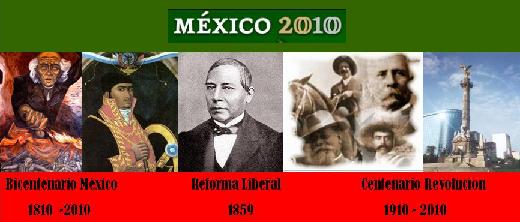
Every high school class has one — the smart little mouthy guy that’s a pain in the ass to the teachers and administrators, who they’ll remember — but won’t say they miss. Guys like Rafael Buelna Tenorio. In his last year of classes at the Colegio Rosales in Culiacán, he became a real problem student, spending his free time organizing demonstrations in favor of a reformist candidate for the Sinaola governor’s race. The administration really didn’t want trouble with the government, and expelled Rafael. So…
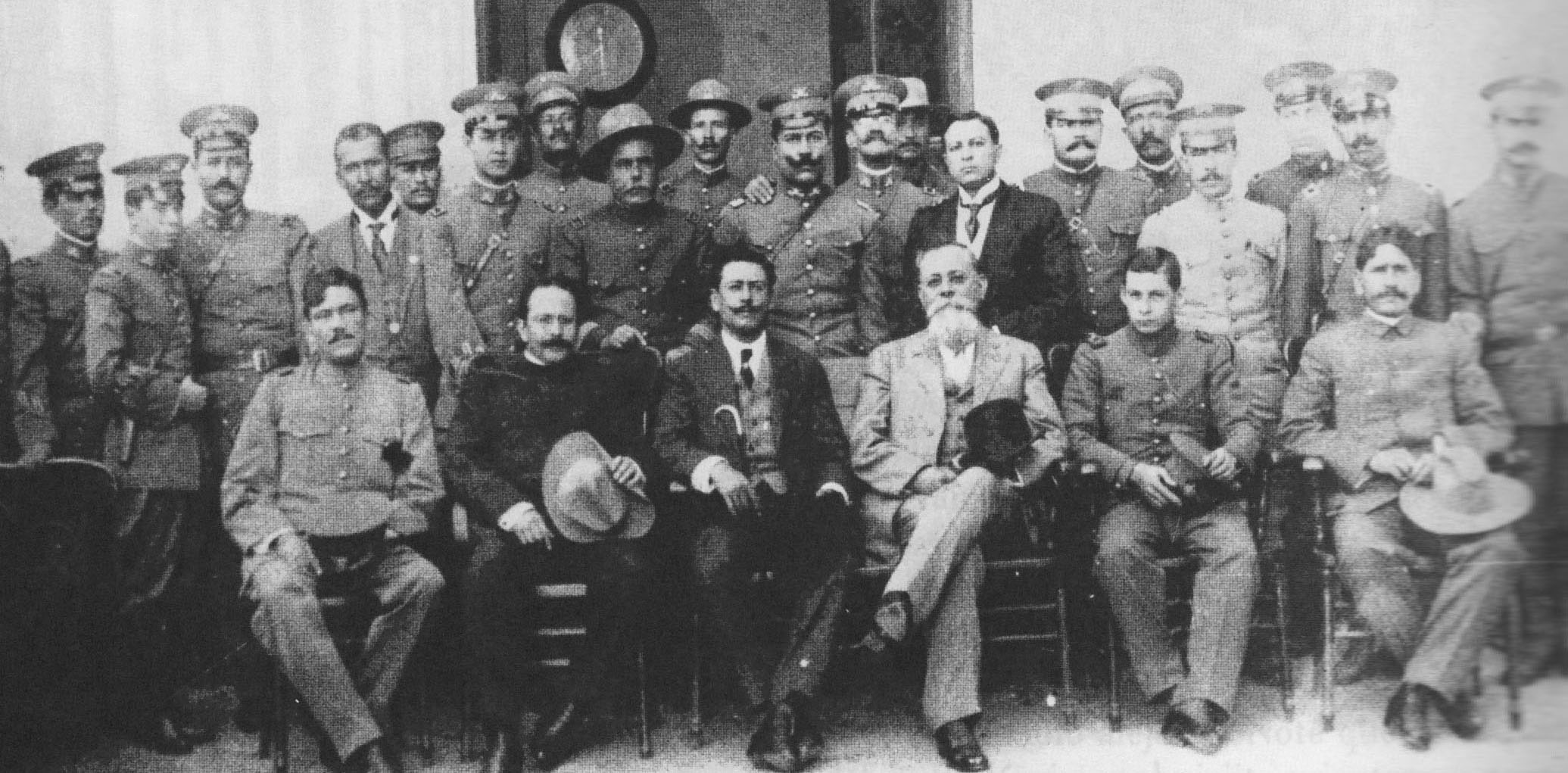
Rather than change schools, Buelna changed the administration… starting with the President of Mexico. After going back and finished his schooling, he began law school while working part time as a journalist. But, after Madero was overthrown, General Rafael Buelna (the kid to the right of Venustiano Carranza, the geezer with the beard) had a work-study project that sort of interfered with his class-work.
I’ll have more on Rafael Buelna on his birthday, 23 May.
The basics
What’s more basic than food?
While I would like to believe the Mex Files is “arguably LatAm’s best written blog“, there is no way I could have written as well, or in such depth, as Esther Buddenhagen (aka Buddenbrooks)’s “From Xico” on the critical issue of Mexican (and human) life that affects all of us on the planet: who controls our food and fiber?
- One Reason Mexicans Head to the US for Work: Coffee looks at the relationship between growers of this one commodity (and I think coffee is one of the four basic food groups all by itself), emigration, environmental degradation and corporate control.
- In A Local Mexican Response to Big Agriculture: Palm Oil NO in Coatzacoalcos, Veracruz Esther writes of the conflict between farmers who want to produce for the local markets and demands for exports (which may not even be profitable for the producer nation as a whole).
- In a short post, Mexico, US, High Fructose Corn Syrup and Sugar, Esther doesn’t need to spell out the problem. Mexico is traditionally a sugar producer and the land of corn, yet is being inundated by corn sweeteners from the United States which exacerbates the very conditions she sees in other commodities.
I live in Sinaloa, where we have been growing opium poppies since the 1880s, and commercial marijuana since the 1920s. Like the farmers in Veracruz, our farmers are at the mercy of businesses seeking a foreign consumer market, and — like the Veracruz coffee growers — are locked into a controlled market that leaves only two choices: emigrate, or become a pawn of the businesses controlling the market.
Like the palm oil growers, our growers are at the mercy of the fickleness of foreign political policies. Encouraged at one point (during World War II) to plant more opium poppies, and by steady demand for the commodity since the 1980s, returning to basic foodstuffs production is a radical — and, much more than in Veracruz, suicidal — decision.
And, being flooded with other “junk” from the north (firearms and bling, just for starters), made from the profits of our agriculture, the economic incentive for basic foodstuffs is being destroyed as surely as the sugar and corn growers here are being forced into pauperdom.
Sure, it’s more fun, and you get the kudos writing about the attention grabbers like migration, narcotics, violence, and political unrest — but we’re looking at the symptoms of a problem, and not the problem itself. And that, unarguably, is the more important thing to blog about.
The War on Drugs: A Failed Paradigm
The original of this article, “La Guerra contra las Drogas: Un Paradigma Fallido” by Santiago Roel is distributed by the Mexican think-tank RSS & Asociados (www.prominix.com). My translation.
We are fighting a war against a powerful foreign market that is able to corrupt officials on both sides of the border, provide weapons to gangs, to divert attention from real solutions and leave people dead and terrorized the Mexican side.
This “war” began 40 years ago, decreed by the government of the United States that had criminalized drug use, thereby creating two artificial problems: Addiction problems became criminal problems; and a black market windfall created powerful incentives problem of addiction that became a criminal problem and a black market windfall created a an industry too powerful to be broken.
Addictions have not declined in the U.S.: drug use remains level at about twenty percent of the ppulation between 18 and 25. In fact, marijuana use in the U.S. is four times that of Mexico, cocaine use is seven, amphetamine use eight and Ecstasy use 100 times higher than the rate in Mexico.
The market for drugs in the United States is 200 billion dollars a year. This is 10 times the defense budget in Mexico and five times what is budgeted in the U.S. for this “war”. Do you really believe you can win?
Containing the supply of drugs has been a wrong paradigm – the price of drugs has fallen. The street price of a gram of cocaine in the U.S., in 1990 was USD $184, that same ounce in 2006 fell to $103. That’s a price reduction of 62%, after inflation. 30% of high school students think it is easy or very easy to get drugs at school. The indications of obvious: the supply has increased.
Mexican Corruption?
Sure, it’s easier to find a scapegoat than to admit to problems. But the U.S. government refuses to reconsider the paradigms and prefers to blame the Mexicans.
Judge James P. Gray, Orange County, California, has courageously quested the whole mess. He has written a great book Why Our Drug Laws Have Failed and discusses his views on his website www.judgejimgray.com. With over 30 years of experience, he is the prototype of a judge: rational, prudent, conservative.
Politicians, says Gray, they are followers, not leaders. They wait for the people to change the paradigms. I recently wrote him, asking what this meant for the Mexicans.
Who won the war according to Gray? The DEA and U.S. agencies: they exist on the funding of the ban on drug use. They, and those who build and administer prisons, drug cartels, arms dealers and a few others.
Who has lost the war? Everyone else, including addicts themselves, and all Mexicans who now suffer from insecurity and corruption.
Gray proposed regulatory control (note, not legalization) of drugs is done in Switzerland, where addiction is treated for what it is: a health problem. The government records and gives addicts a dose of their needed substance in return for not committing crimes or turning to prostitution. The program has been very successful. Among other things, has decreased drug-related crime (robberies, assaults, injuries, homicides) by 75 percent, AIDS infections are down, and of course, some addicts have been rehabilitated.
But we also have the example of Portugal which decriminalized drug use in 2001.There, the choice is between a € 25 fine for consumers, or the alternative of visiting a panel of medical, legal counsel and social worker to assist with addiction problems. If the consumer does not attend a counseling session, there are no sanctions. Interesting. What has happened since then? Drug use and addiction have declined. The increased drug tourism opponents feared has not materialized.
These are two success stories but U.S. politicians are opposed to it because the pressure from the moralists and the interests of government agencies themselves are stronger. They keep selling over and over again the position that the Mexicans are to blame, as they used to blame the Colombians.
The question is not whether the situation is so serious that the army needs to be on the streets, supposedly because the police have been infiltrated by the cartels, and – as a last resort – we must support the President. These are symptoms of the wrong paradigm. The real question is why we have been forced to fight a war that, by its conceptual flaws, is unwinnable.
The real issue is that our government must take a rational, more practical and substantive path. Is President Calderón ready to lead this paradigm shift?


 mexfiles.net