Mexico: one step ahead of COVID-19
EFE, via Sin Embargo (my translation):
Mexico “is one step ahead” of most European countries, by trying to make “flatten” the infection curve “over a longer period” and has taken the correct measures to accomplish this, Cristian Morales, representative of the World Health Organization (WHO) in Mexico, said in an interview published by the UN agency on Tuesday (24 March 2020).
That same day the Mexican government declared the country is in Phase 2 of the coronavirus pandemic, when there is community transmission. He predicted that the outbreak will spread slowly, allowing for the health system to maintain control of the situation.
He stressed that, compared to the complex situations in Italy, Spain, France, and Germany, Mexico has benefited from their experience, and has taken measures prior to going to phase two.
Despite criticism of the Government by those who consider that it acted late in the face of the contingency, Morales pointed out that in other countries social distancing measures were only undertaken when “there were already three or four times more cases than there were until today in Mexico ”.
He congratulated the state governments that even before phase 2 was declared had already positioned themselves “clearly and explicitly” to reduce person to person contagion, taking measures such as the closing public spaces and cancelling classes.
He was particularly impressed that in Mexico all suspicious cases are being monitored and that the country “has been totally consistent” with the call of the WHO director-general to test 100% of the suspected cases and their contacts.
However, he said that in this phase 2 this will have to change, since now anyone who presents a symptom related to COVID-19 and who has been in an area where there is community transmission will also need to be tested.
Likewise, he said that to face this situation, financial resources “should flow without restriction” from the so-called austerity policy.
Morales accepted that in Mexico 6 percent of those infected are expected to require specialized care “although it could be a little more” due to the “very high” rate of type 2 diabetes and obesity among the population.
The latter, he said, are associated with hypertension, respiratory problems and various cancers, making Mexicans a population “that is more at risk.”
He hoped that Mexico will achieve the “flattening and prolonging the infection curve” but predicted that this situation will continue, at least, until next July or August.
COVID-19: a balancing act for Mexico
Ricardo Patterson in today’s El País responds to those critics who carp endlessly (for political advantage or out of “malanchismo”… the sense that only the Europeans and North Americans know the right way to do things) about the Mexican response to the COVID-19 threat. (My translation, a few notes following)
After viewing the wartime conditions which France has imposed on its citizens, I am beginning to wonder if the remedy is not worse than the disease. At this juncture of the COVID-19 crisis, it is not clear that there will not be more victims form the brutal economic effects of the emergency measure as there are from the horrible bug. The near total suspension of production chains in much of the northern hemisphere, the abrupt border closures, paralyzing business for weeks and confining citizens will have consequences that will be felt for many months, if not years. But I can’t help but think of the tragedies in stadiums or theaters where people end up crushed by other people fleeing an emergency. situations in which panic is more damaging than what triggered it.
The European leaders have begun competing with each other to see which of them is willing to go the furthest, so to speak (in the end Angela Merkel will win, as always) when it comes to putting their citizens in a state of siege. I know this, having been caught in the south of France during a book tour promoting the translation of my novels (now cancelled). As a result, I have been closing observing the the draconian and authoritarian measures in Europe. I hope they work for you. What I am not sure about is that these solutions work for Mexico.
Social networks in our country have all but crucified President López Obrador and his Cabinet for “negligent homicide” by delaying the implementation of similar measures. It is the same virus, right? We should have been doing the same thing for weeks, right?
Not necessarily. Yes, it is the same virus but it doesn’t behaving the same way everywhere. Everything indicates that the spread is different in northern countries: it is a bug that likes cold weather, says Manuel Elkin Patarroyo, a celebrity in the world of pandemics, and explains that experts have noticed radically different behavior in his propagation capacity above 22 degrees north latitude (San Luis Potosí, in the case of Mexico). A review of the real-time report of the World Health Organization, with the data from each country day by day, clearly shows that to the south of this line few patients are detected who were not in contact with travelers (imported cases) and there has been little spread of the contagion. Not so in Europe where the transmission is primarily local.
Skeptics attribute the low record of cases to underdevelopment in Africa, Latin America or Southeast Asia, attributing it to neglect and backwardness of local health systems, but weeks have passed without the figures increasing significantly; That and the minuscule impact in countries like Australia or New Zealand, which have strong tourist and business links with China, would seem to confirm “the geographical idiosyncrasy” of the virus (click here for details).
In other words, the rush of Europeans to apply massive chemotherapy that will sweep away their economy is understandable, but that does not mean that we have to immolate ourselves or set our hair on fire, just to demonstrate that we are the equals of the Europeans.
On the other hand, even if the coronavirus were as devastating in Mexico as in those countries, one might wonder if the shock strategy is feasible in our country. There is talk of massive bankruptcy: hotels, thousands of businesses, the automotive industry and a long etcetera. To compensate for this in Germany, France, Spain and Italy, the presidents have mentioned astronomical financial injections to salvage the produtive sector when the health crisis wanes; the figures mentioned are equivalent to several times the domestic product of our country.
And that is not to mention the situation of ordinary citizens. European governments have waived taxes and payment of public services and offer salary coverage in proportions ranging from 80 to 100% during the weeks of confinement.
In countrires with weak public finances like ours, that would be a pipe dream. And even if it were not, what would we say to the majority of Mexicans, the 57% of the population, who obtain their livelihood from the informal economy and would not have access to such benefits? Do we tell him to stop eating for a few days so as not to catch a virus that so far has not killed anyone? In a society in which some regions and the majority of the inhabitants are on the brink of the abyss, we would do well to think twice before imitating a solution that does not correspond to our possibilities. The consequences for many could be apocalyptic.
Never before is the old saying “When the United States had the flu, Mexico catches pneumonia” more true. One can imagine would would happen if we applied the induced coma in which the Europeans have put themselves, knowing that they have the resources to revive themselves. I am not sure that our flimsy productive apparatus would be up to the task.
This does not mean that the Government should sit idly by. Suspending massive events, schools, and postponing public events makes sense. But it is clear that the best security policy is one that has to do with promoting reasonable behavior to minimize the risk of the epidemic: insisting people wash their hands and keep a necessary distance from others. .
We might demand from the president personal conduct consistent with the health standards promoted by the health authorities. But be it for bad or good, to panic or to simply ape foreign practices. It would be wise to think twice before asking the president to shoot the economy in the foot when it is already liming on one leg. As the gringos say, “Be careful what you wish for”, and there is wisdom in that.
There has been once confirmed death in Mexico… a 42 year old diabetic with no apparent contact with foreigners, but that is preliminary information, and doesn’t change the general thrust of the article.
Australia has seen a serious outbreak, but it has to be noted, the country is economically linked with China than other places, and… despite its geographic position, has the economic resources of the global north.
In a few places, I had to find equivalents for Spanish idiomatic expressions that make no sense in English, and, as I usually do, changed verb tenses or changed sentence structure for clarity.
For the good of all, but first…?
“Self-isolation” may indeed be an excellent means of lowering the number of coronavirus infections, but being able to do so (and thankfully, I can) requires having not just the financial ability to lay in supplies for a month or so, but the space to store it, and the facilities at home to live a normal life.
For a time, I lived in a “cuarto amueblado”… furnished room… where I paid by the week, and there was a communal bathroom, and, somewhere in that complex, a kitchen that could be used. My neighbors had to scramble just to cover the rent (many were the so called “informal workers” whose income varied day by day). How are they to buy a month’s worth of food, keep perishables, or even store more than a roll or two of toilet paper in a 2.5 x 2.5 meter room?
And, if one is in the informal workforce, who is paying when most businesses are shut down, and there aren’t customers for the small vendors on the streets?
No idea of the numbers, but there are thousands, and maybe tens of thousands of people here who live in cuartos, or hotel rooms, or rooftop storage units rented out by the month or week who buy their meals by the day, and more (probably several million) in this city without the financial means to simply stay at home for a month.
Despite the exponential growth n the number of private autos on the road here in Mexico City, most of us still use, or need to use, public transit. If small shops and mercados need to close, how will those of us with mobility issues get our supplies in the first place?
What are families with limited resources to do with kids home for an extra couple of weeks?
Where is the place to stay in place if you have no place?
Is the response “the greatest good for the greatest number” really taking care of the “greatest number”, or are the assumptions about “staying in place” an echo of what is done in places not having the same social issues as here (or not in the same number of affected people), not considering the realities of life here?
Tongolele!
Mexico’s greatest (and only) Tahitian-Afro dancer, was neither Taihitian nor African, but… as the great Chavala Vargas said, “A Mexican can be born any damn place she wants”… and appparently any damn ethnicity she wants, too.
Yolanda Montes was born in Spokane, Washington to a Mexican-Swedish father, and Ango-French mother. But crediting her grandmother with having claimed to have some Tahitian ancestry, when Yolanda found herself in Mexico City in the early 1940s, and needing a job, she invented herself as Tongolele, becoming the most famous of the Mexican “exotic dancers” of her era. Her career was temporary put on hold in the late 1950s, courtesy of the Legion of Decency, but she returned to work in the 1960s, expanding her work into roles in telenovelas and horror movies.
Still sharp and … while not dancing… still with us at the age of 88.
Between a rock concert and a hard place
Updated first paragraph (in italics): 17 March 2020
Ironic indeed, that Mexico’s first alleged Coronavirus death was not, as one might expect, some campesino or lowly informal worker, but the president of one of the more important investment banks in the country. Although the rumors of his demise turned out to be premature, he was very seriously ill, having apparently acquired his infection in the U.S. resort city of Vail, Colorado. While one may take some morbid sort of comfort in the thought that the rich can die too, it throws a glaring spotlight on the Mexican response… or non-response… to the pandemic.
Several publications have reported on the Viva Latino concert (more than a rock concert I know, but how could I resist using it in the title?) going ahead when in other countries, the news has been restrictions on public gatherings in the name of protecting public health… “social distancing” being the phrase de jour. And, there has been widespread criticism of Mexico’s president for his … uh.. “social closering” (or whatever the antonym for “distancing” might be): continuing his traditional abrazos, and even kissing a baby the other day. While one might wish the President would… for his own safety and health (he is a sexagenarian, after all), and ours… put some distance between himself and the citizenry at times, it appears there is a delicate balancing act in the government, with political, economic, social, and public health concerns all having to be considered simultaneously.
Although the number of confirmed coronavirus cases has started its expected exponential growth, the situation is still a manageable 40-odd (about 3 percent by population of the confirmed cases in the United States… possibly a matter of more testing in the US, although the confirmed cases here have almost completely been of persons recently in Italy, Spain, China, or the United States where the disease has spread much more rapidly). It was much less when the question of cancelling Viva Latino was first broached… and health officials themselves decided against it. And, being one of the premiere music events in Latin America, there were financial arguments against suddenly shutting it down, not to mention, what I imagine are political considerations. The conservatives in this country have been attacking the administration on every and any move they make. Closing down public and popular venues (especially those with a higher ticket price than, say, the Metro) would be seen as economically irresponsible… and not closing it down as ignoring public heath and safety. What to do?
And… given that there have been some major demonstrations in the capital and throughout the country in the last week or so… AND, our lefty president has been at pains to grin and bear any number of right wing provocations, meekly stating that the people have a right to express their opinions, one asks what the reaction would have been to a strict ban on large gatherings, say, just before the women’s march, or soon after? This is, after all, not Chile or Colombia where coronavirus is proving something of a gift to the ruling parties, a rationale for stopping the massive calls for radical change in those countries. Nor is this Nicaragua, where there is also a militant opposition to the government, but there have been state-organized coronavirus rallies… intended to blame the health emergency on that opposition.
Although over the last day there have been announcements of public health restrictions on public events (over 1000 people here in the Capital) and those restrictions may be made more stringent in the coming weeks, and that schools will be closing after the end of the coming week for four, rather than the usual two weeks (and the closures might be extended), this is not a country where people can just work at home. Many already do, but this is not a telecommuting country, and the kind of service sector jobs that are amenable to telecommuting are few and far between. I heard an American “pundit” the other day, a Sanders supporter, bemoaning the economic effects of a “self-isolation” (quarantine, to use the less euphemistic word) on dog walkers, Uber drivers and gig workers . Yes, there are dog walkers and Uber drivers and gig workers here.. but there are also frangelos, market porters, office cleaners, clerks, not to mention truck drivers, farmers, sweatshop workers, etc. who cannot afford NOT to go to work.
For the good of ll, but first the poor… AMLO’s slogan in his first (stolen) run for the presidency, whether or not the phrase is bandied abut as much as it once was, is still an operating principal for his administration. Is it in the interests of the poor to lock down the country, or is it best we endure a health crisis which can be somewhat controlled, while not bringing the entire economy to a screeching halt?
And our social lives? Perhaps we are too huggy a people, and perhaps … at least for the duration… we need to forego the simple please of embracing our fellows. But it’s hard. And for too many, life itself is hard. Simply gathering together… whether it’s the family paseo of a Sunday, playing dominos on the sidewalk with the neighbors, or visiting La Virgen at the Basilica… Mexicans traditionally do things in groups, and live in groups. Why do you think U.S. style suburbs never caught on here, and why do think even Mexican farmers lived, not on their plots, but in a village?
Is there a line between protecting lives and protecting culture? And when is it to be crossed?
I don’t envy those who are responsible for our public health protection. But, other than convincing us to remember the basics (wash, wash, wash those hands!) and controlling a threat to our collective health… without killing our feeble economy, knocking out the country’s political awakening, nor destroying a culture in order to save it.
Solidarity in the time of coronavirus
How will Mexico City respond to a coronavirus outpbreak?
Being pretty much confined to home, and at an age where such things matter, it’s of more than historical interest to consider how we deal with disasters.
The most famous of our disasters was, of course, the 19 September 1985 earthquake, when the government … despite having military units dedicated to disaster relief going back to the 1940s… failed to respond. Although the citizens did… brilliantly. From the “Mole Men of Tlatlolco” to neighborhood communal kitchens, to the ladies creative writing club drafted by the aristocratic Elena Poniatowska into working as reporters and correspondents for the newspapers.
The 1985 earthquake was a seminal political event. People instinctively understood that the government, and private business, looked out for their own interests first, and that of the citizens only as an afterthought. The quake, as much as anything, was responsible to the political changes. Ironically, we went through 30 years of “neoliberalism” (transferring responsibility for the health and welfare of the public to private capital). However, despite the crooks and charlatans of the time, the state did begin taking its responsibilities seriously, especially here in the Capital, where the informal groups that initially sprang up just as a means of survival became formal organizations and pressure groups, joined by others who learned from them, to force the state to do better. Or at least demand change.
Politicians promised hospitals that were never built, siphoned off money from relief programs, and even stole medical supplies, but it was a little harder for them. Hospitals were built, relief programs were underfunded but provided SOME relief, and medical supplies were more readily available. The military’s relief program was revamped (and I’d put up the work done by DN-E-III — the Army and Air Force protocol for disaster assistance — up against any US or European force for rapid response to emergencies). And still, it comes down to neighbor to neighbor assistance.
Should, or rather, WHEN coronoavirus breaks out in this city, it’s going to be the neighbors who check on those of us who can’t get out, or are too sick to take care of their children, or simply are left alone. Who in the United States will be doing this?
I thought about it after a friend sent a link to an article in a Catholic publication about the role of the Church in Philadelphia’s role in the 1918 Spanish flu pandemic, which hit that city particularly hard. With churches and schools having been closed, it freed up nuns and seminarians to be dragooned by the Archbishop into service with the health department. Although several orders of nuns already ran hospitals, perhaps a more important role was that of what today would be called “home health care workers”:
The Sisters of the Blessed Sacrament for instance were sent to the Municipal Hospital as well as acted as private nurses, going door to door in poor neighborhoods to find and care for the sick.
2000 nuns served during the epidemic. While it surprised me to learn that there are still about 2000 nuns in the Philadelphia Archdioceses, the average age of a nun n the United States is 80. Serving in hsopitals, or going door to door, during a coronavirus outbreak might not be in the best interest of public health. And, while nuns are an exception to the general rule of how people live in the United States… their “alternative lifestyle” (the original feminist communes!)… it is rare in a culture where one doesn’t know, nor want to know, one’s neighbors that you’ll find an organized cadre of people ready to get to work in an emergency. I imagine there are people who will step up. I lived in Des Moines during the “Great Flood of 1993” when the water system was knocked out of commission (yes, floods can mean no water… or at least no safe water) and local farmers began hauling water tanks into the city, so yeah… there is still some sense of solidarity within the US. and people did turn out to sandbag the river, but it was international news to see Americans actually working together for a change.
When neighbors check on neighbors, when a kid gets on the bus to ask if anyone has the blood type a relation needs for an operation, and a few people come forward, or when — like after the 2017 earthquake and traffic wasn’t moving — bicyclists simply showed up to ferry medical supplies around the city, and hardware stores just opened their doors for people to take what they needed to clear the wreckage, it’s just the way things are here. Do we need organized cadres or just, as we have learned to do, show solidarity with our neighbors?
Oiling the big guns aimed at Mexico
According to Reuters, there was a meeting at the U.S. Embassy Friday morning (6 March), attended by diplomats from the United States, Canada, Germany, France, Britain, Italy, Spain and the Netherlands where the various representatives “expressed their concern” that the Lopez Obrador seeks to change contracts signed with the Peña Neito administration, which would “erode” their legal standing.
While no one would confirm anything about the meeting, Reuters was able to report that the diplomats are not sure how to frame their complaints that, in returning PEMEX to Mexican control, the government is renegotiating contracts that in its view favored the foreign investors over the Mexican owners (i.e, the Mexican people).
What it all comes down to really is one oilfield:
A notable discussion has been who has the right to operate an important discovery of offshore oil, the Zama megafield, whose deposit would be shared between Pemex and a consortium of private investors led by the US Talos Energy.
Uh… it’s in Mexican waters, it’s Mexican oil, and the answer is…
ON STRIKE!
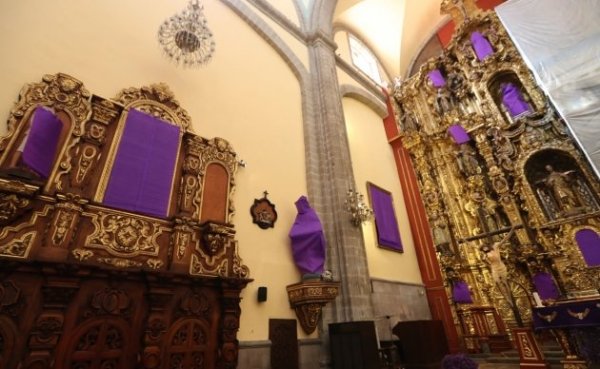
Heaven hath no fury… at my neighborhood church, Santos Cosme y Damián, the Virgin and women saints have joined the strike.
Coronavirus cumbia…
Hey, it’s Mexico. Public health you can dance to…
Doctor Mora.. and Santa Anna… and Joe Biden?
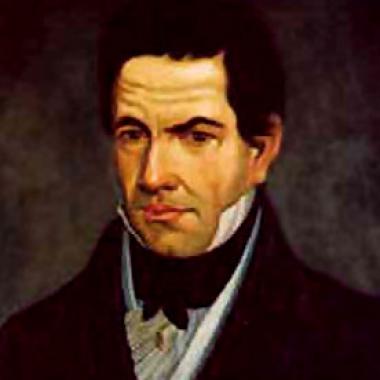 I doubt the talking heads you see on television before and after every election (or, in the US, party primary), yakking on with great authority about why candidate X did better than candidate Y ever heard of José María Servín de la Mora Díaz Madrid, aka “Dr. Mora”… but the early 19th century Mexican priest — without the aid of computer simulations, demographic breakdowns, or splashy graphics — was doing much the same thing.
Born in Guanajuato in 1794, Moro was one of any number of priests, who had joined the Church as much for its educational opportunities as any other reason. Not exactly a stickler for clerical niceties, he was a regular at local Masonic lodge meetings, and, during the War of Independence, found his role as a shepherd to his flock outside the pulpit. Unlike Morelos or Matamoros, he was a less active participant, mostly as an intellectual advisor and commentator (perhaps he was an early pundit as well… but unlike today’s pundits, usually knew what he was talking about, and had some experience in whatever he was commenting on), writing especially on the need for separating Church and State and secular education.
One forgets how “radical” a concept it was back in the 1820s, but Mexico had universal manhood suffrage at a time when even the thought of extending voting rights in the United States to all white males was considered dangerous. Stating with the 1828 Presidential election, Mora began keeping statistical data on election returns, and in two books (almost never read, or even known, today), México y sus revoluciones (1836) and Obras sueltas (1838), and in later, posthumously published papers, laid out the basics for studying or predicting any election.
Mora, although he didn’t use the terms, understood that election outcomes depend on two groups: “influencers” and “low information voters” determine outcomes. What Moro noted about the electoral successes of a General Santa Anna is applicable even day, as perhaps illustrated by the results of the recent “Super Tuesday” Democratic Primary.
Much to the amusement of all, Michael Bloomberg spent a lot of money for very little in return. Mora noted that rich people are not much concerned with which party or platform is elected… as long as they maintain their wealth and power. Of course in our day, with the expensive adverting and campaign budgets, the rich have more influence, nothing there has changed. Given the unexpectedly poor showing of Sanders and Warren, they have some say in who doesn’t win, but rich people, just running as rich people, representing the rich, go nowhere.
Even when a candidate, like Sanders or Warren, offers a program that might be of more benefit to the masses (our “low information voter” in modern “punditese”, the likely winner has to appeal to the “Influencers”. For Mora, in a mostly agrarian country where the rich were seldom see by anyone but their own peers. They might make a show, a progress to the various estates and mines, but how many voters saw them, let alone expected anything from them, compared to the “betters” they would meet daily… the village shopkeeper, the priest, the big hacienda manager, or the small hacienda owner? These were the better educated people likely to have read a newspaper and intepreted it for their illiterate neighbors, or at least seen as the people with some worldly experience.
In Santa Anna’s day, the BIG ISSUES might have been the fight over whether Mexico should be a centralized or federal republic, and the power of the Catholic Church. Mora generally favored Santa Anna, whether he was presenting himself as a Centralist or Federalist, Liberal or Conservative for the same reason the “influencers” did. As ut was, the issues of Centralism or Federalism, Secularism or Clericalism were about as exciting to SOME people as our issues of Neoliberalism or Democratic Socialism — i.e. esoteric issues of the role of government that didn’t appear to much affect the daily lives of the people. Where his rivals were often, like Valentín Gómez Farías were ideolgically “pure”. Gomez Farias has been Santa Anna’s running mate in the 1833 election, but Santa Anna retired “for health reasons” before taking office, allowing Gómez Farías time to introduce unpopular (with the Church) measures that justified Santa Anna coming out of retirement to overthrow the ideologue.
Santa Anna, who switched his political allegiances more often than most of us change our underwear, was consistent in one thing… the basic needs of those “influencers”. In his time, what the small town elites wanted was more educational opportunity for their children. Santa Anna stood for Lancasterian education, a rather inexpensive (and taxpayer friendly) was of bringing schools to rural communities*. Coupled with his reputation as a relatively enlightened landlord (if one didn’t look too closely at where he acquired the funds to expand his small holdings into one of the largest haciendas in Mexico). In other words, being a military hero was secondary: it gave him a name nationally, but it was his appeal to the modest demands of the “indluencers” that served to win him elections.
One might argue that Sanders and Warren were the “ideologues” in the recent primary… or at least perceived as such, Bloomberg as the candidate of the rich, leaving BIden to pick up the pieces by not scaring the (relatively conservative) middle class influencers of our time.. not just the so-called “mainstream media” but, as in Santa ANna’s day, the clergy. That is not saying that what are now called “low information voters” are stupid, or easily swayed, but only that they aren’t likely to have the time or money to be pouring through small circulation magazines, academic journals, statistical analysis of various proposals,etc. and are smart enough to listen to those they know, who may have a better education or interest in the outside world than they do
Dr. Mora may not have been able to predict by what percentage a candidate would win, but he probably would have understood US elections, and those of just about anywhere, as well as anyone living today.
* In the long run, his education program was his downfall. The Lancastrian system put the star pupils to work teaching the rest of the students (freeing the often single schoolmaster to oversee larger student bodies), but also meant peasants got a decent education, and became the next generations’ “community organizers” who would overthrow not only Santa ANna, but the entire political system … “Indians” like Benito Juarez, Porfirio Dias, and Ignacio Manuel ALtamirano who got their start as outstanding pupils and teaching assistants.
Remembering the Alamo
All of the combatants inside the Alamo during the 1836 battle knew that they were fighting for the institution of slavery, as surely as they knew they were fighting for Mexican land. James Bowie, a slave trader and smuggler who William C. Davis says was “easily the largest land swindler of his era,” had arrived in Texas in 1830 with 109 enslaved people. Bowie married well and quickly amassed claims on enormous amounts of Mexican land. His desire to keep Texan forces in San Antonio prevailed, though it was distant from the precious East Texas cotton fields, and of much less strategic value than other garrisons. General Sam Houston thought the Alamo should have been blown up and abandoned. Not surprisingly, the Alamo garrison received few reinforcements or supplies from their rebel compatriots.
Ruben Cordova, bravely posting this from San Antonio (Rivard Repot)
Marijuana and Walmart: too bad, so sad…
If the investment prospects aren’t as rosy in Mexico as some might have hoped, the blame (or… maybe the credit) goes to the new administration’s policies favoring the poor and disadvantaged.
According to Reuters, “Walmart, Mexico’s biggest retailer, reported on Thursday its slowest revenue growth in three quarters, with its core supermarket chain hit by competition after the government altered a welfare spending programme.”
Walmart’s problem is their “Bodega” stores (with a slightly larger selection of goods than a convenience store, but limited selections) now have to compete with the mom-n-pop aborrotes, traditional markets, and even independent farmers selling off the backs of their trucks. Entitlement payments formerly were doled out through various social service agencies, or were through something like EBT cards in the US, limiting the user to stores that could afford the higher costs of maintaining phone lines and computer equipment.
It seemed counterintuitive for the new government to budget more for social payments (and expand payments for groups like students and indigenous people), but by cutting out the “middle men” and eliminating overlapping programs, not to mention the frauds associated with programs that enrolled clients who never existed (especially for things like day care centers, that just padded their rolls with ghosts), there was more money to spend… and more spending money for consumers. The benefit checks go directly to the recipient to spend however they want. Food assistance is most likely to be spent on food… one assumes, though just putting money into circulation isn’t a bad thing.
At any rate, as far as Walmart is concerned, how dare the poor consumer have consumer choice! How dare small Mexican government put money in the hands of Mexicans who are going to buy from Mexicans and invest what little they make in Mexico, rather than repatriate profits back to Walmart headquarters. Will no one think of the Walton family?
And… Motley Fool, the investment website… writes that while marijuana legalization is a done deal (or will be by the end of April), despite Mexico’s large marijuana industry, its not likely to be the investment opportunity foreigners had hoped. Again, blame those durn lefties. Although the Supreme Court ruling that mandated creating a legal market was based on the rights of users, the government’s rationale for simply accepting the ruling was that the growers themselves… generally small subsistence farmers… need a cash crop — a legal cash crop that is — beyond corn and beans.
When it comes to export crops, small farmers have not been able to compete, and, despite what one may think after watching a show like “Narcos”, the major foreign suoplers are not running secret giant plantations (although there have been a few), but are buying from independent growers and sharecroppers, Those growers and sharecroppers, no longer harassed by the government, still need to make a living. If foreign companies come into the trade, the fear is they would turn to giant marijuana plantations, driving out small farmers and simply creating a rural proletariat, rather than peasants… that is, underpaid and exploited workers, rather than farmers with some control over their land and over crop sales.
The upshot being that the big ag corps (and big marijuana investors) are not going to get what they want… but then, the only difference between them and the cartels has always just been where they are located.


 mexfiles.net