You die! No health care for the undocumented
Meg Tirrell and Nicole Gaouette wrote Thursday for Bloomberg:
Illegal immigrants in the U.S. won’t gain insurance benefits under the proposed health-care overhaul that President Barack Obama described yesterday to Congress.
That may not stop some uninsured and undocumented U.S. residents from getting government help paying for their health care, Republican critics said. Current proposals lack enforcement provisions to ensure that ineligible applicants are kept from programs, causing a gap between law and practice, according to a group seeking curbs on immigration.
I’m not concerned that a congressman made an ass of himself yelling “you lie” at the President of the United States. The President is an adult, and a politician, and legislative heckling in this country was one of the necessary steps to opening the political system. I am concerned that people believe medical workers should be checking immigration documents.
The most charitable assumption I can make is that people like Congressman Wilson expect medical workers to check one’s citizenship status before offering care…”Sir, we’ll deal with that sucking chest wound, as soon as we see your birth certificate”.
But, even if Mr. Wilson is a member of the same political party as Abraham Lincoln, his remark (and the boneheaded willingness of his political opponents to address this non-issue) was hardly made with “Charity towards all, and malice towards none.” The reality is that Mr. Wilson would not expect to be asked for HIS papers… but he would expect health care workers to ask “those people.”
How a health care worker is supposed to identify “illegals” from others is left to the imagination. We’ve seen American citizens held as “illegals” because they had a different regional accent (a guy from Brooklyn was arrested in Dallas), because they’re the wrong skin color in certain parts of the country, because they have a “Spanish accent”, or because… well… just because.
I have yet to see actually data proving “illegal aliens” use more public health services than other tax payers… they use the emergency rooms BECAUSE they don’t have health insurance… which would be cost effective to treat as illnesses before they ended up in emergency care. And, given that “illegals” do so much of the type of work that leads to occupational illness (like farm workers) or accidents (meat cutters), they need insurance more than most.
For Wilson (and the spineless members of the other party that are willing to consider this objection… up to and including the President of the United States), there is no sense of recognition that the United States already has a lot of undocumented immigrants and that they are taxpayers, and that they don’t all “look Mexican”… only that they want these people to shut up, do their work, and die quietly.
What do they think? If an “illegal” gets swine flu, you they think his germs are gonna apply for immigration before invading a citizen’s immune system? Living in a normal country, where you just go to the doctor and get treated, or stand in line at the clinica, I have to admit I don’t understand any of this… even when I was an illegal alien here, no one thought of asking, nor would they ask if I had a right to be in the country. They asked how I was feeling.
Besides, ratting out the patient to immigration authorities is not in the The Hippocratic Oath:
What I may see or hear in the course of treatment or even outside of the treatment in regard to the life of men, which on no account one must spread abroad, I will keep myself holding such things shameful to be spoken about.
Rep. Wilson, and those that pander to this nonsense, are Hypocritical Oafs.
Innocents abroad: U.S. media and Venezuela
If you don’t read the newspaper, you are uninformed; if you do read the newspaper, you are misinformed.
– Mark Twain
Cowboy in Caracas (Charles Hardy) was a Catholic priest for 28 years. I think somewhere along the way he learned about the difference between faith and fact:
On August 5, Chávez held a special news conference with the international press that lasted several hours. He presented evidence that the rockets were among five that were stolen from the Venezuelan armed forces on February 25, 1995, when a military base was attacked by Colombian guerillas. This was four years before he became president.
In an Associated Press article with the byline of Christopher Toothaker published on the Internet on August 9, mention is made of Colombia’s accusation and that Sweden confirmed the sale of the weapons to Venezuela. (That happened in the late 80s). It also said that, “Chávez denies aiding the FARC.” But the article did not say anything about the weapons being among those taken in 1995.
So I called Mr. Toothaker to ask why he omitted that. He replied that he didn’t “believe” that they were the weapons that were stolen.
…
I, too, have beliefs and I often express them in my writing. But I write commentaries. The Associated Press is supposed to present facts in their news stories, not beliefs. Unless, that is, it is a religion and its readers are supposed to accept whatever it says as an act of faith.
Robert Morgenthau, the 90-year old Manhattan District Attorney, who doesn’t know anything about Latin America or Venezuela, wrote an editorial for the Wall Street Journal. Which Dr. Mark Weisbrot, an economist and co-director of the Center for Economic and Policy Research in Washington, has written extensively on Venezuelan economics in particular and Latin American economics in general, has parsed (in boldface):
The diplomatic ties between Iran and Venezuela go back almost 50 years and until recently amounted to little more than the routine exchange of diplomats. With the election of Iranian President Mahmoud Ahmadinejad in 2005, the relationship dramatically changed. [1) In fact, the relationship deepened before this, during the Presidency of Mohammad Khatami. A meeting with Khatami and Chávez in 2004 saw the agreement for both the development bank, as well as the tractor production . With the election of Ahmadinejad, Chávez was worried the agreements might be threatened .]
…
A year later, during a visit by Mr. Chávez to Tehran, the two nations declared an “axis of unity” against the U.S. and Ecuador [4) Ecuador? This must be a typo, or else this is the strongest evidence that Morgenthau doesn’t know what he is talking about. This doesn’t say much for the WSJ editors, however, that they missed this]. And in June of this year, while protesters lined the streets of Tehran following the substantial allegations of fraud in the re-election of Mr. Ahmadinejad, Mr. Chávez publicly offered him support [5)As did others, notably President Lula da Silva of Brazil]. …
Meanwhile, Iranian investments in Venezuela have been rising. The two countries have signed various Memoranda of Understanding on technology development, cooperation on banking and finance, and oil and gas exploration and refining [7) Even the State Department acknowledges that each country has a sovereign right to have relations with any country it chooses].
Venezuela is an extreme case, but this is typical reportage from Latin America from sources like AP and WSJ. Reporters either don’t check the facts against published sources (like the Latin American press) or just make assumptions — or rely on editors who feed in their own biases.
11 September
The incidents of 11 September 2001 may have shocked the people of the United States into the realization that the country’s actions were not seen as benign to much of the world, but earlier 11 September forced Latin Americans to draw the same unfortunate conclusion.
As a result of the 11 September 2001 attack by Saudi dissidents, U.S. government not only to try to quash domestic dissent but launched pre-emptive wars, and — internationally — openly embraced on an international scale the kinds of behaviors (extraordinary renditions, hiring mercenaries to protect economic and strategic interests and overtly intervene in other nations’ domestic affairs) that Latin Americans were shocked into realizing was basic to United States policy on 11 September 1973.
Victor Jara, the Chilean composer, was only one of the 11 September victims… tortured and machine gunned to death and dumped in a Santiago slum on 15 September 1973.
¡No pasaran!
Read their lips… no new taxes. Or, at least, no new sales tax on food, medication and schooling.
One of the more Orwellian ideas of late has been to sell regressive taxation as a progressive idea. The Calderón Adminstration, looking to make up for projected revenue shortfalls, has been pushing a two percent tax on … well, everything. While sales taxes (already we have a 15 percent Value Added Tax) food, medication, and educational material has always been exempt, on the premise that basically, people can do without “stuff” — but not eating and not learning is no way to get out of poverty.
So, the administration, facing opposition to income tax changes has been trying to sell the two percent sales tax as an anti-poverty plan. PAN Senate leader, Gustavo Madero argues that the tax “won’t be a sacrifice to the country’s 30 million living in poverty, because they will benefit the most when the taxes are converted into the fight against poverty.Excuse me?
The argument presented by the President is that a strong government creates a strong country. Blogotitlan responds that a strong people (or at least people with enough to eat, not getting sick and receiving some education) is what makes a strong nation.
PRI, which controls both the Senate and the Chamber of Deputies, has said the latest is a no-go, and the PRD, PT and Convergencia have never backed the idea.
Non-cooperation with the Honduran military
Given that the United States FINALLY decided (sorta-kinda) that the coup in Honduras is indeed a coup one of the legal processes is to end all military cooperation. Belén Fernandéz (Narco News Bulletin) recently embedded himself herself with our non-ally:
I ended up seated on a plane out of San Pedro Sula next to a 23-year-old US helicopter pilot, thanks to whom I now know of the existence of the term “gyroscopic procession.” The pilot, who was currently stationed at the joint US-Honduran Palmerola Air Base in the state of Comayagua, explained that he had recently returned from a mission in Costa Rica in which he had been tasked with searching for a lost hiker from Chicago. According to his analysis, the diversification of military chores may have had something to do with the wealth of the lost hiker’s family and the fact that the US military was not supposed to be cooperating with the Honduran military at the moment, as the US State Department was still determining whether or not the June 28 coup against President Mel Zelaya had been military in nature or not.
The pilot reported that the search for the hiker from Chicago had been abandoned after the hiker’s family hired a psychic to guide the helicopters, and cited other recent military chores he had participated in, such as a Black Hawk helicopter deployment to Nicaragua a few days after the coup in order to transport Nicaraguans with cataracts and other afflictions to the USNS Comfort waiting offshore. As for US collaboration with the Honduran armed forces, he explained that it currently consisted of displaying one’s ID to Honduran soldiers guarding the base at Palmerola, but that this was not in fact necessary as the guards’ guns were not loaded anyway.
Holy Air Piracy!
It is starting to look like the guy who highjacked the AeroMexico flight from Santa Cruz, Bolivia to Mexico City after a stopover in Cancun had a co-conspirator in Jesus, though I don’t remember anything about “Blessed are they that threaten to blow up airplanes for My sake” in the New Testament.
José Marc Pereyra Flores (earlier reports had his name wrong), who threatened to blow up the plane with what turned out to be two bottles of Jumex-brand fruit juice (flavor not revealed) said he was on a mission from God. Some reports say the Rev. was just reading his ticket upside down, seeing today´s date (09/09/09) as the mark of the beast: 666. He needed to personally speak to Mexican president Felipe Calderón, and warn him — and Mexicans — of an impending earthquake that would only be averted if the entire nation joined him in prayer.
The flight was diverted to Benito Juarez airport in Mexico City, and moved to the Presidential hanger, where President Calderón did met the plane, along with armed federal officers, who led Pereyra (and reportedly five others in his party) away in handcuffs.
Pereyra and his holy commandos were said to be Bolivians, but the Bolivian Ambassador denied this initially, on the logical grounds that Bolivians can’t afford to fly to Cancun. Later reports say Pereyra is a Mexican resident. Naturally, foreign reports have to say something about narcotics when they write anything about Mexico, so they mention that Flores is said to have been a drug addict. Burro Hall went off the deep end, talking about Al Qaeda (hopefully, tongue in cheek), though I’d expect anything coming out of Santa Cruz to more likely involve home-grown neo-fascists than the points east of the Mediterranean.
There is a video of Pereyra — which seems to part of a series of testimonials from the “saved” — showing off his skills with a pistola, and talking about having been a hitman in Bolivia — but I´m gonna go out on a limb, and just stay the guy is most likely nothing more than a full-blown loon.
There haven’t been any more than the normal earthquakes, which we can take to be a “no comment” from God.
Shoe us the way
In December 2008, Muntazar al Zaidi became the world’s first (and so far only) successful Zapatazoista.
It hasn’t been easy for Al Zaidi, but he is at last, being recognized for his innovative journalistic technique.
Austerity budget — even Carstens is trimming down
Everyone in the Mexi-news blogsphere seems to be focusing on this morning are the plans to eliminate three cabinet departments (Tourism, Agrarian Reform and Public Function ), and taking on faith the Calderón administration’s statements that this is just a necessary budget cutting move.
In theory, these cabinet consolidations make sense. The Secretariat of Public Function(more or less analogous to the United States’ Office of Management and Budget) was only a separate cabinet department to somewhat isolate it from direct control by the Presidency, though in practice, it just duplicated other auditing and budget control activities in Hacienda and within the Executive office.
The Secretariat of Tourism’s functions will be carried out by the Secretariat of the Economy. It probably does make sense to see tourism as just one economic interests within Mexico. Likewise, Agrarian Reform (mostly moving into the Agriculture Secretariat, with some social programs moving to the Secretariats of Social Development and Labor) also makes sense. I’m dubious, however, that the cost savings will be anywhere near what is envisioned without cuts in programs as well as higher level functionaries.
No one is going to fight too much to save these departments, nor are there likely to be huge objections to austerity measures announced by Secretary of Treasury Augustin Castens: a five to ten percent salary cut for high level functionaries and diplomats; a freeze on new hires, new office space and even new office furniture for the next year. Carstens also plans a consolidation within his own department, combining the two government gambling monopolies run through the Treasury (don’t think about it) — the National Lottery and the “Pronósticos Deportivos” (Sports book).
One possible measure, very likely to create some opposition is a higher tax on liquor and tobacco. Maybe, they’ll even cut down on meals for Cabinet Secretaries… one in particular might promise HUUUUGGGGGE savings…
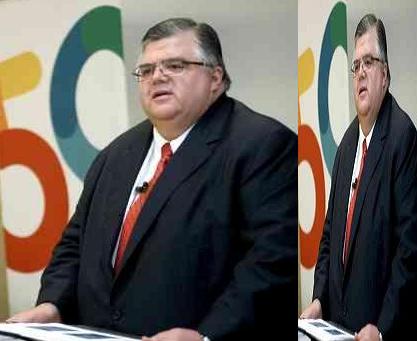 I wonder if there’s a Carlos Slim-fast Diet Plan
Carlos Slim puts his money where his mouth is…
Carlos Slim said Monday that he doesn’t expect a repeat of the ten percent drop in gross domestic product seen last quarter and that although the Mexican economy will not “grow significantly” in the near future, the country will experience modest growth in the coming year.
What makes it noteworthy, and not that Slim was not calming nervous investors, or whistling in the dark, but announcing that his family (though his son, Marco Antonio Slim Domit, was planning to open 300 new branches (up from the present seventy) of Grupo Financiero Inbursa in the coming year.
Twenty percent of funding for the expanded commercial lender is coming from the Spanish investment bank, La Caixa, meaning Slim is hardly alone in sensing that Mexican businesses are credit-worthy.
Slim also spoke of the need for continued government spending to protect family income and employment… which probably makes him a commie.
Dance fever
Sort of making the rounds of the second-string news sources (I only picked this up from the Spanish-language Yahoo.news reprint) is a Reuters story from Buenos Aires about a psychiatric hospital that has incorporated tango into its therapy. With good reason:
Researchers at the University of Washington School of Medicine found the when patients with Parkinson’s took tango lessons their balance improved.
Its intricate steps helped to improve the memory of Alzheimer’s patients in Britain. In Italy the trust needed for the tango’s tight embrace and its backward walk are used in couple’s counseling.
“With tango, you have the advantage of having many different styles of dancing to fit each specific patient,” said Martin Sotelano, chairman of the Wales-based International Association of Tango Therapy.
“You focus on the embrace and the communication for couples counseling; the eight basic steps of tango for Alzheimer’s; and the tango walk, that requires so much grace and rigidity, can help a patient with Parkinson’s.”
It’s not just tango, and it’s not just accordians that keep Latin Americans so spry into their dotage. Go to Plaza Morelos in Mexico City on Sunday afternoon, or the Zocalo in Veracruz almost any night of the week…
… and you’ll see folks in the seventies, eighties and even nineties elegantly shaking a leg doing Danzon — originally a Cuban slave version of the waltz, but incorporated into Veracruz culture, eventually making its way to Mexico City in the 1930s and now… spreading even faster than Dengue fever.
And, you don’t need a doctor’s prescription.
In the war on drugs… drugs won
Ed Vulemy’s “Is America ready to admit defeat in its 40-year war on drugs?” in last Sunday’s The Guardian (U.K.) asks:
Is the “war on drugs” ending? … Across Latin America and Mexico, there is a wave of drug law reform which constitutes a stark rebuff to the United States as it prepares to mark the 40th anniversary of a conflict officially declared by President Richard Nixon and fronted by his wife, Pat, in 1969.
That “war” has incarcerated an average of a million US citizens a year, as every stratum of American society demonstrates its insatiable need to get high. And it has also engulfed not only America, but the Americas.
…
Never have the war on drugs and its flipside, the drug wars, raged so furiously as on this anniversary. Yet Mexico’s is only the latest in a series of murderous conflicts that have scarred the pan-American war on drugs, starting with Operation Condor in the 1970s, whereby the US helped Mexico to obliterate poppy crops, only to give birth to the new cartels and institutionalised corruption.
Meanwhile, there have been catastrophic drug wars and narco-insurgency in Colombia, combining with political struggles to create the biggest internal displacement of people in the western hemisphere. Drug-related violence has blighted Brazil, Peru, Bolivia, Venezuela and anywhere the Mexican and Colombian cocaine cartels sought their product. Latin America has also become a factory for synthetic drugs, much of it now under Mexican control…
(read the entire article here).
Vulemy focuses on the movement across the Americas (not just Mexico and the United States) to decriminalize the use of narcotics, but — as with other “first world media” (even lefty organs like The Guardian) fiails to see that consumption is not particularly relevant to Latin American drug producers. The lack of employment and business opportunities in Latin America, especially in rural regions, makes the narcotics business viable.
One hates to admit it, but one suspects that if Latin American nations just treated the narcotic s trade like any other export, and ended the need to launder profits and use murder as a way of enforcing business contracts, they might be better off.
Of course, one would expect the United States and other consumer countries to retailiate, canceling “aid programs” and attempting to subvert governmetns (nothing new in that) and even forcing U.S. businesses to pull out of the region, maybe attempting to sabotage the tourist trade (something regularly done now, but the U.S. State Department though their “consular warnings”).
On the other hand, all that “evil drug money” that has to be laundered (though U.S. and European banks and investment houses) could be repatriated legitimately, which would create a huge investment pool for Latin American businesses. The rich countries are not going to give up their continued need for Latin American commodities (oil, gold, silver, copper, botanicals, etc.) — or narcotics — and will have to keep buying.
OR.. the narco-consumers can start figuring out how to steer investments and jobs this direction.
Honduras: let’s hear it for the boy!
Hey, golpistas, leave them kids alone!
Hugo Chavez didn’t get interested in politics until he was in the military academy, and President Evo Morales of Bolivia didn’t get into politics until he was 16 (too young to be elected to city council, his older sister served as his proxy). Oscar David Montecinos is only ten, so may have the jump on Evo and Hugo as the United States’ future Latin American headache.
(Sombrero tip to Bina and Honduras Oye)


 mexfiles.net