Send in the envoy…
A delegation of foreign ministers from around the Western Hemisphere arrived in Tegucigalpa on Monday, under the auspices of the Organization of American States. Al-Jazeera calls the visitors the “most prominent officials to visit Honduras since [Mel] Zelaya was deposed as president in a military coup on June 28.” Integrating the group were OAS Sec. General José Miguel Insulza as well as foreign ministers from a variety of governments, many from the center/center-right (Canada, Argentina, Costa Rica, the Dominican Republic, Mexico, and Panama). The group met with de facto president Roberto Micheletti on Monday, but after the Supreme Court’s decision that Zelaya should be arrested if he returns to the country, the success of any negotiation still appears very unlikely. Nevertheless, the U.S. State Dept. welcomed the delegation’s visit, even supplying the group with the aircraft that shuttled ministers to Tegucigalpa.
(Hemispheric Brief, 25-August-2009)
They came, they saw… the other guys changed the rules. Had the United States not dithered around with a ridiculous koan (“when is a coup not a coup?”) there wouldn’t have been much need for this back and forth. Instead of withdrawing recognition of the “de facto government”, or returning to an imperfect democratic state:
The United States was the only government to leave its ambassador in place in Tegucigalpa, and, out of concern for triggering sanctions that would further harm an already beleaguered nation, U.S. officials avoided using the word “coup.”
Washington took the lead in getting Costa Rican President Oscar Arias to mediate the dispute. He has since developed the San José Accord, which calls for the reinstatement of Zelaya, albeit with considerably reduced authority, and new elections in October. But some sectors that are influential in Honduras’ de facto government — namely, powerful business and economic groups — are profoundly mistrustful of Zelaya, whom they fear had plans to model their country after Chávez’s political project in Venezuela. They are also skeptical of assurances of international supervision to transition smoothly to another elected government.
(Michael Shifter, Obama’s Honduras Problem, Foreign Affairs, 24-August-2009)
Do I understand this right? The golpistas staged a coup supposedly to protect their constitution. Although the United States didn’t quite accept that argument, rather than take the negative acts it follows after a coup normally (freezing assets in U.S. banks, removing diplomatic recognition, cutting off all military and financial ties), it dithered back and forth, proposing not to work through the established channels (the OAS), but then pressures an outside actor (Oscar Arias) to hold “talks” … which propose massive legal changes (reducing the presidential perogative) that on the face of it, break both the letter and spirit of that precious constitution.
I leave it to the invaluable Honduras Oye! to sort out the rationale for these movements (or rather, non-movements) but as Greg Weeks, “Two Weeks Notice” keeps reminding us, the whole point is to make the constitutional change of power (scheduled for November) a meaningless exercise in violating the spirit and letter of constitutional democratic governance:
OAS: Let Zelaya back as president
Coup government: No.
OAS: Follow the Arias Accord.
Coup government: No.
OAS: OK, we’ll leave. And then do this again in a few weeks.
Coup government: No hurry.
So the essential question is whether the OAS delegates bring anything new to the table. What pressures are member governments willing to exert on the coup government?
Days since the coup: 58
Days until the scheduled presidential election: 96
Change we can believe in?
Colonia Le Baron update
The murder of two bi-national residents of Le Baron, Chihuahua was cited by the U.S. State Department in their latest “consular warning” — which threw in Michoacan for some reason. Personally, I think Mexico ought to take a cue from Arthur Frommer and issue a consular warning about the failed state of Arizona (for the same reasons), but then, I don’t make the rules. I don’t see where the murders in LeBaron had any real connection to the dual nationality of the victims (more likely it involved land disputes) but — given the outcry from the eccentric religious community’s residents, the State agreed to a demand for citizen patrols. As soon as they can find qualified citizens. From the 3 August El Mexicano (Cd. Juarez, my translation):
Over half of the seventy-seven Mormons who signed up to be trained for a community police force in Le Baron fail to meet the minimum requirements, according to State Public Security Secretariat spokesman, Fidel Banuelos.
The proposed sixty-person police group to be formed in the community of Le Baron, has not yet started the training courses. Out of 77 people who took the examinations required by the SSPE, only 30 were able to pass the basic psychological and physical examinations and toxicological screening.
The state agency is still trying to find sixty individuals among the community’s youth to provide better security within the community. When enough candidates are found, they will need to attend six months of training in Chihuahua. For now, the community police force is only an idea.
It sounds like the State is going about this correctly. If — as I speculated — the violence has to do with land and water disputes, the last thing needed is to arm one community against another. Also, it’s good to see that as police forces are being upgraded, standards are being put in place.
Extradition is a two-way street, ya’ know
Law enforcement officials announced criminal drug-trafficking charges Thursday against 43 people in the United States and Mexico, including suspected leaders of prominent cartels in a country that has been plagued with gun violence.
If the rationale is that the narcotics exporters can’t be tried in Mexico, any chance of the United States extraditing the gun dealers and stolen oil buyers (not to mention tropical wood thieves) here?
Just askin’
Mexico is not Colombia… yet
Foreign Policy — a rather bizarre think-tank turned magazine (founded by Samuel Huntington, who tried to make racial supremacism a respectable basis for U.S. foreign and domestic policy) now owned by the Washington Post Group (which itself has moved to the right in recent years) — is not necessarily a bad on-line magazine. However, it is meant to package “neo-liberalismo” (or what’s good for corporate America is good for the world) and has to be taken with a grain of salt.
Recently, their “Eurasia Group analysts” Allyson Benton and Patrick Esteruelas (though neither Mexico nor Colombia has anything to do with Europe or Asia) did a compare/contrast of the Mexican and Colombian “War on (U.S. market non-prescription) drugs”:
… Mexico’s state of affairs quite different from the situation in Colombia. First, the government still maintains control over its territory and has not ceded ground to narcotraffickers at any time. Second, although the fight against the cartels has resulted in higher rates of violence, the hostility remains largely contained in a few states and among narcotraffickers vying for improved positions within the cartels or between them. Third, Mexico’s drug trafficking violence on a per capital basis remains significantly lower than Colombia’s. Even after years of President Alvaro Uribe’s successful hard-line security policy against Colombia’s narcotraffickers, violence in this country remains quite high: There were a total of 16,000 reported homicides in 2008 in a country of 45 million people. In Mexico, in contrast, narcotrafficking related violence is expected to cause about 6,000 casualties in 2009, in a country of more than 100 million. Fourth, Mexico’s narcotraffickers have not targeted civilians in order to support a campaign of fear against the government, even if they do continue to target public officials specifically involved in the fight against them.
Of course, one can (and Gancho does) find fault with all of these arguments, and with the conclusion the Eurasian analysts come to — that the Calderón Administration’s “war of choice” is necessary and good for business:
… because of Calderón’s anti-crime strategy, Mexico will retain a friendly climate for investors. In a lot of ways, the opposite is true; Calderón’s policies have turned out to be bitter pills for businesses. That doesn’t necessarily make Calderón wrong, but the president’s supporters do themselves a disservice when they overstate or misunderstand the impact of his presidency.
I would disagree somewhat with Gancho (and I usually do). The Calderón Administration has been bone-headedly wrong, as the voters have said in the recent congressional elections. I don’t see that the “war on drugs” has increased investor confidence, and there are a few other glaring problems with the analysis:
The “War on Drugs” in Colombia pre-dated the Uribe regime. Although management of the cocaine trade had largely moved to Mexico, the murder and mayhem associated with the narcotics trade was at a low level (more like that in Sicily when the Italian government began moving against the Mafia) and largely manageable until the Calderón Administration moved it “front and center” in Mexico.
Uribe’s election seemed to be a case of using a gangster to fight the gangsters, but — given that Colombia was in the middle of a long-running (fifty years and counting) civil war, U.S. military support has allowed the Uribe faction the upper hand, and allowed it to use that military buildup against dissidents within the country. The concern among many of us is that the Calderón administration would (as it has given every sign of doing) also extend the military-led “War” to other dissidents. Social reform, as in Colombia, has been shorted by the “war” although to Calderón’s credit, some justice reforms are proceeding despite (not because of) the obsession with narcotics exports.
Of couse violence is lower in Mexico than in Colombia. And, as noted above, Mexico is not simultaneously fighting a civil war. Still, “perception is reality” in public policy. The levels of violence are unacceptable, and just dealing with the symptoms (drug dealing) and not the root causes (rural poverty) is not going to change the situation. Colombia, by the way, also decriminalized personal use narcotics possession… which had little or no effect on the “war on drugs” or on exports. And, while “civilians”, per se, have not been targeted for violence, most victims in this war are “civilians” in that they haven’t been tried, nor convicted, of any criminal acts. The victims — military, police, alleged gangsters — are someone’s brother, father, son.
Whistling in the dark — claiming that the “war on drugs” is not a factor in foreign investment — is plainly silly. It is. And, while that does make economic recovery all that much more difficult, ignoring the Administration’s creation of a crisis — and mishandling of it — while simultanously ignorning the clear signs of a problem with a one-market export economy — made the Foreign Policy article an exercise in ad hoc ergo propter hoc reasoning. U.S. investments in Mexico are supported by the Calderón adminsitration, therefore all Calderón administration actions support U.S. investments.
Time and tide
Mark Lacey in the New York Times:
Police tape goes up every day in trouble spots all across Mexico but is rarely unfurled on the beach. One oceanfront stretch in Cancún, however, was closed off to the public recently after the federal government deemed it a crime scene — the target of what prosecutors consider an elaborate scheme to steal sand.
Beaches, up to the high tide mark, are property of the nation. While hotels do their darndest to restrict access (sometimes resorting to brute force and intimidation), there is no such thing as a private beach in Mexico. What the Gran Caribe hotel is trying to do is prevent the high tide line from reaching their property, thereby letting Mother Nature expropriate the land. And, by privately pumping sand, it’s threatening the property of its neighbors.
Sending in the Marines to close the hotel’s beach might sound a bit dramatic (or amusing), but it is the military’s mission to protect the nation’s natural resources.

AP Photo by Israel Leal, published in the New York Times
Outgunned and underpaid
Kelly M. Phillips, who I first ran into when she commented on a post about Mexican military pay, is a Petty Officer Third Class in the United States Coast Guard, and a former Mexican military wife. Her website, “The Eventual Mexican” is unique, in that it deals with the nitty gritty of the Mexican middle class not as a foreign observer, but from the inside.
As far as I can tell, she is one of the few gringo writers to deal with the realities of day to day survival on a Mexican income. Too many of the “Move to Mexico” sites assume the reader is insulated from the realities of Mexican life or able to live a “turn key existence” where they just seamlessly step from the way things are done in the United States to the way things are done in most of the world. I’ve run out of gas in the middle of a shower too, but I think for many here, and for wannabe expats — it will throw a cold shower on their pipe dreams.
More importantly, she writes — and writes very well — on the realities of Mexican military life. “In Mexico, Outgunned and Underpaid” appeared in the 14 August 2009 New York Times:
President Barack Obama, Canada prime minister, Stephen Harper, and Mexico president, Felipe Calderón, recently met in Guadalajara to discuss the state of the continent and what to do about the drug war in Mexico. Plenty of policy makers agonize over the issue, but having lived on a military base in Mexico as the wife of a Mexican officer, I know that the biggest problem is simple – underequipped, unsupported and absurdly underpaid sailors and soldiers.
…
As an officer, my husband earned about $1,000 a month. Although our family of four struggled financially, the sailors suffered much more. Their salaries, which despite recent increases are frequently under $600 a month, often have to support a wife, children and the occasional elderly parent. Many of them make extra cash sending their children door to door selling tamales and cookies that their wives make. Some take on second and third jobs.
In the spring of 2007, a Mexican marine walked up to my husband and said, forcefully, “Lieutenant Castillo, look at me!” Juan was surprised that the soldier had spoken so disrespectfully until he noticed that something about the man’s bulletproof vest looked odd. Upon closer inspection, he saw that the marine was not wearing a bulletproof vest at all, but instead had been given a life jacket that had been painted black to look like one.
Juan was livid, and the next day he saw to it that the man was given real body armor, but he couldn’t have been the only soldier whose life was put at risk.
What would make us all safer is straightforward – higher salaries and better weapons for the Mexican military.
After all, the cartels already have money and weapons, which they use against those who stand in their way – to buy the ones who can be corrupted and brutally murder the rest.
Clean up your side of the street
NarcoGuerra Times noticed something not well reported yet about the recent PEMEX oil thefts:
This graf from yesterday’s AP story is a reminder of what’s been previously posted here at NarcoGuerra..my emphasis added..
Mexico’s federal police commissioner, Rodrigo Esparza, cited the Zetas as an example. He said the fierce gang aligned with the Gulf drug cartel used false import documents to smuggle at least $46 million worth of oil to U.S. refineries”
That’s “import”, as in US docs not Mexican..as in Crescenzi/Continental who “imported” the condensate. Which brings a strong suspicion that Crescenzi/Continental were dealing with Zetas either directly or with a cut-out in Mexico.
If they were US customs docs, they were either falsified by Continental or somebody at Customs. If they were outright counterfeits, the Zetas were fully capable of providing those.
The PEMEX pipeline thefts have been somewhat under-reported, but as commentator “Bear Rodgers” pointed out, much of the blame is on PEMEX management (or lack thereof), and simply cleaning house at PEMEX is not going to resolve the problem.
HOWEVER, as much as I’d like to make the Zetas into super-villians, and led by some Mexican Doctor Moriarity, and much as I’d like to also like the see those real life super-villians, the Bush family get their comuppance, I don’t think the massive pipeline thefts are going to add up this way.
Clearly PEMEX pipelines need a better security system (in a follow up e-mail, Bear suggested that monitoring equipment, monitors, followup — or all three, are sorely in need of improvement) and certainly organized crime is always looking for expanding business opportunities, but this is just another one of those simple smuggling crimes that depends on willing buyers on the other side. I don’t think it’s possible to be in the Texas oil business without some ties to the Bush family (as a lowly contract technical writer for Exxon for a couple of years, there’s still one degree of separation between me and the Bushes). The crime here is the United States depends on foreign oil even more than it depends on foreign narcotics.
Deutsche Welle, which is covering the story because the German company BASF was the buyer of the stolen oil products, reports on how massive the thefts are, suggesting this was not something that just “slipped by” United States customs officials:
A Texas oil executive says his company was one of several that bought stolen Mexican petroleum and sold the illicit products to large corporations including German chemical giant BASF.
…
Current investigations indicate that the condensate was tapped from pipelines belonging to the Mexican oil company Pemex and smuggled into the USA by road tankers. The oil was then collected at a port in Brownsville, Texas, from where it was delivered to customers including BASF. Pemex, which is the only legal owner and exporter of Mexican oil to the US, has been struggling for years to stop an endless series of illegal taps on its pipelines.
Corruption is needed to grease the wheels of commerce in these particular substances, and the corruption hardly ends at the Mexican border.
Mexico recently — and controversially –– made radical changes in its own customs’ service. I’m not going to hold my breath waiting for the reciprocol change on the other side.
Always a sous-chef, never a chef
Paul Campos (Lawyers, Guns and Money) on U.S. television celebrity chef, Rick Bayless:
… it struck me that in a country where the actual cooking in high-end restaurants is dominated by Latin Americans in general, and Mexicans and Mexican-Americans in particular, the “celebrity chef” doing the Mexican cooking against his French and Italian-American competitors was a very WASPy-seeming fellow. Nothing wrong with that of course — it’s not like you have to be a member of an ethnic group to be a great cook in that genre — but it also reminded me of the point Anthony Bourdain makes in Kitchen Confidential that almost none of the thousands of superbly skilled Mexican and Ecuadorian and Peruvian etc, cooks manning the lines ever seem to end up as head chefs or sous chefs at the fancy places they work, let alone with TV shows on the Food Network.
Assassination in Guerrero — not an isolated incident
You cannot, of course, slander the dead, but CNN does its best to do just that:
(CNN) — Armando Chavarria Barrera became the latest sad note Thursday in a dirge Mexico has been humming bitterly for nearly three years.
Chavarria, president of the Guerrero state congress in southwestern Mexico, was gunned down in his car as he left his house. One bullet hit him in the forehead, another in his chest.
With those two shots, Chavarria joined the more than 11,000 people who have been killed since President Felipe Calderon declared war on drug cartels upon taking office in December 2006…
The implication, obviously is that Chavarría’s assassination had something to do with the drug cartels… something no one (except maybe CNN) has suggested. I think what CNN (and presumably other U.S. media) are missing is that left-wing and reformist political figures throughout the hemisphere are under attack by those who feel threatened by changes to the status quo.
The Guerrero PRD, like the national party, is somewhat split between those who are willing to compromise with the Calderon administration and those who see such compromise as capitulation to what they saw as a stolen Presidential election. Chavarría — from the “progressive” pro-AMLO wing had been meeting with the present governor, Zeferino Torreblanca Galindo, a pragmatist, to work out a reformation within the state party that would have given the leftists the upper hand, and given Chavarría a clear path to the governorship.
Jesús Ortega, the PRD’s national leader (and one of the “blue dogs” to use the U.S. equivalent) and Federal District Chief of Government Marcelo Ebrard (a “progressive”) both have stated that Chavarría was seen as a threat by the “caiques” — the tradtional elites who run the rural state — not to the party.
There is a reason for the rash of political violence against reformers throughout the Americas.
… We believe that there is a real confrontation between those who hold on to their own economic interests and those who defend new alternative models which try to incorporate the interests of the majority.
That carefully worded statement, from the Provincial of the Dominican Order in Central America, addressed to Dominicans in Honduras. It nicely sums up the rationale for a turn to violence, not just in Honduras, but throughout the Americas, including the United States.
Honduras was an extreme example, and hard to miss even for the Associated Press, to judge by a recent article by Alexandra Olsen , in calling the Honduran coup a “a glimmer of hope for the region’s conservative elite” seems to have finally caught on that the real threat to peace and democratic institutions in the Americas is coming, not from change people believe in, but resistance to those changes.
Hitting bottom?
Mexico’s 10.3 percent drop in GDP (the largest in Latin America) is the worst quarterly drop on record. The second worst was last quarter. Leading the decline was a 16.4 percent decline in manufacuring, mostly spurred by lowered exports to the United States. Construction was also down by 9.3 percent. Tourism, already battered by alarmist reports about the narcotics trade (which probably held its own over the last two quarters) took a beating during the H1N1 panic. As a result of the H1N1 outbreak, schools were closed for two weeks, which required schools to stay open an extra two weeks over the summer break, cutting into domestic vacation spending.
Commerce, as a whole dropped a whopping 20.9 percent (except maybe the narcotics trade, which doesn’t share income data with government agencies.
Pedro da Costa and Jason Lange at Reuters state that “Mexico is on track for its most severe recession since the 1930s,” but the news may not be all bad. While it’s not much consolation if your income is dropping (like most of ours are), the inflation rate is low, and the peso has not slid as far as most economists feared.
What goes down might be going back up, but there are some upsides to all this… and as soon as I think of some, I’ll post something.
Juarez… the condensed version
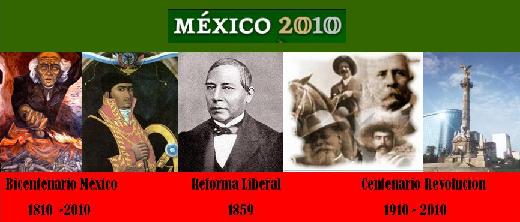
2009 is also the 150th anniversary of the Leyes de la reforma, which led to a complex reactionary movement. You should, of course, read the book , but even there, it’s recommended seeing the entire film, not just the (slightly under) four minute trailer.
It’s actually a pretty good movie, as far as costume dramas go. While probably more sympathetic to the Hapsburgs than I would like, and perhaps slighly misleading in suggesting that Benito Juarez was inspired by Abraham Lincoln (the two had much in common, and admired each other, but Juarez was very much his own man… as was Lincoln), but for that, it’s one of the few classic films based not on a novel, but on a popular non-fiction work ((Bettina Harding’s “Phantom Crown”). Aside from the oddball casting of the Austrian actor Paul Muni as the anti-Austrian Juarez, and one one Mexican among the stars (Gilbert Roland), the casting is just about perfect… besides, nobody does crazy like Bette Davis.
The glass is half-empty
MEXICO CITY (Reuters) – Mexico is suffering from its driest year in 68 years, killing crops and cattle in the countryside and forcing the government to slow the flow of water to the crowded capital.
Below-average rainfall since last year has left about 80 of Mexico’s 175 largest reservoirs less than half full, said Felipe Arreguin, a senior official at the Conagua commission, which manages the country’s water supply.
“We have zones where the reservoirs are totally full but others that don’t have even a drop of water,” he said in an interview late on Tuesday.
More than 1,000 cattle have been lost due to lack of rainfall, and up to 20 million tons of crops managed by 3.5 million small farmers are at risk of being lost, agriculture groups say.
The arid northwest region of Mexico has been hardest hit…
I can vouch for the last statement from personal experience. We should be having a good heavy rainfall every night this time of year, but so far, maybe a few hours a week if we’re lucky.
And, if dying cattle and parched orchards weren’t bad enough
Citrus greening disease has infected six citrus trees on Mexico’s Yucatan Peninsula, spread by an infestation of the Asian citrus psyllid.
The Asian citrus psyllid, or jumping plant louse, carries the bacteria that causes the plant disease, which stunts tree growth, causes premature flowering and — if it doesn’t kill the tree, leads to the production of bitter-tasting fruit. Until recently, it was only found in Asia, but has affected Florida and Brazilian fruit truees since the 1990s.


 mexfiles.net