Nothing new — beads and trinkets and marijuana
Blogging By Boz, which manages to avoid most of the “color commentary” that usually accompanies these kinds of stories, gives a good account of the latest outbreak of gangster violence:
Mexican authorities arrested Arnold Rueda Medina, one of the top figures in the La Familia cartel in Michoacan. The arrest was a serious hit to the organization and a win for Mexico’s intelligence and security forces. What happened next, however, was a sign of just how powerful some of these transnational criminal organizations have become.
Within two hours, paramilitary units controlled by La Familia attackedthe police station where Rueda was being held. Failing to free him, the group began a ten hour, eight city coordinated attack against security forces in the area. Media reports say the attackers used military grade weapons and grenades. Three police officers were killed as they responded to the scene of an accident, only to have a convoy drive by and shoot them down. Two soldiers were assassinated while returning to their barracks. 18 other police officers were wounded in the series of attacks, some of which attacked targets out in the open patroling while others assaulted buildings where security forces were located.
Two of the attackers were arrested and one killed, but it’s uncertain at this point how many attackers were involved in all of the incidents combined. It looks like the attacks were focused on security forces with no civilians targeted…
I don’t see anything new in all this, other than now the government is targeting, La Familia, one of the weirder criminal gangs. There’s nothing surprising in noting the gangsters STILL have access to weapons and communications despite U.S. promises to stop the gun trade, and the money laundering that finances these groups.
A heretical thought. Despite a doubling in narcotics use in Mexico since what the Los Angels Times calls “Calderon’s drug offensive” began, this country has very little market for the stuff.
North of the border, and they’re willing to trade objects of value for narcotics. So. I was recently reading Juan Antonio Crespo’s “Contra la historia oficial” where he mentions in passing that the colonial trade in beads and trinkets for gold was considered a fair deal. Narcotics are our “beads and trinkets.” That others are foolish enough to part with valuable items for them shouldn’t be Mexico’s problem.
It’s more than beads and trinkets and gold and a few isolated pockets of people, here. The “Times” headline suggests that the “offensive” is a presidentially directed. Which — given last week’s election results — have been repudiated by the voters. It’s not that there’s no stomach for the war (though, I doubt anyone in the U.S. would for very long support military action against a major industry in their own country), it’s that there’s no real sense of necessity. While the Times goes on about “corruption” from the narcotics trade, next to nothing is heard from the U.S. about it’s own money laundering (except when the banks collapse) nor is there any demand that political and police officials be detained on suspicion of receiving funds from any of the unsavory businesses that have brought the whole world economy to a screeching halt. Cleaning up north of the border might be a fair deal… you stop pissing away you gold — and everyone else’s — and we’ll stop sending the beads and trinkets.
Woops… missed an important date
Not Bastille Day, but the one Burro Hall caught:
It’s hard to think of another country that was so heavily controlled by a religious entity (in this case, the Catholic Church) and that so radically and suddenly handed that entity a steaming platter of Shut the Fuck Up the way Mexico did 150 years ago today. The law passed on July 12, 1859, basically nationalized all Church property (with the exception of actual churches) and suppressed religious orders. Additional laws nationalized cemeteries, separated Church and State, made births, deaths and marriages civil functions and allowed other religions to exist.
The Burro adds “it was an enormous event in the history of this country… and is, for reasons we don’t fully understand, being completely ignored on its sesquicentennial. It’s the same reason Benito Juarez’ birthday was moved to a Monday holiday. PAN has the Presidency, and is a clerical party.
Kevin G. Hall (“Miami Herald,” July 22, 2006)
Calderon’s father was among the many who took up arms in defense of the church, and it was that sense of persecution that led him in 1939 to join with other conservative Catholics to found the National Action Party, or PAN in its Spanish initials, the party whose banner Calderon appears to have carried to victory.
Unless Mexico’s Federal Electoral Tribunal overturns the disputed July 2 election, Calderon, 43, will be the first president of Mexico whose life is steeped in the brand of conservative Catholicism that gave rise to the Cristero guerrilla movement, which fought against the anti-clerical policies of Mexico’s ruling generals from 1926 to 1929.
The return of clericialism… it’s not just for FeCal anymore:
PAN officially claims to be a non-confessional party in a country that is 90% Christian; however, while on the campaign trail in 2000, Vicente Fox appeared holding a banner emblazoned with the revered icon of the Virgin of Guadalupe – and was fined MXN $20,000 for mixing religion and politics. As president, he continued to make public appearances attending mass as well as proclaiming his faith (even kissing Pope John Paul II’s ring upon his arrival in Mexico in 2002) and at times ending his speeches with a “God bless you”, enraging several sectors of Mexican society for mixing politics and religion In some cases, PAN mayors and governors have banned public employees from wearing miniskirts (Guadalajara), clamped down on the use of profanity in public marketplaces (Santiago de Querétaro), and the last and most polemical had to be with the mayor of Guanajuato City, who tried to prevent couples from kissing on the streets.

Le jour de gloire est arrivé !

Happy Bastille Day… when the French celebrate liberty, equality and fraternity… also running amok, prison breaks and wholesale head chopping.
And if you think the Himno Nacional is blood-soaked (Mexicans, at the cry of war,/ prepare the steel and the steed,/ and may the earth shake at its core/ to the cannons resounding roar!), it’s got nothing on Le Marsellaise:
Let’s go children of the fatherland,
The day of glory has arrived!
Against us tyranny’s
Bloody flag is raised! (repeat)
In the countryside, do you hear
The roaring of these fierce soldiers?
They come right to our arms
To slit the throats of our sons, our friends!
Refrain
Grab your weapons, citizens!
Form your batallions!
Let us march! Let us march!
May impure blood
Water our fields!
Of course, when tyranny’s bloody flag IS raised, you gotta stand up and make some noise.
AND A BASTILLE DAY TRIVIA QUESTION:
Besides Mexican diplomat Gilberto Bosques, who in real life arranged for European refugees to flee the Nazis via Casablanca, another Latin American political figure has an important connection to the film “Casablanca”. Who was he, and what’s his connection? Answer tomorrow.
Two padres — one fight
Hemano Juancito went to Sunday Mass. The homily (sermon) ws given by Padre Fausto. The padre is one tough hombre:
He spoke passionately about the presence of Billy Joya as a security adviser of acting president Micheletti. Joya was involved with the military group 3-16 which has been accused of torture and of collaboration with death squads. Padre Fausto then spoke of his experience of being held in a jail in the 1980s and hearing the screams of a young man who was being tortured in the jail. As they dragged his limp, tortured body past Father’s cell he heard them saying like, “You SOB, you didn’t sing today. But what will we do tomorrow to make you sing.”
Padre Fausto, also quoted Al Gore
… to the effect that “The incestuous marriage of power and money is the worst enemy of democracy” – and of the church, Padre Fausto added. Pastors need to be far from power and money.
 I’m not surprised. I’ve been re-reading Wilbur Timmon’s “Morelos of Mexico” (as far as I can tell, the only English-language study of the first great Latin American guerrilla leader) who was also one of those no-nonsense Latin American parish priests.
A poor parish priest (and even as “Generalissmo of the Republic” Morelos drew no salary. His uniform was a gift, and he only collected enough pay to cover his food … and buy an occasional cigar), Morelos’ was hardly the only cleric in that struggle. Timmons writes of the Independence-era clergy in Mexico:
… the upper clergy were to a large extent loyal to the established system… while the lower clergy divided sharply in their reaction to the rebellion. Many of the latter remained loyal, and a majority were probably neutral in the struggle; yet an important segment joined the insurrection and played a role of greater significance than their numbers would indicate. They … contributed greatly to activities concerned with press and propaganda, and soothed the consciences of their ignorant countrymen…
If a third-rate gangster like Billy Joya isn’t going to scare a guy like Padre Fausto, what chance did Royalist General Felix Maria Calleja, back in the days when the Empire was that of Napoleon Bonaparte, and the exploiting class were the Europeans (and not fellow Americans) have against Padre Jose Maria? His radical vision — as much religious as nationalist, called for racial and social equality among what he called “Americans”… the people of his homeland, free from outside control of their economic and personal destiny. And free from those who do the bidding of those outsiders.
He who dies for the true religion and for his country, does not die unhappily but gloriously. You, who wish to die for the cause of Napoleon, will end in the same way that is designed for the others. You are not the one who determines the final moment… but rather it is God, who has decided the punishment of the Europeans, and who has declared that the Americans should recover their rights. … Even if this army should be defeated, there still remains all America, which knows its rights and which is determined to destroy all gachupines… you are no longer able to deceive [Americans] with your false proclamations.
Today’s Felix Maria Calleja (who incidentally became Viceroy after a coup against the incumbent whom the elites worried was too willing to compromise with the “radicals”) — serve perhaps a different foreign master, and the “gachupines” may be from the same continent, but the issues are the same . What Padre Morelos said in the Spring of 1812 could have been said yesterday in a pulpit in Copan, Hondruas by another brave country priest.
Midterm media mish-mash — four points
A lot of nonsense (or what I see as nonsense) has been floating around regarding the midterm elections here.
First — the significance of the “huge” non-vote. It wasn’t all that huge, and doesn’t mean much of anything. Voter turnout was about 42 percent. This is actually a fairly good number, compared with similar “off-year” elections in the United States, where turnout for non-Presidential year elections has hovered around 37 percent since 1990. In other words, despite an organized political force that discourages voting (the Zapatista’s “other campaign”).
Secondly — the PRI victory is a “return to corruption” . This depends on a belief that PAN administrations governed in a markedly different way than previous PRI administrations (or, on a regional scale, PRD ones).
Although since the mid-1990s, the differences between state and party functions have been more clearly delineated, and the various parties have to compete for the chance at governance, that hasn’t altered the structure of party politics.
Like machine politics anywhere, parties reward their friends and supporters, or seek to reward potential supporters. PAN has proven no less inimical to doling out favors for, or accepting them from, its supporters than PRI. Or PRD. The only difference — as seen by Mexican voters — was that PAN’s favored clients tended to be remote from the daily concerns of the average voter, something Elisabeth Malkin picked up (possibly without being aware of it) when she wrote about a “Nostalgia for Past Corruption” in the New York Times:
“Yes, I admit the PRI is corrupt,” said Luis Osorio, a juice vendor in Mexico City, on Monday as he discussed election news with customers stopping by his stand. “So we voted for the PAN, and they turned out to be just as corrupt. They turned everything into their personal business.”
…
At the local level, where popular PRI governors operate with few controls from the federal government, the party responded to the economic meltdown with handouts of items like food and material goods.
…
The PRI tolerates a bending of the rules that allows working people, like illegal street vendors or unlicensed cabdrivers, to earn a living.
PAN’s corruption, in other words, is more like that in the United States (where, being the accepted practice, it’s not seen as corrpution)… allowing business interests to dictate national policy, or to influence legislatation (as on the television regulation bill and the special exemptions for U.S.-owned Banamex from normal regulatory oversight).
Third: Those who marked their ballots for PRI “began turning Mexico to the dark corners of its past.” This particuarly unfortunate statement came from what is otherwise a good website, “Hermanautic Circle Blog”… when it comes to art criticism. I like this site, and often link to it, but the coverage of the election was toxic.
To misquote Joseph Goebbels, “when I see the word ‘Hermanautics’ I reach for my encyclopedia.” Hemanautics is the “understanding and interpretation of linguistic and non-linguistic expressions.”. It is not — and here’s where Goebbels seems to fit in — using lingusitic and non-linguistic expressions to market a pre-conceived bias.
The post in question is headed by a huge, and highly unflatterly, photograph of PRI chair Beatriz Paredes, identified as “A new boss in town, PRI jefa…”
Paredes is not a glamour girl, but then again, the idea of judging a female politician on her looks has been considered sexist for a number of years now. And… given the comments on the article (“She looks like a chola without a Barrio”) in the reprint (Intersections), it’s obvious that was the intent. As to the “linguistics”, phrasing like “a dark return to the past” is confusing governance and party. Certainly, had Luis Echiverria not been Secretaria de gobernacion in 1968, the Tlatelolco Massacre might not have happened, but that was a government — not a party — failure.
And, if we are going to mix party and government, we have to consider the successes: taking the military out of the political arena, creating a middle class, devleoping a broad-based public education system, support for farmers, rural electrification, and on and on.
“Hermanautics Circle Blog” also mentions a “creepy alliance bloc” with the Green Party. Creepy? Sounds eeeeeviiiil. Though what’s evil about fusion campaigns I don’t know. They’re only done in a few states in the U.S. (Minnesota and New York that I know of), but it’s standard in most countries. The Greens may not be everyone’s taste, but they did fairly well, and there’s nothing “creepy” about alliances in Mexican politics. There was nothing “creepy” about the “FAP” leftist alliance (PRD, PT and Convengencia), nor the PAN-PRD alliances in the 1997-2000 legislature, responsible for several changes in governance. Coalition politics is creepy? It’s irresponsible language, and designed to create the impression that the alliance is a sinister one, not a normal political tactic common in every democratic nation.
Finally: the assumption that Calderon was popular. While polling data showed support for the “drug war” and for Calderon, even Carlos Salinas (who was despised) generally polled favorably when he was in office. People respect the President,and tend to give him the benefit of the doubt. Polls of “likely voters” showed about the results we saw in the election. Calderon, who was barely elected with a little over a third of the vote (if he was elected) benefitted in his election campaign from quasi-official support from the previous administration, good marketing and the luck of having a fragmented PRI and a polemical adversary on the left who could be spun as “dangerous”. Faced with a rebuilt, resurgent PRI, which has paid attention to its base, and widened its support (while his own party fragmented) has exposed how hollow that support actually was.
Smile for the camera
In Texas, $2 million was just pissed away over the last year ” to install cameras along the U.S.-Mexico border and broadcast the footage live over the Internet.”
The program, which depended on “virtual deputies” (some as far away as Australia) to monitor the sites, and call authorities IF they saw suspicious activity, wasn’t a TOTAL bust. At a mere $53,000 per person, 19 arrests were made.
As the inimitable Susan Dequensey (Kiss My Big Blue Butt) puts it:
So, Jim Bob wanted to sit around in his underdrawers, drinking beer, watching the border on his internet machine (between hits to porn sites, of course) and then call the pooolice when he saw Debbie Sue’s yardman come across from visiting his family?
Hell, that ain’t no waste. That’s $2 million worth of entertainment. Think of the money you saved Jim Bob on porn sites!
From “La Gringa’s Blogicito” which has been complaining about the lack of coverage of “peace marches” in Honduras (but says nary a word about the expulsion of six journalists… supposedly because the “government” can’t guarantee their safety), comes this very interesting photo of a “peace march” in Utila (one of the tourist islands on the Caribbean coast):
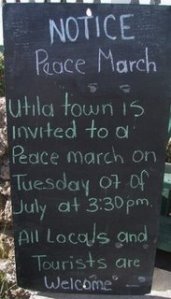 OK, so they want to let the tourists know they’re welcome to participate. What happened to the rationale by the coup-mongers that they were saving their country from foreign influence?
Given that the protest signs in the very small island enclave were ALSO in English (and some protesters were carrying the British Union Jack) attempts to spin the march as local support for the coup is almost as pathetic as Texas’ investment in entertaining Australian bar-flies.
Arms and the man in Chihuahua
Fresh from the funeral of Benjamin LeBaron and Luis Luis Widmar in Le Barón, Chihuahua, Chihuahua State Attorney General Patricia González seeks to add fuel to the fire, by giving guns to the colonists.
This might work for the break-away Mormons in Le Barón, but does this mean the State is not protecting the Mennonites? Does it also mean, as one Human Rights commissioner notes, that the State Governor is making a tacit admission that he cannot govern? That can lead to his “destitution” by Congress and replacement by the Federal Government.
I get the sense that this is a sort of “cowboys v Indians” scenario. Hermangildo Galeana — the municipio where Le Barón is located — is a desert agricultural community (mostly cattle ranching, and some sorghum and garden vegetables. And marijuana, of course). There are some gold deposits in the region, and some mining. Municipal protection is supposedly provided by the “Bando de Policía y Buen Gobierno” which may not be up to the job of keeping the neighbors from resolving their issues outside the law (it’s a huge expanse — over 1500 square kilometers and sparsely populated).
The less than 4000 inhabitants include native speakers of Tarahumara, Mixtec and Nahautl — which means most inhabitants, though Spanish-speaking, are probably also “Indians”… and Roman Catholic (about 80% of the population, according to the 2005 census estimate).
LeBaron and Widmar didn’t deserve to die, and refusing to pay kidnappers is something that should be applauded, but I’d want to know a lot more about the dynamics of the colony’s relationship with its neighbors before I started throwing weaponry into the mix. More people are going to get killed.
Speaking of shoot-outs, Mexico, Indians, farmers fighting bandits… and funerals…
Delay, Evade, Obfuscate
As the talks produced little, much of Honduras was paralyzed by strikes and protests, and cracks were emerging in the group of countries demanding the return of the ousted president.
This highly misleading header highlights Ginger Thompson’s New York Times report on the non-progress of “peace talks” related to the coup against the elected government of Honduras.
— What “cracks”? If you read the article, there is only one country where the non-recognition of the Organization of American States’ decision to suspend Honduran membership is even a question. And only from a few elected officials — from the party that lost the last election, but enjoys support within one state from an exile Cuban constituency. Guess which one that might be.
While Oscar Arias of Costa Rica (who is sponsoring the talks between the legitimate government and the de facto regime) may be hoping to avoid bloodshed, he is (willingly or not) contributing to the success of the coup by stretching out the “negotiations”. The original rationale for the coup — to prevent a non-binding referendum — has already been accomplished. Presidential elections are in November, so the longer the golpistas stay in control, the less chance any opposition to the powers that be have of organizing a democratic alternative. Meaning, there will be no change.
I’m not a fan of Zelaya, and for all I know, he’s the biggest crook in public office since George W. Bush. Not that it matters. The issue boils down to this. Do you have a shitty democracy or do you resort ot military force to resolve legal issues? If the latter, there is no law, but the law of the gun.
Every day a government imposed by a military takeover (whether ordered by a Supreme Court or not… which is dubious. If there was an arrest order for the President, he would have been served papers, not hustled onto an airplane and sent out of the jurisdiction of the court) stays in power only serves to justify “bending the law” to preserve the status quo, and to prevent democratic change in the Americas.
For those of a scholarly bent, the new “emergency blog” (I don’t know what else to call it), “Honduras Coup: 2009” is an excellent resource. There is a good analysis of the constitutional issues (the justification for the coup, though it seems to change more often than I change my socks… which now that we’re in the rainy season is likely to be twice or more a day) by Francisco Palacios Romeo, Professor of Constitutional Law at the Universidad de Zaragoza, Spain.
Alas, the good professor does not explain how Zelaya’s attempted referendum (which would have given political support to a proposal to consider constitutional changes) differed from that proposed by then-deputy Roberto Micheletti, which would have changed the constitution to allow presidents to run for a second term. Bina, back from her mysterious vacation in the Great White North dug up this tidbit, which she presents with her usual heapin’ helpin’ of healthy snark.
Apocalypse now!
The Guatemalan dictator in the early 1980s, Efraim Rios-Montt — a Pentecostal — said a “true Christian has a bible in one hand, and a machine gun in the other”. His regime launched a “scorched earth policy” against the Mayan community (the majority in Guatemala) meant to cure the Mayans of their “immaturity and illiteracy” that he claimed would make them easily swayed by “international Communism”. And, incidentally, kill off a lot of pesky Mayans, and labor leaders, and priests, and nuns, and…
Rios-Montt was an extreme example of “faith in action”, but his the mix of Evangelism and anti-communism is common in Central America. Here are two statement posted on that ex-pat gardening blog turned propaganda organ for the Honduran regime, not “comments” over which the poster might have no control, but posted by the owner to demonstrate support for the coup:
“We, as Americans, are in trouble. The US future is being written by some people that don’t have the interest of the common man and woman in mind. We are seeing the loss of two hundred years of hard won rights being sucked away from the individual. We are about to become the robots of a machine designed to have us all work day in and out just to support the few and their superior lifestyles. Our career politicians and the newly elected President are about to become the US ruling class.God help us all.
When the OAS, the UN, the BAFA and the UFO’s and A.L.I.EN.S are against a tiny country in Central America that is supporting his freedom against totalitarism and Marxism. When all of that happens, you will know that the end of this world is near, that the power of the USA is dwindling, like rome, when they put a barbarian as emperor, their empire started dwindling, they started moving their frontier backwards, and backwards, and more backwards, until those same barbarians who were afraid of them first became the ones to be feared. Beware that time. Beware for is it written it will come for a band of thugs leadered by Chavez is ready to take over the world as we know it.
Having to depend on missionaries and clerical sources for any information from Honduras (which has some of the lowest internet ownership rates in Latin America, and restrictions on the movement of ordinary citizens) may make me more aware of the religious rhetoric, but I have noticed that the Catholic Church sources are opposed to the coup (even though Michael O’Boyle reported for Reuters that Cardinal Oscar Rodriguez Maradiaga supported the coup. However:
He said those who accuse the church of siding with Honduras’ elite “are not listening”, Catholic News Service reports.
“An unemotional person would read the church’s message and would understand it,” he said.
… “Recently, I have observed something that did not previously exist in Honduras: class hatred,” the cardinal said in the interview. “”Recently, I have observed something that did not previously exist in Honduras: class hatred,” the cardinal said in the interview. “Zelaya had advisers in Venezuela, and stirring up class hatred was the strategy.”
The Cardinal, while blaming Mel Zelaya and Hugo Chavez for stirring up the “class hatred” doesn’t necessarily defend the rich, nor back the coup. Such distinctions are important, but — unfortunately — most of us who write about (or from) Latin America aren’t comfortable with the nuances of theology, nor is it something we consider of any importance. When writing Mexican history, I was fortunate to know a conservate Catholic blogger (and former newspaper editor) who wouldn’t be too put off by the messy anti-clericalism of Mexican history, and my book is better for it.
What I noted in my book, when writing about recent Catholic v. Protestant violence in the Mexican south was that:
Roman Catholicism, the traditional religion of Mexico, had always spoken of a community of believers. Evangelicals and other faiths talked more in terms of personal salvation, which made sense to poor people seeking their own individual economic or social betterment.
From “community of belivers” to “communism” is not a huge intellectual gap for those who see individualism as a value. While I found one Catholic missionary worker (connected with a group formed at Pat Roberson’s Regent University... not normally Catholic territory) supporting the coup, the only supporters I’ve found have been among the newer Evangelical communities. Jeremy Weber’s article on coup support in the Evangelical magazine, Christianity Today is headlined “Honduras coup was ‘answer to prayer’ for many evangelicals”.
Evangelical support may not be entirely by accident, or simply a matter of differing theories of salvation. Most Evangelical sects in Central America are off-shoots of the conservative “Christian Right” sects known in the United States. I thought at first Pat Roberson (who is friends with Rios-Montt) was the connection, but I’m wondering if it doesn’t go deeper.
The few U.S. politicians who support the coup, outside of those Florida politicos who need the support of the Cuban exiles, are people like South Carolina’s Senator Jim De Mint.
Besides a history as a supporter of free-trade agreements in Central America and a backer of rightist regimes in the region, DeMint is active in “The Family”, a politically powerful Evangelical organziation that has been in the news lately for unrelated reasons. Two recent U.S. political sex scandals involve other “Family” members. While I’m not particularly interested in the prurient details of the sex scandals (the subject of this news report), Jeff Sharlet’s discussion of “Family values” is frightening:
Sharett wrote a long article on the group for Harper’s back in 2003 (prominently mentioning then Congressman DeMint) and later a full-length book: “The Family: The Secret Fundamentalism at the Heart of American Power. It might be noted that Hillary Clinton is also connected with “The Family“, but has not lived in the facility mentioned in the newscast.
It might also be noted that Honduran officials (pre–Zelaya) were guests of “The Family” functions , and members of “The Family” have political ties to the political right in Central America. It would be foolish to claim a direct link between “The Family” and political upheavals in Latin America, but it is noteworthy that Evangelical organziations, with the tacit backing of the United States government, grew exponentially within Central America only in the latter part of the 20th century, and that the same themes — “free trade” with the United States, anti-communism and personal wealth creation — have been used to justify rightist coups and violence in Central America, usually by politicos connected with “The Family.”
Mexico has largely avoided the problem (and Evangelicals in Mexico are more likely to vote for the left, simply out of fear of Catholic domination by the rightist — and Catholic — PAN) perhaps accidentally, having restrictions on foreign missionary activities.
As far as I know, the Mexican organization, “la familia” (which also seeks to use Evangelical religion to extend its shadowy reach into the halls of power) is not a subsidiary organization. At least I hope not.
(Nicholas Kozloff also writes about The Family and their Central American poltical agenda on Counterpunch. I hadn’t seen his piece until after I posted mine. He includes several other “pro-coup” U.S. political figures among the “Family” members that I do).
E.D. Morel and writing for a change
It might seem eccentric, or even insane for a middle-class, ordinary “first world” type to just decide to become an expert on another part of the world, on its culture, economics and politics. Even odder is when the person takes up the task without any academic of institutional support, but — entirely as a self-taught journalist and — publishes on the foreign culture full time, depending on nothing but contributions to eke out a marginal existence while becoming an acknowledged expert in his field.
If there are any such people out there, their role model (or, perhaps patron saint) has to be Edward Dene Morel, who was born today, 10 July, 1873.
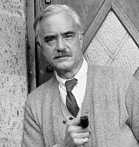
The Good: E.D. Morel, about 1920
His father, a French civil servant, died when Edward was four years old, but his English mother had stayed on in Paris for several years, working as a tutor until she could raise the money to send the boy back to England. When Edward was 15, the money ran out, but he was able to obtain a position as a clerk with the Elder-Dempster shipping line in Liverpool, which appreciated not so much that Morel could do double entry bookkeeping, but that he was fluent in French. The pay wasn’t so hot at Elder-Demster, and to supplement his income, Morel began moonlighting for the British financial press, writing on French trade policy: which, in those days, meant colonial shipping.
Elder-Demster handled shipping for Association Internationale Africaine, the corporate shell company set up by Leopold II King of the Belgians, to run the Congo Free State. The English have never been known for their mastery of other European languages, and someone needed to go over the invoices with Leopold.
Elder-Dempster handled the freight traffic fot the Belgian Congo, and Morel, going over the books, noticed something strange. The goods coming from the colony — rubber and ivory especially, had a much higher value than that on the books. Worse, the exports to the colony were not food, medicine, building supplies, or anything of value… merely copper trinkets.
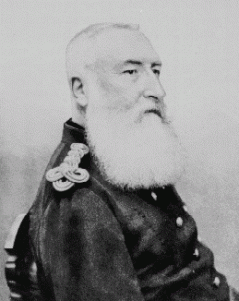
The Bad: Leopold II, CEO and rat bastard
Besides the millions in unaccounted for francs (Switzerland was even then a good tax shelter, even for kings), there was something even more disturbing on the books. There were too many guns and too much ammunition being shipped, either for the Free State itself, or various trading companies (all controlled by Leopold himself, as CEO of the interlocking businesses). Morel realized a full 80 percent of the goods shipped to the Congo were “administrative overhead” and no money was going into the Congo.
Which led Morel to a rather disturbing conclusion. He knew, from the little he knew about French colonial activities, that money wasn’t used by the African colonial subjects. They weren’t being paid… which meant they were being enslaved.
In 1900, Morel — who’d never shown any interest in politics up to this point, began publishing his research in Britigh magazines. Despite having risen through the ranks at Elder-Dempster, accusing your own company of being involved in the slave trade certainly didn’t sit well, and by 1902, he was out of a job.
By 1903, he was publishing the “West Africa Mail”. They didn’t have the internet in those days, but an ” illustrated weekly journal founded to meet the rapidly growing interest in west and central African questions,” was a close as you’d find in those days.
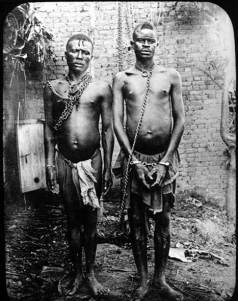
And the ugly: Congolese "workers"
It was a shoestring operation. Morel wrote most of the paper himself, joined by a few other writers who didn’t — as he did — have to support a family on contributions to a small circulation publication. A small, but influential circulation. Early readers, like Irish parliamentarian Sir Roger Casement and a Polish sea captain named Józef Teodor Konrad Korzeniowski took an interest in West African affairs and through their own work, exposed the horrors of the granddaddy of all multi-national corporate exploitations of third world resources to the world. Readers like Anatole France, Mark Twain and Arthur Conan Doyle made Morel’s “West Africa Mail” the “Daily Kos” of the anti-imperialsm set.
Morel became a leader of the Congo Reform Association, which lobbied the Belgian government to take direct control of the Colony… which it eventually did in 1908 — though not much changed overall (and the Congo is still a mess as a result of Belgian misrule and exploitation). Morel continued pushing for reforms in the Congo, in Africa and in business relations with Africa, as well as for decolonization for the rest of his career.
Having opposed British entry into the First World War, he was imprisoned, but upon his release, ran for parliament as a candidate for the new Labour party, winning a seat against Conservative candidate Winston Churchill. But, like so many that make their living from hand-to-mouth writing and political activity, he was not to have a long life, suffering a massive heart attack in 1924.
If there are any people out there crazy enough to plug away writing on decolonization, or third-world worker rights, or multinationals and their sins, or going up against kings and C.E.O’s and the “mainstream media” my sombrero is off to them… they’ve got their work cut out for them, but maybe, just maybe, they’ll do a little something worthwhile in this world. Like E.D. Morel.
Hermano Juancito writes on the Golpe de estado – day 12:
Today I received numerous copies of statements from religious orders in Honduras. None are supportive of the coup, though some are more guarded than others. But the call for “dialogue leading to negotiating,” protests against the denial of civil rights, and concern for the poorest seem to be ever present. The concern is real from these groups of men and women religious who work with the poor and know their struggles.
Onn his Spanish-language site, Juancito Honduras Brother John has posted statements condemning the coup from the:
- “Conferencia de Religiosos/as de Honduras” (sort of all-conference priests, nuns, monks and friars)
- “Provincial de los Dominicos en Centro America” (Dominican Order in Central America)
- “la Comisión Provincial de Apostolado Social (CPAS) de la Provincia Centroamericana de la Compañía de Jesús” (the Jesuits Social Policy division)
- And… a joint statement by the “Miembros de la Familia Dominicana (Orden de Predicadores), Hermanas Claretianas y Hermanas de la Misericordia” (Dominican Preachers, Claretian nuns and Sisters of Mercy),
Meanwhile, Reina Saiki, a research assistant at the National Defense Council Foundation in Alexandria, Virginia, sent her own statement to the Washington Post, also calling for peace and bread, not military solutions.
As Abraham Maslow noted in his psychological study of human motivations, for people to meet the highest needs of self-actualization, such as a sense of identity and purpose, their lower needs must be achieved first, starting with the basic physiological necessities of food, water and security.
Democratic nations can apply the same notions to avoid focusing on traditional military approaches when combating insurgents. As Richard Nixon once warned, we must disabuse ourselves of the notion that national strength is measured solely by military power and that simply by having enough of it we can feel secure.
The first group no doubt says “Deliver us from evil,” but even from the depths of Hell we’re hearing objections to settling socio-political differences with a gun.
Micheletti and company are soooo screwed.


 mexfiles.net