New Year Sunday Readings: 4 January 2009
No democracy please, we’re British
Mercopress (Montevideo, Uruguay):
In anticipation of the annual 3 January anniversary of the 1833 British occupation of the Malvinas, the occupying power announced “limited self-determination” for the islands. The 2500 mostly elderly residents will be able to elect some kind of advisory council, which can be over-ridden by Royal Governor, “in the interests of good governance”, or in relation to external affairs, defence, internal security, the administration of justice, audit, and management of the public service.
But (I hasten to add for my British friends who might take offense), apparently that’s the way those 79% of the inhabitants who claim British nationality want it. Still, the Falklands are a bit of an anomoly in the Americas.
March of the Penguins
Most Falklanders under 55 live off the island. The people there have always been outnumbered by penguins, though they seem to be leaving, too (
…This year, about 2,500 disoriented juvenile penguins traveled more than 2,500 kilometres beyond the normal point, coming ashore in Salvador, in Bahia state, 1,400 kilometres north of Sao Paulo, to the amazement of beachgoers. The penguins were rescued by IFAW and the Centre for Marine Animal Recovery, with help from other organisations and Brazilian environmental authorities.
After months of care and feeding, the 372 surviving penguins were banded and loaded onto a C-130 Hercules military plane and transported to Cassino Beach, in Pelotas, in southern Brazil.
After an overnight rest, they were released into the South Atlantic ocean, along with a few other rescued adult penguins, with the hope that they would guide the younger ones safely home to Patagonia.
About 200 people cheered them on as they waded into the surf. It was the largest penguin rescue on record, a success for animal welfare experts — but a terrible omen for the penguin population. …
March of the anti-democrats…
I shouldn’t make fun of the limited rights of the Falklanders. In the United States, fully 2/3rds of U.S. citizens only enjoy limited rights, too:
Do You Live In A Constitution-Free Zone (BS Alert):
Using data provided by the U.S. Census Bureau, the ACLU has determined that nearly 2/3 of the entire US population (197.4 million people) live within 100 miles of the US land and coastal borders.
The government is assuming extraordinary powers to stop and search individuals within this zone. This is not just about the border: This ” Constitution-Free Zone” includes most of the nation’s largest metropolitan areas.
…and anti-democracy goes marching on…
… in El Salvador, Erica Thomas writes in the NACLA Magazine:
… Since November 2007, El Salvador’s leftist party, the FMLN (Farabundo Martí National Liberation Front), has been consistently polling at a 12-14 point advantage for upcoming legislative, municipal, and presidential elections—ahead of the right-wing ARENA (National Republican Alliance) party’s presidential candidate and former national civilian police director, Rodrigo Avila, who has peaked at around 38 percent by conservative estimates. Because an FMLN victory could deal a profound loss to Washington and Wall Street by countering attempts to increase the corporate privatization of land and public services, business media and government officials have stepped up attempts to defeat them in the press and behind the scenes.
In a recent address to the American Enterprise Institute, Salvadoran Foreign Minister Marisol Argueta implored the U.S. government to intervene in the elections on ARENA’s behalf. In addition, international press reports have propagated ridiculous claims of a mounting “terrorist conspiracy” between the FMLN, the FARC in Colombia, and Hugo Chavez. Wall Street Journal editor Mary Anastasía O’Grady has complained that if the FMLN wins, foreign investors will suffer….
Speaking of the Salvadorian elections, a new addition to my Resources Page is Tim’s El Salvador Blog. I’ve been impressed especially with Tim’s coverage of the role religion plays in that country’s politics (something most English-speaking Latin American writers overlook, or oversimplify at best) and — given the out of proportion tragedy that engulfed that small nation not so long ago (and made so many of us painfully aware that the U.S. role in Latin America is anything but benign), it would be a good idea to check in on El Salvador in this election year.
Been there, done that
Charlie Edgren in the El Paso Times:
Mayor John Cook sent me a copy of an Associated Press article out of Washington that appeared in the May 21, 1942, El Paso Herald-Post. The headline was, “Senate Okays $50,000 For E.P. Border Fence.”
The article:
“The senate voted $50,000 today to build a 25-mile long barbed-wire fence along the Mexican border west of El Paso, although Minority Leader McNary questioned the wisdom of using essential materials for such a project.
” ‘How does this jibe with our good neighbor policy toward Mexico?’ McNary asked when the item came up as an amendment to a $425,703,000 appropriations bill for the State, Justice and Commerce departments and the federal judiciary.
” ‘We want to keep the good neighbor policy on both sides of the border,’ retorted Senator McCarran.
” ‘Is the fence supposed to keep out smugglers or cattle?’ McNary asked.
” ‘Smugglers,’ McCarran said.
” ‘Well,’ said McNary, shaking his head, ‘it must be quite a fence.’
“The Senate passed the measure, carrying $204,625,000 more than the House voted, and returned it to the House.
“The fence has been sought by immigration and customs authorities for years. It will simplify patrolling the border.”
That was 66 years ago. Wonder what the headlines will read in another 66 years?
Historic preservation
Do you recognize this place, and can you guess what famous American was born here?
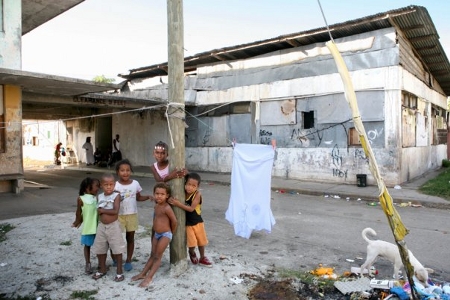
Photo: Rose Cromwell
Read on…
Not this shit again!
Two Canadian men were shot New Years Eve in a Cabo San Lucas stripper bar, but… even the Canadian press was willing to concede , the two Canadians were probably the kind who, as we used to say in Texas, “needed shootin'” :
Carrie Duncan, publisher for the English-language newspaper Gringo Gazette, said Mexican authorities questioned three of the two men’s friends who were at the bar at the time of the shooting, allegedly threatening them with jail time if they didn’t tell police who shot them.
“The police know people don’t burst into a club and target a specific group unless there was some bad blood there. Or more accurately, bad drugs,” she said.
Duncan said the threat must have worked because the three named names and a suspect has already been arrested.
In other words, this was one of those embarrassing incident a country’s media usually is quick to claim was an aberration, lest the host nation assume those country’s visitors are normally engaged in funny business, making them unwelcome in places like… oh… titty bars.
But no…. leave it to the sensationalist Canadian press to try tying to tie what apparently was a gangland rubout and a couple of drunk-i-cides into the usual package of anti-Mexican warnings:
The CBC said there has been a “string of violent incidents” involving Canadians in Mexico since 2006.
Bouabal Bounthavorn, 29, died after being shot three times in the head in his Cabo San Lucas, the media organization reported.
Domenic and Nancy Ianiero of Woodbridge, Ontario, were found with their throats slit in February 2006 near Playa del Carmen, Quintana Roo, the CBC said. It went on to name two other brutal deaths of Canadians, in éapulco and Cancún, in 2007. Both of those were deemed accidental, but relatives and friends dispute the authorities’ position.
Foreign Policy in Aisle 12?
The WTF OF THE WEEK courtesy of the award-winning* Inca Kola News:
Wal Mart (you might have heard of them) is currently buying up D&S, the Chilean supermarket chain that is market leader in its home country (via its Líder brand of supermarkets and hypermarkets) . As part of the purchase process, Wal Mart today instructed D & S that it has until January 4th to remove from its shelves all products supplied by Cuba.
Also, products from Venezuela and Iran.
Otto at the award-winning Inca Kola News* is, of course, an investment adviser, and recommends stocking up now on Cuban Rum. But, you have to ask why a Chileans can’t buy products from countries with which Chile has trade agreements, and why Wal-Mart is involved. The answer, of course, is the Helms-Burton Act, which attempted to force foreign nations to uphold the United States embargo on Cuba, by applying sanctions on businesses that did business with the Cubans. Mexico and Argentina (along with the European Union, Britain and Canada) all — very diplomatically — told Messers Helms and Burton to shove it up their ass. I haven’t really thought to look to see if Cuban products are in Mexican WalMarts, but Mexico is the largest foreign investor in the Island’s economy, and Canadians are the #1 source of tourists. You can buy cohibas or six-packs of that god-awful rum-and-cola in Mexican convenience stores without any trouble.
While I suppose a very convoluted rationale might be made for denying Chileans the right to buy Cuban cigars at low-low prices, or whatever Venezuelan or Iranian goods they might want are mysteries to me. I thought the United States — and WalMart — were all about free trade, but apparently, it means freedom to trade objects made in the Communist People’s Republic of China or the theocratic Kingdom of Saudi Arabia as opposed to those made in another Communist country, or in another theocratic state. And, as to Venezuela, which has good relations with Chile, it’s… it’s … a democratic country with a Socialist president. Just like Chile… and Bolivia… and Paraguay… and Uruguay… and Brazil … and Ecuador.
I don’t expect consistency in any country’s foreign policy, but on the other hand, I haven’t heard of private corporations being used as an arm of foreign policy since the early 1940s.
* Inca Kola News is a finalist for the “Weblogs Best Latino, Caribbean, or South American Blog” listing for 2008. Way to go, Otto!!
Traditional Friday Night Video…
Archbishop de Zumárraga had refrained from forcing the people to conform to strict Spanish religious practices. The indigenous people had enjoyed singing and dancing in their old religion, and Catholic hymns were a great hit with the people. Both European and Mexican musical instruments and rhythms enriched church services. The missionaries were less comfortable with the dancing, but as long as it didn’t have too obvious a relation to the old gods the people were free to dance in front of the church. In the 21st century, they still do.
(Gods, Gachupines and Gringos, © 2008, Richard Grabman)
Video by Pielepataan, posted on Proyecto Sikarios.
PAN-dering to bigotry and racism
Patriotism is the last refuge of a scoundrel. (Dr. Samuel Johnson)
Conservativism is the first refuge of a racist. (The Mex Files)
North of the Border, a candidate for chairman of the Republican Party is getting a lot of press for airing (not so subtly) racist views that, given his party’s rather spectacular rejection at the polls in the latest election, are being argued about as imprudent. Of course, what no one in that party wants to admit is that bigotry and racism is one of their drawing cards in elections (and, yes, before I receive comments about this statement, I am aware that Abraham Lincoln was a member of this party, and that a Senator from the other party once belonged to the KKK… 60 years ago).
In Mexico, the sitting chairman of PAN, has also made the news for bigoted and racist remarks that cannot be passed off by his party as “satire”. What makes this troubling is that PAN, which could be a respectable Capitalist party (and parties in Mexico are usually organized around economic theories) cannot overcome its roots in Fascism.
I’ve written on this before, but recently Party Chair Germán Martínez Cázares went one step beyond the “polite” antisemitism of the Mexican upper-class, creating a firestorm of protest for his slander of the Jews, and of Barack Obama.
Jacobo Zabludovsky, the son of a Polish Jew, the dean of Mexican newsmen (when Zabludovsky signed off as lead anchor on Televisa’s 24 Horas, rather than introduce a new anchorman, replaced their news program) was often accused of pandering to the state authorities. Not any more. He used his 22 December “Bucarelli” column in El Universal to condemn the not-so-secret antisemitism within PAN. My translation

Jacobo Zabludovsky, photo © 2007, El País (Madrid)
Last Tuesday’s El Universal opinion page article by Germán Martínez Cázares, national president of the National Action Party (PAN) was an unacceptable, slander against the Jews.
Martinez’ chose to comment on the fraud committed by Bernard L. Madoff which resulted in a loss calculated at fifty billion dollars to institutions and people in numerous countries. In mentioning some victims, Martinez wrote: “It is worth noting that the swindlers cleansed their sins with charitable donations to the Jewish community.”
“The swindler swindled swindlers who absolve themselves of sins with charitable gifts, and are members of the Jewish community. Martinez does not specify what sins are involved, nor which city, town or country was involved. The swindle is all the Jews’ fault. Someone confused by the strange syntax (the part of grammar that coordinates and orders words into a coherent sentence), could think that the author attributed those faults to Madoff, though logically, one would discard that thought, since nobody has mentioned that he is a charitable donor
On the contrary: among the defrauded are philanthropic and social assistance agencies. But, it’s the Jews who are said to be the swindlers, because they are Jews, and contributed to charities.
The entire article is impregnated with the vilest anti-semitism from the start. Martinez’ first sentence reads, “[Madoff] is one of those priests of the religion of the holy avarice… in New York… His congregants gave him not only their investments and money, but their confidence”. The article’s prose is sprinkled with phrases like: “the creed of greed” and asks: “How do we stop that impulse of the financially sophisticated to indulge in greed without a strong state…?”
Three different times in his short text, Martinez uses the word “avarice,” a sin attributed for centuries to the Jews. There are already enough examples of this type of anti-Jewish aggressions in human history. The most mentioned is the story of Shylock, usually from those who have never read “The Merchant of Venice” and therefore ignore the point that the moneylender preferred his pound of flesh over all the money offered him – to avenge his humiliation and the tragic loss of his daughter, NOT to make a financial gain. But, that’s another story. .
Señor. Martinez is not just any citizen. He has no right to insult citizens in public. He is an advisor to President Felipe Calderón and President of the party to which two generations of Calderóns have belonged. He is the head of the governing party. He is the political chief of deputies, governors, cabinet secretaries, and civil servants at all levels, and of all persuasions.
Is he interpreting the President’s thoughts? When he amazingly says of Madoff, “Perhaps he contributed to Barack Obama’s campaign,” is he suggesting – officially – that there is some proof of dirty money involved? Is he insinuating that “Jewish money” might compromise the next president of the United States?
It is an open secret that one important sector of PAN was founded out of the overtly anti-Semitic, and often violent, National Synarchist Party. Seventy years ago, during their heyday, the Gold Shirts, in broad daylight, turned to open anti-Semitic violence on calle 16 de Septiembre [a main downtown street in Mexico City] attacking the poet Jacobo Glanz, father of the renowned author Margo Glanz. The synarchists in PAN are still so numerous that despite being welcome in the Party, a few months ago considered re-establishing the old Synarchist one.
Their influence is undeniable. .

German Martinez, photo Senado de la República
Martinez needs be very clear on whether or not this article was his own opinion, or a public statement. Katia D’Artigues, in her “Campos Elíseos” column of last Wednesday (17 December), wrote about another political scandal in which Martinez accused Manuel Bartlett of being “the creator of the 1988 electoral fraud and the presumed assassin of [another political figure]”. The Supreme Court, writes Katia, is considering whether or not these remarks by Don German are covered by congressional immunity.
Mexico has been and is a country rooted in democratic ideas of equality and freedom, tolerance and respect. Any attempt to sow hatred against a minority not only harms that group, but tends to destroy the essence of the State and the principles on which we Mexicans have created our system of coexistence.
Mexico has enough problems. It doesn’t need any help brewing up a caudron of discrimination, especially from a party leader. But, I doubt the President will do anything about it. Or will he?
Alfredo, at Citius64 reprints the original Zabludovsky column, as well as Federico Berrueto’s 29 December piece in Milenio, which includes more on the anti-democratic roots of Mexican political parties. My own piece on the fascist history of PAN were posted 19 June 2007.
The other birthday …
Burro Hall celebrates the other quinceañera.. the ELZN turns 15 today (so do the NAFTA accords):

Deleting a post
Not often I do that, but this morning’s post on the Zetas didn’t seem right to one commentator, who pointed out either I’d completely misread what I read, or was using a bad translation. Not knowing which (probably the former), it was one of those rare times it made more sense to trash the post.
No cover up… just a minor fuck up caused by trying to write a couple miscellenous posts to have something to post over the holidays, and not paying attention to what I’m doing.
New Years Day 1959 and the new America
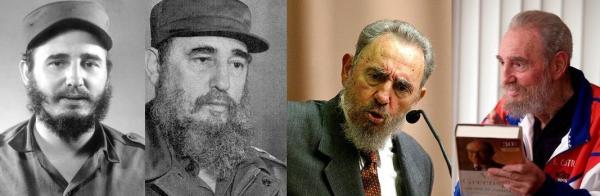
A couple of assassination attempts can really age a guy
“There is no disputing the revolution’s durability. It survived the Bay of Pigs invasion, the missile crisis and the Soviet Union’s collapse. Castro outlasted 10 US presidents and dodged countless CIA assassination attempts,” write Rory Carroll and Andres Schipani in this morning’s Guardian (U.K.).
While Fidel (and now Raul) Castro will probably go down historically as caudillos who stayed around too long, like Porfirio Diaz (whose only mistake, Alvaro Obregon once observed, was “he got old.” ), there is no denying that what happened in Cuba on New Years Day, 1959 changed much more in Latin America than the government of one island, which until that day had been a de facto U.S. colonial possession, best known for cigars, gambling and Ricky Ricardo.
The Mexican Revolution, which pre-dates the Cuban Revolution by fifty years could also arguably be called “anti-imperialist” though the concept of neo-colonialism really wasn’t much in people’s minds before World War II. Mexico’s more fluid revolutionary movement allowed it to accommodate an ideological spectrum within the leadership, and flexibility in economic and social policy. The Cubans do have better health care than in Mexico (indeed, probably better than just about anywhere in the world), and illiteray is unknown, and achieved the goal of providing heath and educational services to all inhabitants in record time, but then again, Cuba is not a huge country, and there is a single language. Mexico is sprawling (where just providing reliable roads was one of the great achievements of the last century) and multi-cultural with over fifty spoken languages.
And the Mexicans had the advantage of staging their revolution before economic theories became quasi-religions. In the United States, we forget that Socialists were a legitimate and respectable political group in the early 19th century, and Socialists ran for office (and were elected) with regularity. Anti-Mexican immigrant groups in the United States regularly claim that the Mexican Constition is based on the Soviet one, which would be a neat trick, the Mexican Constitution being written in the winter of 1916-17, and the Soviets not getting around to writing one until 1919. And even though “Socialism” came to be the accepted term in Mexican revolutionary circles, it was a strange sort of socialism, that never denied the existence of Adam Smith, or Benito Mussolini.
From the 1930s onward, economic theories became state religions. Casto’s unforgivable error was not so much tossing out the neo-imperalists who controlled the island (the U.S. and the Europeans might grumble, and they might subvert the Mexican government, but they were not going to regain direct ownership of the resources and production), but becoming the true believer of a heretical sect of the wrong “religion.” Not just a Marxist, but a “Communist”, specifically a Stalinist.
It’s impossible to say, but had the Cuban Revolution NOT baptised itself as a Communist Revolution, it might have been begrudingly accepted by the United States. Hard to say. Guatemala’s rather mild Jacobo Arbenez was overthown in a very bloody C.I.A. sponsored military coup in 1954 for expressing “socialist ideas about banana farming, and by the 1950s, any ideological heresy in the Americas was intolerant to the United States.
It probably was necessary for Cuba to change the foreign devil they knew (the United States) for the one they really didn’t (the Soviet Union). It was — and still is — an unfortunate fact of life that trade and international cooperation is largely determined by ideology and “no heretics need apply” signs are hung around the world on the doors of nation’s business offices. For what it’s worth, I think the Cubans just exchanged one set of imperialists for another.
Which may have been the only viable option in the Cold War. It’s unfortunate that the result was a “counter-reformation” in U.S. relations towards the Hemisphere, with the C.I.A. and the State Department playing Grand Inquisitor to Latin leaders, and not shy about showing the instruments of torture (and often using them). While the Cubans are said to have inspired liberation movements throughout the hemisphere, they also hardened the reaction, making genuine and startling reforms wait until the end of the Cold War.
The credit, or blame, for whatever the Cuban Revolution is, or will be, largely is due to Fidel Castro. He long overshot Porfiro Diaz’s 36 year record for control of a Latin American nation, and even Franciso Franco’s 39 years in power. True, he doesn’t hold office any more, and there have been major changes in Cuban politics and economics in the last few years, but I expect the Cuban Party will become an “Institutional Revolutionary Party” only after Fidel dies.
The First of January, 1959 is well-worth remembering, not just for what it meant to Cuba, but what it meant to the Hemisphere, and what lessons it has taught us. The new generation of “revolutionary” leaders — the “Axis of Evo” (Morales of Bolivia, Hugo Chavez in Venezuela, Fernando Lugo in Paraguay, Rafael Correa in Ecuador) — have combined the Mexican Revolutionary flexibility with the Cuban emphasis on radical and immediate material progress, the anti-yanqui rhetoric and hemispheric internationalist outlook into something we still haven’t been able to define. If it’s taken a hundred years to come to terms with the Mexican Revolution (or Revolutions) and fifty to accept the Cuban, it’s no wonder we’re still not sure what it means. Get back with me about 2060.
Hell no, we won’t go… on Global Post, Huffington Post, etc.
Is anyone NOT trying to exploit Mexican workers? If the Mex Files has any higher purpose, it’s to promote Mexican awareness among students and scholars and maybe the general public. It specifically permits reposting — with attribution — on educational and personal sites, including some very well known ones like Global Voices, American Public Television’s “WorldFocus” and the Mexico Center of the Woodrow Wilson Institute.
But recently two different commercial sites — “Global Post” and “Huffington Post” — have tried to sell me on the “benfits” of letting them use my work for their own benefit, and I’ve had to say no. Nicely once, and not so nicely now.
“Huffington” wanted me to “contibute” to some series they were running back during the interminably long U.S. Presidential campaign. The Mex Files had, occasionally, said something about that election, but it was only of marginal relevence to the Mex Files’ purpose and while I — as Richard Grabman, a U.S. citizen — might have an opinion on the U.S. election, the Mex Files, a Mexican website, did not. And certainly, Richard Grabman would expect to be paid for his work. The Huffington Post people wrote back saying “well, we’d be interested in foreign views of the election,” which is fine, but since they weren’t paying, I wasn’t interested.
Then, a few months ago, I got an e-mail from some intern at something called “Global Post” (aka “Global News Enterprises”). She wanted me to permit her for-profit company to use my writing in return for “exposure” on their proposed site. I was extremely dubious about the e-mail, both because it seemed marginally illiterate, and because there was no clear concept of what the site was hoping to accomplish (other than re-sell other people’s writing for their own profit). I sent an e-mail back to the intern with a “CC” to John Wilpers, the company’s “Director of Global Blog Development”. I told them that I write under a Creative Commons License which prohibits reprints for commerical purposes. I didn’t see any way I could grant them free reprint rights without a contract. If they wanted to enter into a contractual agreement and pay for reprint rights, I could work out something with the Creative Commons people, or publish specific pieces under a normal copyright.
I never heard back from the intern, and more or less forgot the matter until today, when John Wilpers sent me an e-mail detailing among other things technical changes I needed to make to my site to fit his site’s specifications:
Our only concern is that your RSS feed appears to be broken and, without that, we can’t get your posts into our CMS.
No, it’s not “broken”… I don’t use it… for the same reason I switched two years ago from “blogger” to “wordpress”. As my own editor (which is why my spelling and copy-editing is sometimes erratic) I control what appears on my website. Blogger ran ads, which I found annoying, when they weren’t inimicable to my own biases (I remember posting about the appalling border wall only to have an ad for the “Minutemen” at the top) and contradicted what was on Mex Files. RSS just brings in everything from selected sites, which may be a good way of promoting worthwhile sites I recommend, but not everything they do is useful to me, nor everything I do useful to them. I just don’t find it meets MY needs and MY website.
RSS ain’t broken… it’s one of those things like advertising and “blogroll” I don’t want to use. And don’t.
Secondly, with no permission whatsoever, Wilpers told me he would be “possibly” sending my work to Huffington Post and trying to sell the reprint rights (something Huffington Post knew nothing about, according to an email I received from them this morning). In return for… “exposure” and “traffic.”
“Traffic” is, as far as I can tell, the number of hits a site receives. In the Mex Files’ case, that’s around a thousand a day. Since this is a niche “publication” I don’t think that’s a bad number, nor do I expect that moving to a commercial site that sold advertising would be self-supporting (that’s why I sometimes shamelessly beg for donations).

Exposure bringing in traffic
I have no idea how much “traffic” I’d need to generate to create a viable market for advertisers, but it’s an exponentially larger shitload than I’d get writing about Mexican cultural history. Anybody who falls for this line is an idiot.
To create “traffic,” I’d have to
- Drop what little protection I have under the Creative Commons License.
- Move to a new platform, since WordPress doesn’t permit commercial advertising.
- Write something else to generate more “traffic”…
… which defeats the purpose of — as Wilpers writes — ” continu[ing] to publish your great work in a regular fashion.” I’d have to write crap about time shares and tourist attractions and Cancun hotels to generate traffic that would get the ads that drew the traffic that gets the ads that…
Fuck… I’ll just keep bugging people to send donations.
Whether people who come to The Mex Files through those sites match the “traffic” I might get IF (possibly, maybe) something was re-posted on the Huffington Post, I can’t say. But, since the Huffington Post is a general interest U.S. focused website, I doubt those numbers really mean any more than the huge number of hits I get for the post I entitled (as a joke) “Nude Gay Mexican” (which at least was about a nude, gay Mexican… and had something to do with Mexican culture and history).
Oh well.. the whole thing is an interesting variation on an old scam. You MIGHT be eligible to win big prizes, if you subscribe to some worthless piece-of-shit magazine. The only difference is here, you have to go to work for the piece of shit magazine and MAYBE will get published by someone decent (who still won’t be paying you).
Of course, people are free to use this site — for their scholarly or educational purposes, or to use reasonable exerpts for discussion purposes and are encouraged to do so. And, if they want to give my site more “expose”, and create more “traffic” that’s fine… but if you plan to make a profit off my work, you damn well better pay me.
Sobreviviremos
Is this supposed to happen?
Dec. 29 (Bloomberg) — Mexico’s foreign reserves may show a sixth straight weekly increase as a gain in the peso this month curbed central bank purchases of its own currency.
Reserves may rise “slightly” in the week ending Dec. 26, said Ruben Fernandez, a currency trader at Grupo Financiero Monex SA. Reserves climbed 5.6 percent to $85.4 billion in the week ending Dec. 19 from Nov. 14. The Bank of Mexico is slated to publish data on foreign reserve holdings tomorrow.
Peso purchases by Mexico’s central bank using dollars from its foreign reserves have tumbled in December as the Mexican currency heads for its first monthly increase since July. Banco de Mexico has bought $751 million worth of pesos this month, compared with $1.29 billion in November and $13.1 billion in October, when the currency plunged to a record low.
“There isn’t so much angst-based demand for dollars” from investors, Fernandez said in a telephone interview from his office in Mexico City. “The peso will strengthen a bit by the end of the month.”
Mexico’s peso has risen 0.2 percent so far this month after the U.S. Federal Reserve cut lending rates to as low as zero, buoying demand for higher-yielding assets. The currency plunged 15 percent in October and 5 percent in November when the deepening global credit crisis throttled demand for emerging- market securities.
With derivatives, income from oil is locked in for the next year (at about twice the barrel price) and there are plenty of foreign reserves to offset the drop in exports to the United States. No one expects the peso to return to 10 to the U.S. dollar, nor will there be any huge growth rate over the next year, but so what? The U.S. economy, dependent on continued growth seems to have forgotten that “what goes up must come down”… and the “higher you climb, the further you fall” and all those other basic truisms.
Between a government public works program and more emphasis on the domestic market the downturn won’t be so bad here. And, there’s another factor I don’t think anyone has noticed.
Local governments do not self-finance, but are dependent on federal revenues. Paul Krugman, writing in the New York Times, notes that the U.S. down-turn is going to be worse than it could be because state and local governments are having to cut back on public expenditures just as they should be expanding them:
… these governments, unlike the feds, are subject to balanced-budget rules. But even if they weren’t, running temporary deficits would be difficult. Investors, driven by fear, are refusing to buy anything except federal debt, and those states that can borrow at all are being forced to pay punitive interest rates.
With a few exceptions, there aren’t state or local taxes in Mexico, and local governments are not faced with cutting off social services in hard-hit areas. If anything, the need to boost domestic consumption may mean MORE funding for poor areas, not less.
And, then too, Mexico has always managed to muddle through.


