I´m MexFiles, and I approve this message
Guess which one of these two guys grew up in Spanish-speaking Panama?
It´s embarrassing… the Hawai´ian who never lived in Latin America — even if he is reading off a teleprompter — has a better accent than I do.
Tastes great, but looks like…
U.S. Customs and Border Protection (CBP) officers seized one and a half pounds of Mexican chorizo at the Hidalgo-Reynosa International Brige on Friday night.
Customs officials said an inspection revealed that a 21-year-old Mission woman hid the pork sausage in baby diapers.
Officers seized the chorizo sausage and fined the woman $300.
Port Director Hector A. Mancha said seizure is a reminder for area residents.
“I would like to remind the public that pork such as chorizo is prohibited from entering the United States,” he said.

Ah, SHIT!
One really big wedding…
Sophie Tedmanson at The Times (U.K.) gets the facts almost right (the wedding was at the Lions Club, and not at City Hall… and there wouldn´t be an “altar” in a civil ceremony… the only kind of wedding that counts in Mexico), but otherwise, she gets the important parts of the story right:

Manuel Uribe, 43, wed hairdresser Claudia Solis, fulfilling a birthday wish for the Mexican man who has shed an enormous 570 pounds (230 kg) from his former weight of 94 stone (590kg) over the past 12 months.
Despite his impressive weight loss, Mr Uribe, named the ‘World’s Fattest Man’ by the Guinness Book of Records in 2007, remains confined to his bed which he has not been able to leave in the past four years.
But that didn’t stop him making the 30-minute trip to the civil ceremony at a makeshift altar in a local town hall in his home town of Monterrey.
The former car parts dealer was transported to the wedding on his specially-reinforced four-poster bed, draped with cream and gold and adorned in bright sunflowers, on the back of a truck.
…
Mr Uribe’s doctors were among the 400 guests at the wedding reception which had a “low-calorie banquet” with meat, creamed mushrooms and buttered vegetables.
Mr Uribe, whose goal weight is 120kg (18st), said previously he might have a bite of wedding cake for the cameras, but would not have any more as his strict diet would not allow it…
The great thing about Uribe is he doesn´t see himself so much as a freak, as a man with a mission. Having refused surgical methods like stomach stapling, he attributes his condition to junk food, and — as the world´s now trades on his second world record, as the “biggest loser” — to promote the Fundacion Manuel Uribe (“If I can do it, so can you”) which teaches proper nutrition and natural weight loss programs.
He´s an admirable guy, but as to his honeymoon… please, no details!
A woman’s touch
Although women are beginning to break the “glass ceiling” in Mexico, it’s still usually through inheritance. While women have achieved high level positions in politics on their own, it’s still rare to find a woman business tycoon who did not inherit her stake in the business, like Grupo Modelo’s María Asunción Aramburuzabala, who had to fight her brothers-in-law for control of the company after her father’s death. And, although her business empire is under seige, another woman tycoon has managed — though elimination of her relations (by business rivals and others) to gain control of one of the larger Mexican business enterprises:
Mexico. Eduardo Arellano-Felix the alleged leader of Mexico’s Arelano-Felix Cartel was arrested on Saturday evening after a shootout in Tijuana, Mexico which is located by the US border.
Eduardo Arellano, also known as “The Doctor,” is an alleged leader of one of the most powerful drug cartels in the world: Mexico’s Arellano-Felix Cartel. He is accused of trafficking hundreds of tonnes of cocaine and marijuana to the US.
According to the Mexican defence department, police arrested the suspect on Saturday evening after chasing his car to a home in an upscale neighbourhood of Tijuana.
Mr Arellano-Felix and his sister, Enedina Arellano-Felix, took over the leadership of the cartel after several of their brothers were either arrested or killed, the Mexican authorities say. Still, Enedina Arellano-Felix is the only main suspect from the family who remains at large.
…
The Arellano-Felix family dominated the smuggling of cocaine and marijuana into California in the 1990s and are feared for its ruthless elimination of enemies. The weakening of the family has led other Mexican drug cartels to move in on Tijuana, transforming the city into a chaotic battleground in Felipe Caderon’s drug war.
Bilhá Calderón (Sendero de Peje, Jalisco)
¿QUE?… or will success spoil Eduaro Verastegui?
There are a few “Hispanic” backers of the McCain-Palin ticket, and more than a few Mexican-American cultural conservatives. But how many are beef-cake models… stumping to overturn gay marriage rights in California? As Anita Crane reported in the anti-abortion, culturally conservative Catholic site, Life Site News:
[Eduardo] Verastegui said, “I am endorsing Sen. McCain for president because of his commitments to end abortion, protect traditional marriage and fix immigration law.”
On Gov. Palin’s leadership, he said, “I love her. She’s a great role model for women.”
Verastegui has spoken at several McCain-Palin rallies. In Miami, the capital of Latin America and the first U.S. city where Verastegui lived, he campaigned for John McCain with McCain’s Senate allies Joe Lieberman and Mel Martinez, as well as Florida’s former governor, Jeb Bush and Governor Charlie Crist.
After a career in Mexico as a model, singer and telenovela actor, Verasteui recently has made a name for himself (somewhat) in “Bella” — an independent film that won awards in Toronto and Indianapolis — about a chef trying to convince a pregnant and unwed waitress not to have an abortion. That, and apparently long-held traditional Catholic beliefs, have made Verastegui the front man for an Evangelical Protestant “traditional values” organization, “Viva la Familia” — and the great brown hope for the McCain campaign.
He’s got every right to believe what he wants, but it’s likely to cost him some fans. Matthew Cullinan Hoffman (alos in “Life Site News” , which is pumping the guy as of late) writes of the reaction among his Mexico City fan base:
Mexican-American movie star Eduardo Verastegui has begun campaigning against California’s homosexual “marriage” law, and is incurring the wrath of Mexican homosexuals as a result.
Following Verastegui’s reported decision to lead the campaign for the Hispanic organization “Viva la Familia” (Long Live the Family) enraged members of “Tri Gay”, Mexico’s self-proclaimed “gay soccer selection” expressed their displeasure against the pro-life, pro-family actor and entertainer.
At a press conference on October 22 in the offices of Mexico’s Secretary of Health, the team denounced Verastegui. The vice-president of Tri Gay, Eduardo Velasquez, tore up a picture of the star.
Kyle Munzenrieder, in the Miami New Times also has a few questions about Verastegui’s career make-over:
Dude is an outspoken opponent of abortion and Obama. He even did a Spanish language seven minute video on Obama’s stance on abortion which included graphic images. Apparently he’s a born-again Catholic. He also has publicly supported California’s Prop. 8, which would ban gay marriage.
So here is the question: If this dude clearly had no problem exploiting his body and sexuality for his professional advancement, where does he get off telling women what to do with their bodies and reproductive rights? I’ve always tended to be sympathetic to the right’s view that most celebrities –especially those with out artistic virtue– should keep their mouths fastened shut when it comes to politics (paging Susan Sarandon), and this guy could use a whole lot of duct tape.
That’s easy… look at the pre-born-again and post-born-again pix… the dude was tired of waxing (and maybe the McCain Campaign offered to buy some clothes):


Local economy to get a tuna-up?
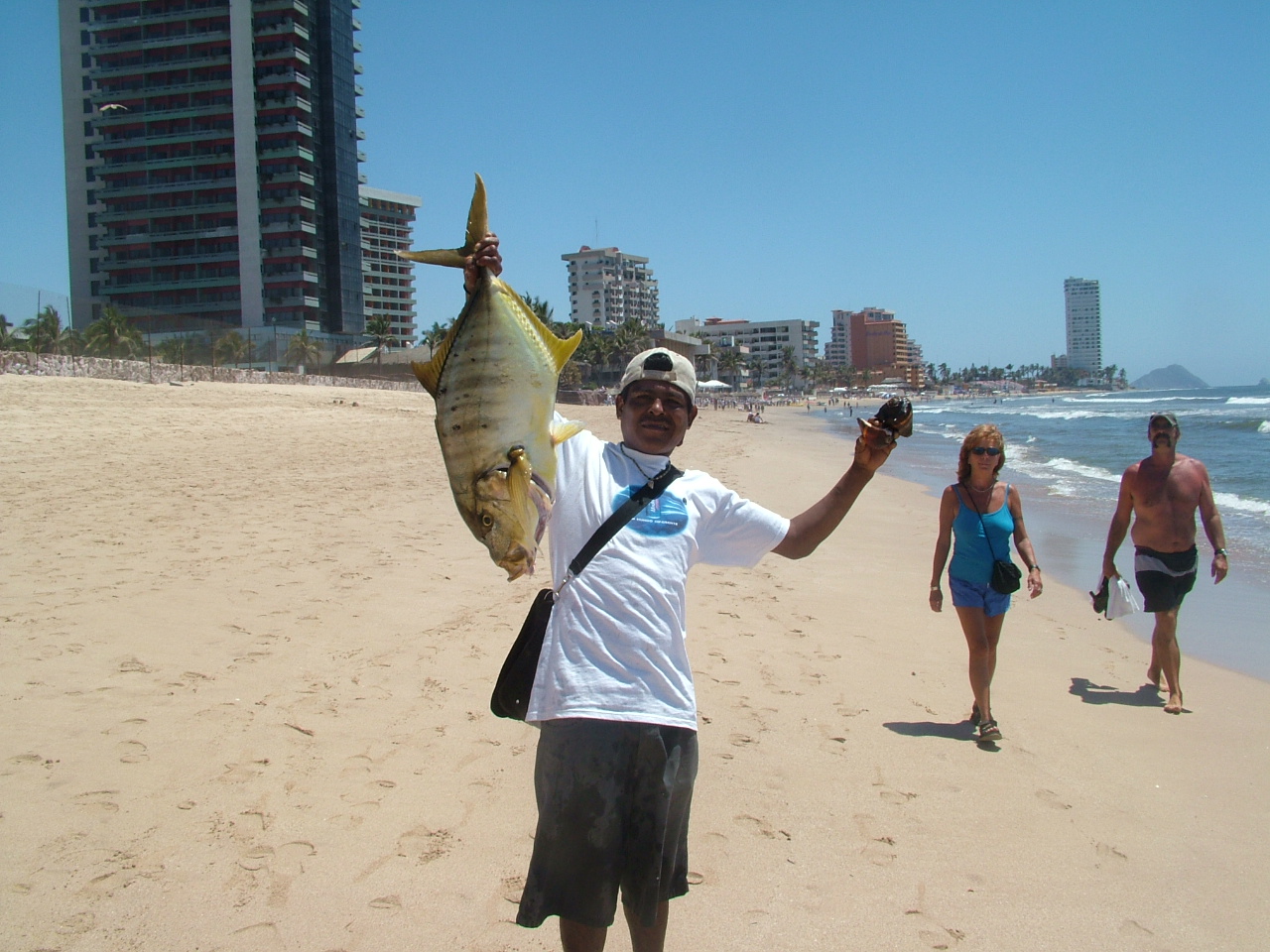
Mazatlan -- where the beaches are lined with tuna
Since, with everyone’s income falling, and we’re all likely to be eating more tuna — and because I live in town where tuna is economically important (both sports fishing and commercial fisheries) — and, if the wind is blowing the right way, I wake up and smell the tuna from Mazatun cannery … this item from the Times of India is worth posting:
MEXICO CITY: The Mexican government says it has formally requested World Trade Organization consultations on US labeling restrictions that it says effectively exclude Mexican tuna from the US market.
Mexico claims its tuna complies with international standards on reducing the accidental capture of dolphins. But US rules prohibit Mexico from using the “dolphin-safe” label needed to sell the product in the United States.
Mexico’s Department said Friday in a statement that the restrictions have shut down a third of the Mexican tuna fleet.
US officials were not available to comment. If WTO talks between the two countries fail to resolve the dispute, Mexico can ask the world trade watchdog to set up a panel to rule on it.
Although the Mazatlan fleet uses “long lines” which meets the rather loose requirements for being “dolphin-safe”, U.S. food companies and fisheries owners fended off Mexican competition by claiming the Mazatlan catch was contaminated with other things. Admittedly, at one time, our tuna canneries were involved in some side businesses:
In 1989, the Salinas Administration began privatizing the Mexican tuna industry, which had been largely created by the government during the oil boom of the early 1980’s. Several major fleets and canneries, it turns out, were purchased as joint ventures by the Tijuana Cartel, which dominates the drug smuggling into California, and the Cali Cartel. Castrillon, supplied with several Mexican passports, is a co-owner using the Mexican alias Jacinto Natalio Ruiloga Tovar.
Not only did the two notorious cartels own tuna fleets in Baja California, home base of the Tijuana Cartel, but they also bought the largest tuna operation in the Western Hemisphere, the ten-boat Pescadora Azteca de Mazatlan fleet. And they bought the giant PINSA tuna cannery in Mazatlan, which is supplied by the Pescadora Azteca fleet.
The tuna/cocaine pipeline was first exposed publicly in July 1995 when a U.S. Coast Guard cutter intercepted one of Castrillon’s Panama-flagged tuna boats, the Nataly I, as it sailed north 780 miles west of Peru – far beyond the range of the anti-drug radar net. It was headed for a desert island 700 miles off the coast of Mexico, a regular rendezvous point for the Cali Cartel fleets to transfer multi-ton cocaine shipments to Mexican tunaboats, which then delivered the drugs to canneries in Ensenada, La Paz, Mazatlan, Manzanillo and other west coast ports.
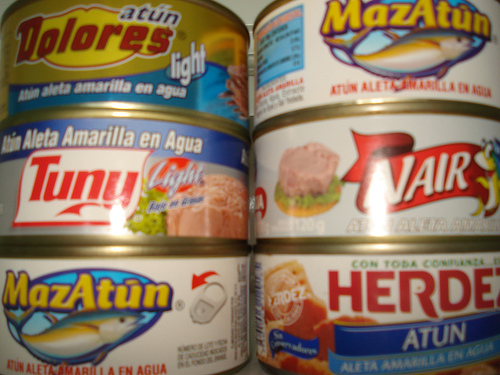
That “pipeline” has been effectively shut down, but who knows. I kinda wonder why I get jittery when my tuna stash runs low.
Sunday readings (and the funny pages): 26-October-2007
Now showing
Along the Malecon tours Havana’s Interior Ministry Museum:
A stuffed German Shepherd and a rock once used to hide spy gear are among the curiosities at Havana’s little-known Museum of the Ministry of the Interior.
The museum is hidden in plain sight along Quinta Avenida in Miramar. A TripAdvisor traveler calls it “a true hidden gem”
… Museum displays include black-and-white photos of purported CIA agents sneaking around in Cuba as they try to drop off money and supplies for dissidents in the 1980s. Cuban agents caught the CIA on film and video and blew the agents’ cover. I understand that the CIA had to change its tactics in Cuba after that, relying more on electronic surveillance than fieldwork.
When Baker visited, the well-preserved German Shepherd – evidently a former Cuban police dog – was among the exhibits.
Sweet dreams are made of these…
The “sugar economy” of the 21st century may not be so sweet, Hope Shand writes in Foreign Policy in Focus:
Peak oil, skyrocketing fuel costs, and the climate crisis are driving corporate enthusiasm for a “biological engineering revolution” that some predict will dramatically transform industrial production of food, energy, materials, medicine, and the ecosystem. Advocates of converging technologies promise a greener, cleaner post-petroleum future, where the production of economically important compounds depends not on fossil fuels but on biological manufacturing platforms fueled by plant sugars. It may sound sweet and clean. But the “sugar economy” will be the catalyst for a corporate grab on all plant matter as well as the destruction of biodiversity on a massive scale.
Stayin’ alive, stayin’ alive…
Mexico News and Reviews offers Five Tips for Staying Alive on Your Mexican Vacation. My favorite:
4) Stay off of your balcony when you are drunk:
Perhaps it’s carelessness inspired by their access to universal healthcare, but Canadians have by far cornered the market for falling to their deaths after drunkenly cavorting on a high rise hotel balcony.
You might feel like it, but I assure you, you are not Superman.
The old terrorist and the candidate of change…
… are the same guy in today’s mayoral elections in Rio de Janeiro. Alexi Barrionuevo profiles Fernando Gabeira in the Sunday New York Times:
In September 1969, Fernando Gabeira helped kidnap the American ambassador to Brazil to protest the military government’s oppressive dictatorship here. On Sunday, he could become this city’s next mayor.
Mr. Gabeira at a military tribunal in Rio in 1970, where he was convicted for his role in kidnapping the American ambassador.
In the nearly four decades since that episode catapulted Mr. Gabeira into Brazilian history, the former student militant, now 67, has become a respected writer, congressman and symbol of the left here — although a photo of him wearing a woman’s bikini bottom also made him a sex symbol of sorts.
Now the slender, soft-spoken former guerrilla has a chance to help chart the future of a city that many say is crying out for radical redefinition after decades of steadily losing its place as a diplomatic and business hub in Brazil…
See ya’ in the funny pages.
Quico, at Caracas Chronicles, is a lively writer on the very active Venezuelan opposition, often cited by those searching for some evidence that the country is a dictatorship. Its not a perfect country, but…
For a country where the standard of political commentary is, erm, not always what one might hope for, Venezuela sure produces a freakish number of really brilliant editorial cartoonists.
…
 In Venezuela it’s perfectly normal for the guy who scribbles the newspaper funnies to get commissioned for a vast roadside mural and sell his more “serious” work in super fancy galleries, where art collectors compete for signed originals of their more celebrated strips. It’s the editorial cartoonist as public intellectual, in the sense Edward Said envisioned…
No talk of walls… just talk
Whenever challenged on their anti-Mexican statements, anti-immigration folks in the U.S. try to talk about the way Guatemalan immigrants are treated in Mexico. Earlier this year, Mexico reduced the penalties for being an undocumented alien, reducing it to a fine. So much for the justification the U.S. had for incarcerating “illegals” on the flimsy excuse that “Mexicans do it too” (or, what I call the “Mommy, he did it first” defense). Now that the excuse for anti-immigration rhetoric is crime prevention, this small item (the only English-language source I could find being the Cuban government controlled Prensa Latina) is worth passing along.
Guatemala, Oct 23 (Prensa Latina) Guatemala President Alvaro Colom is to meet Thursday governors from four south-eastern Mexican states to analyze border problems and ways to develop that area.
The meeting will take place at the main square of the ancient Maya city of Tikal, in the northern department of Peten, and attended by top representatives from Campeche, Chiapas, Quintana Roo and Tabasco.
Also on the list is Mexican Foreign Affairs Secretary Patricia Espinosa, her Guatemalan peer Harold Rodas, as well as Interior ministers from both countries and ministers of Defense, Health and Culture of Guatemala.
The two nations will tackle security, the fight against drug trafficking and people smuggling, migration, environment and trade.
President Colom’s government announced a plan to erradicate drug trafficking in the country, which will deploy 15,000 new policemen in the streets and reinforce the military presence on the borderline.
Guatemala and Mexico share a 954-mile border and the two countries have expressed their interest in increasing security in the region and turning it into a zone of opportunities for people.
Among bi-national projects are the management of biosphere reserves and basins, as well as possible joint infrastructure works to benefit people in both sides of the border.
Details, details…
Gee, other than losing 30% of the value of my money over the last couple of weeks hasn’t been as traumatic as I thought it might be. But then, 30 percent of almost nothin’ doesn’t amount to a whole heck of a lot. And prices for essentials haven’t gone up… yet. Right now, this is a bargain for the tourists (who aren’t freaked out by the financial upsets at home and are traveling), but — as this short article from Mercopress (Uruguay) points out — while the economic situation isn’t necessarily bleak here, there could be a serious problem coming up soon.
The Deputy governor of the Bank of Mexico (central bank) Everardo Elizondo revealed that between October 8 and 23 the bank had intervened in the market pumping 13 billion US dollars to prop the local currency.
Since last August 4, the Mexican peso has depreciated 39% against the US dollar.
Elizonod warned that the increase in the value of the US dollar in Mexico could have an impact on inflation, on real income and further pressures on the stability of the Mexican financial system.
However the president of Mexico Business Council, CCE, although praising the performance of the central bank said that the risk of inflation was contained.
“The intervention of Banxico (Bank of Mexico) to control the value of the peso against the US dollar has been adequate”, said Armando Paredes, CCE president.
“It’s essential for Mexican corporations to have US dollar liquidity”, said Paredes addressing the Mexican Foreign Trade, Investment and Technology Council.
But he warned that the exchange rate will have an impact on food “and the full cost can’t be transferred”. He forecasted that in a few weeks financial markets will begin to loose volatility and the US dollar “should stabilize in the range of 11.50 to 12.50 pesos”.
So, nothing to worry about. Food? Who needs food, right?
I guess we’ve all decided to overlook the role agricultural pricing policies (and lack thereof) play in the U.S. economic crisis.
Friday Nite Video for my peeps at Homeland Security
HEY, look what I stumbled across the other morning:

YUP… the Department of Homeland Security checks out the Mex Files from time to time. This is the post they were looking at (yeah, maybe I shouldn’t use “Terrorist” and “Border” in the same headline). I don’t record the length of visit, so it may have only been a second or so… still, it’s the thought that counts.
To perk things up for those bureaucrats… here’s a Lola Beltran-influenced cancion singer, and 2008 American Latino Media Arts (ALMA) “Trailblazer” honoree Linda Ronstadt working in one of her many, many musical styles with an appropriate song from George and Ira Gershwin:
Puffed Rice… or “Heck of a job, Felipe!”
During his presidential campaign, Calderón said he would rule Mexico with a “firm hand.” That firm hand has predictably turned into an iron fist. There are currently 40,000 federal soldiers deployed in 11 states. Since Calderón declared open war on organized crime a year and a half ago,
- Over 4,152 people have died in drug-related deaths;
- 87 unresolved formal complaints of crimes against journalists have accumulated in the Mexican Attorney General’s office;
- Mexico’s National Human Rights Commission has documented 634 cases of military abuse;
- The country’s homicide rate has increased by 47 percent;
- And there have been at least 223 disappearances during Calderón’s term so far – 23-30 political disappearances and approximately 200 cartel-related disappearances.
To make matters worse, on July 1, 2008, videos surfaced showing US-based private contractors torturing police in León, Guanajuato, as part of a course aimed at preparing the cops for the war on organized crime. Mexican press and human rights organizations say the police were tortured so that they learn to torture. The courses were initiated, paid for, and defended by local officials from Calderón’s National Action Party (PAN).
Meanwhile, Condaleeze Rice has come to Puerto Vallera to shore up support from the largely irrelevant Bush Administration for the Calderon Administration’s continued “war on (some) drugs”. Apparently, the other couple of wars the United States is not fighting by proxy, the internationally condemned practice of keeping an foriegn penal colony open, and the world-wide disaster brought on by the Bushista’s decision to save bankers and investement brokers from their own stupidity isn’t important enough to keep the Secretary of State occupied during her remaining tenure. The United States has ignored the drug/gun/money laundering issue (along with the immigration issue, and the destruction done to Mexican agriculture by U.S. farm policy), so I suppose they have to pretend they’re paying some attentin to their neighbors. And, heck, if I was Condaleeze Rice, I might want to get away to Puerto Vallerta for a few days too.
Having ignored Mexico except for when the administration can sell weapons to this country. It’s a little late in the day for it to be dawning on the U.S. that this drug war is their problem:
The Bush administration increasingly sees the violent clashes in Mexico as a threat to American security…
Even though the White House successfully pushed through Congress $400 million in aid for Mexico’s antidrug effort, Mr. Calderón has complained of the need for even more focused attention from the United States. Not only is America the world’s largest market for illegal narcotics, but it also provides much of the weaponry used by Mexican cartels.
Much? Try MOST.


