Shhhhhh! It happens…
Outside a few of the geezer-oriented right wing nut sites (here’s looking at you, “Free Republic”), not much can be said about this, though of course geezers gotta geeze.
(CNN)Two US soldiers were questioned by Mexican troops earlier this month while conducting a surveillance operation on the US side of the southern border, two US defense officials tell CNN.
America’s first line of defense.
“On April 13, 2019, at approximately 2 p.m. CDT, five to six Mexican military personnel questioned two U.S. Army soldiers who were conducting border support operations in an unmarked (Customs and Border Protection) vehicle near the southwest border in the vicinity of Clint, Texas,” US Northern Command told CNN in a statement.
“The US soldiers were appropriately in US territory” during the encounter, the statement added.
[…]
The encounter took place south of the border fence in the area but north of the Rio Grande, the officials said.
However, the officials said the river in that area consists of brush-filled and dried-out riverbed, making it “very easy” for people to be confused as to what side of the border they are on.

I sure the fighting keyboard brigades will disagree, but it appears the U.S. has ceded the territory south of LA GRAN MURALLA™ to Mexico, as surely as Mexico ceded the land between the Rio Nueces and Rio Bravo del Norte to Texas when General Santa Anna withdrew below the Rio Bravo and the Texas called it the “Treaty [sic] of Velasco”.
And, are we sure that land below the wall in Clint IS in the United States? The border river changes, the original survey was done as inexpensively as possible and mistakes were made, and it really isn’t all that well marked.
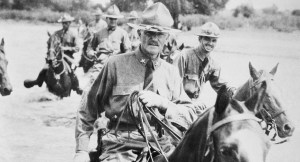
Speaking of border incidents..
Still, I do enjoy (in a twisted way) reading the comments from people who are in no shape, condition, or have the least bit of familiarity with the area to say anything useful. “Remember the Alamo”… besides being a bit of a cliché really has nothing to do with United States history to begin with, and besides, it’s remembered as a battle won by the Mexicans. “Where’s General Pershing when we need him?” shows a bit more insight, though the Pershingistas forget that the only battle during the Pershing Expedition ended with U.S. troops surrendering to the Mexican Army and Pershing being ordered by President Carranza to stop all movements South, East, or West of their present position, but to start moving the one direction that was left.
 I’d ask where was Abe Lincoln, who famously lost his congressional seat in 1848 for continuing to ask exactly where, as President Polk had claimed to justify the invasion and occupation (and later annexation) of northern Mexico, “American blood was spilled on American soil”.
No blood was shed, it’s not all that clear this was US territory (though we’ll cede that point for now) and nothing really happened. So… that…. is ….. that.
Stupid politician tricks…
When it comes to stupid politicians, something there is that loves a wall. Although this one will never beat the one pulled by Raj Peter Bhakta … a Republican candidate for the 13th District U.S. House of Representatives seat in Eastern Pennsylvania who was running in 2006 on his “fame” as a a former star on the NBC show “The Apprentice,” (yeah, the show where some guy named Donald Trump would yell “You’re fired!” at people)… but it deserves an honorable mention.
Duncan Hunter, a Republican house member for the 50th California Congressional District, is apparently facing a serious challenge from his Democratic opponent. Hunter, a ally of Donald Trump (Bhakta’s one time co-star?) has been running on an anti-immigration platform (and some other stupid ideas), so had the bright idea of having himself filmed crossing from Mexico into the United States. One… teeny…. weeny… problem. Hunter is out on bail, pending his trial on federal corruption charges, and — as a condition of his bail — cannot leave the confines of the continental United States.
Whoops!

Wrong foot forward
An interesting thread on a facebook page for foreigners in Mexico City asked people what their biggest mistake was when they move to Mexico. The original poster appears to be someone for whom English and Spanish are both acquired languages, and many of the responses dealt with personal problems (one woman posted that she should have checked out Mexican tax law before moving here, several people — whose names suggested they came from countries with a alphabet other than Roman lettering said they should have had documents translated and apostilled before coming here (though, for things like birth certificates, professional licenses and maybe diplomas, that’s not a bad idea, no matter what language other than Spanish they were originally in). And, the #1 “mistake” mentioned was, unsurprisingly, not learning Spanish.
I agree, people SHOULD learn the language of the country to which they immigrate (ok… for most of them… “espatriate” themselves), but accept that it’s not always possible, especially for people from the US, where so many of us suffer from an otherwise excellent educational system, but are fortunate to have taken 2 years of French in high school. And, while the query was in a Mexico City focused site (and Mexico City’s foreigners are less likely to be the stereotyped retiree looking for a cheap and sunny place) it’s understandable that older emigres are going to be less linguistically flexible. And, of course, in every society people complain about immigrants not learning the majority language.
But even not being able to speak Spanish (let alone Nahuatl, or Otomí or one of the 30 Mayan languages, or any of the 60-odd national languages in Mexico), there are some common mistakes newcomers make… though I can’t speak for all foreigners, not even for all global northerners, people from the US, or even people raised in New York, long-time resident of Texas, and mid-life immigrant to Mexico, I’m going to offer some “what we do wrong” observations anyway.
Lift up the brown man’s burden…
Yes, of course people WANT to move here, for all kinds of reasons. Financial ones are nuts, in my opinion, and I can’t fault anyone for wanting to come here before they retire, but I see an assumption among some people that their particular job skill (or what they think is a job skill) will qualify them to work here, and that,,, being a “first worlder” …. Mexican employers are anxious to employ them. Sure, there are still those “Business English” schools that pay anyone live and breathing with an undergraduate degree to teach English… sort of (I did this for a few years, and whether I did more damage than good is something I wonder about). Not that there aren’t openings for qualified ESL teachers or agronmists who speak Spanish, or geologists, but it’s not like Mexico doesn’t have nurses, and massage therapists and computer programmers and tax accounts and chefs and marketing placement specialists (whatever they are) and…
You get the idea. Intentionally or otherwise, wannabe migrants too often suggest they deserve to be hired, because, well… they’re from the “advanced” world. A little secret: Mexican managers often have advanced degrees themselves (I had one student, looking just to polish her English, with both a law and accounting degree, and a masters’ in foreign policy to boot; another with a doctorate in psychology, who spoke German, Hebrew, Catalan, and Finnish… no idea why he learned Finnish): people unlikely to be impressed with a bachelor of arts degree from East Texas Baptist Women’s College, or any prestigious university no one has ever heard of outside the English speaking world.
And, on the other hand, managers almost expect their foreign job seekers to try to pull the “white privilege card”, and are going to consider how well a prospect fits into the Mexican corporate structure. Not to mention, outside of a few, mostly foreign owned and with a foreign clientele, companies, are employers likely to hire people without working papers.
Don’t, don’t you love me?
Yes, one generally does receive permission to stay in Mexico for 180 days, but not always. And, that is no guarantee that a person will be able to stay after that time, or … if they’re a “border jumper”… that they’ll be able to return. the immigration authorities are pretty relaxed about those “FMM” (Forma Migratoria Multiplé) and don’t normally care even if it has expired, but … given the uncertainty of the person’s status, is it at all strange that landlords are reluctant to sign a lease, or employers are willing to risk hiring people not legally permitted to work, or that banks don’t always accept them as customers? Being a nice person is not enough, I’m afraid. Having been an “illegal alien” for a time here myself (back before the FMM even existed), I can’t fault people for coming in without definite plans and just staying, or … not knowing that the FMM is not a visa or residency permit, just a generic entry card for everyone from tourists to asylum seekers to journalists covering a specific event, scientists meeting with colleagues, and business visitors, do try to establish themselves. But, the experience can be frustrating, and the temptation to decide the Mexicans are anti-gringo, or just creating bureaucratic hurdles (unlike, say, those Mexicans moving to the United States face?) or assuming landladies just won’t rent to foreigners because they are bigots, is an easy first mistake to make.
My Mexican friend…
Even those who come “the right way”… or more realistically, either have the bucks to get a residency permit based on their foreign income, or had arranged a job ahead of time, and went through the process of obtaining a working residency vista, or come as the spouse or dependent of a Mexican national… there’s the common mistake of assuming the one or two Mexicans you know are Mexico as a whole. I saw this more when I lived in a beach town with a large “gringo ghetto” of retirees. Perfectly nice people, but … their “Mexican friend” being either the neighbor who could also afford a condo in the same resort community, or the waiter who speaks English (having been deported after 15 years in Los Angeles) or their cleaning woman. One, or two, or three Mexicans does not a people make. It’s not a crime, but it is something of a shame, when intelligent, interested people make their assumptions about a country based on limited information.
Just as it is when a foreigner moves to one location, and doesn’t at least venture out of their comfort (or slightly discomfortable, but tolerable) zone. Oh, I know… I still see Mexico through the lens of “progressive” middle-class Mexico City… but I’ve been around, I watch the news, read the local media, talk to people. I didn’t make the mistake (mostly by sheer luck) of not ending up in Condesa or Roma, unaware of anything outside my neighborhood, and my perception of the country that of a few square blocks of the metropolis. I admit, I am bemused when I read queries looking for something like ingredients for Chinese cuisine … in Roma or nearby (Barrio Chino is only a short Metrobus ride away) or people excited to find some Canadian brand of coffee in a shop, or… complaints that U.S. Netflix programs aren’t available on their cable service here, and there’s nothing BAD about wanting Chinese herbs, or Canadian coffee or having a favorite TV show… just the mistake of missing out on what it’s like to live in a wildly multicultural and mixed-culture country.
And, of course, there two basic errors I hope no one here every makes: not reading Mexican history, and not reading MexFiles!
Ahem…

Nôtre Dame
Rocha in today’s La Jornada:

FUEGO EN NOTRE DAME
Conquest 2.0
The German-born Emmanuel Leutze is responsible for much of our mythic imaginings of American history (his most famous work was “Washington Crossing the Delaware”), his 1848 “Storming of the Tecalli by Cortez and His Troops” very much one of “American history”… or at least as he saw it in his time. After all, the United States was still occupying Mexico City, and … for the United States troops, the massacre of 22 May 1520 resonated north of the border as the “conquest” of the “halls of Montezuma”.

Emanuel Leutze “Storming of the teocalli by Cortez and his troops” (1848) detail.
Border security… 1851
Of all the odd things to be reading: Millard Fillmore’s Second Annual Message (what today is called the “State of the Union Address). An “accidental president”, as a Whig Member of Congress, he had been an early opponent of the Mexican-American War. As a compromise within his own party, he was the Vice.Presidential candidate in 1848, when the party’s Presidential candidate was the apolitical “hero” of that “unjust invasion by the North Americans”, Zachary Taylor (Taylor was also a southern, and Fillmore from western New York, adding geographical balance to the ticket). When Taylor died (apparently of food poisoning from something he ate at a 4th of July picnic) on July 9 1850, Fillmore became 13th president of the United States.
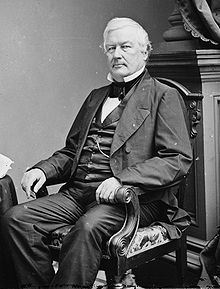 While remembered, if at all, as supposedly one of the worst U.S. presidents (his reputation never recovered from his refusal to veto the Fugitive Slave Act of 1850), and the one with the silliest name, he deserves some credit for being one of the few U.S. Presidents (Abraham Lincoln, Ulysses S. Grant, and maybe Lyndon Johnson being the others) who genuinely wanted nothing more from Mexico than decent relations, and was anxious that Mexican citizens in the United States received equal protection under the law.
In that address of 2 December 1851, Fillmore mentions an executive order forbidding U.S: citizens to take part in military and paramilitary operations in Mexico… aimed squarely at the “filibusters” of the era, the adventurers who would cross the border (or, a few years later, invade Nicaragua) usually bent on annexing territory to the United States, or setting up their own small independent republics. He also directs the U.S. Army to protect Mexico from Indian raids, and to protect Mexican citizens in the then newly acquired U.S. territories on the same basis as they protected Americans.
The border itself was still being surveyed, and… while there had to be some kind of demarcation, it wasn’t something he was willing to spend too much money on.
The joint commission under the treaty of Guadalupe Hidalgo has been actively engaged in running and marking the boundary line between the United States and Mexico. It was stated in the last annual report of the Secretary of the Interior that the initial point on the Pacific and the point of junction of the Gila with the Colorado River had been determined and the intervening line, about 150 miles in length, run and marked by temporary monuments. Since that time a monument of marble has been erected at the initial point, and permanent landmarks of iron have been placed at suitable distances along the line.
The initial point on the Rio Grande has also been fixed by the commissioners, at latitude 32 degrees 22′, and at the date of the last communication the survey of the line had been made thence westward about 150 miles to the neighborhood of the copper mines. The commission on our part was at first organized on a scale which experience proved to be unwieldy and attended with unnecessary expense. Orders have therefore been issued for the reduction of the number of persons employed within the smallest limits consistent with the safety of those engaged in the service and the prompt and efficient execution of their important duties.
OOPS!!!
I was tied up with other things (including sorting through piles of documents for a revision of Gods, Gauchupines and Gringos… including a masters’ thesis on the inqusition’s ruling on the right of an intersex to marry.. really! More on that a bit later) and neglected to pay the domain fee. So… in a panic, I’ve bought BOTH an upgraded wordpress domain AND paid “names.com”.
So… I was down for a while, and just shelled out about 50 US. Not a big deal, but there is a (ahem) donate button over to the right of this page.
I’d say schizophrenic, but bipolar fits
The United States government’s immigration policy is bipolar: wide open to foreigners entering the country, and immediately denying them the opportunity to do so, said Tonatiuh Guillén, commissioner of the National Institute of Migration (INM).
He said this in the context that Mexico is in the middle – a sandwich – as a country of transit for thousands of people daily.
Speaking at a forum entitled “Labor, civic and social insertion of the migrant in an Open Mexico,” the immigration official spoke of the need for regional development, and the strengthening of family unification, as ways to address the phenomenon.
He reiterated that the current government plan is to expand opportunities for labor in the region, to the beneift of Guatemalans, Hondurans, and Salvadorians.
Fr. Flor María Rigoni, from the Scalabrini Migrant Shelters Network added that the recent caravans, which have entered Mexico since October, are more than the usual migration.
[Alluding to the “Arab Spring” and other social movements, the priest called the migrant caravans “A revolutionary Spring no one expected, based in economic, political and social models that have reduced millions of persons to the edge.]
The director of the Mexican Comision for Aid to Refugees, Andrés Ramirez, added that a new immigration policy for Mexico must be based on a human rights platform at all times.
Translated … [and paraphrased] from “Política migratoria de EU es bipolar: INM” (Fabiola Martinez in today’s Jornada)
Sorry, not sorry
This year being the 500th anniversary of the Spanish Conquest, I have been rethinking what to write (assuming I ever get written) about Hernan Cortés and, about the Conquest in general. There isn’t much I need to change about my Cortés: a brilliant, but ethically challenged gambler in an ethically challenged era. In our time, he’d have been a hedge fund manager of some renown. In his time, had he not stumbled upon a much wider sphere of action, he’d have been just another of those appalling monsters who fill the pages of any Renaissance history. About the Conquest itself… I tend to think the “clash of civilizations” was inevitable, but question the prevailing “pink legend” assumption that it was better Spain was the European invader, rather than someone worse: the English, French, Dutch.. or, in Dame Rebecca West’s peculiar musings (Survivors in Mexico, Yale University Press, 2003) , the Muslims.
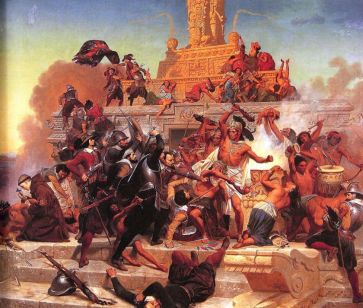
Emanuel Leutze “Storming of the teocalli by Corez and his troops” (1848) detail.
Within the “pink legend” (as opposed to the Black Legend… making Spain the worst of the worst of all possible imperialists), there are a few constant threads. Foremost is that the Spanish “civilized” the native people, or at least made them relatively good Christians. Secondly, that Spain introduced “better” technology (like firearms?) to a “backwards” people. And, third, that the indigenous people weren’t comodifying their resources in any efficient manner (Dame Rebecca goes on at some length to argue that the indigenous people really didn’t “need” their gold and silver, which had much more value in the European financial system). And, the kicker: Spain wasn’t so much setting out to kill the indigenous people and replace them with their own (as the English did), as it was to make them Spaniards. Second class Spaniards perhaps, but Spaniards nonetheless (meaning… Christians with certain European technology, and an economy based on gold and silver). And, if mistakes were made, well… that was then, this is now.
I tend to agree with that last statement.. partially. Of course, no one anywhere knew the causation of infectuous diseases, nor about herd immunity. To “blame” smallpox on Cortés (or, in the pink legend, a Moorish soldier: Spain might fess up to this one “accidental” atrocity, but sidesteps responsibility saying… it wasn’t a “true” Spaniard that done the deed, but a dirty Moor… and compounding what was an accidental wrong with the intentional one of racist stereotyping). And Spain was, objectively, less genocidal overall than the English, Dutch, French and other European imperialists. Which is not to say that they weren’t genocidal maniacs or that the Conquest was not an ethically dubious proposition from the start, nor that in “Christianizing” the indigenous people, there weren’t any number of mortal sins committed in the name of the Church.
All of which brings me to the flurry of media articles, memes, political spin, and denial surrounding Andres Manuel López Obradór’s rather simple request to both the King of Spain and the Pope that Spain and the Vatican owed the indigenous peoples of the Americas an apology for the wrongs done against them.
Stephen Burgen David Agren, in The Guardian summarize the Spanish response… rather, non-response.
A diplomatic row has broken out between Mexico and Spain after the Mexican president wrote to King Felipe VI demanding he apologise for crimes committed against Mexico’s indigenous people during the conquest 500 years ago.
In a video filmed at the ruins of the indigenous city of Comalcalco, in southern Mexico, Andrés Manuel López Obrador called on Spain and the Vatican to recognise the rights violations committed during the conquest, led by Hernán Cortés. The video was posted on the president’s social media accounts.
“There were massacres and oppression. The so-called conquest was waged with the sword and the cross. They built their churches on top of the [indigenous] temples,” he said. “The time has come to reconcile. But let us ask forgiveness first.”
[…]Detail of mural by Jose Clemente Orozco, detail of mural in the Palacio de Gobernacion, Guadalajara. Photo by: Wonderlane/Flickr.
“The Spanish government profoundly regrets the publication of the Mexican president’s letter to his majesty the king on 1 March and completely reject its content,” a government statement read.
“The arrival of the Spanish on Mexican soil 500 years ago cannot be judged in the light of contemporary considerations. Our closely related peoples have always known how to view our shared history without anger and from a shared perspective, as free peoples with a common heritage and an extraordinary future.”

The Catholic Church, for its part, or at least the Mexican heirarchy, is so far taking the position that they already have apologized… as Rodrigo Vera reports in Proceso (my translation):
In a document entitled “The Church has already asked for forgiveness”, the Mexican Bishop’s Council notes that in the Dominican Republic, Pope John Paul II apologized for “the enormous suffering inflicted on the inhabitants of this continent during the time of conquest and colonization. ”
John Paul II then added that only through forgiveness “can a more just and fraternal society be built”.
The Bishop’s response also points out that in 1992 the Latin American bishops requested “forgiveness” from “our indigenous and African-American brothers” for the “sin, injustice and violence” that the Church committed during the colonization of America.
The communication goes on to state that Pope Benedict XVI again asked for forgiveness, noting that “it is not possible to forget the sufferings and injustices inflicted by the colonizers on the indigenous populations, often trampled on their fundamental human rights.”
[…]
And Pope Francis, in a speech delivered in Bolivia, also asked for forgiveness for “the many and serious sins” that the Church committed “against the original peoples of America in the name of God.”
A few researchers, in a rather half-hearted attempt to claim, as the Church has, that it already apologized, point to the December 29, 1836 “Treaty of Friendship between Mexico and [Queen Isabella II of] Spain” which promises the two nations will “Forget forever the past differences and dissensions, for which unfortunately have been interrupted for so long relations of friendship and good harmony between the two peoples.” Not exactly an apology, and nothing to do with the Conquest or the 300 years of colonial rule (and everything to do with Spanish military operations against independent Mexico, and the Mexican Republic’s expulsion of Spanish citizens, and establishing diplomatic relations between the Republic and the former European imperial power).
Although there has been no call for reparations, or anything other than a limited apology to specifically affected ethnic communities, AMLO’s request has been a major controversy, for only one reason. AMLO is the one asking.
That Hugo Chavez once made a similar request to “prove” that AMLO is a left wing “danger to Mexico” … if you ignore that similar requests have come from Justin Trudeau in Canada, and then California Goveror and former Jesuit seminarian Jerry Brown. Or that states (and the Catholic Church) have issued apologies for their past misdeeds on numerous occasions, and generally such actions are viewed as positive for all parties involved. And they cost nothing other than a blow to national self-esteem.
Which should make the objections to the requests by the Mexican right seem ridiculous. Which they are … that is, the Mexican right is ridiculous. Of course, there are the “fifis”… the Hola readers and “pure” Spaniards (not that such a critter exists, even in Spain), the rather silly and inconsequential monarchists (a few who visited this site last weekend) and — of real political weight — the reactionary right, the “Yunque” (the wealthy neo-Francoists, more Catholic than the Pope… especially this Pope) and the political opportunists: racists all.
Rodolfo Soriano Nuñez summarized the Mexican opposition to the call for apologies better than anyone. My translation:
Is it so difficult to recognize that what happened in America between 1492 and the nineteenth century was not by mutual agreement, but was the result of previously unknown forms of violence in America, as well as the de-humanization of the native populations of that continent ? Seriously?
Is it so difficult to admit that Mexica, Maya, Aymara, Inca, Purépecha, Algonquian, Mohican, Carib, Taino peoples, and many others were decimated by war, disease, and exploitation of the encomienda?Is it so difficult to understand that the Africans who came here did not come on pleasure trips, of their own volition, to “know the world”?
Many desire to hold on to the Pink Legend: “Let’s thank God that it was the Spaniards and not the British or the Portuguese.” Well, they can say there are numerous indigenous Mexicans and Peruvians. They can’t say that about Caribs and Tainos …
In the Caribbean there is no way to distinguish the Spanish devastation from the English, the French, the Dutch or the Portuguese. Let’s stop with pink legends now and accept that what happened here was not an idyll, nor a meeting of equals.
It was a brutal subjection to foreign powers that swept away population, cultures, knowledge and deprived people of their natural resources. And yes, the Mexicas were particularly violent. They deserved the distrust of Tlaxcaltecas and other groups that helped the Spaniards …
… but that was not the case of Mayans, Purépechas, Mixtecs and Zapotecs. They did not oppress other peoples like the Mexicas. Their mistake was their skin color, lack of gunpowder, beasts of burden and not believing in what Europeans believed.
Lopez Obrador super-changed the issue, exposing the Yunques and wannabe Yunques, who do not hesitate for a moment to display their nineteenth-century Conservatism and their allegiance to the King of Spain.
Fulton J. Sheen versus the Mexican Nazis… WHAT???
We have a few television evangelists on late night television here, mostly Brazilian programs dubbed into Spanish, but none with the bling and pizzaz of the US evangelists… who — I’ve always found it ironic — owe much of their over the top sartorial style to the original television preacher, Fulton J. Sheen. As a Roman Catholic Bishop of the pre-Vatican II days, the robes and regalia came with the job, but — with his miraculaously plummy mid-Atlantic accent (with more than a hint of his native Illinois tossed in) was the first, and longest lasting of the nationally known television preachers. He got his start on radio in 1930, moving on to television in the early 1950s, only disappearing from the nation’s airwaves in 1968, a year after he publicly announced his opposition to the US War in Vietnam. But, until the late 1960s, Sheen was the public face (or voice before the 50s) of American Catholicism and is, in largely responsible for the change in attitude within the United States towards Catholics, who had been seen as a strange, and alien, minority of dubious loyalty.
When Sheen began on radio, there was another Catholic priest on the national airwaves, who did push a “strange, alien” philosophy, but one that threatened to become americanized. I mean of course, the Canadian priest, Charles Coughlin, who — broadcasting from a Detroit suburb — was an open anti-Semite and cheerleader for Hitler and Mussolini before being forced off the air in 1939.
Meanwhile… south of the border….
As Coughlin was spreading Nazi propaganda to an estimated 3 million listeners in the United States, a Catholic-Fascist movement in Mexico had mounted a serious challenge to the then Socialist government. Saturnino Cedillo, who had made his mark by fighting the Catholic counter-revolutionary Cristeros in the late 1920s, had become the “caudillo” of San Luis Potosí. Although a strong Calles supporter, and an agrarian reformer (he’d defeated the Cristeros mostly by the simple expedient of sending arming landless farmers and promising them land taken from the Cristero leaders, who had, for the most part, been the large landowners in the Bajio), Cedillo had provided refuge to the die-hard Cristeros, as they were discovering Fascism (especially the Francisco Franco version) fit nicely into their own ideals for a “Hispanic” state.. authoritarian, capitalist, and with a rigid social class structure… and, above all, obedient to the dictates of the Church. Cedillo, with the sinarchists (“with stucture”) leaders, and hefty financing from the German embassy, launched the last full scale military attempt to overthrow the post.Revolutionary government, forcing Cardenas himself to take to the field… the last Mexican president to do so (never mind Felipe Calderon’s photo-op battle dress during the “drug war”).
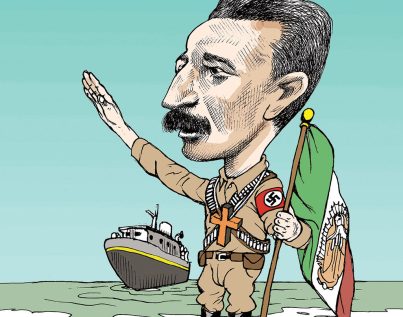
“El exilo de abascal” Rocha, Proceso, 17 de marzo de 2019
The sinarchists, led by Carlos Abascal, still had a sizable following, even after Cedillo was killed, and his attempted counter-revolution collapsed in 1939. Inching ever closer to open Nazism, they were little satisfied that the socialist Cardenas was succeeded in 1940 by the “believer” and relatively conservative Manuel Ávila Camacho. Camacho was not about to reverse Mexico’s openly anti-fascist policies, and … with Britain and the United States willing to put aside their greivances over the oil expropriation in 1938 at least for the duration of the war already being fought against the Nazis by Britain, and as was obvious to everyone, soon to be joined by the United States, the last thing the Mexican government, or the United States, wanted was a “fifth column” in Mexico.
Despite his social conservatism and private beliefs, Avila Camacho and his government increasingly put pressure on the sinarchists. Sensing the growing oppression, Abascal took what seems to be a leaf from the early New England Separatists. He lobbied the government for land for a dissident colony. If you can’t beat ’em… flee ’em, I guess. With perhaps a sense of irony, Avila Camacho found the sinarchists land in Baja Sur California. At the time, it was only a territory, governed by the militant socialist anti-clerical atheist, Francisco José Múgica.
So.. Abascal gathered together about 500 die-hards, heiled the Virgin Mary (literally… the colonists united in the Guadalajara Cathedral to swear to the Virgin their loyalty with raised “heil Hitler” type salures), and headed to Mazatlán for ships to take them to their shining city on a hill — or, rather, a rusty, overcrowded ferry anyway, that managed to take about 500 of them, stranding the no one know how many more back in the “pearl of the Pacific”.
The María Auxiladora colony came ashore, promising to abide by Abascal’s rules, which included, among other things, the requirement that one great one’s neighbors, “Hail Mary, full of grace”, which had to be answered “conceived without sin” along with eschewing shellfish (the easiest to obtain food in the Baja), stay at home (travel for pleasure was a “sin”) and only sell their agricultural produce on the local market. Which there wasn’t. Nor the water to even grow produce. Abascal was sinking more and more money into the project, which might have been fine, except it wasn’t his money. He was also contacting the Japanese Navy about the possibility of their establishing a base at the colony.. something that might cause a bit of friction with the United States, especially after what happened on December 7th of 1941.
Even before Mexico openly joined the Allied cause in May 1942 (after Mexican ships were sunk by German U-boats), Abascal’s colony was clearly a danger to the state. But, given pro-German sentiment and open admiration for Franco’s Spain by the sinarchists … and the disastrous Cristero War still fresh in the memory of the miltiary and Church hierarchy… the least palatable option was a military one.
As it was, other sinarchist leaders, who’d cottoned on to how much money Abascal was costing them, and that Hitler was not exactly a good Catholic, nor was Mussolini, in order to survive as a political force (they would be largely absorbed by the conservative PAN party) were redefining their organization as one that defended “traditional values” a la Mexicana, not one that depended on models from Spain or Germany.
Enter Fulton J. Sheen…
While Franco’s Spain had managed to combine nationalism, conservationism and Catholicism it had only been through winning a war. In the anti-clerical Mexican state, even with a socially conservative President, there was no way sinarchism was going to become state ideology. Abascal changed his tactics, arguing that his colony could act as a militia to prevent the Japanese from landing, while at the same time, keeping Mexico out of the US military orbit, and the dread influence of English-speaking Protestants. The government didn’t think much of the idea of a few hundred half-starved unsuccessful farmers would be no match for Admiral Yamamoto. And, the Church hierarchy, having achieved something of a modus viviendi with the state was wary of any close relationship to Abascal. With the Bishops, the Mexican government, and the Roosevelt Administration all wanting to neutralize the sinarchists and possible pro-fascist movements in Mexico, and even some of the sinarchist leaders wanting to lessen their dependence on what they saw as “materialist” ideology, the nearest model at hand was to the north… where, Catholics, and conservative Catholics at that, in a traditionally anti-Catholic society, had been able to enter the elite, and, in some sense, shape public policy. A compromise, perhaps, but a necessary one if sinarchism was to survive.
The sinarchists continued to argue among themselves, some pro-Falagist (supporting Franco, but neutral in the war effort), some looking to the Catholic Church in the United States as a model for moving forward, and a dwindling number still betting on Hitler.
Then came Stalingrad. Even the most obtuse sinarchist, in the back of the beyond of Baja California Sur, could see the Nazis were done for. It’s very possible that Avila Camacho and Franklin Roosevelt … both of whom were sensing victory for the Allies and wanted to expand Mexico’s contribution to the war effort, took personal action. Someone, somewhere, suggested to Sheen”s superior, Cardinal Richard Spellman of New York, the popular radio priest, part of whose job description had been to lure Catholics back from the Fascist Coughlin, or at least neutralize his influence, to speak with the sinarchists. Ostensibly, attending a theological conference in Hidalgo, Sheen met with the moderate sinarchists (if “moderate” can be used for a far-right political/religious movement) to convince them to cut their dependence on funding from Spanish sources, and turn to conservative, but loyal to America sources like the Knights of Columbus and — like himself — stick to propaganda and lobbying the power elite.
Sheen’s still murky mission was largely successful. Abascal found his funding cut off (and, being sued by several of his backers, ended up bankrupt, spending the rest of his life with his “empire” reduced to a high-end men’s clothing shop in Mexico City), Governor Mujica — who wasn’t heartless — built a road to Maria Auxiladora, partly to send relief supplies, but mostly so the colonists could get out (and maybe enjoy a shellfish dinner), the less fanatical sinarchists becoming the “piety wing” of PAN, the others becoming less and less relevant, and the Knights of Colombus, which perhaps was pulled futher to the right by its association with the sinarchists, proposing Abascal for sainthood.
Oh.,,, and Fulton Sheen went on to win an Emmy, and Mexico to win the War Against Nazifascism.
Sources:
Gutiérrez Vega, Hugo. “Falange y sinarquismo en Baja California“, Jornada Seminal, 9 June 2013.
Mejía Madrid, Fabrizio. “Mexicanos extranjeros“, Proceso, 17 March 2019.
“La Unión Nacional Sinarquista de México: Las peleas faccionales dentro del sinarquismo“, Instituto Schiller.
Cactus… food, fertilizer, fuel all in one
THis video is from 2017, and other nopal biogas plants are already in production around the country. In Zitacuaro, Michoacán, the city auto fleet is being run off biogas from a nopal-manure mixture.
Quote, unquote.
Only twenty years ago an Australian urologist described how the clitoris works. Before that, we did not know how to use it It’s the same thing with marijuana; disinformation is absolutely programmed so that so that people do not know the wonders that the plant can bring in a society with good regulations.


 mexfiles.net