La-la-la-la-la!
Why is this still a new concept to us?:
Mexico’s attorney general said Monday his country is beginning to stem the flow of drugs into the United States, but won’t be able to completely cut it off.
Eduardo Medina Mora Icaza said Americans are fueling drug-related crime in Mexico, spending an estimated $10 billion yearly.
“Pure cash crossing the border,” Icaza said.“Weapons that are illegally shipped to Mexico from the United States and cash which relates to the illegal trade of drugs, which we assess together with the DEA (Drug Enforcement Administration) in the range of $10 billion of cash a year.”
He said there’s no way to break the connection between drug consumption in the United States and violence in Mexico.
“The violent behavior is the most prevalent threat to national security in Mexico,” he said.
Icaza met with Gov. Janet Napolitano as he arrived in Phoenix for a conference of attorneys general from Mexico and the United States.
“The U.S. is the number one consumer in the world for drugs that are either produced or cross through Mexico,” Icaza said. “There is no way we can break the relationship between consumption in the United States” and violence in Mexico.
Things not going better with coke… Colombia v. everybody
Following on the heels of the FARC-fetched explanations of why the Colombians launched a missile into Ecuador, the Colombian government’s only remaining overt rationale for U.S. military support seems to be evaporating. NarcoNews reports that:
… thousands of coca growers that had been occupying town centers in northern Colombia to protest the forced eradication of their crops have begun returning to their villages after three weeks of negotiations with local authorities. Their occupation of four large towns showed that Colombia’s much-demonized producers of the raw material for cocaine are willing to move to alternative, legal crops – if the government will treat them as partners rather than enemies.
Despite some whining from missionaries, about minor things like death squads, our national security depends on free trade with Colombia.
However, Haliburton and Blackwater can take heart (though it’ll mean more U.S. military casualties in Colombia)… now that the Israelis have been put out of the death squad training biz, there are other business opportunities. And, if all else fails, we’ll always have Venezuela:
Two Florida-based companies that have exported a total of at least 11 aircraft to Venezuelan buyers since 2003 are linked to four cocaine planes and what appears to be an elaborate covert intelligence operation…
Durn those Venezuelans.. they may screw the whole thing up:
The Venezuelan police have arrested a suspected drugs and weapons smuggler wanted in the United States. The US authorities have offered a five million dollar reward for the arrest of Hermágoras Gonzales Polanco, who has ties with the Colombian Guajira cartel.
He is suspected of smuggling large quantities of cocaine into the US and weapons, destined for paramilitary groups, from Europe into Colombia. Mr Gonzalez was arrested at the border with Colombia, together with 48 suspected paramilitaries.
Lock ’em up and throw away the key…
And we’re supposed to feel sorry for the “devastated” bailiff?
FAYETTEVILLE, Ark. – A woman being held as an illegal immigrant spent four days forgotten in an isolated holding cell at a courthouse with no food, water, or toilet, authorities and the woman said.
Adriana Torres-Flores, 38, appeared in court Thursday and pleaded not guilty to a charge of selling pirated CDs, but a judge ordered her held because she is in the country illegally, Sheriff Tim Helder said.
Bailiff Jarrod Hankins put her in the cell to await transport to jail, and she was forgotten. Because of heavy snow, few staff members were in the courthouse to hear her cries and pounding later Thursday or on Friday and through the weekend.
Torres-Flores wasn’t found until Monday morning when Hankins opened the door. She was treated at a hospital and allowed to go home.
The sheriff said Hankins, a bailiff for two months, simply forgot about Torres-Flores.
“He’s a broken man right now,” Helder said….
“Two months after the Bush administration expanded a program to haul undocumented residents off to jail instead of shipping them home, the U.S. Marshal Service is overwhelmed.
The 600 marshals stationed on the border with Mexico are dealing with as many as 6,000 new defendants a month. That’s taking them That’s taking them away from other tasks such as capturing escaped prisoners and rounding up sex offenders, according to Justice Department documents obtained by Bloomberg News.”
NOTE TO HOMELAND SECURITY: This is not a criticism of ICE, or federal immigration policy. I would never think of saying anything negative. Maybe Jerrod Hankins — once he’s feeling better — could come down and help the Marshals.
Nothing to declare…
Have you ever:
- Spoken with an accent?
- “Looked Mexican?”
- Attended a pro-migrant rally?
- Complained about the government?
- Written a blog post about immigration?
Watch out—ICE could come to your door…
Full post at Citizen Orange.

Yeah, there is a reason I’m posting on Colombian politics, Mexico City sewers, the Republic’s more colorful characters and… everything BUT immigration. Maybe after Easter, when I’m in Mexico, I’ll have something to say. Until then… nada.
What a wimp! What a dame!
Geeze, the Governor of New York resigns (or is said to be resigning) because he hired a hooker?
While I’m not sure of the difference between prostitution and politics — though I’ve yet to hear of a prostitute being shamed into quitting when it was revealed they’d been consorting with politicians — there was Irma Serrano, who excelled in both professions.
A true survivor, Serrano worked her way up from the the 14-year old victim of a Chiapas state deputy (and pedophile) to TV and film star — and mistress to President Gustavo Diaz Ordaz. Of the famously ugly President, Serrano later said “It’s amazing how power improves a man’s looks.” But, apparently, not his other attributes.
 With political backing, Irma successfully open a night-club, “El Fru-Fru” across the street from what was then the Federal Legistlature (today’s District Assembly building). The cheezy nude statue out front is said to be Irma.
Serrano very publicly broke with Diaz Ordaz when she crashed a birthday party for the first lady and sang — in front of TV cameras — a “tribute” to the President, sort of a 1960s version of “Don’t Want No Short-Dicked Man”
After several years of self-imposed exile in Spain, Serrano got her own revenge, coming back to Mexico and being elected as a reformist Senator from a minor socialist party. Believed to be at least in her late 70s, she claimed to have become pregnant through an embryo implant, but suffered a miscarriage.
Wikipedia describes her as “… the equivalent of Dolly Parton, Hillary Clinton and Elvira (the Halloween witch character) all rolled into one. She is like Dolly Parton because sheis a country singer and actress, like Hillary Clinton because she became a senator and like Elvira because many say she is really a witch. And she projects the glamour of all of them together. ”
If you can imagine “The View” with a little less up-tight version of Mae West, you can image la Tigressa:
Shit happens…

It’s time for the annual reaming out of the city’s storm sewers, which will clear an estimated 150 tons of accumulated trash (leaves, litter, dead cats…) that builds up every year, and needs to be cleared out before the rainy season.
Mexico City’s geographical position — on a lake with no natural drainage, has always made waste-water a challenge. The Aztecs carted off human and animal waste for fertilizer in the chinapas (the floating gardens built on giant rafts that still exist in a few parts of Xochimilco). The poet-engineer-emperor Nezahaucoatl (Leonardo da Vinci, though never a ruler, was the other multi-talented guy of the time) designed a series of dikes and drainage systems to keep the city dry and drain off waste. Alas, because the Spanish urban planning was used to dry plains, the system was abandoned.
In the 1620s, serious consideration was given to moving the capital of Nueva Espagna to Cuernavaca, especially when Mexico was underwater for over a year (priests conducted canoe-in services from church towers), and flooding was a regular problem until the late 1800s.
Building Mexico City’s sewers was one of the great engineering marvels of the late 19th century. The Anglo-Mexican firm, S. Pearson and Sons, finished the project in 1901, ending centuries of annual flooding in the Federal District.Porfiro Diaz’ inaugural flush (attended by a brass band), followed by the diplomatic corps’ witnessing of sewage spewing out in the Lerma River (the system has been much improved since then) was spectacular enough to make Pearson a serious contender for the next big engineering project of the time… the Panama Canal.
Dirty rats…
Rat abatement continues…

This photo, from la Prensa, accompanied a story on a couple of foot patrolmen who arrested two “ratas” (the word used by la Prensa) who’d been robbing — and beating up — women vendors in the Centro Historico. Score one for the solidarity of the mercantile class… the patrolmen did their best to keep the two from being too bruised and battered before turning them over to the Ministerio Publico.
Not so lucky was this rata… found in Ecatepec, State of Mexico, with his eyes duct-taped over, signs of a beating and a couple of bullets in him, including one to the head. A note pinned to the corpse said: “Hello, friendly passers-by. This is a little reminder of what happens to kidnappers, thieves and other rats in the State of Mexico…”

Eeewww… This is very rough justice indeed… but whether “honest vigilantes” or rival gangsters were responsible isn’t known. I suppose there will be some kind of police investigation, but I doubt it’ll be very thorough. Even with a reformed criminal justice system, there are always going to be those impatient with the procedure.
Field trip?
While initial reports on the Colombian rocket attack on the FARC encampment in Ecuador mentioned a Mexican — Lucía Morett Àlvarez — among the survivors, it’s now reported that up to ten Mexicans were among the twenty casualties.
There are two conflicting stories about what the Mexicans were doing in Ecuador. One version has the students attending a Bolivarian Solidarity Conference in Quito or there was a FARC cell in Mexico City, at UNAM. Morett said she did not believe there was anything illegal in visiting FARC leaders in Ecuador — which would bolster Colombian claims that the Ecuadorians knew FARC had a base in their country. At the same time, the Colombian vice-president claims that Mexican and Chilean students were being trained and armed. And that there is a FARC “terrorist cell” operating in Mexico City (maybe this is what vice-presidents are supposed to do. I seem to recall that the U.S. vice-president also made claims of wider “terrorist” connections to justify the U.S. invasion of Iraq, after initial rationales were universally questioned). Count among those who are dubious the UNAM administration.
So far, Felipe Calderon has called the situation “deplorable” — but he seems to accept the Colombian story that the students (if they were students) were guerrillas.
Ecuador’s claim — that the Colombians (with U.S. support) attacked the camp because the Uribe administration was worried that Ecuadorian and Venezuelan negotiations to release foreign hostages held by FARC were about to bear fruit — is the most widely accepted. The Colombian government is widely seen as involved in human rights abuses and narcotics trafficking itself, ignoring right-wing death squads and narcotics dealing “terrorist” groups (and, in some cases, complicit in their activities), using the U.S. military equipment to fight leftists, and not narcotics traders.
So far, Mexico seems to be taking a “wait and see” attitude. I’ve seen nothing from the Mexican left condemning Colombia at this point, other than the expected anti-Colombian protests. Calderon and Uribe met briefly but there is no word on their discussions.
So far, Venezuela, Ecuador and Nicaragua have broken relations with Colombia, with Chile, Brazil and Argentina all supporting Ecuador. France and China also seem to be backing Ecuador, with only the United States in Colombia’s corner. Anything could tip Mexican neutrality —
Compare and contrast…
I’m surprised no one has commented on this, but do you notice something about OUR friend Alvaro Uribe of Colombia (owner of the magic laptop) as compared to the “FARC-ed” leaders of Ecuador and Venezuela?
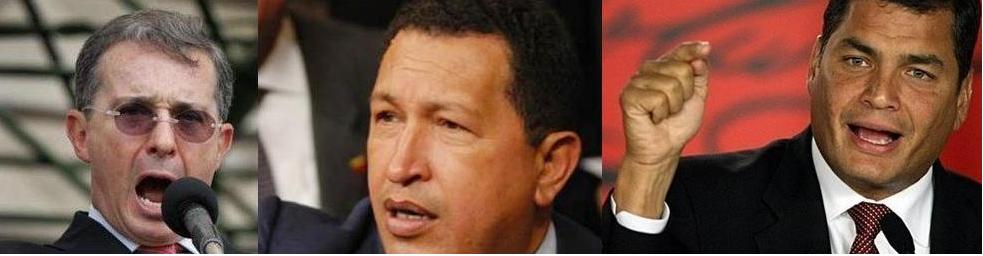
Hey… don’t call me nuts. The Free Republic is quoting a Colombian reporter as saying the two guys on the right (in the photo, not in their politics) are in cahoots with this dude:
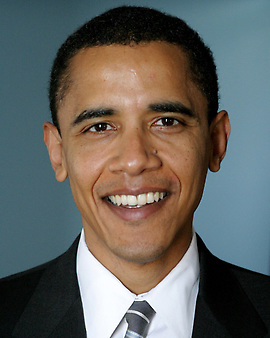
That, of course, makes no sense. None of the U.S. Presidential candidates seem to know diddly-squat about Latin America.
What you see is what you get?
It is likely that the problem that Mexico’s criminal justice system is facing today is rooted in high levels of impunity that are often associated with high levels of corruption. An open and transparent system composed of agencies with separate functions that oversee each other can provide at least the basic conditions for fair and just trials and endows the system with a level of legitimacy that the current one would seem to lack.
So argues Juan Enrique Vargas in the University of Pittsburg Law School journal, The Jurist. Vargas is the Director of CEJA, the Centro de Estudios de Justicia en las Americas, in Santiago, Chile. His argument is that Mexico’s new legal procedures (open trials and oral testimony, as opposed to the reliance on documentation still used by Brazil) will expose legal favoritism to public scrutiny.
I’m not sure that’s completely true — under even the best legal system “the poor and the rich are likewise prosecuted for sleeping under bridges or stealing bread to feed their children” — but the PERCEPTION of favoritism will at least be exposed. Whether it will lower crime rates (or just the perception that people get away with crimes) is yet to be seen. However, it should make Mexican nota rotas even more interesting, given the chance of some of the more dramatically inclined criminal class (and their attorneys) to perform before an audience.
By the way, the first oral federal trial is coming up: an appeal in a rape case. Given the novelty of open trials, I’m not sure how the Mexican media is going to deal with the sensitivities surrounding sexual assault and similar issues. If the assault victim has not been named in press reports when a rapist is arrested, she would never be identified. Under the new system, if her name and reputation is at issue, I don’t know how it’s going to be reported.
This will be a test case in more than one way.
What we have here is a failure to communicate…
Although this is a Mexico-focused website, it’s hard to ignore what has happened in Ecuador. The only Mexican connection, so far, has been that two survivors of the Colombian incursion are Mexican nationals (and are being tried in Ecuadorian courts). So far, Mexico has been able to maintain its strict neutrality when it comes to other nations’ internal affairs. I think, however, Mexico (like Argentina and Brazil, which have already weighed in on the side of Ecuador) will be affected, though only obliquely.
While the whole thing may blow over — for the practical reason that no one wants a war, and it’s economically not feasible, there are some long term worries. It was Bill Clinton’s. administration that got the United States into the Colombian civil war, which was sold as an anti-cocaine trafficking police operation, we were warned we were involving ourselves in Colombia’s domestic politics. Given that funding for “Plan Merida” is still in the works, and the Mexicans, as well as some in the United States are concerned that the “real” use of military hardware will be to stifle internal dissent, this incident may have an echo in Mexican affairs over the next several months.
And, given that no country in Latin America is backing the Colombians (and, by extension, the United States), Mexican diplomacy may have a role to play here, if the Mexicans don’t (as I think they will) tilt towards the other Latin countries in this dispute. How the Calderon administration balances their role as a pro-U.S. state in this situation is going to be worth watching.
While the English-speaking press is beginning to realize the Colombia v. Ecuador… and Venezuela (and the rest of Latin America) is unlikely to erupt into a shooting war, they have still be slow in understanding that it is a serious issue, which will change the ways inter-American politics works.
Canada.com — and I give credit where credit is due — was the first English-speaking “main stream media” source to question the Colombian rationales for the attacks on FARC in Ecuador. Canada, like the United States and Colombia (and, if I’m not mistaken, Bahamas) label FARC a “terrorist organization”, but most American nations accept that they are a rebel organization seeking changes in their own country, not an international group. Even so, the Canadians have a hard time swallowing the “dirty bomb” story (a Colombian official claimed the laptop computer that somehow survived a rocket attack on a FARC encampment in Eucador — which killed 18 and wounded three — somehow spared a laptop computer that included, among other things, unencrypted correspondence regarding acquiring fissionable material… uh, right).
The Independent (U.K.), which some regard as a lefty rag, adds the obvious fact that FARC’s narcotics dealings are what earned them the cachet of “terrorist.” The Guardian does not overlook the fact that EVERY rebel group in Colombia (including the right-wing ones) — and for that matter members of the Uribe government — are involved in the same dirty business.
Another U.K. paper, The Guardian, with the veddy British gift for understatement, downplays the likelihood of a more than temporary crisis by noting:
Daily life largely continued as normal across Ecuador, Colombia and Venezuela. Caracas’s skittish middle class, which habitually stocks up on tinned food and toilet paper at the first sign of political turmoil, had yet to make a run on the supermarkets.
Venezuela, much to the delight of the right-wing, has a meat and milk shortage, importing commodities from Colombia. And Colombia’s army is about twice the size of the Venezuelan and Ecuadorian armies combined (plus is much better equipped and trained). The cartoon is from a Venezuelan newspaper (which also shows that the country does have a free press).

Both the Guardian and Independent articles are the best I’ve seen so far on the background of this situation. For the “whys and wherefores”, you need to go to more partisan publications. ZNet’s Justin Podur (reprinted in Venezuela Analysis) finds a logical reason for the Colombian actions in FARC’s negotiations with France and Venezuela for the attack.
Investor’s Daily oddly spins the whole mess into an argument for a free-trade pact between Colombia and the United States.
When Hugo Chavez says that Colombia is Latin America’s Israel, he is correct. They are the United States’ third largest recipient of military aid are using that aid to attack perceived enemies. And, apparently, with U.S. assistance, Colombia launched a missile attack on a foreign nation to wipe out what they consider a “terrorist”. A thought: a number of known terrorists live in Miami, and have attacked Cuba. Would the Cubans be justified in launching an air strike on Little Havana to wipe out Alpha-66 or Luis Posada Carrilles?
Can Mexico launch an airstrike on the El Paso Gun Show?


