The treasure of Sierra Madre 515
The Federal Prosecutor’s office, assisted by agents from the Agencia Federal de Investigación-Policía Federal Preventiva (AMPF) raided a house at Sierra Madre 515, Lomas de Chapultepec, securing about 205.6 million U.S. dollars, 200,000 Euros and 157,500 Pesos.
According to the Prosecutor’s press statements, a late model Toyota, a Land Rover and six Mercedes-Benzes, as well as two long-arms and five short arms and pill-making equipment were confiscated. One woman and six men were taken into custody.
The raid was part of a money laundering and anti-narcotics trafficing investigation, which since 2006 has targeted the Sinaloa cartel, headed by Joaquín El Chapo Guzmán.
Initial reports from the Prosector’s Office only said that more than $100 million had been recovered.
Raymundo Campos Erik, Tomoyi Mars Yu, Zhn Wei Yi, Arturo Rubio Valdez, Jiovani Delgado González, Alejandro Becerra Turral y Francisco Sertuche Vázquez were turned over to the Ministerio Público, which will determine individual charges.
Aprehension orders were obtained from the Tenth Judicial Court of the First District Penal Division in the Federal District, on a ministerial petition to procede against illegal activities tied to Unimed Pharm Chem de México, S.A. de C.V.
According to the investigative report, the business illegally imported clorhidrate of pseudophedrine from India to use in manufacturing methamphetamines.
Inconvenient question… where did the cash come from, and who buys all that meth?
That ONLY took two hours…
…not to write the abortion post, but to format it.
I know a lot of what gets posted here isn’t edited correctly, or formatted as well as it should be, but there is only so much time in the day.
When you’re working off pirated, or share-ware versions of obsolete software that will run with a really bad operating system (Millenium) on an old computer I picked up for 150 dollars, everything takes at least twice as long as it should.
I’d prefer (and I think you would prefer) that the time was spent on research and writing — and editing. But, making the Mex Files a half-way decent source of information is a full-time balancing act — to have the time to write, I had to take a less than full time job. Which means there’s not the money for basics like keeping the auto insurance and resistration up to date (which would at least let me earn a little more… and not spend two or three hours just working out getting to the grocery, local meetings, etc.), or decent software. So… I’m spending TIME on inessentials.
I’ve had some generous contributions, which took care of the most pressing electical bills, and part of the phone bill, but the Mex Files can only continue if there is time to write… and, at this point, there isn’t the time to edit, or do much of anything else.
Thanks to the generous folks who’ve donated so far, but there’s still about $800 (US Dollars, not Mexican Pesos) needed to meet the most pressing, and time wasting, needs. And, yeah… a little dental work would be nice if there’s anything over.


I expect editors to simplify what I write, and they do. When it comes to Mexico, and Mexican politics, and Mexican culture (AND the intersection between the two), the poor reporter, no matter how talented or informed is going to find their story simplified and at least partially misleading. Especially if they’re writing for a mass-market (and better paying… it’s pledge month here at Mex Files: hint, hint) news service like Associated Press
Istra Pacheco filed from Mexico City a story on proposed liberalization of the Federal District’s abortion law, which is very good, very informative, but misses a lot of the nuances and contradictions of the issue in Mexico. Of course, so do others
I swiped the AP story from the Seattle Post-Intelligencer:
MEXICO CITY — Mexico City legislators are debating a bill that would legalize abortion during the first three months of pregnancy, a measure that would be the first of its kind in this heavily Roman Catholic nation.
The bill is supported by the leftist Democratic Revolution Party, which holds the mayorship and a majority in the city’s legislature, and it could be approved in the coming months, lawmakers said.
Mexico City, with a population of 8.7 million, is a federal district similar to Washington, D.C., with its own legislature.
The Roman Catholic Church and officials with the conservative National Action Party of President Felipe Calderon have promised to block the proposal. They claim that abortion violates articles in the Constitution protecting life and say they will oppose the bill in court if necessary.
Jorge Serrano, president of the National Pro-Life Committee, argued that legalizing abortion would encourage more women to terminate their pregnancies.
“The more women who have abortions, the more women and babies will die,” Serrano said. “The risks will increase.”
Under current Mexico City law, abortion is only permitted if the pregnancy endangers a woman’s life or if the woman has been raped.
Proponents of the bill say these restrictions force women to seek abortions outside the law. While wealthier women travel to the United States for the procedure, poorer women must remain in Mexico and have back-street operations, supporters said.
“Some even carry out the abortions themselves because they have no other alternative,” said Victor Cirigo, a Democratic Revolution legislator who helped the draft the bill.
About 90 percent of Mexicans consider themselves Roman Catholic, but many have increasingly liberal views on issues such as abortion and homosexuality.
That last paragraph is boilerplate you see any time there’s an AP story about some change in Mexican law. What they need is one that says, “Mexico has a long anti-clerical tradition and only about ten to twenty percent of Mexican pay attention to church teachings.”
There is also a bill in the Chamber of Deputies to create a federal abortion law, but still more restrictive than the proposal in the Federal District to make first trimester abortions legal.
The Federal District’s abortion law (“Ley Robles”, after interim Jefa de Gobernacion Rosario Robles, who got the bill though the District Assembly during her year’s tenure between Cuauhtémoc Cardenas and Andres Manuel Lopez Obradór) was – at the time – the best that could be done (allowing abortions if the pregancy was a result of rape), but the conservative media outlets (the TV networks are still controlled by the ultra-conservative Azcarraga family.
GIRE, a private organization similar to Planned Parenthood in the U.S., did its best to publicize the law, but rape victims (who tend not to report the crime, just like everywhere else) don’t often take advantage of it.
Women in Mexico City are treated for “late menstruations” (which are openly advertised) and a few states have relatively liberal – or even radical – abortion laws. Yucatan, which has a long history of feminist and radical leadership (the state was the first in the Americas to have elected women leaders, back during the short-lived “Socialist State of Yucatan” during the Revolution) allows abortion if a mother already has three children, and more mouths to feed would create “grave economic consequences.”
The Catholic News Agency (in the course of lamenting the possible Federal abortion law) mentions “liberal” codes in Queretero and Baja California also. These state’s codes are similar to Mexico City’s.
Even in the “liberal” areas, it’s hard to find a legal abortion. Mexico has a very good record in family planning and public health (compared to other “non-OECD member” middle-class countries that don’t have a socialist history, like Poland. And Mexico compares much more favorably in public health and birth control than other Latin American nations, like Argentina or Brazil, let alone Peru or Bolivia). The birth rate is down from seven per mother a few years ago to about two and a half. As a whole, the Mexican population is stable, or slightly decreasing (ironic, that the Mexican government recognizes it will be somewhat dependent on immigrant labor within the next 30 years or so).
Birth control is available, legal and accepted. But not abortion.
Cristina Alonso works at the Luna Maya birthing clinic in San Cristobal de las Casas, Mexico. She says there are between half a million and a million abortions a year in Mexico. And while abortion is legal in cases of rape or a threat to life, the actual mechanism to get permission to have a legal abortion is so complex that it discourages women. Alonso points out that last year in Mexico City, only 17 legal abortions were approved, yet there are 30 rapes reported to police per day there.
With the worrisome news about the new Secretary of Health, José Angel Cordoba Villalobos, who opposes birth control, you can expect abortions – illegal ones – to become more common. Thanks to available birth control alternatives, the abortion rate isn’t much higher than in the United States (where abortion is legal for the most part). The U.S. rate is about 21 per 1000 pregnancies. In Mexico it’s between 23 and 25 per 1000, according to “International Data for Evaluation of Abortion Services” and Plannned Parenthood (Reproductive Health Rights in Mexico
It’s the “illegal” part that creates the problem. Padre Amaro’s “crime” was having a 15 year old girlfriend. Having to seek an illegal abortion was his tragedy. The death tool is shocking : 31 perecent of deaths among pregnant women are the result of abortions (anti-abortion organizations in the U.S. cite the few hundred deaths from legal abortions as evidence of their danger. Illegal abortions are much more dangerous, by far).
Illegality is not going to stop abortions. Poor Peru and comparatively wealthy Chile, both countries where abortions are illegal and where birth control is mostly unavailable, have double the abortion rate of Mexico. One can expect the number of Mexican abortions to rise – and many more maternal deaths if the Calderón administration makes birth control less available.
Andrew Oh-Willeke, a Colorado attorney and writer, with an academic background in statistics, summarized the situation for his blog, “Wash Park Prophet”
There are actually fewer abortions per capita in the United States, where it is legal, than in Mexico, where it is illegal, and even using data suggested by anti-abortion groups, the death rate from medical complications from abortions in the United States is about 98% lower than in Mexico, where abortion is generally illegal. Using data offered by the medical establishment, the death rate from medical complications from abortions in the United States is about 99.94% lower than in Mexico. Either way, it is clear that the illegality of abortion in Mexico is a significant cause of death to women who seek abortions, while it is not very effective at preventing abortions.
Maybe it’s a sign…
(El Universal, today):
As soon as Air Force One left Merida, the city was invaded by millions of locusts.

PEMEX: off the table
 There has been speculation (or maybe wishful thinking by some in the U.S.) that PEMEX would be privatized. Why would that be a foreign affair?
Todays Jornada (my translation):
Mérida, Yuc. The Mexican president, Felipe Calderón, assured the press that the subject of privatization of Petróleos Mexicanos (PEMEX) was not raised during his discussions with his U.S. counterpart, George W. Bush in the Merida talks because, “it is exclusively a Mexican matter.”
“We have absolutely no intention of privatizing a company that only can belong to all Mexicans,” Calderón said in a Tuesday news conference at the Hotel Fiesta, where he has been staying during the talks.
The Mexican president added that “Yes we will have to resolve in the future, questions of sovereignty and consider alternatives,” but emphasized that “Congress decides” the future of the national oil congress.
Pemex is the second largest oil company in the world by some reckonings. The largest, Aramco — as well as the third (Petroleos de Venezuela) and fourth largest (China National Oil) are all state-owned companies. You’d have to go to the #5 oil company, Exxon-Mobile, before you found one that was privatized. But, then, it always had been.
Sure, it has been badly managed (name a state agency anywhere in the world that’s a model of cold-blooded corporate efficiency… PEMEX is also a social service agency in some ways. Andres Manuel Lopez Obradór began his career as a PEMEX social worker). And, yes, it needs working capital very badly (so does every other capital intensive investment in Mexico). None of which argue for selling it off to the highest bidder (whom could just as likely be the Russian company Yukos, or the Venezuelans or the Chinese as any of the American or British companies who controlled Mexican oil production before 1938).
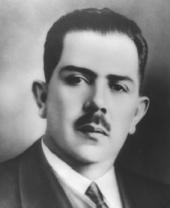 You need to remember that PEMEX was the first nationalized company of its kind. Lazaro Cardenás had to go back to both Catholic Church documents, pre-Colonial Spanish law and even the Aztec legal system to cobble together a political and social theory for a nationalized resource company (and, something everyone conveniently forgets, to satisfy the Church, and win their “blessing” on the project — literally: the Cardinal of Mexico City and the Pope were both corralled into supporting the project publically — the private investors were compensated at rates agreed to by an international arbitration).
My feeling (I’m not prepared to offer a bunch of links by way of argument just now) is that the Fox Administration, like Salinas and Zedillo, had bought into the privatization theory, but that Fox, like Ronald Reagan, used political appointments to further ideological goals.
What I mean is that while Salinas (like George W. Bush) damaged state institutions by appointing cronies and incompetents (and outright crooks) which seriously damaged PEMEX, Fox (like Reagan) appointed people who knew exactly what their goals were — drive the “company” out of business to where sale to outsiders was an option that was salable to the voters.
PEMEX probably will, as it does now, take on more joint ventures (often with other State-owned companies). The left (which while FAP is not the numerical majority in Congress, has enough PRI and independent support to control legislation) has no major problems with joint ventures. And, it has looked at alternative financing. And, if PEMEX’s outside expenses (the social security network, the parallel public hospitals, etc.) were folded into other federal agencies, it would have a much healthier balance sheet.
In other words, don’t count on PEMEXxon-Mobil coming to a gas station near you any time in the near future.
Going thru hoops at the border
In honor of the 258th anniversary of the founding of Reynosa (Tamps)/McAllen (Texas), Alcalde Javier García and Mayor Richard Cortez sponsored an exhibition game between the McAllen Silverados and the Reynosa Correcaminos.
HIDALGO-REYNOSA INTERNATIONAL BRIDGE — The Rio Grande Valley Silverados promise show-stopping, pulse-racing basketball when they make their American Basketball Association debut this fall. For 15 minutes on Tuesday morning, they stopped traffic and made a little bit of history.
In an exhibition dubbed the “Unity of Nations” the Silverados played the Reynosa Correcaminos of the Liga Nacional de Baloncesto Professional before approximately 100 spectators on the Hidalgo-Reynosa International Bridge with half court being the demarcation line between the United States and Mexico.
“It was more of an exhibition game, a friendly game just to show unity between the nations,” said Silverados co-owner Kevin Mitchell, who played for the Silverados. “Basketball has knocked down racial barriers throughout history and this was just another demonstration of that.”
Baskets were affixed to trucks and the teams held up traffic heading to Reynosa while partaking in a 5-minute game in which players dealt with a wet macadam surface and speed bumps. La Joya’s Alejandro Robles scored the first basket for the Correcaminos and former Edinburg and University of Texas-Pan American star and current Edinburg Economedes coach Lalo Rios drained a long jumper for Reynosa.
Mitchell himself a former Bronc, played alongside fellow former UTPA players Matt Palmquist and Chris Fagan for RGV.
While the Silverados scored it a 4-4 tie, they believe the end result transcends more than a final score.
“With our team it’s not just entertainment value,” Mitchell said. “I think it was a great opportunity to promote one part of the puzzle that we bring with our team. We’re not only entertainment value, but also community involvement as well.”
A little locker-room talk from El Universal (my translation):
Art González, part-owner of the Rio Grande Valley Silverados remarked that the game was the first ever using an international border as the half-court line, an event that should earn a place in the Guiness Book of World Records.
David Sikes, an American player for the Silverados, showed that when it comes to border issues, like migration, governments could learn something from the game.
“I believe that we can do it better than we are doing it now. We don’t need walls. I have a lot of Mexican friends, and I like being in Mexico,” said Sikes, who played last year for the Correcaminos.
Why did he even bother?
Not Even Host Enthusiastic About ‘Lame Duck’ Bush
Diego Cevallos (InterPress News Service)
In statements to the leftist daily La Jornada, Calderón said he would never attack the Latin American left at Washington’s behest, and that during his government, Mexico would seek a regional leadership role characterised by “calm consideration, balance and sensibility.”
Regarding Bush’s visit, he said he had no great expectations, although he urged the United States to value its relationship with Mexico as “the most important one it has.” In direct contrast to Washington’s position, he also said that he plans to improve Mexico’s relations with Cuba, and even to visit Fidel Castro, who has temporarily delegated his authority for health reasons.
Columnist and political scientist Sergio Aguayo said that the Calderón administration still needs to clarify how it will handle its relations with the United States. In his opinion, the visit from “such a weak” president as Bush is not helpful towards this end.
…
U.S. presidents have visited Mexico more than 70 times since the start of the 20th century, and according to Aguayo, this latest visit by Bush is probably the least transcendent of them all.
InterPress, by the way, is one of the best agencies for news AP and Reuters (and AFP and DIPA and BBC) miss… the part of the planet that’s not the U.S. or Western Europe.
Nothing sacred… Kraft “guacamole”
Whether eating alone or having a party, one simple dish that can bring a zestful joy to your table and palate is guacamole. Just as the Aztecs did 700 years ago, all you do is mush up a couple of avocados, squeeze in some lime juice, toss in some chopped peppers, tomatoes, and onions if you want, grab some chips… and go at it.
Unless, of course, you’re one of the industrial food giants like Kraft Foods, Inc. In that case, you don’t let such natural ingredients get in the way of making guacamole. Instead, Kraft (a division of Altria, formerly known as Philip Morris) fills its little plastic tubs of “guacamole dip” with partially-hydrogenated soybean and coconut oils, a big dollop of corn syrup to give it some sweetness, a glob of modified food starch to give it some body, and a nice blend of yellow and blue artificial food dyes to give it that green guacamole-ish color.
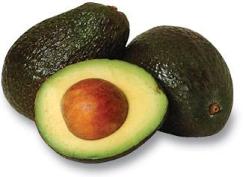
Let’s see, did they leave anything out? Oh, yes – avocado! Indeed, only if you put on your 10-power specs and read the fine print do you-the-consumer learn that Kraft’s dip is practically avocado-free, containing less than two percent of this essential ingredient.OK, food corporations are in the business of deceiving and ripping off consumers – but where’s the Food and Drug Administration, which is supposedly our consumer watch dog against avocadoless guacamole? Oh, says FDA spokesman Michael Herndon, “we would have to find that the labeling is misleading, which would likely require some consumer data to prove the labeling is misleading.”
This is Jim Hightower saying… No, you numbskull – all it would require is that someone at FDA have at least as much common sense in their head as Kraft’s guacamole dip has avocado. Meanwhile, if you really want some guacamole, do it the Aztec way. Nothing beats nature’s own ingredients, and you can’t trust food profiteers to make an honest dip for you.
Sources:
“Lawsuit stirs up guacamole controversy,” Los Angeles Times, November 30, 2006.
“Introducing Avocado-Free Guacamole?” Center for Science in the Public Interest, April 25, 2006.
“Avocado,” by the way, comes from the Nahuatl word “Agacuatl” — the tree with gonads. REAL AVOCADOS are high in vitamin E, and don’t clog up your arteries… or your gonads, the way soy and coconut oil does. Your choice.
Maybe the decider should have decided to stay home

Outside U.S. Embassy, Mexico City (NY Times photo by Adriana Zehbrauskas
The always cautious James McKinney of the New York Times writes of Bush’s visit to Merida…
Since taking office in December, Mr. Calderón has taken several steps aimed in part at showing Washington he is a willing partner on security and immigration issues.
…
Mr. Bush, meanwhile, ruffled a lot of feathers when he suggested in an interview with Reforma that the state-owned oil monopoly should be opened to private investment so it could explore deeper waters for crude.
Selling off all or part of the state monopoly, or even allowing private investment in it, is a political land mine here that even the most ardent free-trade conservatives like Mr. Calderón are not willing to step near. …
Beyond help with changing United States immigration laws, Mr. Calderón is likely to bring up the possibility of tinkering with the North American Free Trade Agreement to protect farmers who produce corn and beans.
…
Other issues likely to come up are the steady flow of arms from the United States into Mexico as well as the skyrocketing cost of American corn because of new ethanol plants.
…some Mexican political leaders and opinion makers are now expressing the belief that Mr. Bush does not understand the depth of anti-American sentiment
To say the least.
Por Esto!, the ballsy Merida daily that’s been on a crusade against narcotraficantes, isn’t covering the event. They have their own axe to grind (they claim Calderón’s anti-narco crusade isn’t going after the “big fish” on the Yucatan). This is the start of their front page editorial (my translation):
President George Bush arrives today in Mérida, an open insult to the First Amendment of the United States, guaranteeing constitutional liberty.
His arrival in the Yucatán capital signals the violation by state and Federal authorities of Article 6 of the General Constitution of the Republic, which reads: “The expression of ideas shall not be subject to any judicial or administrative investigation, unless it offends good morals, infringes the rights of others, incites to crime, or disturbs the public order.”
It is no accident that that these serious matters occur at this critical moment. The usurper, Felipe Calderón Hijosa, personally ordered that accreditation to cover the American president’s visit be refused to reporters and photographers of POR ESTO!, undermining the confidence and credibility that surrounds the event.
They are panicky and afraid of the truth.
O.K., well Por Esto! is one local paper. The editorial went on to claim they were denied press credentials because they wanted to ask some questions about the narcotics trade, and the U.S. role in it. But, the Times says FeCal is asking the same questions. But, he’s probably gonna be very polite and apologetic about it.
The Yucatecas aren’t so quiet. Look at the opinion poll from the “respectable” Diario de Yucatan:
(screen capture at 5:30 AM, 13-March):

As it happens, I’m not Hugo Chavéz’ greatest fan (I’d prefer someone like Lopez Obradór, a former social worker and administrator, and an anti-clerical with a sense of tradition, over a religious militar any day of the week). But given the choice of George Bush over Hugo Chavez, you can see how those newspaper readers voted.
I suspect a lot of people in the U.S. would do the same, if they were asked.
Peter out…
Remember the strange saga of Peter Kimber, the Canadian squatting in Hualtalco in a bus with a wife and seven kids? He was the guy who defrauded a British hotel owner (or so everyone seems to agree) out of 200,000 or so pesos, claiming to be a qualified builder.
Kimber ended up in the slammer, and his no-count kinfolk deported back to Canada. Not being able to repay the money he owed, he sat in jail… concocting a tale (which just was a tad incredible… though the part about being forceably injected with unknown substances was dramatic… though straight out of a lot of really bad movies over the years). And sat there for a year or two… until…
The well-aimed shit hit the fan, about February 1. The shit-aimers included a talk radio hostess (and Evangelical preacher) from British Columbia, and some guy with a website named John Joseph Kennedy, who claimed he was running for president of the United States. I picked up the story from a post on “Lonely Planet” soon after.
The interesting thing was that all the Canadian news stories were exactly the same as the press releases. There was already enough anti-Mexican propaganda in the Canadian press at the time. And there were even calls to “boycott Mexico”. All of which was alternately amusing and appalling, but February was a busy month here… shootings in Arizona, Molly Ivins and the Burro Lady died, the drug war nonsense went on, the Tepito raids… a few more important things than this minor case.
And, I’d sworn off making fun of Canada for Lent.
A mysterious blogger named “factfile” appeared out of nowhere… or out of Hualtalco, with what seems to be solid reporting on the story. It’s obvious that “factfile” is someone connected to the English couple, or at least a partisan of theirs (factfile uses Received English spelling — “neighbour” — where Americans use “neighbor”. Most Mexicans use American spelling for English). He (or she) has been all over the blogosphere (and in the “comments” sections of some Canadian papers) about this incident.
According to JJ Kennedy’s “Free Peter Kimber” site, Kimber was freed March 9. Factfile claims Kennedy and donors paid the fine, but I can’t find confirmation of that.
The Vancouver Province reported this morning that Kimber would be back in British Columbia this evening. What bothers me is they keep saying:
“What would have become a small-claims dispute in Canada instead resulted in imprisonment for Kimber on Oct. 15, 2004.”
A $24,000 Canadian Dollar fraud is a SMALL CLAIMS dispute? I don’t think so.
Factfile is happy to see Kimber out… of Hutalco, the country, his hair… but has a few parting shots:
Now he is your problem Canada and good luck with that.
My mystical powers … looking into the future see this scenario very soon.
Peter Kimber gets new house on social services. Peter Kimber pisses of residents of said neighbourhood with petty threats, robberies and the suchlike. There is a large group of people who are demanding that someone do something. Peter Kimber is in the dock again for … let’s say … robbery of an old ladies life savings (as he said he was going to build a garage for her). He is meanwhile on the prowl back in his house and abusing the old lady with death threats …
“If only it was like Mexico” they should say (but won’t) the wanker would be arrested and then the money would be returned to the old dear… but hey … Canada has such a superior legal system doesnt it? …
… in other words he is free to defend himself with scumbag lawyers who will eat away the old ladies savings … he will never actually serve a day in prison and the old lady will die of sadness and injustice.
Sound too far fetched? Then you obviously never knew the guy.
And, this should be my last post on that!
“Boys y toys” (No, not the Mexican porno magazine!)
Gerardo Fernandez Norona, former spokesman for Mexico‘s left-wing opposition Party of the Democratic Revolution (PRD), said on Monday that he plans to send 200 toy soldiers to visiting U.S. President George W. Bush as an unusual anti-war protest.
“It will be occupational therapy for him,” Fernandez told reporters as he arrived at Manuel Crescencio Terrejon International Airport, in Merida, the capital of Yucatan state, where Mexican President Felipe Calderon will meet Bush.
He added that he hoped it would help Bush to stop playing war with the world.
Fernandez was PRD spokesman for several months, but was removed from his post by party leader Leonel Cota, who did not agree with some of the statements Fernandez made on behalf of the party.
(Xinhua, People’s Daily English Edition)

Welll… Duh! The “iron river” flows south…
Human and drug smuggling organizations in Mexico are getting their guns from the same places law-abiding citizens are getting theirs – licensed gun dealers and gun shows, according to court documents.
“There’s an iron river of guns flowing to Mexico,” said special agent Thomas Mangan, spokesman for the Phoenix office of the U.S. Bureau of Alcohol Tobacco, Firearms and Explosives.
Search warrant affidavits show smugglers are getting guns from “straw purchasers,” people with clean records who buy guns for smugglers, who then sneak them across the border for a few hundred dollars.
Records show the weaponry is bought from legitimate dealers in cities from Tucson to Scottsdale and Apache Junction to Avondale.
On Jan. 21, agents with the U.S. Bureau of Immigration and Customs Enforcement arrested Cedric Lloyd Manuel and Miguel Apodaca of Phoenix with nine assault rifles at the Arizona-Mexico border.
The guns had been bought the day before at gun stores in Apache Junction, Scottsdale and Phoenix. They were purchased by three brothers, Lucio, Rosendo and Marcos Aguilar.
Between November and the Jan. 21 arrests at the border, the Aguilars and others in the straw-purchasing crew bought 66 assault rifles, records show.
“Manuel (Aguilar) stated that he had taken probably about 20 loads of firearms into Mexico over the past couple of months,” ATF special agent Heidi Peterson wrote in the affidavit.
The Aguilar family, Manuel Apodaca and the alleged ringleader, Blas Bustamante, have been charged in U.S. District Court with gun violations.
Mangan said the value of guns triples across the border.
He said Mexican crime organizations use the same infrastructure for smuggling humans and drugs north as they do to move the guns south.
He said the agency is working on a number of Arizona gun trafficking investigations while they also work with Mexican authorities to trace guns used in crimes across the border.
One such crime was the shooting of Ramon Tacho Verdugo, the 49-year-old police chief of Agua Prieta, Sonora, who was gunned down as he left the police station Feb. 26.


