The Conservapedia makes it all clear
U.S. conservatives want the right to discriminate against minorities, reject science and repeal the law of gravity… basically, they want things simple.
Thinking is hard work… so, I guess it’s only natural that they’d have their own encyclopedia too.
And here I’ve been agonizing for months over how to fit the story of the Mexican Revolution into 40 pages of text. I tried doing it chronologically, but you keep looping back between Zapatistas adn Carrenzistas and Villistas and Woodrow Wilson’s foreign policy and… you get hopelessly lost. Thematically, it seems to be going better, but my last version (literally cut and paste. I printed the things, cut them up into paragraphs, spread them around the living room floor and scotched taped them into some semblance of order) is still a hopeless mess. I finally put it aside for a time.
Oh well… maybe it was a waste of time. I should take the Conservative (or Conservapedia) approach: Keep it Simply Stupid.
While the links don’t work, it is quite a feat to get the ENTIRE Mexican revolution down to this entry:
The Mexican Revolution 1910 (1910-1920) was brought on by a disagreement between the people of Mexico and their dictator, Porfirio Diaz.[1] It resulted in his overthrowing and flee to Paris, France.[2] During his ruling, Mexico’s wealth was even more undistributed than it is today.
The (other) Gulf War syndrome
What Raymundo Rivas Palacios calls “The (other) Gulf War” requires combat reporters. Heck, here in Alpine, the first armed robbery in umteen years is the big news of the week. Well, there are maybe some other things going on, but I don’t cover them… I’m not a combat reporter. If I was, I wouldn’t be using my real name, just like the AP stringer (or source… I never did understand the issue) in Bagdad someone keeps harping at me about as an example of how the AP supposedly slants news from THAT war.
A little secret — “Truth is the first casualty of war” — but sometimes the truth slips through. It’s boldfaced in the e-mail that was forwarded to me. It’s the U.S. appetite for narcotics… and the guns and money going south that are fuelling crime (and something I’ve written on several times) It’s not the “illegal aliens” (post coming soon).
Those of us who are NOT combat reporters, but close enough to the “front lines” to know the embedded reporters aren’t about to use “real names” or identifying markings. That’s security for us and the “warriors” (even if we disagree with the war aims, or think the “war on drugs” is boneheaded) — it’s not a “gag order from the cartel.”
For what it’s worth, the person who sent me this email was not the writer, but is trustworthy. The reporter for Tiempo de Laredo and the unnamed Mexican radio station are also respected journalists, and both very good ones. I don’t know how the LMT slipped up and inserted the Mexican reporters’ name. He may need a job right quick somewhere like Montreal. Yeah, it’s that serious.
Date: Thu, 22 Feb 2007 15:33:40 -0800 (PST)
From: XXXXXXXXXXXXXXXXXXX@yahoo.com
Subject: Garza: I was the target; congressman
recovering at hospital in Mexico City
To: XXXXXXXXXXXXXXXXXXXXSee El Manana version in Spanish after Laredo Morning Times article. The Spanish version is unbelievable!!For those who don’t read Spanish, the congressman tried to hitch a ride and waited for 15 minutes by the highway after he was shot three times (bullets are still in his body). And when he finally does get a ride, it is only for a few meters because the driver did not want to compromise himself. Then another woman who recognized the congressman gave him a ride about 15 or 20 meters from a clinic since he had told her that he did not want to endanger her life either. Then he was transported by plane to Mexico City. The congressman said he and his family will not return to Nuevo Laredo until security is restored.The border has always been a rough place when I was growing up in Laredo, nevertheless we could go anywhere without any problems, including across the river to Nuevo Laredo. And all of this because of the high demand for drugs by the USA. The greed is out of control and wreaking havoc on the business community. Furthermore, the San Antonio Express needs to stop quoting FORMER Mayor Betty Flores and start quoting the new mayor who is a former FBI agent and understands the seriousness of the situation. “Mistaken identity” give me a break. Denial is not a river! The congressman confirmed that they were after him.
And at least the El Manana newspaper had more sense than the Laredo Morning Times by not printing the name of the radio reporter who interviewed Congressman Garza by phone. The cartel basically put a gag order on the Mexican press by killing many reporters covering the cartel violence. I expect that <the reporter>, in Nuevo Laredo is by now on the cartel’s hit list. The kiss of death by the Laredo Morning Times.
Garza: I was the target; congressman recovering at hospital in Mexico City
02/22/2007 NUEVO LAREDO —Federal Congressman Horacio Garza Garza, interviewed on a Nuevo Laredo radio station, said Wednesday he was the intended target in a Monday shooting here that claimed the life of his driver.
Garza, reached by telephone in Mexico City by <someone respected at radio station>-FM, is recovering from bullet wounds at the ABC Hospital in the Federal District. The congressman for the state of Tamaulipas said he lamented the death of his friend and driver, Hector Morales Juarez.
The Tamaulipas lawmaker told <the reporter> that Morales Juarez was an innocent bystander and that the firearm blasts were intended for Garza.
Garza, a PRI officeholder and former municipal president of Nuevo Laredo, was in a Suburban driven by Morales Juarez and was headed for the Nuevo Laredo International Airport when they were intercepted by several vehicles. An undetermined number of armed men opened fire. Morales Juarez died at the scene from multiple bullet wounds.
Garza dismissed the actions as reprisals, adding that he recognizes that he has to face these situations.
He said he was overwhelmed by the expressed solidarity of his family, friends and general public. He said he appreciates the support of the state governor, Eugenio Hernandez Flores, the Nuevo Laredo Mayor Daniel Peña Treviño, countless senators and representatives in Congress as well as officials from different state and national governmental agencies.
Nuevo Laredo Bishop Ricardo Watty Urquidi characterized the attempt on Garza’s life as an aggression against the community.
“We pray for his wife and his family, and pray for his full recovery,” Bishop Watty said. “Like his family, we are all offended by this horrible assault on human dignity and human rights.”
The bishop called for an end to unlawful detentions, kidnappings and wanton killings, adding that these aggressions “are an attack on humanity and God.”
Garza acknowledged he is having trouble talking because of the shooting injury in the neck. He said doctors told him he has a piece of lead in the neck area.
He told the radio reporter that the Suburban’s path was blocked by vehicles as the assailants opened fire. Garza said his driver brought the van to a sudden stop and more shooting followed in the direction of the Suburban.
Garza said he felt the sting of bullets in the neck and side, but he did not see any of the assailants in the darkness of night on the road to the airport. Garza said he felt that “they were shooting to kill.”
Garza said he never gave thought to the suggestion that these people were trying to scare him.
“I regret the death of my good friend, Hector,” Garza said. “He was an innocent individual who worked hard, was a humble person. I am so sorry he died under these circumstances. He was a good man and my friend.”
Garza said he did not realize his driver was dead immediately after the shooting. He said he tried to help the man “but he was dead, covered in blood.
“Everything was covered in blood, my portfolio, my clothing, the laptop,” he said. “It happened so fast. It was a sudden reaction to take cover to save my life.”
Garza said it was a miracle that he came out of the scene alive, adding that he would continue to work hard for the betterment of Nuevo Laredo and the country.
“They are not going to scare me,” Garza said. “They were trying to kill me, not my driver. It was not a warning. They were after me, an execution.”
Garza said he hopes the shooting incident “shall be the last one for Nuevo Laredo in the on-going wave of violence that he holds the community hostage.”
“Nuevo Laredo is witnessing a deterioration of its economic and social life. We are going to continue fighting this situation.”
In recent times, Garza had called for a joint state-federal campaign to fight organized crime on the border. As secretariat for fiscal reform (Comision de Hacienda), Garza had submitted several legislative proposals in the Federal District.
“We are not going to negotiate in darkness,” he said. “Everything will be out in the open with full transparency for the benefit of the people. I hope this happens in quick order.”
He said PAN partisans aligned to President Calderón have endorsed his legislative proposals. He said his program is one of the most important challenges facing Congress this year.
©Laredo Morning Times 2007
Honest coppers? What’s the world coming to?
Maybe the experiment in Neza is paying off. I wrote about the educational program for Neza police officers a while back, and thought it was interesting that as the police officers became better educated, they got more respect, and crime dropped. It seems to be having some very interesting secondary effects on crime.
More than 500 State of Mexico Police (Agencia de Seguridad Estatal — ASE, assigned to the Rapid Action Force in Nezahualcóyotl, as well as officers from Ecatepec and Tlalnepantla, launched a protest to demand better salaries and working conditions. They also denounced corrupt police chiefs, and the “chain of corruption” in their departments.
The demonstrations — mostly in downtown Neza City were peaceful and no arrests were made.
(Mark-in-Mexico “scooped” me on this, with his usual anti-union, provincial “evil Mexico City” spin)
Cross-training
José Emanuel Guillén Roldán, a 22-year old accounting and management student is in training. Guillén has been bulking up, lifing weights and running… and is now fasing… all in preparation to be castigated, spat upon and scourged as he climbs Cerro de la Estrella … where he’ll be crucified.
 Having worked his way up through the supporting cast, from a leper to a Hebrew to the Apostle Thomas, Guillén beat out 15 other hopeful in gaining the starring role in this year’s 164-year old Iztapalapa Semana Santa religious pagent.
An estimated 1,000,000 people come to Iztapalapa on Good Friday to witness the event.
A fishy story out of San Blas
Sombrero-tip to “Dollard” at Thorn Tree Mexico Forum:
They claim to have survived for 289 days at sea, but, four months on, the awe-inspiring tale of the Mexican fishermen looks less like a miracle and more like an elaborate hoax. Mike Guy reports for the Independent (UK):
Last October, Salvador “Chava” Ordoñez and four other fishermen embarked from San Blas, a village on the west coast of Mexico, for what was supposed to be a three-day shark-fishing expedition. On the first night they ran out of petrol (or the engine broke down, or both, depending on which version you read) and their small boat was swept away by the same strong winds and currents that carried Portuguese spice traders to Micronesia in the 17th century.Nine and a half months later, the 27-ft craft was spotted by the crew of a tuna-fishing boat in the waters off Baker Island, a tiny atoll some 5,500 miles west of San Blas. Two of the men had died of starvation, but 37-year-old Chava Ordoñez survived, along with Jesus Vidaña and Lucio Rendon, both 27. …Los Perdidos, as they’re known in Mexico, claimed they survived by drinking rainwater from the filthy bilge and eating seagulls, raw fish, and sea turtles. They read aloud from Chava’s tattered Bible, while Lucio, a musician, played air-guitar concertos to stave off boredom, as toxic on a small boat as the seawater around it.
The three pescadores (fishermen) had apparently endured the most remarkable odyssey of survival ever recorded: 289 days at sea, utterly exposed to the blazing sun, with nothing but two useless outboard engines and their own inner toughness. It was the kind of accidental epic journey that brought the Vikings to North America, the Maoris to New Zealand, Noah to Mount Ararat.
As news of their rescue flashed around the world, the fishermen’s journey took on near-biblical significance. The Catholic Church’s League of Bishops declared their survival a profound miracle, an “example of the power of faith”. …the tale of Los Perdidos is sufficiently fantastic that it requires a certain degree of faith to believe it at all.
…In San Blas many locals have opinions about Los Perdidos, but few have as much authority as Antonio Aguayo. …He thinks it likely that the three were involved in some sort of smuggling operation.
OR…

Mexican director praises G.W. Bush!!!!!
El Laberinto del Fauno, Guillermo del Torre’s Oscar nominated “adult fairy tale” — a fantasy about excapism during the Spanish Civil War –commented on reports that the film was recently screened at the White House.
The Mexican horror and fantasy master, whose earlier works include whose works include El Espinazo del Diablo and Hellboy, said that “Having been praised by Stephen King, I think he and I would be interested to know the opinion of that true master of horror…or science fiction, if we consider the intellegence information about Iraq.”

Not quite Free Trade?
The Trucker News Service reports:
EL PASO, Texas (Feb. 23, 2007) — U.S. trucks will for the first time be allowed to make deliveries in Mexico under a year-long pilot program that expands cross-border trucking operations with Mexico, U.S. Transportation Secretary Mary E. Peters announced today during a visit to truck inspection facilities in El Paso, Texas.
U.S. trucks will get to make deliveries into Mexico while a select group of Mexican trucking companies will be allowed to make deliveries beyond the 20- to 25-mile commercial zones currently in place along the Southwest border.
Peters said the new demonstration program was designed to simplify a process that currently requires Mexican truckers to stop and wait for U.S. trucks to arrive and transfer cargo. She said this process wastes money, drives up the cost of goods, and leaves trucks loaded with cargo idling inside U.S. borders. She added that under current rules, U.S. trucks are not allowed into Mexico because the U.S. refused to implement provisions of the North American Free Trade Agreement (NAFTA) that would have permitted safe cross-border trucking.
“The United States has never shied away from opportunities to compete, to open new markets and to trade with the world. Now that safety and security programs are in place, the time has come for us to move forward on this longstanding promise with Mexico,” Peters said.
It’s not a new issue, and free transport of goods was a basic part of NAFTA. In December 2001, NewsMax was all a-twitter about this. The Arizona Republic reported in 2004:
Trucking companies, which have waged a 22-year battle to win access to U.S. highways, say they face unresolved tax issues, new challenges by U.S. lawmakers and a general uncertainty ahead of U.S. elections.“Since 1982 we have been told, ‘Next year, next year,’ ” said Raúl O’Farrill, a Phoenix lawyer and expert in transportation law who moderated a discussion on trucking at the Border Trade Alliance conference in Mexico City on Thursday. “This is creating even more frustration.” advertisement
The whole thing has been watered down as a “pilot program” involving 100 trucking companies… the big boys that are basically Freightliner and the other international companies under a Mexican label.
A “select group” going one direction, and open borders the other direction doesn’t sound like “free trade” to me. The trucks working in the U.S. will, of course, have to meet U.S. trucking regulations, and this is limited to 100 trucking companies
Of course, there’s a lot of “Mexican trucks are unsafe” stories making the rounds… usually from people talking about farm trucks and local haulers.
Peterbilts are built by Pedro.
As are Freightliner, Volvo, Kenniworth, DINA etc. Most of the big rigs on the road right now are Mexican-built, so it’s not the trucks, it’s the drivers. And, yeah… Mexican drivers are nuts, but their truckers are better than most.
Bill O’Reilly’s big gay Mexican adventure
22-July-2007: I’m not sure why this post suddenly became so popular in the last few days, but I’m glad people enjoy it. Keeping the Mex Files going is practically a full time job, and I can barely afford it. The Mex Files is written from a very rural, isolated corner of the U.S./Mexican border (the Texas Big Bend) where there aren’t a lot of outside economic opportunities. I do a little free-lancing for the local papers, and live modestly. But, my own bills — compounded by the problems caused by a mentally ill neighbor I helped out who wrote me several large bad checks to cover her expenses — mean I’ll have to discontinue the Mex Files unless more financial support is available.
I need to raise a few hundred dollars immediately, and about 12,000 over the year. That’s only $30 a reader, given 400 “regulars” — and maybe some from people reading this…

If you prefer to send a check, money order or make other arrangements, please write me at “richmx2 -AT- excite -DOT- com” and include “Mex Files” in the subject line.
Back to the original post:
If you go to any of the resort areas, Cancún or Acapulco, as I mentioned, Puerto Vallarta, any of them — come on, it’s gay parade time. …There’s gay bars; there’s gay restaurants; there’s gay everything.
YUP… THAT Bill O’Reilly… REALLY!

I don’t know how to steal the video, but it’s right here on Media Matters.
(The comments are almost — ALMOST — as bizzaro as Billo’s blathering).
Billo’s was discussing an recent legal case, in which gay Mexican cited a “well founded fear of persecution” in seeking political asylum. The Mexican does not fit the stereotype of a gay man — a lower court had basically told him to “go in the closet”.
It’s one of those “I donno” things… On the one hand, the Mexican Constitution grants equal rights regardless of “orientation”. There is a suprisingly high level of social tolerance, sometimes in surprising places. But, there is very real anti-gay violence in Mexico (written about here and here).
Homophobia and tolerance seem to have a lot more to do with social class, age, religion and where one lives within Mexico … just as they do in the United States.
So… how does one prove one’s sexual orientation in a court of law beyond a reasonable doubt?
AND SHOULD GAY TOURISTS START ASKING BILL O’RIELLY WHERE TO GO IN PV?
Free markets and captured minds
I lived a few blocks from a “crack house” in Kansas City several years ago that “mysteriously burned to the ground” within a few hours of the water being shut off for non-payment and the residents evicted. “Somehow” one of the neighbor’s car was stalled in the street when the fire started and the Fire Department just couldn’t get there in time.
That sounds like the traditional way these public nuisances used to be dealt with, and still often are in Mexico (there’s an American who posts regularly on Mexico travel boards about the dangers of Mexico City, and talks about his neighbors doing nothing when his apartment was robbed, back when he was an English tutor — though he always claims to have been a “business consultant.” I know enough people who knew him, and his activities were obnoxious enough to his neighbors, to guess pretty confidently that it wasn’t a robbery so much as a “creative eviction”).
Drug users were traditionally a “public nuisance”… as long as they weren’t a threat to the powers that be, nobody much minded. Marijuana use was always a lower-class thing, and a stoned naco was no real danger to anyone. And, a lot of folk remedies call for marijuana (just about every Mexican over the age of sixty has a stash — moldy marijuana soaked in rubbing alcohol is used like we use “Ben Gay” — externally, not internally!)
If your local stoner was a nuisance, his neighbors or granny took care of the problem. Most other drugs were just “passing through” to the consumers north of the border.
Between new border security, the on-going “War on Drugs” north of the border and the sometimes unfortunate tendancy of the Mexican establishment to follow U.S. models, Mexico has developed a “drug problem”. Or, rather, the “powers that be” have decided its a problem.
Like in the U.S., local governments can now condemn “drug houses.” But, la fortaleza was no run-down crackhouse. It was narco-supermarket and condo, at Jesus Carrenza and Tenotitchtlan. Using the Federal District’s new Ley de extinción de dominio (“Law to wipe out houses” –Spanish can be a brutal language at times, and the custom of giving laws cute names that disguise their purpose hasn’t caught on yet), the great anti-narco/naco crusade has come to the heart of Tepito.
The takeover of la Forteleza hasn’t been popular with everyone — seen by some (the District being PRD, naturally the complaints are coming from PRI) as a media stunt. There’s no question that there are more narcotics available, but traditionally, small time drug users (and dealers) were a public health issue, not a criminal one. It’s probably an indication of the traditional attitude that la Forteleza is being expropriated for a health clinic and a day care center.
(In the U.S., we’d probably put in a police station. When I lived in Santa Maria de la Ribera, there was neighborhood opposition to a police station… on the logical grounds that a police station and public ministry office would mean criminals and lawyers would be hanging around!)
I was never particularly bothered by the Fox Administration’s approach… wipe out the kingpins, and let the lieutenants bump each other off. But — given both Calderón’s tenuous legitimacy as President, and pressure to “do something” about sales to the U.S., there was that much bally-hooed attack on the big time dealers.
Other than a lot of smoke and noise (and some dead bodies) it’s a phoney war (or an excuse for Felipe Calderón to pump money into the military, according to Blogotitlan). At most, the exporters dumped their goods on the local market. And, now… what used to be cheap marijuana is being replaced by cheap cocaine and crack and ice and meth.
John Ross reports from street level in Counterpunch:
Prior to the arrival of the Colombian drug cartels in the 1980s after the U.S. Navy cut off Caribbean shipping routes, Mexico’s worst drug problem was U.S.-manufactured glues and solvents. Cocaine, the way Mexican authorities saw it, was a U.S. problem, one of supply and demand. If the U.S. were to crack down on consumers, Mexico would not be troubled by the cartels. In retaliation, Washington accused its distant neighbor to the south of not fulfilling its drug war obligations and rampant corruption of the Mexican police and military bolstered the allegations.
Even while badgering their counterparts to crack down on the cartels moving drugs through Mexico, the U.S. was tightening up border detection, particularly after 9/11 when the War on Terror was tossed into the mix. Plugging up what had always been a porous border with more Immigration and Customs agents, military equipment, and high technology did not stop the flow but it slowed it down. The drug mobs had to keep their loads in Mexico longer until the proper arrangements could be made. Their cash flows were frozen and their creditors got nervous. So pretty soon the drugs started to leak out into the street and within just a few years the capos had a whole new market–albeit not as affluent as up in Gringolandia. By the late 1990s, Mexico had a drug problem.
Whether this was a deliberate strategy devised by U.S. anti-drug crusaders to force Mexico to act against the cartels or merely the free market at work, the result was the same. Nine year-old kids are smoking crack in Tepito.
Supporting the troops
Conditions for the Mexican soldier and sailor seem to be improving. President Calderón announced he would seek a pay raise during a speech marking Army Day. Next Monday, the eleven ministers of the Supreme Court will rule on the constitutionality of the present military code, which calls for the dismissing HIV positive service members.
While the formal ruling is Monday, six of the eleven have stated that such dismissals are unconstitutional, athough their reasoning varies, some arguing that as “workers for the state” the service members are entitled to the same protections and health benefits as other state employees, others arguing that as a signatory to international treaties on the treatment of sereopositives, Mexico is obligated not to discriminate against the soldiers. The Mexican Constitution already provides for equal treatment under the law, regardless of health condition.
The immediate benefit for HIV-positive soldiers and sailors is continued treatment in military hospitals and continued military benefits. Mexico has nothing analogous to the Veterans’ Administration in the U.S., and public hospitals and health clinics are often unable to treat HIV/AIDS.
The Mexican Senate, meanwhile, took up the defense of Agustín Aguayo
Aguayo realized after about one year of service in the military that his beliefs had changed to the point that he could no longer in good conscience be a part of the armed forces. He first applied for discharge as a conscientious objector in February of 2004. While his application was being processed, he was sent to Iraq as a medic, where he refused to load his weapon even when put on guard duty. His application was denied by the Army while he was still in Iraq, but because it had been seriously mishandled, he had a chance to challenge the ruling by filing a habeas corpus in federal court.
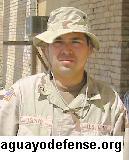 A Federal Appeals court turned down his request faces a seven year prison sentence, if convicted at his court martial (scheduled for March 6-7 in Wurtzburg, Germany).
Aguayo was born in Guadajara, Jalisco, and the Mexican Senate has requested the Mexican Ambassador to Germany (where Aguayo is being held) to provide legal assistance, and to guarantee [Aguayo’s] physical and psychologoical integrity”.
Senator Silvano Aureoles, (PRD) said that Aguayo “is a prisoner of conscience, and an unfortunate victim of the bellicose adventurism of George W. Bush.”

Corn Again (or, the devil is in the details)
It’s not news that agribusiness is good for everyone except the farmer. I saw that Nestlé announced a 21% profit this year, with most growth coming from coffee and sugar sales. Chairman Peter Brabeck was quoted by the BBC as saying he expected good sales again next year, because “The prices from raw materials coming in 2006 will be much less than those coming in 2005,” Mr Brabeck said.
I lived in the State of Morelos, where the fallout from low commodies prices for sugar led to a collapse of state owned refineries, privatization and re-sale to the state (and lots of angry farmers in the streets of Cuernavaca). I was not in Xalapa or Cordoba, Veracruz when coffee prices dropped. I was able to buy coffee by the kilo on the street in Mexico City for about 40 pesos a kilo… the surviving farmers were just selling it themselves and still turning a slight profit by breaking their contracts with the sellers.
As Maja Wallengren reported for the Dow Jones Newswire on May 29, 2001 –
MEXICO CITY –Serving as grim proof of the severity of the social crisis in Mexico caused by low international coffee prices, most of the immigrants found dead in the Arizona desert last week came from coffee-producing areas.
Fleeing the crisis in Mexico’s second largest producing state of Veracruz, six of the 14 dead were identified as small coffee farmers, some of the thousands who have been heading to the U.S. to try their luck as illegal immigrants.With coffee prices at around 60 cents a pound not covering the cost of production, farmers are abandoning their farms or selling them to raise the money to pay smugglers to take them into the U.S.
For the farmers who stick it out, the mass exodus leaves them without labor to harvest their beans.“It’s an indication of the level of desperation in the coffee areas, which is triggering a massive migration from all areas, and the cost of this social crisis is enormous,” an exporter in the Veracruz coffee town of Xalapa told Dow Jones Newswires by telephone from the Gulf Coast state.
Veracruz state produced about 1.56 million 60-kilogram bags of coffee in the 1999/2000 record harvest cycle, or roughly 25% of Mexico’s total output in that harvest cycle, according to figures from the Mexican Coffee Council. This year’s crop is likely to be markedly lower
 Suddenly “fair trade” was hip, but the Archbishop of Chiapas still condemnded coffee buyers (particularly Starbucks) as Satanic. For once, the Archbishop and I agreed [full disclosure — many years ago I worked for the now-defunct Sugar Creek Coffee Roasting Company. With one Honduran grower, and only minor suppliers elsewhere in the world, we couldn’t compete].
Now, it’s corn…
I’ve never bought the rationale that the jump in tortilla prices was caused by U.S. demand for ethanol, but there is a connection. Tom Philpotts makes one in “Bad Wrap: How Archer Daniels Midland Cashes in on Mexico’s Tortilla Crisis (Grist, 22 February 2007)
…1980s-era privatization schemes dealt a serious blow to the nutritional value of tortillas. Buoyed along by his good friend the now-disgraced former president Carlos Salinas, a magnate named Roberto González Barrera used government power to rig a market for his new industrial tortilla-making process, which relies on refined corn flour rather than whole corn kernels. Its products less flavorful and nutritious than traditional tortillas, González’s method was decisively rejected by the market — and then, in the mid-1990s, it got a boost from his political cronies. Today, it accounts for about half of Mexican tortilla production — and González’s company, Gruma, controls 70 percent of the industrial tortilla market. (In the same bout of privatization that won him his tortilla powerhouse, González also pocketed a bank.)
Evidently impressed by Gruma’s ability to leverage public support for private gain, Archer Daniels Midland bought its stake in Gruma in 1996. For most of the last 10 years, Gruma used its market power with impunity. Indeed, the current crisis doesn’t mark the first time since Gruma gained market dominance that Mexican consumers have endured a jump in tortilla prices. According to Oxfam [PDF], the government watched idly while the retail price of tortillas tripled between 1994 and 1999 — even as the price of Gruma’s raw material, corn, fell steadily.
The Mexican rural population is basically at the mercy of multi-nationals. Sam Logan and Katie Kaires of IRC show that even alternative rural industries geared to foreign consumer demand may not be the answer…For a long time, the United States’ addiction to hard drugs was seen as strictly a domestic problem. Compared to drug demand in the United States, consumption of illegal drugs in Latin America was relatively low. Countries south of the Rio Grande kept mainly to production and distribution—as long as U.S. demand created a market, Latin America would supply. Criminals in Colombia and Mexico, in particular, focused on feeding the beast, making billions of dollars in the process.But the nature of drug demand in the United States has changed. With the heavy and relatively rapid onset of demand for methamphetamine (meth), a new paradigm has formed. In the past, demand for the drugs coming out of Latin America remained inside the United States. Today demand has begun to spread out from the United States to Mexico, and possibly beyond.
Methamphetamine use has risen dramatically throughout the United States, and in the past few years the horror of meth has hit Mexico too. Drug producing and transit countries throughout Latin America have in recent years also become drug consuming countries, as drug traffickers seek profits at home. New findings show that meth—a drug that was previously little known south of the U.S.-Mexico border—is now not only being massively produced in Mexico but also widely consumed.
When Felipe Calderón and “the decider” meet next month in Merida, it’ll be interesting to see what — if anything — is said about agriculture and rural development. Or, about the only alternative (outside of AMLO’s suggestion of more rural development, financial aide to campesinos, price supports and renegotiating NAFTA) available — emigration to the United States.
ADM-controlled Grupo Gruma announced today that they expect to raise corn prices another 3 or 4 percent later this year.
Raising (questions in) Arizona
I’m not the only one who noticed that whoever shot up a vanload of farmworkers in Eloy Arizona last Feb. 1 didn’t sound like Mexican gangsters.
Billie Stanton writes in the Tucson Citizen
With anti-illegal immigrant forces roiling, Arizona now has a dubious distinction.
More hate crimes are investigated here than anywhere else by the Southern Poverty Law Center.
The Montgomery, Ala.-based center first won renown for probing race-based crimes in the South.
Alas, the South has got nothing on us these days.
“We’re spending more energy covering Arizona than almost the rest of the country – much more than any other state,” reports SPLC Director of Investigations Michael Potok.
…
The attack came on the heels of a Wednesday night incident on the border near Sasabe, where 18 illegal immigrants were robbed at gunpoint by four heavily armed men wearing ski masks.
And both attacks echo another near Eloy on Jan. 27, in which four men confronted 12 illegal immigrants, killed an Eloy man and shot a teenager.
The Eloy assault was waged by four men – three whites and a Hispanic who spoke limited Spanish – who were wearing military-style berets and camouflage clothing, witnesses told authorities.
…
Law enforcement, as well as several humanitarian border workers, say these crimes surely were committed by rival smugglers or robbers seeking to take advantage of people migrating illegally.
Potok and Tucson lawyer Isabel Garcia aren’t so sure.
“If vigilantes are out there murdering people, no one’s safe. Some of these people are quite willing to point a gun in the face of a U.S. citizen, particularly if that citizen has brown skin,” says Potok.
“And the Barnett case showed that if you have brown skin, you better look out.”
Roger Barnett, who owns and leases 22,000 acres in southern Arizona, has bragged about capturing more than 10,000 people who crossed his land.
In November, an Arizona jury ordered him to pay $98,750 to a family of U.S. citizens whom he terrorized in 2004.
Ronald Morales had been hunting with his father, Arturo, and daughters, ages 9 and 11, and another 11-year-old girl, when Barnett confronted and threatened them Oct. 30, 2004, testimony showed.
Although a Cochise County sheriff’s deputy had evidence to charge Barnett with eight felony counts of aggravated assault, the county prosecutor declined to file charges.
Barnett and his brother, Donald, own a tow-truck company that contracts with the Border Patrol, and both are former sheriff’s deputies, the SPLC notes.
The case is the latest in a string of hate-based crimes against illegal immigrants.
Arizona’s border region has become an incubator for race-based hatred, attracting national attention, none of it flattering.
“I wouldn’t dismiss the notion that these are hate crimes,” says Garcia, a longtime humanitarian and lawyer for illegal immigrants.
“If it is vigilantes, I think they are trying to put fear in Mexicans and to throw all of us off to blame smugglers and continue to militarize this border.
“Most politicians will look at these incidents and say we need more agents, we need a virtual wall, and on and on.”
But it is the militarization of our border, begun in 1994, that has funneled illegal immigrants into a few narrow and extremely dangerous crossing routes.
Such “enforcement first” tactics clearly don’t thwart illegal immigration; they merely make aspiring immigrants more vulnerable, whether to criminals or deaths in our rugged desert.


