War and Peace: the Michoacán report (apologies to Democracy Now)
One of my correspondents sent me a link to a post on the Zero Hedge website, written by “Tyler Dunden”… a pseudonym for the editor, or editors of the “dissident” business and financial website, making the argument that the Michoacán (and elsewhere) auto-defenses have much in common with the “militias” and “patriot organizations” in the United States.
Mainstream media coverage of the situation in the western states of Mexico has been minimal at best; and I find the more I learn about the movement in the region, the more I find a kinship with them. Whether we realize it or not, we are fighting the same fight. We are working toward the same goal of liberty, though we speak different languages and herald from different cultures. Recent government propaganda accusing Michoacan militias of “working with rival cartels” should ring familiar with those of us in the American liberty movement. We are the new “terrorists,” the new bogeymen of the faltering American epoch. We are painted as the villains; and in this, strangely, I find a considerable amount of solace.
“Dunden’s” knowledge of Mexican history is rather thin, seeing the auto-defensas as somehow taking “a page from the American Revolution,  organizing citizen militias…” and missing that such militias were common during and after the 1910 Revolution, and that several of these groups sprang from both the indigenous rights movements that have sprung up around the country since the 1990s, as well as the modern Zapatista movement. As it is, now the media is reporting on auto-defensas being the “vanguard” of assaults on gangster strongholds, with the Army in a supporting role.
The editor(s) know as Dunden, besides unapologetically using the term “illegal aliens” for economic and other refugees who cross into the United States, manages to hit all the usual racist and right-wing screeds … claiming the Mexican elites have some sort of secret plan to export the poor to the United States.
“Tyler Dunden” is said to be a Wall Street insider, or a collaboration of Wall Street insiders, so the reactionary U.S.-centric “white lens” viewpoint and language are regrettable, but probably inevitable. Putting all that aside (if I can), and Dunden’s presumption (popular with the more paranoid of the U.S. media) that the slobs who work for the “cartels” are all “former Mexican military special ops and even covert operations agents”, what I found useful was that he (she? they?) recognize why these groups are so problematic for the government, and for civil society as a whole …
Initially, local authorities encouraged the militias, or stayed out of their way. The citizens armed themselves with semi-automatic weapons, risking government reprisal, in order to defend their homes; and so far, they have been victorious. One would think that the federal government of Mexico would be enthusiastic about such victories against the cartels they claim to have been fighting against for decades; but when common citizens take control of their own destinies, this often incurs the wrath of the establishment as well.
Certainly, the auto-defensas (or “militias” as Zero Hedge styles them), have been successful, and most of us are cheering them on. But, as armed citizen groups, they are uncomfortably similar to those “militias” that were indeed terrorist groups in the United States. There is the danger that those who see themselves now as defending “traditional values” like indigenous culture, or the stewardship of local resources could — like militias in the United States — take on a xenophobic and racist coloration, or could … as some groups in the U.S. did, become criminal gangs themselves. In some ways, the “Knights Templars” — the gangster band most mentioned in news stories from Michoacán — is itself, an off-shoot of an eccentric “moral” movement, “La Familia Michoacana” (based on Colorado’s “Focus on the Family” literature!) which was, for a time, somewhat praised for protecting “traditional values” while acting as a death squad against small time criminals … and openly manufacturing and transporting meth for foreign consumption.
That the auto-defensa movement is growing, and is “winning” however, leaves a problem. While putting the army into the field, even if they are on the same “side” as the auto-defensas, is problematic. First off, unless one wants to create a permanent garrison state, the army cannot stay indefinitely, and a military force in the midst of an armed populace is an invitation to disaster. That the military initially tried to disarm the local auto-defensas has not been seen as positive, nor has it created any sense of security (and, in fact, has had the opposite effect). Arresting… or even resorting to “extrajudicial means” (i.e. murdering or disappearing) local gang bosses has been a failed policy… the gangsters bump off each other all the time, and there’s not much loyalty among thieves… so someone will pick up the pieces, or — more likely — the surviving factional leaders will fight it out among themselves.
The Federal Government seems resigned to a policy that has been used in the past with peasant uprisings… that of incorporating the armed local groups into national groups under government control. Of course, if — as is claimed — the political and police leadership is more part of the problem than a solution, the communities themselves will be no better off.
Maybe, in the short run, these self-defense groups are needed, and maybe, in the short run, the army will have to make common cause with them. But this can only be a short-term solution. Perhaps we need to “give peace a chance. Raul Vera, the Bishop of Saltillo, and the strongest voice on the Christian left, makes the point that the present adminstration — in promising radical changes in Mexico — has worked from the top down: going for the economic and political “reforms” that solve non-existent, or non-critical problems (like changing the structure of the oil industry to benefit foreign investment), instead of the basic issues of security and rural development.
AMLO, whose commitment to non-violence has been severely tested over the years, and I believe is genuine, admits that the auto-defensas a filling a need for now, but he called for the government — if it wants a lasting solution — to take on an even more daunting task than hunting down gangsters… reactivate the economy, create jobs and go house-to-house to enroll youths in school or find them jobs.
Unacknowledged legislators in the news
Percy Bysshe Shelly may have defined poets as the “unacknowledged legislators of the world” but their doings are seldom remarked outside the halls of academia, or in the smallest of small circulation media. Except maybe in Mexico, where not only do we put our dead poets (Octavio Paz, Sor Juana Inez de la Cruz, Nezahaucoatl of Texcoco) on our currency, we publish updates on the health of our living ones.
 José Emilio Pacheco (“one of the most significant contemporary Latin American poets”) took a nasty fall at home yesterday, and was hospitalized. While perhaps less newsworthy outside Mexico than, say, a 20 year old Canadian pop star being arrested in the United States, when a 75 year old national treasure is whisked to the hospital, it is national news here.
While, as one might expect, the leftist and intellectual La Jornada (for which the poet’s wife, journalist and TV personality Cristina Pacheco, is a regular essayist) gives prominent placement to Pacheco’s health situation on its website, the mainstream El Universal — a much more “U.S. style” publication — not only put a  link to the article on Pacheco’s health on the home page of its on-line edition, but publishing a list of his visitors:
Accompanying the writers’ family were his editor Marcelo Uribe, the poet Coral Bracho, and literary critic Fernando García Ramírez. Historian Enrique Krauze dropped by a few hours later.
Perhaps it means our priorities are right. There’s not much we can do about our “official” legislators and p9liticians come and go. How they’re feeling doesn’t much interest anyone outside their own families. Our unacknowledged legislators … are the indispensible men and women of the culture and cannot be replaced, thought one hopes, there will always be others. But not too soon… get well José Emilio Pacheco.
Alta traición
No amo mi Patria. Su fulgor abstracto
es inasible.
Pero (aunque suene mal) daría la vida
por diez lugares suyos, cierta gente,
puertos, bosques de pinos, fortalezas,
una ciudad deshecha, gris, monstruosa,
varias figuras de su historia,
montañas
(y tres o cuatro ríos).
High treason (translation via Judith Pordon, Casa Poema)
I do not love my country. Its abstract splendor
is beyond my grasp.
But (although it sounds bad) I would give my life
for ten places in it, for certain people,
seaports, pinewoods, fortresses,
a run-down city, gray, grotesque,
various figures from its history
mountains
(and three or four rivers).
Argentinians making their mark
 Aren’t there any good pens sitting around the Vatican these days?
Francis is signing something official with a plastic ballpoint pen… I don’t see the cap that most people stick on the back of their pen, unless they’re just loaning it out I wouldn’t be surprised if Francis had had to ask someone for a pen, and they expected him to hand it back.
Sure, one of the more extraordinary things about Pope Francis has been his unpretentious style and seeming indifference if not outright rejection of bling and extravagance. Still, I’d expect the this Pope … even if he doesn’t want some diamond encrusted writing implement to at least have a pen in his pocket… assuming the Pope-suit has pockets, to keep a pen handy. Perhaps a nice Cross fountain pen?
Of course, being a Jesuit, besides that vow of poverty thing, he’s a a well-educated wily character, and not above making “meaningful” gestures… and even more to the point, he’s an Argentinian.
Perhaps he’s trying to remind the world that he’s not the first Argentinian to make a mark on world history… quite a few marks were made by Argentine immigrant Laszlo Biro , who 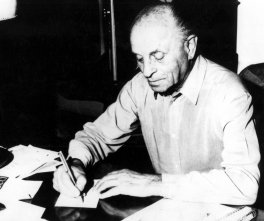 patented the ballpoint pen in 1943. Although Biro sold his patent to French businessman Marcel Bich in 1949 (who dropped the “h” from his family name in marketing his new product) and the inventor died in 1985, Biro lives on as the generic word for a ballpoint pen in Spanish and most other language.
His birthday (29 September) is celebrated in Argentina as Día del Inventor.
Slim’s pickin’s
Carlos Slim learned business from his dad… who got rich (but not in the way Carlos did) by paying ready money for distressed properties, and waiting for them to increase in value. Slim Senor paid cash for property and furnishings from the old elites of Mexico City fleeing the Revolution, waited for things to settle down, and sold to the new elites.
Following that simple plan, Slim the second got filthy rich not as a corporate raider, but by bailing out the “old elites” with cash, and sitting on his investments in the knowledge that they still had value. And, unlike a corporate raider, he wasn’t looking to strip his new properties, but wanted them to grow in value. Obviously, he bought up Telefonos de Mexico at below fire sale prices, but it was a loser at the time (perhaps by design, neo-liberal administrations finding it easier to sell the public on the need to dispose of state owned companies if they could make the argument that they were a drag on the economy).
Although he’s had a few losers, like CompUSA, along the way, the losers have been companies that couldn’t compete in an over-saturated market (like CompUSA), or could be folded into more successful ones. J.C. Penney, which opened its first Mexican stores in 1995, was just one more foreign retailer, and never was able to distinguish itself in any particular way. When Slim bought out J.C. Penney in 2003, they were folded into Sanborns’, a well-established name (and considered a much “higher class” retailer than Penneys). Sears, whose Mexican operations Slim had bought out between 1997 and 2000, while retaining a separate image (and a slightly different logo than the U.S. company) has become almost an adjunct to Sanborns… or at least where you find a Sears store in Mexico, there will be a Sandborns right next door.
Although his acquisitions have been mostly in telephony and retail sales, he seems to be following the a combination of the “money for the desperate” investment strategy (used to acquire Telefonos de Mexico, now Telemex) and his father’s simple idea of waiting out the bad times in his investments in the New York Times.
With newspapers closing throughout the United States, the New York Times was desperate for cash and was having trouble unloading its own less profitable assets when Slim “loaned” the Times corporation 250 million dollars in 2009. One uses the term “loan” advisedly. With the Times unable to borrow … especially in the sums it needed… at the then prevailing bond rate of 13.41 percent, Slim’s offer of the 250 million at 14 % was the best they could do. As part of the deal, Slim acquired an option for up to 15.9 million shares, and … by immediately acquiring enough shares to become “America’s Newspaper’s” largest outside investor, a seat on the board.
The cash infusion gave the Times not just breathing room to dispose of their less profitable units and to upgrade their existing products to at least remain relevant in a post-newspaper age, but even to expand. Slim’s “loan” paid for the Times’ acquisition of the Boston Globe in 2009.
At the same time, while it has meant the Times has had to trim dividends to meet the loan payments, it has been giving Slim a nice return. His estimated present 11.9 million shares have brought him about a million dollars in dividends… on top of the $263 million he’s estimated to have profited on the loan so far.
It’s unlikely Slim could, as he did with like J.C. Penney and Sears, simply acquire the  company (except maybe its outside the U.S. holdings… there is no reason the publication formerly known as International Herald Tribune could not become Mexican owned) or fold it into some other company. The New York Times being to U.S. media what Sanborns is to Mexican drugstores, I’d more likely expect Slim to fold other media holdings into the Times Company (as happened to the Boston Globe, probably with Slim’s approval). But… even with brokers unlikely to recommend investing in newspapers, and especially not in the New York Times Company, I wouldn’t count on it losing money, especially Carlos Slim’s money.
Sources:
Bloomberg, “Carlos Slim Still Reaping Big Rewards From NY Times Loan” 20 January 2014.
New York Times (“COMPANY NEWS; J.C. PENNEY IS SELLING ITS STORES IN MEXICO“, 30 October 2003)
Wikipedia, Sears (Mexico)
All your bread belongs to us, bwahaaaaa!
Canadians may control Mexican minerals, but they may soon be asking Mexicans, “give us this day our daily bread” :
Olivia Oran and Soyoung Kim, Reuters:
Grupo Bimbo (BIMBOA.MX), one of the world’s largest bread makers, has emerged as the leading candidate to acquire Canada Bread Co Ltd (CBY.TO) from majority owner Maple Leaf Foods Inc (MFI.TO), according to people familiar with the matter.
[…]
A purchase of Canada Bread, one of two dominant bakery companies in the  country, would build on Bimbo’s large U.S. acquisitions in recent years and strengthen the Mexican company’s position as the top bread maker in North America.
Bimbo has expanded its U.S. footprint in recent years, acquiring Sara Lee Corp’s North American bakery business for $959 million in 2010 and buying Hostess Brands Inc’s Beefsteak bread brand last year.
Ya think?
Richard Fausett, Los Angeles Times:
Mexican President Enrique Peña Nieto said Wednesday that the vigilante “self-defense” groups of Michoacan had “in no way” been allowed to expand on his watch, even though the groups began to emerge three months after his inauguration and have indeed grown in scope and power since.
Michoacan’s armed vigilantes went on the offensive this month, seizing control of a number of towns and communities and declaring their intention to directly confront their enemy, the Knights Templar drug
cartel, given the government’s inability to root it out of the southwestern state. Peña Nieto’s government was forced to send in a surge of troops and federal police last week to avert a bloodbath.
[…]
The president’s take on the self-defense groups may be part of his administration’s desire to downplay the crisis in Michoacan, which has garnered international attention at the expense of news about the president’s ambitious reform agenda.
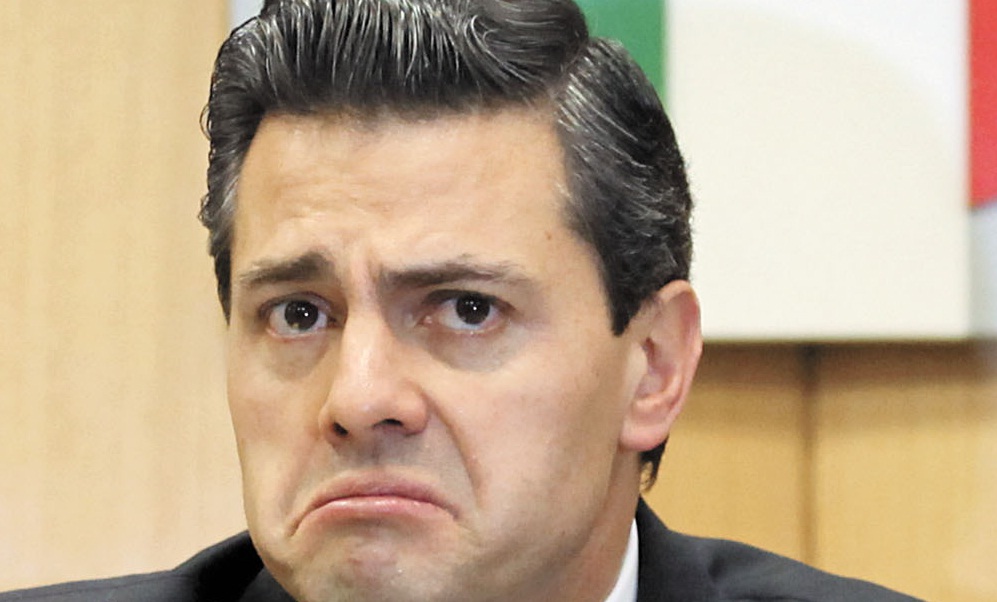
Well, that, or just because we have pyramids here, too… Peña Nieto thinks denial is a river in Mexico.
Greg Abbott… making life less safe for all of us
Texas Attorney General Greg Abbott, who probably not coincidentally is the front-runner in the upcoming Republican primary to select the party’s candidate for Governor in the November elections, turned his back on international law and the the rights of all citizens living abroad last night.
While U.S. Secretary of State John Kerry and Mexican officials (including Ambassador to the United States, Eduardo Medina Mora had both requested Abbott delay the execution of Miacatlán, Morelos native Edgar Arias Tamayo… not because Tamayo was innocent, nor because there is evidence that Tamayo was mentally incompetent, nor even because Texas is one of the few places on the planet that still practices the barbaric custom of making their citizens complicit in killing people as punishment for killing people… but because it makes any of us who live abroad or travel abroad less safe. Thanks to Greg Abbott.
“This has nothing to do with the behavior and the consequences that that behavior had,” Mexico’s ambassador to the United States, Eduardo Medina Mora, said in an interview. “A court has to examine the consequences of that violation, a violation that has been conceded by both the United States and the State of Texas.”
Tamayo was arrested for shooting a Houston police officer in 1994. While shooting a cop generally does mean the cops are less likely to follow procedure, the arrest was back in 1994. As the New York Times reported:
…authorities failed to notify Mr. Tamayo of his right to contact the Mexican Consulate, an omission that violated the international treaty known as the Vienna Convention on Consular Relations.
In 2004, the top judicial body of the United Nations — the International Court of Justice, informally known as the World Court — ordered the United States to review the convictions of Mr. Tamayo and 50 other Mexican citizens whose Vienna Convention rights were violated and who were on death row in the United States. Texas has executed two other Mexicans whose cases were part of the World Court’s order. Those two had their convictions reviewed in connection with the Vienna Convention violations, but no United States court has done so in Mr. Tamayo’s case.
Last week, the Inter-American Commission on Human Rights, an arm of the Organization of American States, said that if Texas carried out the execution, it would be “committing a serious and irreparable violation” of the United States’ international legal obligations.
Abbott had the power to delay the execution at least until the legal issue was worked out, but either for political expediency or out of a callous disregard for the safety of
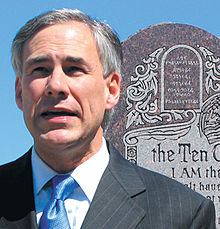
I think right behind him there’s something about “Thou Shalt Not Kill”, though when it’s politically expedient…
U.S. citizens abroad, failed to act. That in any civilized country, a foreigner who is arrested has the right to consular assistance has effectively been nullified by one U.S. state… something I don’t think makes any sense to anyone outside the U.S., certainly not to that copper on a back road who decides your broken left taillight looks a lot like the broken left taillight on the guy who robbed the local bank and decides to throw you in the slammer until he can come up with someone better to pin the crime on.
Thanks to Gregg Abbott, you can rot for all he cares. And, though it may help meet his short term political goals, was it really so smart for a would-be Texas Governor to piss off every political party in Mexico? PAN, PRI, PRD, and PANAL all jointly condemned the State of Texas’ failure to follow legal procedure. Yeah, and the U.S. claims to be a “nation of laws”. Good luck trying to sell that tonight.
La Jornada: “La ejecución de Édgar Tamayo, ‘un asesinato sin justificación alguna’: AI” 23 January 2014.
Manny Fernandez, New York Times: “Texas Prepares to Execute Mexican Despite Concerns That His Arrest Violated Law” 21 January 2014.
Víctor Ballinas and Enrique Méndez, La Jornada: “Reprochan legisladores inminente ejecución de Édgar Tamayo” (22 January 2014).
Self-defense… Templaros are not the only gangsters
John Ackerman, although he may not always have an answer, asks the right questions.
Mexico is not Colombia and here drug trafficking is not on the side of the guerrilla forces, but on the side of the government. The actions of the self-defense groups have revealed the complicities of the three levels of government and the three main political parties with The Knights Templar and other organized crime groups. How else to explain the fact that the government has barely begun to act, even in a simulated way, against the ringleaders of drug trafficking in Michoacán*? Why did more than six years have to pass from the beginning of Operation Michoacán for Monte Alejandro Rubido, a “security” official who worked with Felipe Calderón as well as Peña Nieto, to announce that “the room for criminals to maneuver is practically reduced to zero”?
The ups and downs between negotiation, repression, sponsorship and reprimand by the government toward the “self-defense” groups show that the uprising has cornered the regime. Miguel Osorio does not tire of pointing out that civilians carrying of arms that are for use exclusively by the army will be punished in “strict compliance with the law.” However, at the same time the authorities are meeting with armed civil leaders [… B]arely two days after the appointment of Alfredo Castillo, 80 armed members of self-defense groups were escorted by a contingent from the Federal Police in their seizure of the municipality of La Huerta.
[…]
… What makes the difference today is the emergence of a positive synergy between civil society and the self-defense groups that is creating the grounds for the strengthening of popular power.
There would not then exist a distance as wide as some imagine between the new self-defense groups and other community groups with a long history of defending their peoples and lands, such as the Purepecha villagers of Cherán and the Nahua of Sierra de Manantlán. Although many leaders of the “self-defense” groups have effectively expressed a questionable amount of confidence toward the corrupt and useless state and federal governments, the two types of movements share the same social basis of dignified Mexicans willing to defend their property and their country. For instance, the recent return of lands that had been expropriated by drug traffickers to their rightful owners constitutes a very positive sign from the self-defense groups on expanding their intervention further than matters solely of public security.
The possibility of a general social uprising in Michoacán, one that would spread to other regions of the country, is real…
(Full article in English translation here. Original Jornada article here).
* A question we have been asking here in Sinaloa about the seemingly simulated “war on drugs” against everyone BUT Chapo.
Los zetas need an image consulatant… desperately
Back in the day when los Zetas were the worst of the gangsters in Mexico (which seemed to change week by week… the fact that their first “don” was a former Special Forces guy, and some of their early recruits were also from the Mexican military led to the widespread belief that these guys were some sort of army of evil… which — while they were (and are) evil bastards — was just plain silly.
Every time you saw a “perp parade” of various Zetas you were struck, if by anything, of their un-military, undisciplined, look. One always got the sense that the reason they were always paraded before the cameras in their jockey shorts wasn’t (as one supposed) to show they hadn’t been battered and bruised by the police, but to show that these bozos weren’t so ferocious after all… something not helped by their habit of giving themselves ridiculous noms de crime.
Domingo Suárez Lacroix had been captured by the Army back in 2003 with 446 kilogs de cocaine, managed to get himself sprung from prison a year later and then got into a shootout with the police. On an outstanding warrant from the State of Tabasco, he was picked up in the Federal District and packed off to Altiplano Maximum Security Prison yesterday.
Which means, we are all supposed to feel safer, knowing El Teletubi is behind bars. El Teletubi? Really?
With no perp photo in the papers today, this’ll have to do…

A fish story
 The Mexican Pacific tuna fleet… the largest in the Americas… set out early Sunday, the closed season for tuna fishing in Mexican waters having ended at one minute past midnight on Sunday. This years harvest is expected to be in the neighborhood of 133,000 metric tons of fish, a huge drop from the 145,000 tons taken annually in the mid 2000s.
Prices will be higher, and no telling yet what the Fukishima disaster has done to Pacific fishing stocks. I don’t know if was stupid or not to stock up on canned tuna at the Soriana last week or not. Especially when I just live around the corner from the city fish market in a major fishing town, who will have uncanned — and, one hopes, not irradiated — tuna for a lot less in a few days:

Bullshit from the Washington Post
Joshua Parlow (a new name to me among the “usual suspects” who report on Mexico for the U.S. media*) tries to create the impression that the self-defense organizations springing up (or rather, that have sprung up over the last year or two, but now dominate the news from Mexico) are something “created” by returned migrants from the U.S.
It could be that Parlow only spoke to those who spoke English, and it could be he was just looking for a U.S. “angle”, and — as is typical with U.S. writers — has no sense of history, nor is able to consider Mexican responses in any cultural terms other than those of the culture of the United States.
That men from rural Michaocán have to emigrate to the U.S. for work is well known, and has more to do with economic opportunity (or lack thereof) than anything else. Other than the weapons, the only real U.S. “contribution” has been your appetite for narcotics (which finance the Templars and other gangsters), and your insane agricultural policies that have bankrupted rural Mexicans and created opportunities for gansters.. To claim that “gangs” (as your writer dismissively labels these self-defense groups) are a U.S. import is nonsense.
Mutual self-defense organizations have a long history in Mexico, and rural people’s militias go back at least to the Revolution of 1910-20. The sense of the village as a commune, and responsible for its own affairs (including its self-defense) long pre-dates the Conquest. There are any number of local uprisings against the state, having used the slogan “DEATH TO BAD GOVERNMENT,” precipitated by the failure of the state to protect the local interests.
As to people’s militias, they go back at least to Emiliano Zapata… this movement challenges not just those old-fashioned banditos— rebooted in our international financial system as “cartels” — but the centralized state in its present incarnation as a subservient client, and resource provider to the United States.
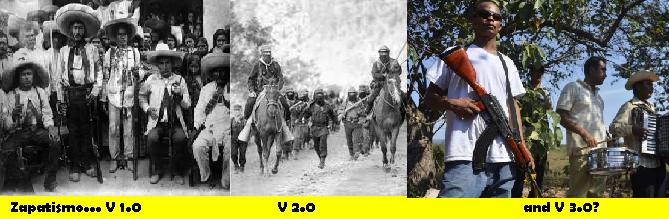
* As I should have known, Parlow’s background is as a middle-east correspondent. He was a Wilson Center Public Policy Scholar last year, his Expertise being in “Security and Defense; Asia; Afghanistan; Middle East and North Africa”… none of which has anything to do with Mesoamerica, Mexico or the avocado country.
Advice from the State Department



 mexfiles.net