What Cuban boycott?
Since everybody’s been talking about the Kennedy Administration this last week, here’s another ghost from that era that still haunts Latin America… the Cuban boycott.
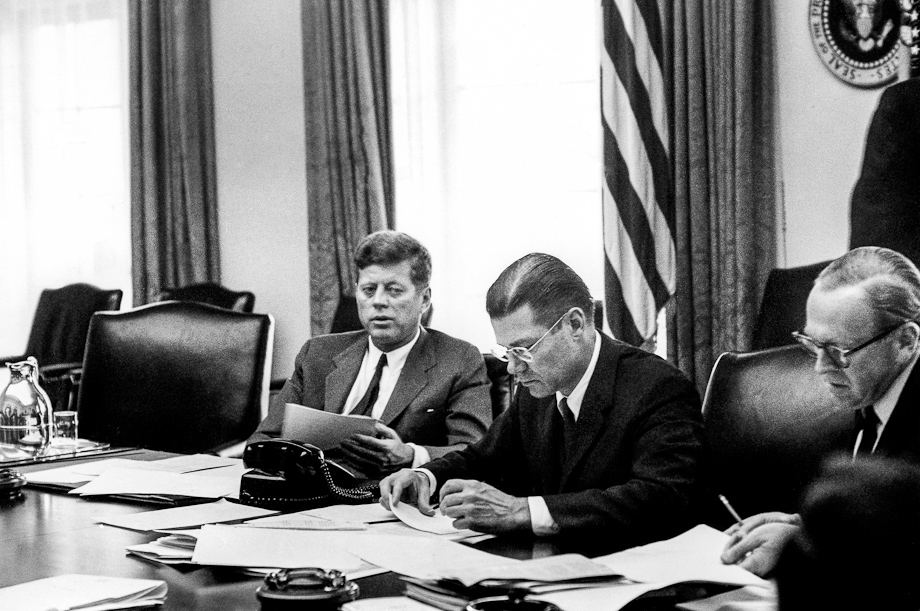
October 1962
Meeting of the Executive Committee of the National Security Council . Photo: Cecil Stoughton, White House / John Fitzgerald Kennedy Library, Boston
In the annual U.N. vote condemning the boycott, three “countries” abstained (Micronesia, Marshall Islands, and Palau: all “Associated States” of the United States) and every other country (including countries at war with each other, like North and South Korea) voted to end the blockade. Except the United States, of course. And one other…
Support for Washington in 2013 was technically the lowest ever, with only Israel in its now impossible-to-be-smaller corner. (Notably, Israel has significant two-way economic trade and commercial relations with Cuba and there is fully legal travel from each country to the other. “We assume that at least 10,000 Israelis have already visited Cuba,” said Daniel Faians, president and CEO of Polaris Group, a large travel wholesaler and airline agent based in Tel Aviv. That would be the equivalent, in an Israeli population of just under 8 million, of around 400,000 US visitors. Faians has found no anti-Semitism in Cuba and no personal hostility towards Israelis even though the Cuban government is a strong supporter of Palestinian self-determination and has normal or friendly diplomatic relations with all the Arab countries as well as Iran. Faians emphasized, “And we don’t have any problems with the authorities. If you arrive with an Israeli passport, you get the same treatment as anybody else.” Fifty-six Cuban Jewish athletes participated in the 2013 Maccabiah Games — the so-called Jewish Olympics — in Jerusalem with no incidents or problems. There has been significant Israeli-based capital investment in numerous Cuban projects and industries including irrigation technology, office towers, and agricultural production.)
Ike Nahem, “Another Vote on Washington’s Anti-Cuba Policy at the United Nations” (Counterpunch, 24 November 2013)
Mexico 2006, Honduras 2013
In The Guardian this morning: “Ruling party candidate in lead to become Honduras’s next president”:
With just over half the ballots tallied by late on Sunday, Juan Orlando Hernandez of the governing National party had the edge over Xiomara Castro, whose husband Manuel Zelaya was ousted in a 2009 coup that has left the country politically unstable.

Andres Manuel Lopez Obrador, 2006 protests
Hernandez and Castro went into Sunday’s election neck-and-neck in opinion polls, and expectations of a close finish raised fears that a disputed result would produce more instability and protests. Voting went off peacefully amid a heavy turnout, however, and the uncertainty of the final result plus a cold, rainy night kept the streets quiet.
[…]

Xiomara Castro, 2012
Both of the two top candidates claimed victory, with Hernandez saying he would start on Monday with the job of leading Hondurans out of the misery they’ve endured. Poverty and violence have climbed in the past four years under President Porfirio Lobo, also of the National Party.
Castro said her campaign’s numbers gave her a victory by 3 points, then left her election-night party at a hotel and was not heard from the rest of the night. Zelaya urged her supporters to stay at the polls and keep monitoring the count.
Which led me to comment:
This is eerily like our 2006 presidential election here in Mexico, in which a leftist opposition party was widely expected to win, but the official returns favoring the incumbent conservative party contradicted all pre-election polling data and on-sight anecdotal evidence. Of course, ancecotal evidence and opinion polls may not be right, but it did suggest fraud … and, as in Honduras, there was under-reported evidence of overspending, and biased media coverage (as well as interference by sitting officials) to favor the conservatives. The Mexican left held massive non-violent protests and suspicion of fraud still exists (the ballots were eventually destroyed without a full investigation) and the country suffered through a presidential term by a right-wing “law and order” administration which was the bloodiest since our Revolution. That Hernandez is far to the right, and far more “law-n-order-ish” than Calderón does not bode well for our unhappy neighbor to the south.
As usual, Chomsky is right. While mostly talking about the (ir)responsibility of the media in fomenting “terror” among the population, he makes the following observation about immigration and our “conflicted” attitudes … the results of inadequate and misleading media reports:
… Right around Boston, there’s a pretty large community of Mayan immigrants. They’re still coming right now. They live right near here, but under the radar because they’re undocumented. Why are Mayans coming here? They don’t want to be here. Some of them I know pretty well, and when you talk to them, they say, “We’d rather be home.” They don’t want to be here.
Why are they coming? Well, because in the early 1980s, there was a virtually genocidal attack on the highlands in Guatemala that was supported by Ronald Reagan, backed by the United States. It practically  wiped the place out, and there are now actually trials going on in Guatemala of the perpetrators, but nobody here talks about it. So, you know, we destroy their country and people flee because they can’t survive. In fact, there’s an interesting book coming out by David Bacon, who is an immigration activist. It’s called “The Right to Stay Home.”
It was obvious, for example, that NAFTA was going to destroy Mexican agriculture. The Mexican campesinos can be as efficient as they like, but they can’t compete with highly subsidized U.S agribusiness, and that means people are going to flee. And, in fact, it’s not just coincidental that the year NAFTA was passed, Clinton started militarizing the border. It was an open border before, and so, of course, people are going to come. Well, these topics aren’t discussed.
If you’re worried about immigration, let’s take a look at why people are coming and what our responsibility is and what we can do about it…
Catherine Komp, Truthout.org via Salon.com: “Noam Chomsky: America is a terrified country“
Honduras: already signs of trouble
As of earlier this evening, the Honduran Elections Tribunal … based on 24 percent of the vote… showed National Party presidential candidate Juan Orlando in the lead with 249,000 votes over Xiomara Castro of LIBRE’s 202,000. Both candidates, based on these incomplete returns are claiming victory.
What makes this election so important… well beyond Honduras… is what it says about both U.S. influence in the Latin America, and the role of “traditional” politics. Honduras, like the United States, has — for as long as anyone can remember — been a two-party state, with two right of center pro-capitalist parties: the Liberal and National Parties. The 28 June 2009 coup d’etat removed Liberal Party president Manuel (Mel) Zelaya and installed Roberto Micheletti. While in the United States and Canada, every attempt was made to claim Zelaya’s removal was legitimate… and if not legitimate, then necessary given the Liberal pol was pushing Honduras into an alliance with Venezuela though extra-legal means, no one outside the two North American powers bought this. What the rest of the planet saw was that Zeleya’s “crime” was promoting a referendum on a new constitution to replace the flawed 1982 Constitution (which among other things, forbids exiling a president… which in this instance was done) which was hastily cut and pasted together as part of negotiations to end 42 years of military rule (under the “tutelage of the United States).
Even the conservative, pro-U.S. government of Mexico’s Felipe Calderón having rejected the U.S./Canadian position, Calderón led the way in forming CELAC … the Council of Latin American and Carribean States… as a counterweight to the OAS (Organization of American States) with the same membership, but without the United States and Canada… the two countries that denied a coup had taken place. Mexico’s PRI, while pro-U.S. and pro-NAFTA over the last 20 years, rediscovered its nationalist heritage in the last election, and in coming into the Presidency (and a congressional majority) has taken a less subservient attitude towards the “Colossus of the North” in good part because even the conservative elements in the party recognized that U.S interests and Latin American interests collided.
The interim government that replaced Zelaya was also headed by Liberals, and another Liberal politician, Porfirio Lobo won the tainted 2010 special election to finish out Zelaya’s term. Resistance to the coup has been fractured, and there were eight parties on the ballot. The main elements within the resistance coalesced into a pro-Zelaya part of the left, LIBRE (Partido Libertad y Refundación), and the Liberals have been toast. Xiomara Castro, LIBRE’s candidate, is Mrs. Mel Zelaya.
Should initial counts hold up, the Liberals will have gone from the main party to a third party, with LIBRE — if not the ruling party — then the mainstream opposition. As it is, opposition parties, overall, received more than the majority of votes, with the Nationalists and Liberals together less than half the votes.
With both Castro and Nationalist candidate Orlando having campaigned on promises to push through constitutional changes (although Orlando’s changes would allow for a larger role for the military in civil policing, creating an even more repressive society than the one the opposition parties sought to change), a Nationalist government is going to have to respond to LIBRE’s own demands for economic and social change.
I don’t mean to say that a housewives Buernos Aires, or factory workers in Saõ Paulo or Aguascalientes are going to be influenced by what Honduran voters do, and even if reaction to today’s elections lead to violence (or, more troubling, to pressure on the U.S. government to “fix” Honduras) are they going to take much notice of the country, but the effects on their governments, and their government’s responses, are felt throughout Latin America. And, while Honduras is the last country one would consider a trend-setter in Latin American political thought, what makes this even more important is that being such a “backwater” of political and social innovation, when there is genuine interest in change, one can safely assume that the region as a whole is no longer satisfied with the status quo.
A path of destruction.
Laura Carlsen in today’s New York Times
Nafta is limping toward its 20th anniversary with a beat-up image and a bad track record. Recent polls show that the majority of the U.S. people favors “leaving” or “renegotiating” the model trade agreement.
While much has been said about its impact on U.S. job loss and eroding labor conditions, some of the most severe impacts of Nafta have been felt south of the border.
Corn imports drove down farmers’ price, driving millions to migrate north. It lowered labor rights and environmental rules, hurting all workers.
Nafta has cut a path of destruction through Mexico.
Selfie-destructive
Serafín Zambada, son of Sinaloan …er… unregulated agricultural produce exporter Ismael (El Mayo) Zambada, was arrested at the U.S. border crossing in Nogales, Arizona.
According to reports, young Zambada was tracked down through his social media accounts, where the dumb fuck liked to show off his toys and his pets… leading investigators to conclude either Zambada was more entrepreneurial than the average “junior”… or more spoiled than most… and about as stupid and self-centered as any.


sources: Contiendo, Animal Politica
Anyone understand this?
I admit I’m stumped:
Nov 19 (Reuters) – Mexican state-owned oil major Pemex is seeking to join forces with billionaire Carlos Slim to buy a 10 percent stake in Spanish oil group Repsol, to add to the 9.3 percent it already holds, ABC newspaper reported on Tuesday citing unnamed sources.
 Pemex, which has threatened to sell out of the Spanish company in the past because of differences with Chairman Antonio Brufau, will present the plan in its next board meeting, the paper said.
Such a transaction would make Pemex the biggest stakeholder in Repsol.
As part of the deal, Slim would buy Repsol shares in the market. At Monday’s closing price, a 10 percent stake in Repsol would have a market value of more than 2.4 billion euros ($3.3 billion)….
Does this mean Slim is buying Repsol shares and re-selling them to PEMEX, or that Slim as a private citizen is becoming a part owner of PEMEX assets, or a company Slim controls or what?
In theory, there is nothing wrong with PEMEX — as a state agency — buying into a foreign non-state oil company, just with foreign oil companies (or individuals) buying into PEMEX. That PEMEX would become Repsol’s largest shareholder (and seeks to change its management) is interesting, but not sure what it means. Repsol was favored in contracts by the previous (Calderón) administration, and I’m wondering if this isn’t a way of bringing in foreign investors (at least in the petrochemical services sector) through the back door. Or at least one private investor?
Naughty or nice?
Mexican kids luck out with one guy bringing you toys down the chimnea, and another couple of guys showing up with more stuff on January 6…
You better be good, but they don’t have to be…
We will fight them FOR the beaches…
Club Med affiliate Aldeas Turísticas S. A. is claiming it has a “concession” allowing it exclusive rights to the 6000 meters of Playa Quieta in Zihuatanejo, Morelia.
Blocking access with cables running out to buoys at sea, and posting “restricted” signs, Club Med claims to have special permission from the previous federal and state administrations… which have led to a denunciation (legal challenge) by local priest, Father Roberto Peña, heading a group of local citizens complaining that they, and tourists not staying at the resort, have been “escorted” off the beach, or denied entry. Consessionaires, who make a living providing services to beach users have also complained… in one instance, beach chairs offered for rent by Promotora de Playa Quieta, were removed by Club Med personnel, which justified their actions by saying the Club had chairs of its own to rent, and that it did provide public access… provided you were staying at their resort.
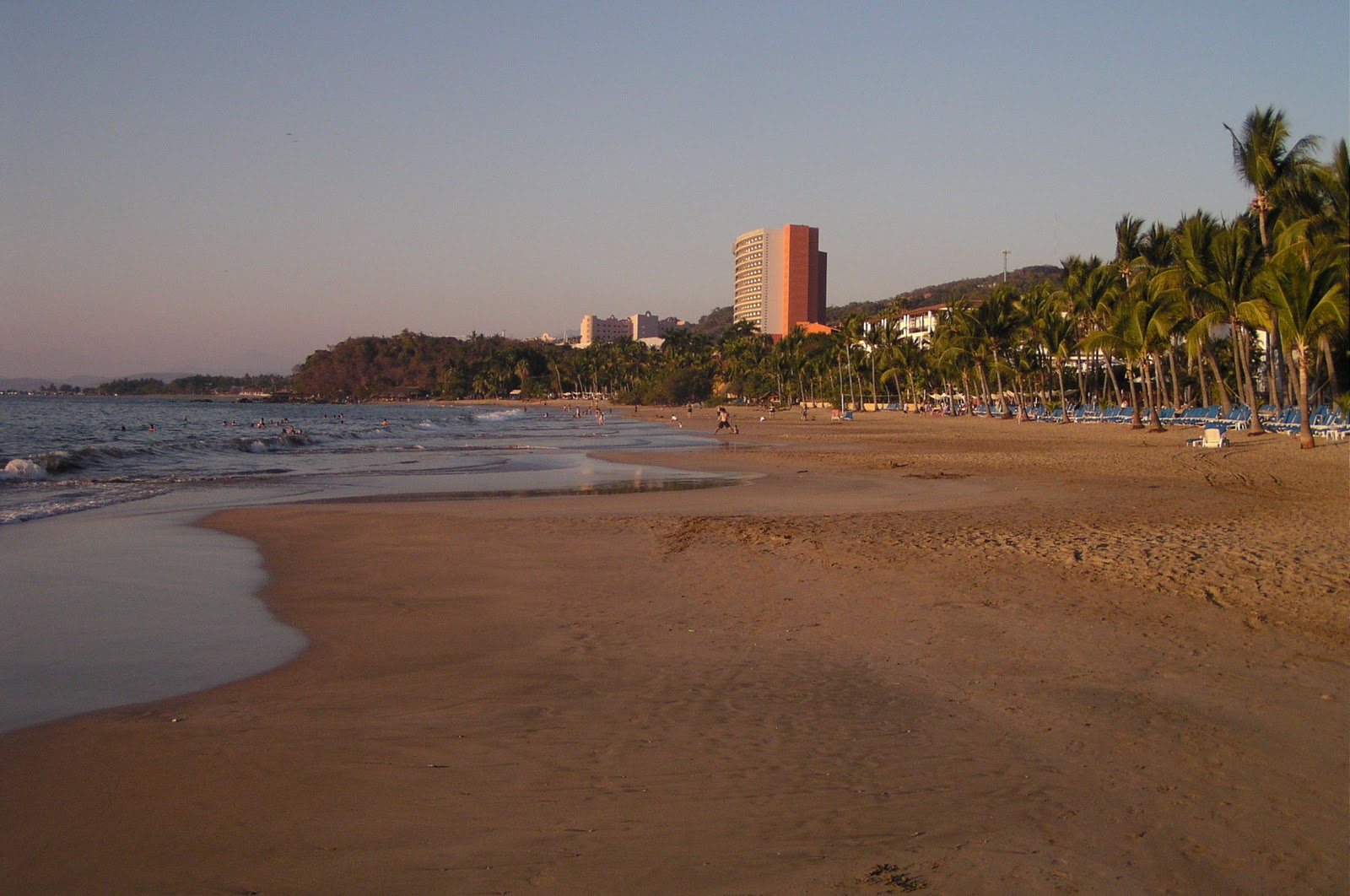
Club Med Condos, December 2013, “.travelwithkevinandruth.com”
“We … want to rescue that beach, because there is no right to exclusive use, nor is it fair for a company to divest the public of a beach belonging to all Mexicans,” Father Peña said. , it is not fair that a company will divest the public of a beach that belongs to all Mexicans, Father Peña said.
Under Mexican law there is no such thing as a private beach. SEMARNAT (the Secretariat of Natural Resources) has the right to make some restrictions… motor vehicle use, or for wildlife preservation (sea turtle nesting sites are off-limits to people and horses part of the year, for example) and forbidding dangerous activities, but that’s it.
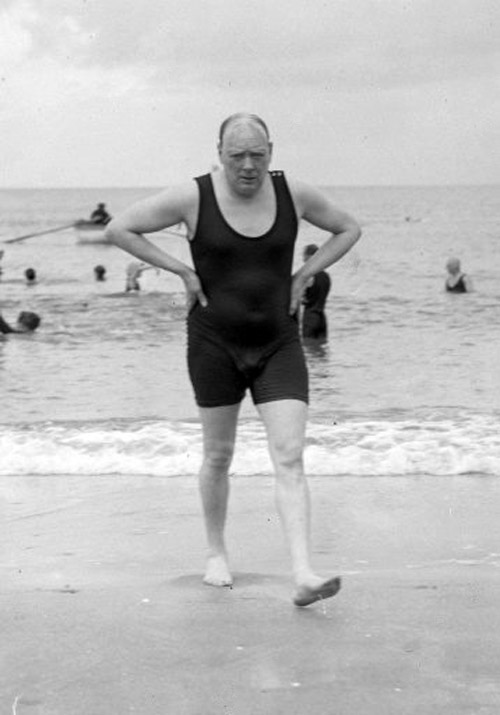
…we will NEVER surrender!
Beaches ARE public property under Mexican law and private property owners abutting beaches MUST provide public access. With talk of permitting foreigners to own property within 20 Km of the coasts (which foreigners do now, by setting up a Mexican trust to be the legal owner… which Aldea Turistica S.A. appears to be for Club Med) this is likely to become an ever more contentious issue, and issues like this one in Zihuatanejo, are just one reason talk of a constitutional change that would allow for foreigners to buy property outright in the exclusion zones is bitterly opposed by nearly everyone except real estate developers (and the politicians honest enough to stay bought).
Not to belieber the issue
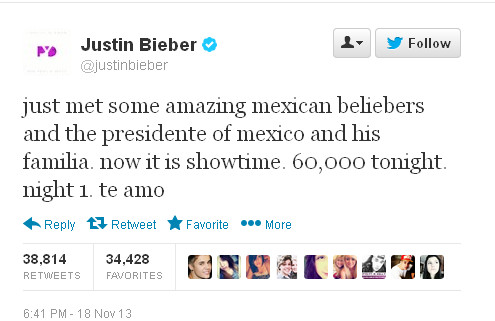
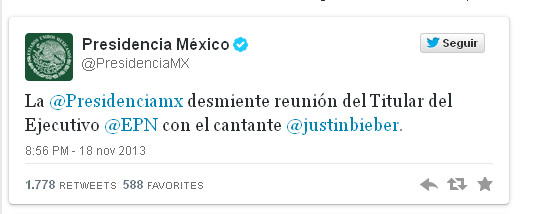
The Office of the President went to the trouble of releasing a statement at 9 P.M, saying the President had been in a National Security meeting… but no mention of whether Justin Bieber was there or not.
Mex Files missing files
I don’t know when it happened, why, or how, but I know I made SOME posts between September and December 2011, as well from September 2005 to April 2006 although there is nothing on this site to show for it. The latter may have been lost when I moved from “blogspot” to “WordPress” in November 2007 (and posts before that would have been rather spotty, perhaps one or two a month), and in September 2011 I took a break from posting, but only for a short period … not three months.


 mexfiles.net