Before interest flags

Statehood for the Commonwealth of Puerto Rico is one of those ideas that pops up every couple of years, pushed by whatever political party on the mainland thinks it’s to their advantage, then dies out… given concern over not only with perceived cultural differences between the “mainland” and the Island, but over which political party would really benefit. And there is that pesky 51-star on the flag problem.
Perhaps there is a way to incorporate the cultural symbols of Puerto Rico, AND deal with the 51-st star:

Some are more equal than others…

Sure, Mexico needs to do something about income inequality, but it looks like some unnamed country just north of us has an even bigger issue to contend with.
As goes Haiti, so goes Ontario… maybe? sorta?
Michèle Pierre-Louis, who was Prime Minister of Haiti from September 2008 to November 2009 has never been completely open about her sexual orientation, but as a woman who left her husband to live with another woman, she was widely (and snidely) assumed to be a lesbian. As it was, while neither confirming nor denying her sexual orientation, she was the first person to hold such a post in the Americas DESPITE her sexual orientation. That is, the candidate’s sexual orientation was raised as an issue, but the candidate won.

Pierre-Louis (left) and Wynne (right). Who’s on first?
Haiti is a country of only 10 and a half million, and not a lot of economic power. While Ontario is only a Canadian province, and not a country, it has more people (13 and a half million) and has a much heavier footprint in the affairs of the Americas than Haiti. And, as of next week, it will have a lesbian premier (provincial prime minister).
Katherine Wynne, who unlike Pierre-Louis is not at all coy about her sexual orientation, was selected as Liberal Party leader from a multi-cultural field, including, in her words, “candidates who were Portuguese-Canadian, Indo-Canadian, Italian-Canadian, female, gay and Catholic.”
Wynne, it should be noted, has not been elected premier, but as party leader will assume the office when incumbent Dalton McGinty resigns, something expected to happen tomorrow or later this week.
Cassiz and Hammar… not the same
I saw where one of my facebook friends (and a regular reader of these posts) opined (one assumes with a good dose of snark):
I’m just going to say that, as a foreigner in Mexico, I’m generally okay with foreigners in Mexico getting out of jail just because they’re foreigners. If Mexico had a fair, efficient, transparent and impartial justice system, I might feel differently.
Justice and the law are different things.
I was involved in a extremely minor way with those seeking Hammar’s release (helping a small veterans organization with some translations, and finding Mexican contacts for them) . He was the U.S. Marine veteran who entered Mexico with an illegal shotgun, believing U.S. Customs could “authorize” the weapon’s entry. Hammar was jailed … but taking into consideration Hammar’s emotional and mental health, and his naivete… justice was served through a speedy trial and deportation.
It was unfortunate that the incident was politicized — mostly based on the assumption that a rich country foreigner like Hammar deserved special rights, or that the law didn’t apply to people like him, but also because it fed into U.S. stereotypes about Mexico and Mexicans (and played nicely into the whole U.S. gun control “debate”) . In some sense, Hammar’s status as a foreigner worked to his advantage: I’m under no illusion that emotionally or mentally damaged Mexicans sitting in jail awaiting trial are not likely to receive special treatment, nor have their cases adjudicated in a timely manner.
I wonder though, if the speedy resolution of his release, hasn’t allowed us to forget the bigger justice issue. Alas, other than a one-day news story in the United States on his release, the Hammar incident has been not led to any consideration of how mentally and emotionally ill prisoners are treated here, or any serious discussion of Post Traumatic Stress Disorder in the United States.
Florence Cassiz has also hadher sentence reduced to time served and expelled from the country. Cassiz, like Hammar, is from a politically well connected family and during her stay in a Mexican prison received positive media attention in her home country. But, for Florence Cassiz to claim her arrest came about because of naivete or a misunderstanding of the law is ridiculous.
She was a gangster moll, and she was, by most accounts, an active participant in activities that would be criminal anywhere… i.e., kidnapping. While gun-running (which is what Hammar was accused of) is also a serious crime, it was understood relatively quickly that he was not intentionally committing a crime, but the law is the law… and to NOT investigate would have been, in a very real sense, an injustice to the Mexican people who have been the victims of U.S. gun runners for the last several decades now.
For complex cultural reasons (that I don’t completely understand), kidnapping is popularly regarded as a more serious offense than murder. Although both the death penalty and life imprisonment are considered barbaric in this country, there is support for both when it comes to kidnappers. Yeah, Cassiz is THAT low. That Cassiz was involved with kidnappers is not in doubt, and to not have investigated would again be an injustice.
While anything but a sympathetic figure, it was the perversion of the law — not of justice — that led to Cassiz’ release only seven years into a well-deserved sixty year stretch in the slammer.
The Calderón Administration’s search for a telegenic anti-crime victory for the much criticized Procurador General de la Republica (“Attorney General”) Genaro García Luna … coupled with the PAN administration’s abiding interest in presenting the Federal Government as the one competent to resolve problems in the PRD-controlled Federal District, and the Administration’s close ties to Televisa, led to a “re-actment” of the take-down of the Zodiaco gang (including Mlle. Cassiz) and to rather shoddy investigative work (allegedly including torture, though there are plenty of perfectly civilized people in this country who wouldn’t have objected to “enhanced interrogation” in such cases).
That the Calderón Administration chose to make Cassiz a TV star (or rather, villain) and the ham-handed PR spin around the arrest, unfortunately makes a fair trial impossible at this late date. That Cassiz was released was not a victory for justice, but for the on-going reforms of the legal system (ironically, a legal system adopted from Cassiz’ own France). For Cassiz to have said in Paris that her release proved she was “innocent” is nonsense. I’m not familiar enough with Mexican law to know if there are rules against “double jeopardy” but — being unlikely to return to Mexico — any discussion of a retrial for Florence Cassiz would be purely theoretical at best.
Of course, legal technicalities are meant to insure justice, and in that sense, Cassiz’ release was “just”. But this was “just-us” not “justice”. With former French President Nicolas Sarkozy having used the threat of cancelling sales of French aircraft to Mexico, “convinced” the Calderón Administration to pressure the Supreme Court to review Cassiz’ original conviction, and to shave 30 years off the original 90 year sentence, and the general tenor of French reportage on Cassiz, there was more than a whiff of racism and elitism in the claims that the Frenchwoman was treated with undo harshness by the Mexicans.
Although there were the unfortunate elitist “first worlder” remarks verging on racism surrounding the Hammar incident (notably, from Fox News commentator Bill O’Reilly… who we expect that sort of thing from anyway), and it’s understandable that prisoners who have become media darlings are cheered in their home country when they are released, to see Florence Cassiz’ expulsion as some sort of moral victory over Mexico is missing the mark… while it highlights a need for certain changes in the system, it does no more to bring about real justice than Hammar’s release is likely to lead to better treatment for the mentally ill.
However, and it’s not the French who deserve credit for this, Cassiz’ release — and the outrage it has caused in this country — has at least begun the conversation on the need for the law, and the agents of the law, to work towards justice.
Links:
SDP Noticias:
Aplaudo la liberación de Floance Cassiz
Víctima de Cassez envía carta a EPN: “Me daba a escoger dedo u oreja”
Jornada:
Autoridades del más alto nivel, detrás de mi encarcelación, afirma la francesa
USA Today:
Mexico’s legal soul search after Frenchwoman freed
Seattle Times (McClatchy News):
Mexico moves to shore up its justice system
ADN Noticias:
Miguel Carbonell: Florence Cassez… ¿En verdad es culpable?
Someday, they’ll be together…
She may not be as rhythmic as the dynamic trio of Diana Ross, Mary Wilson, and Florence Ballard were, but Madame Justice Sonya Sotomayor has better moves than the other eight Supremes…
Really, could you see Anthony Scalia dancing with Jorge Ramos? Or. Clarence Thomas, or Ruth Bader Ginsburg? Ok, maybe Benjamin Cardozo…but let’s not go there.
Much too simple, but then, it’s a cartoon
An immodest proposal
The most appalling idea yet in the “war on (some, but not all) Mexican drug (exporters)”. In the overwrought prose of the Associated Press:
The Pentagon is stepping up aid for Mexico’s bloody drug war with a new U.S.-based special operations headquarters to teach Mexican security forces how to hunt drug cartels the same way special operations teams hunt al-Qaida, according to documents and interviews with multiple U.S. officials.
Such assistance could help newly elected Mexican President Enrique Pena Nieto establish a military force to focus on drug criminal networks that have terrorized Mexico’s northern states and threatened the U.S. Southwest border.
There was mention in the Mexican press of a “private meeting” between Secretario de Gobernacion Migual Osario Chong and U.S. Ambassador Anthony Wayne a few days prior to this story appearing in U.S. publications. The substance of the meeting wasn’t given in the Mexican media, but I wouldn’t be surprised if this U.S. proposal was presented. What I also haven’t seen in the Mexican media, nor in the U.S. reports, is any mention that Mexico requested this kind of “assistance”.
The poor showing by PAN — the party of the former administration — in July’s election was seen by most observers as confirmation that the public would not stand for the continued militarization of the anti-narcotics “crusade”, and that there was widespread resentment of U.S. “assistance”. And — not that I think Peña Nieto isn’t capable of making misleading statements — Mexicans were being assured during and after the campaign that a Peña Nieto administration was less interested in taking “trophy” gangsters than in increasing everyday security for ordinary citizens. This may be just one of those over-reaches by the U.S. military in its bureaucratic search of a mission.
Based at the U.S. Northern Command in Colorado, Special Operations Command-North will build on a commando program that has brought Mexican military, intelligence and law enforcement officials to study U.S. counterterrorist operations, to show them how special operations troops built an interagency network to target al-Qaida mastermind Osama bin Laden and his followers.
The special operations team within Northcom will be turned into a new headquarters, led by a general instead of a colonel. It was established in a Dec. 31 memo signed by Defense Secretary Leon Panetta. That move gives the group more autonomy and the number of people could eventually quintuple from 30 to 150, meaning the headquarters could expand its training missions with the Mexicans, even though no new money is being assigned to the mission.
What bothers me — beyond the idea of Mexican military being under the command of, and directed by, a foreign government from their own territory — is the presumption that the Mexican military would be used on its own territory to “hunt” for common criminals with techniques supposedly designed to fight ideological foes. In other words, training for domestic use what was internationally sanctioned (or at least tolerated) death squads.
I may be cynical, but I’m not the only one to notice that the big time gangsters who don’t live long enough to make it into a court of law tend to be either U.S. citizens like “El Barbie” or who appear to have been assets for U.S. secret police and/or intelligence operatives (like Vicente Carrillo Leyva). I suppose there’s a logic to NOT allowing the “kingpins” to appear in court (which could be rather embarrassing to some other kinds of “kingpins”… like bankers and high level officials), there’s the added danger that it’s not a flaw but a feature of these kinds of death squads that they are used for political purposes.
And, that’s on top of the whole ethical problem of just killing people. What’s maddening about the whole proposal is that the U.S. is escalating their war on drugs just as the U.S. is starting to seriously consider some very mild narcotics law reforms (at the state level), as are governments in Latin America that see themselves as victims of U.S. “assistance”… even right-wing leaders, like Guatemala’s General Oscar Pérez Molina. And the United States is FINALLY beginning to at least talk about making some half-assed changes in their ridiculously lax gun laws. Both decriminalization in the world’s largest narcotics consumer nation and some control over the internal arms baazar in the United States are admitted by the U.S.administration to be of some use in bringing down violence in the supplier countries. But with the butcher’s bill from U.S. “drug war assistance” now officially over 70,000 and unofficially over 90,000 just here in Mexico, the U.S. response is to escalate the “assistance” and maybe throw in some drones.
The AP story does mention that “it’s unclear whether the Mexican government will agree to boost its training”, but even so, that the idea is being considered, is something we should be concerned about.
The U.S. just wants the drug war to continue indefinitely, it seems. No mention is ever made of reforming it’s own agricultural system (and opening the market for small farmers in Latin America to have a viable crop other than poppies and marijuana and — in the Andean countries — coca). Or, of the unspoken assumption that any Latin American commodity in demand by the northern countries should be in the control of northern country businesses (you don’t think that “cartels” controlled sugar, coffee, mining, oil, etc. exploitation here non-violently, do you?) and hate it when Latin Americans control the production and distribution of something they desire. And… of course… a terrible dependency, not so much on narcotics (although the whole country could probably use a good 12-step program), but on exporting war as a means of boosting the national economy.
Frankly, if the U.S. wants to use their trained death squads to “fight drugs” they can unleash them on U.S. bankers who launder money, and the arms dealers who sell weapons to Mexican gangsters and… if the U.S. is really serious, start sending out pickup trucks full of masked soldiers with 50-cal machine guns mounted on the roof into suburbia, and deal with their drug users.
A million gringos?
I’ve been hearing for years that there are supposedly a million gringos living in Mexico — a number was pulled out of somebody’s butt (the somebody being a highly unreliable source that used to be running around this country… and cyberspace… spouting all kinds of nonsense) back in 2002, and taken as semi-gospel ever since.
While it’s difficult to count U.S. citizens who are dual nationals, and there may be a million FOREIGNERS in Mexico at any time (this is a big country, and one of the 10 largest tourist destinations on the planet after all), the Centro de Estudios Migratoria of the Instituto Nacional de Migración, pegs the number of total foreign RESIDENTS at a mere 262 thousand plus. That was in 2009, and of course, there are “undocumented aliens” (including, and maybe especially)  North Americans, but even if the number of foreign residents doubled or tripled in the last couple of years, or was vastly undercounted, it’s still nowhere near a million anybodys… and certainly not a million gringos.
AMERICANS… meaning those who hail from somewhere between Point Barrow to Tierra del Fuego account for 2/3rds of foreigners, but U.S. and Canadian citizens only account for a about a quarter of foreign residents. And, of those 70,000+ “North Americans,” an undetermined number are people who already had cultural or familial ties to Mexico when they came here.
There are far more Argentines and Colombians than Canadians… followed closely behind by Cubans, Venezuelans and… Chinese. Spaniards still come to Mexico in some numbers, as they have since 1521. The second largest single cohort of foreign nationals in Mexico are the los gachupines.
Other than simply accepting an unreliable source, how did we get such “funny numbers?” I tend to think that a lot of it was wishful thinking on the part of realtors, the “leisure industry” and those catering to the “gringo ghettos” (which includes myself, at least partially). That is, by presuming one has a market of a million, it’s a lot easier to find investors (and to continue investing one’s one time and effort and money) in a Mexican business, than when faced with a market (scattered over a huge country) that’s actually much smaller and more localized than one wants to think.
There’s also the tendency to assume that those with which you share one trait share all the same traits. I get semi-annoyed at the English language “ex-pat” websites and message boards, which are full of information (and misinformation) and discussion of new immigration and visa procedures. Most commentators, even the knowledgeable ones, go on and on and on about requirements for a pensioner’s visa, as if pensioners were the only sort of foreign resident of any significance. While slightly less than half of U.S. and Canadian resident foreigners are on pensioners’ visas, overall, only about 20 percent of foreigners are pensioners. Over half of us gringos, and most of the other immigrant… ex-pats… refugees… “mojados reversos”… creatively (or otherwise) self-exiled… are not.
And, because the North American pensioners are so concentrated in a few communities, there’s again, that sense that all foreigners are living in such places. A third of foreigners live in Mexico City, and none of the ten largest municipalities we think of as “gringo” has a foreign population of more than 2 percent.
A million is a nice, round number, and sounds good. But perhaps those that claim a million of US guys just plain overlooked their neighbors, or just can’t count.
War is religion by other means?
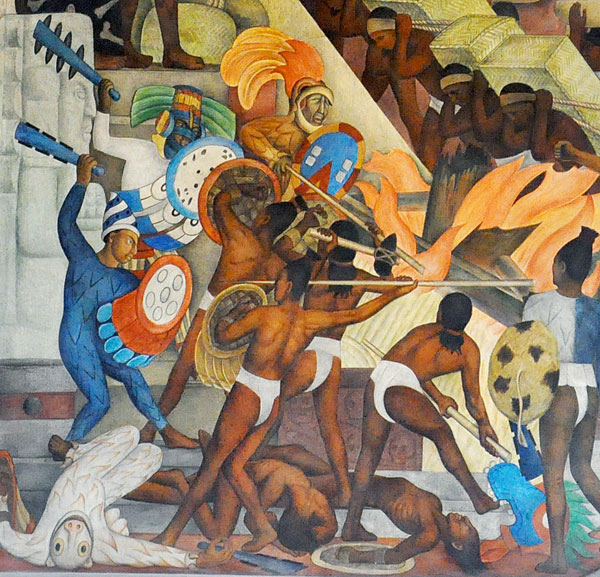 Jason Dormady, my co-administrator on the Mexican History/Historia Mexicana facebook page, is an assistant professor of history at Central Washington University where he teaches courses on Mexico, general Latin American topics, world history, and religion in Latin America.
His students are reading Inga Clendinnon’s “The Cost of Courage in Aztec Society” and have published their “reflections” on the religious meaning of warfare. While Jihad and the Crusades are the most likely analogies we would make in the “west”, if one defines “religion” as any faith-based ideology (including free-market economics… Randifarians and Friedmanics seem to be about as prone to violence as any Marxist or Christian warrior or Jihadi) then the issue of how one expresses the “courage of our convictions” becomes much more complex.
That the Aztec world was seeped in religion (and violence) doesn’t seem all that remote to us…
Excellent reflections, and Dr. Domady and his students welcome comments on these reflections (The Ritual of Warfare: Blood for Paradise, Blood for Oil) posted on the always interesting Secret History: Reflections on Latin America.
Ah, shoot!
One of the first films made in the Americas, this Gabriel Verye 1896 short (probably filmed the same morning Verye also produced his classic “Porfirio Diaz riding his horse in Chapultepec Park) seems to have been particularly influential north of the border … morons shooting each other has been a staple of Hollywood films ever since there was a Hollywood.
The French (and Israeli and Chinese and Brazilian) Connection?
Oh, c’mon! George Grayson — the U.S. media’s favorite go-to guy for confirming neo-liberal and U.S. conservative assumptions about Mexico — apparently is attempting to either defend U.S. gun laws (or lack thereof) or redefine geography. He’s quoted in Fox News Latino (on a story about Mexican government interest in stricter gun laws in the United States):
Cartels, Grayson said, can easily find AK-47s and other assault weapons on the international market – places such as China, France, Brazil and Israel.
“The lion’s share of weapons used by cartels come from the United States, but having said that, if the Virgin of Guadeloupe [sic!!!]were to stop the flow of weapons southward it would be a nuisance for the cartels but it certainly would not end the bloodshed,” Grayson said.

Yeah, well, almost the same thing.
Economic health
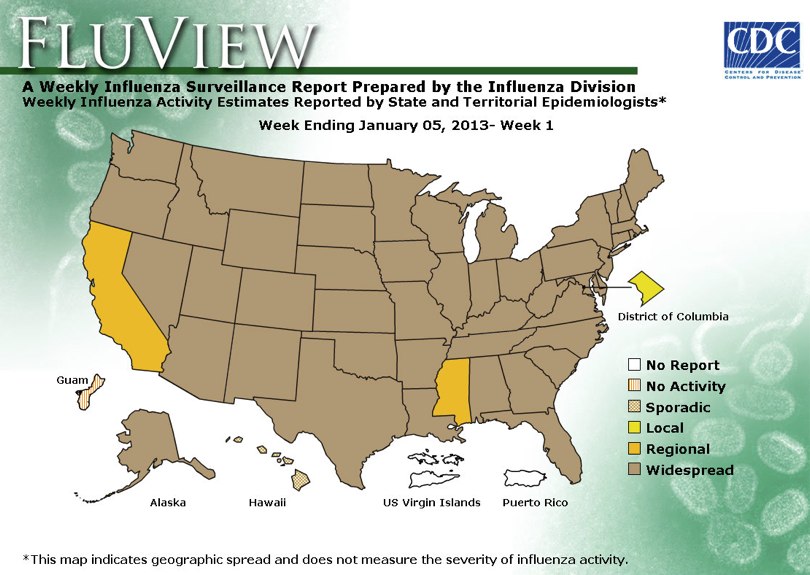
When Mexico experienced an outbreak of flu in the spring of 2012 …

… much of the country came to a screeching halt. For a supposedly disorganized, “third world” country, closing down one of the world’s largest cities (and the commercial center of the world’s 10th largest economy) was not something undertaken lightly. Being a “backwards” nation, Mexico records all flu deaths, whereas in the “advanced” United States, only the deaths of children from the flu are reported to national health authorities, so the actual number of flu deaths — which are most likely in not children, and not the elderly, but in young men — in the United States hasn’t been, and probably won’t be, tallied.
While the reaction to the flu epidemic here was probably “overkill”, I guess the difference between a “first world” and “third world” country is this — people before profits.


 mexfiles.net