Huapango!
If you did a Google search today, you might have caught the homage to Mexican composer José Pablo Moncayo, who was born 29 June 1912 in Guadalajara. One  of the essential Mexican composers of the past century, Moncayo’s compositions are considered ” the most important legacies of the Mexican nationalism in art music.” A student of Carlos Chavez’s experimental National Conservatory composition program (to whom Salvador Novo taught literature and the unlikely figure of Augusín Lara lectured on world history), when the experiment was canceled by Lazaro Cardenas, young Moncayo was sometimes criticized in the press as a “Chavista”.
So who better to play the music of a Carlos Chavista than a presumed Hugo Chavista… Maestro Gustavo Dudamel and the Orquesta Sinfónica Simón Bolívar of Venezeula with Moncayo’s Huapango.
What Greater Glory?
The village maestros or maestras — teachers — were to be the “vanguard of the Revolution”. Official propaganda equated teachers with soldiers: ignorance and poverty were the enemy…books and knowledge the weapons. Although poorly paid, the teachers were dedicated and tough. During the Cristero War, when religious fanatics were likely to assassinate village teachers as representatives of the secular state, sometimes the village “schoolmarm” was armed.
(Gods, Gachupines and Gringos, page 325)
Or should have gone armed against the reactionaries opposed to public education:
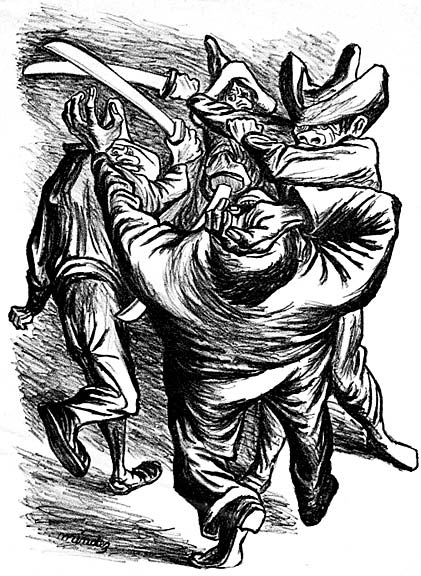
“Professor Arnulf Sosa Portillo, killed April 4, 1937, in San Andrés Xochimilca, Puebla.” – Leopoldo Méndez. Lithograph. 1938.
Sombrero tip to Sterling Bennett, for a link to Mark Vallen’s fine essay on the historically inaccurate film “The Greater Glory” (an attempted whitewash of the career of mercenary Enrique Gorostieta, and the Cristeros in general) and on the artistic response in Mexico to the Cristero War.
For Greater Glory: In The Name of Christ (art-for-a-change.com)
… For Greater Glory, the latest film by director Dean Wright […] purports to tell the ‘true story’ of the Cristero War, the armed uprising of Catholics against the Mexican government that began in 1926 and lasted until the late 1930s. Touted as a ‘sweeping historic epic’, the film presents only the viewpoints of the fundamentalist Cristeros (Fighters for Christ), an outlook that distorts a complicated period in Mexico’s history.
[…] Mexican artist Leopoldo Méndez, who opposed the armed uprising … treated the Cristero War as a subject for his artworks. In particular I am featuring the artist’s lithographs En nombre de Cristo, han asesinado a más de 200 maestros (In the name of Christ: they have assassinated more than 200 teachers), a 1938 portfolio of prints by Méndez that portrayed the violent fanaticism of the so-called ‘Fighters for Christ’.
Fast and Furious II now in production?
Sometimes I learn more from snark sites like Wonkette than I do from the “real” news.
In 2011 alone, more than 700,000 items were transferred to police departments for a total value of $500 million. This year, as of May 15, police departments already acquired almost $400 million worth of stuff. Last year’s record would have certainly been shattered if the Arizona Republic hadn’t revealed in early May that – and then sold the gear to others, something that is strictly forbidden.…
By coincidence I also saw in passing mention that the gangsters here have all kinds of weaponry … even tanks and boats. That’s not surprising, and I see those kinds of stories so often, I really don’t pay much attention to them. But it does make me wonder if the gangsters, besides easily buying weaponry in Arizona and Texas gunstores, aren’t just getting them from and how? One possibility are those “surplus” military items being <a href="Arizona Sheriffs Departments or other “law enforcement” units.
I’ve suspected for years that one of the more “legitimate” means U.S. weaponry is flowing here is through the unregulated “private security” business. Private security firms are almost completely unregulated in Mexico, and non-existent “private security” companies … or even genuine police departments in Mexico can buy U.S. hardware and “law enforcement equipment” without much problem.
Does anyone track any of what goes south… or only when it’s convenient for Republican congress-critters trying to make mischief does it become at all important?
Don’t text this great news
Great news, fans of Mex-ploitation films:
Machete Kills is the sequel to 2010’s Machete, which itself was adapted from Rodriguez’ fake trailer during 2007’s Grindhouse. The action exploitation film finds Machete recruited by the President of the United States to take down a dangerous drug cartel leader who threatens to fire a missile at America.
Shooting began on June 10. There is no release date of yet.
Not really safe for work (or those easily offended by nekked women or Anglo-Saxonisms) here’s the original fake trailer that turned into a real movie, probably the best satire of the U.S. “illegal immigration” issue, narcotics trading and Texas politics.
The cone of silence
We’re into the “veda electoral” — electoral veil. For the 72 hours before the election Mexicans are supposedly spared media comments about the various candidates, giving them time to absorb the candidate’s positions, maybe tote up the cash value of their campaign bling, fill out stolen ballots (using voter IDs “borrowed” in exchange for cash) or maybe change their minds about whatever candidate they originally said they were voting for. I know a few people who only this week decided they would vote… and it ain’t for the presumed front-runner.
The polls published yesterday, and the reports on the closing campaign rallies by the various candidates are last we’ll hear of them. There weren’t any last minute surprises. Peña Nieto still leads in the polls (though who knows if the polls are accurate?), followed by AMLO, then Josefina and Quadri just a footnote, if even included in the polls. Not that anyone believes the polls.
The three main candidates all convoked decent sized rallies in their home territories. Peña Neito, in Toluca trotted out some pop stars and made a few more promises, AMLO supporters filled the Zocalo and surrounding streets in the Capital, and Josefina offered to make Calderón her Attorney General in her administration. Which is unlikely to happen (and … during the six month transition, I expect Calderón — who is very likely to face international human rights violation charges — will be looking for a comfortable exile). I have no idea where Gabriel Quadri was… probably lecturing his supporters as they tooled along in his baby blue campaign VW micro-minibus).
In theory, this website is located in Canada (at least my server is), but I’m going to honor the veda, and spend my time catching up on my reading: the history of medieval Spain, if you want to know.
Bought, but paid for?
Simon Cameron, the 19th century U.S. financier turned politico, once quipped “An honest politician is one who, when he is bought, will stay bought.” But what if “honestly bought politicians” aren’t paid… or if they aren’t honest? Will they stay bought… or… worse, will they talk?
What will happen if they are perform their services, but their payments are frozen? This could happen, given the possibility that PRI funds meant to buy some “honest politicians” might be frozen, as Salvador Camarena reported for El País (my translation). A couple of things that might confuse U.S. readers. Mexico does have public financed elections, and our elections commission is a judicial body. I suppose, in theory, IFE could annul the election, but the probability of that is less than zero. Still — if these scandals have any teeth at all — at a minimum some low-level political hacks are going to get thrown to the wolves, and the PRI may find its financing cut for the next election cycle.
With all the odds on his favor going into Sunday’s election, PRI presidential candidate Enrique Peña Nieto’s election faces a hurdle that has already become a major headache for the candidate and his party. The National
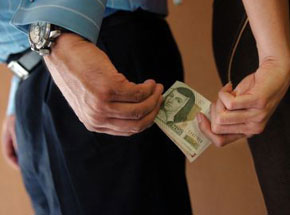
Bribery, the old fashioned way… cash.
Action Party (PAN) and the Progressive Movement (left) have both formally denounced what they consider illegal financial transactions that would mean that the PRI had exceeded by more than twice the legal limit the authorized expenditure for a presidential campaign.
On Monday, Roberto Gil and Juan Ignacio Zavala Zuarth, coordinators and spokesmen respectively, of the Progressive Movement and of PAN candidate Josefina Vazquez Mota reported that they had evidence of a sophisticated mechanism for making illegal payments to PRI operatives. They explained that the PRI will use 450,000 debit cards issued by Monex, a Mexican financial institution, to pay for an electoral mobilization on the First of July.
Zuarth Gil said that from what they learned from PRI operators, the scheme works like this: each district delegate (there are 300 in Mexico) received a Monex card with 180,000 pesos (10,000 Euros) for three months work. For each of the 19,490 general party representatives, the amount payable would be 20,000 pesos. The three poll representatives at the more than 149,000 ballot stations would receive 600 pesos for the day. This total paid out is around 701 million pesos (40 million Euros), or more than double the 336 million peso spending cap set by law for a presidential campaign.
“What is clear from this clearly illegal operation, is that the PRI is committing an organized crime, and we have presented the evidence to IFE [Federal Electoral Institute], in order that they can take an interim measure to freeze these accounts, so they will not be a factor in upsetting real competition in this election,” said PAN’s Gil Zuarth hours before formally lodging the complaint with the IFE early yesterday morning.
Zuarth Gil added that has twenty cards and with the testimonies of the respective operators. “This is evidence of illegal financial structure set up by Peña Nieto, through accounts not recognized by the PR, disbursed through electronic debit cards,” he said.
PAN’s denunciation comes a week after Andres Manuel Lopez Obrador, the candidate of the Progressive Movement and second in the polls, warned that the PRI has allegedly prepared an operation to coerce voters, and transport them to other polling stations that had been organized by the 19 PRI governors in the country.
And there is another financial story: Two weeks ago, Jose Luis Ponce de Aquino, a Mexican-American businessman filed a lawsuit in the United States against a group of businessmen and members of the Peña Nieto campaign, claiming he was owed money for alleged contracts totaling 56 million dollars (44.8 million euros), which would be paid, he said, through Monex bank. At that time, the PRI spokesman claimed that the businessman named Joseph Aquino was part of an extortion attempt.
Following up on Aquino’s complaint, the Progressive Movement filed suit with the PGR — Procurador General of the Republic (Federal Attorney General’s Office). “Given the recent events we will extend the formal complaint filed with the PGR for money laundering and illegal financing of PRI through Monex. It is necessary to freeze the accounts, “said Ricardo Monreal, Lopez Obrador’s campaign coordinator.
Electoral expert Jorge Alcocer, editor of Voz y voto, said however, that despite the statements by parties opposed to the PRI, the IFE control unit must review the terms of the complaint in accordance with established procedures. “We must distinguish between propaganda and complaints, and what I see right now is propaganda. There are times and times for this. I am aware that the parties seek to influence the public by Sunday, and do not prejudge, but what we’ve seen so far is propaganda.”
26 June 1876
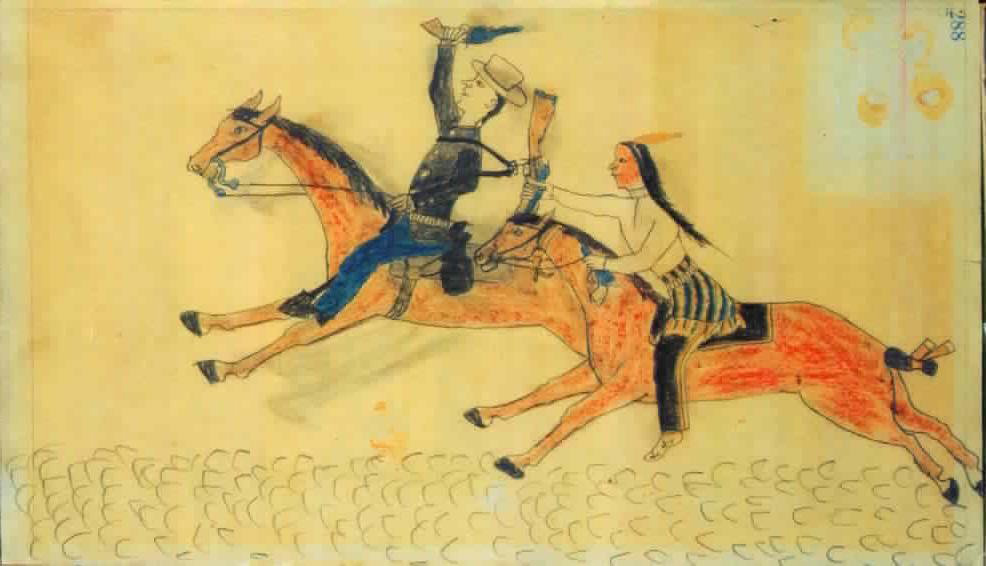
One of the few times in North American history, the people won against the government’s protection of financial interests: The Battle of Greasy Grass, also known as the Battle of Little Big Horn. (June 25 and 26, 1873). It was an overwhelming victory for the Lakota, Northern Cheyenne, and Arapaho, led by several major war leaders, including Crazy Horse and Gall, inspired by the visions of shaman and moral philosopher, Sitting Bull.
From “Little Bighorn Battlefield National Monument: The Battle of the Little Bighorn“:
In 1875 the United States ordered all nomadic Lakota and Cheyenne to return to the Great Sioux Reservation, established by the Treaty of 1868, or be considered hostile. Thus confined they would not be a hindrance or threat to immigration into the region. A lesser portion of the tribes determined they would continue to be independent of U.S. government authority and maintain their nomadic way of life, roaming freely throughout the Powder and Yellowstone River drainages.
The immediate issues leading to the conflict which became known as the Great Sioux War were the Black Hills Expedition of 1874 and the invasion of the Black Hills by gold miners. The U.S. attempted to acquire the Black Hills by purchase but had been re-buffed by the Lakota. The Grant administration then unilaterally declared the Black Hills outside of the control of the Great Sioux Reservation. Further, all Lakota’s and Cheyenne’s dwelling away from the Great Sioux Reservation must return and live within the confines of the established boundary of the reservation, or be considered hostile. General Philip Sheridan the overall commander devised a strategy that committed several thousand troops to find and engage the now declared hostile tribes. Gen. Sheridan decided to order three Army expeditionary forces to converge on the Indian’s locations.
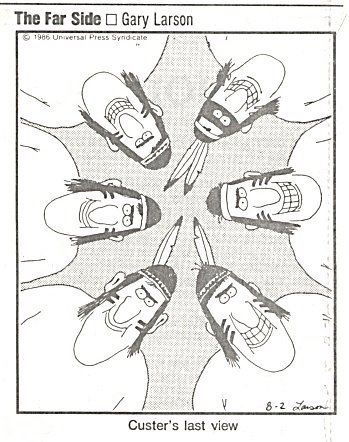
The picture at the top was by Wooden Leg, a veteran of the campaign. Of course, there were no survivors of Custer’s troops, but we have a pretty good idea of what things looked like to them:
Voter ID
Creating a voter ID card has been a contentious issue in the United States. Usually, it’s presented as a way of preventing fraud. Not that there’s much evidence fraud based on false identification is much of a problem in the United States, nor that the sizable number of people without the types of ID usually considered under “voter ID laws” (drivers licenses or passports) are likely to commit voter fraud.
I am not saying this is unique to any particular political party here, or even to Mexico. I happen to think the IFE Card was an excellent way to limit fraud… but it is far from perfect. As this video shows — when a voter ID card is required to cast a ballot it simply creates opportunities for a different type of fraud: and, if fraud prevention was really what “voter ID” laws were about in the U.S., one that should worry its supporters.
Photo finishing
In the 2006 election, one of the more difficult to explain away anomalies was that the “PREP” returns — the supposedly mathematically valid statistical sampling of results from polling stations throughout the country — began to show an increase in votes for Felipe Calderón that just slightly over-matched the drop in votes for AMLO on results appearing on the PREP report after 10 PM.
It may have been coincidental, but the explanations have never been all that convincing, and — of course — the ballots themselves were never counted, nor were the reported results checked against the tally-sheets prepared by monitors at the individual polling stations. The monitors prepare the tally, post the results and sign them after the polls close at 6 PM. They results are publicly posted and available to the public.
The “official” returns are supposed to be based on those tally sheets, with the ballots themselves as backups, if there are questions. However, checking those tallies (which could have been manipulated after the fact) against the actual ballots was never done in 2006, which has left the lingering suspicion that the “fix was in”, and that frauds at individual polling stations was simply missed.
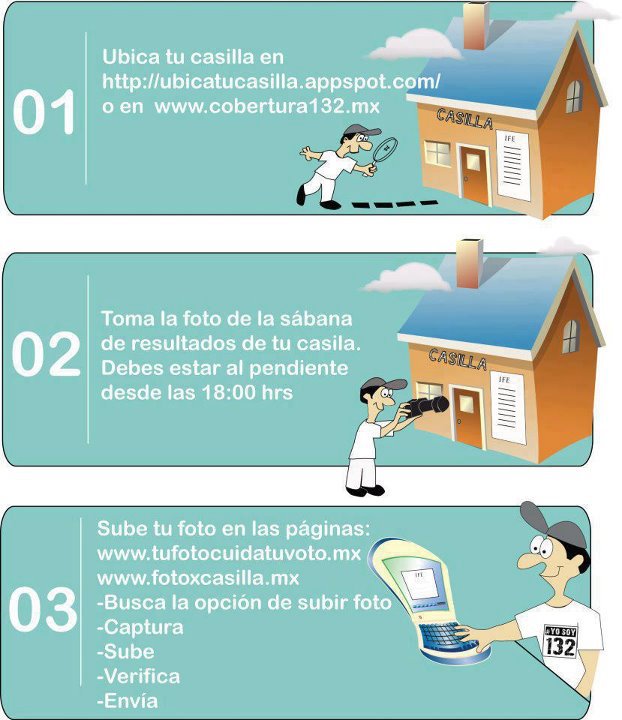
For those who want to take participate in the election beyond voting (citizens, I mean), and crossing their fingers to hope their own ballot box wasn’t tampered with, “yosoy#132” has a request. Take a camera, photograph the tallies and upload the photos:
Yucateca Lysistrata-gy
PAN Presidential candidate Josefina Vásquez Mota, speaking to a women’s group in Tizimin, Yucatán has a suggestion for turning out the vote among the usually apathetic Mayan male voter. She exhorted her audience to convince their husbands to vote for her party because “we want a free Mexico, because we want a debt-free and prosperous Yucatan, because we love our children and because we are the choice that provides stability and freedom ,” and… if that’s not enough — husbands who don’t vote should expect to spend the next month with no “loch“.
Then, she condemned the practice of bribing or threatening voters. A mixed message to be sure, but at least we all learned something that might come in handy at some poi: the Yucateca Mayan word for nookie.
Dummies, and dumber
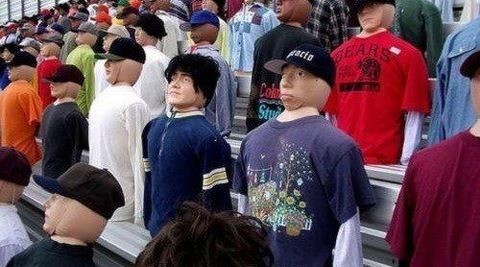
Photo of some of the Peña Neito supporters who supposedly filled the stands on Sunday at Estadio Azteca:
And from the AMLO camp … With friends like these:
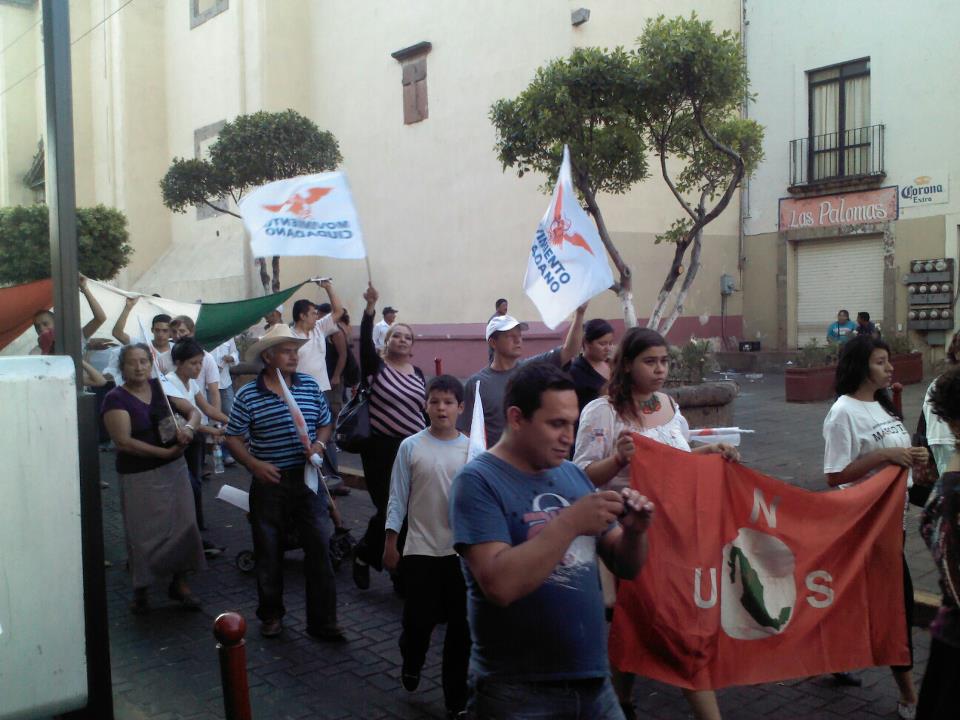
UNS is the Unión Nacional Sinarquista… historically a far-right Catholic and Fascist party, which still holds out in a few backwaters of the old Cristero regions of Guanajuato and Jalisco (these Synarchists are from Jalisco) and at one point split into two factions, one authoritarian rightist, and the other authoritarian leftist, both politically marginal. I thought they were extinct: they lost their party registration years ago for not being able to attract enough voters, and most of them joined PAN.
Neither of the Synachist factions seem to have any web presence any more, although I did find a facebook page for the UNS, the only post being a letter from Party Chair José Manuel Luna Encinas, who was complaining he was tricked into signing on with the Peña Nieto campaign. He went on to say that for historical reasons … the UNS would not take a formal position on any candidate.
Whether this is the left or the right faction (assuming they still are split, or if the “left” ever really was “left”), I can’t figure out, but synarchists in general despise the PRI, and — perhaps like many potential PAN supporters realizes the best way stop a PRI victory is not a PAN vote for the hapless Josefina Vásquez Mota, but a “voto util” for AMLO: which would account for some local synarchist group attaching themselves to the social-democratic Moviemento Cuidandano.
Enemies of your enemies and all that… but still… geeze.
There is no coup here, no institutional breakdown. It’s a legal step that the constitution and the laws of my country permit in order to make a change when the situation becomes unworkable.
— Federico Franco, de facto President of Paraguay
Didn’t Obama accept this excuse from the Micheletti Government in Honduras when they bent the law to hustle their president out of the country a few years back, too? While the U.S. might buy such bullshit, the government’s this side of the Rio Bravo del Norte know coups when they see them.
A couple of quick reminders. While the Paraguayan Chamber of Deputies had the constitutional authority to vote for impeachment, the rationale seems pretty thin… basically, a botched police operation (on behalf of a major land-owner) was used by the right-wing parties to claim that Francisco Lugo was just not up to the job.
The version of events from the media and police is that a group of agents was attacked when it entered the estate of millionaire Blas Riquelme – who was linked to, and enriched by, former dictator Alfredo Stroessner – which was being occupied by members of the Carperos Campesino Movement. [Translator’s note: Carperos are landless campesinos struggling to obtain land promised to them by land reform.] The Rural Association of Paraguay adds to this tale the “certain” link between the farmworkers and the guerillas of the Paraguayan People’s Army (EPP): “This fact, plus the use of automatic weapons and explosive devices, suggests something more than a simple group of landless campesinos. It was a heavily armed and organized group, capable of dealing a fatal blow to regular police forces.”
It is an implausible version of the facts, given that the composition of victims so far indicates that there were more dead among rural farmworkers (11) than police (7); the latter group included two members of the Special Operations Group.
The account by campesino Quiroga differs from that offered by most of the media, the police and the landowner’s association. “There is no truth to the claim that there were automatic weapons in our comrades’ camp. I can tell you, comrade, that we have no connection to any guerrillas; for us, the EPP does not exist. They are inventing the story to discredit campesinos when they organize better, because we do not want to continue hoping that someday the ill-gotten lands will be given to us, we campesinos are fighting for our rights.”
Even if Lugo was responsible in some way for the deaths, the Senate trial was highly irregular. The Paraguayan Constitution calls for accused persons to have an “adequate defense”, but with only 24 hours to prepare a defense (one assumes President Lugo didn’t have to spend much time hiring lawyers, anyway), that is not adequate. And, when one of the Senators said, “We already know the facts,” there is something more than a little hinky about the process.
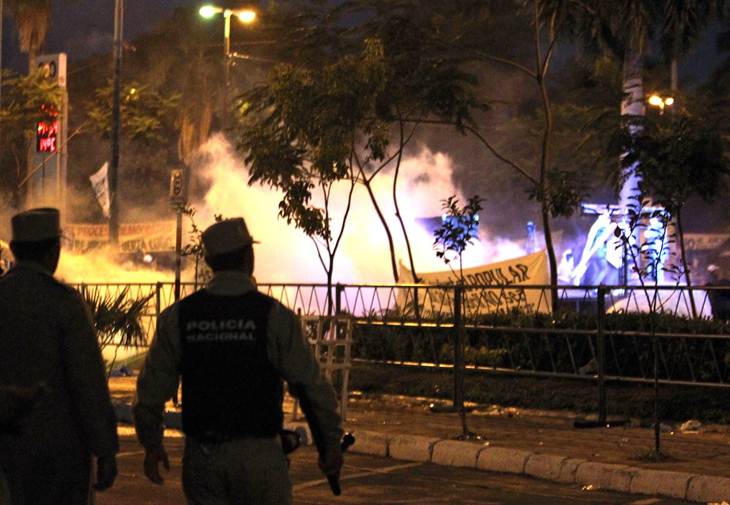
“…in the spirit of Paraguay’s democratic principles”
The U.S. made some non-committal statement (“We urge all Paraguayans to act peacefully, with calm and responsibility, in the spirit of Paraguay’s democratic principles”) , but so far has not shown any willingness to even acknowledge that there was a coup… constitutional or otherwise.
Since the late 2000s, relationships between Washington and Asunción have been deteriorating. The mysterious Mariscal Estigarribia Airport project, built by U.S. military personnel in the early 2000s, was widely suspected of being a “front” for U.S. penetration into that landlocked country (and a way to keep an eye on supposed pro-Arab residents in northeast Paraguay). The country is dirt poor, and, much to Washington’s chagrin, even under the former Colorado Party rule, was turning to it’s leftist neighbors and Cuba for development assistance.
In September 2009, Paraguay
… rejected an extension of a military cooperation deal with the United States. On Thursday, Paraguayan President Fernando Lugo said his government would stop conducting a series of military exercises with US troops. Lugo cited recent hemispheric opposition to an agreement extending the US military presence inside Colombia.
While those might be of concern to U.S. strategic thinking, more to the point is Paraguay, while still stuck with U.S. “assistance” in training the military, and with the large landowners´stranglehold on the economy, was making progress towards land reform and in forging economic and political integration with its less-foreign dependent neighbors: Brazil, Uruguay, Argentina and Bolivia. The coup has the happy advantage for the U.S. of suspending Paraguay’s participation in Mercosur… the South American common market.
And, it needs to be mentioned, that with Presidential elections in Paraguay scheduled for next year. The right is split among three parties — Colorado, Authentic Radical Liberals and “Ethical Citizens” — and these parties have warring factions within themselves, but all agree that the left, which came to power in a coalition behind Lugo (the 99 percenters) , is a bigger threat to them all, than any of the rightist parties are to each other.
But, it isn’t only the left that sees the kangaroo impeachment trial as a regional issue. The regional cooperative body, UNISUR, recognizes Fernando Lugo as the legitimate chair of their organization (it rotates among the presidents of the member states), although it is expected that under the circumstances, the chairmanship will pass to Peruvian President Ollanta Humala when they meet to discuss the situation later this week.
While, as expected, the left-ier of the regional states, notably Venezuela and Ecuador, have been the most condemnatory of the “parliamentary coup”, UNISUR member Chile — under a rightist administration as well as the conservative governments of Costa Rica and Mexico (not a UNISUR member, but an interested party) have recalled their ambassadors for consultation and are considering further sanctions.


 mexfiles.net