Cultural Appropriation
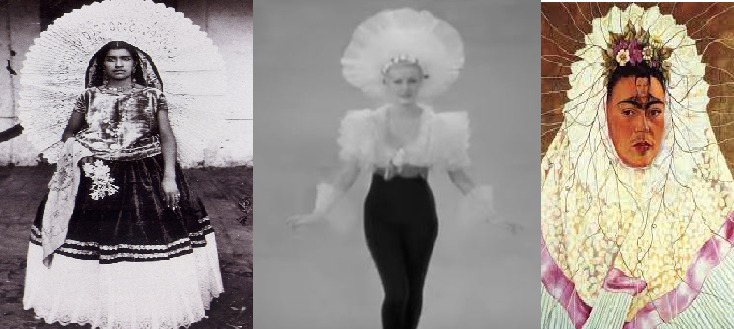
It wasn’t just Frida Kahlo who appropriated traditional Zapoteca style. Apparently she wasn’t as tendy as she made herself out to be. Busby Berkeley, back in the 1930s, had the same idea.
Very Strange Fruit in Puebla
Trigger warning: this is gross!
Mexico has a macabre fascination (at least Mexfiles does) with the “Bebé Tadeo” story.
The initial reports… that a dead baby had been found in a dumpster at San Miguel prison in the state of Puebla were weird enough,without the added detail that there appeared to be knife wounds … leading to all kinds of dark speculation about “satanic cult sacrifices” and the kinds of weird stories you might find in an over-the-top low budget horror movie.
Maybe there is a slight truth to the “cult” rumors, but the story is much, much stranger. The “knife wounds” were quickly discovered to be the result of an autopsy and the first stories, that the body was a new born were not quite true. Given that the baby was about five months old, and had been autoposied (meaning there were records), it took a few days, but the body was identified as that of a Itzapalapa child who had died of a congential deformity several months previously.
And.. had been properly buried in Mexico City’s sprawling San Nicolas Tolentino cemetery. Which leads to another horror-movie trope… grave robbing. Something which, while it happens once in a great while, isn’t usually something that comes up in presidential statements very often, though this grave robbery certainly has everyone talking. And, of course, spinning. For AMLO, it’s just another example of the “rotten fruit” of out-of-control capitalism. Short of yet another horror movie scenario, involving some secret society of grave robbers, hard to imagine body snatching as either a charitable or public service trade. And… although the short life and death of Bebé Tadeo was a tragedy, the afterlife is racking up impressive statistics.
The State of Puebla has issued arrest warrants for 23 prison officials, with more charges expected soon… the case being a rationale for a complete overhaul of the prison system (or lack of any sort of system), while in Itzapalapa, all 448 cemetery employees are being questioned, and the alcadesa (elected president of the municipality) is promising to spend a half million US dollars for heat-seeking drones that will patrol the 100+ square hectare cemetery (the second largest in the country) at night. As well as providing police patrols.
And we still don’t know, and maybe never will, the answer to the most basic question… the answer to which we probably don’t want to know anyway. Why would anyone want a dead body in the first place?
Sources:
El País, “Drones para evitar otro saqueo de restos humanos en el cementerio de Iztapalapa” (26 January 2022)
Regeneracíon, “Ya son 21 detenidos por caso de bebé Tadeo en penal de Puebla” (25 January 2022)
Independent (Español), “Tadeo murió, su cuerpo fue robado de un cementerio y terminó en la basura de un penal en Puebla” (24 January 2022)
Jornada de Oriente, “Aprehenden a encargado y a 18 custodios del Cereso de Puebla” (25 January 2022)
El Financiero, “Caso del bebé Tadeo es por fruto podrido de la política neoliberal: AMLO” (24 January 2022)
The (relatively) poor will always be with . . . Morena
Reworked (more than translated) from Viri Rios, “La apuesta de AMLO es la clase media baja, no los más pobres“, Expansíon, 25 January 2022.
López Obrador’s signature slogan has always been “For the good of all, but first the poor .” In a country where 53% of the population is poor, the real question is not whether they are put first, but who, among the poor, are at the head of the line.
How poverty has been addressed is largely a matter of electoral calculations, with differening social policies by the recent ruling parties, PRI, PAN and Morena.
Business-oriented PAN sought to hold down social spending to a minimum. Under the Calderón administration, Mexico became the country with the lowest social spending in the OECD and — with a few exceptions — in all of Latin America. The pittance of social spending that existed (7.3% of GDP) was focused on the poorest of the poor, but because there was so little money, leaving many poor people frankly destitute.
PAN’s tight-fistedness is based on the assumption that the poor needed to “earn” support — that they needed to prove they were the “deserving poor”. Assistance was only available to those that could prove they were enrolled in school and using medical clinics… something impossible for the ultra-poor (who didn’t have the resources to attend school, and might not be able to travel to the clinic regularly). Calderón’s signal social expenditures were Seguro Popular (91 billion pesos), and 55 billion for higher education and post-graduate studies (something very, very unlikely to benefit the vast majority of the poor).
Under PRI’s Peña, things changed. The party wanted to increase social spending, but ,,, true to its paternalist traditions… did not trust the people. Social spending, while substantially increased, went to state institutions, and not into the pockets of the poor.
Thus, during the Peña administration, while social spending grew by 29% (from 660 billion to 854 billion), cash transfers were reduced even more than under the PAN. Social spending went mainly to the IMSS (236 billion) and Seguro Popular (76 billion). And, as it turns out, much of the IMSS spending was for never finished buiding projects, and other white elephants that made no one better off than some political connected builders and real estate “developers”.
But if — maybe in spite of itself — the PRI did something right, it was to focus its social spending. For this reason, despite having fewer direct transfers, assistance in general managed to reach more of the poorest of the poor, becoming available to 63% of households in the two lowest income categories, compared to only 53% during Calderón’s six-year term.
With López Obrador, there has been a paradigm shift. The current policy is not, like with the PRI, to focus on only the poorest of the poor, or like PAN, to spend as little as possible. Rather, it is to put money into the hands of everyone.
Social spending has increased by 24%, and cash transfers by 47%. The number of households receiving direct benefits has gone up from 28% under the Peña administration to 30% under AMLO.
The numbers don’t reflect it, but López Obrador’s spending policy has triggered an extremely momentous change. For the first time in recent history, the “not so poor” — the lower middle class — are also receiving cash transfers. Only 17% of what in the US would be called the lower middle class or working poor, received transfers under the previous two adminstations, whereas now 26% of the households in this category do. More importantly, they are receiving 54% more than they did before.
For these people, social assistance makes a huge difference. 54% of the lower middle class — while not destitute (the focus of previous administration’s social policies) — they lack the income needed for basic necessities.
(My interjection); John F. Kennedy supposedly said, regarding “trickle down” economics, that a rising tide lifts all yachts. In other words, the beloved theory of neoliberalism is only true in that money might trickle down, but only to the next level. That is, when the rich get richer, the ony beneficiaries are the slightly less rich catering to their whims. But when the poor get a little extra money, they’ll spend it on basic necessities, like food: the products of the very poor.
As to political calculus, this has meant increased political support for MORENA. The best kept secret of López Obrador’s cash transfer policy is that his bet is not on the poorest, but on the lower middle class. Morena is betting on winning the hearts of precarious urban areas such as Iztapalapa, Gustavo A. Madero and Ecatepec, areas mostly abandoned by past governments because they were not ultra-poor.
The first American War of Independence?
It doesn’t really count, but the first serious attempt at separating the Americas from their European colonial rulers was not in 1776 (nor in the 1640s) but a century earlier, led by Hernan Cortés sons, Martín Cortés, and Martín Cortés.
The first Martín, born in 1533 was “legitimate”, his mother being Cortés Spanish wife, Juana Zuñiga; the “other” Martín, “Martín el Meztizo” being the son of Malache, the conquistor’s Nahuatl interpreter, political advisor and sometime bed partner. The first Martín, of course, got all the goodies when dear old dad shuffled off his mortal coil in 1547 … that including — or so he insisted — the “encomendas” in New Spain that made him, like his father, the wealthiest person in the Kingdom.

HOWEVER, since 1542, the crown had been trying to extinguish the encomendas, under which conquistadors had been rewarded not just with land taken from native peoples, but the people as well… somewhat between a form of serfdom and chattel slavery, the people were forced to work for the new owners, whose income largely rested on renting out their “free” labor. The crown had already abolished chattel slavery at home, and sought (with only middling success) to end Indigenous slavery in the Americas. While there was some moral consideration given to abolition (especially when the justificatin had been the “need” to Christianize those pagan Indians, most of whom were quick enough to switch their allegiences to the “right” Gods) and Pope Paul III’s 1537 Bull, Sublemis Deus (“the Indians were human beings and they were not to be robbed of their freedom or possessions” — followed up by Pastorale officium, which automatically excommunicated those who disobeyed), there were practical considerations. Besides the huge drain on the treasury of having to sublet or rent workers for public works in the colonies, Spain, like other European powers, was consolidating the power of the crown at the expense of the old feudal lods, and recognized that the encomenderos were, when you came down to it, just feudal barons with their potential armies of dependent serfs (or slaves) at their disposal and a source of wealth out of reach of the crown.
Felipe II, decreed that conquistador encomenidas could not be inherited… that is, Martín Cort{es inherited the land but not the people living there. Nor did the other sons and heirs of the other conquistadors. Having returned to claim his inheritance in 1563, only to find his main revenue stream (renting out “his” people”) had been cut off, when the Viceroy died later that year, and the goverment was temporary in the hads of the audiencia (roughly the Mexico City Council), he had himself appointed captain-general (head of the local militia, much as his father had when founding Veracruz to justify his own role as legitimate leader of his dubiously legal conquest) and, at the head of an attemped encomiendero coup, was proposed as “king” of an independent Mexico.
The coup was put down by the visador (special prosecutor) Alonza Muñoz. While today, we think of special prosecutors with some trepidation, the visador, especially when it was someone like Muñoz was beyond scary. He had the coup leaders — who found “their” indians not exactly willing to fight for them (I wonder why) — rounded up, and chopping off their heads. Martín, the rich one, was spared only because of his father’s name, but he was stripped of his properties in Mexico and tossed out of the Americas (and of Spain itself, being exiled to Oran, a Spanish enclave in what is now Algeria).
Showing that racial disparity exists, even in the most prominent of families, Martín el Mestizo, while he kept his head, was tortured and waterboarded before being sent back to Spain. To his credit, Felipe II did recall Muñoz, and fine him for his over-zealous prosecution.
While not by any means the end of indigenous exploitation, it did lead to a few reforms. The “reparimento” system, by which indigenous communities themselves would appoint a quota of workers for public works projects (with “service” running from a few weeks to a couple months) to satisfy their tax obligations replaced the encomiendos, at least in Mexico. The encomiendos would still linger in parts of the Americas through the 18th century, but became rarer and rarer.
On the other hand, it also gave impetus to the transatlantic slave trade, and to the long practice of buying slaves from the northern tribes (especialy Apaches and Navahos) for export to the other colonies.
The a-Biden lure of imperialism
When it comes to US-Mexican relations, it doesn’t much matter whether the president at the time is considered a liberal, a progressive, a conservative, or a right-wing lunatic… what they all have in common has been a sense that — whatever the issue — they know what is best for Mexico, and that Mexican economic reforms can only go as far as they… the US administration… permits.
The present adminstration being of the Democratic Party, Democratic Senators — supposedly of the “progessive” bent — are sticking to the imperialist tradition, insisting that when US President Joe Biden meets with Mexican President Andres Manuel López Obrador, Biden defend US energy interests and policy against reforms proposed here.
Senators Bob Menendez, Jeff Merkley, Tim Kaine, and Brian Schatz are claiming that the reforms — which would give the Mexican state electric utility (CFE) majority control of generating capacity in the country (and be designed to meet Mexican energy needs first) will lead to more fossil fuel usage, and worse stifle “competition”, especially since the reforms include state control over lithium deposits.
The US Senators are making the same assumptions those opposing the Mexican administration’s proposals — i.e. the foreign energy companies most likely to be affected (mostly Spanish, but some US as well) — that because several CFE generating plants depend on fossil fuel (or imported gas from Texas), they will stay on line, and that the energy produced by private and alterantive sources will simply shut down. As far as Mexfiles can determine, while there may be some short-term increase in fossil fuel usage, it is only as the alternatives are incorporated into the CFE system, and as the energy now exported (mostly solar power to California and Arizona, which produce on this side of the border simply because the land is cheaper).
MAYBE, just maybe, the US Senators have a argument (though not a good one) when it comes to oil production… a part of the reform (or rather, a related reform)… being the decision by PEMEX to get out of the oil export business in favor of domestic use… less a matter of more fossil fuel usage, than of meeting Mexico’s own demands domestically. Building refineries and not buying gasoline (while exporting oil) doesn’t mean more fossil fuel use, so much as just changing suppliers.
As to the Lithium deposits, “competition” looks to be a code word for the right to exploit yet another natural resource not for the benefit of the producing country, but for US consumers. And… given that the Mexican lithium would be used by the Mexican energy sector … for things like car batteries… fossil fuel usage is likely to drop given the reforms, not increase.
While Biden was probably a better selection for the US electorate than the bufoon he replaced (who’s only virtue for Mexico was that he was so toxic that even the most pro-US politicians here had to distance themselves from any hint of US support for their positions, allowing the present government to …. for once… carve out domestic policies without interference) these US Senators demonstrate that when it comes to Mexican relations (and relations with Latin America in general), nothing has changed since the days of Woodrow “we will teach them to elect good men” Wilson.
Ricardo Salinas Pliego’ very bad day
The rich cry, too.
Ricardo Salinas Pliego owns… about everything Carlos Slim doesn’t, it seems. The CEO of Grupo Electra, Banco Azteca, Azteca TV, Totalplay internet services, Italika motorbikes, the Mazatlan Futbol Club… etc. etc. etc. and noted COVID skeptic, has been hit with a 2,3636,000,000 peso (about 130 million US dollar) tax bill for… wait for it… his 2006 income taxes.
While he claims the Supreme Court, by turning down his demand for an amparo– injunction — agains the tax lien is a violation of his human rights and he can take the case to some yet higher court is unlikely to go anywhere.
On top of that… having insulted just about every journalist who has reporte on his dubious record of tax payments… coupled with his tendency to deny COVD is any sort of problem… 500 of his favorite “bots” were shut down, and he was banned by Twitter.
What’s this world coming to when billionaires have to pay taxes?
Oh… and Jorge Hank Rhon, the biggest casino owner in the country, just got dinged by the tax office too… though that’s a mere 1,187,000.000 million pesos (58 million US dollars).
Give the (old) Devil his due
Holed up for the last several years in his San Angel home, centinarian Luis Echeverría Álvarez, has been dubbed the “Ogre in the Castle”. The sobriquet is well-deserved, given his role in the Tlatelolco massacre and the crack-down on political dissent here in Mexico both during his tenure as Interior Minister from 1963 to 1969, and as President from 1970 to 1976. The Tlatelolco Massacre of 1968, the Halconazo (“Corpus Christi Massacre”… best known to foreigners from its portrayal in the film “Roma”) in 1971 and the “dirty war” — the largely clandestine (and US backed) campaign of military persecution, extra-judicial murder and “disappearances” of (mostly rural) dissenters — are not forgotten.
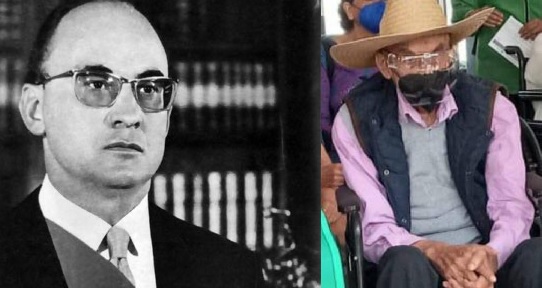
In his quest to restore not only his unsavory reputation among intellectuals and his attempt to legitimize his preferred role as would be leader of the “third world”, what was bally-hood in the media — besides spectacular economic growth (over 6% during his tenure) — was massive investments in cultural institutions (and state employment for would be intellectual opponents) and foreign policy decisions clearly meant to break with the pro-US “Cold War” restraints, including opening diplomatic relations with both the People’s Republic of China and the Palestinian Liberation Organization, providing political asylum for leftist dissidents from Chile and Spain, and… just as Franciso Franco was on his death-bed, attempting to hurry along the end of Spanish Fascism, pushing to have the country expelled from the United Nations…. and later openly campaigned to become its Secretary-General (allegedly calling on the then “untouchable” Mother Theresa to lobby for him!).
None of which moved Mexico towards a more equitable and just society, the benefits of the growth mostly concentrated among the “usual suspects”, the populist policies largely forgotten by subsequent adminstrations, and his remembered accomplishments being best summed up by slightly misquoting Lady Macbeth:
Yet who would have thought the old man to have had so much blood ON him?
The latest… uh… dope
When back at the end of 2018, the Mexican Supreme Court ruled that smoking marijuana was constitutionally protected (under the rubric of the “free development of personality”… one of several rights specifically mentioned in the expansive (in theory, not always in practice) “Magna Carta”. While there was a lot of smoke (especially in the US media) about the coming “legalization”, it has yet to happen.
For two important reasons: First off, with Canada and several larger US states having already legalized, or decriminalized use, the market value has dropped, and Mexican smugglers have turned to more lucrative products like heroin and meth, or taken up other criminal activities (gasoline theft, shaking down avocado producers, etc.) that offer a better return on their investment.
The second reason is… and much to the disappointment of at least some “expats”, Canadian marketers (all set to begin operations here) and US consumers… is that there really isn’t all that much support, or objections, to what is seen as a relatively unimportant issue.
The “drug war” (allegedly ended in the US by Barack Obama, though it lasted through the Peña Nieto administration here) aside, the marijuana industry WAS important at one time. According to Benjamin T. Smith’s The Dope: The Real History of the Mexican Drug Trade (W.W. Norton, 2021), even though Mexico was supposedly “fighting drugs”, it was a relatively reliable revenue source for the state. Call it corruption, but as Smith noted, it was more a “shake-down” by state (and later federal) authorities… an informal export duty that — for all the memes and fictional stories about corrupt officials getting rich — surprisingly was, for the most part, well invested by governments and seen as a way of keeping down the rates for more honest businesses and ordinary taxpayers. It’s been said (though I don’t think by Smith) that “taxes” on marijuna paid for the University of Baja California campus… a worthy investment, to be sure.
One might assume (and one might be right) that informal taxation on the more profitable meth and heroin (and, lately, fentanyl) exports may still be informally taxed, although it appears that there is less toleration for the “informal taxation” system, as well as personal corruption. Combined with the present government’s push for better accounting and auditing, as well as tighter controls on law enforcement agencies, such methods are just not worth the trouble, especially when it comes to lower value illegal exports, like marijuana.
Add to that, when the Senate, back in December 2020, sent its “Ley Federal para la Regularización de Cannabis” to the Chamber of Deputies, what emerged was a substantially changed bill that, in the opinion of Senate leaders, instead of just legalizing personal use, actually created harsher penalties. For example, the original Senate bill legalized possession up to 28 grams, with relatively mild sanctions for quantities up to 200 grams. The Chamber bill called for anything over 28 grams… even 29 grams.. to face up to four years in prison (as opposed to the present three years), and large fines for failure to obtain a proposed certificate allowing one to possess marijuana in the first place. And, other changes from the initial proposal — which favored small growers (i.e., campesinos) over corporate growers and foreign investors.
When the Chamber bill was returned to the Senate in April 2021, there were more pressing issues. Like Covid, like the Federal Budget, like Lithium, like democratic reforms, like…
So…MAYBE in Frbruary, the Senate will again pass an amended, amended bill, pared down to the most basic of issues… legalizing the use (though they’re fighting over whether this means persons 18 and over, 21 and over, or 25 and over) and revisiting what are perhaps more important things… the comercial hemp trade, quality control, distribution and taxation… sometime later.
Or not.
Becerril, Andrea. “Va Senado por despenalización de la mota con nueva iniciativa”, La Jornada, 17 January 2022, page 4.
Busby, Mattha, “Mexico has a new marijuana legalization bill. Here’s what’s in it“, Leafly, 2 December 2021.
Smith, Benjamin T. The Dope: The Real History of the Mexican Drug Trade (W.W. Norton, 2021)
Loud and clear!
Guadalajara’s TeleDiario news presenter Leonardo Schwebel has a few words to say to people who won’t get vaccinated and won’t wear masks. Not that you need to understand Spanish to get his point.
To see ourselves as others see us: long-stay tourists
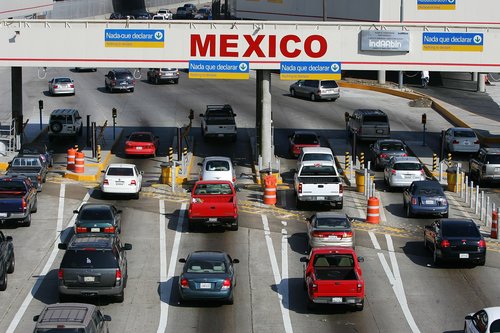
This are for the americas complaining about your 180 days, from the side of a Mexican citizenI do not get why people have an issue with saying more than 180 days in Mexico as a tourist is not allowed. Did you know a Canadian as a tourist, is not allowed to spend more than 6 months in the US? And, the count includes the day you set foot on U.S. soil as one day, and the day you leave as another—even if they’re only partial days. Most U.S. border officials now apply the six-month or 182-day quota over any consecutive 12-month period.For a Mexican to step foot in the US, they need to apply on-line for an appointment which will take up to a year. We pay a non-refundable $160. I am in San Miguel and I need to travel to Mexico City and stay over night more costs. I need to prove I have work to return to and funds in my bank account. My appointment is next week. Did you know, if a Mexican overstays their 180 days in the US by more than a year they are barred from entering for 10 years. So why should Mexico be different? At least it is a lot easier for an expat to live in Mexico, full time than it is for me to live in the US full time. Why the lack of respect for Mexico. I do not get it!!
Charly Sandoval, posting on Facebooks’s “Foreigners in Mexico City”.
Many thanks to Mr. Sandoval for his permission to reprint his ripost to a series of posts on “expat” pages around the internet, complaining about recent changes in Mexico’s migration policies (not any major change in the law, simply in its enforcement: a 180 day stay has always been the maximum number of days given to a visitor, as in other North American countries (and several others: in the Shengen region [Western and Central Europe] foreigners are given 90 days within any six month period; the United Kingdom, like Mexico, MAY give a tourist permit for UP TO 180 days, but then again, may not. For that matter, so does Guatemala,
Mexico’s policy is no different from that of Colombia, which CAN also give up to 180 days, although they are (for now) more lax on “permanent tourists”, who can “renew” their visa any number of times by leaving the country for a short period, but then again, there are fewer permanent tourists in Colombia than in Mexico.
Let us now praise famous women
Josefa Ortiz, Gertrudis Bocanegra, Sor Juana Inés de la Cruz y Margarita Maza

Recently added to the series of monuments to famous Mexicans along Reforma.
Ortiz was a leader in the “conspiracion”… the 1810 uprising that marked the beginning of the War of Independence. Something like Paul Revere in US revolutionary mythology, she was the one who warned Padre Hidalgo that the Spanish were coming!, the Spanish were coming!.
Bocanegra was an propagandist and spy for the Independence fighter, tortured and executed by the Spanish in 1817.
Sor Juana, the “tenth muse of the Americas” was a feminist, poet, musician, scientist and philospher.
Margarita Maza, in addition to caring for the 17 children (only 12 of whom survived to adulthood), of her and her husband, Benito Juarez, she was a close advisor to the president, entrusted with raising funds and public support for the Republic during the war agains the French occupation, and unofficially the Republic’s diplomatic reprentative in New York.
Mea Culpa?
How much responsiblity Mexfiles… and other Mexican-based “private media”… bears for the present confusion foreigners have about their permission to stay in the country isn’t clear. Some, perhaps quite a bit.
For years, with the visitors permit (the FMM…Forma Migratoria Múltiple) would — almost without exception — give the holder UP TO 180 days to stay in Mexico. When it was first introduced, it was meant to replace a plethora of different forms for different types of visitors: business travelers going to meetings, academics on sabbatical, students, and — of course — tourists. We (in the Mex-media biz) — given the generous time given even to casual visitors spending a week in Cancun, or a couple days in Mexico City … got into the bad habit of referring to the form as the “tourist visa” … undertandable, but highly misleading.
An FMM assumes the holder had no ties or committment to the country (one reason over the years, I’ve read about so many FMM holders who just can’t understand why when they’re arrested, there is no question of any sort of “bail” or bond they can post… they’re a flight risk). Or, why they are denied re-entry after holding themselves out as residents, and expecting the same rights of entry as a resident. A VISA implies the state has decided the person is worthy of a longer stay… temporarily, or permantly (depending on the situation), has some legitimate reason to live full-time (or nearly full time) in the country, and is unlikely to become a public charge.


 mexfiles.net