El Tesorio de Moctezuma… is it for real?
Wow!… a recent discovery of an unknown Aztec codex, tentatively dated early 1520s has re-ignited scholarly research into Meso-american communications and financial networks, and may have uncovered suspected links to the rest of the world. The provenance of the so-called Codex Lagos (from its discovery in a cache of rare documents purchased from an anonymous Nigerian seller n behalf of a recently deposed head of state), is a bit murky at this point and the hieroglyphs were only recently deciphered. While the original contained several glaring errors, they seem to be the result of wide dissemination, and it is expected that the more of these types of documents will surface. Nahatl scholars have painstakingly transliterated the original, then translating — complete with errors — the transliteration into English.

My dear friend:
I am Prince Atotlscam, next but two in line for succession to the throne of Emperor Cuauhtemoc. As you may seen in recent scrolls, there was a sudden change in government here in Tenochtitlán. During upheavals surrounding the death of Emperor Moctezuma, and the precipeious departure of the Castillian occupation forces, several tons of gold have mysteriously disappeared. While the Castillians have been spinning the story that our gold is lying at the bottom of Lake Tezcoco, I recently learned that my late uncle Moctezuma managed to deposit a thousand quills of gold, 140,000 feather capes and several millions in cocoa beans with the First Mayan Trust of Chichen Itzá. The worthy departed Moctezoma entrusted me with the account number of our family treasure, which in these trying times due to the siege of the navel of the world by the perfidious Cortés and his Tlaxcalan allies. Unable are we my family to make of use.
You, my dear sir, have been recommended as a person both tustworthy and destrete. In consultation with the high priests and sub-assistant Snake Woman for royal household Expenses, Ufelferatl, we have the honour of presenting to you the following proposition.
We sir, are willing to discount our treasure into your capable hands by sending you our cheque for payment against our account at First Mayan Turst of Chichen Itzá and trusting you to return to us a goodly twenty-five percent. We beg you please to remember, we must act with the utmost discretion and speediness. Our royal soothsayers inform us that the transfer of funds from the Mayan banks can be paid to you, my dear and trusted friend, in our cheque made in your name, and payable to you in doubloons and pieces of eight (four million three hundred and twelve doubloons and 1432 pieces of eight and two bits) as we trust you, our dear, dear friend, to hold our treasure
We are informed that to release to you the sum of four million three hundred and twelve doubloons and 1432 pieces of eight and two bits it is necessary for you to make a payment to clear Azteco-Mayan currency transfer fees, as recorded in regulation 356.231, sub-hieroglyph “third-finger-from-left” as displayed on the south wall, fourth skull down from the top in the third inner layer of the temple of Huitzipotchtli. In unsettled times like ours, to avoid fluctuations in the values of feathered capes, we thought it best, and best for our trusted and valued friends, to have these transactions processed under an international agreement with the Bank of the Knights Templars of Geneva, Switzerland. IN accordance with the DaVinci Code of International Asset Transfers, your cheque for four million three hundred and twelve doubloons and 1432 pieces of eight and two bits require you to remit the fees payable in an internationally recognized value, that being gold ducats. The deductions for the transfer fee amounts to two percent of the total released value, so sir, as you can see, should you be able to adequately manage the four million three hundred and twelve doubloons and 1432 pieces of eight and two bits, it behooves you to remit up to 15,000 ducats post-haste.
Were these normal times, sir, I would hesitate to prevail upon your upstanding reputation and honor, but these, my dear, are not such times. You need to make your deposit of 15,000 ducats before the next turn of the great calander. Again, sir, dear friend, I stress the need for speed and discretion in this transaction, as a Castillian-imposed banking regime may affect this profitable transaction within the next few weeks…
Alas… the Treasure of Moctezuma was already found:

When, exactly, does a historical event happen?
Depending on who you read (and what their biases are), the political reforms in Mexico began with Vicente Fox’s 2000 election to the Presidency, with the first opposition Congress in 1994, with the founding of the PRD in 1989, with Cuauhtémoc Cardenas’ campaign in 1988, with the Mexico City earthquake of 1985, with Tlatelolco in 1968, or… as I hinted in Gods, Gachupines and Gringos, in 1958 when:
… UNAM students had staged noisy street protests over a canceled showing of the new Elvis Presley film, “Jailhouse Rock”. It was a minor incident and quickly settled (the Party and the theaters arranged for extra showings and student discount tickets, but it was the start of something bigger. Elvis’ role as the nonconformist, lower-class Vince Everett had resonated with the students, even the middle and upper-class students, the beneficiaries of the Institutional Revolution. Ironically, because of the successes of the Institutional Revolution, the students had access to the wider world and as Mexicans, saw themselves as active participants in that world.
I can’t say which of these events (or any combination of them) is, by itself, the starting point for what we tend to define as the “democratic” process, which provides the fodder for so much of the blogswampia’s content: inter-party and intra-party squabbling in a multi-party political system.
That, of course, is narrowly defining democracy by the delivery system. There have been any number of ways of delivering democracy — as a product — over the last couple of millenia, but for the last two centuries, the basic delivery system has been relatively standard: self-identified elites identify possible choices from which a portion (and perhaps a very large portion) of the people within a geographic region can chose a representative (usually from the elites) to rule over them.
But, democracy itself — rule by the will of the people (however “the people” is defined)— isn’t the same thing as the system. Ever since Harmodius and Aristogeiton accidentally invented democracy back in 514 BCE when their protests over sexual harassment led to murder and rioting, making the will of the people known has been a messy, noisy and often brutal, process, as at Tlatelolco in 1968. Or, seemingly beneath serious notice, as in the Jailhouse Rock protests of 1958, but signalling a radical change in our political and social landscape.
In posts leading up to yesterday’s anti-violence protests, I was struck by how many of my fellow foreign commentators (if they mentioned it at all) downplayed the radicalism of the protesters’ demands, not being in the form of political party platforms, or legislative proposals or executive policy decisions. The commentators seem to be lost when the movement is led, not by a political figure, but by a poet.
Poets may be, as Percy Bysshe Shelley claimed, “the unacknowledged legislators of the world,” but as the figurehead of a radical call to transform Mexican politics, Javier Sicilia is an unlikely choice. He is a metaphysical Catholic poet, a throwback to the rarified traditon of St. John of the Cross (who was no slouch when it came to reforms within the narrower realm of Spanish monastic life of the 16th century). But then, Francisco I. Madero, with his ouiji board and half-understood Hinduism, was an unlikely champion of radical reform in 1910 as well.
Madero’s reforms (and the movement he had the personal misfortune to be considered the leader of) was initially about the election process.
Sicilia’s movement (as likely as Madero’s to broaden and morph into something else) brings in Catholics, Zapatistas, some of the left, intellectuals, and is gathering youth groups and union support. It begins with the premise that the system is broken. Certainly, orderly elections, from slates selected by political parties, are going to remain the most common form of delivering democracy … but when the “consumers” don’t feel they are receiving their packages as promised, then they can’t be faulted for considering either a change in their delivery system, or a change in supplier.
While platforms and proposals and policy decisions are a likely outcome (or, at least, lip service given to them), if in self-defense of the system if nothing else, what I think is overlooked is that the protests demonstrate a re-emergence, or a recovery, of democracy itself. While the media headlines focus on a systemic act (calling for the resignation of National Security Secretary Genaro García Luna), or the political reactions (from the PRI, from Felipe Calderón, from the leftist coalition, and others), what is overlooked is what a movement — not an individual poet — is seeking:
Truth and justice; the arrest and trial of the intellectual authors of crimes; an end to the militarized anti-crime strategy and a focus on public security; action against corruption and political impunity; a focus instead on the economic roots of crime; and recovery of the rights of the people for a democratic representative democracy and a democratic media.
Read in who you will for Mexico in 2011 for King George III in Shelley’s England in 1819 (where the President is sometimes called tlatoani, the title given to the Aztec sovereign), but who knows what glorious phantom may burst forth from the poet’s call for a new democracy?:
An old, mad, blind, despis’d, and dying king,
Princes, the dregs of their dull race, who flow
Through public scorn–mud from a muddy spring,
Rulers who neither see, nor feel, nor know,
But leech-like to their fainting country cling,
Till they drop, blind in blood, without a blow,
A people starv’d and stabb’d in the untill’d field,
An army, which liberticide and prey
Makes as a two-edg’d sword to all who wield,
Golden and sanguine laws which tempt and slay,
Religion Christless, Godless–a book seal’d,
A Senate–Time’s worst statute unrepeal’d,
Are graves, from which a glorious Phantom may
Burst, to illumine our tempestuous day.
I am not a drunk!
Think of Donald Trump crossed with W.C. Fields, and you have Jalisco Governor Emilio Gonzales, who has thrown his hat into the ring for the PAN presidential nomination. It’s a crowded field (about a dozen prospective “pre-candidates” last time I tried to count them), none nearly as entertaining as Gonzales.
Although he’s never publicly invited those who disagreed with his policies  to have unnaturally close relations with their female parent — at least not in front of television cameras and a Cardinal — there is a sizable sector of the population that is convinced Felipe Calderón is drinking on the job. Governor Gonzales — while giving all the appearance of one who had an elevated blood alcohol content — did indeed tell those who might take exception to his generous “donation” of state funds to a planned resort complex for Catholic priests to engage in such a parent-child bonding experience, while sharing a podium with Cardinal Sandoval.
“So, I drink tequila. It’s mandatory to drink in Jalisco,” Gonzales says in a video prepared for the party’s central committee, dealing as only he can with what is probably the biggest negative for a candidate seeking the conservative vote in a conservative party’s primary.
Gonzales’ statement about gays (“Some of my best friends are gay. And if they come out of the closet, they’d probably still be friends”) and the separation of church and state (“The secular state gives me the right to go to Mass. And I do”) may not be all that inflamatory in a conservative party’s internal candidate search, but it will make for comedy gold should he stay in the running for any length of time.
Freedom of Expression
Libertad de expresíon was written by editor-in-chief (Director general) Pablo Hiriart of the national daily, La Razon de México. My translation.
Freedom House, the influential NGO that often relies on the way the U.S. government to set its criteria, said that Mexico is no longer a country enjoying freedom of expression. This is true — in part.
Drug traffickers and violent gangs have robbed our freedom of expression, while the state is impotent to do anything about it.
As well as some governors who pursue the press armed with the criminal code.
In Chiapas, for example, then-Governor Pablo Salazar forced a newspaper editor who criticized him into exile.
He was physically pursued and legally hounded until he had to flee. His son was imprisoned in Tuxtla Gutierrez on bogus auto theft charges.
Inside prison, he was subject to every imaginable abuse, and destroyed physically and psychologically.
His father, Conrado de la Cruz, former owner of Cuarto Poder, died of grief in the United States.
The son could not bear the humiliation to which he was subjected, and also died.
That happened in our fully democratic Mexico.
At the federal level it has been several years since the government told the media what to publish and what not to publish.
But the role of government is not just to take a hands-off approach to what others say or write, but to ensure that the freedom to do so can be exercised to the fullest.
That’s where we fail. In several states there is no freedom of expression because crime, organized or disorganized, dictates, monitors and punishes deviation from their editorial line by the media.
Where is the State to guarantee the freedom of expression?
Absent. Or impotent. It lacks the ability to guarantee freedom of transit, let alone freedom of expression. There is no ability to guarantee freedom of transit, nor is there to protect freedom of expression.
It’s true that any newspaper can point out the real or imagined mistakes of the President of the Republic, his family or his associates. But in large areas of this country, one cannot name the “capos” of narcotics or human smuggling organizations, much less refer to the associates or relatives of the Mafiosi who hide in plain view.
That happens in other parts of the world. In Italy, at least one investigative journalist was also harassed and sent death threats. But in few places are journalists harassed by criminals with so much viciousness, and so often as in Mexico.
So we find ourselves on the red list of countries without freedom of expression.
In fact, we have lost much of the country. We must recover this and other freedoms that we have lost to violence.
Laura Hahnefeld (Phoenix New Times) gives us “Top Five Things White People Do to Celebrate Cinco de Mayo”.
 Of course, while the most popular activity is drinking heavily, it’s not the only way to celebrate the Mexican non-holiday:
Number Five: Dress “Mexican”: Sombreros and tacos? It’s everything white people love about Mexican culture! Extra credit for a black mustache or the ultra-offensive “brown face.”
Other than naming a bunch of streets and colonias “Cinco de Mayo” throughout the country, you don’t hear much about it in Mexico. Maybe the prez. will give speech to some military group in Puebla, and lay a wreath somewhere, but that’s about it. Even the hero of Cinco de Mayo, Ignacio Zaragoza, has been replaced on the the 500-peso note in favor of Diego Rivera.
We’re just not that into playing Mexican for a day.
DOH! Canada…
Sabina Becker, who is even leftier than I am, probably feels about her “home and native land” today about the same way I did about “the land of the free and home of the brave” on the 3rd of November 2004, when our fellow citizens picked the wrong set of scoundrels… AGAIN.
 As it was, George W. Bush’s first non-election in November 2000 was a factor in moving to Mexico (where I watched Felipe Calderón probably not get elected in 2006). Comparing a parlimentary system to a presidential one is slippery, but, there’s a tendency to compare Canadian and U.S. politics. If we’re going to compare North American political systems and their elections, maybe Sabina will be slightly cheered by looking at the other NAFTA partner’s recent political history.
The United States is locked into a two-party system, both parties being relatively conservative (and one being frankly reactionary) liberal capitalists. Canada and Mexico, by contrast, are multi-party states, with a history of mainstream labor and socialist parties. In Canada yesterday, as in Mexico in 2006, the smallest of the three main parties (NDP in Canada, PRD in Mexico) — overtly socialist parties at that — surprised the pundits but actually becoming serious contenders for winning the election.
In yesterday’s Canadian election, as in the July 2006 Mexican general election, the left/labor parties captured between 60 percent and two-thirds of the votes: not enough to capture the administration, nor enough legislative clout to implement their own programs, but enough to force the majority to either co-opt their proposals or, at least scale back the conservatives’ own less than modest proposals for “reform”.
“albertde”, writing in the Texas-based (but internationalist in scope) “Agnonist” notes a similarity between Mexican and Canadian politics that I hadn’t noticed before:
Canada has strict financing rules, … We don’t allow big donations to political parties. … the Liberals pushed through a bill that gave a public subsidy to political parties of $1.75 per vote received in the last election. That law led to the creation of the Conservative Party as the right realized that small donors would not support two right-wing parties.
While the Canadians allow for limited private campaign contributions (something considered bribery in Mexico), both here and in Canada, the public financing of parties based on their vote in the previous election is a factor in how parties (especially the minor parties) form coalitions or define their platforms. The practical effect has been to weed out smaller parties, or encouraging mergers among parties for purely monetary reasons.
There used to be two Canadian conservative parties, but the Alliance and Progressive Conservative Parties (the latter having the weirdest name in North American politics except for Mexico’s “Institutional Revolutionary Party”) merged in 2003. The merger gave them relative numerical parity with the “traditional” ruling Liberal Party. Thanks to those state subsidies AND having access to private donations, the Conservatives have more than adequate funding for propaganda and party organization.
The Liberals, being somewhat inept at fund raising, and the NDP, which largely depends on state financing (being socialist and all, they’re less likely to have party stalwarts capable of making sizable private donations), could both capitalize on the miserable showing by minor parties with complementary ideologies (Greens, etc.), or… if Canada is to become a more or less two-party state, the NDP might peel off enough Liberals to form the second party, offering the electorate a real ideological choice.
Of course, Mexico was, for all practical purposes, a one-party state since the late 1920s until the late 1990s, but that one party, the PRI, is — like the Liberals in Canada — considered the middle of the road, “safe” fall-back governing party. With no particular ideology (although theoretically socialist), it isn’t seen as offering much of a choice to the present conservative governing party, PAN.
Here’s where Canada and Mexico diverge though. PAN — basically through its own political leader’s mistakes and missteps — is expected to lose the next presidential election. IN THEORY, it is not wedded to capitalism or conservative economics (though in practice, it is). In by-elections, it has had some success by running fusion tickets with the leftists (PRD and the small Convergencia and Workers’ Parties) as a reformist ticket. While the reformist promises are yet to be met (at least here in Sinaloa. In Oaxaca, there are promising reforms, but then again, the state was so poorly run, that any new administration was bound to be an improvement), the fusion tickets mean increased funding for the parties on the winning side.
The PRI being the one to beat, these “left-right” coalitions were marriages of convenience at best, and not expected to last. Which they don’t seem to be doing. I know Aguachile and others think it’s madness for the PRD to go it alone in upcoming elections (they don’t, at this point, poll anywhere near as well as they did before the 2006 elections), Mexico —again like Canada — does not have permanent elections, nor long election cycles. Anything can happen in the next year before the election season actually starts.
There is a presumed PRI candidate (Enrique Peña Neito) who, like Canada’s Stephen Harper, is “George W. Bush minus the warmth and intellect“). While right now Peña Neito has the backing of the country’s most important opinion setter … Televisa… there is plenty of time for siphoning off that support. The Calderón Administration (PAN) is losing support and — with a dozen or so PANistas expecting to enter their party primaries — they could very well end up with a compromise candidate by default … acceptable to all, but electable by none.
The left, while strategically distancing itself from some of the more problematic left-right fusion by-elections (like for the governorship in the State of Mexico, which the PRI would have won, thanks to changes in state legislation meant to preserve the party in the governorship) has been organizing under the radar. I noticed the other night that the two supposed rivals for the PRD Presidential candidacy, Andres Manuel López Obrador and Marcelo Ebrard Casaubón are making nice, and admit their differences are more stylistic than substantial.
The PRD, and its minor allies may yet make a deal with the conservatives, but, in any rate, losing an election doesn’t mean they lose influence. PAN wants to prevent the return of PRI more than it wants to prevent a PRD victory, and, while not likely to embrace the Socialists platform, will be more than willing to work with PRD against PRI, as it has in the past. I don’t see PAN as having much to offer in the way of anything new, and not so much the concern that a PRI victory would be a step back to the days of the quasi-one party state as a return to failed policies of the 80s and 90s.
“Hope” and “Change” worked pretty well in the U.S. It may not have worked out in practice, but the left can run on those and they’re a a hell of a lot better campaign slogans than what’s offered by right/center both in Canada (Conservatives and Liberals) and Mexico (PAN and PRI): “preserve the status quo” and “good enough, considering”.
Oh well… they tried to set the world on fire
Still, a pretty amazing find!
… I honestly do not remember anyone filming the Doors performances in Mexico City, although it is possible. And even if there was someone filming the Doors during those performances, there is no reason to imagine that the footage continues to exist. If there was good footage shot during these shows, I think it would have come to light by this time. Anyone who owns such valuable footage would have wanted to sell it by now. Let’s not get our hopes up too high about this or any other lost film or video of Jim in performance.
(Frank Lisciandro on Ship of Fools, the Doors Fan Club website)
Do you feel holy, punk?
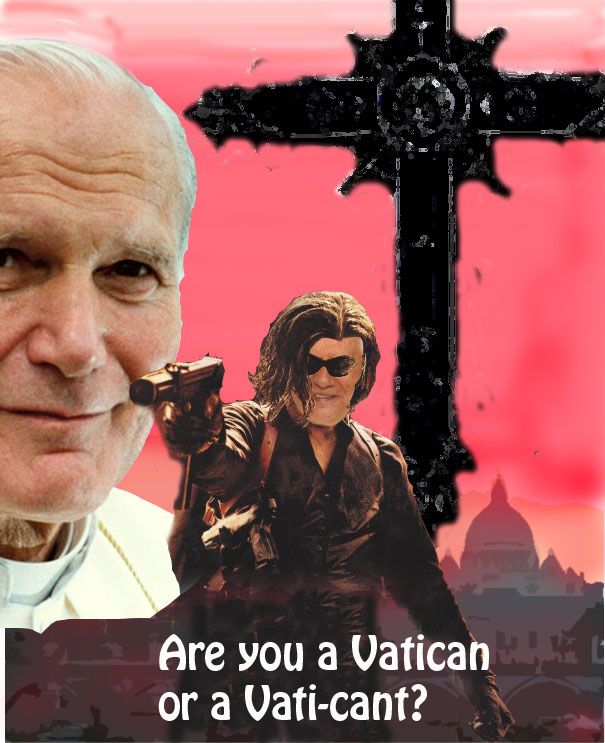
Interesting statistics from Milenio. During the Papacy of Juan-Pablo II, who visited Mexico three times, the percentage of Mexicans who belonged to the Catholic Church (or claimed they did) fell by nearly 14 percent. In 1980, 86 percent of Mexican babies were baptized in the Roman Catholic ritual. By the end of JPII’s papacy, only 73.69 percent of Mexicans received this sacrament.
One Mexican researcher suggested that the reason for JPII’s beatification was the need for a “fresh face” on the Roman Catholic Church to reverse the recent drop in adherents. And, he is a popular folk-saint in Mexico.
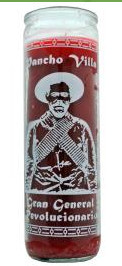
 Folk saint isn’t quite the same as official Vatican approved saint, though. To earn that, JPII needs another miracle. Which, maybe in the spirit of his fellow Mexican folk saints like Jesus Malverde and Pancho Villa, maybe JPII managed to pull off…
Peruvian President Alan Garcia claims Osama bin Ladin was killed through the divine intervention of the beatified JPII… Navy Seals? C.I.A.? … Oh ye of little faith!
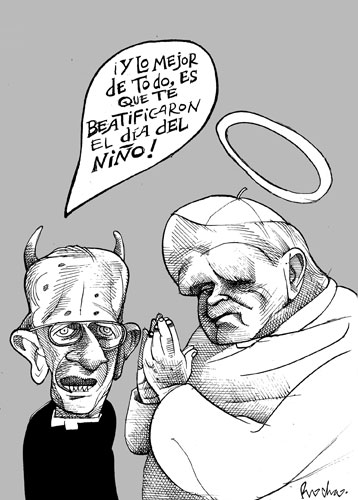
Maybe, JPII (his beatification was on the International Day of the Child), as holy hit-man would overcome the reluctance of some to accept as a saint the same guy who took as his Mexican adviser, and protected from legal authorities, the child-molesting, dope-shooting, clerical conman and Fascist, Marcial Maciel. Forgetting Maciel though, would be a sin.
Point of order
Ganchoblog’s post on the El Universal crime poll overlooked one important figure.
Patrick notes that 63 percent of respondents agree with the general “¡Ya basta! to crime” statement of Felipe Calderón, in general, but slightly more respondents blame the government than criminals for increasing violence (28 to 24 percent) and that 61 percent of respondents believe the criminals are “winning.” This is an increase from the 50 percent who thought so in January 2010.
Furthermore:
… 80 percent expressed support for the army being deployed on the streets, while 86 percent said the army should support the fight against drug trafficking.
Perhaps it was buried in the dataset to which Ganchoblog linked, but the data also reported that 75 percent also believe there has been a negative impact on human rights .
As the paper opines:
When talking about a change in strategy, some in the federal government and among its critics, take this to mean giving up on the crime fight, coming to terms with the criminals, or ignoring them. What the figures suggest is that the people neither want the State to capitulate to the criminals, nor to maintain the status quo.
…
Take away the ideology, and people want to fight crime, but they want their rights respected too.
It may be a mistake to conclude, as Gancho does, that:
Despite the emergence of another anti-violence movement in recent weeks, the constituency for a radical and immediate change of direction doesn’t seem to exist
I’m not sure what Ganchoblog considers “radical and immediate change”, but I’ve yet to hear any of the opposition call for a complete “surrender” to the criminals, or for a complete withdrawal of the military. Even Lopez Obrador — the usual suspect when commentators use the word “radical” — according to a recent “Wikileak” (06MEXICO505) recognized that there was a place for the military in anti-crime activities.
Actually, there have been a few who have suggested withdrawal to the barracks while new rules of engagement are drawn up to protect citizens and their civil rights. Those radicals included law professors, academic and the the Roman Catholic hierarchy.
The only radical proposals I’ve seen are from the Calderón Administration, trying to ram through a legal changes that would permit it to use military force in any civil disturbance.
WASHINGTON — Osama bin Laden, the Saudi extremist whose al-Qaida terrorist organization killed more than 3,000 people in coordinated attacks on the U.S. on Sept. 11, 2001, is dead following a military operation in Pakistan and the U.S. has recovered his body, U.S. President Barack Obama announced Sunday night.
“Justice has been done,” the president declared as crowds formed outside the White House to celebrate, singing “The Star-Spangled Banner” and “We Are the Champions,” NBC News reported…
MSNBC.com
(10 PM, Mazatlan time):
There is nothing wrong with cheering the death of Osama bin Ladin, but for us here, there’s something out of tune about the celebrations in Washington.
A few observations from Mexico. The government here, at the behest of the United States, targeted — and killed — any number of supposedly indispensable men in generic evil-doing business. While there’s a tendency to give these groups inappropriate names like “cartels”, or ridiculously inflated bureaucratic terms like “Transnational Criminal Organizations”, the Mexican fight has been against a known — and not all that complicated — an enemy: gangsters.
Every time some “drug king-pin” has been blown away we’re told it’s an incredible victory for the government and the “war on drugs” … and the result is more violence, more mayhem. Osama bin Ladin was a lot more sophisticated a businessman than our Sinaloan hillbillies, and Al Qaida — having an ideological underpinning to its criminal activities — a hell of a lot more sophisticated than our so-called “cartels.” It’s absurd to think that Al Qaida doesn’t have a transition plan in place, if it hasn’t transitioned to a new management structure already. Richard Engle (MSNBC) is probably right in saying that this is a “significant blow” to Al Qaida, but that the group is going to have to prove it is still relevant.
The U.S. has been supposedly waging not a war on Al Qaida, but a “war on terror” — the abstract noun that may have one referred specifically to bin Ladin’s organization, and by extension to similar armed ideological movements, but has proven elastic enough to cover nearly any organized violent resistance to the status quo; or, as with those who want to redefine Mexican gangsters as “terrorists”… any violent group without official state sanction; or… as with those who loosely define any objectionable group as “terrorist” (I’ve seen undocumented aliens referred to this way) … it can mean anything at all.
Or nothing. What many worry about here in Mexico is that the “war” on organized crime (or drugs or “TCOs” or cartels or …) — like the U.S. “war on terror” — may have had identifiable targets on one time, but as the wars drag on inconclusively, and as they escalate, the targets become more nebulous, or the focus of the “war” becomes irrelevant. Not completely dismissive of the suggestion that the Mexican government favors the Sinaloa “cartel” (or rather, the organized drug smuggling organizations allied with Chapo Guzmán), I can understand perfectly those in the U.S. who suggested that the “war on terror” was not about Osama bin Ladin, but about other things. It’s to Mexico’s credit that while the United States was able to sell a war against Iraq as somehow related to the war on bin Ladin, no one here bought it, nor the Mexican government’s an attempt to tie harassment of the ELZN to narcotics smugglers.
In Mexico, the “war on drugs” — perhaps a reasonable way to deal with various criminal gangs — is morphing into a call for our own “PATRIOT Act”, that would give the President the discretion to define what constituted the type of unrest that called for military intervention. I may not like it, but I accept the reasoning that those in regions where the criminal gangs operate, who want the military in control of law enforcement (for now). But, our “justice reform” proposals would not make the military a temporary law enforcement tool, but — by legitimizing military actions against civilians — also makes them the dispenser of justice. And, from a bullet in the head, there is no appeal.
What frankly scares quite a number of people here is not that the criminals might “win”, but that the state will lose legitimacy. Or, that in its infinite expansion of the “war on terror”, the United States will drop the pretense of “cooperation” and simply intervene directly in this country. Which, of course, would lead to resistance, which would be labeled “terrorism”, which would require more intervention…
In the “War on Terror” the United States, by losing focus on its original goal, and by making “reforms” that justify its actions, has lost legitimacy as a just society in the eyes of many around the planet. People in the U.S. tend to think in terms of win and loss… as if life is a game. It’s not. No one is keeping score, and if there ever was a goal in the hunt for Osama bin Ladin, it hasn’t been all that important in a very long time. To claim “we are the champions of the world” is extremely short-sighted.
Cuban zombie-killers: From each according to his ability, to each according to his needs
I’m expecting everyone will try to read some political message — about brain-destroying and soul stealing imperialist plots, or the about the undead geriatric Revolutionaries in Havana or some such — when Juan of the Dead (Juan de los Muertos) is released in October, but what director and writer Alejandro Brugués said in The Guardian about his film applies to Latin Americans in general: “When confronted with a crisis we go into business.”
Other secuestros
We heard less about crimes not related to narcotics, but they are just as serious, and — unlike narcotics smuggling — perhaps more damaging to Mexico. From Lourdes Cardenas (El Paso Times):
Last Thursday, Mexican police federal officers rescued 10 tigers and jaguars that were captive in a restaurant and in a piece of private land at the touristic area of Cancun. According to press releases, the felines were visibly malnourished and in deplorable conditions, but they were used as an attraction for tourists.
Few months ago, officers from the Federal Environmental Protection Agency (Profepa) also rescued four lemurs, two foxes, one macaw and a California King snake from a mansion in Mexico City.
Rescues such as these are not rare in Mexico and they include a variety of species, from mammals to reptiles and endangered birds. Most of the animals are trafficked by organized crime networks that operate along the United States, Canada and Mexico, among other countries.
According to federal authorities, Mexico ranks third place among the countries where the trafficking of animals is more intense. The annual profits generated by this crime are only surpassed by the profits of drug and weapons trafficking.
…
Some figures from Defenders of Wildlife of Mexico give an idea of the magnitude of the animal-trafficking problem: “It is estimated that between 65,000 to 78,500 parrots are caught illegally every year and from them, 77 percent die before they arrive into the hands of a buyer. The mistreatment these animals suffer explains the high mortality rate.
The illegal trafficking of animals is considered a crime punished with one and up to nine years in prison, but apparently that is not enough to stop a business that according to Defenders of Wildlife represents worldwide profits for more than $25 billion annually .
…
Every time that a single parrot, a monkey, a reptile, a turtle, a jaguar, a wild cat or a tiger is taken out from its … the complete ecosystem is damaged, and in the future, we, the entire humanity, will pay the consequences too.


 mexfiles.net