Pancho Villa: Aqui and Alli

 Of course, this is NOT Chapo Guzmán (creative guess, though!), but a young José Doroteo Arango Arámbula — before his apotheosis as Pancho Villa. The photo was taken from the History Channel’s fine “Pancho Villa: Aqui and Alli” — a documentary cum road-trip with the genial Paco Ignacio Taibo II though “Villa Country” — Durango, Chihuahua and across the border. There is an 8-part youtube download — labeled part 1 of 7… perhaps to confuse the gringos looking for Pancho, that — as far as I know — is a legal download, but then, again, we’re dealing with Pancho Villa, who wasn’t always a stickler for the legal niceties that stood in the way of educating the masses.
Just a poor boy, from a poor family…
Don’t try looking up this photo on “tineye”… it’s not there (I checked).
IF this teenager is who historians believe he is, than this is the earliest known portrait of a Mexican whose pathway out of poverty and obscurity was of such an ingenious nature that many prominent people in the United States were eager to meet with him… so avid to make his acquaintance in fact, that officials disseminated the kid’s later photos throughout parts of the United States, along with offers of substantial financial remuneration to anyone able to affect an encounter with the fascinating fellow … dead or alive.
I know you know him.
Just a spark
Mary Beth Sheridan’s “Military broadens U.S. push to help Mexico battle drug cartels” (Washington Post, 10 November 2010) brought out a not unexpected reaction from Bloggings by Boz (the inside the beltway — inside the Pentagon) guy:
In any conversation about US military aid to Mexico, someone will immediately remark about how the Mexican public will oppose military aid because of the historical tensions. It’s a mandatory line in any article about this issue. This leads to three possible conclusions:
1. Don’t do it.
2. Do it, defend the policy publicly and accept the criticism.
3. Do it and don’t talk about it.I know lots of commentators who believe the first option.
I happen to be a supporter of the second option, believing that military aid is important but an abundance of transparency should come with that aid, even if it means facing criticism.
Boz is very trusting (when has the U.S. military EVER, in any time, been “transparent”) given that even he sees the history of this most recent intervention as less than “transparent”:
…[I]t shouldn’t take a reporter pushing to get an off the record comment by a high level official and no comment from the four star admiral in charge. I remember going through this same lack of transparency and debate when the Merida Initiative was first being developed four years ago. It was wrong then and it is wrong now. Both the US and Mexican public deserve more transparency and a more pro-active explanation and defense of government policy in this area.
Well, at least Boz recognizes “historical tensions” (note the plural). I’m really sad that Ganchoblog assesses probable Mexican reaction based on a narrow reading of one incident in Mexican history:
I know people in the States assume Mexicans are permanently scarred by the Mexican War and therefore extremely distrustful of all things having to do with the US, especially its government. The Mexican War and the loss of territory certainly plays a big role in kids’ history lessons growing up, and there’s an element of lingering fear, but Mexicans increasingly have first-hand knowledge of the US that weighs much more heavily than events that they know only from classes.
Gancho has read Mexican history — or should, even if it’s only my book. There’s been a heck of a lot of foreign intervening going on since 1521, and the Mexican psyche has the scars to show for it. And, as it is, the 1846-48 intervention is only a very small unit in history courses, and I know people who never finished their formal schooling who refer to people from the United States not as “gringos” but as “invasores”.
Mexicans do, however, have a “first hand knowledge of the US” … they hear the racist rhetoric that spews on the airwaves, they read about the xenophobia and the out-of-control narcotics addiction rate, and the random violence associated with it, and the the pathetic attempts at preventing arms smuggling to Mexico. And they aren’t automatically admirers of the “American way of life”… or of militarism in any form. Mexicans know about the Vietnam War (apparently better than Boz… does he expect “advisors” won’t be seen as targets by “enemy forces” in an asymetrical “war”… or that the U.S. military won’t think in terms of warfare and enemies?), the Cuban Revolution, the coup in Honduras, and a lot of other things.
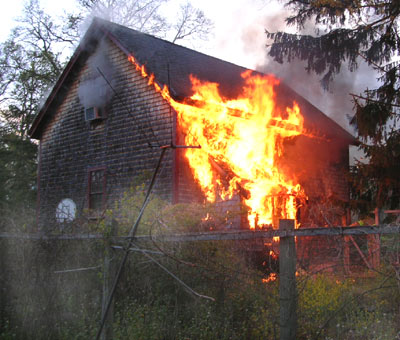 Maybe it is only the opinion makers who “make political hay” about these things, but it doesn’t even take an important opinion maker to set off a spark. Who ever heard of the guys who set off Timmy McVeigh? An upheaval doesn’t require moving the masses… just a critical mass… Hidalgo, preaching to his rural parish, Ruben Jaramilla‘s farmers revolt in 1950s Morelos, or Madre Conchita‘s prayer meetings in 1920s Mexico City.
In Mexico, with what Boz calls “our democratic neighbors in the hemisphere” there is less and less support for the present administration (which a sizable number of people never have accepted as legitimate) and growing resistance to the proxy war now. Many have given up on a “democracy” that looks more and more like a military dictatorship in mufti. Bring in foreign “advisors” or “trainers” or whatever you want to call them, and it doesn’t take a rocket scientist to figure out what’s going to happen. Just a resentment and a home-made rocket launcher.
I just hope it’s not some young gringo tourist who becomes the “collateral damage” that turns this farce into tragedy.
Intelligent design?
Well, apparently religious belief does have something to do with evolution… at least in Mexico. From Science Daily:
Since before the arrival of Christopher Columbus to the New World, the Zoque people of southern Mexico would venture each year during the Easter season deep into the sulfuric cave Cueva del Azufre to implore their deities for a bountiful rain season. As part of the annual ritual, they release into the cave’s waters a distinctive, leaf-bound paste made of lime and the ground-up root of the barbasco plant, a natural fish toxin. Believing the cave’s fish to be gifts from their gods, they scoop up their poisoned prey to feed upon until their crops are ready to harvest.
However, a team of researchers led by Dr. Michael Tobler, an evolutionary ecologist at Oklahoma State University, and Dr. Gil Rosenthal, a biology professor at Texas A&M, has discovered that some of these fish have managed not only to develop a resistance to the plant’s powerful toxin, but also to pass on their tolerant genes to their offspring, enabling them to survive in the face of otherwise certain death for their non-evolved brethren.
Storm warning
It’s almost a given among those who think the present “War on (some) exporters” is futile is that gangster leaders are more or less replaceable parts in the infernal machinery of “free trade” at its most brutal, and bumping off various key executives just leads to nasty “boardroom fights”. Ciro Gomez Leyva, in yesterday’s Milenio, points out its worse than that (my translation):
In what is probably the most useful published analysis of the four years of war against organized crime, Eduardo Guerrero (Nexus, November 2010) coolly and methodically dissects the results of the arrest of crime bosses, which “have triggered large waves of violence, that lasted several months and have led to the deaths of thousands of people.”
The author propounds that the two worst violent waves of four years were related to:
1) the arrest of Alfredo Beltran Leyva Mocha, and the consequent release of their brethren in the Sinaloa cartel, leading to a coalition between the Zetas and the Juarez Cartel (May-November 2008), and
2) the death of Arturo Beltran Leyva (December 2009-May 2010).
According to Guerrero, “the arrest or elimination of a boss of a large criminal organization tends to lead their division, resulting in the birth of new organizations.” To build their reputation quickly, emerging groups specialize in violence and are intensively engaged in creating their image as well as their own survival.
These new organizations break the existing equilibrium among the gangs and generate a competitive dynamic in which the capacity for violence is a key factor for success.
Arturo Ezequiel Cardenas, Tony Tormenta (“Stormy Tony”) , as well as being the brother of Osiel, was in charge of controlling the border cities of Tamaulipas. Nothing more and nothing less. The question remains what will happen in Tamaulipas now, after the death of this boss.
If Eduardo Guerrero’s thesis is correct, we will be in for the worst damn storm yet of these last four years.
In other words, if we think organized crime is bad, “organizing” crime is worse.
Nobody doesn’t like Sara Lee
Mexicans selling the pastries Americans can’t…
Nov. 9 (Bloomberg) — Grupo Bimbo SAB, the world’s largest bread maker, agreed to buy Sara Lee Corp.’s North American bakery business for $959 million to boost sales outside Mexico.
The transaction, which includes the right to the Sara Lee brand for bakery goods in the U.S. and regional brands such as Heiner’s and Rainbo, will likely close during the first half of 2011, Mexico City-based Bimbo said today in a statement.
Bimbo, which makes Entenmann’s cakes, Thomas’ English Muffins and Mrs. Baird’s breads, currently gets most of its sales in Mexico. Buying the Sara Lee unit may help make the U.S. Bimbo’s largest market, building on its $2.5 billion purchase of George Weston Ltd.’s U.S. baking operations.
Nothing half-baked about this … both Bimbo and Sara Lee stock prices rose.
Shocked! Shocked!
It has long been an open secret – or no secret at all – that the church has happily accepted massive donations from organized crime to fund its programs, maintain its buildings, or, in the extreme case of Hidalgo, erecting temples in their honor: There, it was recently revealed that Heriberto “El Lazca” Lazcano, head of the vicious Los Zetas mafia, had practically financed the building of the chapel El Tezontle, in Pachuca.
Although having by osmosis absorbed the innate anti-clericalism of the Mexican intellectuals and the chattering class, as scandals go this seems rather petty— especially in a country where great sinners have been paying for churches since Hernán Cortés who financed his church donations on a career of pillage and slaughter that makes a guy like El Lazca look like a slacker.
Of course, rogues donating to the Church smacks of buying God off. I have no idea of His/Her reaction to such generosity, but I don’t think S/He would frown on, say, a Chapo Guzmán Scholarship Fund, or a Beltran-Leyva Medical Research Grant Program any more than S/He objected to 17th century scam artist and pirate Elihu Yale‘s generous contribution to New England education.
I’ve wondered about “dirty money” before — living in Sinaloa, I can’t say I haven’t received money from gangsters, either directly or second hand. Anyway, there is no way the money earned in the narcotics trade is coming back to Mexico in nearly the proportion that it should… if “dirty money” is the issue, I suggest looking at investment banks and Wall Street. What money does come back needs to be invested. If the worry about “dirty money” is that it will somehow “infect” the body politic (or the Mexican economy), and can’t be put into decent long-range projects like universities or scientific research, better it goes into something with just a short-term economic and political impact — like buying the materials and paying the labor costs on a church building — than something like a federal home building project, or political campaigns.
Besides, if anyone needs to make it right with God, its El Lazca.
Change… of scenery
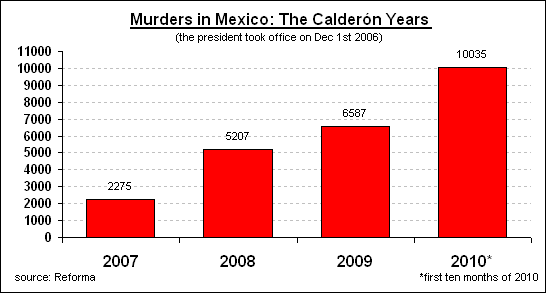 (Chart: Reforma posted by Inca Kola News )
The Mexican murder rate — taken as a whole — is not all that alarmingly high for the Americas — hovering at about 10 to 12 per 100,000. With a slowly aging population, and better economic conditions than its neighbors to the south, it has been slowly declining since the 1990s. What is alarming is the steep rise in the homicide rate attributed to a single event: 10,000 plus homicides attributed to “narcotics violence” this year alone with 30,000+ deaths since the Calderón Administration launched the “War against (some) narcotics (exporters — but maybe not so much against Chapo Guzmán*)”.
Although in the United States, people want to blame start of the “War on Drugs” on either J. Edgar Hoover or Richard Nixon — depending on which of the two rogues is their favored villain — Mexican narcotics have been an export commodity for a long time and neither Hoover’s 1920s anti-dope kick, nor Nixon’s “War on Drugs” had all that much effect on Mexico. Heroin and marijuana were certainly Mexican exports, but from the 1930s onward, even after Mexico was convinced to poison marijuana fields with paraquat, the effects on the Mexican exporters was minimal. That cocaine later became a popular drug in the United States really had nothing to do with Mexico (not directly anyway) until the Clinton Administration.
Ostensibly, “Plan Colombia” was meant to curtail Colombian cocaine exports to the United States (in itself a failure, cocaine exports having remained relatively stable or growing since the start of the U.S. funding in 1996) its purpose was to combat “left-wing insurgency”. Although Colombian President Andrés Pastrana originally proposed (in 1998 when what had been just military assistance was repackaged as a formal foreign policy initiative) a plan for “social development” that would supposedly replace coca cultivation as a export crop, the plan was sold in the U.S. as a boon for military suppliers. Given that there had been a leftist insurgency in Colombia since the 1940s, Clinton — anxious to placate the right wing in the United States at a relatively low domestic cost, pumped up the militarily insignificant threat posed to the United States by Colombian insurgents (and incidentally, to foster exports) began pumping money into Colombia.
Insurgents have always called on the services of criminals to assist in their financing. Stalin staged bank robberies back when the Communists were the insurgents, and the anti-Bolsheveks robbed Communist banks during Lenin’s time. The Irish nationalists, during their fight against British colonialism, were no strangers to kidnapping and armed robbery. Basque Anarchists, on behalf of the besieged Republicans during the Spanish Civil War, were know to have pulled off some spectacular insurance frauds. The French Resistance called on the services of forgers, safecrackers, hitmen and other decidedly anti-social types in their struggle against Fascism. Pancho Villa, that most puritanical of insurgents, stole cattle, robbed banks and permitted “gambling dens” and whorehouses catering to the gringos to flourish — although, interestingly enough, he drew the line at narcotics dealing. The Contras of 1980s Nicaragua — with the connivance of White House operatives during the Reagan Administration — were less fussy, as were the Colombian left-wing insurgents.
That it was easy to justify the anti-insurgent activities in Colombia as an anti-narcotics operation filled needs for both the Colombian and the U.S. government. Re-branding the insurgents as “narcotics dealers” has allowed the Colombians to claim the (presumed) defeat of the insurgents as a political victory. The United States — ignoring the uncomfortable fact that narcotics sales have really not diminished, and are still managed by gangsters — could at least claim “Plan Colombia” has succeeded in disrupting some smuggling rings.
And, naturally, no one wanted to talk about Colombia having more displaced internal refugees than anywhere else on the planet, nor the appalling human rights record of its “forces of law and order” or the erosion of civil rights and political culture.
Of course, “Plan Colombia” was mixed up with a move towards a “Free Trade Association” with the United States… some saying that was “the plan” all along: create a client state by removing any potential opposition, under the guise of “restoring order”. “Restoring Order” in Mexico — Calderón’s “Mano duro”, after the failed attempts to blame the left (specifically Andrés Manuel López Obrador) for crime in Mexico City failed, found it’s rationale in political unrest — in Oaxaca and elsewhere. Having “restored order” — or rather tamped down dissent – in Oaxaca soon after assuming the Presidency, but still needing to destroy opposition to “Free Trade” is seen by many to have figured into Calderón’s proposed “Plan Mérida”.
Although it looked initially much like Pastrana’s 1988 “Plan Colombia”, in that funding was supposedly for building “civil society,” the promised court reforms and educational and job creation parts of “Plan Mérida” never were more than window dressing (and really never required U.S. funding in the first place). Arms purchases did.
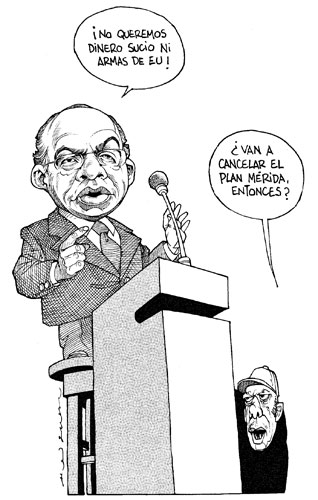
"We must halt the dirty money and arms coming from the U.S.!" ".... So, that means you're canceling 'Plan Mérida', right?"
With the new reactionary U.S. congress, and the rightward drift in U.S. policy since Ronald Reagan, there’s no reason to expect the United States to reign in “Plan Mérida” for political reasons, nor to expect the U.S. government to rein in the taxpayer subsidies it is providing to U.S. military suppliers for the Mexican “drug war.”
What is interesting about it is that the gangsters here, never having any particular political ties (except maybe to neo-liberal “free trade” thinking of the most primitive sort) are being repackaged as “insurgents”, much as Colombian insurgents were repackaged as gangsters.
Consider Hillary Clinton’s description of drug cartels as ” showing more and more indices of insurgencies”. For that matter, consider the use of “cartels” to describe criminal gangs. Gangsters are bad people, but — in the United States, with its fascination for crime stories (and the romanticism of films like “The Godfather” or “The Untouchables”) “gangsters” are not evil, where a “cartel” — with overtones of political enemies like OPEC — suggests a more organized economic, social and political challenge. In case anyone missed the point, Ms. Clinton later referred to the Mexican gangsters as “having the same propensity for violence that the Taliban does.” Meaning, I suppose, that Mexican gangsters, like the Taliban, kills people in gruesome fashion in pursuit of their goals… as did Al Capone and every other gangster, as well as a lot of political groups of one sort or another, including most of the “respectable” ones at one time or another.
Ben Erenreich’s review of Malcolm Beith’s The Last Drug Lord (which, although Jason Dormandy has dismissed it as a “tired little book” would have a lively and wide-awake audience here in Sinaloa, dealing as it does with our neighbor, Chapo Guzmán) in the 21 October 2010 London Review of Books “A Lucrative War” is described by Chris Floyd as “one of the best articles on the current situation in Mexico that I have seen”.
The LRB article is, alas, available only by subscription, but Floyd not only has a subscription, he is able to quote the article at some length in his own excellent article, “Manufacturing Mayhem in Mexico: From Nixon to NAFTA and Beyond” (Empire Burlesque):
As Ehrenreich points out in the succinct but detailed historical background he provides, the current Drug War-fueled destruction is just part and parcel of a larger assault on the underpinning of Mexican society — a wider campaign that includes brutal economic war, and the relentless militarization of society on both sides of the border. On the U.S. side, it is again a thoroughly bipartisan affair, ranging from Richard Nixon to Clinton’s NAFTA and beyond.
Calderón… has promised to keep the troops on the streets until the end of his six-year term. His support from the north has been unflagging. Obama has proposed extending the Merida Initiative, and has requested an additional $310 million for 2011. His administration appears to situate Mexico within the discourse of failing states battling insurgencies and requiring American help. It’s a bad fit – the cartels are not revolutionary cells so much as organisations of global capital – but the rhetoric provides a domestic pretext for folding Mexico into US security protocols. Carlos Pascual, the new US ambassador to Mexico, last summer confidently proposed ‘a new role’ for the Mexican military in Juárez, one consistent with counter-insurgency tactics employed by the US across the globe: they would secure the perimeter of five-block-square ‘safe zones’, and push that perimeter outward block by block.
I don’t quite believe that the Calderón Administration, despite it’s claims to the contrary, really wants to “bring down” Chapo Guzmán, but it does want to keep this “war” going. Is it any wonder then that the United States has “intelligence advisors” in Mexico… presumably not just the DEA agents that have been here for years? I know it’s another of Dr. Dormandy’s “tired little books”, and I dismiss it an unpalatable mix of war porn and a true-crime book, but it’s worth the pain of re-reading Mark Bowden’s Killing Pablo, which in celebrating the exploits of “intelligence advisors” in Colombia is a nightmarish foretaste of what could happen here as the Obama administration seeks to satiate the right-wing’s need to blame others for the U.S. drug problem, and mask the imposition of “free trade” policies under the rubric of national security.
* With the demise of “Tony Tormenta”, said to be the leader of the Gulf Cartel, another of Chapo’s rivals has been eliminated.
Auto-development
It’s gotten to the point with business, and with my personal life, that I needed my own form of private transportation. Of course, Mexico is a major auto producer and foreign visitors are often surprised (and sometimes disappointed) that the cars and trucks and buses on the road are the same as those in the “first world” for the most part, but I had a limited budget to work with — not to mention the VW I was looking at becoming not available at the last minute — so ended up with this…

This is not a Volvo… it’s a VOLORD. Or maybe a FORVO. I’m not sure. OK, it looks like a 1983 Volvo, but appearances can be deceiving. The engine is from a Mexican-made Ford pickup truck. Try getting Volvo parts here… or finding a use for seat-warmers in the tropics (or even getting power windows to work). But it runs well enough, and I needed something to haul myself and books and whatnot around the country.
That slightly shabby retro European exterior hiding Mexican power (resulting from a U.S. investment) and not quite working as intended, it’s, I suppose, “typically” Mexican.
I’m somewhat apologetic for driving something this huge, but perhaps that’s “typically Mexican” too… not in buying more than I need, but in finding what was available wasn’t originally intended for a modest market, or for a modest country.
OK, it’s only a car (er… truck…er… caruck?) but I wouldn’t normally mention my own affairs, but I think I can stretch a metaphor or two out of this.
Last week, the United Nations Human Development Index was published, which usually elicits head-shaking concerns by the professional yakkers and denizens of the international blogo-swamp. Mexico is at 56th place in “development”. The charts are useful in measuring things like educational levels (we need to work on that), it hardly means Mexicans are “less developed” as human beings than, say, Norwegians (#1 on the chart) … who incidentally have a lot of Volvos — with Volvo engines.
It’s a problem I have with these kinds of studies… all they can measure is access to goods and services, whether or not the goods and services are needed or not. Levels of consumption are measurable, whereas the things that make us human are not. Does our reliance on historical memory, for example, make us less developed humans than the people of the United States who have more access to books and information, but still make stupid decisions (and consume more than their share of the planet’s resources)?
56th place isn’t bad or good in itself — we’re “Highly Developed” as the world goes, just not “Very Highly Developed, ” but how much that means is a mystery to me. Is it a sign of under-development of us as humans when we rely, say, on informal networks for access to credit (you don’t think I had the cash on hand to buy that Forvo out of my pocket, do you?) as opposed to the system in “more developed” countries? How do we account for familial or social network support (and how do we offset that against the “underdevelopment” of the individual within that network?) ?
I suppose “Very Highly Developed” means you can get a Volvo, with Volvo parts and there is a significant portion of the population that can go to the bank, fill out forms and buy one. But in Mexico we need to develop our own solutions… meaning perhaps, we’re e-Volvo-ing into a Very Highly Developed people. Or that we’re figured out that we can’t always get what we want, but if we try some times, we get what we need.
A system of a down
My computer has a hard drive problem (second time this year) and I will be offline for the next day or two.
Brazil’s other woman

Photo: El País
To absolutely no one’s surprise, Dilma Rouseff won election yesterday as Brazil’s first woman president… although not the first woman to serve as Chief of State in Brazil.
HUH?
Brazil’s independence from Portugal coincided with that of the former Spanish colonies, several of which — including Mexico — seriously considered monarchy as the best form of government for their new nations. Mexico, like the other colonies, had rebelled against not so much the Spanish crown, but the Spanish control of their resources, and for many of the insurgents, there was no particular brief for republicanism as a form of government.
In the Spanish-speaking Americas, it was the absence of the Bourbons on the throne (Napoleon, when he occupied Spain, installed his brother Joseph as King of Spain) which gave many the rationale they needed to support independence. They were not rebelling against the King, but against an illegitimate king. At independence, several considered either a dual monarchy with Spain, or inviting a member of the House of Bourbon to take an American throne. Mexico had a brief stab at a “native monarchy” for ten months in 1822-23, under Emperor Augustin the First… and last.
The Portuguese -ruled Brazil had quite a different history. When Napoleon marched into Portugal, the Portuguese royal family fled to Brazil, together with most of the imperial bureaucracy. From Bahía, and later Rio de Janeiro, the far-flung Portuguese Empire and its monarchs were able to sit out the Napoleonic Wars. By the end of the French occupation, the Portuguese rulers found they rather liked Rio much better than Lisbon, and some were more than reluctant to go home. Besides, they realized their wealth depended on loot from the colonies, and wanted to keep an eye on their income. In 1822, Pedro IV of Portugal took on a second title as Pedro I, Emperor of Brazil. Which, of course, made the PORTUGUESE feel like colonials, and threatening to rebel. In 1826, Pedro gave up the Portuguese throne, his daughter, Maria, becoming Maria IV of Portugal and Pedro staying on in Brazil.
If the Brazilian royal house was an oddity among crowned heads, the Imperial government was even odder … a “Constitutional Empire”. The Brazilian Emperors were not, in the 19th century way, “liberal” because the monarch granted the people a parliament, but in that the parliament granted the monarch a political role as arbitrator and expected the monarch to take an open role as much head of state as head of the head of the political system: more like a modern President who should appear to have national interests in mind, but of course, is beholden to the party that brought him or her to office. For the Brazilian royals, their party was the “liberal” one.
Having a Brazilian born son gave some legitimacy to the monarchy when the erratic Pedro I abdicated in 1831 making the five year old Pedro II (“Dom Pedro”) Emperor. Of course, a five year old is not going to run the country, and Brazil’s monarchy was, at least until Dom Pedro turned 14 (they grew up early in those days), under a regency. Dom Pedro spent a lonely childhood learning the Empire-ruling biz, and, incidentally, getting Brazilians used to the idea of a regent running the country.
Odd as the Brazilian monarchy was, unlike the phantom Hapsburg Empire in Mexico of Maximiliano and Carlota who had to kidnap an heir, the royal house was considered on the up and up as these things go. Dom Pedro sired a male heir (by the Sicilian born Empress Teresa-Cristina), but Prince Alfonso died at the age of two, leaving the next in line, Princess Isabel (born 1846) as heir-apparent.
Princess Imperial Isabel, as regent for her absent father, Emperor Pedro II, “Dom Pedro”, was the first American woman head of state. During her first regency, she gave the royal assent to the Lei do Ventre Livre (“Free-born Law”) of 21 September 1871. Although Brazil, under the monarchy considered itself a “liberal” and modern government, it depended on slave labor for much of its agricultural production. The arguments for and against abolition were much the same as in the United States, although, in Brazil, there was less regional distribution of slavery (unlike the U.S. where slavery had become unprofitable, and ended much earlier in the North) and — in Brazil, the economy was much more dependent on agriculture than on manufacturing, and the government was too weak to risk a confrontation with the wealthy slave-owning class.
 Still abolition was popular among two key groups (besides the poor, who had no say in things anyway): urban elites and the well-educated, outward looking royal family, at least in part because of the Emperor’s continual obsession with creating a “modern” country (something not uncommon among Latin American leaders then or now) and slavery was retro in the extreme.
Importation of slaves having been outlawed in 1850, the Lei do Ventre Livre was intended to lead to a gradual extinction of slavery. Under the law, children of slaves born on or after 21 September 1871 were free-born Brazilians.
Dom Pedro, the titular head of state, and something of a Lula da Silva of his time (in that he tireless sought to give Brazil a larger role in international and Latin American affairs, and was an extremely popular figure with foreign commentators) — while supportive of abolition — thought it prudent to be out of the country when the controversial law was passed. Leaving the 21 year old Isabel to give the royal stamp of approval.
In 1888, knowing the monarchy was likely to be overthrown by conservatives who rejected Dom Pedro’s push for a liberalized government, and with the critically ill Dom Pedro in Europe for medical treatment, Isabel took advantage of her regency to work with the Brazilian Senate to push through the Lei Áurea (Golden Law) of 13 May 1888, abolishing slavery outright. As Isabel fully knew, and as her father had predicted, abolition gave the conservative land-owners one more reason to back republicans, who would overthrow the monarchy the next year.
Isabel was celebrated in her time as a defender of basic human rights, and as that rare being, the head of state willing to take the right action, even when they know it is likely to destroy their own career.
Like so many Latin American exiles before and since, Princess Imperial Isabel sailed off to France (where she died in 1921) but maintained contact with political thinkers back home, and closely observed her homeland’s political and social development. At the time of her death she was planning to return to Brazil as a private citizen.


 mexfiles.net