Virgin travel
A new mosaic, depicting the Virgin of Guadalupe, was installed at St. Christopher’s Church on 12 December. This would be unremarkable, if St. Christopher’s was somewhere like Los Angeles or Houston or Phoenix — or even Burlington North Carolina… but the church sits on Zhongshan North Road in Taipei, in the heart of what is known in the Taiwanese capital as “little Manila.”
The thread of the story of how the Virgin of Guadalupe ended up in Taiwan in a church serving a Filipino congregation begins with… well… thread.
Spain had a silk industry at the time of the conquest, but the best silk, of course, came from China. But, in line with the mercantilist theories of the time, it was assumed the purpose of colonial expansion was to create a market for the mother country… meaning Mexicans could buy silk, but only the inferior Spanish silk, and at inflated prices. Then, as now, enterprising Mexicans considered “alternative import sources”… i.e., smuggling. Knowing perfectly well that the world was round, but still having no idea of how far the Americas were from Asia, by the mid-16th century, Mexican smugglers (er… explorers) were already searching for a route to the silk supply.
Miguel López de Legapi and Andrés de Urdaneta (a retired sailor turned monk, who was along as chaplain, but took over when most of the crew died of scurvy) discovered a route to Manila in 1565, given Spain a backdoor to China. (Gods, Gachupines and Gringos, page 95).
If Pinoy culture sometimes bears some striking resemblances to Mexican culture, there’s a simple explanation. Until 1821, the Philippines were not a Spanish colony, but a part of Mexico.
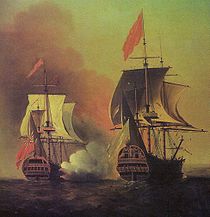 It was a cumbersome administrative burden (a ghost story of the early 17th century tells of the Philippine soldier so faithful to his post, that when the governor of Manilla and his guards all died in an epidemic, the faithful guard’s ghost showed up in Mexico City’s Zocalo to report on the situation… and asked to be relieved), one exploited by those entrepreneurial Mexican merchants. Complaints from Spanish merchants had convinced Philip II to limit the official galleon trade between Manilla and Acapulco to two ships a year in 1593, but unofficial trade — and cheap silk (not to mention spices and Chinese made products, although plastic doo-dads and radios were far in the future) managed somehow to make their way to Mexico… and Mexican goods to the Philipines (and onward to China).
As did Mexicans and Filipinos. Filipino ancestry is not uncommon in western Mexico (Mazatlán, for example, considers Pinoy merchant Antonio Machado, it’s true founding father), nor Mexican ancestry in the Philippines.
Along with the pirates, bureaucrats, soldiers and honest merchants, of course, the Mexicans — not the Spanish — sent out priests and monks. And, the Virgin of Guadalupe went along for the ride. Although separated from the step-mother country when Mexico gained independence, and between 1898 and 1946, a United States possession, the Mexicanization of the culture, and Mexican-style Catholicism had deep roots among the Pinoy.
As with other island-dwellers, the Pinoy are great seafarers and explorers. And, in the late 20th century and now, their government has encouraged remittance labor. It’s no surprise there is a “little Manila” in Taipei… nor that a mosaic of the Virgin of Guadalupe is being installed in a church with a largely Pinoy congregation.
The mosaic, by the way, is of Talavera tile (a product of Puebla) and Guanajuato limestone. The mosaic itself was produced in yet another former Mexican town… San Francisco, California, by Nick Berg and Alan Roth of Exact Mosaics.

Exact Mosaics
Did NAFTA actually help Mexico?
Elisabeth Malkin of the New York Times reports that according to the Carnegie Endowment for International Peace, the answer is NO:
… Local companies went out of business because they could not compete with imports. Foreign companies that invested in Mexico did not source from Mexico, and Nafta’s conditions prevented Mexico from requiring local purchases. At the same time, public investment fell because Mexico adopted strict fiscal policies to achieve macroeconomic stability. The study estimates that Mexico’s overall investment rate has hovered around 19 percent of gross domestic product, compared to China’s rate of about 40 percent over the last two decades.
American jobs did move south, particularly into the export sector. The growth in services — new supermarkets, banks, tourism — also created jobs. But overall, Mexico was unable to create enough jobs to make up for all the jobs lost because of competition from imports, particularly purchases of subsidized grains from the United States.
The oversupply of labor, along with government policies that succeeded in keeping wages low, have led to a slight increase in the gap between average wages in the United States and Mexico — precisely the opposite of what Nafta was expected to do.
All your seed belongs to us
Although this video is aimed at North of the Border consumers, it is worth considering that Montsanto corn is being grown in Mexico, and is contaminating native stocks. Whether patent law, as interpreted in the Canadian courts (who ruled that cross pollination of a farmer’s own seed supply with Montansanto-owned genetic stock — even if unintentional — gave Montsanto a right to the crop) would apply in Mexico is uncertain. However, NAFTA regulations would seem to give Montsanto the edge over the independent Mexican farmer.
Esther (From Xico) has more on the threat Montsanto represents, not just to national sovereignty, but to our food supply itself.
Yes, they will have bananas
Victory is ours!
What banana war? Since the 2001 “Doha Development Agency” of the World Trade Organization set up the ground rules for international tariffs, the biggest slip-up in international trade has been bananas.
Although meant to lower agricultural tariffs world-wide, the reality has been the larger countries sought to prop up corporate agriculture though exports, while denying their markets to imports from less wealthy nations. Although bananas don’t grow in Europe, Europeans like them… and there are still a few French Overseas Territories (like Martinique) that grown them… not to mention a lot of French and British corporations that control agriculture in former colonial possessions, especially in the Americas.
 The upshot has been that — with high tariffs on Mexican, and Honduran and Ecuadorian, etc. bananas — Latin American nations have tariffs on European goods, and agricultural products from the former colonial possessions that are in the banana-biz. Bananas may not be such a big deal, but peel back the assumptions — that the rich countries get to play by a different set of rules than the rest of the planet — and the whole “free” part of “free trade” is called into question. Agricultural subsidies and tariffs, more than anything else, have called the whole assumptions of the World Trade Organization into question. International trade agreements broke down in 2003 (in Cancún) over the agricultural subsides (the banana controversy being the symbolic issue) and have stalled since.
And, as a result of continual prat-falls with the WTO, the G-8 has become the G-20 as — in an attempt to fend off a fall in banana tariffs (ok, among other things) — the organization was forced to take in the “outsiders” if it was going to maintain the credibility is was rapidly losing, largely as a result of the banana tariffs.
Anway, today — finally — a banana tariff agreement has been reached. There aren’t any details yet, and it’ll probably suck if you’re a French fruit importer with extensive investments in Reunion, or an English shareholder with extensive investments in Belize, but for the European and Latin American consumer (and producer), this is a big win.
Long Live the Glorious Banana Republics!
Church: we support the troops — in their barracks
Although the Church (and any religious body, for that matter) cannot, as an organization, take a position for or against any political issue (the Church cannot lobby the Chamber of Deputies, or support any candidate, for example), nor can a church be used for political activity, clerics can express an opinion outside their precincts. Msgr. Hugo Valdemar, the press liaison for the Archdiocese of Mexico normally has a few reporters waiting for him just outside the Metropolitan Cathedral on Sunday mornings, and his “opinion” can be taken as official statement by Cardinal Norberto Rivera.
My translation is from El Universal’s coverage of yesterdays not quite “ex-cathedra” — more “exiting the Cathedral” — statement.
Hugo Valdemar, spokesman for the the Archdiocese of Mexico, said yesterday that the federal government should consider replacing the Army with an effective national police force in the battle against the scourge of drug trafficking,
Valdemar admitted that federal authorities do not presently have the numbers of police needed to replace the military in the fight against organized crime but that the military are engaging in human rights violations.
Interviewed at the end of Sunday Mass in the Metropolitan Cathedral, the prelate said that this situation must be considered by the current administration and that the highest priority needs to be protecting the individual rights of the people.
He said the federal government should consider creating a national police force dedicated exclusively to combating drug trafficking, and that the military can not do everything at home.
While several of the commentators on the article speculated on church ties to the narcotics traffickers, and — being Mexico, where anti-clericalism is a long tradition — there are a fair share of knee-jerk “how many little boys has this guy boinked?” type comments, what’s more interesting is the reaction of the faithful, who are the Calderón Administration’s biggest supporters.
That the Church — as an institution — has also recognized the failure of the present “drug war” model, but also the proposal that municipal and state police be replaced with a single national force, is another sign not just that “drug war” model is being rejected by Mexican society, but that the Felipe Calderón is, himself, cannot expect uncritical support for his proposals.
Blackfire: Translation, eh?
The defenses excuses given by Blackfire Exploration, a Canadian mining operation in Chiapas, for their employee’s role in the murder of local environmental activist Mariano Abarca Roblero are stretching the limits of credibility, as well as English comprehension. Andy Hoffman, of the Toronto Globe and Mail had the unenviable task of presenting the company’s story. I have the perverse pleasure of providing the translation.
First, Andy’s admirably comprehensible backgrounder:
[Canadian] Governor-General Michaëlle Jean encountered protesters chanting, “Canada get out,” while on a visit to Chiapas this week. Ms. Jean called Mr. Abarca’s murder “deplorable” and “inexcusable.”
Three men with links to Blackfire have been arrested by Mexican police in connection with the slaying. One of the men arrested is a Blackfire employee and the two others have worked for the company in the past.
Blackfire has condemned Mr. Abarca’s murder and denied any involvement. Its mine was shut down this week by Mexican authorities for alleged environmental violations.
And, now… a plunge into corporatese —
BLACKFIRE SPEAK:
“We have been extorted by the mayor of Chicomuselo, who since we began operations has asked us for the amount of 10,000 pesos per month to prevent the Mexican co-operative farm near where we mine from taking up arms.”
ENGLISH TRANSLATION:
We paid about 750 US Dollars a month protection money in return for the mayor sending out goons to harass the local ejidatarios.
BLACKFIRE SPEAK:
… the mayor asked for 100,000 pesos for the village fair. The documents indicate that 75,000 pesos were to be deposited into the mayor’s personal account at the Bancomer bank.
ENGLISH TRANSLATION:
The largest employer and business in the community was asked to contribute 8000 US Dollars to the annual festival. Instead, the company deposited 5,000 US Dollars in the mayor’s personal bank account.
BLACKFIRE SPEAK:
“We decided not to meet [a request that the company hire pop star Niuka, described by the Globe and Mail as a “nude model”, to perform at the event], and for this reason the mayor started a smear campaign, making allegations to the priest of the region against the company, and we know that this incited the people who violently took the facilities of our company on June 10, 2009.”
ENGLISH TRANSLATION:
Those injuns were pissed off about ruining their land and water… it was all the evil influence of Romish priests.
BLACKFIRE SPEAK:
As far as Blackfire is concerned, we were sponsoring the town of Chicomuselo, and we felt that the mayor was abusing and taking the money for his own personal needs, and that is why we reported him to congress to overturn his immunity so that we could press criminal charges against him [filing a complaint with the State of Chiapas on 15 June, 2009 — five days after protests against Blackfire’s barite mine erupted).
ENGLISH TRANSLATION:
We expect bought politicians to stay bought.
BLACKFIRE SPEAK:
This isn’t bribery. We were taken advantage of. We are fighting against it.
ENGLISH TRANSLATION:
We’re lying.
The Canadian Parliament is considering a new mining law. Andy Hoffman writes about the Blackfire affair:
Representatives of the Canadian mining industry concede the Blackfire case is threatening to tarnish its reputation at a sensitive time, as Parliament considers the proposed mining law.
I have no idea what the Canadian parliament should do, or will do. And, it’s not really Mexico’s concern. But, the Canadian mining industry can’t do much more to tarnish its reputation down here than they already have. Another Canadian owned mining operation– Mineria San Xavier in San Luis Potosi (owned by New Gold, Inc.) — is accused of unleasing a hundred of its employees to attack local anti-mining protesters and members of ejidal Cerro de San Pedro.
Bah Humbug!
From The Sanctuary:
Last week, a conglomeration of anti-immigrant groups, led by “Help Save Maryland” and FAIR (recognized a hate group by the Southern Poverty Law Center), organized a rally against my organization, CASA de Maryland.
The heavily promoted rally, which was announced in CAPITAL LETTERS on the website of Help Save Maryland, was supposed to draw the anti-immigrant forces from around the state. …
Now, before I go on, it’s important to note that many political-types in Washington actually believe that the anti-immigrant forces are vast and numerous— not just noisy. Because of this, conventional wisdom on how immigration is hard to change. Well, for anyone in DC who missed how badly anti-immigrant candidates lost in 2008, please turn your attention to Maryland.
A funny thing happened on the way to that big rally against CASA, which, as noted above, was supposed to include both HSM members and anti-immigrant groups from across the state: One person showed up.
Washington would be hard-pressed to find any definition of a successful rally or a successful movement that included one person.
On the other hand, this guy showed up at Casa de Maryland. Seeing he flies in without having his passport checked, or going through a Homeland Security vetting, I guess the jolly old elf is just another “illegal alien” anyway…

Un-planned Sunday Readings
Unregisterering their dissent
Lillie Langtry (Memory in Latin America) on today’s elections in Chile in which in extremely low turnout among young (only 9.2 percent of 18 tp 29 year olds registered to vote) will be a factor:
… young Chileans will engage with political issues which they feel affected by – but using methods such as public protest, not by voting. This is an interesting legacy of the dictatorship; simplistically, one might expect the population to have an enthusiasm for the democratic process fostered by the length of time it was denied to them, but this is not exactly how it works. Susana Kaiser’s book Postmemories of Terror, for which the author interviewed many young Argentines who were too young to remember the dictatorship personally, revealed a similar reticence to engage with the political system. Aside from activists who had strong personal connections to victims of the regime, such as members of HIJOS, many young Argentines were uninterested in party politics, vague about the exact causes of political repression, and still felt inhibited by the belief of their parents that political involvement could be dangerous.
U.N. – likely bank bailout
Rajeev Syal, The Observer (U.K.):
Drugs money worth billions of dollars kept the financial system afloat at the height of the global crisis, the United Nations‘ drugs and crime tsar has told the Observer.
Antonio Maria Costa, head of the UN Office on Drugs and Crime, said he has seen evidence that the proceeds of organised crime were “the only liquid investment capital” available to some banks on the brink of collapse last year. He said that a majority of the $352bn (£216bn) of drugs profits was absorbed into the economic system as a result.
This will raise questions about crime’s influence on the economic system at times of crisis.
As, say, opposed to crime’s influence on the economic system in good times?
Unplanned discovery
Eddie Edmundson, director of the Chilean-British Institute in Concepción from 1984-1990, interviewed by the Santiago Times on his book “A History of the British Presence in Chile” (reprinted by MercoPress [may require registration]:
Darwin spent 17 months in what is now modern day Chile. His ‘On The Origin Of The Species’ begins with the quote As naturalist in South America I was much impressed by the peoples that I met. This is what he met in Chile, nowhere else. The Fuegian Indians in Tierra del Fuego made him ponder on the species of mankind. They helped him realize that culture was just a veneer over humanity. He saw for himself that (these savages) could adopt manners and customs, and learn other languages.
Another thing – which if it hadn’t happened there would have been no Galapagos and no circumnavigation of the world – was the earthquake which occurred in Concepcion when he visited. He realized that however despondent and depressed he and the crew of the HMS Beagle were, their lot was extraordinarily good compared to those who had lost everything in the earthquake. The captain decided to have another look at Chiloe and the southern coasts of Chile before they crossed the Pacific. This kept Darwin on board. He would have left otherwise. The earthquake in Concepcion made them stay longer.
Under-capitalized?
With falling numbers of new “unregistered aliens” in the United States, the bureaucrats are considering an alternative way of dealing with the estimated 12 million now in the country. Katherine McIntire Peters, Government Executive:
Just as U.S. Citizenship and Immigration Services is digging itself out from under an enormous backlog of citizenship and naturalization applications, a sharp decline in applications — and the processing fees associated with them — threatens the agency’s fiscal future.
In a wide-ranging discussion with reporters on Thursday, Alejandro Mayorkas, director of USCIS since August, said the agency halved the naturalization application processing time from eight months in 2008 to four months in 2009, and cut adjustment-of-status processing times from nearly 14 months to 4.3 months during the same period. It also has eliminated a backlog in an FBI name check program.
But a significant drop in applications this year is creating a budget crunch for the agency. “The challenge for 2010 is to be able to maintain momentum in the face of great fiscal challenges,” Mayorkas said. The agency is predicting a dramatic decline in revenue from application fees in 2010 and 2011, said Chris Bentley, USCIS spokesman. Officials are now conducting an expansive review of agency operations to reduce overhead and spending and they are considering raising application fees as well.
Un-manned flight
While Homeland Security is forced to raise prices for budget reasons, they seem to have a lot of money to spend on enforcement. From Laura Martinez’s “Mi Blog es tu blog”:
Just in time for this upcoming Season to be Jolly, the U.S. government has unveiled a “super” idea: It will begin using military predator drones to catch illegal immigrants along the U.S.-Mexico border. These babies, which are currently used by the military in Iraq and Afghanistan, cost only $13.5 million each, but can fire two AGM-114 Hellfire missiles… which must be like shit scary stuff.
The Fall of Mexico
The hyperbolic title of a Philip Caputo’s Atlantic Magazine article on militarization of the anti-narcotics crusade here have been better been “The Fall of the Calderón Administration” or “The Fall of U.S. Hypocrisy About The Drug War” or… the “fall” of any number of things… but was, instead, “The Fall of Mexico”. Which led “Peter” at Mexconnect.com to post the following thoughts about the Fall of Mexico:
The fall of Mexico is a very beautiful season of the year with many fiestas and outdoor celebrations. It is a time when the Mexican army is busiest seeking out marijuana fields as it comes into harvest time and the farmers experience their crops going up in flame either by the military’s elaborate bonfires or end users putting match to plump yescas.
It was during the time of US prohibition of alcohol Mexican border towns’ economies experienced a great surge in tourism, notably Tijuana where culture was born from those days and have since become permanently engrained in American society in the form of Ceasar Salads, the Margarita cocktail, and tuck and roll auto upholstry until activists sucessfully sought to curtail that activity when finally outraged at the number of naugas that sacrificed their hides to adorn the many cocktail lounges and add renewed splendor to numerous restored Chevrolet Impalas.
Now some eighty years later when Mexico’s northern neighbor is firmly enforcing its latest prohibition that has stemmed from the earlier prohibition when those black markets became legitimate and demanded the state protect their industry and ban the production and use of rival substances, we will probably not be able to experience the benefit of the new cultural developments that would likely stem from the tourism that would no doubt boom from Amsterdam-style hash cafes in Mexico. Whatever economic advantages to arise from those, likely enormous, would be at the cost of Mexico’s military might who would lose foreign funding which currently keeps them engaged and would then become hard-pressed to find other functions to perform.
The fall of Mexico is that time when the snowbirds return from Canada, the mariposas return from their northern migrations, and when students and marine wildlife come to spawn on Mexico’s beaches. Thankfully it is not just the fall of Mexico that is prime but any time of year when the tourist can come and experience their paradise here. This fall will not be the time for the imminent cultural boom that would surely come after those now prohibited markets have been sufficiently stimulated to stand on their own economically and dictate their own world policy out in the open. But why would they ever opt for those conditions when the current state is so generous to those few who understand this and now wield the power to keep their lucrative markets repressed, out of state control, and kept in select hands? What seasonal climate could ever cause that to change? It would be the Fall, somewhere.
And the winters are nice here, too.
White woman speak with forked tongue
“If people want to flirt with Iran, they should take a look at what the consequences might well be for them. And we hope that they will think twice.”
Hillary Clinton, Secretary of State of the United States of America re: the foreign policy of the Plurinomial Republic of Bolivia.
“Do you know who exports terrorism? Those people who send troops to other countries, who install themselves in military bases, they are the ones that practice terrorism. It is the government of The United States that practices terrorism at the moment.”
Evo Morales, President of the Plurinomial Republic of Bolivia re: the foreign policy of the United States (translation by Otto)
The consequences being…? Sounds like a terrorist threat to me. I don’t know how many times I’ve said it, but this U.S. Administration’s Latin American policy is the same as every U.S. Administration since at least Woodrow Wilson’s … do as we say, not as we do… or we’ll do unto you as we’ve done unto others.
Correspondences: Sor Juana, Father Louis and Jesús the Indian
Talk about your cosmic convergences. I don’t often watch television, but in Mexico City last week, after a very long day (among other things taking a 17 year old down to UNAM to check out the huuuugggge campus) I was channel surfing in my hotel room and ran across a program on Concultura (the most educational of the several educational channels) on Octavio Paz. This was minimalist TV — a couple of literary critics and writers sitting in a library lounge with a television camera rolling (and people behind them wandering the stacks) talking about Paz. Every one of them, when asked which of Paz’ large number of works was essential for understanding his political and social thinking, mentioned his biography of Sor Juana.
Which… the next day… I found. Or it found me… in Pasaje Iturbide (running through what was the Napoleon wannabe’s “imperial palace” from Simon Bolivar to Pedro de Gante between Francisco Madero and 16 de Septiembre) which includes not just the New Options Bookstore, Global Books, a couple cafes and an internet cafe, but also the wonderful Mexico Viejo rare and used book store. A first edition hardback of Sor Juana or the Traps of Faith (Cambridge: Belknap Press of Harvard University Press, 1988) was worth every centavo of the three hundred pesos I shelled out.
 I’m slowly working my way through the life of Sor Juana, who is less a biographical subject for her fellow Mexican poet and thinker, than a springboard for Paz’ discussion of the Mexican baroque, the criollo culture of the 17th century (which, Paz believes, was more influential on Mexican culture and politics than we tend to credit). If I ever have to write a second edition of Gods, Gachupines and Gringos, I’ll have to make a few changes based on Paz, but that’s for another time.
What intrigued me about Sor Juana as a person was that — while a good nun and not particularly atypical for a Heronomyte nun of her time other than, being poor and of illegitimate birth, the dowry normally paid to the order upon taking vows was paid by a benefactor (sort of a scholarship for poor, deserving criollo girls) — Juana was very much a woman of the world. Juana Abaje Ramírez — who served as a lady in waiting to the Vicereina from the time she was 14 until she entered the convent at 20 — remained very much a figure to be reckoned with in the larger world of Spanish thought even after taking the veil (which she wore rather lightly for most of her life), writing secular and religious works, “dances and provincial airs,” poetry, scientific and theological studies … and maintaining a voluminous correspondence with the movers and shakers of the world-wide Spanish empire.
A scandalized Father Oviedo reports that she stopped writing letters only when she was in the locutory [the convent’s visiting room] chatting with vistors…. [T]he Vicereine and her husband, the Marquis of Mancera, “had the custom of attending chapel for vesper prayers, and then chatting in the locutory with Sor Juana.” They were accompanied by close friends and members of the court who had known the young nun during her years in the palace.”
In Sor Juana’s time, there was no great gulf between the world of the spirit and the world of the flesh. The art of the time, and the art which Juana mastered was that of discovering the correspondences between things of the body and things of the soul, a singularity in her age, a dichotomy in ours: for the most part.
There have been a few artists in our era who sought to recover the wholeness of the baroque mindset. And, at least one who — as Juana did in the last few years of her life — sought to change the world of the aesthetic for that of the ascetic.
Hermano Juancito earlier this week remembered it was the anniversary of Thomas Merton’s death (10 November 1968). Merton, who was raised among what were once known as “bohemians” (with an artist father who left his mother for mistress, and left Tom to be raised in France and genteely eccentric American grandparents), was physically of the Beat Generation, but his ethos matched in many ways that of Sor Juana’s Baroque.
Where the “Beats” sought to integrate the flesh and spirit though a more intense identification with the physical world (leaving to us their legacy of sex drugs and rock-n-roll), Merton took a radically different path — one that made logical sense in Sor Juana’s age, but not our own. Juana orginally joined the Discalced Carmelites, an ascetic order (“discalced” just means they didn’t wear shoes, among other mortifications of the flesh*), then the more relaxed Heronomytes. Merton originally was intended to become** a Franciscan lay brother — which expected him to be part of the world, but in 1941, entered the Order of Cistercians of the Strict Observance — the contemplative Trappists. In 1949, he was ordained a priest, taking the religious name Father Louis.
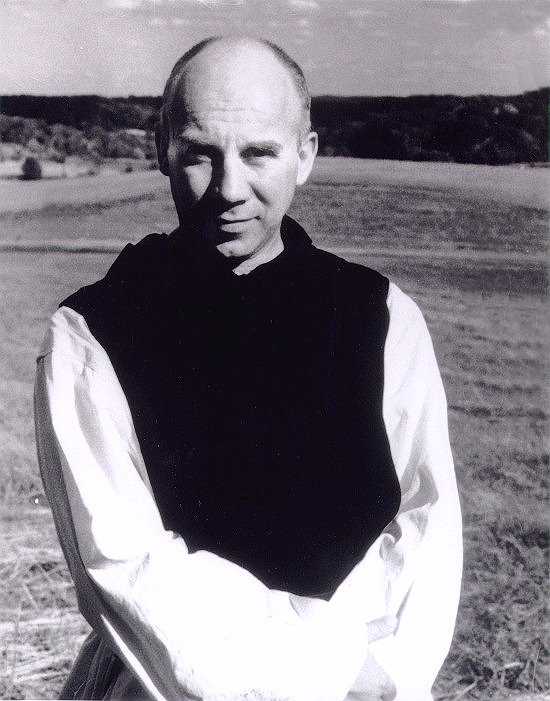 Although as a Trappist, Merton spoke only when necessary, he wrote incessantly, and — like Sor Juana — his outside correspondence was something of a trial to his religious superiors. Somewhat as penance for his letter-writing, his abbot put him to work writing a history of the American Trappists, The Waters of Siloe (Garden City Books, 1951). Hardly Merton’s best work, but still a readable account of what can only be described as an alternative lifestyle.
Living in a much wider world than the Spanish Empire of Juana’s time, his correspondence — with the world in general through magazine articles, poetry and books, and with individuals ranging from Alan Ginsburg to the Dalai Lama — continued to make him a public figure. In the wider world of our time, Merton sought, as did Juana, correspondence between the things of the flesh — which are mostly political and not personal in our time — and those of the spirit. While best remembered for his interest in integrating Buddhism and Catholicism (he died of accidental electrocution while attending an inter-faith monastic conference in Thailand), it was in his pronouncements on peace and justice — or the lack thereof — that he sought correspondence… as in Emblems of a Season of Fury (Norwalk, CT: New Directions, 1963)
If only North Americans had realized . . . that Latin Americans really existed. That they were really people. That they spoke a different language. That they had a culture. That they had more than something to sell! Money has totally corrupted the brotherhood that should have united all the peoples of America. It has destroyed the sense of relationship, the spiritual community that had already begun to flourish in the years of Bolivar. But no! Most North Americans still don’t know, and don’t care, … that Latin America is by and large culturally superior to the United States, not only on the level of the wealthy minority which has absorbed more of the sophistication of Europe, but also among the desperately poor indigenous cultures, some of which are rooted in a past that has never yet been surpassed on this continent.
So the tourist drinks tequila, and thinks it is no good, and waits for the fiesta he has been told to wait for. How should he realize that the Indian who walks down the street with half a house on his head and a hole in his pants, is Christ? All the tourist thinks is that it is odd for so many Indians to be called Jesús.
* mea culpa for the misspelling in the original post.
** mea culpa, mea culpa, mea maxima culpa.


 mexfiles.net