Calling Carlos Slim…
Al Jazzera’s Mexico correspondent, Franc Contraras posted this raw footage of Mexican TV talking head (a “politicologico”) Denise Dresser talking about how she lowers he own telephone rates — and the implications for Mexico of the high phone rates — on his Mexico Monitor site.
I suppose, with a little spin, lower phone rates could be made an “anti-crime” measure… more phones, more ways to call the police. Sensible, no?
Unless your cell phone is robbed.
The Revolution will be globalized
Duderino (Abiding in Bolivia) uncovered this gem by Aymara hip-hoppers Uamau and Ke
Chihuahua nips Wal-Mart: in-dispensa-ble and indefensible
Dspensas — coupons or credit vouchers — are commonly used in Mexico not just for social programs (Mexico City’s “old age pensions” are not cash payouts, but can be used for food and necessities, like the ATM cards states in the U.S. used to replace food stamps). They are not just for social programs, though. Businesses often provide dispensas. There’s certain tax advantages for the employer (who lowers their payroll taxes) and they are often presented to potential employees as a company benefit. Which, for most employees, they are.
What no one seems to have thought of until now was that these limit the consumers’ rights. It’s a modern recasting of an old problem, that was one of the major factors in the Revolution… peonage and the tienda de raya (company store). While Mexico was the first country to outright forbid slavery, the more “modern” economic form of slavery, peonage, remained. It was simple enough: people were legally enjoined from leaving their jobs until their debts to the employer were settled. And, of course, the employee was not paid enough for basic necessities, receiving script for a company store that sold goods far beyond any reasonable price, keeping the worker in hock forever. Of course, this system was used throughout the world (and still is), even in “advanced” countries well into the 20th century.
The 1910-20 Revolution was based in a lot of different grievances, but both the rural and urban workers saw themselves (and rightly so) as the main force for radical change. The “radical” 1916-17 Queretaro Constitutional Convention’s delegates included not just rural revolutionaries and union members themselves, but a contingent of what was then a new specialty, labor lawyers. What emerged was unique: the first consitution on the planet to include an entire labor code. While Article 123 of the Constitution has been “reformed” over the years (usually to the benefit of employers), and has its oddities (Mexico is probably the only country in the world where making your employees go to a cafe to pick up their paycheck is a constitutional violation), it has stood up pretty well, and is the basis of most 20th century labor codes. Article 123 specifically forbids employers to pay in company script, or force workes to buy from the company store. Dispensas, however, as long as they are not your paycheck, and not making you buy on credit, are perfectly legal. UNLESS…
Enter the chain stores and debit cards. Of course, the chains have the ability to process debit cards, and if your dispensa is a debit card, you’re shit out of luck if you want to shop at a mom-n-pop in most places. My local abarrotes — which does have a scanner — handles credit purchases the old fashioned way. If Lolita knows you, she writes down what you owe her in a school notebook, and when you pay she deducts the outstanding amount.
What about when the employer is a chain-store? The State of Chihuahua got an injunction from the Surpreme Court against Walmart because their “social benefits plan” which includes company debit cards as dispensas.
So, all you WalMart employees out there… when you think of calling yourself a “peon”… you’re right.

Portrait of a General
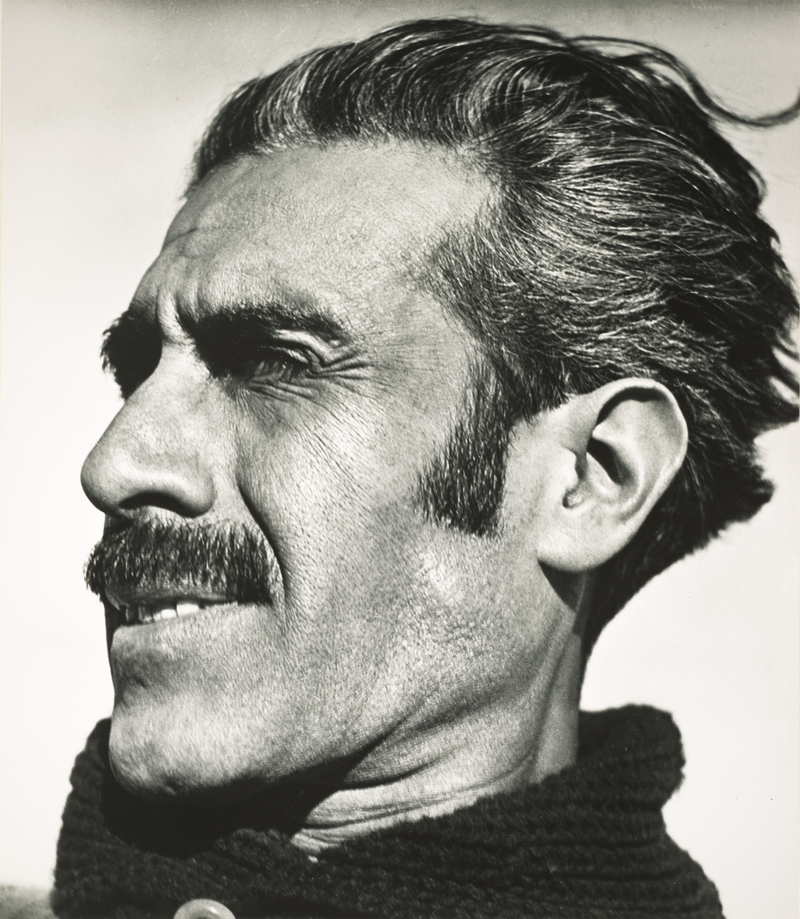
Edward Weston: Manuel Hernández Galván, 1924. © Center for Creative Photography, Arizona Board of Regents
I’m afraid I know nothing about General Hernández Galván’s career.
Tina Modetti may have had an affair with the General at some point (briefly mentioned in passing by Patricia Albers, Shadow, Fire, Snow: The Life of Tina Modetti, University of California Press, 2002). Tina had a long term affair with Weston. I don’t know the extent of Weston and the General’s relationship, but this portrait was taken iIn 1924, during what Richard Nilson, in an Arizona Republic review of a recent Edward Weston show at the Phoenix Art Museum describes as an expedition against the “Huertistas.”
Huertistas would have been backers of Victoriano Huerta, the U.S. backed general who seized power from the democratic Madero government in 1913, setting off the Constitutionalist revolt of Villa, Obregon and Carrenza that was the heart of the military phase of the Mexican Revolution. Huerta died in 1916 (in U.S. custody, and was buried in El Paso’s Evergreen Cemetery). I think Nilson means “delaHurtistas”, backers of the 1924 revolt by former interim President Adolfo de la Huerta, who — after a stint as Obregon’s Secretary of the Treasury — was prevailed upon to lead a short-lived revolt in 1924. A minor detail, in an otherwise enlightening review.
Whomever they were, Weston was prepared for a shoot … of some kind. Hernández Galván loaned the photographer a pistol — just in case — but obviously, Weston was a better shot with his camera. Someone else shot the General in a Mexico City cantina a few years later.
I know quite a bit about the Mexican Revolution, but don’t pretend to be omnipotent. Having spent the last six plus years writing a Mexican history, and having originally written my version of the Revolution four different ways (and revised I forget how many times), It’s easy to overlook even a most photgenic Generals, like Manuel Hernández Galván.
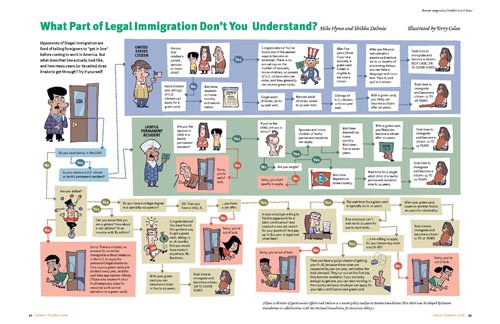
What part of legal don’t they understand?
Via American Wetback comes this chart from Reason magazine on the “ease” of obtaining legal residency in the Untied States.
Cuban heels…
Could the great Merida head-chopping story get any more twisted? After reports in the AP that the killers must have been engaging in some sort of kinky religious ritual (based on one cops’ speculation, but nothing substantial other than they can’t find the guys’ heads), I’m expecting the story to get stranger and stranger.
El Universal reported Thursday that two CUBANS were detained in connection with the eleven murders and mutilations, who were in possession of various arms (including fragmentation grenades), cash, a Hummer and a Suburban.. and — isn’t this intriguing… U.S. and Cuban passports, U.S. bank cards and checkbooks.
The Cuban government considers (with justification) the exile group connected with the last people-smuggling operation to go wrong to be “terrorists” and their seeming connection to organized crime in Mexico makes me think the Cubans are probably right in their estimation.
There hasn’t been a turf war between gangsters in Merida, so unless the Zetas were cleaning out their own ranks… or the silly story about human sacrifice makes any sense at all… exile Cuban death squads getting rid of their patsies makes more sense to me.
“A profound shudder”
Nicaraguan poet Rubén Darío wrote for
The America of Moctezuma and Atahualpa,
the aromatic America of Columbus,
Catholic America, Spanish America,
the America where noble Cuauhtémoc said:
“I am not on a bed of roses” —our America,
trembling with hurricanes, trembling with Love…
In 1905 America trembled not with hurricane and Love, but with the boom of gunboats. President Theodore Roosevelt, in 1904 had signed off on the “Roosevelt Corollary” to the Monroe Doctrine, with which the United States unilaterally declared its right to use military force to “police” Latin America.
Although the fashion of late has been to “outsource” the military forces, and to sell equipment that can be used to “police” Latin America, the warnings to the Americas in “To Roosevelt” still need to be heeded.
The voice that would reach you, Hunter, must speak
in Biblical tones, or in the poetry of Walt Whitman.
You are primitive and modern, simple and complex;
you are one part George Washington and one part Nimrod.
You are the United States,
future invader of our naive America
with its Indian blood, an America
that still prays to Christ and still speaks Spanish.
You are strong, proud model of your race;
you are cultured and able; you oppose Tolstoy.
You are an Alexander-Nebuchadnezzar,
breaking horses and murdering tigers.
(You are a Professor of Energy,
as current lunatics say).
You think that life is a fire,
that progress is an eruption,
that the future is wherever
your bullet strikes.
No.
The United States is grand and powerful.
Whenever it trembles, a profound shudder
runs down the enormous backbone of the Andes.
If it shouts, the sound is like the roar of a lion.
(Translation by Lysander Kamp)
What’s in it for Mexico?
Felipe Calderon, interviewed on Radio Fórmula, while managing not to endorse either candidate for president of the United States seems to prefer McCain. He says that while he thinks Obama offers a better deal for Mexicans and Mexican-Americans living in the United States, he also belives “McCain knows more about Mexican reality” [does he have a house here?] . Calderon’s biggest concern is with the candidate’s posture towards the NAFTA agreement, and is worried by Obama’s calls for some adjustments in the treaty. I’m assuming Calderon doesn’t take the Republican Party Platform seriously:
The 2008 platform sensibly calls for “a Western Hemisphere of sovereign nations with secure borders,” and the committee unanimously rejected the goal of a “North American Union” modeled on the European Union.
to quote from crazy old(er than McCain) lady Phyllis Schlafly.
However:
In general, Mexicans favor Democrat Obama over Republican John McCain. A June poll of 1,000 Mexicans by Mitofsky Consulting indicated that 30.6 percent supported Obama and 6.3 percent favored McCain, with most undecided. The poll had a margin of error of plus or minus 3.1 percentage points.
according to Chris Hawley and Sergio Solache in the Arizona Republic .
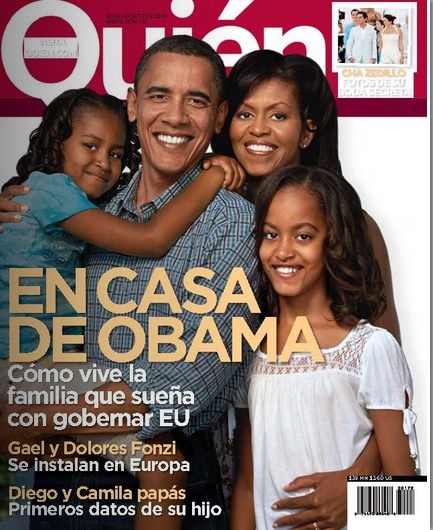
The Obamas do seem to have the edge with the anglophile fresas. At least they made the June cover of the Quién which makes them officially “celebrities” — at least to Mexican yuppies who pay good money to read abougt English film actresses and telenovela starlets.
Candidate vetting

With the Olympics scheduled to open in mid-October 1968, the Díaz Ordaz government was desperate to preserve a atmosphere of peace and stability. Changing social attitudes, the international student protests, fear of Communism and even Díaz Ordaz’ personal ugliness all collided in what is called “Tlatelolco”—the beginning of the end of the Institutional Revolution.
A few high school boys, playing soccer, touched off the explosion. The boys started a fight over a disputed goal, and the police responded in force. The police had been quietly removing troublemakers from the streets for weeks, but a fight within a few blocks of the National Palace seemed more serious than it really was. Even in the pre-Internet, pre-text messaging era, word of the police crackdown got around.
High school students throughout Mexico City started protesting and were joined by the University students….
(For the “rest of the story” buy the book. Reviewer copies should be out very shortly, but the publisher will take pre-release orders: $24.95 US/ MX$250)
This photo, from El Universal’s Los 71 dias que sacudieron a Mexico is from the summer of 1968, as student protests were just beginning in Mexico City. The kid getting the crap kicked out of him was a shoe-shine boy from Baja California who had come to Mexico City to take advantage of the schools and the chance of a better future. In 1968, he was a 17 year old planning to study economics and banking — not exactly an “anarchist youth” type.
He did earn his degree… and then a Masters… and then a Yale Doctorate. And joined the Party. The PRI, in the years following Tlatelolco, went out of its way to recruit the best and brightest technocrats As one of the few high-level PRI members not holding office when Luis Donaldo Colesio was assassinated in 1994, and the unknown economist, Ernesto Zedillo Ponce de Leon found himself the front running presidential candidate.
A physical beating by the Party’s henchmen may not be the best way to prepare for the Presidency, but Zedillo came in at a delicate time. His predecessor, and would-be controller, Carlos Salinas had managed to bankrupt the country, either through mismanagement or theft (or both) in his drive to “privatize” the economy and create a common market with the United States and Canada.
Zedillo withstood the financial pummeling, revalued the peso and gave the country enough stability to recover from its economic battering. He knew his party was going to take a beating in the 2000 election, and refused to interfere in the change. He had learned, even if the party hadn’t, to roll with the punches.
Whack-jobs
What does the artistic and creative hit man do for an encore? Michael Marizco reviews Mexican gangland’s greatest hits (The News 2-Sep-08 ):
Everybody´s jumping onboard with the head chopping.
In Culiacán, the headless corpse was found with a message to Arturo Beltrán Leyva to get out of town. Then 12 more materialized in Yucatán.
The Get Shorty coalition of Beltrán, Carrillo and Zetas then did three in a posh Nogales, Sonora, neighborhood, Colonia Rodeo. From my understanding, the second body was found near the police chief´s home and the first thing to come to everybody´s mind was whether his neck was still intact.
Clearly, someone is taking no small measure of pride in the cleanliness of the beheadings. These are no rusty bow saw jobs, but rather, exceptionally clean slicings, probably with a power saw.
The Yucatán job was so well done there was barely any neck left above the shoulders.
It´s all very impressive, dramatic and depraved, an intimidation campaign designed to shock and awe the enemy.
Beheading one´s enemy is as old as the idea of the state. It´s been the chosen form of capital punishment for thousands of years all over the globe . Chinese, Japanese, British, Arabs, and now Mexico´s cartels are wanting to enter the annals of decapitation.
But have they gone too far?
I am not talking about going too far into the depths of their barbarism.
There are worse places I could live …

Dissidents and journalists are being arrested, during protests outside the ruling party congress, where the nomenclatura is seeking a figurehead to replace the discredited leader and hopes to avoid a takeover by a centerist reformist groups. The outgoing leader, who came to power in an election marked by open fraud and ballot stuffing, is the son of the country’s former secret police chief.
In their desperation, the ruling party turned to an elderly, ailing wealthy Senator who will be running on a joint ticket with the governor of a distant oil-rich province known for it’s corrupt leadership and right-wing separatist movements. Sources suggest the governor is supports a religious fundamentalist paramilitary organization. The Governor has been compared to Hugo Chavez, and not in a good way.
Miltary adventurism, economic mismanagement, a long term “state of emergency’, the curtailment of civil liberties and a suspected link to terrorism are all cited by outside observers as factors in the eroding support for the ruling party.
(Obviously, this isn’t Bolivia — though my thinking about this, and the fascist warning sign — owe quite a bit to Duderino’s creative genius.)
Bunny-robbers and head-choppers: the Mega-March
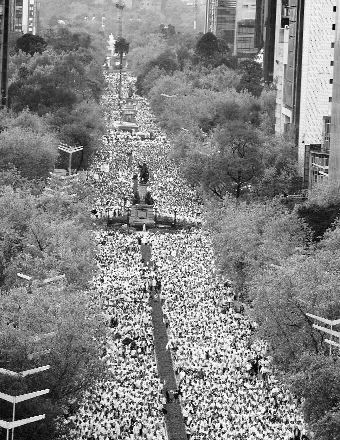
Luis Acosta, Agence France-Presse, Getty Images
How representative the impressive anti-crime marches last Sunday were of the people as a whole, I can’t say. Lotta folks… somewhere between 10,000 and a million, depending on which news report you believe.
Given the heavy “official” propaganda on telvisa and in the “mainstream media” it didn’t seem all that different than any of the old PRI rallies where campesinos were trucked in to cheer whatever the administration was trying to sell as a populist measure. But, unlike those rallies, this one had a dress code, which gave it a creepy Nuremburg Rally — or something out of North Korean — feel. Here in Mazatlan, where there is a sizable foreign community, the foreigners were led to believe they were in a “peace march” and their attendance was requested.
I declined, not so much because its probably illegal but that any foreign participation internal politics is a surefire way to suggest outside manipulation of a movement. The invite also suggested to me that this was a movement of the haves, not the have-nots.
The (Mexico City) News [sorry, no link] suggests I’m right, in that they took some pains to find working class people to quote:
Some citizens wondered why it took the death of a wealthy teen to finally draw so many people out in protest.
“The march is for the rich,” said Guillermo Tenorio, a judo instructor at the UNAM who decided not to attend. “Kidnap the rich and there will be a reaction, kidnap the poor and God help them.”
Organizers of Let´s Light Up Mexico said the criticism is just meant to undercut an effort by vocal community leaders, who they say come from all economic classes.
“It´s easy to criticize, but going through the trouble of organizing this event is a lot more difficult,” said Laura Elena Herrejón, a spokesperson for the march.
Some protesters interviewed by The News were from the working class, including Felipe Pérez, a member of a group of bus drivers from the high-crime suburb of Chimalhuacán.
It was more than just class issues that bothered a significant number of people. I’m sure Ms. Herrejon and her committee put in shit-loads of work, but the organized left will argue that the administration is manipulating insecurity for their own reasons. For example, consider this statement, loosely translated from Blogotitlan:
While the narcos settle accounts with their treasonous accomplices in the government, their sponsors on the extreme right distract us by organizing marches without focusing on the origin of the terror. The obvious political look to the “Light Up Mexico” marches, promoted endlessly in the media by the business organization opposed to Marcelo Ebrard (they don’t dare lay the problem at the feet of Calderón, guilty of sins of commission and omission), now tries to distract attention from the fact that they have ignored official corruption going back to the timeof Salinas de Gorari, who gave impunity and protection to these gangsters, even when the “narcomanta” messages directed at high government officials, spell it out for them.
Just being against crime is easy. But, is a crime like this (I found the translation in “Infoshop Anarchist News“) really much of a threat?
“Animal liberation is not just two words written in zines, web sites, T-shirts, tattoos or patches; animal liberation is not just words spoken at animal rights meetings, shouted at peaceful demonstrations or rumors spoken about different people; animal liberation is deeds, fury turned into action, a radical response against the anthropocentric system of domination, the love for freedom; it’s what few dare to carry out; it is a challenge to authority, to society, to the system and to its institutions. It is a fire that spreads and that is unstoppable; it is insurrection.
Animal liberation is all this and more; so on August 23 a rabbit was liberated from one of the many ‘pet’ stores in Mexico City (Federal District) in broad daylight and before the eyes of the owners and nearby merchants.
For the animals there is not justice, there is only us.
Frente de Liberación Animal – Comando Verde Negro (FLA-CVN) – México”
Bunny-rabbit liberation? But seriously folks…


 mexfiles.net