Nice work if you can get it
Poor Marta Sahagún Jiménez didn’t have a jewel to her name back in 2001 when she was only press secretary to Vicente Fox. Marta changed careers, and seems to have done quite well. When now-hubby Vicente left office, her personal assets included 827,000 pesos in “jewelry and farm implements.” I don’t think she bought a combine, but her black and white pearl necklace is valued at ten and twenty thousand DOLLARS.
There’s nothing suspicious in that, is there?
Univision and the Seven Dwarves
The Seven Old White Dwarves — Sleazy, Dopey, Preachy, Nasty, Floppy, Wacky and Clueless — tortured Univsion viewers last night for several hours.
I’m not sure why, other than to show off that none of them speak much Spanish. Clueless managed to refer to KING Juan-Carlos of Spain as “Prince” Juan-Carlos. Um… Juan-Carlos has been the King for the last thirty plus years. OK, so Clueless is a bit long in the tooth, and was out of circulation for a few years back then. Geeze, you’d think he’d catch up by now. Clueless was speaking in reference to the King’s rejoinder to Venezuelan President Hugo Chavez. The King told the President to “shut up” recently — which Kings aren’t supposed to do, never mind that the Venezuelans really don’t appreciate their former colonial “master” telling them anything. And, seeing the audience were American citizens, I’m not sure what it has to do with anything, other than raising some bribes (oops… “campaign contributions”) from Venezuelans who can’t steal their own country’s wealth any more and took off for the riper pickings of Miami.
Wacky — to his credit — said that we’d have to at least talk to Hugo Chavez. You know, like Presidents are supposed to do. Alas, Wacky is running for the Presidency of the wrong country. About the only politician he seems to resemble is Juan Domingo Peron — and Argentina just picked a fine new president and isn’t in the market for another.
Think about it… Wacky is a right-wing anarchist (what we call “libertarian” in the U.S.), trying to simultaneously appeal to the far right and the left. Sure, I might approve of his anti-corporatist, non-interventionist stance… but his fascist supporters (and his own reflexive racism) are pretty scary. Not to mention his immigration policy, support of the “Minutemen”. One difference is that Peron was very much a 20th century man. Wacky would drag us back to the 18th: I’ve never heard anyone after 1830 or so speaking in favor of “Letters of Marque” — piracy as state policy. Come to think of it, wouldn’t that be a job for Blackwater?
Floppy, one of Blackwater’s biggest boosters (or rather bribees), like Sleazy and Preachy, tried to win over their audience of aging, right-wing Cubans by speaking out of both sides of their mouths: all three of them tried to somehow blame “illegal immigrants” for anti-immigrant know-nothingism. In other words — if THOSE brown folks hadn’t crossed the border, we’d be more open to YOU brown folks.
Sleazy and Nasty should have done better. Sleazy fits the image of an old Latin American pol…Carlos Menim of Argentina, who threw his wife out of the Presidential Palace, or Jose Lopez-Portillo of Mexico who tried to make his mistress Minister of Tourism, say.
Nasty at least has some cognizance of his audience. They’re Cubans, and he has managed to praise Cuba — or rather OUR corner of it, Guantanamo, where “They’ve got health care that’s better than most HMOs. And they got something else that no Democrat politician in America has: They live in a place called Guantanamo, where not one person has ever been murdered”. Admittedly he said this a couple of months ago, but then Nasty doesn’t have a snowball’s chance in Miami of going anywhere. Too bad: I was hoping Nasty and Dopey would be the Presidential and Vice-Presidential candidates. I looked forward to “Hunter-Thompson: Fear and Loathing for America” bumper stickers.
I’m still not sure why these guys even bothered.
A study released last week by the nonpartisan Pew Hispanic Center showed that inroads the party made with Hispanics during the Bush years have been more than wiped out. Hispanic voters are now overwhelmingly Democrats – 57 percent, compared to 23 percent Republicans, a bigger gap than in 1999.
Hispanics are the nation’s largest and fastest-growing minority group, with 46 million people and about 15 percent of the U.S. population, and they are expected to hold outsize clout in key battlegrounds next year, including four states President Bush carried by less than 5 percentage points in 2004: New Mexico, where they are 37 percent of voters; Florida (14 percent); Nevada (12 percent); and Colorado (12 percent).
In Arizona and Iowa, the Hispanic vote is bigger than Mr. Bush’s last margin of victory.
And, when you come down to it, the “Hispanics” who are likely to vote for one of the seven dwarves are usually second or third — or tenth or twelvth generation immigrants who don’t use Spanish as their first language anyway.

Preachy, Dopey, Floppy, Sleazy, Wacky, Clueless and Nasty.
Not pictured: Whiney.
My weekly reader
The dependably snarky (and very funny) Guanabee manages to be it’s usual snarky, funny self while writing a genuinely informative and well-researched essay on the implications of the Spanish-language slur, “maricón.”
Upside Down World looks at the growing militarization, calls for drug interdiction and claims that “illegal aliens” are becoming a threat (sound familiar?) on the Mexican-Guatemalan Border. “Free trade” and agricultural subsidies are the main culprits, as they are in the on-going U.S.-Mexican border controversy.
The Bank of the South officially comes into existence today. Figureing out what the Pan-Latin owned and operated development bank means — and doesn’t mean — is why we read sites from the Council on Hemispheric Relations.
With the Pope himself attacking neo-liberalism, maybe it’s time to review Liberation Theology. It still having an impact, and is far from dead, in Latin America, or elsewhere, Jason Rowe writes in Foreign Policy in Focus.
Fred Flintstone was a Mexican?
Who knew?
The Museo Valdemar Juslrud in Acambaro, Guanajuanto holds the collection of local artifacts “discovered” by a local merchant and amatuer archeologist, Valdemar Juslrud, in the 1940s.
Juslrud paid local farmers to bring in ceramics they found, which the farmers were happy to do. Over the next several years, over 32,000 ceramic objects were uncovered.
Juslrud ended up spending a fortune for figurines showing a little of everything. Including, some say, dinosaurs. Oddly, the expected Tarascan artifacts, which are normally found around Acabaro, are all pretty well beaten up — as you’d expect things that have been in the ground a few centuries … let alone a few millenia — to be. The dinos and others were all intact.
If you’re a little dubious, rest assured. In 1955, the whole thing was investigated by none other than Earl Stanley Gardner. After all, he wrote the Perry Mason stories, so he had to know something about archaeology, ¿verdad?
Creationist websites in the U.S. (and home-school textbooks for the willfully uneducated future voters!) all use these figurines as evidence  that humans and dinosaurs co-existed. It might not have been a peaceful co-existence (apparently the dinos are happily munching away on people) though it might have had its moments .. from the scant description I can find, it seems to show Bedrock’s equivalent of the Tijuana Donkey Show (which is a little dubious itself). Funny, the Creationist literature doesn’t talk about that particular figurine.
Isn’t Yabba-dabba-doo Purimpecha for “There’s a sucker born every minute”?

Friday video: Mariposas Monarchas
MEXICO CITY (AP) Mexican authorities say they have confiscated more than 6,000 tons of logs and boards in the country’s biggest anti-logging raid ever.
And they did it to protect butterflies.
Authorities are trying to sweep illicit loggers out of a nature reserve that’s home to millions of Monarch butterflies.
Deforestation in and around the reserve threatens the butterflies, which rely on forest cover to protect them from cold winds.
About 700 Mexican police and environmental officers raided 19 clandestine saw mills this week.
Authorities seized the equivalent of more than 600 heavy truckloads of wood that had been cut within the Monarch butterfly reserve. And they arrested more than 50 people, including sawmill employees, lumberjacks and truck drivers.
This is a police raid I support (700 cops on an environmental protection operation? So much for the idea that Mexico doesn’t take the environment seriously!). While everyone likes butterflies and eco-tourism has become integral to the Michoacan economy (if you look at the back of the 50-peso note, which features scenes from Michaoacan, you’ll find mariposas monarchas fluttering around), clandestine logging is probably a more serious long-term threat to Mexico than narcotics dealers. We don’t hear much about it, but logging gangs kill people too — and for the same reason: there’s money to be made).
Forest protection (Mexico hopes to plant a billion trees over the next six years — even if it doesn’t meet the goal, that’s still a lot more trees) is vital for Mexico’s survival. It’s not just the butterflies (and the tourists who come to see the migrating insects in their winter home), but watersheds, land conservation and air quality that the forests protect. And, if it takes 700 armed coppers to stop illegal loggers, it’s an investment in the future. If the Mexican government was using the “Plan Merida” funding to fight this real threat to their own survival, I might be less opposed to it.
This video was made in Valle de Bravo by JGrillo310:
Come together, right now?
I changed one paragraph Friday when I re-read this. It sounded as if I’d said 2/3rds of voters chose AMLO. He received a bit over 1/3rd of the vote. What I meant was 2/3rds of voters chose candidates from “leftist” parties.
Carlos Narvarette, the PRD Senate leader, set off a “tempest in a teapot” the other day with what seems a sensible proposal (My translation from Propone Navarrete fusionar partidos en torno a AMLO, by Andrea Becerril, Víctor Ballinas and the Jornada on-line staff):
In advance of Senate consideration of federal election law reform, Carlos Narvarette, Revolutionary Democratic Party (PRD) Senate coordinator had proposed starting internal discussions within his own party, as well as with two leftist parties – the Workers’ Party (PT) and Convergencia – on a proposed merger.
“The proposal would unite the three parties included in the movement headed byAndrés Manuel Lopez Obrador”, Narvarette explained.
“This would give Andrés Manuel Lopez Obrador, and the movement he represents, a stronger organization and a way to create a single organization that could win against the right in 2009 or 2012,” he added.
Narvarette expanded on his proposal. He said he would hope that “the PRD would put their registry and the votes the part obtained in 2006 in the service of a larger movement, and join in a broad movement that could become a new party with its own identity.
Fusing the three parties, would move beyond [temporary] electoral coalitions, and an alliance “would not waste its time in discussing percentage, prerogatives or candidates.
Narvarette rejected the idea that there are those within the PRD looking to debilitate Lopez Obrador, stressing that no party on the left would undercut its own leadership.
People in the U.S. have a hard time understanding that the rest of the planet finds the concept of only two political parties (and both ascribing to the same economic ideology — liberal capitalism) kinda lame. The U.S. has its own political language, of course — “liberal” having something to do with whether gays should marry or whether one says “Happy Holidays,” or nonsense like that — not, as on the rest of the planet with open markets.
Anyway, Mexico — in common with other representational states — gives voters a wide choice. Admittedly, the PRI controlled politics for years, but even that party, ostenively Socialist, made room for various economic ideologies.
The Lopez Obrador supporters — which is what Narvarette is talking about is a little over one-third of the voters ) included the “wide” party, the PRD (more openly Socialist), the PRI, two social democratic parties (Convergencia and Alternativa) and PT — orignally Maoist, though more or less just another Socialist party. This doesn’t include small state and regional parties, like the reformed Communist Unidad Democrática in Coahuila.
PRD is usually described as “Center-Left” — but “Center-Left” would include about 2/3rds of the mexican electorate. PRD, like PRI is a member of Socialist International, but then, so is the British Labour Party… it doesn’t mean much more than a more emphasis on the need to “promote the general welfare” of the people, and sees the “blessings of liberty” as independent from one’s access to cash. I’m including the Greens, the “Social Democatic” Alternativa, and Nueva Alianza as “Center-Left”.
All the leftist parties pretty much accept the existence of capitalist enterprises, and most have no problem with them. Except for a few very tiny stalinist parties (associated with the Zapatistas, who discourge voting anyway), there’s enough ideological similarity between PRD, PT and Convergencia to make Narvarette’s proposal sensible.
Given Mexico’s proportional representation system (also alien to those of us in the U.S. — a party gaining more than two percent of the electorate is guaranteed at least a congressional seat) and fusion politics.
In the U.S. only a few states like Minnesota and New York, even have important minor parties. In those states, the minor parties usually back one of the two major party candidates for national office. The only recent exception I can think of was James Buckley’s election to the U.S. Senate in 1970, from New York’s third largest party, the Conservatives.
In Mexico, fusion candidates are common — and do win. Vicente Fox was elected on the “Change Alliance” ticket — his own PAN, together with the Greens and two now forgotten minor Social-Democratic parties (at least one being allegedly financed by the U.S. government). Cuautemoc Cardenas probably won in 1988 on the “Democratic National Front” candidate, and Andres Manuel Lopez Obrador as the “Benefit of All” leader.
PRI normally runs a fusion candidate with the Greens, even for state office, so it’s become the norm — rather than the exception — to run a fusion candidate. The only problem is that with the proportional system, the parties within a coalition have to work out an agreement over whose candidate leads the ticket — and horse-trade the proportional seats. Normally, the larger party ends up ceding a few seats in congress or the state legislatures to one of the minor parties to get them to agree to a temporary merger — a great deal for the minor parties, but in reality, it gives small parties almost a veto over broader consensus issues. The Greens might have joined Fox and PAN in the 2000 election, but Fox made a strategic error, and the Greens made their legislative alliance with PRi… basically making anything Fox proposed though PAN DOA for the next six years.
I think what Narvarette is proposing is to make the existing PRD-PT-Convergencia congressional alliance (Frente Amplio Progressiva — “Broad Progressive Front”) a single entity. Of course, there would still be factions within the new party (as there are within PRD, PRI and PAN now — think of all the different factions within either of the two U.S. parties for an analogy). Of course, the various factions within PRD (not to mention the two smaller parties) will probably doom this idea to the graveyard of “good plan, poor execution”.
Had “Benefit of All” run as a single ticket in 2006, we’d probably be writing about President Lopez Obradór… the horse-trading, compromises, etc. necessary to work out a multi-party deal probably did cost AMLO some votes and time — not to mention having to get a sign off from three different party leaders every time there was a major policy decision — that could have been spent countering single-party Felipe Calderón’s very good (though dirty) campaign.
Wrong numbers…
“If everybody has more than enough, what good is my more-than-enough?”
(A Walk on the Wild Side, Nelson Algren, 1956)
From 1894, when the Subterranean Telephone Company was first trying to get a contract to lay lines, home telephone service was something of a luxury in Mexico City. When I first moved to the Federal District (a century and a decade later), one statistic I uncovered was that there were more home lines per capita in Botswana than in Mexico. I had mostly been writing tech manuals for telephone companies before I moved to Mexico, so was at least somewhat aware of the big problem TelMex was having — not their privatization so much as homologation. Going back to 1894, when Porfirio Diaz was starting to worry about overdependence on single-source foreign suppliers, Mexican telephone companies used both Seimans and Bell switches. Seimans switches are configued in a series of 2 – XX-XX-XX and Bell switches 3 and 2 — XXX-XX-XX. Canada and the U.S. always used Bell switches, and post_NAFTA Mexican phone switching stations were being replaced.
At the same time, Mexican incomes were rising and more telephone lines were needed — for faxes, computers, etc. And, yes, Carlos Slim wanted to make a profit.
So, home lines were outrageously expensive, especially if you didn’t make a lot of calls, or you were — like I was initially — a wetback (I didn’t come across the Rio Grande doing the backstroke, but I did ride a bus in, and overstayed my tourist visa) the backstroke.
Ex-pats tend to be hanging out with foreign teachers and executives and students… the kinds of people who had some plausible reason to get a cell phone. They weren’t expensive (you could buy a whole TelCel kit for about 300 pesos), but you had to buy a card for your calls, and that was expensive. Especially if you were doing something not always steady like …. oh, teaching English to executives
Fresas, naturally, made them chic, but a lot of people actually had a use for the damn things — taxi drivers, plumbers, working mom, bank robbers — were all buying phones too. When there was still some cachet to having a cell phone, even gangsters discovered their advantages. You could call in a kidnapping — or even better — cell phone users supposedly having money, call in a threatened kidnapping.
There was an e-mail going around at the time: “You know you live in Mexico City…” one of which was “When you go out for dinner and the number of cell phones on the table outnumber the silverware.”
Almost true. But not quite everyone can afford the phones (or, more to the point, needs a phone available 24-7). These days, NOT having a cell phone is something of a social stigma (unless you’re so rich, you have somebody else to carry a phone for you). And, alas, some folks will do anything to get a phone.
Mexico City’s police chief, Joel Ortega, is blaming the six percent increase in reported robberies on… you got it… cell phones.
You don’t need a phone card and phone booth to call the police to report the robbery…. unless, of course, it was your cell phone that was swiped.
All in favor say ¡Ai!

Oh do not ask us why…
Show us the way to the next dollar
Oh do not ask us why
For we must find the next little dollar
Or if we don’t find the next little dollar
I tell you we must die
I tell you we must die
I tell you, I tell you
I tell you we must die!
Kurt Weill, Bertolt Brecht,
Aufstieg und Fall der Stadt Mahagonny (1930)
When it comes to the “immigration crisis” , maybe it’s best to ask cui bono? Who benefits? According to Peter Cervantes-Gautschi, it’s the same organizations that created the Mexican EMigration crisis:
While it is popular among U.S. presidential candidates these days to blame Mexican corruption for our huge undocumented immigrant population, corruption in the United States played a far larger role in compelling millions of Mexicans to cross our southern border with or without legal authorization. U.S. corruption came in the form of politicians implementing and enforcing foreign policies that yielded unprecedented profits for their well-heeled campaign contributors in the financial services industry. They probably didn’t break U.S. law to accomplish this, but they did force Mexico to break its own laws to implement their program.
Led by Wall Street heavies Bank of America, Goldman Sachs, Citi, Fidelity, Chase, and others, these finance industry leaders got Congress to permit financial institutions to increase family debt in the United States by enacting legislation friendly to mega-banks (financial holding companies) while thwarting consumer-friendly legislation. The same U.S.-based financial services leaders played a leading role in increasing family debt to unmanageable levels in Mexico in the mid to late 1990s through their influence of the U.S. Congress.
Drugs are not the answer… so what’s the question?
In a front page story in the Houston Chronicle, Mexico City bureau reporter Dudley Althaus writes:
MEXICO CITY — Apart from the police and narco-gangsters, few groups have suffered more in Mexico’s brutal drug wars than the singers whose music often chronicles the carnage.
The latest casualty appears to be Zayda Peña, 28, a singer who was shot dead Saturday in a hospital emergency room in the city of Matamoros, across the Rio Grande from Brownsville.
Peña, the lead singer in the grupero band, Zayda y los Culpables, was shot and killed as she was leaving the hospital where she had been treated for a wound received Friday night. The Friday shooting killed Ana Bertha Gonzalez and hotel employee Leonard Sanchez .
Alhaus writes that
Peña … enjoyed a following on both sides of the border playing music known as grupero, which features bass, electric guitar, drums, accordions and synthesizers. rom Brownsville.
and goes on for several paragraphs about narcotic-related killings, and recent murders of pop stars.
¡PROBLEMA!: Jose Borjon, police reporter for the Brownsville Herald (in separate stories in both the Valley Morning News and the McAllen Monitor) — quoting both U.S. and Mexican police investigators — and Mexican news sources — reports that the murder has absolutely nothing to do with drugs:
Peña was shot … Friday after she was caught with the suspect’s ex-girlfriend, Ana Bertha Gonzalez.
The suspect found Peña and Gonzales, who was also her presumed lover, at the Monaco Motel on La Carretera Matamoros Reynosa.
Tamaulipas State Police believe that Gonzalez’s ex-boyfriend killed her and Peña in a rage over a lesbian affair.
Borjon, whom I don’t know personally, but I am guessing actually knows something about grupero music calls Zayda y los Culpables, “a moderately popular band” Althaus spends four paragraphs on the band and grupero.
Matamoros is in Tamaulipas. Norteños are stereotypically hung up on traditional sex roles, but the neighboring state of Coahuila recently passed a gay marriage law without much fuss, so the stereotype may be out of date. Drugs are not the only cause of violence in Mexico. Proximity to the U.S. border (the killer allegedly bought a car recently in Brownsville, which is why Texas investigators are involved) — where just about any fool can buy a handgun — was probably more relevant.
One is, after all, more likely to be killed by crazy ex-es (especially armed crazy ex-es) — or your partner’s crazy ex- — than rubbed out by gangsters.
Plan Colombia to Plan Mexico — Plan for failure
“Grits for Breakfast.” which focuses on Texas penal issues, highly recommends Ben Wallace-Wells “How America Lost the War on Drugs” in Rolling Stone:
Those who don’t learn from the history of the Drug War in Colombia are failed to repeat it in Mexico. For a preview of what another $1.4 billion may buy in a Mexican edition of “Plan Colombia,” see the article…
…The piece confirms my impression, as I’ve maintained previously that Mexican drug cartels arguably constitute the greatest overall public safety threat from the drug war. I’m increasingly convinced that current proposals for anti-drug collaborations with Mexico precisely risk repeating the mistake of allowing “our drug agents to be used by the cartels for their own ends.”
I’ve been focused on the effects on Mexico, and the probable use of the “War on Drugs” as a Mexican version of our “War on Terror” — i.e., a rationale for stifling political and economic dissent in the country (which is much more likely to be fatal to Mexican dissenters than it has been so far to those of us in the U.S.) — but agree that “Plan Mexico” (aka “Plan Merida”) is futile and counterproductive. And dangerous.
“People don’t give a shit about the place”
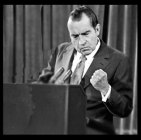
Richard Nixon may have said that about Latin America, but some people care very much. Australian film-maker John Pilger’s “The War on Democracy” (sombrero tip to Roman Cotera, the “Amazing Mexican” ) doesn’t have much specifically to do with Mexico, but well worth watching — and I seriously doubt it will be showing on U.S. TV stations any time soon . Pilger is one of the few “Western” journalists who supported Hugo Chavez’ administration’s decision to cancel the license of Radio Caracas Televisión, arguing that any television station that overtly called to overthorw any government would expect to have their broadcast license pulled.
Even if you’re not sold on Hugo, you’ll want to watch this — unless, of course, you’re a Dick.


