Gods, Gachupines, and Gringos…
Mexican history, as I said in my book, is like the Aztec Calendar, cyclical but changing form with every cycle… only sometimes converging. As yesterday, when we invoked the
Gods…

as the
Gachupines…

and
Gringos…

looked on, mere observers in the turning cycle!
¡Viva la 4° Transformation!
Reefer Logic
(Originally published in the Presidio (TX) International)
Mark Twain said “Travel is fatal to prejudice”, but he might have added, expatriation creates new prejudices. My vice being coffee, legal marijuana was the furthest thing from my mind when I first started living in Mexico. At least by education, or by trade… giving private English lessons to those with the income to pay a private tutor… I’ve picked up the prejudices of the Mexican middle class. I may have grown up in the era when Mexico and marijuana were pretty much synonyms, but was soon disabused of the notion that it was an acceptable habit, but rather something indulged in by “nacos” (the kind of people dismissed in the U.S. As “trailer trash”) or shady types like gringos and the decadent rich.
I was greatly amused when I first lived in Mexico City by my landlady, a European countess in self-imposed exile, who went out of her way to live up to the decadent rich image. And even she kept her two or three joints locked up in her safe. Several years later, renting a duplex, my college kid neighbors were going to ridiculous lengths, to hide the occasional whiff of a few tokes. And today, in a news report from Tijuana, a woman was protesting the arrival of Central American migrants, because “they are smoking marijuana”, So it is a surprise that within a month or so, marijuana for not just medical use, but for personal consumption will be legal, and that the new law has broad public support.
Attitudes haven’t changed, but the landscape has. The U.S. Sponsored “drug war” was never particularly popular, and the appalling death toll has been too much, even for social conservatives to swallow. The incoming president campaigned not just on lowering the impact of the drug war, but on agricultural reform as well. It is hard to say that another export crop, and the families that depend on growing exports are a social problem. Economic conservatives, like ex-President Vicente Fox — whose family fortune rests on agricultural exports — and his first foreign minister, Jorge Casteñada (a regular commentator in the US media) — both made the argument that Lopez Obrador’s incoming administration makes, that marijuana is just another export crop, and
When conservative, former president Vicente Fox (whose family fortune rests on agricultural exports ,to begin with) openly proposed legal sales, he was pilloried in the press, and the social media had a field day producing memes showing Fox as a hippie stoner. At a lecture I attended about eight years ago, Jorge Castañeda, Fox’s foreign secretary and a regular figure on US news shows, asked the audience about legalizing marijuana, only to be shouted down. And that was in Sinaloa, ground zero of the marijuana region.
Joining the social conservatives were human rights activists. The legal case for personal use came from prominent human rights workers, all of whom were quick to they had no intention of actually using marijuana (after all, they were respectable lawyers and academics) but wanted to test the Mexican constitutional guarantee of the right to “personal development”. The court had already ruled on the medical use issue, although marijuana based medication had to be imported, and was subject to very strict licensing by COPRIFIS, Mexico’s equivalent of the FDA.
The court rulings were largely the handiwork of justice Olga Sánchez Cordero. Term limited (Mexican judges do not have lifetime appointments) at 70, Cordero’s career is far from finished. A distinguished jurist and feminist, she was something of a surprise when Lopez Obrador announced she would be his choice for Interior Minister… an office with no equivalent in the United States, but the second most powerful office in the federal government, the second in line to the president, as well as Chief of Staff, liaison to congress, and overseeing the department that coordinates domestic policy.
While waiting to be appointed, she also successfully ran for the Senate. Whether she can hold both offices at the same time might still be an issue, but for now, with Congress having taken office in September, while the new President doesn’t assume his position until the end of this month, there was an ample opportunity for the “sausage making” of legislation, crafting a bill that will allay the fears of the socially conservative middle class that legalization will lead to rampant use, while providing an alternative to a militarized and destructive “drug war” and bring the “exporters” into the legitimate marketplace.
The July election swept away the traditional parties, leaving the reformist Morena party in an almost absolute majority in Congress. Some compromises with a few small parties and individuals within the three traditional parties, will guarantee passage of some form of legalization: Morena’s proposal would allow (under license) growing up to five plants and producing up to 480 grams per year. Sales and distribution would be regulated by COPRAFIS, and would probably be though licensed pharmacists.
So… Big Benders. How this will affect your “importers”, I can’t say. In theory, the existing exporters will have to change their market strategy (Canada, which legalized marijuana earlier this year, is bandied about as a new major market, as well as several European pharmaceutical manufacturers) and their own supply chain. And, in theory, we’ll be seeing a lot less “collateral damage” from the drug war. What we don’t foresee are more stoned gringos sitting on the beach. Maybe.
Deciphering AMLO.
David Brooks, in yesterday’s Jornada:
(New York) Shortly before he assumes power, investors, analysts and politicians in the United States have sought to define who and what President Andrés Manuel López Obrador will be like. For now, there is no consensus – he remains an enigma.
However, what is most worrying for many regarding bilateral relationship between the United States and Mexico is not so much what the new Mexican government will do but the erratic and provocative policy of the Donald Trump regime, which already laid the groundwork for the crisis López Obrador must face.
Media reports here say AMLO is scaring investors (Wall Street Journal), while others offer a more positive outlook for investors, calculating that fears are exaggerated (Bloomberg) while still others are alarmed that a possible “enemy” is of democracy is coming(Financial Times). All this, along with the usual claim that AMLO is “unpredictable, temperamental “and you do not know” which version “of him will govern” (New York Times). And still others fall back on the word of the day, the increasingly ambiguous term ” populist “(one headline sought to merge everything and call him “a pragmatic populist “).
Meanwhile, experts and former diplomats (including former ambassadors in Mexico) predict “a difficult path” and possibly even “explosive” between the two leaders — based on their personalities, or their divergent policies. They offer lists of recommendations of what the new government should do, from economic, energy and security policy center on anti-drug cooperation with the United States.
The first crisis
Almost all indicate that the first bilateral crisis of the new president is already more than announced: asylum seekers in the border. In fact, perhaps as early as 24 hours after AMLO takes office, his chancellor Marcelo Ebrard is scheduled to fly to Washington to meet with Secretary of State Mike Pompeo and Secretary of Homeland Security Kirstjen Nielsen to continue to address the issue.
Ebrard had already begun discreet negotiations with Pompeo in Houston a few days ago. News reports reported that an agreement had been reached, but that was denied, and Ebrard insisted that all that exists is a conversation for now on how to deal with the situation.
But Trump’s position does not leave much room. While talks were going on between the Americans and the elected government last week, Trump tweeted that asylum seekers would not be allowed into the United States until a court approves their petitions and that “everyone will remain in Mexico. If for any reason it becomes necessary, we will CLOSE our Southern Border. “
In part, what is at stake are principals governing the relationship between the incoming Mexican government and the Trump regime. The US government’s position is that Mexico should be a staging ground in the process of evaluating asylum requests, something that can last for months and even years.
According to José Pertierra, an expert lawyer in migration and asylum in Washington, what Trump asks is nothing less than that “Mexico become an accomplice in violating the international law on refugees” and violating the United States’ own asylum laws. that establish that anyone has the right to enter US territory to request it.
“What Trump is doing is dismantling the entire asylum system,” by increasingly restricting entry into the country and, with his former attorney Jeff Sessions, reducing reasons for granting asylum until they are almost non-existent — for example, nullifying claims for asylum based on domestic violence, or gender violence, or criminal violence as he explained in an interview with La Jornada.
“But for this to work, he (Trump) needs Mexico to accept and house all those people in its own territory, where the applicants do not know anyone or have access to the support infrastructure on the US side. Many come [to the United States] because they know someone here, “he explained. Therefore, Pertierra reiterated, Mexico is in danger of being subordinated to Trump’s anti-immigrant strategy.
In the coming days, the first impressions and reactions will spring up about the new president in the neighboring country, including among the Mexicans and Latin Americans living in the United States who await AMLO’s response to the persecution they suffer from this regime and its allies.
When crime doesn’t pay… Gofundme!
Guillermo Padrés Elias, the former governor of Sonora, managed somehow to walk off with 8.8 million dollars, proceeds of a career of “organized crime, fraud, and investments with illicitly obtained funds”. About par for a really crooked governor. He’s been in jail for two years awaiting trial, so, a kindly judge let him out, on a mere 40 million peso bail (about 2 million US dollars). However, another 100 million pesos is still needed if he’s to stay out of the slammer… owed to various creditors which would settle some criminal complaints, though his trial on several charges would still be pending.
Padrés claims he just doesn’t have the money… his good friend state PAN party chair Ernesto Munro Palacio — who just happened to be Secretary of Security during Padrés tenure — is asking for donations. Don’t let a crook sit in jail, just because he claims to have lost his loot.
Weird way to die… or maybe not
One of the more useful government agencies in Mexico is INAI.. The National Institute for Transparency, Information Access and Data Protection. It’s an “autonomous organ”, meaning it is guaranteed funding by the Federal Government, but is outside the control of the executive, legislative, and judicial system. There are seven commissioners, appointed by Congress, but their mission is to not just make ordinary bureaucratic information and data available to the public, but to dig into government records and present the facts on some of our murkier and less than adequately explained recent past.
Carlos Alberto Bonnin Erales was putting together information on a few of these more sensitive murky incidents — public spending on recovery efforts after the 19 September 2017 earthquake; the “Odebrecht case” (involving alleged payoffs to PEMEX and other government officials in return for favorable contracts); the often under-regulated IMSS (National Health and Social Security Institute) day care centers; and the assassination of Luis Donaldo Collesio, the PRI party reformist presidential candidate, murdered in 1994).
Was.. until this last Monday, when he either had a heart attack and fell five stories, or fell five stories and had a heart attack, or just fell (somehow) from his office those five stories… or…
There’s a story… or five… that isn’t as transparent as it should be.
Under-mining the market?
From his aerie in the Andes, the Inka keeps his eagle-eye on Latin American mining, and is quick to swoop down on those nervous investor news letters that panic before they should.
The new panorama for mining in Mexico is not wholesale militancy against the industry and the driving away of companies or new investment. What it is, however, are new deals that will see more of the cash generated go to its workforce. Or else. Therefore, what this means to investments in the country is that the sharp selling we saw last week is almost certainly overdone. However, I don’t think the nerves are going to abate in a matter of hours or days and none of the affected stocks are my idea of a rebound quickflip-trade. We may get more selling in the days ahead, but above all I doubt we’re going to get enough money sloshing back in to push price back in the very-near-term. On the other hand, we may eventually see the companies that weren’t hit hard last week as the bigger losers. As an example (and it’s probably unfair just to pick on one), Fortuna Silver at San Jose in Oaxaca has fought hard to keep its mine non-unionized or keep the union influence over its operations to a minimum. With the new strength of Napito and worker emancipation on the menu, they are an example (I repeat, there are others) of a smaller company that could see its operating costs rise meaningfully in dollar terms as workers demand a better remuneration package.
The bottom line is that I am less worried about the future of mining in Mexico than the panic sellers of last week. I’m also highly suspicious of the lack of depth shown by sell side analysts on the subject, especially those in the larger firms (Morgan Stanley and Citi are two of the large entities that helped spread the unalloyed fear last week) who should have the depth of knowledge to advise their clients better. However, I am not a knee-jerk buyer of the beaten-down stocks because a) the fear-mongering could go on for a while and b) even though the worst of the law project is unlikely to make it into law there is plenty of evidence to show that the Napito-driven (“Napito” is Napoleón Gómez Urrutia, the president of the independent miner’s union, who returned from exile in Canada after his election to the Senate from the new ruling party, MORENA) mining scene in Mexico is going to see changes, first and foremost in better pay deals for workers. That means higher costs for the companies. And a final point; aside from the passive exposure via Sandstorm (SAND) (SSL.to) which is something I am happy to take, the IKN Weekly ‘Stocks to Follow’ list has had no Mexico exposure for quite some time. That is not a coincidence, but in 2019 that may change once the new rules are established.
One of these does not belong

Gabriel Garcia Marquez
Nelson Mandela
Fidel Castro
Ted Kennedy
Eva Perón
Jared Kushner
The Order of the Aztec Eagle, bestowed by the President of Mexico to foreigners who have performed some great service to Mexico, or to humanity in general. Which I’m not sure includes being a gofer for the guy who called Mexicans “murderers and rapists, and some good people”.
Trans-Isthmus Railway: third time a charm?
Narrow, windy, and flat, the Isthmus of Tehuantepec was always a contender for the shortest, and fastest, transit route between the Atlantic and Pacific. Going back to Hernan Cortés, dreamers and schemers considered the possibility of digging a canal. Technically impossible until the 19th century (the Suez Canal is a few meters longer than the 193 Km route across Tehuantepec usually considered), unloading ships in Coatzacoalcos on the Gulf coast, and reloading in Salina Cruz on the Pacific side (or vice-versa) was often a cost-effective alternative to sailing down the entire coast and “rounding the Horn”. And much safer than a passage across the narrower Straits of Darien in today’s Panama. Flat as it is, it’s also one of the windier places in the world. More on that in a minute.
After the acquisition (ok, theft) of California by the United States, contact between the Atlantic facing states and the new states in the west became a issue both for commercial interests and for the government. At their own expense, the United States built a rough log-paved road across the Isthmus, but with Mexico torn between Conservatives and Reformers in the 1850s, U.S. interests often found themselves subject to two competing Mexican governments with different customs regulations, and different shipping rates. With the Reformers gaining the upper hand, but with an empty treasury, they struck a deal with the United States.
The Ocampo-McLain Treaty of 1859 is often cited by partisans of the conservatives as “proof” that the Juarez Administration was willing to “sell out” Mexican sovereignty. However, there was nothing particularly unusual about the treaty, a 19th century free trade agreement of sorts. In return for building and maintaining a railroad across the Isthmus, and a regular yearly payment, the United States would be able to trans-ship cargo from US ports on one ocean bound for US ports on the other, without paying Mexican customs duties in the process. Misrepresented as giving the United States extra-territorial rights within the region, the treaty did specify that U.S. commercial law applied to those U.S. shipments. The only really controversial item was that under the treaty terms, U.S. military personnel and equipment could cross the Isthmus. The devil is in the details… perhaps… but it became a moot issue when the American Civil War broke out, and the treaty was never ratified.
 While the American Civil War was largely found over the question of slavery, it has to be remembered that what brought the conflict to a head was the question of expanding slavery into new territories in the west. And, in that war, as a strategic advantage, the free labor northern states… with their railroads and better shipping capabilities… always had the upper hand. The lesson was clear to the victorious northerners: transportation was vital to the nation’s security. With completion of a transcontinental railroad in 1868, a mere nine years after the Ocampo-McLane Treaty was negotiated, the Trans-Isthmus railroad project seemed to be forgotten.
Except by James Eads. A self-taught engineer, Eads had made his name as one of the great engineers of all time working out how to build a bridge across the Mississippi River and working out better engines for river boats. Eads recognized the growing importance of the central United States, where the Mississippi was a vital transport network. And where did the Mississipi flow? Into the Gulf of Mexico, of course. And from the Gulf, where was the best place to ship both to the U.S. west, and to the burgeoning Asian and Pacific market? The Isthmus, of course.
 Eads’ proposal was as fantastical as it was daring. Dry dock facilities and hydraulic lifts had been around for some time, and the trick was just to make them large enough to lift entire ships and set them on specially build rail cars… four tracks wide, to be pulled across the Isthmus, and and floated off the specially designed cars back into the ocean on the other side. It was feasible, and with the United States government no longer interested, Eads turned to Porfirio Díaz (a native of the region) and outside investors. Although it soon became clear that neither Coatzacoalcos (then known as Puerto México) nor Salina Cruz had the right dry dock facilities, and the ports would need massive investments in new infrastructure, Eads raised the money to begin laying tracks in 1885. And died suddenly in 1887, and the foreign investors were reluctant to put more money into the project. Porfirio eventually turned to a British-Mexican company,S. Pearson & Son, Ltd. (who had built the drainage system for the Valle de México) which more modestly finished a multi-track railway across the Isthmus… with a siding to the home of Juana Catalina Romero… a native Zapotec, and Porfirio’s first girlfriend back in the day when she was a simple cigarette girl and he a lonely young soldier.
Doña Cata, as she was known, was one of the very few natives of the region to profit from what became.. until the completion of the Panama Canal in 1914 an extremely profitable enterprise. A savvy business woman from a matriarchal culture, while the romance with Porfirio went by the wayside, she remained his friend and unofficial political adviser on Isthmus affairs. She had invested her modest earnings selling cigarettes in groceries, then in farms, tobacco plantations and mines. And the railroad, making her one of the wealthiest women of her era (and probably the wealthiest person in Mexico). In the capital, and during her regular trips to Europe, she dressed in the finest and latest Paris fashions, but at home, her only concession to her status was to wear diamond necklaces when going about in traditional Zapotec clothing.

Miguel Covarrubias drew some Isthmeños… waiting for their ship to come in, perhaps, back in the 1940s. It still hasn’t.
Doña Cata died in 1915, a year after the Panama Canal opened. While remembered for her generous contributions to Zapotec cultural preservation, and while the railroad still runs, nothing much has been done to improve the economic standing of the native people of the region then or since. Various projects over the last several years… a gas duct from the oil region on the east coast to Salina Cruz, and… remember the wind?…
In Eads day, it wasn’t understood that mosquitos were the carriers of tropical diseases like yellow fever and malaria, but it was known that windy places were healthier. In our day, windy places are also seen as a great please to build wind-powered generators… and a plethoria generators built mostly by Spanish corporate interests were built in the Calderón Administration, local rights be damned, running roughshod over indigenous communities. The foreign corporations simply ignored the local population as the reaped the financial harvest (and good press) of providing “green energy” sent elsewhere.
That the local people have never profited… not from the U.S. build road, not from the railroad, not from the wind farms, has the Isthmus’ people largely opposed to the second question on this weekend’s “consulta” (informal referendum on the incoming adminstration’s big ticket spending programs). That question asks is the government should build a new railroad… one that will take the containers on the ships built today, much too large to pass through the Panama Canal, across the Isthmus, just as the did in the old days, though not the ships themselves, as Eads proposed.
Sources:
Celis, Gilberto. “Del Istmo de Tehuantepec y AMLO, pecador siete veces siete, justo“, Indice Politico, 23 November 2018.
The Maritime Heritage Project: Mexico. “Cental America Interocean Ship Railway” (2017).
Tehuantepec Interoceanic Ship Railway 1880-1887, GlobalSecurity.org
Racist? I think so…
I’ve more than once had to mention that “raza” does not exactly translate to the English-language word “race” … Vasconcelos’ “raza cosmica” included all the black-brown-red-yellow-white possible combinations (and often improbable ones) that live, or have their roots in, the 19.2 million square kilometers of Latin America. Privileged migrant or not, I’ve as much right any Honduran migrant short-order cook in Houston, fifth generation Irish cop in Boston, or Congressional representative and great-granddaughter of a slave has when the people of the United States are when reading some stereotyped, ignorant (and proudly so) comment about their country and its people, especially when the commentator defends themselves as saying it was a joke… with the tired old response “if you can’t take a joke, then… (you know the rest)”.
What brings this up was a small article in one of the news aggregators I like, about discovering the wreck of the ARA San Juan, the Argentinian submarine lost at sea, killing all 44 sailors aboard. I can’t imagine the horror of the event, but admit, I give little thought to the Argentine navy or submariners, and wouldn’t have thought much of the article other than say “what a tragedy” if it wasn’t for a commentator who wote:
And here I thought we were.gonna find out they headed North to Cuidad Juarez—-
Which made absolutely no sense to anyone with even the vaguest conception of Latin America… Juarez is in the desert, of course, and a good 9200 Km from Mar de Plata (a bit further than the distance from Hong Kong to London). That I said the comment made no sense set the original commentator off … apparently I was a “troll” for not getting her (and the commentator’s “handle” identified the person as female) reference to Hondurans supposedly headed for that US-Mexican border city.
And it was that explanation that I find racism. As much as the dishwasher, the cop, the Congressional representative would find some stereotype of all their countrymen based on one cowboy in Montana, or a self-indulgent real estate promoter from Queens for that matter… and that is only a matter of nationality. An African-American would be more offended, and more rightly so, if a commentator on, say, an article about some tragedy in Zambia somehow saw it as relevant to Haitians in Miami. Which is, more or less what this person was doing… the loss of the ARA San Juan a year ago, somehow in their mind was tied up with Hondurans migrating through Mexico seeking asylum in the United States today.
Do all Americans look and act the same? Does every person in the African diaspora (or in Africa itself) have the same goals and interests? Are the still Americans or African-descent? Do Argentine sailors; Honduran farmers and housewives; Mexican factory workers all look and act the same or have the same goals and interests. And for all their differences, are they not one people? La Raza? And ..
“Por mi raza hablará el espíritu”…
And the spirit moved me to call out the commentator as a racist.
Pass it on… lawyers, paralegals take note
Lawyer and paralegal friends, it’s time to help the detained kids held in cages and tents. Please join me:
Dear colleagues,
The Trump administration is now detaining about 14,000 unaccompanied minors, three to four times more than any previous administration. Thousands of children are now being detained for several months or a year or longer. It’s time to challenge this inhumane and cruel zero tolerance policy, and you can help and make a huge difference.
We urgently need volunteers to help us review over 300 declarations recently obtained from detained minors. Volunteers simply review declarations and copy key parts into a document that sorts quotes from the declarations into subject categories (such as access to telephones, delays in release, secure versus non-secure facilities, etc.)
It only takes about 30 minutes to excerpt a declaration. You may excerpt one or more declarations, depending on your availability.
We urge attorneys and paralegals who participated in Flores monitoring to excerpt the declarations they prepared during their site visits. But anyone who wants to help may do so, regardless whether you participated in detention site visits to gather class members’ declarations.
The excerpts from the declarations will be used in a new motion to enforce the nationwide Flores settlement which requires the humane treatment and prompt release of minors.
Volunteers must agree to read and abide by a Confidentiality Agreement available at this link: https://reunification.communityos.org/…/rep…/cid/1338/fid/25
Please email me at pschey@centerforhumanrights.org and copy chapmannoam@centerforhumanrights.org if you are interested in volunteering. In subject line please insert Flores Declaration Volunteer. We will then send you a link to access the declarations that must be reviewed.
Thank you.
Peter Schey
President
Center for Human Rights and Constitutional Law
I could never say such a thing, but…

The patron saint of the Fifis.
One of my favorite fictional villains of all times is Francis Urquhart, the devious conservative prime minister in the original “House of Cards”. Whenever forced to make a statement that would give away his (reactionary and undemocratic) views, he would say “You may well think that, but I could never say such a thing”. Ana Lozano’s short piece in SDPNoticias on the anti-anti-new airport protest today (“March of the FIfis”) made me think of Urquart, leading the charge to undermine democracy and uphold elitist traditions (including bribery and murder):
(my translation)
As of this writing, a group of Mexicans are marching to voice their discontent over the cancellation of the Texcoco Airport. To not build it, they say, will negatively affect the nation’s economy and that cannot be allowed to happen.
For them the construction of a first world airport is essential; but they forget that Mexico is a third world country, which is always among the most violent and corrupt in the world.
The showcase development of the Peña Nieto administration has been canceled and this has generated great indignation. The “Fifis” forget that the multi-million (er.. billion) project only benefits the businessmen and politicians involved. That inhabitants of Texcoco were dispossessed of their lands or forced to sell at ridiculous prices: the same land that was resold to the builders at more than seven hundred dollars a meter. Nor does the ecological impact and high maintenance cost of that airport matter. It is not important that it is being built in a seismically active swamp. Nor that the glass- The glass-clad works of architect Norman Foster have a history of maintenance issues: libraries that leak; a Las Vegas tower that had to be demolished: a structure in the City of London with an eye-poping 3.5 million peso window washing bill… and the new airport would have 100 times as much glass to clean. Who would pay for the upkeep?
The thousands of disappeared, clandestine graves, murders, tractor-trailers hauling more than three hundred corpses, femicides, corruption, insecurity, impunity … those atrocities appear not to merit demonstrations, but an over-priced airport?
Ironic and shameless, no doubt …
11-11-1918
Alan Seeger (1888-1916) has a slight Mexican connection, his family having business concerns here, the Seegers moved to Mexico City in 1902. From a wealthy, cultured background, during his Harvard education, he became friends with another young poet, T.S. Eliot, both publishing their first works in the Harvard Monthly. Following his graduation in 1910, he moved to Greenwich Village. With his family disapproving of his “bohemian lifestyle”, he couch-surfed for a few years, often staying with Communist journalist and writer John Reed. two years of that was enough, and he moved to Paris in 1912.
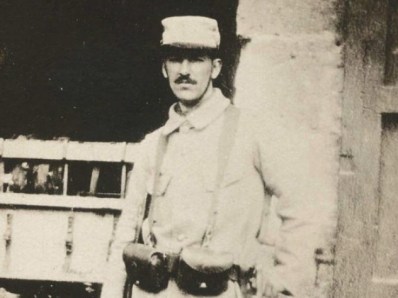 At the outbreak of the war, Seeger joined the French Foreign Legion. He was killed on 4 July 1916 at Belloy-en-Santerre, where he was shot in the stomach. Following his death, the French military awarded him the Croix de Guerre and the Medaille Militaire. He was buried in a mass grave.
His posthumously published poems (1917) were dismissed as “immature” and too much influenced by the English romantics, while others, including Eliot, saw them as evidence of a poetic career cut tragically short… a step towards modernism in literature, and a testament to the horrors of the time.
Known, if at all in the United States, as Pete Seeger’s uncle, he is well-remembered in France. In Mexico City, the American Legion hall… probably unique in hosting poetry readings and giving space to a small English language bookshop… is named in his honor:
I have a rendezvous with Death
At some disputed barricade,
When Spring comes back with rustling shade
And apple-blossoms fill the air—
I have a rendezvous with Death
When Spring brings back blue days and fair.It may be he shall take my hand
And lead me into his dark land
And close my eyes and quench my breath—
It may be I shall pass him still.
I have a rendezvous with Death
On some scarred slope of battered hill,
When Spring comes round again this year
And the first meadow-flowers appear.God knows ’twere better to be deep
Pillowed in silk and scented down,
Where Love throbs out in blissful sleep,
Pulse nigh to pulse, and breath to breath,
Where hushed awakenings are dear …
But I’ve a rendezvous with Death
At midnight in some flaming town,
When Spring trips north again this year,
And I to my pledged word am true,
I shall not fail that rendezvous.


 mexfiles.net