Reading for today:
Dispelling Mexican Narconarratives: Why Most Fiction Gets It All Wrong (Borderlands Beat)
I’m not sure the narcotics trade is any different than any other large-scale multi-national business. While more obviously violent (one can’t exactly send a memo from the CEO to enforce corporate protocol) it depends as much on control of the state as any business like Mobil-Exxon or Walmart does. And run by the same kind of people… putting profits before social responsibility. On the other hand, being a “criminal enterprise”, unlike Mobil-Exxon or Walmart, the management needs to disguise their role which has the ironic effect of making it seem somehow less than other exploitative industries depending on cheap labor and violence… like the oil industry, large scale agrobusiness, etc.
Believe it or not
When Pope John-Paul II placed a crown atop the statue of the Virgin of the Assumption (Virgen de Nuestra Señora de la Asunción de María) in the 18th century parish church of the Nahuatl community of Copilco, Comacalco, Tabasco, he was hardly the first, nor by any means the last, to pay particular homage to the legendary image.
According to oral tradition, in 1638, a wooden boat washed up on the shore in Paraiso. On board was an image of the Virgin, which pious fishermen carried up to the local church. The Virgin, apparently knowing her own mind, was found the next morning, heading north. The fishermen, concluding the Virgin knew her own mind, helped her along, carrying her to the next church north. Which was not her intended destination, and Virgin again moved on overnight. Carrying her from church to church, she finally decided to stay in Copilco.
 The original church was rebuilt in the late 18th century to house the image, and is considered an outstanding example of tropical baroque. Particularly colorful, the church as been decorated over the years by local artists, and is, in itself, a tourist destination, apart from the religious pilgrims who have come for the Virgin’s blessings since the mid 17th century.
It’s not that she’s necessarily nice. In 1800, blood stains in the shapes of soldiers and weapons appeared at the foot of the statue. Then, snakes were seen writhing around the base. Along with, of all things, a big cake. The snakes (six of the seven… a detail always mentioned in the stories, the significance of which is never said) were captured, killed and soaked in alcohol to create what was literally a miracle cure. Soldiers from the local barracks… who had been in the community to harass the locals… confiscated the cake. Ate it. And died.
 Her fame as protector of the Nahautls only grew, although she has eventually become seen as the “Queen of Tabasco” (the rationale for the Pope’s ceremonial coronation). During the radical anti-clerical governorship of Tomás Garrido Canibal, who one year celebrated Mexican Independence Day with a particularly impressive display of pyrotecnics, blowing up Villahermosa Cathedral, the church (and the Virgin) were left alone. It may have had as much to do with the nascent tourism industry as anything. Tabasco, being a swampy, oil-producing state, had little enough to recommend it to tourists, and the church was a “must see” site in all the tourist literature. That the local economy by this time also depended heavily on the pilgrim trade may have had something to do with it too. Or… maybe even Garrido Canibal didn’t want to mess with those snakes and cakes.
As to the Virgin herself. Having expressed her opinion of militarism once before, she began to weep when Mexico entered the Second World War and didn’t stop until the war ended. Or that’s the story.
She began weeping again this last week. Sadness over the earthquake is the popular explanation. Maybe, though, she’s mad at Donald Trump… or about NAFTA negotiations… or the likelihood of our next president being from Tabasco… or…?
Sources:
Museo Comunitario de la Virgin de Cupilco
Isn’t that convenient?
As with any natural disaster, there is always the question of what part unnatural acts played in the devastation. Specifically, where newer buildings collapsed after the 19 September earthquake, there is a question of whether or not they were built according to specifications (in which case, perhaps the engineering standards need to be looked at), or were corners cut. And if cut, by whom.. and how. And, there is always the intriguing question to be asked “Cue bono?”
The tool needed to answer those questions exists… the SIG-CDMX or Sistema de geográfica of SEDUVI, the Secretariá de Desarrollo Urbano y Vivenda. In other words, the database of land use and development project data, which ties to the building permits and engineering reports, inspections, etc.
Right now, the excuse is that the Seduvi building was badly damaged, and fiber optic lines to the building were destroyed. , and the information is unavailable. You mean there aren’t backups, or that nobody wants to start looking at the data?
Humanitarian tourism and other infamies
In some ways, I am grateful that my accident, and its too long recovery, has kept me from taking an active role in responding as I might wish to our recent tragedy. I sense that my own privileged neighborhood received the bulk of international and local attention not because the suffering was worse for us than for others (like the sweatshop workers trapped in a collapsed building in Colonia Obrero, or the congregation at a baptism killed in the collapse of a church in colonia Guerrero, or the residents of the small communities south of the capital), but because the area has excellent access to the rest of the city (my rationale for living here in the first place), is home to some of Mexico’s better known journalists,writers, and artists (and many more wannabes), as well as first-world foreigners. I suppose it was inevitable that … given the type of people who live here (along with the majority of ordinary middle-class Mexicans), that we’d be the focus of international attention… if for no other reason than foreigners and tourists have at least some idea of where this area is, or at least have vaguely heard in mentioned… if only as something silly like the “new Berlin”.
The best I could do was to repost calls for volunteers to help in other places around the city, and plead with journalists to give coverage to the wider disaster, and not focus too narrowly on this one neighborhood. Cynically I suspect the reason so much foreign coverage only showed Condesa and Roma was simple. Not so much the easy access, as it was that cafes and bars in the area managed in most cases to get back to work. Take a photo, interview an English speaker or two, and file a story (or upload a post) from the comfort of the nearest Starbucks.
Jorge Zepada Patterson, in his weekly column for Madrid’s El País, notes that not all who descended on the area were those who responded to our collective SOS, nor at least intended (with the least amount of trouble) to tell our story, but those who wanted their own story to tell… or at least the vicarious thrill of having been part of something much bigger than themselves:
(my translation, photo actually from Nepal, but you get the idea)
Together with the first responders, voluntary and otherwise, who contributed their muscle and insomnia in the first 72 hours after the 19 September earthquake (some of whom are still digging through collapsed buildings and toiling in relief centers), a witnessed a new phenomenon that, for lack of a better name, I will call “humanitarian tourism”.
The Condesa has been turned into a kind of apocalyptic theme park, something to visit, an experience to trophy.
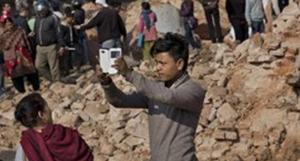 Hordes descended to the attractive and bohemian colonies Condesa and Roma, to take “selfies” in front of collapsed buildings. Dressing up in masks and helmets, the tourists record through their cell phones a landscape of devastated buildings and evicted tenants, of streets strewn with crime scene tapes.
I describe it as a “humanitarian tourism”, because – while apparently intended to help the victims and show solidarity with the fallen — is was, in fact, essentially a tourist expedition: a leisurely weekend trip to the Condesa Apocalypse Theme Park : a place to visit, an experience to collect. The last time I went to a museum in New York I was struck by the fact that most of the visitors turned their backs on Van Gogh’s famous Starry Night; they were not going to the museum to see the painting but to take a selfie with the picture behind their smiling and proud faces. They literally passed the work without seeing it. In return, they came out with the digitized image that bluntly declared: “I was here.”
This weekend I went back to thinking about those false cultural tourists. Unfortunately I had to be part of those who could not return home because of the damage to my own home. Hundreds, maybe thousands, wandered around our house wondering where we would sleep that and the following nights, when we could change clothes or pick up the cell phone or where I might find my abandoned wallet. We all received some help from the wonderful volunteers who had morphed into providential angels.
But we also witnessed legions of visitors attracted by the morbidity of the tragedy of others. The same fascination that a road accident exerts on the rest of the motorists who as survivors are free to enjoy the sight without recognizing, t themselves as simply survivors. I suppose that, in fact, witnessing another’s misfortunes makes us survivors.
Humanitarian tourism is no respecter of differences in social class, age, or sex. I saw the elegant ladies of Las Lomas and Polanco wrapped in 500 dollar leather jackets, with their coiffed hair protected by Pineda Covalin scarves as well as youngsters from the slums who can attest to the fact that disasters feast on the affluent as well as anyone else. Both rich and poor accepted rescue vests, masks, and when there was one, some protective helmet, to take an improvised tour of the damaged buildings. At some point they told themselves that there were already too many volunteers, that “it’s best to stay out of the way” and returned where they had come from Yes, but gratified by having felt the desire to help others and by being able to post a photo on Facebook or Instagram to prove it.
Do not misunderstand me. A week ago in my column, I praised the enormous generosity of the thousands who spontaneously in the minutes after the earthquake, and throughout the following days, put their own lives on hold to save the lives of others. t We can never thank you enough for your effort and solidarity. And, of course, behind every tragedy there are huge crimes: from the murderous builders and corrupt building inspectors who forbid buildings, even, to those who committed assaults in the midst of the catastrophe. t Compared with these scoundrels, the false humanitarian tourism that I describe here is a venial sin. Definitely. But it is a frivolity that I had never observed, or at least not on this scale, in the midst of a sin like the one we suffer. Digital post-modernity, I suppose.
You have the courage to be afraid
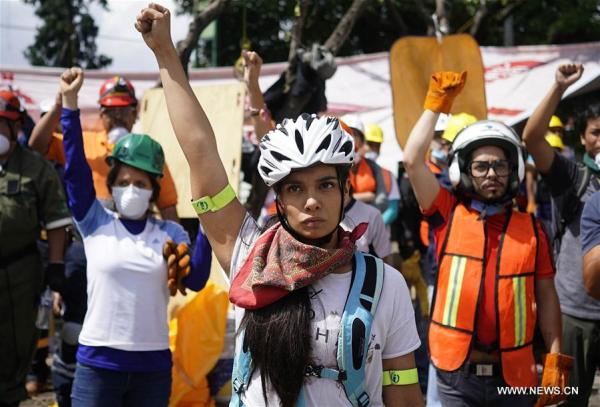 Juan Villoro’s El Puño en alto was published the 22 September 2017 in Reforma. Translation by Peter Davies published in Latin American Focus, 23 September 2017.
A raised fist is normally seen as a sign of defiance. But, when digging through the rubble, we all know it as the signal to keep absolute silence as rescuers listen for any sign of life below … in a way, a call to defy the unpredictability of our lives.
| Eres del lugar donde recoges la basura. Donde dos rayos caen en el mismo sitio. Porque viste el primero, esperas el segundo. Y aquí sigues. Donde la tierra se abre y la gente se junta.Otra vez llegaste tarde: estás vivo por impuntual, por no asistir a la cita que a las 13:14 te había dado la muerte, treinta y dos años después de la otra cita, a la que tampoco llegaste a tiempo. Eres la víctima omitida. El edificio se cimbró y no viste pasar la vida ante tus ojos, como sucede en las películas. Te dolió una parte del cuerpo que no sabías que existía: La piel de la memoria, que no traía escenas de tu vida, sino del animal que oye crujir a la materia. También el agua recordó lo que fue cuando era dueña de este sitio. Tembló en los ríos. Tembló en las casas que inventamos en los ríos. Recogiste los libros de otro tiempo, el que fuiste hace mucho ante esas páginas.Llovió sobre mojado después de las fiestas de la patria, Más cercanas al jolgorio que a la grandeza. ¿Queda cupo para los héroes en septiembre? Tienes miedo. Tienes el valor de tener miedo. No sabes qué hacer, pero haces algo. No fundaste la ciudad ni la defendiste de invasores.Eres, si acaso, un pordiosero de la historia. El que recoge desperdicios después de la tragedia. El que acomoda ladrillos, junta piedras, encuentra un peine, dos zapatos que no hacen juego, una cartera con fotografías. El que ordena partes sueltas, trozos de trozos, restos, sólo restos. Lo que cabe en las manos.El que no tiene guantes. El que reparte agua. El que regala sus medicinas porque ya se curó de espanto. El que vio la luna y soñó cosas raras, pero no supo interpretarlas. El que oyó maullar a su gato media hora antes y sólo lo entendió con la primera sacudida, cuando el agua salía del excusado. El que rezó en una lengua extraña porque olvidó cómo se reza. El que recordó quién estaba en qué lugar.El que fue por sus hijos a la escuela. El que pensó en los que tenían hijos en la escuela. El que se quedó sin pila. El que salió a la calle a ofrecer su celular. El que entró a robar a un comercio abandonado y se arrepintió en un centro de acopio. El que supo que salía sobrando. El que estuvo despierto para que los demás duerma. El que es de aquí. El que acaba de llegar y ya es de aquí. El que dice “ciudad” por decir tú y yo y Pedro y Marta y Francisco y Guadalupe. El que lleva dos días sin luz ni agua. El que todavía respira. El que levantó un puño para pedir silencio. Los que le hicieron caso. Los que levantaron el puño. Los que levantaron el puño para escuchar si alguien vivía. Los que levantaron el puño para escuchar si alguien vivía y oyeron un murmullo. Los que no dejan de escuchar. |
You are from the place where you pick up the garbage. Where two bolts of lightning fall in the same place. Because you saw the first, you wait for the second. And you’re still here. Where the earth opens and people come together. You arrived late again: You’re alive because you’re unpunctual, because you didn’t go to the appointment that death had prepared for you at 13:14, thirty-two years after the other appointment, which you didn’t arrive to on time either. You are the missing victim. The building swayed and you didn’t see life pass before your eyes, like it does in movies. A part of your body pained you that you didn’t know existed: The memory ingrained in your skin didn’t recall the scenes of your life, but of the animal within that hears the creaks of the walls. The water remembered as well when it was the master of this place. It shook in the rivers. It shook in the houses that we built over the rivers. You picked up from the books of another time, one that you were a long time ago before these pages. It never rained but it poured after the festivities of the motherland, that more resembled revelry than greatness. Is there room for more heroes in September? You are afraid. You have the courage to be afraid.You don’t know what to do, but you do something. You didn’t found the city nor defend it from invaders. You are, if anything, a beggar of history. The one who picks up the pieces after the tragedy. The one who picks up the bricks, gathers the stones, finds a comb, two shoes that don’t make a pair, a wallet with photographs. The one who puts loose parts together, pieces of pieces, remnants, only remnants, whatever fits in your hands. The one who doesn’t have gloves. The one who hands out water. The one who gives away his medicine because he’s already cured of his horror. The one who saw the moon and dreamt strange things, but didn’t know how to interpret them. The one who heard her cat meow half an hour before but only understood it with the first tremor when water came out of the toilet. The one who prayed in a strange language because he forgot how to pray. The one who remembered who was at which place. The one who picked up her kids at school. The one who thought of those who had kids at school. The one who ran out of battery. The one who went out to lend his phone. The one who entered an abandoned shop to steal but repented it later at a collection center. The one who knew what there was too much of. The one who was awake so the others could sleep. The one who is from here. The one who just arrived but is from here now. The one who says “city” by saying you and I and Pedro and Marta and Francisco and Guadalupe. The one who has been without electricity or water for two days. The one who’s still breathing. The one who raises his fist to ask for silence. The ones who obeyed. The ones who raised their fists. The ones who raised their fists to listen if someone was still alive. The ones who raised their fists to listen if someone was still alive and heard a murmur. The ones who don’t stop listening. |
Start following the money…
Some lessons we learned, others have yet to sink in.
Laura Carlsen on Real News Network:
Anarchy in the CDMX:19 Septiembre 1985… y… 2017
Obviously, we have had an “eventful” few days here. The coincidence of another major earthquake on the anniversary of what many here still think of THE earthquake (and only a two hours after a city-wide drill) has been endlessly noted, but apparently, saved lives. The first responders to the apartment house collapse a few blocks from my house (where, had I not been in a wheelchair recovering from a bicycle accident, I’d have been walking my dog about the time it happened) were construction workers from a nearby renovation project who had just finished a refresher course on what was they should do, should they face a major earthquake ever again. Which, of course, they did.
But, it wasn’t just the construction workers who popped up, knowing exactly what to do. In 1985, it was the inability… or reluctance… of the government to respond immediately that forced citizens to set up “ad hoc” disaster relief brigades. I honestly think it changed the psyche of the country… people did not passively wait for help to arrive, or for someone in authority to pop up to tell them what to do, but took control of their own lives, and responsibility for their community. While some, like the Brigada de Rescate Tlatelolco have become formal bodies since then (and deserve your support: paypal donations to donativos@brigada-rescate-topos.org), and back in 1985 we didn’t have social media to keep us informed, what surprises me is how organized the unofficial emergency response is.
In 1985, for communications, one had to depend on radio, TV and print journalism. It took longer to sink in the dimensions of the disaster in 1985. And, even if the media outlets were able to function, their reporters, pressmen, and technicians either were missing, or unable to get to work. Elena Poniatowska drafted a writing class for “ladies who lunch” to work as reporters and runners for the newspapers. A 14 year old boy scout took charge of one rubble-digging crew, under the assumption that SOMEBODY in uniform should be directing the operation (and, it is said, he did a much better job than any military authority around). Private autos (still relatively rare in those days) were pressed into service as ambulances. And neighbors set up communal kitchens to serve not just the “damnificados” (displaced people) but the hordes of accountants, housewives, students, construction workers, doctors, lawyers, bureaucrats, punk rockers … who all found themselves not cogs in the machine, but active agents in the running of their own society. But it took a few days.
Yesterday, within about two hours of the initial quake, Facebook and other social media (it could have been earlier, but I wasn’t checking my social media all that much while sitting out in the street anticipating possible after-shocks) was full of calls for this and that brigade. None needed a formal name… nor was their any formal leader. But they knew what was needed. Bicyclists were asked to meet at one place, ready to distribute food and water to sites where other brigades were searching for survivors in collapsed buildings. And those brigades were listing exactly what they needed: including megaphones for whoever it was who had to coordinate the effort. And, if you’ve seen these operations, they are coordinated.
One reads and hears it was “anarchy” back in 1985. And, in a sense, it was. The government response was to protect itself from the people. Much of the business community did the same, more interested in protecting its goods than in rescuing its workers. It was chaos, but the heroes and heroines of 1985 who saved the city were “anarchists” of a sort. The masses simply pushed aside the state, and of their own free will worked together under their own leaders… or no leader… to meet the immediate needs of the citizens.
In part, the state has learned its lesson: one reason we have that drill every year here. And some (but not enough) better building codes. Certainly, the “official” groups… Cruz Roja, the hospital staffs, the police, the electric company, etc… have responded quite well, although not always as immediately as one would like. Not having to go through channels, or wait for instructions, we are almost back to normal in good part thanks to a outbreak of anarchy.
Will “they” get over it… and should they?
Something by way of a draft for an introduction to a new edition of Gods, Gachupines and Gringos.
Last night, I watched the 2008 documentary “The Last Conquistador“... a study of the controversy surrounding the city of El Paso’s commission of a monumental sculpture of Juan de Oñate), one incident that stuck in my mind was a meeting of Hispanic historians and history buffs where one leader said that the Acoma tribe should “just get over it”. “It” was Oñate’s massacre of an estimated 1000 Acomas in October 1598, followed by the enslavement of the rest, and having the left foot chopped off all the adult male survivors.
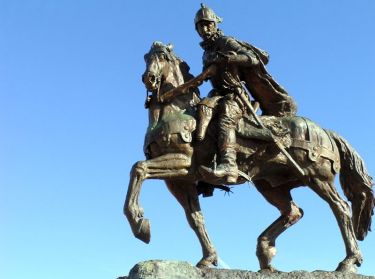 Oñate, founder of El Paso/Juarez, and Santa Fe, is undoubtedly a seminal figure in the history of New Spain. That his impact on what is now part of the United States was largely forgotten by “official” history until quite recently does indeed have more to do with seeing history through a “white lens” (a term I have shamelessly stolen from Joaquín Ramon Herrera, who did the illustrations for, and designed the cover of, the first edition of Gods, Gachupines and Gringos). Joaquín was referring to the tendency to interpret experience and to explain complex events through the viewpoint of the privileged class … in the United States, the “white” majority. Especially in places like El Paso (a majority “Hispanic” city), paying homage to a Oñate would seem to be a corrective to this — never mind that he was of Jewish-Castillian ancestry (“white” by 21st century reckoning), and the majority of people in El Paso “people of color” — mostly of mixed European and indigenous ancestry.
To the Acoma, and the other Pueblo tribes of New Mexico Oñate was a terrorist and genocidal maniac. He had more than a hand in wiping out about 80 percent of the communities that existed at his time, and evidently the Viceregal government back in Mexico City agreed. Despite having “settled” huge new territories for the crown (his forces ranged as far afield as what it now Oklahoma and Kansas), he was recalled to the Capital in 1606, tried and convicted of cruelty but merely stripped of his title as Governor of the new territory, and banished from returning.
Certainly, it is to the credit of sculptor John Houser — who had worked with indigenous communities memorializing their own history — that he was conflicted about the meaning communities gave to his work, and wondered if it hadn’t been a mistake, despite which the 11 meter high monument (allegedly the largest equestrian statue in the world) was installed at the El Paso airport October 2006.
Then this morning, I read a small paean to Juan Garrido, the African born conquistador. When I was writing my first edition, Afro-Mexican studies was a tiny field. Most scholars paid attention to the impact of African influence and culture on colonial New Spain and in the early Republic, the contemporary Afro-Mexican community has only been receiving a wider recognition, both by scholars and the general public, in the last decade. In my first edition, Garrido got a one-sentence mention, as the first wheat-grower in the Americas. But his history is hardly that of a benign farmer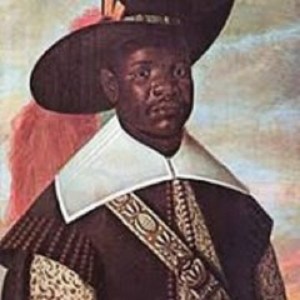 . He had taken in active role in the genocide … or as he put it in a letter to King Felipe I, the “pacification” of Cuba, and, as an officer in Nuño Guzmán’s rampaging conquest of what is now Jalisco, an active participant in the reign of terror, enslavement, and genocide perpetrated against the indigenous communities. Can he be seen as a figure of pride by Afro-Mexicans, or would that be merely substituting a “black lens” for an indigenous one… or is seeing him as a Conquistador, and celebrating his contributions to the creation of New Spain, to see him through the “white lens”?
No historian can guarantee that his or her work is free of all biases, nor am I completely convinced it is necessary to inject my 21st century white lens (even with corrective glasses, fitted by a wide-ranging number of scholars, writers, and ordinary people from various minority cultures) on historical figures. That is, one has to accept that the often appalling attitudes and actions of our ancestors may not have affected them, or been viewed by them, the same way they affect us. We’re grossed out by the thought of Aztec human sacrifice, of the (mis)treatment of women and sexual minorities, of slavery, of the whole nonsensical theory of “race”, of any number of things. The most one can hope to do is say “X did this, and also did that” and let the heroes fall where they may.
El disastre… hardly the first, and definitely not the last, time.
For obvious reasons, this seems an appropriate historial document to highlight today:
The permanent tourists: when will they ever learn?
Via one of the “expat” sites:
A couple, which has been “coming and going on 180 day tourist permits[FMM: technically not a “tourist permit”, but permission to be in Mexico, but not to work in Mexico, for a short period of up to 180 days] for several years” got off the plane recently, “they were then asked to step into the interrogation room and to hand over their phone and laptop, along with the password for their email. They hold an on-line job from outside of Mexico. They were questioned about where they live, how long and what was their source of income. The agent then discovered an email on the computer that was an exchange regarding a VBRO email. It was a rental confirmation for a house that they manage for a Canadian friend. The money went into a Canadian account but as far as he was concerned they had income in Mexico. The lecture they got included three main points. They had been residing in Mexico on FMMs intended for Tourists. They would need a Resident Visa to stay in Mexico. They were not permitted to work in Mexico. ´Managing´ Mexican property is a lucrative activity. Lastly they would be responsible for paying tax on the rental income. [Although given a 30-day tourist permit, if they wished to return, the immigration officer said they would need “to visit a Mexican Consulate and apply for residency.”
A lively thread followed, most comments coming from people with residency permits of one sort or another, most of them not particularly sympathetic to the couple. I’ve been hearing more and more stories like this, and — at the same time — more and more posts from people planning to look for work after they arrive here. While working “on-line” remains a possibility, or so far is overlooked by the authorities (how to tax income earned abroad is always problematic) I see a few trends developing.
The assumption that one is “entitled” to stay up to six months simply because you cross the border isn’t a given. Mexico is not some technological backwater, and … although slow to do so… is updating and installing better software. They can see where a person is continually coming and going as a “tourist” and is rightfully suspicious of those tourists whose entries indicate that they live here. The Mexicans expect those foreigners living here are not likely to become public charges, and … as US and Canadian (and every other country’s immigration officers) … interrogate the would be visitor about their financial resources, intended destination, purpose for visiting the country, and other matters. I haven’t heard of anyone denied entry (yet) as happens with some regularity at the US and Canadian borders, but I have run into people given shorter stays when their responses were inadequate.
A few years ago, when after our former employer’s business in Mazatlan had closed, and we had moved to Mexico City, my now spouse inadvertently overstayed his temporary residency permit (which permitted him to work). It was a complicated situation, and at the advise of our attorney, he returned to the United States for a few days, then flew back to Mexico expecting to receive a 180 day FMM, which would give ample time to resolve the problem. Not something easily explainable at 2 in the morning. The 20 days he was given were a little hectic, and we’ve been told the immigration officer overstepped her authority, but that was an unusual situation. And one we were able to resolve.
The couple in the post, and those “permanent tourists” who are working in Mexico in some way (which would include pet and house sitting… and, obviously, managing rental property) aren’t in some bureaucratic twilight zone, but are clearly violating the laws. Giving them 20 days to make arrangements to either regularize their situation, or at least wrap up their affairs in the country (and, as supposed tourists, staying less than six months, there wouldn’t be much to wrap up) is relatively humane. Most other places would just tell you to buy a return ticket on the next plane out.
Of course, having been an “illegal alien” at one time myself (working on a tourist visa, and not even bothering to renew it, to boot) I’m not going to say that this couple were “bad hombres” and — for all I know — they may have just been victims of bad advise. After all, the internet (and travel guides, and other foreigners) too often give bad advise. I have no idea if a FMM holder who is paid abroad for on-line work is considered working in Mexico (it would seem NOT YET) but they probably should avoid those jobs meant to earn income within Mexico, like property management, or sales of Mexican goods and services… including language lessons.
There are political considerations in all this, as well. Not so much in some “left/right” argument … between those who see the couple’s woes as some kind of “karmic payback” for mistreatment of less well heeled migrants to wealthier countries, or as some “hypocrisy” for the demands of justice for Mexican migrants who have run afoul of US immigration laws… but in the sense that the comments suggest that the more settled migrants (and expats) are less sympathetic to the “permanent tourists” than I’d thought. Perhaps it’s a feeling that having “gone through the channels” the resident visa holders see themselves as belonging, and the “permanent tourists” as interlopers on their community. And, perhaps, the Mexicans are starting to agree… that the “tourists” are welcome to visit, but if they plan to stay, at least say so.
Reading Thoreau in Mexico
Thoreau has been interpreted in many ways … which is only right, given that as a New England Transcendentalist, one’s intuition about an experience is the path to wisdom. Given that On The Duty of Civil Disobedience was written largely in reaction to his own protest against the U.S. invasion of Mexico, it is only to be expected that our writers’ intuit Thoreau’s political stand as more relevant to this country than even his better known Walden.
Juan Manuel Roca’s “Evocación de Thoreau” from the 27 August Jornada Seminal. My translation*
Henry David Thoreau’s essay on civil disobedience strong influenced both Leo Tolstoy and Mahatma Gandhi:. Together they would become icons of an otherwise iconoclastic movement: anarchism.
Inclining towards anarchism, Thoreau is, at core, a pacifist, but his pacifism is pacifism, an active pacifism, involved with politics in a real way.
Born in Massachusetts in 1817, in the 21st century his reputation is mostly as a pioneer in the ecological and environmental ethics movements. He gives testimony to his love for nature in his beautiful Walden, a book about life in the woods that he published in 1847 and which tried to reconcile the split between man with his natural environment.
But, On the duty of civil disobedience is perhaps his greatest political legacy. In 1846 Thoreau refused to pay taxes, in protest both to the war against Mexico and to slavery in the United States, and was sentenced to jail. From there was born his famous treatise, in which he declares as one of his main concepts the idea that governments should not have any more power than the citizens are willing to grant it, even proposing the abolition of all government and in the same vein, opposing all power.
He then declares himself, like any good and true anarchist, an enemy of the State. His influence over the ensuing years has ranged from the Beatnicks to Martin Luther King to the late American environmentalist Murray Bookchin.
Reflecting on Thoreau, the elderly Henry Miller said he was “the best sort of person that a community can produce”. Someone who would have preferred the non-existence of governments if I was in a hurry to define his book. I could say that it is a classic of insobordination, a manual for the disobedient, useful for reinforcing the healthy and necessary ideas of dissent.” Miller himself evoked D. H. Lawrence when he said that Thoreau was a “aristocratic spirit,” which Miller reinforced by saying that “he is closer to an anarchist than to a democrat, a socialist, or a communist.”
When he wrote Of the duty of civil disobedience, he most certainly did not think that the conditions at that historic moment in his country were inalterable. He warned about how, over and above the will of one people, the US government – like so many others – will continue to give rise to “abuse and prejudice before the people can act”.
As an example he presented, “…the current Mexican war, the work of relatively few people who use the government established as an instrument, even though the people would not have authorized that measure.”
It is history as repetition, a macabre caricature that would re-emerge its imperial mood in the Vietnam War and of course in the Iraqui war, which was enthusiastically supported by a spurious government of this country.
Thoreau should be considered a hero in Mexico and deserves tp have a monument to remember him by, as surely as we have one of Gandhi.
* Working from the original Spanish, and not having Henry Miller’s works handy, I can’t vouch for the Miller quote. Thoreau’s, of course, I took directly from the published 1849 text.
One lump or two? Sugar negotiations and NAFTA
With NAFTA 2.0 negotiations beginning earlier this week, most media focus has been on what the United States expects in a new NAFTA treaty. While there is still hope in Mexico that a revised treaty might benefit the country (or at least not unduely damage existing economic ties), Ana de Ita, writing in Thursday’s Jornada, believes the earlier negotiations over sugar quotas suggest the present Mexican administration is unprepared, or disinterested, in any new treaty which will prove beneficial to Mexican industry, or…especially… agriculture.
(Originally published as “Lecciones del azúcar ante la ‘modernización’ del TLCAN“. I made a few necessary changes to “Englishize” idiomatic expressions, and some changes in sentence structure and verb tenses.).
The sugar negotiations, that preceeded the renegotiation of the North American Free Trade Agreement (NAFTA) which began [Wednesday], came together in a series of errors by the Mexican government, placing it in a weak position. The long dispute over sugar became a political football for the current administration, something that could be sacrificed to save the total renegotiation and exhibit A in how negotiations between the superpower and the weak and non-consensual government of our country are likely to go. .
The Mexican Secretary of Economy, Ildefonso Guajardo, considered maintaining a balance between fructose and sugar in both the US and Mexican markets, but never included fructose imports in the agreement.
In the early 1990s, during NAFTA negotiations, Mexico was a net importer of sugar, but had a small export quota to the United States of 8 thousand tons. Mexican negotiators — betting that privatizating the sugar refineries would increase production and productivity — asked the United States to increase the export quota to 1.65 million tons, which was not accepted. NAFTA increased Mexico’s duty-free export quota only up to 25,000 tons between 1994 and 2000, and up to 150,000 tons between 2001 and 2007 provided there was a surplus of sugar available. But, in the latter period, the surplus could only be for two years in a row.
With the sugar industray in the United States already facing competition from high fructose corn syrup in the soft drink industry, the original agreement was hotly debated.
Mexico’s 15 percent tariff for sugar imports and 210 percent on fructose imports, were to be phased out in 15 years. The parallel letters on sugar signed as a condition for the Clinton administration to accept NAFTA, specified that for Mexico to claim there was a surplus of sugar, it also had to consider fructose consumption. Thus the condition of surplus was never fulfilled in the period of transition between 1994 and 2007.
In 2008, as scheduled, the two countries liberalized the market for all agricultural products. Fructose imports from the United States increased rapidly to $900 million in 2012. On the other hand, Mexican sugar exports also soared to $175 million in 2013. The US sugar industry responded by requesting the Commission for International Commerce to investigate whether the Mexican sugar industry was using subsidies to their industry to “dump” their product on the United States. Mexico was found guilty by this commission that proved that Mexican sugar is exported with margins of dumping. The subsidies refer to the expropriation and rescue of bankrupt refineries by the Fox Administration, following the return of previously expropriated mills to their former owners. This would have allowed the United States to apply tariffs of about 80 percent. To avoid them, the two countries reached a suspension agreement in 2014. Mexico committed to comply with volume and price caps and with a schedule for exports. As a result, the NAFTA liberalization had no effect on sugar.
The Mexican sugar industry responded by asking the Ministry of Economy to investigate dumping by fructose importers. The Ministry concluded in 2015 that while fructose imports were within the margins of undercutting prices, it would not continue the investigation, as it did not cause damage to sugar production.
Late last year, US sugar corporations, claiming that the suspension agreements did not sufficiently protect them, set a deadline of June 5 to reach a new agreement at the risk of imposing tariffs. On June 6, the dispute concluded with a new agreement.
Wilbur Ross, Secretary of Commerce and head of the US negotiation, said: “We have managed to get the Mexican side to accept almost all the demands made by the US sugar industry to solve the flaws of the current system and ensure fair treatment of the producers and sugar refineries of America.” Meanwhile, Secretary Guajardo, responsible for the Mexican side, tried to sell the new agreement as a success, since it maintains the access to the US market for Mexican sugar, with any additional demand available to be offered on the domestic market. Mexican refiners declared that they definitely sacrificed a lot, while the rating agency Moody’s for Latin America summarized the general sentiment: What we saw is that Mexico accepted the punishment imposed by the United States.


 mexfiles.net