Scenes from the Class War
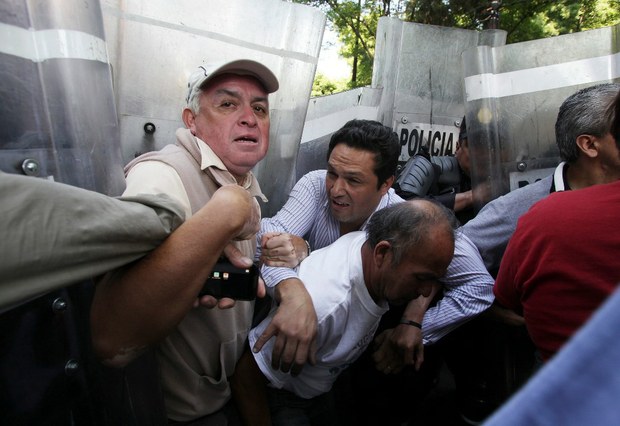
Give me liberty, and give me free parking!
Five were arrested and several injured when rich guys in an upscale section of Coyoacán attacked police officers sent to protect workers installing parking meters.
Chapo, we hardly knew ye
I don’t move in the right (or wrong) social circles to write on Chapo’s personal life (and, frankly, it’s never particularly been an interest of mine). However, at a time when my own family affairs are taken precedence over other things for the next few day, living in Sinaloa and having been recently tagged (by another foreign observer of the Chapo saga) “al mejor blog gringo sobre México“, it seems I’m expected to make some kind of public comment on the seemingly perverse reaction here in Sinaloa to Guzmán’s arrest.
Alma Guillermoprito — much more suited than I am to putting the story into an intellectual frame — presents a much more realistic sense of “the most wanted man in the world” than what I’ve seen even in our local media, in the New York Review of Books:
Rummaging in the National Archives in Mexico City, the Sinaloan historian Froylan Enciso recently found charges, never acted on, filed in Culiacán in 1975 by several women from San José, a hamlet just downhill from La Tuna, Guzman’s birthplace. The women were protesting the incursion of Mexican army troops into their village—population about four hundred. The troops, they said, had come looting and pillaging into their homes. One young boy was shot, the men fled, the women were forced to strip naked and molested, a woman who had just sold some cattle was robbed of her money. The last name of one of those women was Loera. Joaquín Guzmán Loera would have been around seventeen years old then, and Enciso speculates that this woman could have been a close relative. The account is, in any event, typical of the period. Army operations in rural Sinaloa have been recurrent ever since that time, and it is fair to say that Guzmán, like thousands of Sinaloans, has lived his adult life in a state of war and his use of violence comes naturally.
I know Froylan Enciso has been working on a history of the Sinaloan narcotics trade, and still have some hopes of publishing an English language edition, but otherwise, outside of crime reporters, not much really has been said about the social framework in which the Sinaloa “cartel” and Chapo Guzmán arose. University of Sinaloa Professor Luis Astorga’s 1997 “Drug Trafficking in Mexico: A First General Assessment” mentions that marijuana and opiate exports have long been part of the Sinaloan economy, and — even though illegal — had been tolerated when not tacitly encouraged because of its importance to the rural economy.
Atorga’s paper appeared at a time when the violence associated with “narcos” was hardly an international issue, something that has only taken off since NAFTA. Enciso’s discovery of state violence — possibly directed against a member of Chapo’s own relations — is important for two reasons.
First: the sense one gets from Astorga is that the Sierra Madres narcotics trade was
AFP Photo
seen by the Culiacan bourgeois as a “investment”, while it was the “Sinaloan Hillbillies” ( a term popularized by Sim Quinones) like the Guzmáns of La Tuna who provided the raw material. That one of the Guzmán’s was smart enough … and, yes, ruthless enough… to wrest control of what was an nice investment that dare not speak its name away from the ruling class did make him something of a local hero. Not just in Mexico are successful people from the wrong side of the tracks, or the law, celebrated. “Success” is worshiped in other economic spheres, and seldom is thought given to what actions led to that success. Even successful criminals, from the mythical Robin Hood to John Dillinger to those who later achieved some semblance of “respectability” like Pancho Villa in Mexico or Phoolan Devi in India are celebrated as much for fighting the “system” as they are romanticized for merely being successful.
Like hill-country people throughout the world, the Sinaloan “hillbillies” who took control of the narcotics trade had little concern for the approval of the outside world, nor did the outside world see them as anything but backwards and expendable laborers. Like other hill folk (the Afghans, to pick another such people), they were rather puritanical in their own way, with little tolerance for using their own exports except to exchange for needed goods (and luxuries), and a code of ethics in which violence is met with violence.
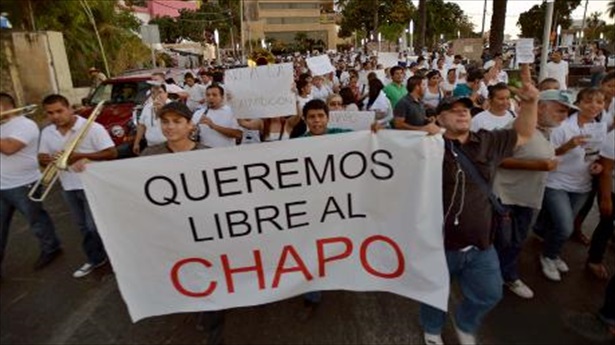
Via Sin Embargo, comes this “manifesto” from one of the pro-Chapo protesters in Culiacán (my translation):
Those who criticize Chapo and his organization surely have never known nor suffered from the deprivation and lack of opportunity found both in rural and urban communities . Most often, the motivation for doing something “illegal” is to avoid paying taxes to the government on one’s business — high taxes that seldom are put to any useful end. Hard work for low pay, coupled with the unjust price of food and clothing does nothing to improve one’s lifestyle.
Lack of food , clothing and housing FORCES people to admire characters such as Chapo . WHY? Because the federal , state and local government have not been truthful, effective or efficient in promoting the welfare of those living either in the countryside and in the city. This is also reflected in the discriminatory treatment given to people who have no money in relation to the rich (eg in hospitals).
El Chapo’s drug trafficking business provides OPPORTUNITIES for a better -paid job : a dream come true when the government that does not give a helping hand ( there are exceptions). And I write “drug trafficking”, because that is Chapo’s business: extortion, kidnapping, etc, are the actions of those who have distorted the business. But hey, you critics are only supposed to be aware of what is reported in the commercial media, and televison news prefers to dwell on stories like ” SETTLING ACCOUNTS” or “HOMOCIDE”. Narcotics is not the main cause of death in the country: MORE DIE OF HUNGER AND CHRONIC DEGENERATIVE DISEASES largely caused by the government …….
I was born and raised in Culiacan, and he came from a tiny hamlet. We both love our state and despite various setbacks, have succeeded here. Many people do not have the sorts of opportunities I had, or Chapo had. And the vast majority of the people in this state believe their hero, Chapo has earned what he has. What those people want to hear from EPN [Enrique Peña Nieto] is the answer to the question, “What is he going? Where are WE going?? These are the people paying for water, electricity, home loans, trying to maintain a quality of life, paying for gasoline, and paying your salary.”
I do not criticize those who that judge us “wrong,” nor do I need to try to convince anyone that what I say is correct. I just hope that people reflect on what this, and do not write in an effort to offend us, believing themselves superior to those of us attending this march. We simply know that our fellow Sinaloan, Chapo Guzmán, has in fact helped his people and his state. And just remind you of one of his recent and most generous displays of his affection for his people. 19 September 2013 (Hurricane Manuel ) when he helped more people than the President of Mexico.
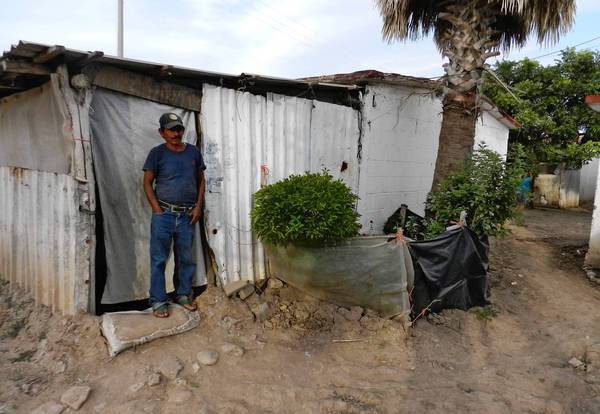
Worker in Sinaloa’s “respectable” agricultural export sector… photo by Javier Valdez for The Los Angeles Times.
I just saw on an “ex-pat” website the question asked in reference to the protests, “What’s wrong with these people?”. Perhaps instead of — as our local media tells us — the governor is ordering an investigation of WHO is behind the protests, what needs to be looked at is WHY they are protesting. What is wrong with “these people” is that they come from a culture of violence perpetrated by the state, a threat to a way of life from the outside, a sense of abandonment by their own government, hunger, poverty, under-employment … and, if they seem to be celebrating a criminal, they are also celebrating the fact that one of their own managed to thrive in spite of the odds against them all.
Beware of all enterprise that require new clothes
“Determining What is True” Sterling Bennett
[In] … the Mexican state of Michoacán … self-defense groups have risen up to defend their families and themselves against criminals, narco and otherwise—since the government, local and federal, either is unable to or uninterested in granting them their basic human rights and protection under the law.
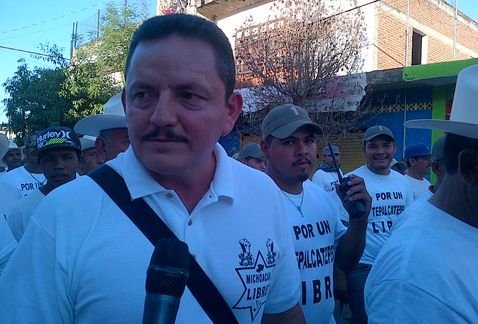
One of the leaders is Juan José Farías “El Abuelo,” The Grandfather. There are whispers, reliable or not, that he used to be with organized crime. The spokesperson for the self-defense groups, José Manuel Mireles, says El Abuelo is a member in good standing of the new citizen defense forces. I once watched an interview with this Dr. Mireles and judged him to be credible.
Milenio.com
On the other hand, “El Abuelo,” captured on the front page of La Jornada, wears aviator glasses, tinted, if I remember […] a baseball cap with something like oak leaf braids that suggests he might be the commander of an aircraft carrier; and an AK47 military-style assault rifle that hangs around his neck and one shoulder, across his chest like an honor guard sash […] This combination of accoutrements, for some reason, makes me wary and in my mind suggest a man who feels weak and therefore wears things that make him look important and powerful. The clincher is the big black Hummer that carries him around and that reminds me of the in-between culture one sees when the police merge with the narcos…
Excellent, as both his fictions and musings on Mexico always are.
Paco de Lucía, D.E.P.
Spanish flamenco guitarist Paco de Lucía, born Francisco Sánchez Gómez in Algecerís who had been living in Cuba and Mexico for the last several years, died yesterday in a Cancún after a heart attack at the beach. He was 66.
Although always faithful to his flamenco roots, de Lucía’s long association with foreign artists, like Chick Correa, was influential in creating his” nuevo flamenco” sound.
Rio Ancho:
The ones that got away
Via FAIR (Fairness and Accuracy in Reporting):
…while the only questions regarding [Chapo] Guzman’s prosecution appear to be where and when, things were different when it came to prosecuting the institution that supported what Immigration and Customs Enforcement Director John Morton called “the lifeblood of their operations.”
 The DOJ “stopped short of indicting HSBC,” as the New York Times phrased it (3/1/13) because, according to Justice Department prosecutor Lanny Breuer, there were other considerations:
Had the US authorities decided to press criminal charges, HSBC would certainly have lost its banking license in the US, the future of the institution would have been under threat and the entire banking system would have been destabilized.
Judging by coverage, media bought that line
Denise Dresser on NAFTA
Translation by Reed Brundage for Mexico Voices.
A snippet:
NAFTA is a mosaic of chiaroscuro, black and whites and grays, of what did happen and what was left pending. The trade liberalization that NAFTA pushed forward is not and was not an independent variable; it cannot be analyzed separate from the development model adopted by the country. A model characterized by mediocre economic growth. A model with small islands of competitiveness and productivity surrounded by extreme poverty. The unequal distribution of income. The dependence on the United States economy. The turn toward exportations as a lithmus test. Since Salinas changed directions when he proposed NAFTA, Mexico is a more open, competitive, functional country for millions of consumers.
But at the same time it’s more unequal. Full or monopolies, duopolies and oligopolies that NAFTA didn’t even touch. Full of privileges and protections that NAFTA didn’t face. Because the treaty was thought up to make the cake bigger, but it wasn’t created to share it better. Carlos Salinas was so hungry for foreign investments that he searched for the best way to get them. NAFTA would be a seal of quality, a mark of identity, a verification of stability. Instead of being a turbulent Latin-American country, Mexico would be a triumphant North American country. And it was packaged, sold and embellished as such; just like Enrique Peña Nieto’s energy reform is today. As an infallible detonator of growth. As an invitation to foreign investment, capable of financing what Mexico can’t do on its own. As a way to institutionalize the proximity and ensure business.
(Sombrero tip to Sterling Bennett)
Strange brew (of ex-pats)
Mexico can still be a sunny place for shady people. The other Gail Collins (not the New York Times columnist) was a well known rock lyricist for Cream and Mountain. In 1983, she shot her husband, Mountain’s Felix Pappalardi (“Mississippi Queen”) and was convicted on manslaughter.
A “…witch of trouble in electric blue”? Well, maybe. She disappeared in 1985, while on parole, and was living as a cantankerous expat recluse in Ajijic until her death sometime in the last several weeks (the body was not discovered until recently) at the age of 72.
Just another day in Paradise
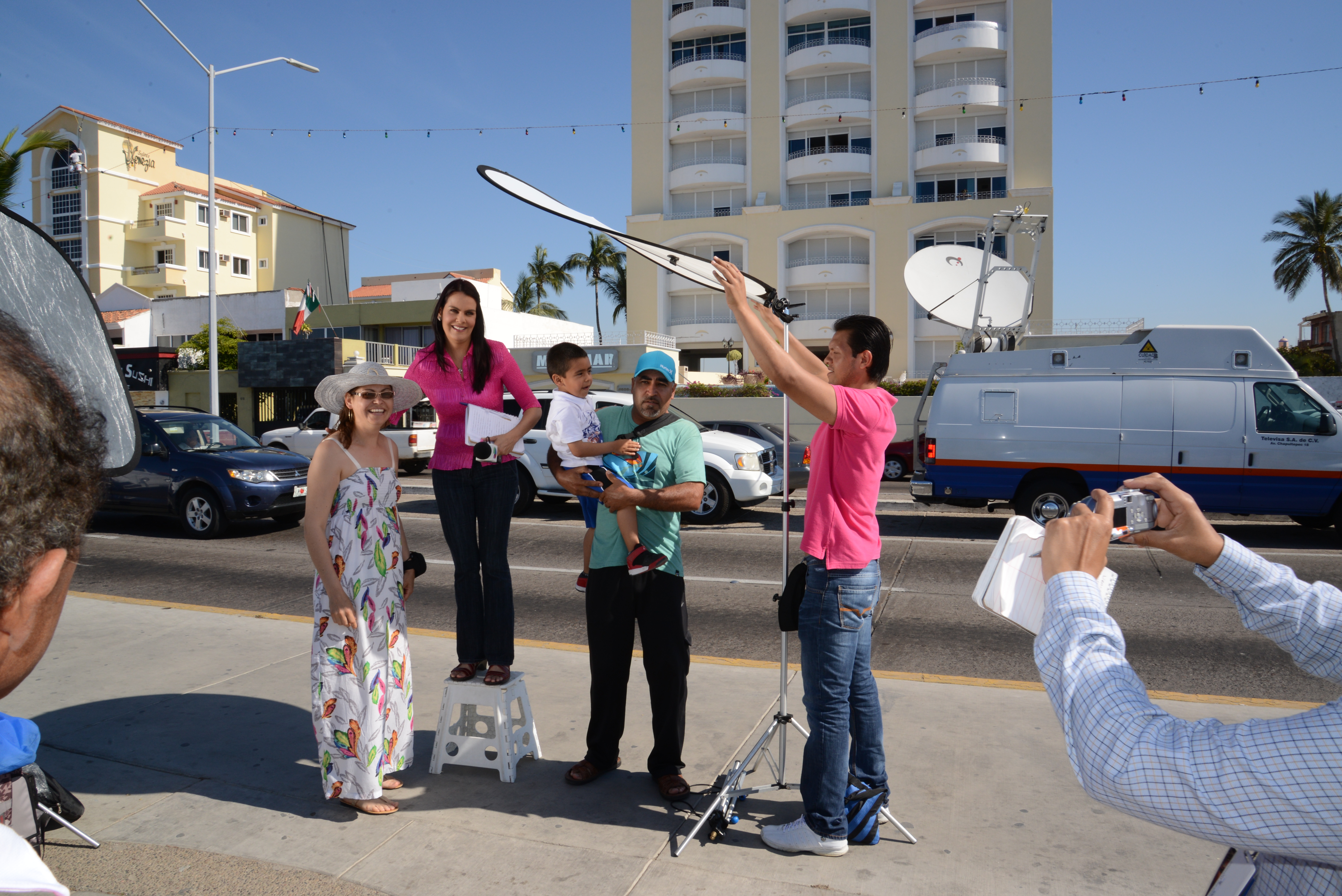
Photo by John Kirsch
Normally, we don’t pay much attention to the tourists, but every once in a while one of them makes the news. Having lived in a resort town before, it made perfect sense to me that Chapo was here (beyond having significant business interests in town… it’s not all play and no work in a seaport). At about a thousand US a month, it’s a bit pricey for most of us who live here, but the kind of place that is full of vacationers and foreigners.
In a normal Mexican neighborhood, any newcomer is going to be noticed… among tourists, no. Who is going to pay attention to one more outsiders living in a rather nice, but not particularly ostentatious rental apartment?
Even if your neighbor just happens to be some criminal mastermind with a it’s no reason to disrupt your vacation … take the family for a stroll along the beach and get some souvenir photos… though I can’t guarantee you’ll find yourself on TV.
Chapo… the legend begins
Boy, it didn’t take long for this one to pop up. From “Huzlers” (and a couple of other websites you never heard of either):
Family members of Gregorio Chavez are claiming he is the man currently under arrest by the government of Mexico and are falsely claiming him as famed drug lord Joaquin Guzman.
Or… maybe… they nabbed Nacho Libre?
Claiming a bigger conspiracy in this whole ordeal Lorena wife of Gregorio claims men from CISEN [mexican cia] visited their home in Mazatlan on several occasions to offer monetary assistance to the entire family in exchange for Gregorio’s participation in a “Top secret program” only after her husband went missing several weeks ago did she began to worry he had been kidnapped but this morning she was shocked to realize he was the man being portrayed all over the media in Mexico as Joaquin Guzman. This wouldn’t be the first case of Mexican authorities falsely identifying reputed drug lords, just last June they arrested a man named Felix Beltran Leon and claimed he was “El Chapos” son only to later find out he had no relation whatsoever to Chapo.
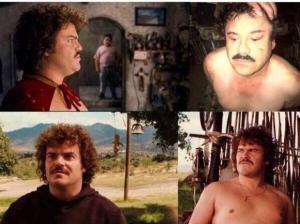
Huzzlers.com is a rather obscure satire and hoax site, but stranger things have happened when it comes to Mexican gangsters. Complete strangers are arrested as putative children of “kingpins, they’re supposed to be dead but their corpse disappears, or are confused with Cardinals.
Move over Obama-phones. Here comes Peña Neito-vision!
The Mexican government plans to provide free high-definition televisions to low-income households to speed along its transition to digital broadcasts.
The project is starting with a pilot program in Tamaulipas state to distribute 120,000 TVs from two suppliers, Foxconn Technology Group and Diamond Electronics, the Communications and Transportation Ministry said yesterday in a statement. In May, the government will solicit bids for nationwide TV distribution.
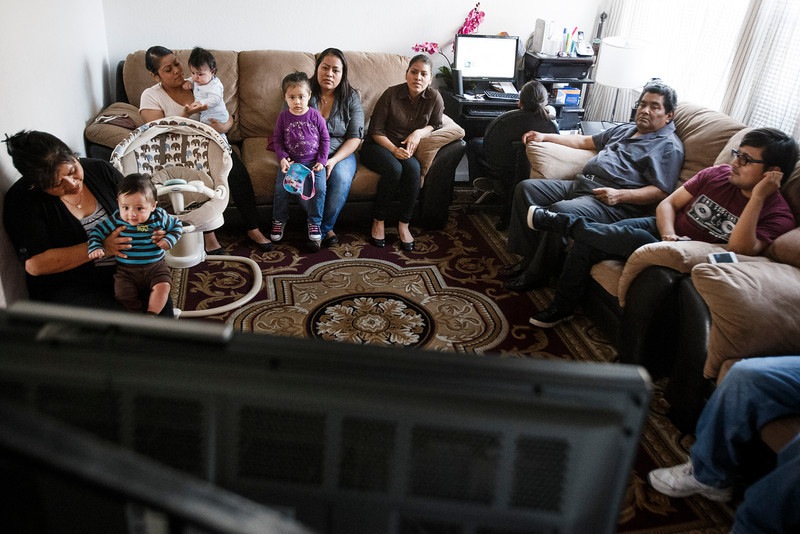
Photo by Dai Sugano via EricBuys.wordpress.com
As in the U.S. and elsewhere, television broadcasting is moving from analog todigital, and — even more than in the United States — people felt they would be “forced” into a major purchases they could ill afford. In a country where more families have a television than a refrigerator, and where ninety percent of the people get their news from television (and — alas — ninety percent of the news is by just two networks), having a television is more or less a necessity… or at least perceived as one.
While in the U.S., there was a program to provide “coupons” for converters, the similar “pilot program” in Tijuana to distribute converters was something of a cock-up. The converter boxes were imports, and some came with instructions in Mandarin or English, rather than Spanish. Since televisions are made in Mexico… and where there is hope of revising what was once a promising Mexican electronics industry, a government program to buy the not particularly popular 24″ screen televisions makes a lot of sense. Especially given that the televisions are manufactured in Mexico (although the corporations are are foreign-owned: Taiwanese Foxconn at a plant in Chihuahua, and Chinese owned Diamond Electronics in Baja California), and having all the extras of new televisions, including “HDMI and USB ports to connect with other devices and the Internet” are meant to stimulate growth in other electronics sales (as well as televisions themselves, as Mexicans go to bigger and bigger and bigger TVs… I replaced my 14″ analog TV with a 36″ smartTV, which was the smallest size in the store), dish or cable services, as well as computers and internet access.
This should have a positive effect on industry, and make more information available to more Mexicans, but what the effect all those new excuses for sitting on our butts will have on the national drive for more exercise and active living is something I don’t want to contemplate.
The Mazatlán business report

Can this be true?
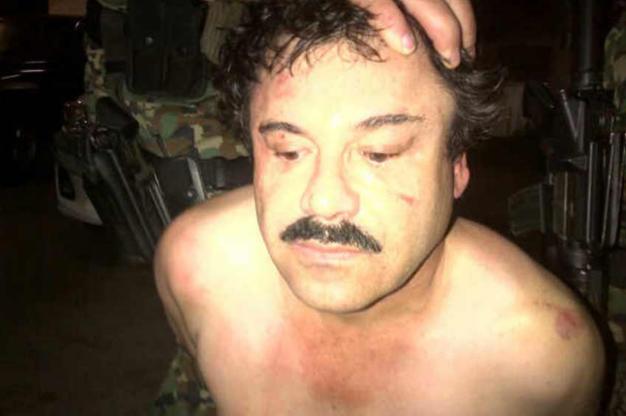
“Chapo” Guzmán taken alive… right here in Mazatlán?
It’s an open secret that he’s often in town, though I don’t think we’ve ever had him as a customer (don’t believe he reads English, anyway). He’s a major employer and investor here, after all. If this is him (and El Debate cautiously labels this photo “the person detained in Mazatlán”), and he stays alive, it’s going to be interesting to hear what he has to say. And the effect on the local economy is going to be tremendous. To say nothing of our way of life.
I don’t know anything about this (why didn’t someone tell me… er… better off they didn’t)… two questions that immediately come to mind. Why was this within days of that regular visit from the Prime Minister of Canada and the President of the U.S. who come here to basically give Mexico their marching orders?
And, of more immediate concern, what happens now? The common wisdom has always been that Chapo kept a tight control on his organization, tamping down dissent within his own gang and keeping out rivals… making this town relatively immune to gang wars. What happens if there is a fight for control of the Sinaloa export trade, or if rival gangs try to move in?
Assuming, of course, this IS Chapo.


 mexfiles.net